
Aberdeen is best known for its industrial heart, catering to the oil and gas industry of Scotland's North Sea. The granite stones of Aberdeen are dour in the winter and sparkle in the summer.
The golf is overshadowed by St Andrews, Carnoustie and Kingsbarns further south and closer to Edinburgh. East Lothian is anchored by North Berwick and Muirfield and a plethora of fine courses most Scots haven't even heard of. Ayrshire, with Prestwick, Royal Troon and Turnberry seem to be visited next. For the adventurous, Inverness with Royal Dornoch, Nairn and Cabot Highlands Castle Stuart is the next outpost. If you've gotten that far, Arran and Machrishanish get a look. Aberdeen has been underrated and overlooked for far too long...
The big four are Royal Aberdeen, Trump International Golf Links Old and New, and Cruden Bay. All big 3 are fixtures in the World Top 100 - the jury is out on the New Course at Trump International Scotland. Wherever that lands, it will be a very compelling 36-hole venue with very contrasting courses.
It is one of the very best links in the world. With the offering of practice facilities, on-site accommodation, and food and beverage options, you cannot go wrong with the course. My preference is the front nine, but the back nine is an education in routing. This can play as hard as you wish, with 5 tees on each hole, the wind can affect play immensely.

Photo Courtesy Gary Lisbon
Already billed as the greatest 36-hole venue in the world, it will have a shot, but it won't be easy. The course contrasts with the Old in almost every way. Laid out over links, heathland and wetlands, it is unique. We cannot wait to be back to see it fully grown in.
One of the world's best, this is cut from the same cloth as North Berwick. If you love one, you will love the other. You cannot come to Aberdeen without a visit.

Photo Courtesy Gary Lisbon
The oldest and most storied club in the area, Royal Aberdeen is fighting coastal erosion and the course seems to be altered to combat the changes after each storm. The front nine is one of the very best in the world - another must-see, hurry before it's too late.

Photo Courtesy Gary Lisbon
Sneaky good golf, this is only getting better with gorse being removed and cut back. Renowned as being tough as nails, the club has turned the corner and proper presentation and maintenance have made a massive difference. There are blind holes that won't be to everyone's taste, but you're in Scotland to see and experience something different. If you can't access Royal Aberdeen or the green fee is too much, Murcar gives you a close experience with the majority of holes on the front nine playing the exact same dunes as Royal Aberdeen's famous front nine.

Photo Courtesy Gary Lisbon
Fraserburgh is about an hour north of Aberdeen. It is a fun links that has a very good stretch of holes on the back nine. The opening and closing holes are on some of the flattest ground I've ever seen on links, and a few holes that follow give one Gullane 1 vibes, playing up and over a massive dune. The front nine will underwhelm but the middle stretch is very good golf.

Photo Courtesy Jasper Miners
Peterhead Golf Club has a very unique entrance to the club... after parking by a children's playground, you walk across a bridge to access the clubhouse and first tee. The first 3 holes are quite pedestrian but it really ramps up with the 7th. The run from 8 to 10 and 15 to 17 are stunners. Peterhead is sneaky good and if you can overlook the start, the holes mentioned previously can compete with many of the holes of the big four above.

Photo - Contact for Credit
This is a hidden gem in every sense of the word... located north of Trump, the golf course is on the flatter links land adjacent to the sand dunes. Gorse is still aplenty but work is being done. The clubhouse is new (from 2001) and more is being spent on the course. We think this will become a course you'll be hearing more about soon... it's relatively new, opening the current 18-hole course in 1996.
The site is stunning and similar to North Foreland but on steroids. Some spectacular high cliff holes make it one to remember. If you get the others done and you're still local, it's worth a look. If you're driving to Edinburgh, there are better courses along the route...
Aberdeen Airport is connected by frequent flights to the rest of the UK and most hubs in Continental Europe. If you're coming to the UK from Canada or the USA, you'll probably have to fly into London or Edinburgh then fly, drive or take the train.
Train service is very good with links to Edinburgh and London. Stress free, the trains allow you to relax and take in the scenery.
Unlike other destinations, the road network to Aberdeen is quite good from Edinburgh. The M90 and A90 are good roads that make the journey as good as it can be. You'll need a vehicle to get around once you're in Aberdeen as it is still a small city without a lot of options for public transport. The drive is not as inspired as the Highlands but it's not a slog, which is probably more important if you're just covering miles.
If you've travelled in Scotland, you'll know the score. Many restaurants (especially in the low season) are not open or are closed a few days a week. If you arrive without booking or checking, you might be out of luck and go to bed hungry.
Most clubs will have the very basics but don't expect too much. If you like your food brown and crispy, you will be well looked after. Were perhaps being harsh but this is not the land of slow-cooked beef brisket and fish tacos at the turn. If you think food is limited at the course, be advised most small villages don't have supermarkets and some don't have corner shops... Plan ahead.
For stay-and-play options, The Dunes at Cruden Bay is perfect especially if you like to self-cater. If you want the full-service, 5-star treatment, Trump will be your best bet.
Remember, the drink-drive laws in Scotland are strict - virtually zero tolerance. If you're tying one on or having more than a small glass of wine with dinner, taxi's and transit will add up... if you can find them at all.
Top 100 Golf Courses of Britain & Ireland 2014 Our latest Britain & Ireland Top 100 ranking list is unveiled 16th December 2013 We are thrilled to announce our latest 2014 Britain & Ireland Top 100 rankings. We’ve actually whittled our shortlist down this time round because it was taking far too long to research more than 500 courses, the majority of which were never serious contenders for this stellar chart. The top of the table has hardly changed at all and the top six remain in exactly the same positions as 2012. In total, nine courses in our Top 20 remain in the same spots as last time – this is in complete contrast to 2012 when no fewer than seventeen courses in the Top 20 moved position. The skirl of bagpipes at the unveiling of Trump International Golf Links back in July 2012 is now a dim and distant wail. We featured this high profile course on the Top 100 website soon after it opened, but inevitably our biggest challenge focused on where to rank this new kid on the block alongside two favourite classics: Royal Aberdeen (Balgownie) and Cruden Bay. I’ve already gone on record and expressed my utter surprise at a UK golf magazine that claims “definitive rankings by the people who know”. In a moment of excitement they decided to rank Trump’s new Scottish debutant at position eight in their 2012 Britain & Ireland chart – the highest new entry in the magazine’s Top 100 history. Where they ranked the course does not concern me, the fact they ranked it two months before it opened for play caused my eyebrows to involuntarily raise. Anyway, eighteen months later I can tell you that Trump Golf Links is also our highest new entry, straight in at 31st. It is possible that if the playing surfaces at Trump Golf Links firm up, it could be the highest climber in our 2016 rankings. The Carnegie Club at Skibo Castle narrowly missed out in 2012, so we’re pleased to welcome another Scottish links to our 2014 Britain & Ireland chart. Straight in at 61st, Skibo now offers limited tee times on special request. Hats off to Tom Mackenzie (Mackenzie & Ebert) and David Thomson (Skibo’s Director of Golf) who turned this course around. According to one reviewer: “The shift from 2006 to 2008 and then to the current day is dramatic. Where as in 2005 (when I first visited) Skibo was a magnificent Highland hospitality experience with an interesting golf course as a sideshow, the course now stands up in its own right.” There’s a third and final Scottish new entry, straight in at 84th, and you won’t be surprised to hear it’s another links. We first played The Renaissance Club in April 2008, shortly after it opened and our Editor and Scottish Correspondent, Jim McCann, commented: “Doak’s understated touch is a real joy to behold and it raises the bar of golfing excellence along this [East Lothian] coastline yet another notch higher.” There’s a happy return to our 2014 Britain & Ireland Top 100 for Remedy Oak and Moortown, but it gives me great pleasure to announce one more brand new entry, this time from the Emerald Isle. Please raise a glass of Guinness and let’s hear it for Ballyliffin’s Old course. Many golfers believe that Ballyliffin is Ireland’s premier 36-hole complex. The wonderful Glashedy course is knocking on a Top 50 place in Britain & Ireland and with the Old course debuting at position 100, who would argue? According to one reviewer: “Out of the two superb courses at Ballyliffin this [the Old] just nudges it for me. There’s something about the more traditional linksy feel with its numerous bumps and hollows that bring a smile to the face on every hole.” In general terms, Scottish courses fared well in our new rankings, with Duke's St Andrews climbing nine. However, English courses found the going rather more challenging. Irish courses held firm but Welsh courses dropped back a little, compounded by Celtic Manor’s Twenty Ten dropping off the list. A few English courses however made significant upward moves, including Alwoodley (up 12), Hankley Common (up 17) and Broadstone (up 10). The Marquess and Duke’s courses at Woburn both go up nine places. In Ireland the dramatic Old Head may divide opinion but its upward move of thirteen places is, in my humble view, deserved. Lough Erne in the north also makes a positive upward move of nine places. We always welcome feedback, so please feel free to let us know what you think of our latest 2014 Britain & Ireland Top 100. We won’t claim to be “definitive” but we do like to think that we’re the most “informed” and considered golf course rankings in the business. If you’ve played any of our featured courses, we’d love to know what you think, so why not post a course review or two? Keith Baxter Editor-in-Chief www.top100golfcourses.com Click to explore in detail our new 2014 Britain & Ireland Top 100 For those interested, the six courses that made way for the new are: Trevose (Championship), Chart Hills, Celtic Manor (Twenty Ten), Lindrick, Panmure and New Zealand.
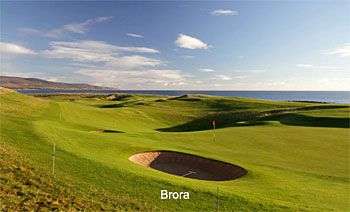
Top 100 Golf Courses of Britain & Ireland 2016 Our latest Britain & Ireland Top 100 ranking list is unveiled Two years ago we said we’d whittled down our Britain and Ireland shortlist because it was taking too long to research more than 500 courses. We then had a rush of blood to the head and decided to contact every golf club in Britain & Ireland to help shape our regional/county rankings. The results from this survey have already been published and every regional ranking table (of which there are around 90) has been reordered. In our recent World Top 100 2016 release, I pointed out that this premier ranking table was complied using a different process from previous iterations, using feedback from many sources. Click here to read the story. This latest Britain & Ireland Top 100 list has been formulated using a combination of a top down (World 100) and bottom up (Regional/County) analysis. This “coming together” has resulted in some significant swings in our new GB&I table. Two years ago I felt confident I’d now be able to report that one of our team had managed to play the entire Britain & Ireland Top 100. Next time (2018), I’m sure that at least one of our direct team members will have played every course on the list. Brian Ward is closing in on completing the Britain & Ireland “holy grail”, having played 98 courses from our new 2016 rankings – Hankley Common (Up 15) and Ballyliffin (Old) (Up 4) are tantalisingly waiting for Brian to tick them off. Andy Newmarch is not far behind Brian with only a handful left to play – who will be first I wonder? A dozen or so years ago I needed to play only twenty more courses to complete the Britain and Ireland hundred, but now I still have fifteen on my “to-play” list, in part due to the ever-moving goalposts. However, I’m still working to our original 2004 list and I’ve only got ten left to play from that particular chart – it’s still a poor effort on my part though. It goes without saying that you need to be dedicated to complete any Top 100 ranking list. You also need a great deal of time and a fair amount of money. I know of only one person who has played the entire GB&I Top 100. Shaun Rhodes completed the task in 2006 and we joined up with him in Ireland to chronicle his achievement. If you’ve played them all, please get in touch with me – I’d love to hear your story. So what’s new for 2016? Well, quite a lot actually, but Royal County Down (Championship) still heads the table and St Andrews (Old) remains at No.2. However, three courses enter our Top 20 for the first time and they’re all Scottish. Castle Stuart moves up four places to 17th and I must say I thoroughly enjoyed playing this Gil Hanse delight earlier this year. Royal Aberdeen (Balgownie) rises seven places to 18th, while its near neighbour, Trump International jumps eleven places to 20th. I’m regularly asked which is the best area in Britain & Ireland for golf. The short answer is – it depends. If you love links golf, like I do, the Highlands is one of the (if not the) best golfing destinations in Britain & Ireland. There’s a second course (designed by Arnold Palmer) scheduled to open at Castle Stuart in 2019 and Mike Kaiser (of Bandon Dunes fame) is hatching a plan to build a new course at Embo near Dornoch. Today, the Championship courses at Royal Dornoch (up 1 place to 3rd) and Nairn (up 2 to 42nd) along with Skibo Castle and Brora (a new entry at 100th) and, of course, Castle Stuart, means that the Highlands can boast five links courses in our new Britain & Ireland Top 100 (only Ayrshire and Lancashire can also claim as many top rated links courses in our latest list). Well over half the layouts on this ranking list are links courses, which is no great surprise, but there are also some wonderful inland courses listed too and three of them are new entries – although Sherwood Forest (in at 95th) and the Old course at Royal Ashdown Forest (in at 99th) are both re-entries. Hindhead, on the other hand, appears on this table for the first time and it’s straight in at position 82. The Devil's Punchbowl is a large hollow of dry sandy heath to the west of Hindhead (the highest village in Surrey) and the front nine is laid out through these heather and bracken strewn Ice Age valleys, while the back nine plays on a hillside heathland plateau. It’s a truly dramatic setting and I’m delighted Hindhead has finally entered this stellar ranking list to join its Surrey heathland contemporaries – the Hindhead greenkeeping team should take a bow. Incidentally, if you like heathland golf (as I do) Surrey is impossible to beat. There are fourteen courses from this premier English county listed in this latest Top 100. Southport & Ainsdale (in at 95th) completes our quintet of new additions and makes up the fifth Lancashire links course (alongside Birkdale, Lytham, Formby and Hillside) to feature within this new chart. Improvements have been made to a number of courses that are upward movers in the rankings: Remedy Oak (up 7) has recently re-laid greens to USGA specification; Renaissance Club (up 17) has built three new holes along the East Lothian coastline; Swinley Forest (up 7) has invested significantly in improved maintenance and has cleared much undergrowth in order to return to firm and fast playing surfaces. Even the much-loved and highly ranked Turnberry, now owned by Trump, undergoes a major facelift. Courses that stand still are in danger of dropping down or even falling off this very competitive ranking list. An example is the West course at Wentworth (now under Chinese ownership). It’s going backwards at an alarming rate of knots (down 21 to 54th). While the club struggles with the quality of the greens on its flagship course, existing Wentworth members have recently been told they must pay £100,000 in order to remain at the club. My hope is that Wentworth comes through these challenges and injects a little TLC into my favourite course at Virginia Water. You know which one I mean, it’s the one they use for car parking when the big tournaments are played on the West. The East (up 1) is the original Harry Colt course at Wentworth and it’s the only heathland layout that remains at the property. However, without remedial action, it too will end up like the West – more parkland than heathland in nature. Next door to Wentworth, both courses at Sunningdale stand firm. The Old and New together are quite rightly considered to be the best pair of inland courses in Britain & Ireland, perhaps even the world. I wonder how many Wentworth members now wish they had joined the club next door? Ballyliffin continues to fly the Irish flag as the only club with more than one course (Glashedy and Old) in the GB&I rankings. Brian Ward is now regretting the fact that he didn’t play the Old course when he last visited Inishowen, because this classic links has consolidated its position (up 4 to 96) in the GB&I rankings. Twenty-two Irish courses appear in the hundred (eighteen from the Republic and four from the North); eight move up, nine go down and five remain in the same position as last time. Ireland continues to punch well above its weight in these rankings. Once again four Welsh courses appear in the chart, matched course-for-course by Northern Ireland’s quartet. It’s hard to imagine a fifth Welsh course breaking into the GB&I rankings unless something dramatic happens in the Principality. Some might say we’ve missed a trick by omitting the Twenty Ten Ryder Cup course, but it missed selection by some distance – although it will appear in our GB&I second hundred. We’ve continued to fly The Red Dragon flag for Pennard (up 1), which we feel is the Welsh equivalent of England’s St Enodoc (also up 1). Both courses started out following the marker pegs of James Braid and both are routed across hilly ground from where the golf and the views are sparkling. Two courses narrowly missed selection and both are worthy of mention. James Braid overcame his fear of sea travel to redesign La Moye in Jersey and it shares a common theme with Pennard and St Enodoc in that they were all touched by the five-time Open Champion and all three are laid out on high ground. La Moye has never been ranked in our GB&I listings, but it came close this time. Castletown on the Isle of Man was a regular in our GB&I rankings some years ago but fell out of favour. Castletown and La Moye suffer from being separated from the mainlands of Britain & Ireland but these two courses are serious contenders for inclusion in our 2018 GB&I Top 100. The question is, which courses might they replace? Feedback is always welcome, so please feel free to let us know what you think of our latest 2016 GB&I Top 100. Please click the “Respond to this article” link at the top and bottom of the page if you’d like to share your opinion. Additionally, if you’ve played an extensive number of Britain & Ireland’s Top 100, please get in touch. We’d love to hear your story. Over the next few weeks we’ll publish a GB&I second hundred for the first time. Keep an eye out for this release as it promises the odd surprise. Finally, you may be interested to note that thirty-one courses from this latest GB&I ranking table are also listed in our new World Top 100. It’s an impressive achievement considering the size of these diminutive islands. Keith Baxter Editor-in-Chief Top 100 Golf Courses Click to explore in detail our new 2016 Britain & Ireland Top 100 For those interested, the five courses that made way for the new entries are: Blairgowrie (Rosemount), Adare, Mount Juliet, Belfry (Brabazon) and Bearwood Lakes.

Links golf changes with the seasons, and knowing when to go can make a big difference to a trip. Summer brings long days in Scotland and Ireland, while winter offers the chance to head south to Australia and New Zealand. Spring and autumn can also be good times to play, with different conditions and green fees to consider. Here's a look at where to play throughout the year, with options for different budgets and travel plans. Winter (December–February): Follow the sun south While winter brings the links season to a close at many courses in Britain and Ireland, it's summer in Australia and New Zealand. For golfers keen to keep playing through December, January and February, the Southern Hemisphere has some excellent options. Tasmania is a good place to start, with Barnbougle Dunes and Lost Farm sitting next to each other on the island's north coast. Tom Doak and Mike Clayton designed Dunes, which follows the natural contours of the towering dunes, with plenty of uneven lies and the wind rarely far from play. Lost Farm, designed by Bill Coore and Ben Crenshaw, takes a different approach to the same landscape. The 20-hole course moves between the dunes and more sheltered ground, giving golfers a different test from its neighbour. Playing both gives golfers two different tests in the same part of Tasmania. Cape Wickham, on King Island, is another option for those happy to travel a little further. The course winds through sand hills and limestone outcrops before returning towards the coast and the lighthouse that gives the property its name. The closing hole wraps around a sandy bay, with the shoreline providing a memorable backdrop to the finish. New Zealand has plenty to offer, too. Te Arai Links, north of Auckland, has two courses on a sandy stretch of coast. Bill Coore and Ben Crenshaw's South Course brings several holes right alongside the Pacific, while Tom Doak's North Course moves between the coastline and forest before returning to the sea for its closing holes. For a different kind of test, Paraparaumu Beach Golf Club, near Wellington, is one of New Zealand's best-known traditional links. Designed by Alex Russell in 1949, it has hosted the New Zealand Open 12 times. Wind can make club selection difficult, while the split fairway on the 17th gives players a choice of routes rather than a simple shot to the green. These destinations still get their share of bad weather, and reaching Tasmania's island courses takes more planning than a conventional city break. But for golfers willing to travel during the European winter, they offer the chance to play some excellent links while much of the northern hemisphere waits for spring. Green Fees: Barnbougle The Dunes & Lost Farm: A$285 Cape Wickham: A$315 Te Arai Links (North & South): NZ$975 Paraparaumu Beach: NZ$275 Spring (March–May): Get ahead of the summer rush Spring is a good time to start planning a links trip in the UK. Daylight increases through the season, and April and May can offer a chance to play some of the country's best courses before the busiest summer weeks arrive. March is less predictable, with cold, wet and windy conditions still very much part of the deal. Kent is an obvious starting point. Royal St George's, in Sandwich, has hosted The Open 15 times and is known for its undulating fairways, awkward lies and deep bunkers. The enormous bunker beside the fourth hole is one of its most recognisable features, but there are plenty of other places where a wayward shot can make the next one difficult. Royal Cinque Ports, known locally as Deal, is only a short distance away and makes a natural addition to a two-course trip. It's an exposed links that can be particularly demanding when the wind gets up, with the closing stretch a stern finish after a full day's golf. Playing both courses over a couple of days gives visitors two very different tests without spending much time travelling between them. Scotland has good options for a spring trip, too. North Berwick's West Links is one of the most distinctive courses in the country, with views across the Firth of Forth and a variety of holes that reward more than just hitting the ball as far as possible. Its unusual features make it a course worth playing with an open mind, especially for golfers used to more conventional layouts. Further along the coast, Dunbar is a strong option for anyone wanting another East Lothian round. The course runs beside the North Sea, with a rugged setting and plenty of exposure to the wind. It attracts less international attention than some of its neighbours, but it deserves a place on a trip to the area. Spring weather is never a sure thing, particularly in March and early April. By May, longer days make it easier to fit in multiple rounds, but demand starts to build. Booking tee times and accommodation ahead of time is still a sensible move. Green Fees: Royal St George’s: £235 (March), £430 (April to September) Royal Cinque Ports: £185 (March), £285 (April to October) North Berwick: £260-280 (March), £360-380 (April to November) Dunbar: £135-155 (March), £165-265 (April to October) Summer (June–August): The classic Scottish and Irish links trip Summer is peak season for links golf in the UK and Ireland. Long daylight hours make it possible to fit in extra rounds, visit more remote courses and cover plenty of ground on a golf trip. Green fees and visitor demand are at their highest, but this is also the time of year when golfers have the best chance of making the most of a long day on the links. St Andrews Old Course is the obvious centrepiece for many trips to Scotland. Its enormous double greens, deep pot bunkers and humps and hollows have challenged golfers for generations. The Road Hole, with its notorious bunker and narrow green beside the hotel, is one of the game's most famous tests. Getting a tee time takes planning and a degree of luck, with the ballot one of the main options for visitors who haven't secured a place in advance. For something further from the usual tourist route, Machrihanish Dunes sits on the Kintyre peninsula, where the rugged coastline and natural dunes make for an unpredictable round. Uneven lies and the Atlantic wind are part of the challenge, and the remote location means it takes more effort to reach than courses around St Andrews. Across the Irish Sea, Royal County Down is one of the major draws. Set beneath the Mountains of Mourne in Newcastle, Northern Ireland, the course combines views of the mountains and sea with a demanding test through gorse and heather. Blind shots and tricky approaches mean position matters, and the course can be a tough proposition when the wind picks up. On Ireland's west coast, Enniscrone is another trip worth building around. The Dunes course runs through towering dunes in County Sligo, with a scale and setting that make it feel a long way from the more familiar golfing hubs. The dunes provide plenty of drama, but the challenge is about finding the right lines and positions as much as it is about length. Summer comes with the highest prices and the most competition for tee times, particularly at the best-known courses. Book early, and consider adding a less familiar course or two rather than building an entire itinerary around the biggest names. Green Fees: St Andrews Links (Old Course): £380 Royal County Down: £495 Enniscrone (Dunes): €290 Autumn (September–November): Make the most of the shoulder season September and early October can be a good time to play links golf in the UK and Ireland. The summer rush begins to ease at some courses, while the weather can still allow for a full day on the links. As the season progresses, shorter days and more changeable conditions become increasingly important when planning a trip. Kingsbarns, just south of St Andrews, is a good fit for an autumn visit. The modern links hugs the Fife coastline, with several holes running right beside the North Sea. It can be paired with the Old Course and Carnoustie for a trip to the area, although its popularity means tee times still need to be booked well ahead. For golfers looking for another East Lothian round, Gullane No. 2 is worth considering alongside its better-known neighbour. Designed by Willie Park Jr and opened in 1898, it occupies elevated ground above the coast. It's shorter than Gullane No. 1, but still provides a demanding test, with the long par-three 11th among the holes to look out for. Ireland's Atlantic coast is another good place to head in autumn. Portsalon Golf Club, in County Donegal, sits beside Ballymastocker Bay on the Fanad peninsula. The early holes run close to the shoreline, the second skirts the beach, and an approach shot over a burn adds another challenge. Elevated tees provide views across the bay, and Portsalon is a useful option for visitors wanting to explore beyond Ireland's most heavily travelled golf destinations. Further south along Ireland's Atlantic coast, Carne Golf Links sits on the Belmullet peninsula in County Mayo. Its enormous dunes and rugged terrain make for a very different round from the more accessible parkland courses found elsewhere. The elevation changes and scale of the landscape are a big part of the challenge, and its remote position means it takes some planning to include in an itinerary. September and early October generally offer the best balance of daylight and playing opportunities. By November, shorter days and more unpredictable weather can make a trip harder to organise, so build some flexibility into the schedule and check tee-time availability before booking accommodation. Green Fees: Kingsbarns: £524 Gullane No. 2: £100-125 Plan around the season There isn't one perfect time to play links golf. Winter opens up the Southern Hemisphere, spring can bring better value in Britain, summer gives golfers the longest days in Scotland and Ireland, and autumn offers another chance to play before the weather turns. The best choice depends on the courses you want to play, your budget and how much uncertainty you're prepared to accept with the weather. Wherever you go, it's worth checking seasonal green fees and visitor access before committing to flights and accommodation. Note: Green fees are based on international visitor rates for the 2026/27 season and are listed in each course's local currency. Prices may vary by date and availability.

