Cornwall's north coast delivers one of Britain's most compelling short golf breaks – two James Braid masterpieces within 30 minutes of each other, exceptional coastal accommodation, and authentic links golf that rivals Scotland without the journey north. This isn't a week-long expedition requiring detailed logistics. It's a focused 36-hole escape showcasing why serious golfers make the pilgrimage to England's Atlantic peninsula.
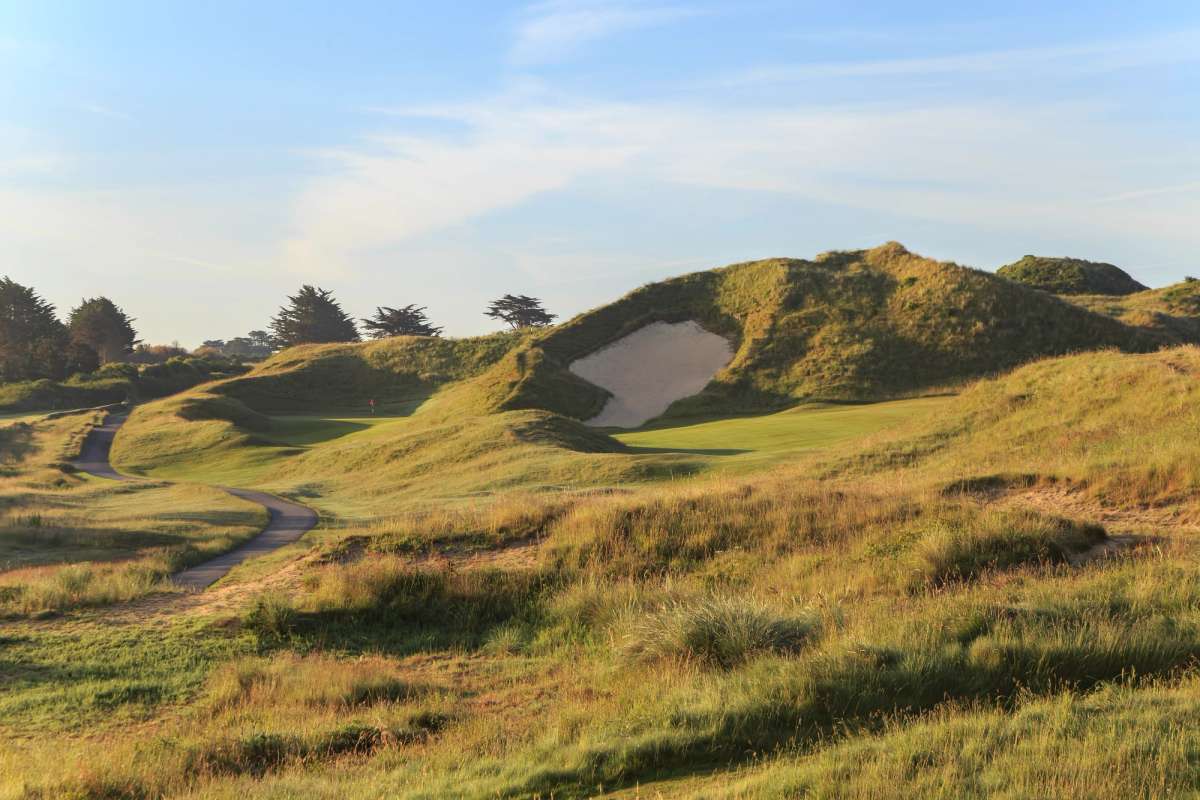
St Enodoc represents James Braid's most individual design – a spectacular links course where the famous Himalaya bunker and dramatic dunes beside the Camel Estuary create golf theatre that lingers long after the final putt drops.

Perranporth offers perhaps the purest natural links test in southwest England, where Braid's 1927 layout remains virtually unchanged, running through magnificent duneland with panoramic Atlantic views.
Stay at The Headland Hotel, a five-star clifftop retreat overlooking Fistral Beach that positions golfers perfectly between both courses. One or two nights provides ample time for two rounds of championship links golf, exceptional seafood dining in nearby Padstow, and genuine Cornish hospitality.
This is links golf without complicated itineraries – just authentic coastal experiences and two courses that deserve every golfer's attention.
This focused golf break delivers maximum impact with minimum complexity. Two James Braid-designed championship links courses, one premium coastal hotel, and 36 holes of authentic seaside golf that compares favourably with Scotland's finest – all achievable in a single overnight or relaxed two-night stay.
Why this works brilliantly:
Stay at The Headland Hotel overlooking Fistral Beach, where clifftop luxury meets practical golf access. The five-star property combines award-winning spa facilities, multiple dining options, and ocean views with simple drives to both featured courses. This isn't a golf resort with manufactured experiences – it's authentic Cornish hospitality providing the perfect base for serious links golf.

The Church Course represents James Braid's most individual and memorable design, occupying magnificent duneland beside the Camel Estuary near Rock. St Enodoc delivers an experience that feels utterly unique – part links, part downland, with elevation changes that create strategic complexity and visual drama on almost every hole.

The legendary par-four 6th hole confronts golfers with the Himalaya bunker, a vast sand chasm that dominates the fairway and demands either tactical positioning or outright bravery from the tee. The 10th plays alongside the ancient St Enodoc Church where Poet Laureate John Betjeman lies buried, the churchyard adding unexpected historical resonance to the round. Few courses worldwide pack such variety and character into a par-69 layout stretching just 6,010m (6,572 yards).
Advance booking proves essential during April through October, with the club maintaining immaculate conditions year-round. The 30-minute drive from The Headland Hotel travels through beautiful Cornish countryside via the A39 to Rock.
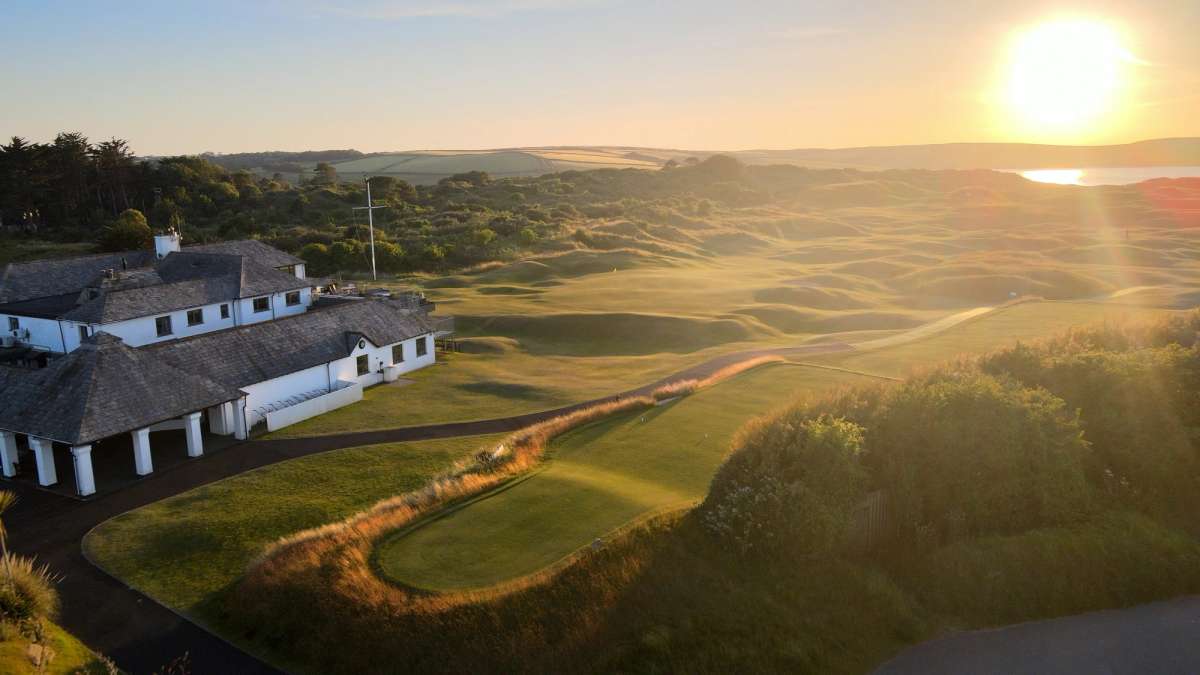
Perranporth might be Britain's most underestimated championship links. James Braid's 1927 design runs through spectacular natural duneland high above Perran Bay, where the routing takes brilliant advantage of tumbling terrain to create a par-72 examination that rewards thoughtful play over brute force. The course remains virtually unchanged since opening, a testament to Braid's instinctive understanding of links golf fundamentals.]

Blind shots feature prominently – the course demands local knowledge or careful study of marker posts – but the strategic interest compensates for occasional uncertainty. The 5th and 14th tees command panoramic views across three miles of golden sand and aquamarine Atlantic, moments to pause and appreciate Cornwall's natural splendour. Fast, true greens provide consistent putting surfaces ranked amongst the southwest's finest, whilst the natural contours create challenge without artificial difficulty.
The club offers self-catering accommodation in caravans and lodges set peacefully within the course, though most visitors prefer the luxury and facilities at The Headland Hotel just 20 minutes away via coastal roads through Newquay.
Below is our quick trip guide. For more help in planning your Cornwall golf trip, visit Golf South West.
Day 1 – Arrival and Perranporth Arrive Newquay mid-morning (by car, train, or Newquay Airport flight). Check bags at The Headland Hotel, then drive 20 minutes south to Perranporth for an early afternoon tee time. The natural links demand concentration but reward strategic play with spectacular coastal views. Post-round, return to The Headland for check-in, spa relaxation, or Fistral Beach walk. Dinner at The Headland's RenMor restaurant for fine dining with ocean views, or The Deck for Mediterranean-style poolside cuisine.

Day 2 – St Enodoc and Departure Early breakfast at The Headland, then a 30-minute drive to St Enodoc for your morning tee time. Experience Braid's dramatic dunes, the famous Himalaya bunker, and the historic churchyard setting. Post-round lunch at St Enodoc's clubhouse. This compact itinerary delivers two championship links courses and luxury accommodation with minimal travel time.
Day 1 – Arrival and Settle In Arrive at The Headland Hotel by mid-afternoon. Enjoy welcome refreshments on the terrace overlooking Fistral Beach, then explore Newquay town centre or walk the coastal path to Towan Beach. Dinner at The Headland's RenMor restaurant for fine dining with ocean views, or The Deck for more casual Mediterranean-style cuisine.
Day 2 – St Enodoc Morning tee time at St Enodoc. Play the spectacular Church Course. Post-round lunch at St Enodoc clubhouse, then afternoon return to The Headland for spa treatments, pool relaxation, or coastal walks from the hotel. Evening dinner at The Headland – choose between RenMor's fine dining or The Ugly Butterfly’s with beachside views.
Day 3 – Perranporth and Departure Leisurely breakfast at The Headland, then 20-minute drive to Perranporth for a mid-morning tee time. Experience Braid's pure natural links with its blind shots, dramatic dunes, and magnificent bay views. Post-round lunch at Perranporth's clubhouse, enjoying course views, then afternoon departure.

Seasonal Timing:
May through September offers the warmest conditions and longest daylight, though July-August brings peak crowds.
April-May and September-October provide the sweet spot – excellent playing conditions, quieter courses, and competitive pricing.
Winter golf (November-March) remains perfectly viable given Cornwall's mild climate and excellent course drainage, with far fewer visitors and potential accommodation discounts.
Alternative Routing: Some golfers prefer playing St Enodoc first (considered the premier course), then Perranporth. Others enjoy building toward St Enodoc as the climax. Both sequences work perfectly – choose based on tee time availability and personal preference.
Getting There: Newquay Airport (NQY) handles direct flights from numerous UK cities plus limited European connections, positioned 15 minutes from The Headland Hotel. Alternatively, fly to Exeter (EXT, 90 minutes) or Bristol (BRS, 2.5 hours) for wider connectivity.
Train service reaches Newquay from London Paddington (approximately 5 hours) via connections at Par or Plymouth, offering a scenic journey through Devon and Cornwall.
Transportation: A rental car is essential for accessing multiple courses efficiently. Book through major providers at airports or Newquay station. Roads prove narrow and winding in places – allow extra journey time, especially during summer. The A30 dual carriageway provides main arterial access across Cornwall, with smaller A-roads and B-roads connecting coastal golf venues. Expect 20-35 minute drives between featured courses.
Weather and Packing: Cornwall enjoys Britain's mildest climate, with winter temperatures rarely dropping below 4°C (39°F) and summer averaging 19°C (66°F). The Gulf Stream influence creates subtropical conditions – seven months annually exceed 10°C (50°F) average. However, Atlantic weather changes rapidly.
Pack layers including a waterproof jacket and trousers, a warm mid-layer, and cap/hat for wind protection. Spring and autumn bring unpredictable conditions – prepare for four seasons in one day. Summer offers the most reliable warmth but occasionally disappoints with prolonged cool spells.
Practical Details: Expect 4-hour rounds on busy days, 3.5 hours at quieter times.
The Headland Hotel provides the ideal base for this focused Cornwall golf escape. This five-star clifftop property overlooks Fistral Beach and Britain's surfing capital, combining luxury accommodation with perfect geographic positioning between St Enodoc (30 minutes north) and Perranporth (20 minutes south).
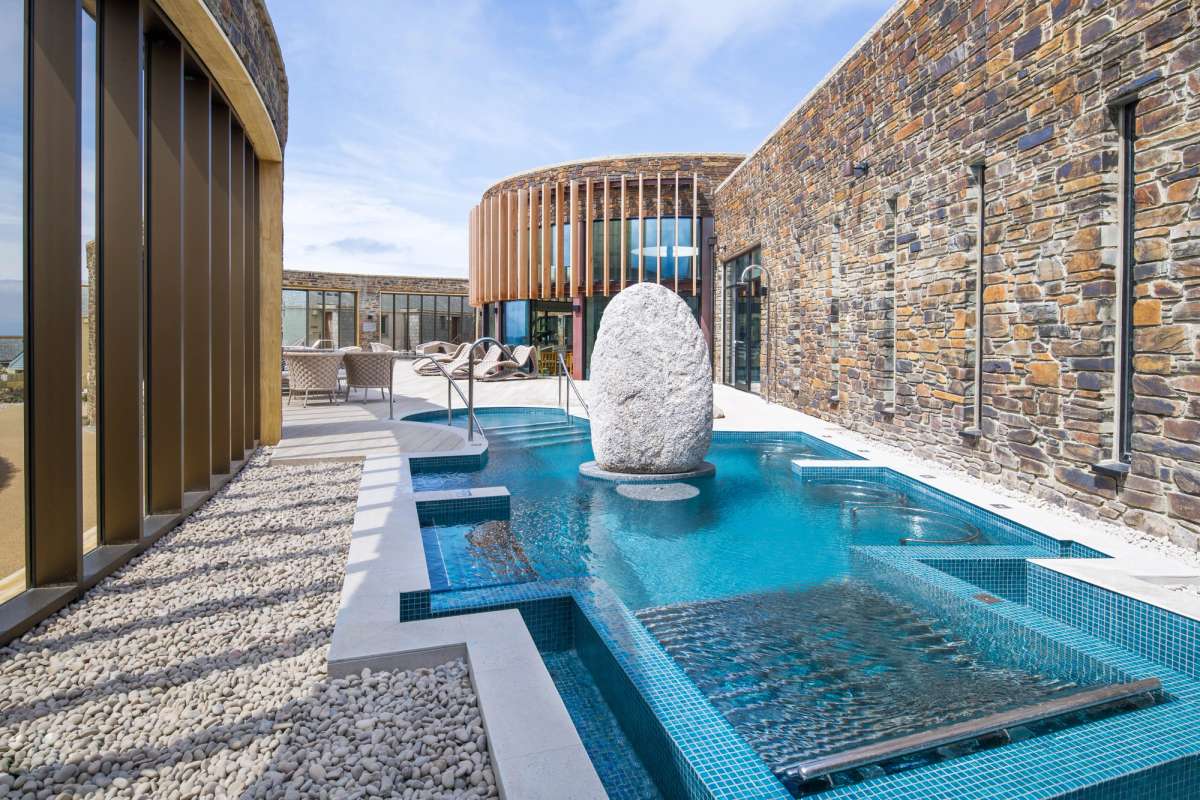
The hotel has seen significant recent investment, earning its five-star rating through comprehensive facilities and genuine attention to detail. The award-winning Headland Spa features treatment rooms, thermal experiences, and indoor/outdoor pools. The new AquaClub adds six additional swimming pools with Mediterranean-inspired poolside dining at The Deck.

Multiple dining options range from fine dining at RenMor to casual beachside fare at The Ugly Butterfly, all showcasing Cornwall's exceptional local produce and seafood.
The Headland excels for this type of focused golf trip because it eliminates logistical complications. Golfers can enjoy exceptional facilities, multiple dining options, and genuine five-star comfort without changing accommodations.
The spa proves particularly valuable after two rounds of links golf, whilst the various restaurants and bars provide relaxing evening environments.
Breakfast is included in room rates, with options from full English to lighter continental selections.
The Headland Hotel provides comprehensive dining options that eliminate the need to venture elsewhere during your golf break. Multiple restaurants and bars cater to different moods and occasions, all showcasing Cornwall's exceptional local produce and fresh seafood.
RenMor Restaurant delivers fine dining with locally-sourced ingredients and dramatic ocean views. The restaurant focuses on contemporary British cuisine with a strong emphasis on Cornish seafood, premium meats, and seasonal vegetables. Advance reservations recommended, particularly for weekend dining. Smart-casual dress code applies.
The Deck offers relaxed Mediterranean-inspired poolside dining at the AquaClub, perfect for post-round meals in casual atmosphere. The menu features lighter dishes, fresh salads, wood-fired pizzas, and grilled seafood alongside excellent cocktails and local wines. Open for lunch and dinner during warmer months. No reservations needed; walk-ins welcome.
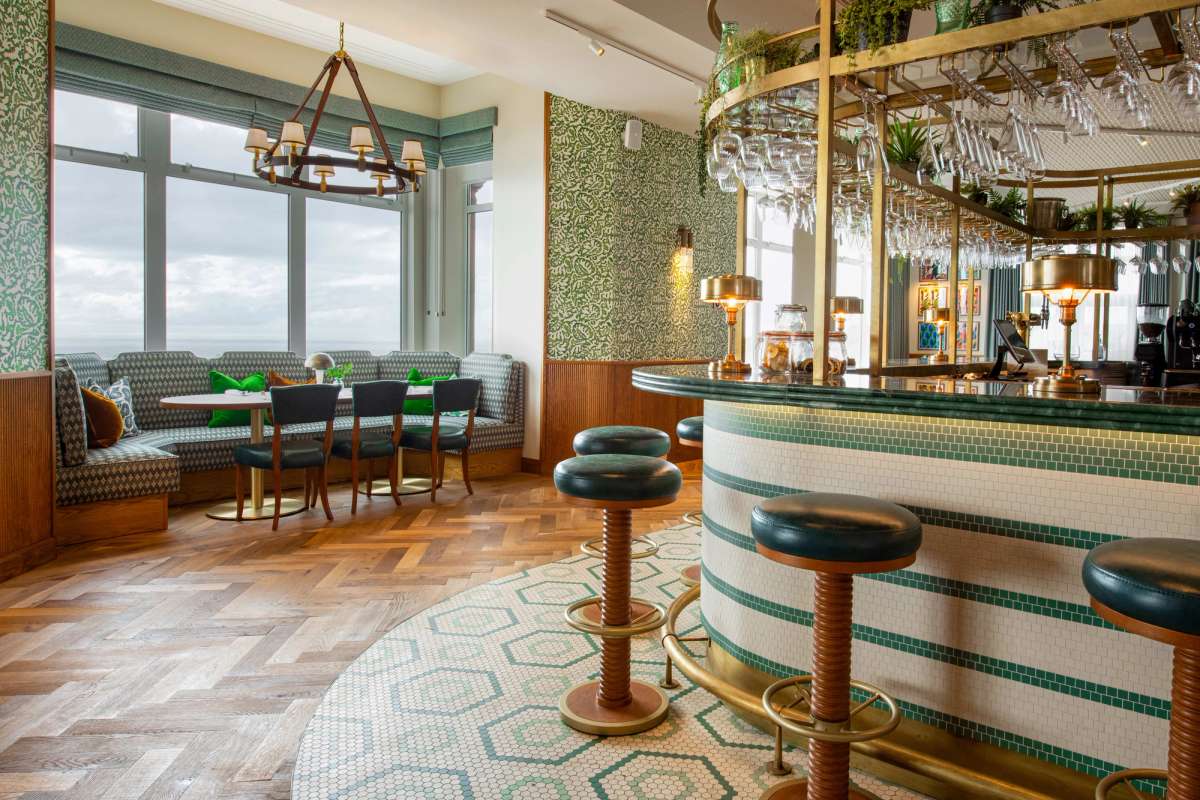
The Ugly Butterfly provides all-day dining with spectacular beachside views overlooking Fistral. The menu balances classic British dishes with international influences, offering everything from substantial breakfasts through afternoon teas to evening meals. Particularly popular for Sunday roasts and casual dinners. Dog-friendly outdoor seating available.
Bars and Lounges throughout the hotel offer comfortable spaces for pre-dinner drinks, afternoon tea, or evening relaxation. The main bar features an excellent cocktail menu, a comprehensive wine list, and local Cornish ales. Light snacks and bar meals are available throughout the day.
Breakfast included with room rates offers an extensive buffet selection plus cooked-to-order options. Full English breakfast, lighter continental selections, fresh pastries, cereals, fruits, and quality coffee ensure proper fuelling before morning tee times.
The convenience of multiple on-site dining options means golfers can focus entirely on golf and relaxation without coordinating restaurant reservations or additional travel. After two rounds of challenging links golf, simply retire to the hotel for spa treatments, pool relaxation, and excellent meals without leaving the property.
Advance Planning: St Enodoc Church Course requires booking 2-4 weeks ahead during peak season (May-September), longer for weekends.
Perranporth typically needs 1-2 weeks' advance booking during peak times. Spring and autumn shoulder seasons offer more availability, with 1-2 weeks generally sufficient.
Winter provides substantial flexibility, often accepting same-week bookings.
Seasonal Patterns: July-August represents peak demand coinciding with school holidays – expect premium pricing and limited availability without early booking.
May-June and September-October deliver the sweet spot of excellent conditions, reasonable pricing, and easier access.
November-March offers the lowest green fees and guaranteed availability, with mild conditions maintaining playability.
Direct Booking: Both clubs accept online bookings through their websites.
Strategic Tips: Book early morning tee times during summer for faster play and often better conditions before afternoon winds strengthen. Weekday golf generally costs less than weekends at both venues.
Weather Contingency: Spring and autumn bring the greatest weather unpredictability. Both courses handle wind and light rain well – only heavy sustained rain stops play. Links courses with excellent drainage rarely close due to weather.
The Headland Hotel provides comprehensive facilities, ensuring non-golfing time remains both engaging and restorative. The award-winning Headland Spa offers an extensive treatment menu including massages, facials, body treatments, and wellness therapies. Thermal experiences include steam rooms, saunas, and relaxation areas. The AquaClub features six swimming pools, including indoor heated pools, an outdoor infinity pool, and hydrotherapy options.
Fistral Beach sits immediately below the hotel, offering Britain's premier surfing location with multiple surf schools providing lessons and equipment hire. The South West Coast Path National Trail passes directly by the hotel, enabling spectacular coastal walks in both directions without requiring transport. Newquay town centre lies 10 10-minute' walk, featuring shops, cafés, and local attractions.
The hotel's fitness facilities include a fully-equipped gymnasium, exercise classes, and personal training options. For families, the location provides easy beach access and various water sports opportunities. The multiple pools and family-friendly restaurant options ensure children remain entertained whilst adults focus on golf and relaxation.
This self-contained approach means golfers can structure their break entirely around the hotel's facilities and the two featured golf courses, without coordinating external activities or additional travel. Everything needed for a complete golf escape exists within the property or immediate surroundings.
Common Visitor Mistakes: Underestimating journey times on narrow Cornish roads – add 25% to GPS estimates, especially in summer. Forgetting waterproofs even during summer – Atlantic weather changes rapidly. Underestimating Perranporth's blind shots – first-time players should carefully study marker posts and course guides.
Strategic Planning: Allow 4-4.5 hours for rounds at both courses. St Enodoc's Church Course presents a greater challenge for higher handicappers. Perranporth's natural terrain creates physical challenge with significant elevation changes. Both courses reward multiple plays as local knowledge significantly impacts scoring.
Weather Wisdom: May and September often deliver Cornwall's finest weather – settled conditions without peak summer crowds. June can surprise with warmth and light winds. July-August occasionally disappoint with cooler temperatures. Always pack layers and waterproofs regardless of the forecast. Both courses remain playable in conditions that would close inland courses, thanks to excellent drainage.
This focused Cornwall golf break strips away unnecessary complexity to deliver what serious golfers actually want – two championship James Braid links courses, luxury coastal accommodation, and authentic experiences without manufactured golf resort atmospherics.
St Enodoc's dramatic dunes and the Himalaya bunker create unforgettable golf theatre. Perranporth provides the purest natural links test in southwest England. Together, they showcase why Cornwall merits attention alongside Scotland and Ireland for authentic seaside golf.
The Headland Hotel provides five-star comfort perfectly positioned between both courses, with comprehensive spa facilities, multiple dining options, and ocean views, creating a complete golf break experience. This isn't complicated multi-course touring requiring detailed logistics – it's 36 holes of exceptional links golf achievable in one or two nights, with total costs comparing favourably against Scotland's premium destinations whilst offering distinctive Cornish character.
For travelling golfers seeking genuine links experiences without the journey north, Cornwall delivers compelling value. Year-round playability, Britain's mildest climate, and courses maintained to championship standards create a destination that works across all seasons. The compact geography means more time playing golf and less time in rental cars, whilst The Headland's self-contained facilities eliminate the need for complex dinner reservations or external coordination.
Pack your waterproofs alongside the sunscreen, embrace whatever Atlantic weather arrives, and discover why James Braid's two Cornish masterpieces deserve their reputations. This is links golf that reminds you why the game remains so compelling when played on wild coastal ground where strategy trumps power and every round tells a different story. St Enodoc and Perranporth await – pure championship golf without complications.

Top 10 Golf Courses in Cornwall 2015 Cornwall Best in County rankings updated With a population estimated at around the half a million mark, Cornwall is one of the least populated counties in England. Along with Brittany, Isle of Man, Scotland, Wales and Ireland, the region is recognised as a Celtic Nation, with a unique cultural identity reflecting its historical background. Cornwall comprises the westernmost portion of England’s southwest peninsula and it’s a popular holiday destination, despite its relative remoteness from the rest of the country. Over five million tourists visit Cornwall every year, accounting for around a quarter of the area’s economic income. Sailing, surfing and other water sports engage many of the visitors to the region but there’s also some great golf to be found here, especially along the spectacular seaside. With more than thirty clubs spread across the county, you’re never more than a short drive away from a course, wherever you might find yourself. We maintain a Top 10 for Cornwall and, since we introduced our regional rankings in 2012, the top four positions in our chart have remained the same. That means the St Enodoc (Church) 18-hole layout at St Enodoc Golf Club retains the number 1 spot. The links currently enjoys a 5-ball average review score, which is quite remarkable for a course that has attracted more than forty posts. The Trevose (Championship) links occupies the number 2 slot in our listings and this old Harry Colt track was recently described by Richard Smith, one of our regular American contributors, as “a nice breath of fresh air that gives you some room off the tee and numerous openings in front of the greens to play bump and run shots”. The St Mellion (Nicklaus) 18-hole layout is at number 3 and this Jack Nicklaus course – the Golden Bear’s first European design when it opened in 1988 – is a tough test, no matter which tees are used. The St Mellion International resort underwent a multi-million pound redevelopment in 2008 and this resulted in the unveiling of the Kernow course, a shorter and more forgiving track that complements Jack’s layout perfectly. At number 4, Perranporth is a James Braid creation and it’s reckoned to be the only links layout that the master architect ever designed from scratch. Situated on high ground, with wonderful views across Perran Bay, the course has few bunkers but it requires a number of blind shots to be played off the tee or approaching the green. The holes were re-sequenced in the 1980s but Braid’s work remains largely in place. Two courses make upward moves in our revised Cornwall chart: Rising one spot to number 5, we have West Cornwall, where Top 100 Editor-in-Chief Keith Baxter recently played, describing it as “near to the top of my ‘quirky course’ list, which is the essence of seaside golf.” Also climbing two places to number seven, Newquay is a Harry Colt design which dates back to 1908, when the original course was expanded following an acquisition of land from the Treffy Estate. There’s only one new entry in the new listings, with China Fleet making way for Lanhydrock Hotel and Golf Club’s course at number 10. Situated close to the town of Bodmin, the modern parkland facility at Lanhydrock is owned and operated by the Bond family, which created the Nicklaus course at St Mellion. We’re grateful to all the clubs and professional golfers who assisted with our re-ranking process for this county. To view details of all the courses in our Cornwall Top 10 rankings click the link. If you have extensive experience of playing across the south west region of England and would like to contribute to our next re-ranking exercise then please email Editor-in-Chief Keith Baxter at keith@top100golfcourses.com. Jim McCann Editor Top 100 Golf Courses

The South West of England occupies a unique position in the nation's golfing landscape. Stretching from the Atlantic-battered tip of Cornwall through Devon's rolling moorlands, Dorset's heathland ridges, the Somerset Levels, the Cotswold escarpment, and the downland of Wiltshire, no other English region offers such dramatic topographical variety across its golf courses. Across six counties and more than 220 clubs, the South West has long been recognised as the second strongest golfing region in England. The latest rankings reflect a broader philosophical shift taking hold across Top 100 Golf Courses' assessments, placing architectural integrity at the heart of every evaluation. Best Golf Courses in South West England The Unchanged Elite St Enodoc Golf Club (Church), Cornwall, holds firm at the summit of the regional rankings, a position it has occupied without interruption since the inaugural South West Top 20 in 2017. Designed by James Braid in 1907, the Church course is widely regarded as the finest links in England outside the Open Championship rota. Saunton Golf Club (East) in Devon maintains second place, its ranking as rock-solid as the Braunton Burrows dune system that shields it from the Atlantic. Burnham & Berrow Golf Club (Championship) holds third, Somerset's great links on the Bristol Channel coast. Best Golf Courses in the South West by County Cornwall supplies the region's undisputed headline act in St Enodoc, alongside two more Top 15 entries in Perranporth and Trevose (Championship). Cornwall and its three Top 15 finishers confirm it as the go-to destination for anyone seeking pure, seaside links golf in the South West. Devon places five courses in the regional Top 15, the most of any county, with Saunton's twin links at second and seventh representing the finest 36 consecutive links holes in England. Royal North Devon at Westward Ho! brings historical gravitas, while East Devon and Yelverton represent the county's inland quality. Dorset contributes four Top 15 entries, clustered in and around Poole. Parkstone, Broadstone, and Ferndown (Old) form one of the finest heathland and coastal trios in English golf, all within a few miles of one another. Gloucestershire, Somerset, and Wiltshire collectively account for one Top 15 entry — Cleeve Hill in the thirteenth position. Gloucestershire's listings are headlined by the Minchinhampton complex, Somerset offers a cluster of quality parkland and clifftop courses anchored by Burnham & Berrow, and Wiltshire's ranked courses include the fine PGA venue at Bowood and the superb downland layout at Tidworth Garrison. What the Rankings Tell Us The Enduring Primacy of Links Golf Nine of the 15 courses in the regional standings are either true links or coastal heathland layouts, a proportion that speaks to the South West's Atlantic-facing geography. St Enodoc, both Saunton courses, Royal North Devon, Perranporth, Trevose, Burnham & Berrow, and Parkstone are all defined by their coastal character. Dorset's Heathland Cluster The Poole basin, taking in Parkstone, Broadstone, and Ferndown within a five-mile radius, represents one of the most concentrated pockets of heathland quality in England. Willie Park Junior laid out Parkstone in 1909, later redesigned by James Braid. Harry Colt reshaped Broadstone from Tom Dunn's original 1898 layout. Harold Hilton, one of England's finest amateur champions, designed Ferndown's Old course just before the First World War. Three Golden Age architects, three outstanding courses, and a shared landscape of pine, heather, and sandy loam. Minchinhampton and the Gloucestershire Transformation The biggest story in the inland counties is the rise of Minchinhampton in Gloucestershire. The club operates three 18-hole courses across two sites — Cherington, Old, and Avening — and all three appear in the current county Top 5. The Minchinhampton (Old) course makes the most notable move in the Gloucestershire standings, climbing several places to third, recognition of a layout that has been quietly improving in esteem. Cleeve Hill's presence is also significant: the common land course near Cheltenham, with its sweeping Malvern Hills views, has long been underappreciated. The Architectural Depth of the South West Beyond the headline names, the South West's collective 87-course ranking reveals genuine depth. In Devon, courses like Teignmouth and Bovey Castle sit firmly inside the county Top 10. In Wiltshire, the double-figure depth of the county chart includes Manor House Golf Club and Tidworth Garrison, two of the more characterful inland layouts in southern England. Planning Your South West England Golf Trip The South West as a region divides naturally into distinct golfing bases, each with a different character. The Cornwall Circuit — Basing yourself in north Cornwall around Rock or Padstow puts you within easy reach of St Enodoc, Trevose, and Perranporth, three courses with entirely distinct personalities that together represent some of the finest links golf in England. Bude & North Cornwall and West Cornwall add further options for a week-long visit, and the peninsula's coastal scenery between rounds is among the most dramatic in the British Isles. North Devon and Exmoor — Saunton's twin links are the centrepiece of any North Devon golf trip. Adding Royal North Devon at Westward Ho! makes a natural and historically rich trilogy. Yelverton to the south gives access to Dartmoor for a change of scene, and East Devon near Budleigh Salterton, a Herbert Fowler and Harry Colt collaboration 400 feet above Lyme Bay, rewards those willing to venture off the well-trodden North Devon circuit. The Dorset Heathland Triangle — Parkstone, Broadstone, and Ferndown can all be played within a single day's drive of central Dorset, making this trio the natural hub of any Dorset golf stay. Isle of Purbeck and Remedy Oak extend the itinerary further east and west, respectively, and the combination of heathland golf with the Jurassic Coast as backdrop is genuinely unique in English golf. The Cotswolds and Wiltshire — Cleeve Hill is the gateway to Gloucestershire's inland riches, and the Minchinhampton complex offers outstanding value for a single-destination stay. In Wiltshire, Bowood and Tidworth Garrison are logical pairings for anyone visiting the county from the Cotswolds or the New Forest. For the complete South West England regional rankings across all six counties, visit the Top 100 Golf Courses South West England page.

Welcome to the latest of our regional updates for England as we now move into the more southern parts of the country. Following our recent revision of three counties in the northeast, we now focus on six counties in the southwest, namely Cornwall, Devon, Dorset, Gloucestershire, Somerset and Wiltshire. Over five million people live here in an area extending to over nine thousand square miles, with easily the longest coastline of any English region. More than two hundred clubs are registered with the various local golfing authorities and we feature courses from nearly half those clubs across the six county listings. Five counties retain the same number one but there’s a new top dog to contend with in Gloucestershire. We’ve also added twenty-five new tracks which now means we profile almost a hundred in this region. If there’s somewhere we’ve overlooked then please let us know – we don’t do “ultimate” or “definitive” lists so please get in touch and we’ll check out any recommendations. Cornwall The Church course at St Enodoc Golf Club (pictured above) entered our World Top 100 chart at #87 in 2018 and it’s since risen to #74 in that esteemed global listing – with that in mind, it’ll be no surprise to learn that it’s still our #1 for Cornwall. A recent reviewer summed up the golfing charms of St Enodoc pretty well when they wrote: “an exceptional course, matched by a lovely clubhouse with great service, in a stunning part of the country.” Trevose Only two courses make upward moves in the revised standings and the foremost of these is the Championship course at Trevose Golf Club, advancing one place to the runner-up spot. Tom Mackenzie has completed a renovation project at the club, rejuvenating most of the holes on the layout, and such is the quality of the work undertaken, a reviewer has posted that the rankings of St Enodoc and Trevose should, in their opinion, be switched. The Harry Colt-designed 18-hole layout at Newquay is the other Cornwall climber, and it also rises by one place to #6. St Austell The highest of our six new entries for Cornwall is the course at St Austell Golf Club, arriving at #10. The club was established in 1911 with an 18-hole layout in play three years later. James Braid visited in November 1926 to advise on course improvements but it took more than a decade before his plans were implemented, with the remodelled layout opening on 25th September 1937. The other new entries for this county are St Mellion (Kernow) at #12, Truro at #13, Looe at #14, Lanhydrock at #15 and Carylon Bay at #16. Click the following link to see the newly updated county rankings for Cornwall. Devon The East course at Saunton Golf Club (pictured above) remains our #1 for Devon and it also ranks very highly in both our English national chart (at #24) and our Britain & Ireland chart (at #53). A reviewer from a couple of months ago was impressed, writing: “a spectacular piece of land greets you at Saunton… but don’t let the terrain be what you judge the East on as the layout of the course is spectacular in itself, with hole after hole of golfing splendour!” Eight courses advance in our new table, with all of them making just a one-place improvement. The highest of these climbers is the West course at Saunton (at #2), swapping places with the old links at Royal North Devon Golf Club. Honiton There are two newcomers to the Devon chart and the leading course is the 18-hole layout at Honiton Golf Club, making its first appearance at #19. The course dates back to when the club was founded in 1896, starting out with nine holes but quickly becoming an 18-hole track, and it occupies a compact property of around 90 acres, with glorious views across the Blackdown Hills. The other Devon new entry is Ilfracombe at #22. Click the following link to see the newly updated county rankings for Devon. Dorset Retaining its status as number one course in Dorset, the short 18-hole heathland layout at Broadstone Golf Club (pictured above) is an old Tom Dunn design from 1898 that Harry Colt remodelled during and just after the Great War. Like Saunton (East) the course is well regarded in both our English (#36) and Britan & Ireland (87) Top 100 charts. Unfortunately, it’s a little too short to host most elite amateur or professional events but it has staged other important tournaments in the past, including the English Women’s Amateur (three times) and the Women’s Amateur back in 1951. Knighton Heath Progressing two spots from #10 to #8, the course at Knighton Heath Golf Club was described in a post a few weeks ago as “great fun and well worth finding the time to play… it may be built in a compact area of just 90 acres but there is little feeling of holes being squeezed in… the clever bunkering is a feature and the mainly flat greens are a dream to putt on.” Came Down The first of five new entries for Dorset is the course at Came Down Golf Club at #10. Set out by Tom Dunn in 1896, when the club was called Dorchester Golf Club, the original 9-hole course was extended to eighteen holes by J.H. Taylor before Harry Colt was engaged to redesign the course in the late 1920s. The other four Dorset new entries are Lyme Regis (at #11), Rushmore (at #12), Meyrick Park (at #13) and Weymouth (at #14). Click the following link to see the newly updated county rankings for Dorset. Gloucestershire We have a new #1 for Gloucestershire and it’s the 18-hole Cherington course at Minchinhampton Golf Club (pictured above), where Fred Hawtree laid out eighteen holes in the mid-1970s then his son Martin added another eighteen in 1995. The Cherington and Avening courses utilize a combination of holes from father and son, with a composite course used in the past for Regional Open Qualifying. Cleeve Hill The biggest jump in this county re-ranking is made by the course at Cleeve Hill Golf Club (up three to #3) which Old Tom Morris laid out in 1891. Another Tom, architect Tom Doak, had this to say about the course a while back: “here is a chance to appreciate golf as you may never have understood it – an energizing walk over glorious open countryside, with some unique hazards to overcome along the way.” Lilley Brook The first of three new Gloucestershire entries in this updated county table is the course at Lilley Brook Golf Club, where Alister MacKenzie fashioned a new 18-hole course for the club shortly after it was established in 1921. For some reason, the layout was remodelled in 1964, so that only nine of the original holes from the Good Doctor are still in play today. The other two newcomers in this county are Cirencester (at #17) and Henbury (at #18). Click the following link to see the newly updated county rankings for Gloucestershire. Somerset The Championship course at Burnham & Berrow Golf Club (pictured above) is still our #1 in Somerset. Also ranked #26 in England and #62 in Britain & Ireland, this 18-hole track has been refined down the years by a number of eminent golf course architects, including former members Herbert Fowler and Hugh Alison. Currently, Tom Mackenzie is overseeing a long-term upgrade project on the course. Minehead & West Somerset The best upward move in this updated county chart is made by the 18-hole layout at Minehead & West Somerset Golf Club (up two to #8). The course was laid out as a 9-hole affair by Royal North Devon professional John Allan in 1882 before it was expanded to eighteen holes in 1901. Nowadays, it plays to just over 6,200 yards, with par set at 72. Oake Manor The first of thee new Somerset chart entries, the course at Oake Manor Golf Club enters at #10, slightly ahead of Mendip Spring (Brinsea) at #12, Burnham & Berrow (Channel) at #13 and Farrington (Duchy) at #14. An early 1990s Adrian Stiff design, Oake Manor features water hazards at half the holes on the scorecard. Click the following link to see the newly updated county rankings for Somerset. Wiltshire Retaining the Wiltshire #1 spot that it first captured in 2016, the course at Bowood Estate (pictured above) is an early 1990s Dave Thomas design that is now designated as the PGA Official Golf Course and Academy Course for the South West of England. It can be stretched to just over 7,300 yards from the back tees, where the old Standard Scratch Score is 76 (against a par of 72) so choose your tees very carefully if you decide to tee it up here. High Post The course at High Post Golf Club makes the greatest headway in the new Wiltshire standings, shooting four places up the chart to #5. Located on chalk downland, the layout is a J.H. Taylor and F.G. Hawtree production which celebrated a hundred years in operation last year. Many of the original design traits, like grassy hollows and subtly contoured greens, are still very much in evidence here. Ogbourne Downs The first of the Wiltshire new entries is the course at Ogbourne Downs Golf Club, arriving at #10. It’s another Taylor/Hawtree co-production that was built when the club moved to its current location in 1929. Initially founded as North Wilts in 1907, the club changed name to Swindon Golf Club before it finally became Ogbourne Downs in 1995. The other Wiltshire new entries are Upavon (at #12), West Wilts (at #13), Chippenham (at #14) and Marlborough (at #15). Click the following link to see the newly updated county rankings for Wiltshire. Jim McCann Editor Top 100 Golf Courses

