For much of golf’s history, the idea of a hole measuring 700 yards or more would have seemed excessive. Today, such distances are no longer quite so extraordinary.
The world’s longest holes are an eclectic group, spread across very different landscapes and created for very different reasons. Some belong to expansive resort courses, others to championship layouts, while a handful have become famous largely because of the sheer scale of the challenge they present.
From a former world-record holder in North Carolina to an extraordinary par 7 measuring over 1km in South Korea, these are the 10 longest golf holes in the world.
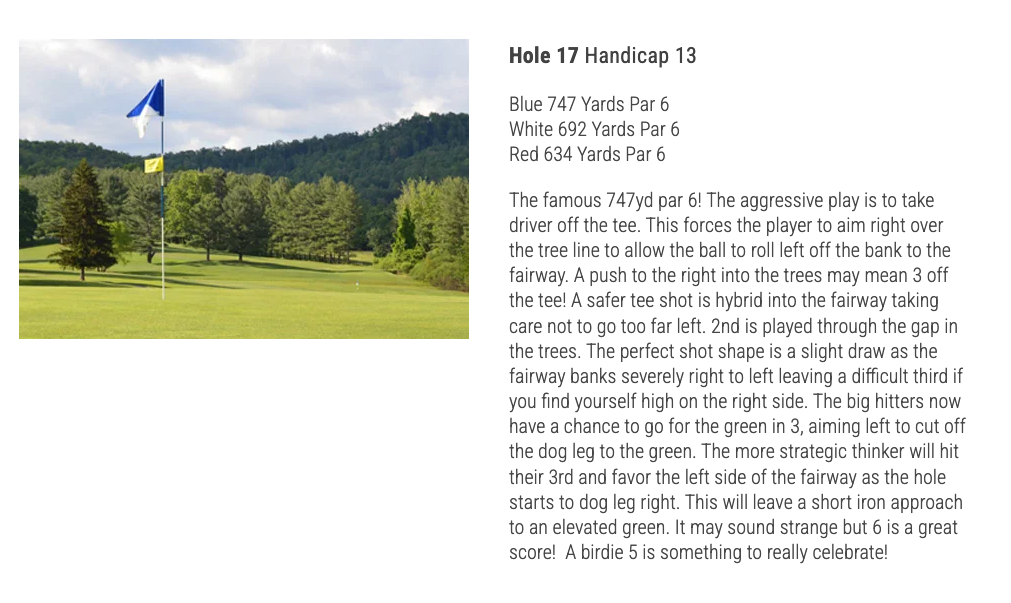
The 17th at Black Mountain is one of the survivors from an era when exceptionally long golf holes were still something of a novelty. At 747 yards, the par six was once recognised as the longest golf hole in the world - a distinction that helped put this small North Carolina club on the golfing map.
The hole is part of Black Mountain's older nine-hole layout, which dates back to the 1960s, and its extraordinary length was a deliberate feature rather than an accident of modern championship-course design. From the back tees, the fairway climbs and falls through the foothills, with the green sitting far enough away that it disappears from view for much of the hole.
For a course that otherwise has a relatively modest footprint, the 17th is an impressive piece of real estate. Its 747 yards are now exceeded by several holes built in the decades since, but the hole retains its place in golf's long-hole folklore.
It is also a reminder of how quickly perceptions of distance have changed. What was once a world record is now the shortest hole in this particular top ten.
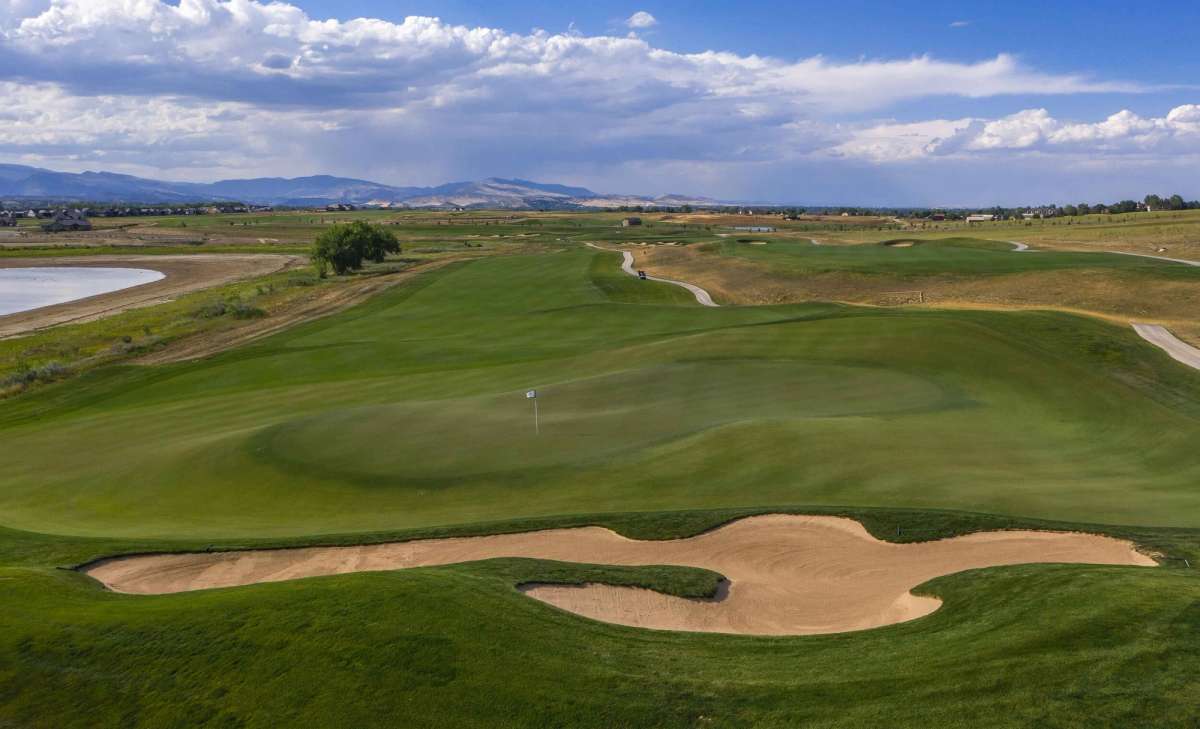
TPC Colorado opened in 2018 at Heron Lakes near Berthoud, with Arthur Schaupeter’s design set against open Colorado terrain and views towards the Front Range. The 7,991-yard course was built with tournament golf in mind and has since become a regular Korn Ferry Tour venue.
The 13th, named “Longer Still”, is its defining hole. At 773 yards from the TOUR tees, it is the longest hole on a PGA TOUR course and the longest par five in PGA TOUR golf. Its principal feature is the enormous 108-yard Hell Bunker, which runs along the left side of the fairway and creates the key decision after the drive: challenge it to gain ground or lay back and accept a longer approach.
At altitude, the hole does not play quite as severely as the yardage suggests, but its scale remains remarkable. More importantly, the length is integrated into the design rather than simply added as a spectacle, giving No. 13 a strategic identity that has made it one of the most recognisable holes in modern American golf.
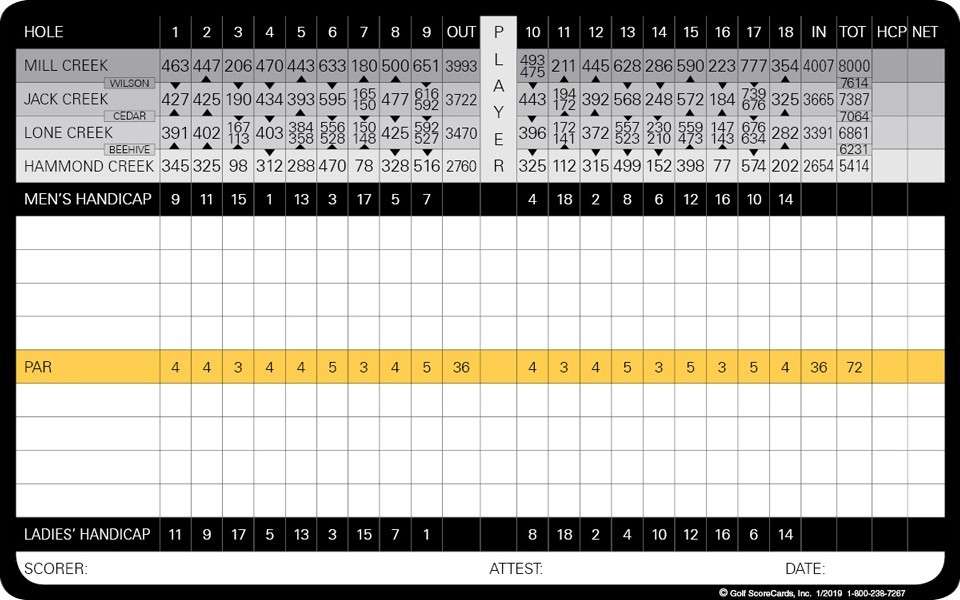
Set at 7,500 feet above Big Sky in the Rocky Mountains, The Reserve at Moonlight Basin is one of Jack Nicklaus’ most dramatic mountain courses. Built across the former Moonlight Basin ski area, the 8,000-yard layout moves through forest and open mountain terrain, with more than 1,000 feet of elevation change across the property.
The 17th is the signature expression of that setting. At 777 yards, it is already extraordinary on the card, but the hole plunges downhill towards the green, with the change in elevation and thin mountain air making the distance considerably less daunting than it first appears. A large fairway bunker sits around 370 yards from the back tee, beyond which the fairway reveals the full scale of the descent towards the green.
It is a fittingly theatrical hole for a course where elevation is central to the experience. The 17th was also one of the holes that came to wider attention when Moonlight Basin hosted The Match in 2021 – when Bryson DeChambeau and Aaron Rodgers defeated Phil Mickelson and Tom Brady – putting its spectacular setting and remarkable yardage on national television.
Opened in 2012, the Legend Course at Penati occupies a sandy, pine-covered site near Senica, with Nicklaus Design using the natural character of the property to create wide, undulating fairways and extensive waste areas. The course forms part of Slovakia’s largest golf resort and was the first Nicklaus Design course in the country.
The 15th is the course’s defining feature. It has 11 teeing positions, allowing it to be played at very different lengths, but from the back tees, it stretches to 783 yards and becomes a par 6. The fairway is split by a large waste bunker, with further bunkering framing the second landing area before the hole finally turns towards the green.
The hole gained international attention when the European Challenge Tour used the full 783-yard version during the Slovakia Challenge in 2015, 2016 and 2019. In regular play, however, it is generally shortened and played as a par 5 - a useful reminder that the extraordinary version seen on the professional circuit is only one interpretation of Central Europe’s longest hole.
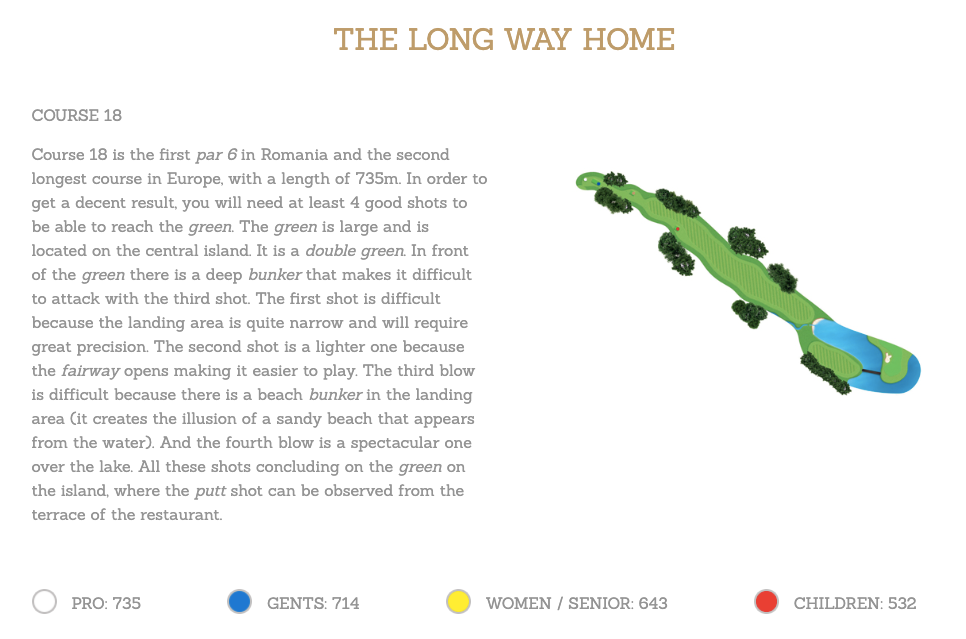
Theodora Golf Club sits outside Alba Iulia on the banks of the Mureș, occupying a remarkably flat 56-hectare site. Opened in 2018, the resort was created around an 18-hole championship course, with a large lake excavated in front of the clubhouse providing material to shape the otherwise level ground.
That lake is central to the character of the closing hole. The 18th stretches over 800 yards from the back tees, with the approach eventually leading to an island green shared with the 9th. The arrangement gives what might otherwise be a straightforwardly expansive hole a much more distinctive finish.
Theodora itself describes the 18th as the longest par 6 in Europe, and it has become the defining feature of a relatively young Romanian resort that has steadily established itself on the European golf map.
The Links at Kahite opened in 2002 as the third course in Tellico Village, occupying a natural setting between Tellico Lake and the foothills of the Great Smoky Mountains. The links-style layout has six sets of tees, stretches to 7,170 yards and is notable for its 93 bunkers and tall fescue framing some of the fairways.
The 9th is the course's defining hole: an 739-metre par 6 that runs in a notably direct line across the landscape. From the back tees it measures 808 yards, while the blue tees bring it down to 721, making the hole a very different proposition depending on where it is played from. The course's own guide describes it simply as a unique hole, with the fairway rewarding players who can keep successive shots in play.
Its position at the turn also gives Kahite an unusual rhythm. After eight holes that establish the character of the course, the 9th opens out into one of the most distinctive holes in Tennessee golf before the back nine heads back towards the mountains.

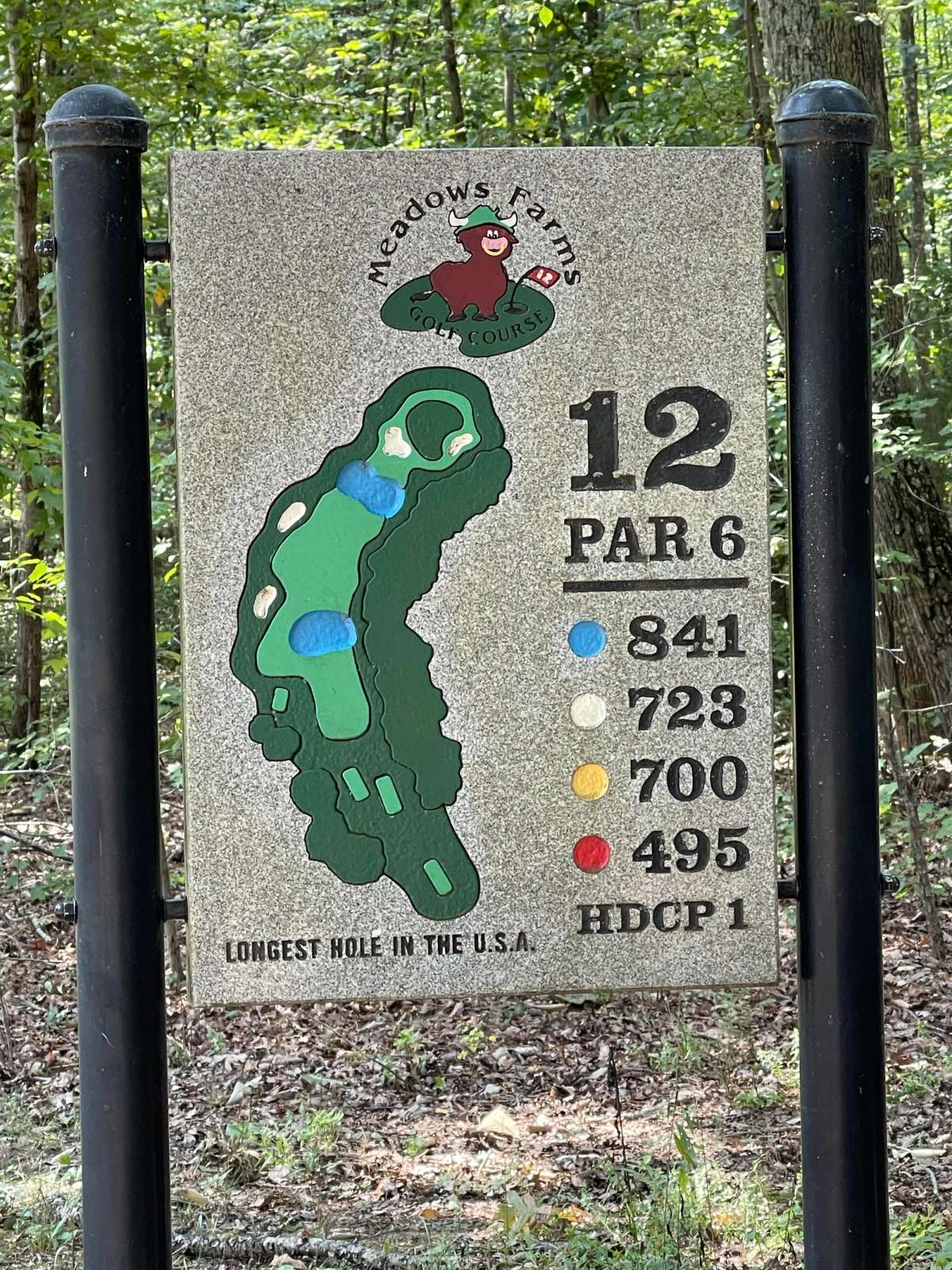
Meadows Farms is very much the product of its founder, Bill “Farmer” Meadows, who built the course on former farmland after taking up golf later in life. It opened in 1993 with an intentionally unconventional character: the 27-hole layout includes a baseball-themed hole, a waterfall green and an island green, alongside the hole that became its calling card.
The 12th stretches to 841 yards from the championship tees, running downhill before turning right, crossing two lakes and climbing towards a large elevated green. A three-leaf-clover-shaped bunker guards the approach. The sequence gives the hole considerably more shape and interest than its raw length might suggest.
For decades it was promoted as the longest golf hole in the United States, a distinction that helped make this eccentric Virginia course a destination in its own right. The current course still describes No. 12 as its signature hole and the longest in the country, as recognised by the Guinness Book of World Records.
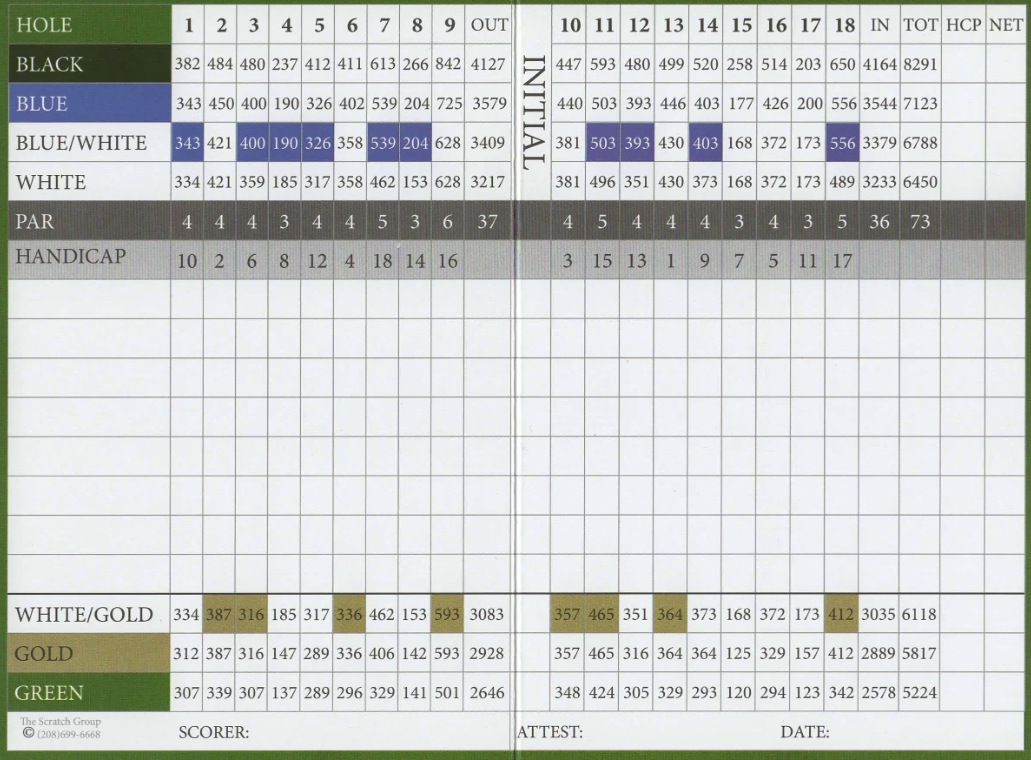
The Links Golf Club in Post Falls opened in 1999 on the broad, open Rathdrum Prairie, with owner and designer Emmett Burley shaping the course in the tradition of Scottish links golf. There are few trees or water hazards to interrupt the prairie landscape, leaving wind, wide fairways, deep bunkers and rough to define its character.
The 9th has been the course's signature hole from the beginning. It was originally measured at 738 yards from the black tees, but subsequent changes have transformed it into an 842-yard par 6, now the longest hole on the course and one of the longest in America.
That extra distance has only amplified the hole's original links character. With no trees or water to dictate the route, the scale of the prairie is laid bare, while the wind can have a considerable influence on successive shots. The green itself has two distinct levels, adding another layer to a hole that has evolved from an unusual feature into the defining landmark of The Links.
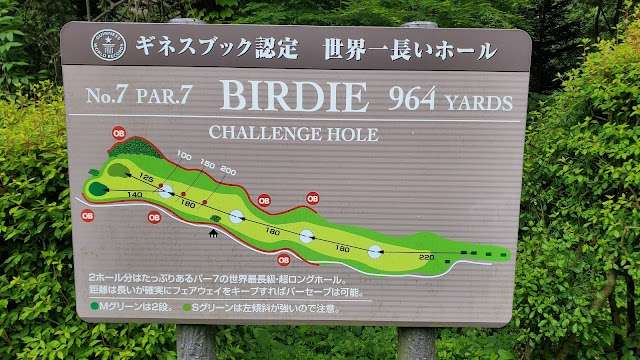
Satsuki Golf Club’s Sano Course opened in 1979 in the hills of Tochigi Prefecture, with broad fairways laid through a landscape of trees and gentle elevation changes. The 18-hole course measures more than 7,200 yards from the back tees, but it is the seventh hole on the outward nine that has made the club internationally known.
At 964 yards, the seventh was recognised by Guinness World Records as the world’s longest golf hole and remains the defining feature of the course. It is not simply a long, open stretch: the hole has trees crowding the tee shot, OB on both sides and a relatively narrow fairway, creating pressure from the outset.
There are two greens, with the left measuring the full 964 yards and the right 924. The club’s own playing strategy reflects the scale of the hole: rather than simply attacking distance on every shot, the objective is to keep successive balls in play and leave the final approach within comfortable range.
For many years, Satsuki’s seventh was the benchmark by which the world’s longest holes were measured. Gunsan Country Club has since surpassed it in sheer yardage, but the Japanese par-7 remains the more established name in the record books.
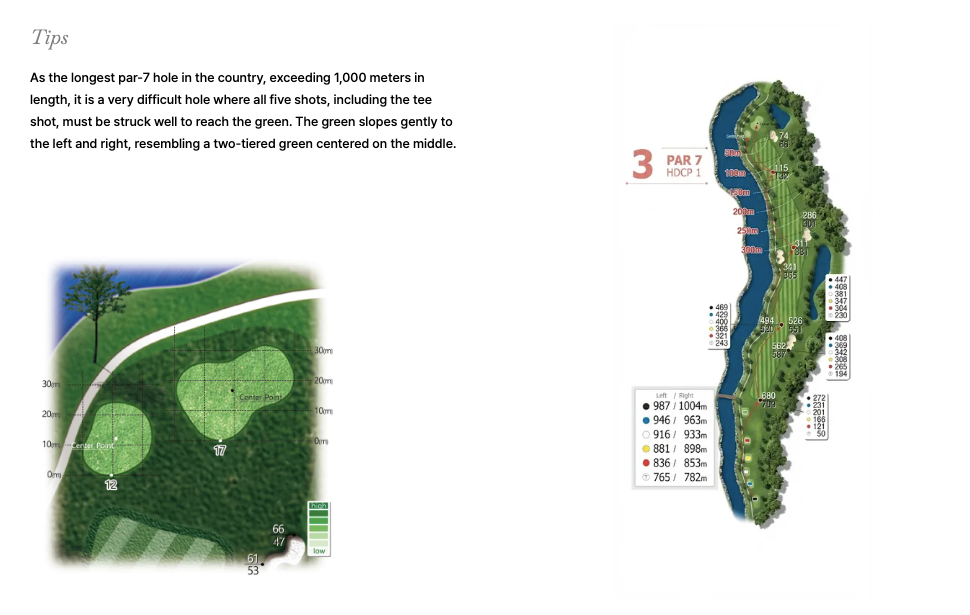
Gunsan Country Club is an extraordinary property in its own right. Built on a former salt field on Korea’s west coast, the sprawling complex now has 81 holes across more than 1,000 acres, with lakes accounting for roughly 380 acres of the site and 26 bridges linking the courses.
The third on the Jeongeup Course is the hole that gives Gunsan its international reputation. At 1,004 metres from the black tees, it is a par 7 and the longest hole in this ranking. The hole is also the No. 1 handicap on its nine, with water running along the left and bunkers placed to complicate the long sequence of shots required to reach the green.
Its scale is matched by an unusual sense of place. The hole emerged from the transformation of the old salt works into one of Asia’s largest golf complexes, and its local nickname, the “1004 Hole”, is a play on the 1,004-metre length. Gunsan has built much of its identity around these extreme holes, with a 661-metre par 6 elsewhere on the property, but the Jeongeup third remains the defining feature.
At 1,098 yards, it is comfortably longer than Satsuki’s 964-yard seventh and takes the top spot here by distance. Guinness World Records, however, has historically recognised Satsuki’s hole, so the distinction between the longest hole by yardage and the Guinness record is worth keeping in mind.
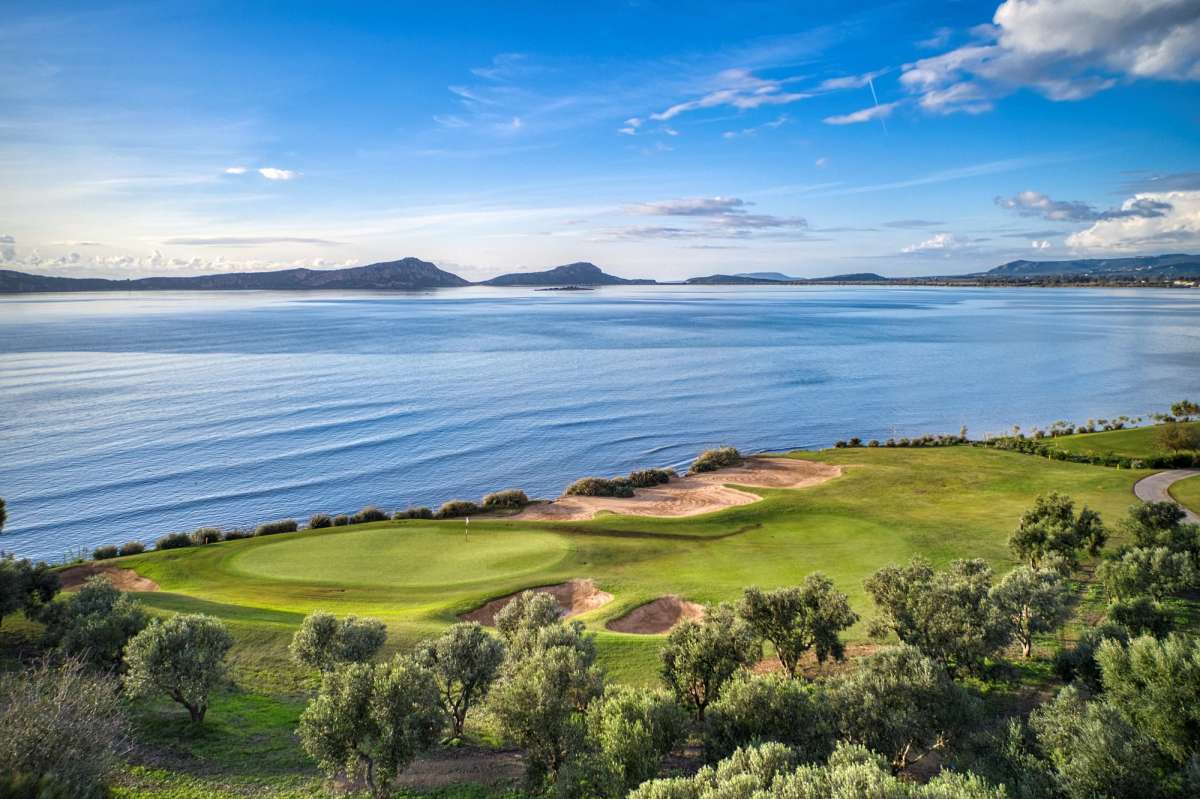
The best golf trips for couples aren’t necessarily the ones with the most famous courses. They’re the destinations where great golf is just one part of a holiday that both of you will genuinely enjoy. That might mean playing a championship course before spending the afternoon on the beach, exploring wine country after a morning round, or combining world-class golf with a spa, fine dining and a beautiful setting. The key is finding places where the golf adds to the experience rather than taking it over completely. Top100 has chosen 10 destinations that offer two excellent courses alongside plenty to do away from the fairways, from the beaches of Hawaii and Mauritius to the vineyards of Napa Valley and the restaurants and sunshine of the Mediterranean. These are the golf trips where you don’t have to compromise. Kiawah Island (South Carolina, USA) Two good courses: Kiawah Island Golf Resort (Ocean course) & Kiawah Island Golf Resort (Osprey Point course) Couples activities: Beach day on Kiawah & day/evening in Charleston Kiawah Island is an ideal destination for couples who want serious golf without sacrificing the wider holiday experience. The headline act is the legendary Ocean Course, Pete Dye’s spectacular seaside layout that hosted the infamous 1991 Ryder Cup, the 2012 PGA Championship and Phil Mickelson’s record-breaking victory at the 2021 PGA Championship. With panoramic Atlantic views and more seaside holes than almost any other course in the Northern Hemisphere, it is a genuine bucket-list round. For a second round, Osprey Point, designed by Tom Fazio, offers a contrasting experience. Rather than following the coastline, the course winds across the island, with ponds and water hazards providing much of the challenge. Away from the golf, Kiawah offers miles of beach, nature and outdoor activities, while historic Charleston is close enough for a day or evening out. The result is a destination where championship golf can be combined with beach days, great food and time spent exploring Charleston together. Best for: Golf and beach Gleneagles Golf Resort (Scotland) Two good courses: Gleneagles (King’s course) & Gleneagles (Queen’s course) Couples activities: Spa day & falconry/country pursuits Gleneagles is one of those rare golf resorts where the golf is only part of the appeal. Set in the Perthshire countryside, it has three championship courses, with the King’s Course and Queen’s Course providing a superb combination for a couples getaway. Designed by James Braid and C.K. Hutchison, the King’s is the more testing of the two and has hosted the Scottish Open, while the Queen’s is shorter and more intimate, winding through woodland and undulating moorland. The resort’s credentials away from golf are just as compelling. Gleneagles offers five-star accommodation, a state-of-the-art spa and fine dining, including two-Michelin-starred Andrew Fairlie. Couples can also choose from activities including horse riding, falconry, fishing and off-road driving. That variety is what makes Gleneagles work so well for couples. Days can be built around championship golf, long lunches, spa treatments and country pursuits, while the spectacular Perthshire setting gives the whole trip a sense of occasion. Best for: Luxury country living Sea Island (Georgia, USA) Two good courses: Sea Island Resort (Seaside course) & Sea Island Resort (Plantation course) Couples activities: Beach/pool day & kayaking or boating Sea Island is one of America’s great golf resorts, combining exceptional courses with a luxurious coastal setting and an impressive range of activities. The Seaside Course is the standout, with roots stretching back to the 1920s when C.H. Alison of Colt & Alison created the original layout. Tom Fazio later updated the course, retaining its bold carries across tidal marshland and its spectacular coastal character. The result is a strategic seaside course where water, wind and wetlands are constant companions. The Plantation Course offers a contrasting experience. Originally laid out by Walter Travis in 1926, it was comprehensively redesigned by Love Golf Design in 2018, restoring elements of the original routing and introducing Golden Age-inspired features, including chocolate drops and a Principal’s Nose bunker. Beyond the golf, Sea Island delivers the kind of setting that makes a couples trip feel like a proper escape, with beaches, a spa, fine dining, boating and other outdoor activities. The combination of world-class golf, coastal scenery and resort comforts makes it an easy place to spend several days without ever feeling short of things to do. Best for: Coastal luxury Costa Navarino Golf Resort (Greece) Two good courses: Costa Navarino (Dunes course) & Costa Navarino (Bay course) Couples activities: Anazoe Spa & explore the Messinian coast/local food and culture Costa Navarino has evolved into one of Europe’s most complete golf destinations, combining four championship courses with five-star hotels, beaches, restaurants and the spectacular coastline of Greece’s Peloponnese. For a couples trip, the Dunes Course and Bay Course make an excellent pairing. The Dunes, designed by Bernhard Langer with European Golf Design, was the first signature course to open at the resort and combines wide fairways and large greens with links-style dunes, olive groves and views towards the sea. The Bay Course, designed by Robert Trent Jones Jr., provides a contrasting coastal layout with holes overlooking the historic Bay of Navarino. Away from the golf, Costa Navarino stretches across 13 kilometres of Messinian coastline and offers four five-star hotels, more than 40 food and drink outlets, beaches, the Anazoe Spa and a host of activities. The combination makes Costa Navarino feel like a genuine Mediterranean holiday rather than simply a golf resort: exceptional courses, beautiful scenery, outstanding food and plenty of opportunities to relax and explore together. Best for: A Mediterranean escape Algarve (Portugal) Two good courses: Quinta do Lago Golf Resort (South course) & Quinta do Lago Golf Resort (Laranjal course) Couples activities: Beach day & boat trip through the Ria Formosa The Algarve is one of Europe’s easiest golf destinations to combine with a proper couples holiday, and Quinta do Lago Resort provides an excellent base. The South Course is the resort’s original and most famous layout, opening in 1974 and subsequently hosting the Portuguese Open eight times. Designed by William Mitchell, its umbrella-pine-lined fairways, bold bunkering and water features create an attractive championship course that remains accessible to a broad range of golfers. A major renovation in 2021 refreshed everything from the playing surfaces to the bunkers and lakes. For a second round, Laranjal offers a very different experience. Opened in 2009 and designed by Jorge Santana da Silva, it winds through orange groves and features an unusual layout of five par fives and five par threes, giving the course a distinctive rhythm. Away from the golf, Quinta do Lago has the ingredients for a relaxed couples escape, with beaches, restaurants, cycling and the natural surroundings of the Ria Formosa. Its proximity to the Algarve’s historic capital city, Faro, also makes it remarkably easy to reach from the UK. The result is a destination where excellent golf sits comfortably alongside sunshine, good food and plenty of time to enjoy the Algarve together. Best for: An easy European escape Napa Valley (California, USA) Two good courses: Silverado Resort (North course) & Silverado Resort (South course) Couples activities: Wine tasting & Napa Valley restaurant/countryside day Napa Valley is an ideal destination for couples who want great golf without making the entire holiday about golf. At its heart is Silverado Resort, whose North course has a history stretching back to 1955, when Ben Harmon created the original layout. Robert Trent Jones later modernised the course and built the South Course, while Johnny Miller subsequently renovated the North before Silverado became host of the PGA Tour’s Safeway Open in 2014. Today, the course combines a strong championship pedigree with the scenery of the Napa Valley. For a second round, the South Course provides a natural companion to the North, giving golfers two contrasting layouts without having to leave the resort. But golf is only one reason to visit Napa. The valley’s vineyards and wineries provide an obvious couples activity, while its exceptional restaurants make lingering over lunch or dinner part of the experience. Add in scenic drives, spas and the relaxed atmosphere of California wine country, and Napa becomes a destination where golf can comfortably sit alongside a wider romantic getaway. Few places make it easier to combine a morning round with an afternoon of wine tasting and an excellent dinner. Best for: Golf and wine Mauritius Two good courses: Anahita Golf Club & Ile aux Cerfs Golf Club Couples activities: Lagoon/boat trip & beach and spa day Mauritius is an obvious choice for couples who want a golf trip to feel like a proper tropical escape. The Anahita Golf Club, designed by Ernie Els, occupies a spectacular setting between the island’s mountains and the Indian Ocean. Built on a former sugar plantation, the course features generous fairways, natural stone walls and six oceanfront holes, with the closing stretch following the rugged coastline back towards the clubhouse. It has also hosted the AfrAsia Mauritius Open. For a second round, Île aux Cerfs Golf Club provides an entirely different experience. Designed by Bernhard Langer, the course occupies a small island in Mauritius’s largest lagoon, with holes winding through former sugar plantation, mangroves, volcanic rock and along white-sand beaches. The setting is as memorable as the golf. That combination makes Mauritius particularly appealing for couples. Golf can be combined with lazy beach days, boat trips across the Indian Ocean, spa treatments and long lunches overlooking the water. With spectacular scenery surrounding both courses, even the golf feels like part of the wider tropical holiday rather than a reason to leave it. Best for: A tropical escape Marbella and the Costa del Sol (Spain) Two good courses: Finca Cortesin Golf Club & La Reserva Club Couples activities: Beach clubs & dinner/shopping in Marbella Marbella and the Costa del Sol offer an effortless combination of exceptional golf, Mediterranean sunshine and a glamorous couples getaway. La Reserva Club is one of the region’s newer courses, designed by Cabell B. Robinson and opened in 2004. Set across two valleys, its long, generous layout is capable of championship golf, having hosted the NH Collection Open, La Reserva de Sotogrande Invitational and Aramco Team Series. Finca Cortesin provides an equally impressive second round. Also designed by Robinson, the course winds through a dramatic valley close to the Mediterranean and stretches to almost 7,000 metres from the back tees. Its championship credentials include hosting the World Match Play Championship and, in 2023, the Solheim Cup. A relaxed atmosphere, five-star hotel and spa add to its appeal. Away from the golf, Marbella provides beautiful beaches, stylish beach clubs, excellent restaurants and a lively social scene, while the surrounding Costa del Sol offers plenty to explore. It is a destination that combines two outstanding courses with the pleasures of a luxurious Mediterranean holiday, making it particularly well-suited to couples looking for golf with a little glamour. Best for: Golf, nightlife and glamour Terre Blanche Golf & Spa Hotel (Provence, France) Two good courses: Terre Blanche (Château course) & Terre Blanche (Le Riou course) Couples activities: Spa day & explore Provençal villages and markets Terre Blanche is a superb choice for couples looking for a luxurious golf escape in the south of France. Tucked into the hills of Provence, close to Cannes and the Côte d’Azur, the resort combines spectacular golf with sunshine, fine dining, a five-star hotel and an exceptional spa. The headline course, Le Château, was designed by Dave Thomas and opened in 2000. Measuring 6,616 metres, it winds through the hilly landscape in a setting that feels both secluded and spectacular, with immaculate conditioning and a layout capable of testing the very best golfers. The second course, Le Riou, is shorter at 6,005 metres but no less demanding. Also designed by Thomas, its tree-lined fairways climb into the higher reaches of the property, with water hazards featuring prominently on the closing holes of both nines. Beyond the golf, Terre Blanche is perfectly positioned for exploring Provence and the Côte d’Azur, with Cannes only around 30 minutes away. Add the resort’s spa, restaurants and beautiful countryside setting, and it becomes a destination where golf forms part of a genuinely indulgent French holiday. Best for: Golf and the French good life Wailea (Maui, Hawaii) Two good courses: Wailea Golf Club (Gold course) & Wailea Golf Club (Emerald course) Couples activities: Sunset/whale-watching cruise & explore the Road to Hana Wailea is one of Hawaii’s most appealing golf destinations for couples, combining excellent courses with the beaches, scenery and relaxed atmosphere of Maui’s southwest coast. The Gold Course, designed by Robert Trent Jones Jr., is the longest and most challenging of Wailea’s three layouts. Built across volcanic terrain, it incorporates natural lava outcrops and ancient stone walls, while dramatic elevation changes and ocean views add to the experience. The course hosted the Champions Skins Game between 2001 and 2007. For a second round, the Emerald Course provides a more forgiving and visually spectacular contrast. Also designed by Jones Jr., it features colourful landscaping, ocean views and a number of memorable holes, including the downhill 6th and the water-influenced 10th and 17th. Away from the golf, Wailea offers some of Maui’s finest beaches, restaurants, resorts and spas, with the island’s volcanic landscapes and Pacific coastline providing a spectacular backdrop. It is the kind of destination where golf naturally fits into a wider tropical escape, with plenty of opportunities to enjoy Maui together. Best for: The big romantic getaway
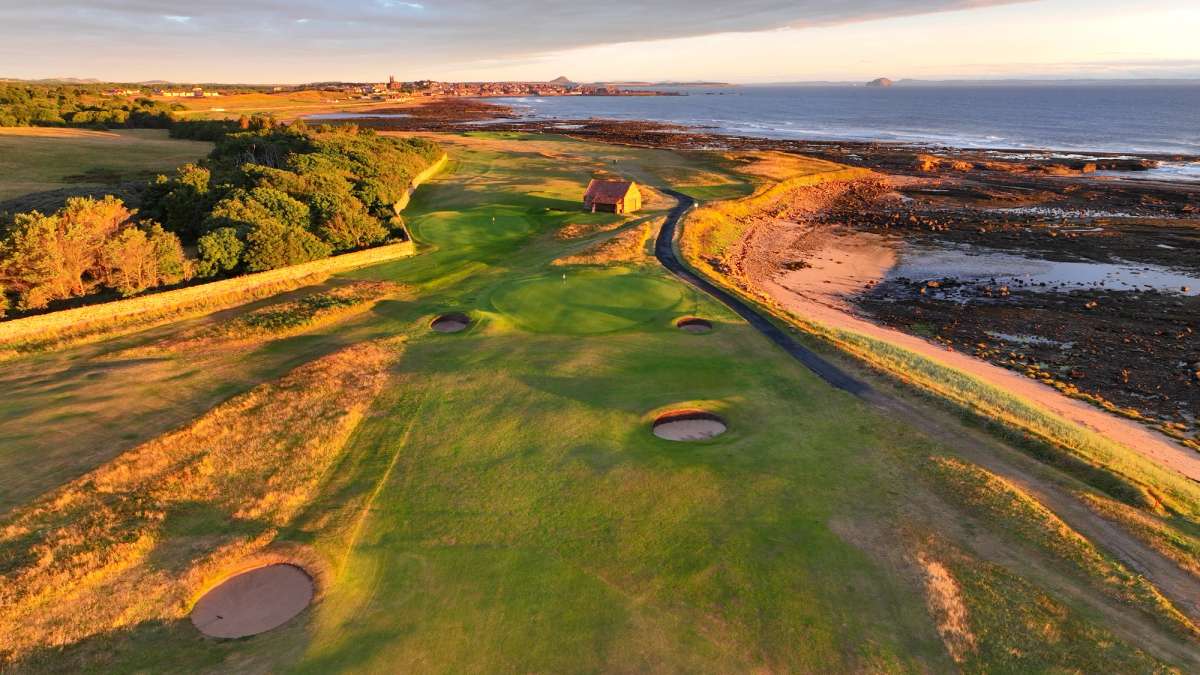
Scotland has golf courses for every standard of golfer. While its famous championship links attract visitors from around the world, some of the best places for beginners are shorter, less intimidating and considerably easier on the wallet. Top100 has compiled 10 courses that offer an enjoyable introduction to Scottish golf, taking into account their length, difficulty, green fees and overall atmosphere. Some are classic links, others are inland parkland courses, but all offer something that makes them worth considering for a golfer still finding their feet. 1. Gullane No.3 Why play it: Short, scenic East Lothian links Length: 5,134 yards (4,695m) - Par 67 Difficulty: ★★☆☆☆ Price: £70 Best for: First taste of links golf Gullane No.3 may sit in the shadow of its more famous neighbours, but it's an excellent introduction to East Lothian links golf. At just over 5,200 yards, it's short enough to be approachable for beginners, with only one par four exceeding 400 yards, while strategically placed bunkers and slick greens still provide plenty of challenge. The biggest reward comes between the fourth and 15th, where the course climbs Gullane Hill before opening up to spectacular views across the Firth of Forth. With Muirfield, North Berwick, Luffness New and Kilspindie all visible from the higher ground, it's a brilliant way to experience one of Scotland's great golfing regions without the price tag or pressure of its more famous neighbours. 2. Kilspindie Golf Club Why play it: Quirky seaside golf packed into a compact layout Length: 5,494 yards (5,024m) - Par 69 Difficulty: ★★☆☆☆ Price: £120 Best for: Fun, informal links golf Kilspindie is almost tailor-made for beginners looking to experience traditional Scottish links golf. Measuring just under 5,500 yards, the course places far more emphasis on accuracy than distance, with seven of its 13 par fours measuring less than 300 yards. Its compact layout beside Aberlady Bay also means you can enjoy a genuine seaside golfing experience without the intimidation of a long championship course. Founded in 1867, Kilspindie is steeped in history, while its secluded setting beside the nature reserve gives the course a wonderfully peaceful atmosphere. From the opening ‘Point’ to the 252-yard closing hole, ‘Home’, the layout is packed with quirky, old-fashioned holes that reward beginners who learn to plot their way around rather than simply reaching for the driver. 3. St Andrews Links - Strathtyrum Course Why play it: The easiest route into playing St Andrews Length: 5,628 yards (5,146m) - Par 69 Difficulty: ★★☆☆☆ Price: £60 Best for: First-time visitors wanting to play St Andrews The Strathtyrum is arguably one of the best options for beginners wanting to play at St Andrews. Opened in 1993 and designed by Donald Steel and David Thomas, the 5,628-yard layout is shorter and more forgiving than the Old Course, with generous fairways and relatively straightforward greens giving newer golfers room to enjoy themselves. Its fairways are framed by 15 bunkers, while cleverly positioned hazards and several water features provide enough challenge to keep experienced golfers interested. The Strathtyrum allows beginners to experience the atmosphere of St Andrews Links without the pressure associated with its more historic courses. 4. The Glen Golf Club Why play it: Spectacular coastal views and approachable links golf Length: 6,275 yards (5,738m) - Par 70 Difficulty: ★★☆☆☆ Price: £100 Best for: Scenic golf The Glen is a brilliant choice for beginners who want to experience Scottish links golf without being overwhelmed by length. Nine of its 12 par fours measure under 400 yards, while relatively gentle greens and generous opportunities from the tee make it possible to enjoy the course without needing a perfect game. The real highlight, however, is the scenery, with much of the course perched above the Firth of Forth and views towards Bass Rock, Fidra and Fife. The famous 13th, known as the ‘Sea Hole’, runs alongside the coastline, while the dramatic downhill 18th at ‘Jacob's Ladder’ provides a memorable finish. With the beaches and walking trails of North Berwick surrounding the course, The Glen has a relaxed, holiday atmosphere that makes it particularly appealing to newer golfers. 5. Hopeman Golf Club Why play it: Affordable clifftop links with spectacular views Length: 5,624 yards (5,143 m) - Par 68 Difficulty: ★★☆☆☆ Price: From £60 Best for: Affordable coastal golf Hopeman is a great reminder that Scottish links golf isn't all about length. The Moray Firth course rewards accuracy rather than power, with gorse lining its fairways and just one par five on the scorecard. For beginners, that makes it an inviting place to learn how to plot your way around a links rather than simply trying to overpower it. The highlight is the 12th, a 150-yard par three played from an elevated tee more than 100 feet above the green at Clashach Cove. With panoramic views across the Firth, it's the sort of hole that can make a beginner fall in love with Scottish golf. The course has been played since 1909 and remains a wonderfully traditional, unpretentious links experience. 6. Crieff Golf Club - The Ferntower Course Why play it: Friendly parkland golf in a spectacular setting Length: 6,493 yards (5,937m) - Par 71 Difficulty: ★★☆☆☆ Price: From £70 Best for: Relaxed inland golf For beginners who want to experience Scotland beyond the links, Crieff is an excellent alternative. Set among the rolling parkland of the Strathearn Valley, the course offers generous fairways and relatively forgiving rough, making it possible for newer golfers to enjoy their round without constantly searching for their ball. Crieff has plenty of golfing pedigree, too, with an original nine-hole layout designed by Old Tom Morris in 1891 before Robert Simpson and James Braid helped develop it into an 18-hole course. Add in its friendly welcome and excellent value, and Crieff offers a relaxed way for beginners to experience Scottish golf away from the country's famous links. 7. Prestwick St Nicholas Why play it: Traditional links golf without the championship price tag Length: 6,044 yards (5,526 m) - Par 69 Difficulty: ★★★☆☆ Price: £110 Best for: Traditional Scottish golf Prestwick St Nicholas is proof that a golf course doesn't need to be long to be a challenge. Described by Henry Cotton as a “miniature championship course”, its generous fairways make it approachable for newer golfers, but blind shots, strategically placed bunkers and tricky greens mean course management is essential. There's plenty of history here, too. The club's members originally played on the neighbouring Prestwick course, which hosted the first 12 Open Championships between 1860 and 1872. For beginners, it offers a chance to experience traditional Ayrshire links golf without having to take on one of the region's more intimidating championship layouts. 8. St Andrews Links - Eden Course Why play it: Authentic St Andrews links with a little more challenge Length: 6,140 yards (5,614m) - Par 70 Difficulty: ★★★☆☆ Price: £80 Best for: Beginners ready to step up If the Old Course feels too intimidating, or its £355 green fee is simply out of reach, the Eden offers a far more accessible way to play at St Andrews. Designed by Harry Colt in 1914, this par 70 layout provides a genuine links experience without the pressure or price tag of the Old Course. The Eden is strategic rather than brutally difficult, with generous fairways giving beginners room to find their feet. The challenge comes around the greens, where deep bunkers, humps and hollows demand a little more thought. With a two-tiered fifth green and the tricky 17th among its highlights, the Eden is an ideal next step for golfers who want to experience the Home of Golf while testing themselves. 9. Dunbar Golf Club Why play it: Classic links golf with a little more bite Length: 6,547 yards (5,987m) - Par 71 Difficulty: ★★★☆☆ Price: From £145 Best for: Beginners ready for a challenge Dunbar is a step up in difficulty from some of the shorter courses on this list, but it offers an excellent introduction to the more demanding side of Scottish links golf. The course hugs the North Sea coastline for much of its back nine, with spectacular views towards Bass Rock and the wind adding an extra layer of challenge. For beginners, it's a chance to discover why links golf requires more than simply hitting the ball straight and far. There's plenty of history to enjoy along the way, too. Golf has been played around Dunbar since the 17th century, while the course has benefited from the influence of Old Tom Morris, Ben Sayers and James Braid. 10. Brora Golf Club Why play it: Wild, natural links golf with a relaxed atmosphere Length: 6,211 yards (5,679m) - Par 70 Difficulty: ★★★☆☆ Price: From £180 Best for: An adventurous first links trip Brora offers beginners something that the famous championship courses often can't: the chance to experience a truly natural Scottish links without the pressure of a world-famous name. The 6,211-yard course isn't overly long, but its exposed coastal setting means the wind can quickly change the challenge. The opening nine runs remarkably close to the North Sea, with the second tee perched beside the beach and spectacular views stretching along the coastline. James Braid redesigned Brora in 1923, and relatively little has changed since. The 162-yard ninth, named the ‘Sea Hole’, is a particular highlight, while the closing par three provides a suitably challenging finish. Five-time Open Champion, the late Peter Thomson regularly played Brora and called it one of his favourite links courses in the world. Which Course is Best for You? With so many excellent options, the best Scottish golf course for a beginner depends on the type of experience you're looking for. Best for a first links experience: Gullane No.3 - Short enough to be approachable, but still delivers the classic East Lothian links experience. Best for experiencing St Andrews: St Andrews Strathtyrum - A more forgiving introduction to the Home of Golf than the Old Course. Best scenery: The Glen - Few courses on this list can match its views across North Berwick and the Firth of Forth. Best value: Hopeman - Affordable green fees and spectacular Moray Firth scenery make it an excellent option for golfers on a budget. Best traditional experience: Prestwick St Nicholas - A chance to experience traditional Ayrshire links golf without tackling one of the region's toughest championship courses. Best inland option: Crieff - A scenic alternative to links golf, with a more relaxed setting for golfers still finding their feet. Best for a challenge: Dunbar - Longer and more demanding than some of the other courses on this list, but a good choice for beginners looking to test themselves. Best for character: Kilspindie - A short, quirky and highly memorable links where no two holes quite feel the same. Green fees quoted are summer 2026 rates where available
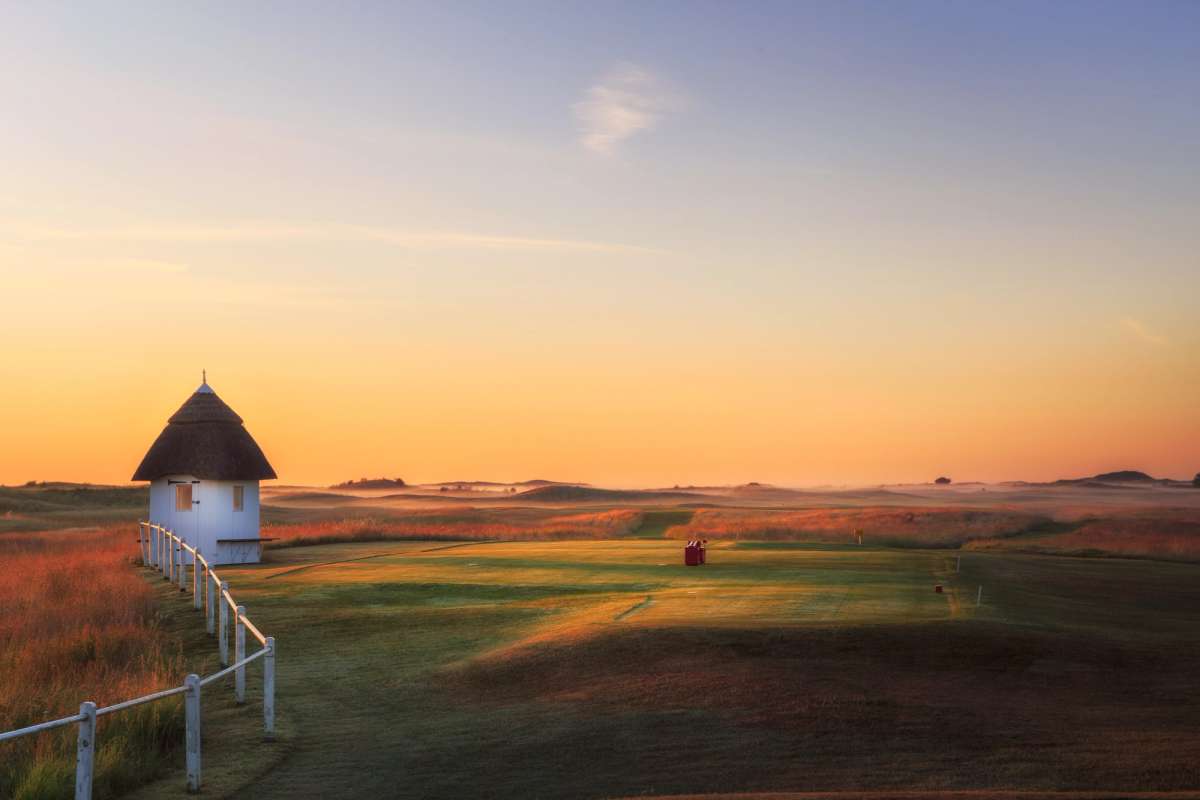
England is home to some of the best golf courses in the world, and its five highest-ranked layouts can be played without being a member. From a 15-time Open venue on the Kent coast to some of the finest heathland golf in Surrey and Berkshire, plus a spectacular links course in Cornwall, these are the five highest-ranked courses in England that welcome visiting golfers. Royal St. George’s Golf Club (Kent) World Ranking: 19th | England ranking: 1st | Green fee: £430 Royal St George’s offers the chance to play one of England’s most historic and challenging links courses. Founded in 1887, it was the first English course to host the Open and has staged the championship 15 times, including the most recent edition in 2021. Routed through towering dunes in a loose figure of eight, Royal St George’s has undulating fairways, uneven lies and plenty of elevation changes that can make even seemingly straightforward shots difficult. The fourth hole is particularly memorable, with a huge bunker carved into a towering dune guarding the fairway. Despite its reputation as a demanding championship test, the course is as enjoyable to explore as it is difficult to score on. Wildflowers and dune grasses line the fairways, while views stretch across Pegwell Bay towards the white cliffs beyond. Add in distinctive features such as the thatched shelters and St George’s flags, and there is plenty to keep you entertained between the inevitable moments of frustration. Sunningdale Golf Club - Old Course (Surrey) World Ranking: 22nd | England ranking: 2nd | Green fee: £485 The Old course at Sunningdale is widely regarded as one of the most beautiful inland courses in the British Isles. Opened in 1901 by Willie Park Jr, it was one of the first great courses to emerge from the Surrey and Berkshire sand-belt, with Harry Colt later reshaping the layout and giving it the intimate, tree-lined character it has today. Pine, birch, oak and heather frame the fairways, while the firm heathland turf makes Sunningdale a joy to walk and play. The course has hosted plenty of memorable golf, too, including Bobby Jones’ remarkable 66 in Open qualifying in 1926 and Nick Faldo’s 62 at the 1986 European Open. The 10th is a particular highlight, with its elevated tee offering a spectacular view before the halfway hut provides one of golf’s more welcome rewards. The 15th, a 226-yard par three, is another standout. For golfers visiting England, Sunningdale Old offers a classic heathland experience in one of the country's finest golfing regions. Sunningdale Golf Club - New Course (Surrey) World Ranking: 41st | England ranking: 3rd | Green fee: £485 The New course at Sunningdale provides a rather different experience to its famous older sibling. Opened in 1923 and designed by Harry Colt, it is more open and rugged than the Old, with elevated tees, heathery terrain and long carries placing a greater emphasis on driving. At 6,700 yards and par 70, the New is no pushover, with narrow fairways and plenty of undulation making it a particularly demanding test from the back tees. Even the professionals have struggled to make it look easy: Jack Nicklaus once held the course record with a 67 before Graeme Storm carded a remarkable 62 during Open qualifying in 2009. The course has also benefited from an ongoing tree-management programme, allowing more heather to return and restoring views across Chobham Common. The fifth, a picturesque par three played across the heath, is one of the highlights. The result is a course that rewards good driving without becoming a purely distance-based test, with the heathland setting providing plenty of visual interest along the way. St Enodoc Golf Club - Church Course (Cornwall) World Ranking: 49th | England ranking: 4th | Green fee: £190 St Enodoc is unlike almost any other links course in England. Overlooking the Camel Estuary in Rock, with views across to Padstow, the Church Course takes its name from the 13th-century church that sits beside the 10th green. Remarkably, the building was completely buried by sand in the 19th century before being excavated in 1863. Founded in 1891 and redesigned by James Braid in 1907, St Enodoc is defined by its towering dunes and constantly changing terrain, where no two holes feel quite the same. The sixth is the course's signature hole, demanding two blind shots over the towering 'Himalayas' dune to reach the hidden green. The 10th, played across a natural valley to a narrow fairway below, is another memorable challenge. If your ball strays towards the churchyard, you'll also find the grave of Poet Laureate John Betjeman, whose poem Seaside Golf was inspired by the course. The combination of huge dunes, unusual holes and views across the Camel Estuary makes St Enodoc a particularly distinctive addition to any English golf trip. Swinley Forest Golf Club (Berkshire) World Ranking: 52nd | England ranking: 5th Swinley Forest offers a quieter, more understated version of heathland golf on the Surrey and Berkshire sand-belt. Set among mature pines and heather, it has a wonderfully quiet atmosphere and an old-fashioned character that is increasingly difficult to find. The firm, fast-running fairways and purple heather in summer give it all the hallmarks of classic heathland golf. Designed by Harry Colt and opened in 1909, Swinley measures around 6,400 yards and plays to a par of 69. The short holes are particularly strong, with a varied collection of one-shotters that require careful club selection. Around the greens, false fronts, run-offs and subtle slopes provide plenty of opportunities for a good round to unravel. For much of its history, Swinley was an intensely private club where visitors were few and far between. It now welcomes green-fee golfers, although the club retains much of its distinctive character. The result is a course that feels removed from the modern world, with little of the glamour associated with some of its better-known neighbours. For golfers who enjoy traditional heathland golf, that simplicity is a large part of Swinley's appeal. Green fees quoted are summer 2027 rates where available.

