The stigma that good golf has to be expensive is one worth challenging.
From windswept prairie in Nebraska and oceanfront holes in California to championship layouts in the shadow of Hazeltine and Bethpage, these are courses that offer much more than a cheap round.
All 10 can be played for $100 or less, but the price is only part of the appeal. They have tournament history, famous designers, memorable settings and the kind of layouts that can stand alongside much more expensive golf.
Green fees listed are standard rates and do not take twilight or off-season discounts into account, meaning some courses can be played for even less.
Nebraska Ranking: 6th | Green Fees: From $68
Why Play it: Outstanding value on a natural prairie layout
Best For: Golfers who love natural, windswept courses
If you’re looking for proof that great golf doesn’t have to come with a great big price tag, head for the Nebraska prairie. Wild Horse Golf Club is one of the best-value public courses in America, combining excellent golf with a setting that feels a world away from the usual resort experience.
Designed by Dave Axland and Dan Proctor, Wild Horse opened in 1999 after the pair spent more than a decade working for Ben Crenshaw’s design company. The result is a natural-looking layout shaped by native grasses, rolling prairie and dramatic blow-out bunkers rather than rows of manicured hazards.
Wild Horse has earned plenty of recognition over the years, including a place in the Top100 US rankings, although it has sometimes been overshadowed by nearby Sand Hills. Tom Doak once described it as a “very good golf course” that is often overlooked because of its affordability.

Indiana Ranking: 7th | Green Fees: From $75
Why Play it: A Coore & Crenshaw design on the Notre Dame campus
Best For: Fans of Coore & Crenshaw
Set among 250 acres of woodland on the northern edge of the University of Notre Dame campus, the Warren Golf Course offers the unusual combination of championship pedigree and accessible green fees. Designed by Bill Coore and Ben Crenshaw, the course opened in 2000 and has since become one of Indiana’s most highly regarded public layouts.
The Warren Course is home to Notre Dame’s men’s and women’s golf teams and has hosted a string of major amateur events, including NCAA Division I regional championships and the 2010 U.S. Women’s Amateur Public Links. It also hosted the U.S. Senior Open in 2019, bringing some of the biggest names in senior golf to South Bend.
The setting is a big part of the appeal, with the course winding through mature woodland within a Certified Audubon Cooperative Sanctuary. For golfers visiting Notre Dame or passing through Indiana, the Warren Course offers a chance to experience one of America’s leading modern design partnerships without a leading-edge green fee.

California Ranking: 71st | Green Fees: From $66
Why Play it: Oceanfront golf just minutes from Pebble Beach
Best For: Golfers looking for a Pebble Beach alternative
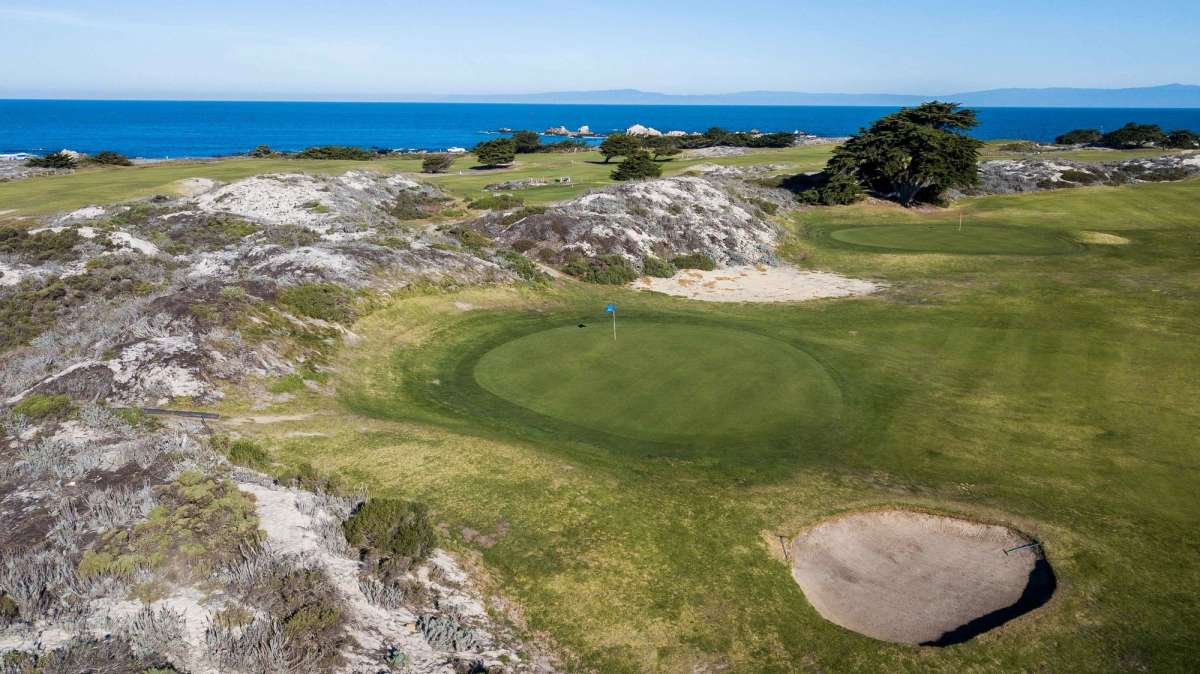
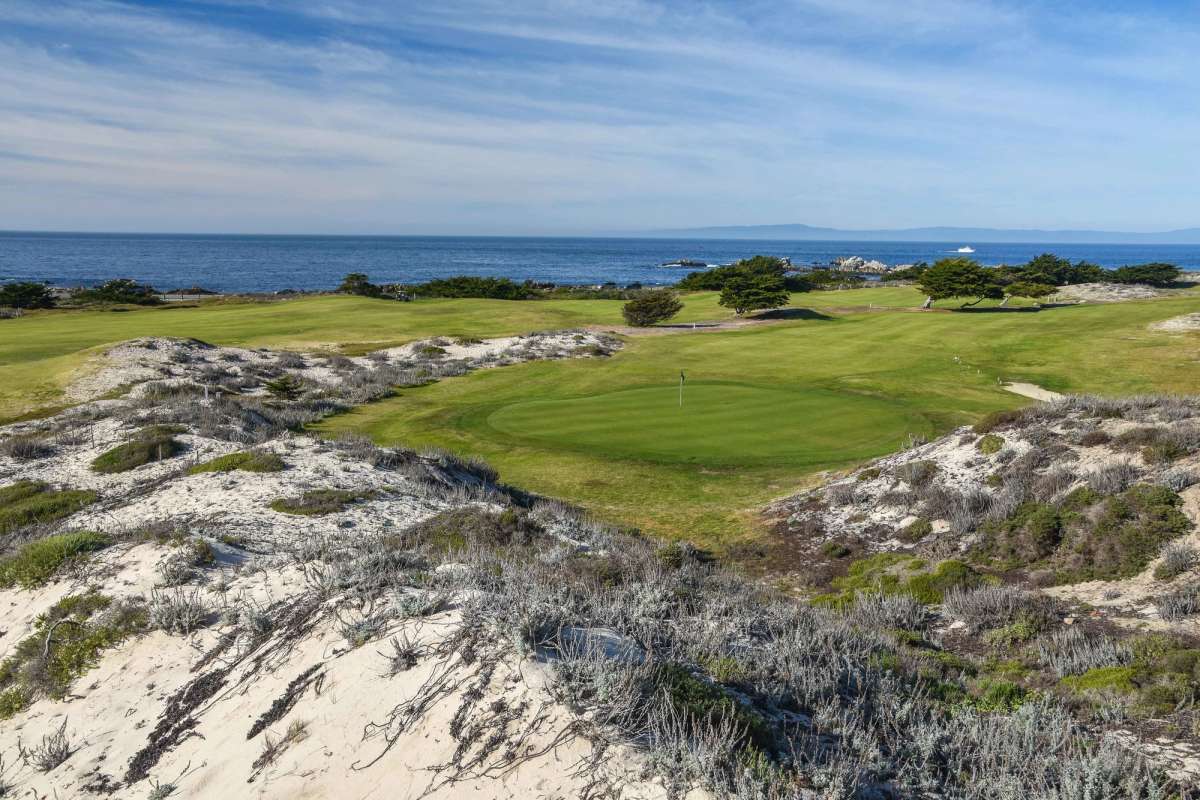
Just five miles from Pebble Beach, Pacific Grove Golf Links offers a very different way to experience the Monterey Peninsula. This old-school municipal course runs along the Pacific Ocean, with a front nine that feels more like a traditional parkland course before the back nine heads into the dunes overlooking the water.
The course has an impressive design lineage, too. US Amateur Champion Chandler Egan, who helped Alister MacKenzie redesign Pebble Beach, laid out the original nine holes in 1932, while Jack Neville, one of the original designers of Pebble Beach, later extended Pacific Grove to 18 holes.
The result is a quirky and enjoyable layout, beginning with back-to-back par threes before throwing in consecutive par fives at the fifth and sixth. On the oceanfront back nine, short par fours and tumbling fairways provide plenty of character.
New York Ranking: 6th | Green Fees: From $90
Why Play it: A championship-calibre course in the shadow of the Black
Best For: Golfers who want a taste of Bethpage without playing the Black
Bethpage Black might get all the attention, but the Red Course at Bethpage State Park is a formidable test in its own right. Known by some as “Baby Black”, the Red is widely regarded as the standout alternative to its more famous neighbour and offers a chance to experience Bethpage without the Black's famously difficult tee-time scramble.
The course features a series of strong doglegs and demanding holes, with Tom Doak once suggesting that the Red might have received similar acclaim had its more famous neighbour never been built. He particularly praised the opening and closing holes, the long fifth and the short sixth, where an aggressive drive can quickly turn into trouble.
The Red doesn't have the Black's enormous bunkers or intimidating reputation, but that doesn't make it easy. For golfers visiting Long Island, it offers another opportunity to play championship-level golf at one of America's most famous public facilities.
Oregon Ranking: 21st | Green Fees: From $70
Why Play it: Affordable golf in one of America's biggest golf destinations
Best For: Golfers visiting Bandon
Bandon has become one of America's great golf destinations, but you don't have to play the resort courses to enjoy a round in the area. Bandon Crossings was created specifically to offer affordable public golf for locals and visitors, providing a lower-cost alternative to its famous neighbours.
Built on the site of an old cattle and sheep ranch, the course was developed by local couple Rex and Carla Smith with Oregon architect Dan Hixson. Rather than compete directly with Bandon's collection of links courses, Crossings takes its inspiration from the heathland golf found around London.
The course may sit away from the Pacific coastline, but that doesn't make it an afterthought. Its fairways move quickly across the property and around Twomile Creek, creating a challenging and enjoyable test that offers a different experience from the resort layouts.

New York Ranking: 80th | Green Fees: From $95
Why Play it: Robert Trent Jones design at the tip of Long Island
Best For: Golfers exploring Long Island
At the eastern tip of Long Island, around 120 miles from downtown New York City, Montauk Downs feels a long way from the hustle of Manhattan. Golf has been played here for decades, with the current layout shaped by Robert Trent Jones Sr. and his son Rees Jones in 1968.
The Jones family connection is one of the course's biggest attractions, with Rees returning alongside Bryce Swanson in 2008 to restore the bunkers and tees on the par-three holes. The result is a classic parkland layout that combines the character of an older course with the challenge expected from a Jones design.
Its location also makes Montauk Downs a natural addition to a Long Island golf trip, particularly for golfers looking to explore beyond the courses closer to New York City.
Washington Ranking: 13th | Green Fees: From $35
Why Play it: Championship golf at a 36-hole public facility
Best For: Golfers looking for a full day of golf
The Olympic Course at Gold Mountain Golf Club is proof that you don't need a famous resort or hefty green fee to find championship-calibre golf. Part of a 36-hole public facility owned and operated by the City of Bremerton, the course was designed by John Harbottle III and opened in 1996, 25 years after the original Cascade Course.
The tree-lined layout is slightly hillier than its older sibling but remains eminently walkable, with annual bluegrass covering the tees, fairways and greens. Its quality has been recognised on the national stage, hosting the U.S. Amateur Public Links Championship in 2006 and U.S. Junior Amateur Championship in 2011.
There are plenty of memorable holes, including the short fourth, the water-guarded ninth and the 188-yard 16th, which plays across a lake to the green. The closing par four also offers a tempting birdie opportunity.
With the Cascade Course next door, golfers can play 36 holes at Gold Mountain for less than $100, with green fees for the second 18 starting at just $30.

Minnesota Ranking: 26th | Green Fees: From $63
Why Play it: Championship golf just minutes from Hazeltine National
Best For: Golfers visiting the Twin Cities
Just a few miles from Hazeltine National, the Chaska Town Course offers a chance to play a highly regarded championship layout without the private-club price tag. Owned and operated by the local municipality, the course occupies 285 acres of oak groves, open prairie and marshland.
Designed by Arthur Hills and opened in 1997, Chaska Town has even shared the stage with Hazeltine. The two courses co-hosted the 2006 U.S. Amateur Championship, while Chaska Town was also scheduled to co-host the 2020 U.S. Junior Amateur before the tournament was cancelled due to the COVID-19 pandemic.
The layout plays to 6,817 yards from the back tees and features two returning nines, each finishing with a par five. The short fourth and 16th offer opportunities to score, while the right-doglegging ninth provides a tougher test.

Green Fees: From $56
Why Play it: A Tillinghast classic with Texas Open history
Best For: Golfers who love historic golf courses
The oldest public 18-hole course in Texas, Brackenridge Park Golf Course has been a fixture in San Antonio golf for more than a century. Designed by A.W. Tillinghast in 1916, “Old Brack” went on to host 21 editions of the Texas Open between 1922 and 1959.
The course has retained much of its historic character thanks to a restoration by John Colligan, who brought the layout back to life while preserving Tillinghast’s original design. The front nine is relatively tight, while the back nine opens out and provides some of the course’s strongest holes.
Brackenridge is also part of the Alamo City Golf Trail, making it easy to combine with several other public courses in the San Antonio area.
Green Fees: $81
Why Play it: A former PGA Tour venue with Tiger Woods history
Best For: Golfers who like tournament pedigree
Brown Deer Park Golf Course combines affordable public golf with a notable place in PGA Tour history. Located just north of Milwaukee, the course hosted the Greater Milwaukee Open from 1994 to 2009, with Tiger Woods making his professional debut here in 1996.
Founded in 1929, the course was originally designed by George Hansen before being partially redesigned by Andy North and Roger Packard. Today, its tree-lined fairways and stream that winds through the property provide a classic parkland setting.
The Tiger Woods connection is an obvious draw, but Brown Deer offers more than a famous name in its history. Its accessible layout and location make it a practical option for golfers visiting Milwaukee.
For golfers who enjoy playing courses with a tournament past, Brown Deer offers a chance to follow in the footsteps of some of the game's biggest names without paying resort-course prices.

Florida is one of the world's great golf destinations, but its reputation for championship courses and high-end resorts can make it seem like a difficult place for beginners to start. It doesn't have to be. Across the state, you'll find short municipal layouts, forgiving designs, affordable daily-fee courses and practice facilities that make it easier to learn the game without being overwhelmed. Some offer a gentle introduction to 18 holes, while others provide a chance to experience famous golf venues from more manageable tees. We've picked some of the best options for beginners, looking at factors including length, difficulty, green fees, accessibility and the overall experience. Whether you're playing your first full round or simply looking for a Florida course where you can enjoy the game without needing a low handicap, these are the courses worth putting on your list. The Park West Palm Why play it: Golf for everyone, with plenty of ways to learn and practice Difficulty: ★★☆☆☆ Price: From $95 Best for: Beginners looking to learn and improve The Park is a particularly good introduction to golf for beginners because it offers plenty of ways to learn the game before committing to 18 holes. Alongside the full-length course is a Toptracer driving range, putting course and the Lit 9, a nine-hole par-three layout that can be played with little more than a wedge and putter. The 18-hole course itself was completely rebuilt by Hanse Golf Course Design, replacing Dick Wilson's original 1947 West Palm Beach layout with a new routing. The real appeal, however, is the club's approach to growing the game. Green fees for juniors registered as West Palm Beach city residents are just $20, while carts are not permitted before noon and caddies are actively encouraged. The Lit 9 costs $30 for adults and is free for children aged 12 and under, providing an inexpensive way to get on the course without tackling 18 holes. The Park has even hosted The Match IX, but despite welcoming stars such as Rory McIlroy, Max Homa, Lexi Thompson and Rose Zhang, its focus remains firmly on making golf accessible to everyone. Southern Dunes Golf & Country Club Why play it: A links-inspired layout where everything is laid out in front of you Length: 6,220 yards - Par 72 Difficulty: ★★★☆☆ Price: From $49 Best for: Beginners ready for a full-length challenge Southern Dunes offers a gentler introduction to championship-style golf than its 7,227-yard black-tee length might suggest. Designed by Steve Smyers in 1993, the course uses a sandy, undulating site and extensive mounding to create a links-like feel, with huge traditional bunkers, wispy waste areas and occasional water hazards shaping the holes. There are five sets of tees, with the shortest full course measuring 5,633 yards, giving beginners the option to leave the driver in the bag and play a manageable yardage. The appeal is that there are few surprises around Southern Dunes. The fairways, hazards and greens are generally laid out in front of you, allowing beginners to see the challenge and plot their way around rather than having to guess what lies ahead. The large, fast greens and rolling fairways still demand good putting and accuracy, but choose the right tees and Southern Dunes becomes a fair test rather than an intimidating one. Located in Haines City, just south of Orlando, it also offers an unusual taste of links-style golf in Central Florida. Orange County National – Panther Lake Course Why play it: A huge golf facility where beginners can build confidence before tackling 18 holes Length: 6,002 yards - Par 72 Difficulty: ★★★☆☆ Price: From $75 Best for: Beginners who want a full golf experience Orange County National is built around golf, with 45 holes, a 42-acre circular driving range, a 36-hole putting course and the nine-hole Tooth course all on the same sprawling property. For beginners, that means there are plenty of ways to practice before taking on Panther Lake, whether that means working on the range, spending time on the putting course or starting with nine holes. Panther Lake itself opened in 1997 and was designed by Phil Ritson, Isao Aoki and David Harman, with the rolling site providing some of the elevation change that is unusual for Florida. At more than 7,400 yards from the tips, Panther Lake is certainly not short, but the multiple tee options allow beginners to choose a yardage suited to their game. The course is set across more than 900 acres with no surrounding housing, creating a remarkably open and peaceful setting despite being a short drive from Orlando. With its extensive practice facilities and two championship courses, Orange County National gives beginners plenty of room to practise before working their way up to Panther Lake. Juliette Falls Golf Course Why play it: A scenic, strategic course with plenty of tee options Length: 6,269 yards - Par 72 Difficulty: ★★★☆☆ Price: From $70 Best for: Beginners ready to step up to a full-length course Juliette Falls proves that beginner-friendly golf doesn't have to mean giving up on scenery or ambition. John Sanford's 2007 design stretches to more than 7,200 yards from the back tees, but five sets of tees allow newer golfers to choose a more manageable distance. The layout winds through mature oak trees and the former phosphate-mining site, with generous corridors and clear angles of play making it possible to see the strategy of each hole before deciding how aggressively to play it. The course becomes particularly dramatic from the sixth hole, where the par five requires a tee shot over Reflection Lake, followed by the tropical landscaping and waterfall at the par-three seventh. Water is a recurring feature, but the hazards are generally visible rather than hidden, rewarding beginners who take the sensible route rather than chasing distance. With its rolling terrain, mature trees and four waterfalls, Juliette Falls offers a more substantial challenge while remaining accessible to golfers who choose the right tees. North Palm Beach Country Club Why play it: A forgiving Nicklaus design with plenty of room off the tee Length: 5,932 yards - Par 71 Difficulty: ★★☆☆☆ Price: From $60 Best for: Beginners who want a forgiving 18-hole course North Palm Beach Country Club is a good option for beginners who want to play a proper 18-hole course without being punished for every wayward drive. Redesigned by Jack Nicklaus in 2006, the course measures just under 7,100 yards from the back tees, but Nicklaus specifically designed it to be user-friendly from the member and senior tees. The first 180 to 200 yards from those tees are particularly wide, giving newer golfers plenty of room to find the fairway and build confidence off the tee. The course sits on a sandy site of less than 125 acres, with several lakes adding strategy without overwhelming the layout. Nicklaus also described the greens as having plenty of movement, giving beginners a chance to work on their short game as they progress. There is some history here, too: the original course dates to the late 1920s and was one of the final designs by Seth Raynor before Nicklaus gave the layout a new lease of life. In 2006, it became only the second Nicklaus Signature municipal course in the USA. Dye’s Valley at TPC Sawgrass Why play it: A chance to experience TPC Sawgrass without taking on the Stadium Course Length: 6,079 yards - Par 72 Difficulty: ★★★☆☆ Price: From $350 Best for: Beginners ready for a taste of championship golf Dye’s Valley offers beginners a chance to experience the TPC Sawgrass setting without immediately throwing them into the deep end of the Stadium Course. Designed by Pete Dye with Bobby Weed and player consultant Jerry Pate, the course stretches to around 6,850 yards but is less demanding from the forward tees. Water remains a major part of the challenge, lining many holes, although there are fewer forced carries than on its famous neighbour. The course opened in 1987, five years after Pate won The Players Championship and famously celebrated by dunking Dye in a nearby lake. There is still plenty of Dye’s trademark strategy here, with water, bunkering and demanding greens requiring golfers to think their way around the course. For beginners, however, the shorter length and variety of tee options make Dye’s Valley a more approachable way to experience one of American golf’s best-known venues. Winter Park Pines Golf Club Why play it: A short, affordable 18-hole course where beginners can leave the driver in the bag Length: 5,107 yards - Par 70 Difficulty: ★★☆☆☆ Price: From $45 Best for: Beginners looking for an affordable full round Winter Park Pines is a reminder that beginners don't need 7,000 yards to get a proper 18-hole golf experience. The Lloyd Clifton-designed course opened in 1968 and measures just 5,354 yards from the back tees, with forward tees bringing it down to 4,336 yards. The layout features five par threes and three par fives, while the relatively short par fours give newer golfers plenty of opportunities to reach the greens without relying on their longest clubs. Water is a recurring feature, including a creek that runs through the property, so there are still hazards to negotiate despite the modest yardage. But the course is designed to provide a test for both novices and more experienced golfers, with a driving range and practice greens available before the round. Best of all, non-resident green fees start at just $45 on weekdays during the summer, making Winter Park Pines one of the more affordable ways to play 18 holes in the Orlando area. Palm Beach Par 3 Golf Course Why play it: A spectacular 18-hole introduction to golf with every hole within reach Length: 2,572 yards - Par 54 Difficulty: ★★☆☆☆ Price: From $35 Best for: Beginners who want to learn the game without a full-length course Palm Beach Par 3 strips golf back to its essentials, with 18 holes ranging from just 81 to 211 yards. Set between the Atlantic Ocean and Intracoastal Waterway, the course gives beginners a chance to experience a full round without needing the distance or consistency required on a traditional par 72. Each hole has three sets of tees, while water hazards and sand bunkers provide plenty of challenges without turning every missed shot into a lost ball. The course dates back to 1961, when it was designed by Dick Wilson and his apprentice Joe Lee, before being completely redesigned by Hall of Famer Raymond Floyd in 2009. Alongside the ocean views, golfers have access to a full-length driving range, putting green and practice bunker, making it possible to work on the basics before taking on the course. For beginners, it is an affordable and unusually scenic way to get 18 holes under the belt.
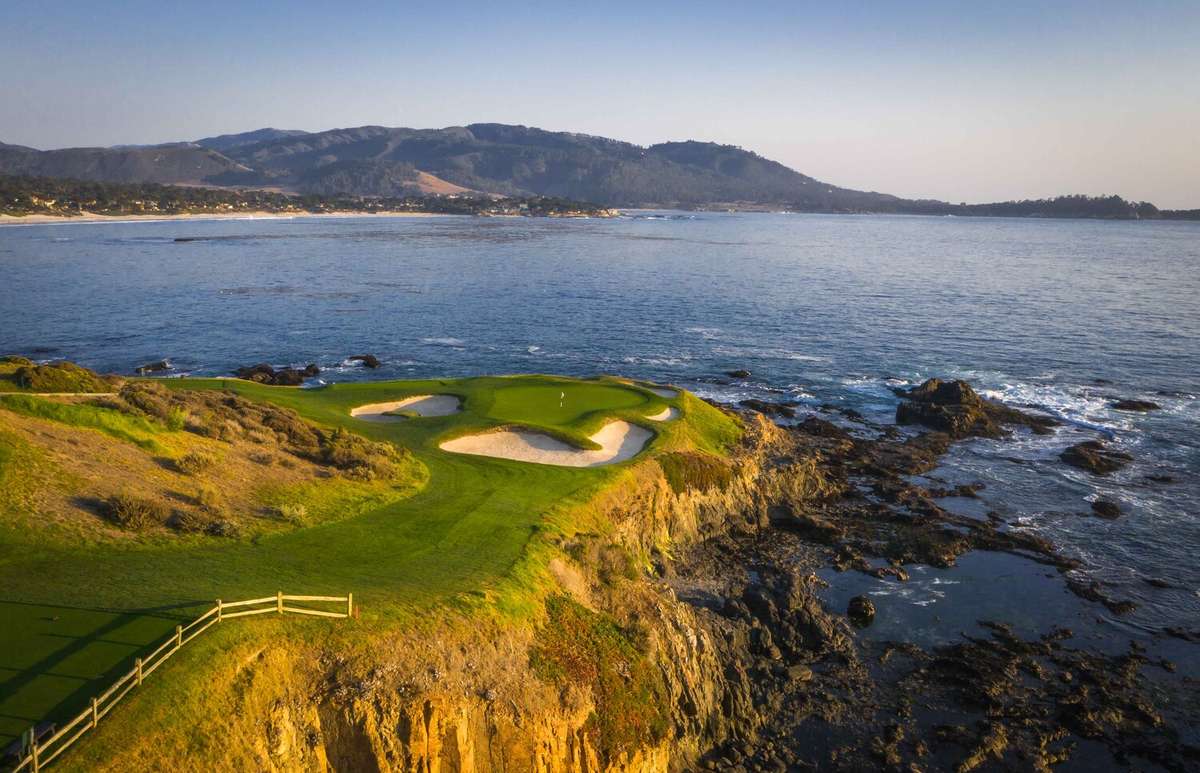
California is home to some of the finest golf courses in the United States, but many of its highest-ranked layouts are reserved for members. For visiting golfers, that can make finding a truly exceptional public course a challenge. Fortunately, the California Top 100 ranking includes several outstanding courses that welcome public play. From the bucket-list experience of Pebble Beach to the much more affordable Rustic Canyon, here are the five highest-ranked courses in The Golden State that visiting golfers can play. Pebble Beach Golf Links (Pebble Beach) World Ranking: 27th | California ranking: 3rd | Green fee: $755 Pebble Beach Golf Links is one of golf’s great amphitheaters, where the Pacific Ocean provides the backdrop and almost every hole carries a piece of history. Jack Neville’s original 1919 layout, remodelled by Henry Chandler Egan, has evolved over the years, but its essential character remains intact. This is the course where the greats have made history, from U.S. Open champions to the stars of the Pebble Beach Pro-Am, yet its greatest appeal is that anyone can play it. The price may make the wallet wince, but where else can an ordinary golfer walk in the footsteps of Nicklaus, Watson and Woods? The stretch from the 7th to the 10th is among the most exhilarating in golf, while the run to the 18th provides a suitably spectacular finale. Pebble Beach may not be perfect, but when the Pacific is crashing against the cliffs, who really cares? Only resort guests can reserve Pebble Beach tee times more than 24 hours in advance, subject to a minimum two-night stay. Non-resort guests can call 24 hours before play to enquire about any remaining tee times. Green Fees: Resort Guest: $695 (£513) Non-Resort Guest: $755 (£557), including cart fee Pasatiempo Golf Club (Santa Cruz) USA Ranking: 63rd | California ranking: 7th | Green fee: $465 Pasatiempo Golf Club is one of America’s great Golden Age survivors and, remarkably, the only public-access course that famed golf architect Alister MacKenzie regarded as his finest work. Founded by Marion Hollins in 1929, the rolling Santa Cruz layout was MacKenzie’s American home, and he lived alongside the sixth fairway during the final years of his life. The course has plenty of history, but it remains a thoroughly enjoyable test for visiting golfers. The front nine winds through the trees before the routing becomes more dramatic on the back nine, where deep barrancas and undulating terrain come into play. A major restoration completed in 2024 returned the greens and bunkers closer to their original forms. Although Pasatiempo is a semi-private club, visiting golfers can book two types of tee times through the club's online booking system – regular, available up to a week in advance, and priority, available up to a year in advance. For golfers looking to experience one of California's great courses without the price tag of Pebble Beach, Pasatiempo offers a rare chance to play a genuine piece of Golden Age golf. Green Fees: 18 holes: $465 (£341), excluding $50 cart fee Spyglass Hill Golf Course (Pebble Beach) California ranking: 17th | Green fee: $610 Spyglass Hill is one of the great tests on the Monterey Peninsula and, for many, the most demanding of the Pebble Beach quartet. Designed by Robert Trent Jones Sr. and opened in 1966, it has been part of the AT&T Pebble Beach Pro-Am rota since the following year. The opening five holes sweep from the Del Monte Forest towards the Pacific, with Jones deliberately drawing inspiration from Pine Valley. The course then turns inland through towering Monterey Pines and Cypress, with its tree-lined corridors recalling Augusta National. The 12th and 15th provide memorable par-three challenges, while the closing holes demand a strong finish. Spyglass Hill may live in the shadow of Pebble Beach and Cypress Point, but its reputation as one of America’s toughest and most rewarding layouts is thoroughly deserved. Unlike its more famous neighbour, Spyglass Hill is considerably easier for visiting golfers to book, with non-resort guests able to reserve tee times up to three months in advance. Green Fees: Resort Guest: $550 (£406) Non-Resort Guest: $610 (£450), including cart fee Rustic Canyon Golf Course (Moorpark) California ranking: 19th | Green fee: From $30 Rustic Canyon Golf Course offers a very different experience from the famous resort courses of the Monterey Peninsula. Laid out by Gil Hanse, Jim Wagner and Geoff Shackelford on a former sheep ranch north-west of Los Angeles, it is a relaxed, natural-looking course where wide fairways and firm, fast-running turf give golfers plenty of options. The course is relatively forgiving from the tee, but its large, undulating greens provide a sterner test, while the exposed setting means wind can quickly change the character of the round. The back nine is particularly memorable, climbing into the surrounding hills before a testing finish. It may lack the ocean views and tournament history of California's marquee courses, but Rustic Canyon offers excellent golf at a fraction of the price. For golfers looking beyond the obvious names, it is one of the state's best-value public courses. Tee times can be booked online, with reservations available to public golfers up to 28 days in advance. Popular weekend slots can fill quickly, while green fees vary depending on the day of the week and how far in advance you book. PGA West – Stadium (La Quinta) California ranking: 23rd | Green fee: From $60 PGA West’s Stadium Course is the toughest of the three public courses at the La Quinta resort and has been challenging golfers since 1986. It has plenty of tournament pedigree, having hosted the televised Skins Game and now serving as the venue for The American Express on the PGA Tour. At 7,300 yards, the Stadium Course is no pushover, with water coming into play on many holes. The closing stretch is particularly demanding, with the famous island green on the 17th – nicknamed Alcatraz – followed by a daunting water-guarded 18th. The course underwent a major restoration in 2024 and remains one of California’s most memorable public golf experiences. For golfers who enjoy a challenge, the Stadium Course offers the chance to test themselves on a layout that continues to feature on the professional circuit. Tee times can be booked online through PGA West, with the Stadium Course available to both resort and non-resort guests. Green Fees: Approximately $60–$399+ (£44–£295+), depending on the season and tee time.
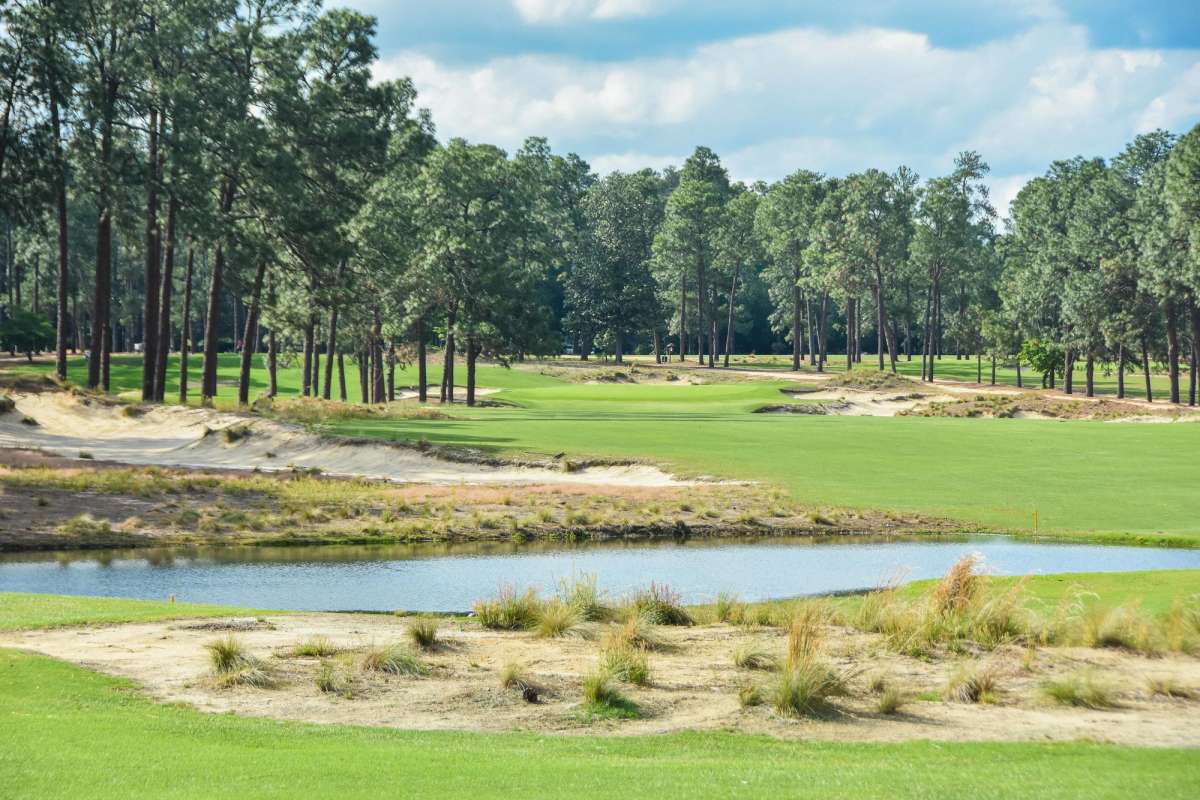
North Carolina has an unusually strong claim to being one of America's great golf destinations. From the historic courses around Pinehurst and Southern Pines to the more distinctive layouts scattered across the Sandhills, there is enough variety to suit almost any kind of golf trip. The only question is how much you want to spend. For this guide, Top100 has built three different two-night itineraries for a four-ball, with each one offering a different way to experience North Carolina golf. The budgets range from $750 to $2,000+ per person, with three rounds included in every trip. From three Donald Ross classics for less than $750 to the ultimate Pinehurst Resort experience, here's how to plan your North Carolina golf trip. $750 - The Sandhills Classics If you want to experience the Pinehurst area without spending a fortune, the $750 itinerary is the sweet spot. For four golfers sharing two rooms, two nights and three rounds, you can build a genuinely memorable Sandhills trip around three Ross courses that all feature prominently on the Top100 North Carolina ranking: Mid Pines (#7), Southern Pines (#11) and Pine Needles (#13). The beauty of this itinerary is its simplicity. All three courses sit within a few minutes of one another, so there is no need to spend half your trip behind the wheel. Instead, you can settle into Southern Pines and concentrate on the golf. Mid Pines is the highest-ranked of the three and makes an excellent starting point. It is a relatively compact course by modern standards, but there is plenty of variety in the holes and the undulating terrain means that the lie you leave yourself can be as important as the shot itself. The greens are a particular feature, with plenty of subtle breaks that aren't always obvious from the fairway. A few minutes away, Southern Pines Golf Club offers a different feel. It is less formal than its better-known neighbours and remains one of the more affordable ways to experience the area's historic golf. For golfers who want to see what Pinehurst was like before it became synonymous with luxury golf travel, this is an essential stop. The final round is at Pine Needles, a course with considerably more championship pedigree. It has hosted the U.S. Women's Open four times, most recently in 2022, and provides a slightly more polished resort experience while retaining the strategic qualities associated with Ross's work. The numbers work surprisingly well too. The three-course Bell Golf Package at Pine Needles bundles two nights' accommodation with all three rounds, breakfast, dinner and carts. At approximately $585 per person, there is still room within the $750 budget for a rental car, fuel and a few extras where necessary. For a first taste of the Sandhills, this is difficult to beat. You get three Top100-ranked courses, three distinct takes on classic North Carolina golf and barely any wasted time travelling between them. $1000 - Tobacco Road and the Strantz Experience The middle itinerary moves away from the traditional Sandhills experience and towards three more varied public-access courses: Tobacco Road (#5), Talamore and Tot Hill Farm. Tobacco Road is the obvious starting point. Mike Strantz's course is one of the most distinctive in the country, and its unconventional layout makes it unlike the other courses in this series. Blind shots are part of the design rather than an occasional feature, while the dramatic changes in elevation and extensive sandy areas give the course a character all of its own. It is a course that can feel intimidating on the first tee, but once you accept that not every shot needs to be conventional, the strategy begins to reveal itself. Talamore provides a useful contrast. The course is more conventional, with a mix of woodland and open holes and enough water and bunkering to keep the round interesting. It also has the practical advantage of being part of a resort operation, making it straightforward to combine with accommodation. The third round at Tot Hill Farm brings the trip back towards Strantz territory. Like Tobacco Road, it makes extensive use of the natural terrain, although the course feels less polished and more remote. The course winds through dramatic terrain and uses the natural landscape to create a succession of memorable holes. It is a good complement to Tobacco Road rather than simply another version of it. The three rounds should cost approximately $650 per person, based on fall rates of around $300 for Tobacco Road, $200 for Talamore and $150 for Tot Hill Farm, including the latter's cart fee. Accommodation for two nights and a shared rental car should bring the overall trip to roughly $800-$900 per person, leaving some headroom within the $1,000 budget. This is the itinerary for golfers who want to see a less conventional side of North Carolina golf, with Tobacco Road providing the clear centrepiece. $2000+ - The Ultimate Pinehurst Experience For golfers prepared to spend more than $2,000 per person, there is no need to look beyond the resort that put North Carolina on the golfing map. A two-night stay at Pinehurst Resort, combined with rounds on Pinehurst No. 2 (#1), No. 4 (#9) and No. 10 (#16), delivers the ultimate version of the Sandhills experience. No. 2 is the historic centrepiece and the course most golfers will have seen on television. Its crowned greens and sandy waste areas are immediately recognisable, while its U.S. Open history gives the round an additional dimension. The challenge is less about finding a way to overpower the course than avoiding the difficult positions that can quickly lead to dropped shots. Around the greens in particular, the difference between a good approach and a slightly misplaced one can be significant. No. 4 offers a different experience. It is a larger, more expansive course, with wider corridors and a greater sense of scale. The course has undergone a major transformation in recent years and now sits comfortably among the best courses at the resort. No. 10, meanwhile, is the newest of the three and provides a different perspective again. The Tom Doak design occupies a quieter part of the property and makes extensive use of the natural sandy terrain. Its inclusion also means the trip isn't simply a greatest-hits tour of Pinehurst's past; you are seeing where the resort's golf story is heading. Pinehurst's Donald Ross Golf Package includes two nights' accommodation, three rounds, breakfast and dinner, with supplements for No. 2 and No. 10. For four golfers sharing two rooms, the trip is likely to come in at around $2,800-$3,000 per person once the package, course premiums, rental car and fuel are accounted for, before any additional discretionary spending. While it’s a substantial investment, this is not simply three rounds of golf. It is a stay at one of America's great golf resorts, playing three of the best courses in North Carolina, including the state's No. 1 course. For golfers looking to make Pinehurst the centrepiece of a Carolina trip, this is the premium option. Each itinerary is based on two nights and three rounds for four golfers sharing two rooms. Prices include accommodation, green fees and food where appropriate, but exclude flights.

