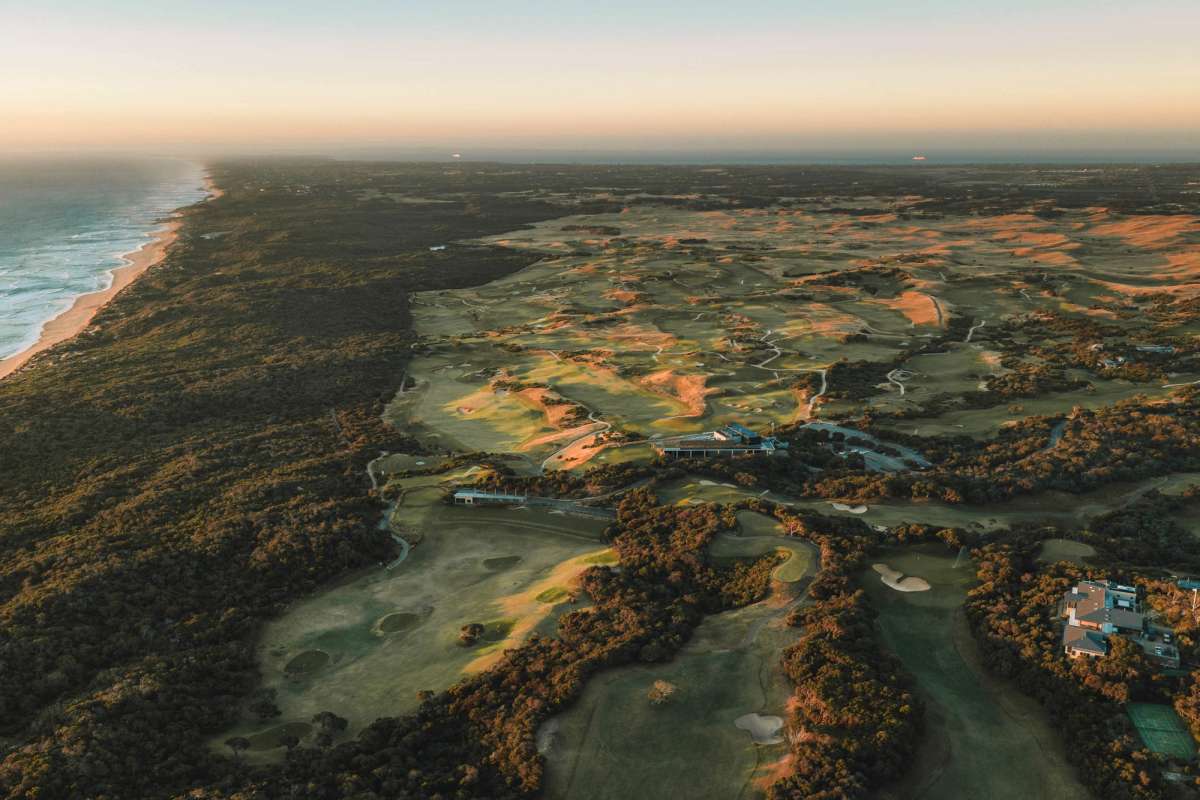
Just 90 minutes from Melbourne, the Mornington Peninsula combines exceptional golf with beaches, wineries, restaurants and wellness experiences, making it an ideal addition to an Australian golf holiday.
Melbourne provides one of the world’s great golf cities, with the famous Sandbelt courses on its doorstep. But there is another destination worth adding to the itinerary.
Around 90 minutes south-east of Melbourne, the Mornington Peninsula is one of Australia’s best-known coastal escapes. Vineyards and cellar doors sit alongside beaches, seaside towns and rugged stretches of coastline, while some of Victoria’s most interesting golf courses are scattered across the region.
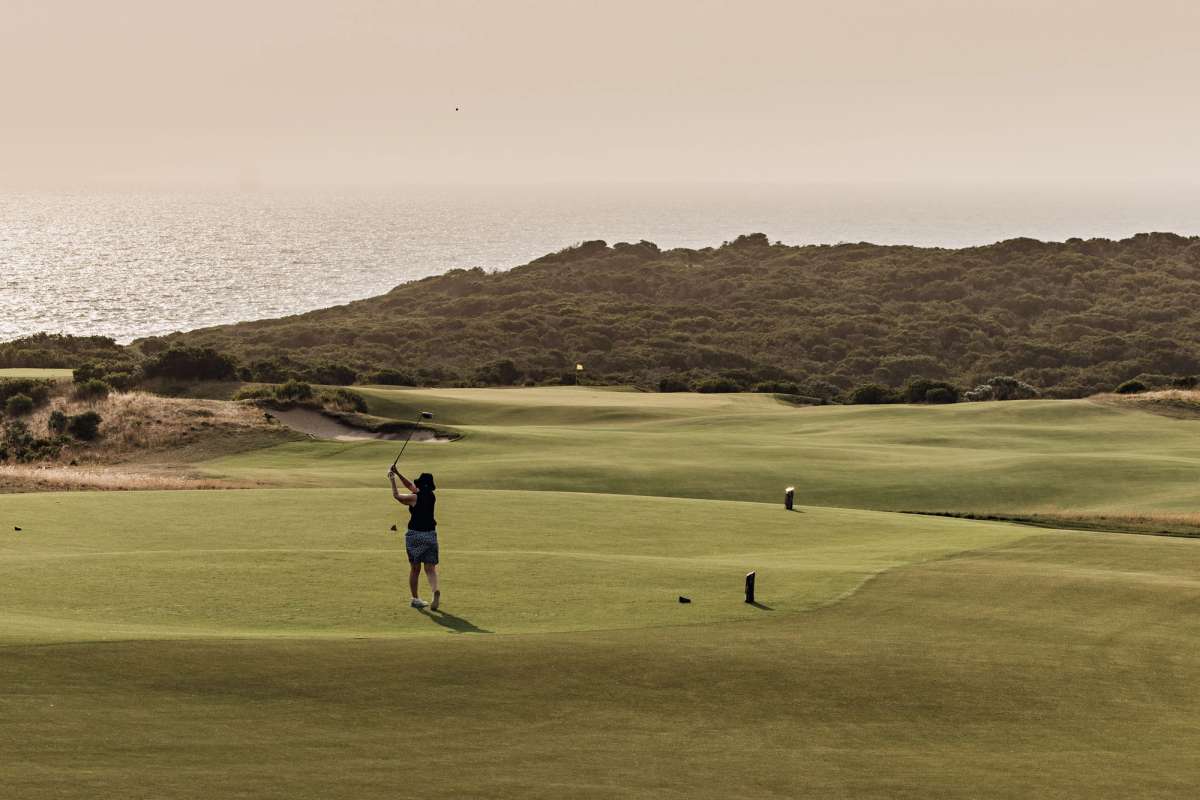
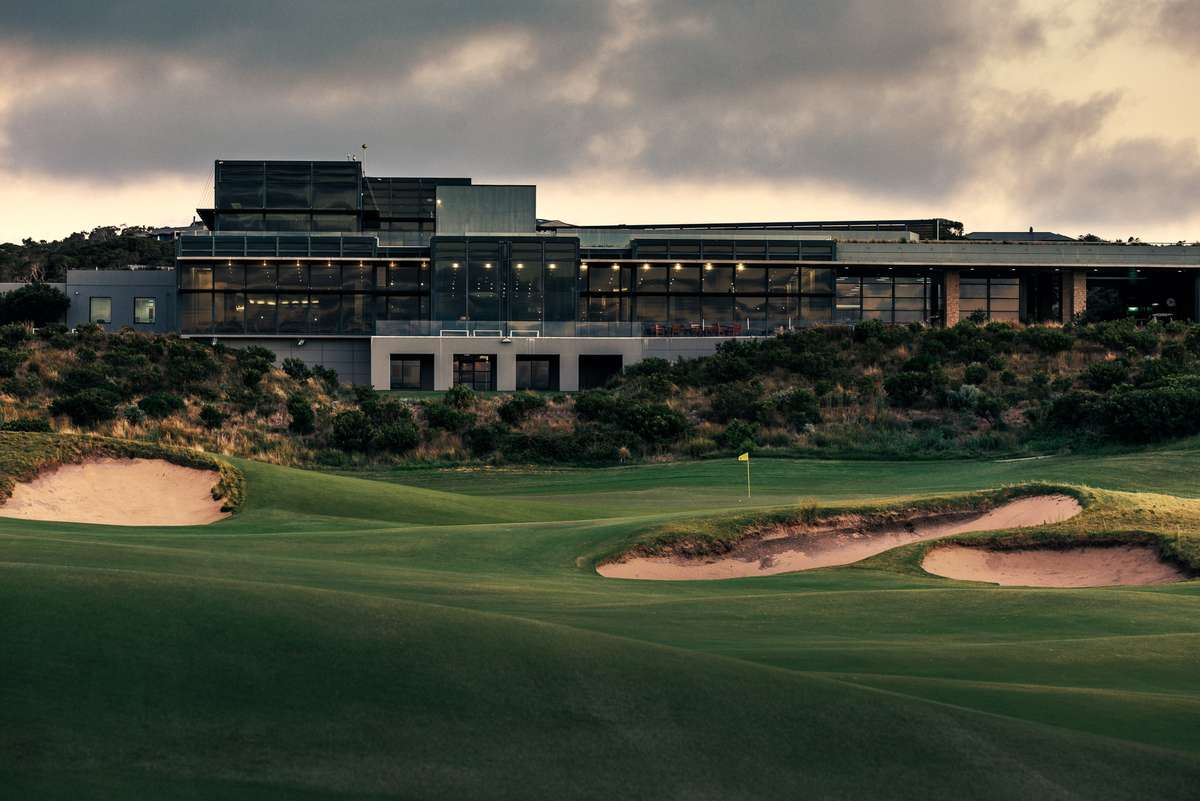
At the centre of the golf experience is The National Golf Club, a private members’ club offering 72 holes of golf across two sites. Three of its four courses sit together at Cape Schanck, where The Old, Moonah and Gunnamatta provide three distinctly different experiences. The fourth, Long Island, is located at Frankston, closer to Melbourne, and provides a contrasting Sandbelt experience.
One of the strengths of a visit to The National is the contrast between its three Cape Schanck courses. They occupy the same dramatic coastal property, but different architects, routings and characteristics give each its own identity.
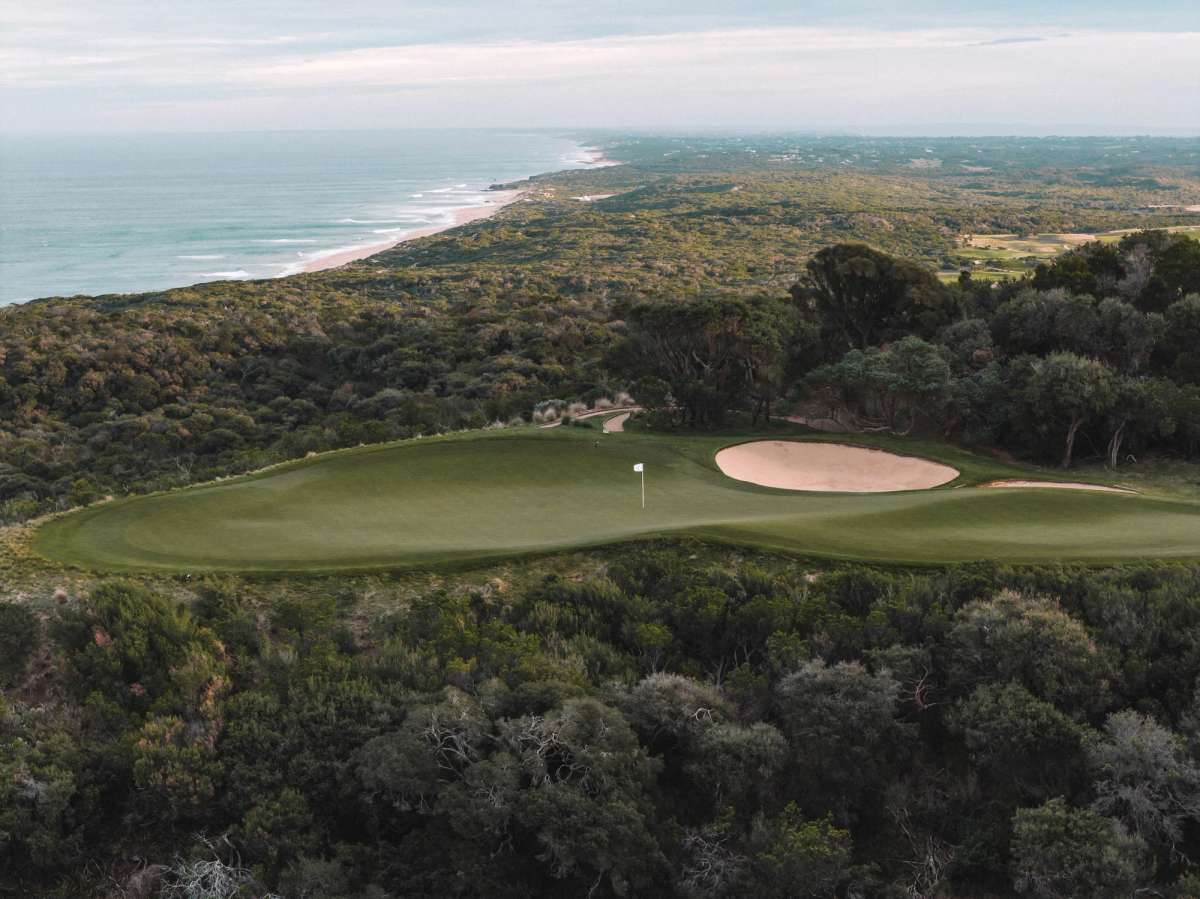
Designed by Robert Trent Jones Jr, The Old was The National’s original course at Cape Schanck.
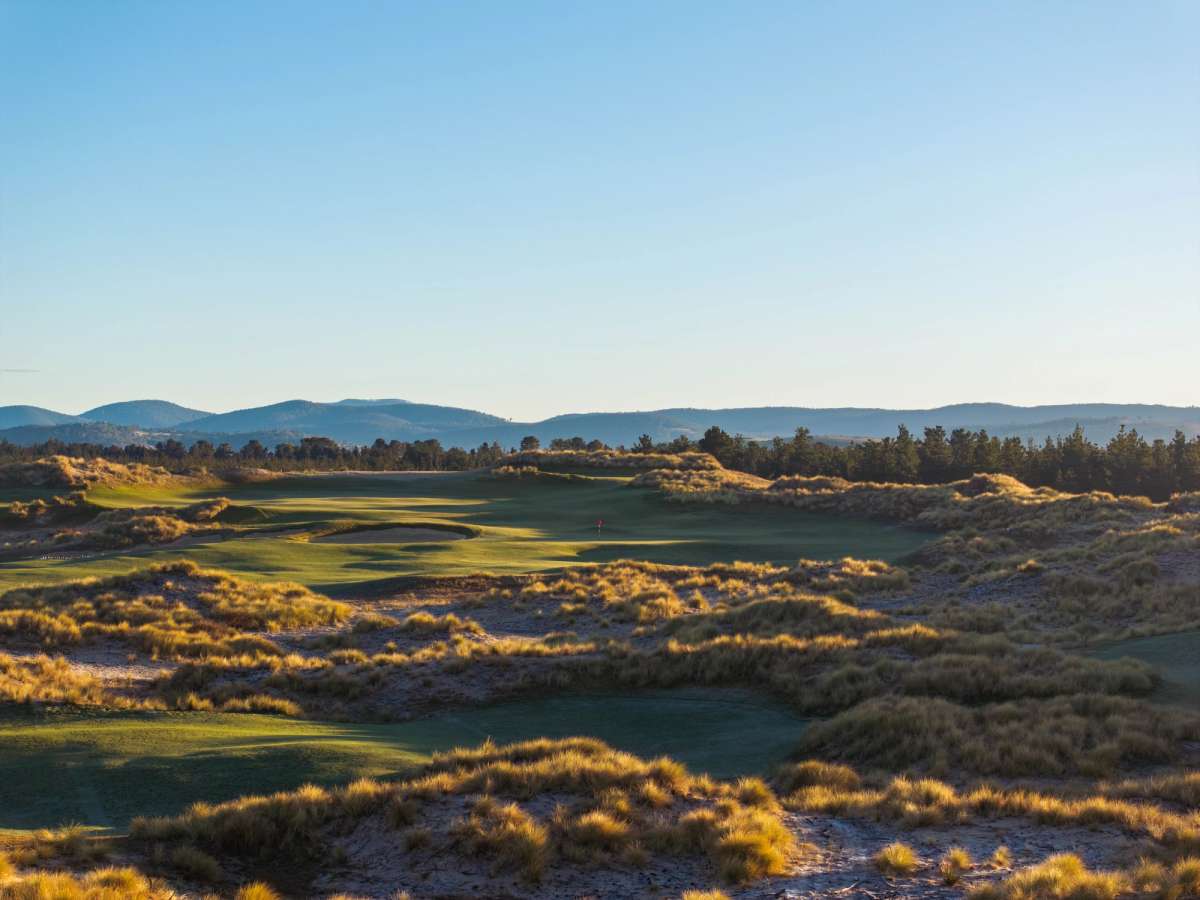
The course moves through heaving terrain, large dunes and native coastal
vegetation, with elevation changes and views across Bass Strait contributing to its distinctive character. The dramatic coastal setting is particularly evident around the middle of the round, but the landscape influences the experience throughout.
It is a course where the terrain is always present, whether shaping a shot, changing the view or influencing the way the wind affects play.
Greg Norman and Bob Harrison’s Moonah course provides a different scale and feel.
Serpentine fairways move through towering dunes and established Moonah trees, creating a sense of space while still placing a premium on positioning from the tee.
Strong par-fives, significant fairway movement and exposed coastal conditions are recurring features.
The design feels expansive, with the dunes and native vegetation framing the golf rather than competing with it.
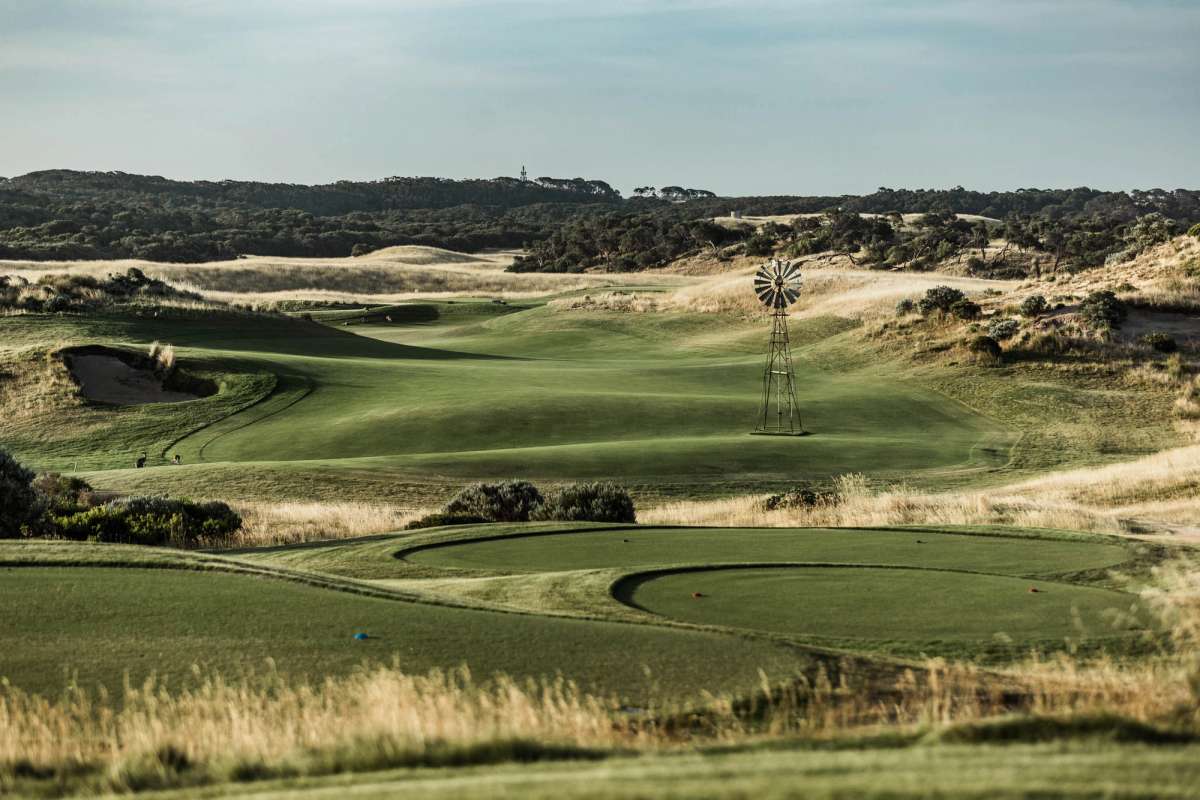
Gunnamatta was redesigned by Tom Doak and opened in its current form in 2019.
Doak made use of the site’s natural cup-and-bowl terrain, with generous fairways giving golfers room from the tee before imaginative green shapes, contours and strategic bunkering ask more questions closer to the hole.
The contrast with its neighbours is immediate. Gunnamatta encourages golfers to think about angles, slopes and where to position the ball, creating a course that can reveal something different with each round.
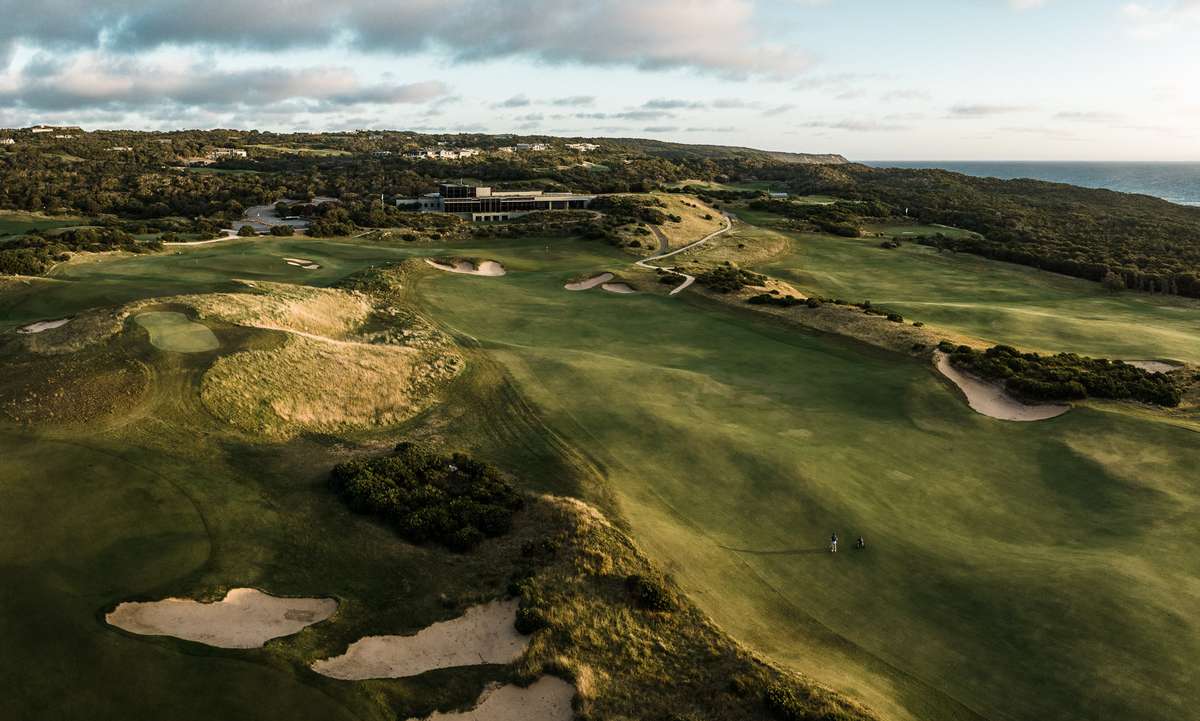
The National’s fourth property sits on the sandbelt, between central Melbourne and the Mornington Peninsula.
Originally designed by Gordon Oliver, Long Island has recently undergone a
significant renovation by OCM Golf. The project has introduced three distinct 18-hole routings, The Original, The Farm and The Track, using shared fairways, double greens and alternate tees to create different ways of playing across the same piece of land.
It provides a very different experience from Cape Schanck, replacing the large
coastal dunes with the firmer ground, vegetation and strategic qualities associated with Melbourne’s Sandbelt.
While The National is a private members’ club, interstate and overseas golfers can request tee times directly with the Club, subject to availability.
Victorian residents who are not members must be invited and play with a member.
Travelling golfers should plan ahead, particularly if hoping to experience more than one of the Cape Schanck courses during their stay.
For those able to arrange access, the opportunity to play three courses from three different architects at the same property makes Cape Schanck an easy place to dedicate several days rather than simply squeezing in a single round.
The National forms part of a much broader golf region.
The Dunes, St Andrews Beach and Moonah Links are among the public-access
courses that can be incorporated into a Mornington Peninsula itinerary, allowing visiting golfers to build several days of golf without spending large amounts of time travelling between rounds.
The Dunes sits among the rolling sand dunes of the Peninsula’s Cups region and is one of the area’s best-known public-access layouts.
That concentration of golf is one of the Peninsula’s advantages. A trip can combine private and public courses while still leaving time to experience the region away from the course.
Golf might provide the reason for the trip, but where you stay can become an
important part of the experience.
Set among the vines at Merricks North, Jackalope offers a very different setting from a traditional golf resort. The design-led hotel sits within an 11-hectare vineyard and combines accommodation with wine, dining, a spa and a 30-metre infinity pool overlooking the vines.
For a golf trip, it works particularly well as a base from which the days can begin and end with something other than golf.
Rare Hare provides relaxed vineyard dining with views across the property, while Doot Doot Doot offers the hotel’s more considered dining experience beneath its distinctive 10,000-globe chandelier. Wine tastings are available on the estate, and the cellar door provides an opportunity to explore wines produced from the vineyard surrounding the hotel.
For couples or groups travelling together, it makes it possible to combine golf with the food, wine and accommodation experience that has made the Mornington Peninsula a destination in its own right.
Not everyone travelling on a golf trip necessarily wants to play every round.
Alba Thermal Springs and Spa at Fingal provides an easy off-course option, whether it is a golfer looking for some recovery between rounds, a partner looking for a day away from the course, or a family travelling together.
Set among native vegetation, Alba combines indoor, open-air and outdoor
geothermal pools with spa treatments and dining at Thyme. Its general springs
welcome guests of all ages, with those under 16 accompanied by an adult, while the spa and private springs experiences are designed for older guests.
It also works naturally within a golf itinerary. A morning round can be followed by an afternoon in the springs, while those sitting out a day of golf can spend considerably longer exploring the pools, spa and dining experiences.
For couples, private bathing and spa options provide another way to spend time together on the Peninsula. For families, the general springs offer an activity that does not rely on everyone sharing the same enthusiasm for golf.
The same principle applies across the wider Mornington Peninsula.
More than 50 cellar doors are spread across the region, with Pinot Noir and
Chardonnay particularly closely associated with the Peninsula’s cool-climate
vineyards. Restaurants, breweries, farm gates and local producers add further
options for an afternoon or evening away from the course.
Then there is the coastline.
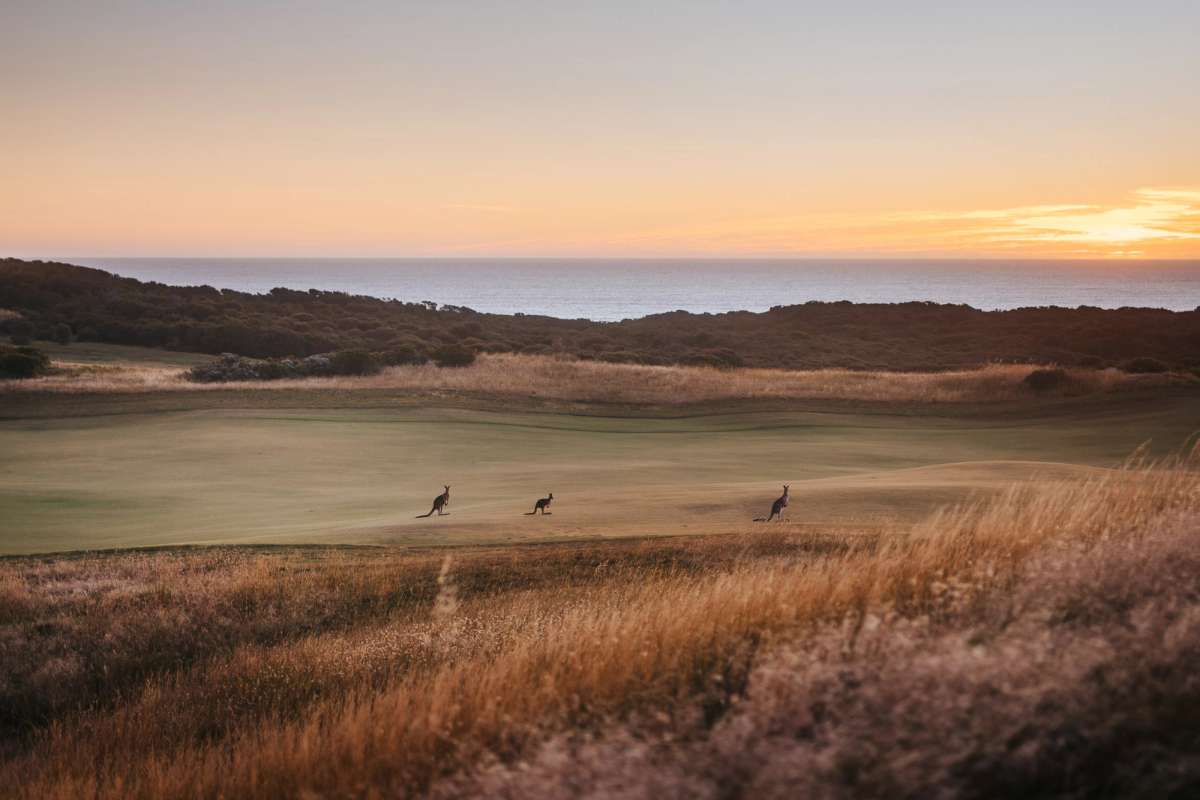
The Peninsula sits between the calmer waters of Port Phillip and the more exposed ocean coastline of Bass Strait, creating everything from family-friendly bay beaches to surf beaches, cliffs, coastal walks and lookouts.
That variety matters when travelling as a couple, family or mixed group.
Golfers can build the trip around the courses without requiring everyone else to build their holiday around golf.
For international and interstate golfers already travelling to Melbourne, the
Mornington Peninsula fits naturally alongside a Sandbelt itinerary.
Rather than treating Cape Schanck as a day trip, spending several nights on the Peninsula creates the opportunity to experience The Old, Moonah and Gunnamatta individually, add one or two of the region’s public courses and still leave room for the experiences that sit beyond golf.
Long Island can provide another National experience closer to Melbourne, while Jackalope, Alba, the region’s wineries and the coastline give travelling partners and non-golfers their own reasons to make the trip.
That is what separates the Mornington Peninsula from simply being somewhere with good golf.
The courses may bring golfers south from Melbourne, but the combination of golf, accommodation, food, wine, coastline and wellness makes it somewhere worth staying.
Australia is home to some of the world’s best golf, from the coastal links of Tasmania to the championship courses of Melbourne and the year-round sunshine of the Gold Coast. But with so much ground to cover, choosing where to play can be half the challenge. We’ve put together three seven-night itineraries to help you plan your next Australian golf holiday, each combining standout courses with local food, scenery and things to do away from the fairways. Whether you’re after a links-focused road trip, a week exploring the Mornington Peninsula or a golf getaway with beaches and nightlife, there’s an option to suit. Melbourne, Australia: A Mornington Peninsula Golf Week Suggested duration: 7 nights | Golf: 4 rounds | Best base: Mornington Peninsula The Mornington Peninsula is one of Australia’s best regions for a golf getaway, with several excellent courses within easy reach of one another. With coastal scenery, wineries, hot springs and plenty of good places to eat, it’s an ideal base for a week of golf without spending every day on the road. Itinerary Day 1 – Arrive in Melbourne Collect a hire car at Melbourne Airport or arrange to pick one up the next morning, then settle into accommodation in the city. Enjoy dinner in one of Melbourne’s many laneways before an early night. Day 2 – Drive to the Mornington Peninsula Head south to the Mornington Peninsula, allowing around 90 minutes or more depending on traffic and your destination. Stop in Mornington for lunch before settling into accommodation around Fingal, Rye or Rosebud. Day 3 – Moonah Links (Open) Play Moonah Links’ Open Course, a championship layout designed to host the Australian Open, with the Legends Course offering an alternative for a second round. Spend the evening relaxing at the resort or head into nearby Rye for dinner. Day 4 – St Andrews Beach Golf Course St Andrews Beach is one of the world’s top 100 courses, and the cheapest to play on the list. Designed by Tom Doak, it winds through the peninsula’s sandy coastal terrain. Afterwards, head to the coast for a walk or find a local restaurant for dinner. Day 5 – A day off the course Take a break from the fairways with a visit to Peninsula Hot Springs or explore the wineries around Red Hill. The seaside towns of Sorrento and Portsea are also worth a visit for coastal walks, cafes and lunch by the water. Day 6 – The Dunes Golf Links Head to The Dunes Golf Links near Rye for another round on one of the peninsula’s leading public-access courses. Spend the afternoon exploring the surrounding coastline before choosing from the area’s restaurants for dinner. Day 7 – RACV Cape Schanck Finish the golf with a round at RACV Cape Schanck, where ocean views add to the appeal of the course. Alternatively, leave the clubs behind for another day exploring the peninsula’s beaches, wineries and coastal villages. Day 8 – Return to Melbourne and depart Planning note: This itinerary avoids relying on restricted-access Sandbelt courses such as Royal Melbourne and Kingston Heath. Book Moonah Links early, then confirm visitor tee-time availability at St Andrews Beach, The Dunes and RACV Cape Schanck before finalising accommodation, particularly during peak season. Green Fees Moonah Links: AU$125-140 St Andrews Beach: AU$139 The Dunes Golf Links: AU$110-135 RACV Cape Schanck: AU$119-129 Green fees are shown as low-season to high-season rates where a range is available. Prices are indicative and subject to change. Estimated Trip Cost Budget note: All figures are indicative, per person and in Australian dollars (AU$), based on four golfers sharing accommodation and a hire car. Green fees reflect the courses listed in each itinerary, with rates subject to season, day of the week and visitor category where applicable. Costs will vary with accommodation, dining and activities. International flights, club hire and caddies are excluded. Tasmania, Australia: Links Golf And a Laid-Back Road Trip Suggested duration: 7 nights | Golf: 4-5 rounds | Best base: Barnbougle, followed by Bothwell and Hobart Tasmania packs some of Australia’s best golf into a relatively small island, from the coastal links at Barnbougle to the historic fairways of Ratho Farm. This seven-night road trip combines world-class golf with a journey from Launceston in the north to Hobart in the south, with time to enjoy Tasmania’s food, scenery and laid-back pace along the way. Itinerary Day 1 – Arrive in Launceston Collect a hire car at Launceston Airport and spend the day exploring Tasmania’s second-largest city. Visit the Cataract Gorge Reserve before dinner at one of the city’s restaurants, ready for an early start the following morning. Day 2 – Travel to Barnbougle Drive north-east to Barnbougle, allowing around 90 minutes from Launceston. Settle into your accommodation near Bridport, with the coast and the island’s headline golf courses now on your doorstep. Day 3 – Barnbougle (The Dunes) Start with Barnbougle Dunes, the acclaimed links course set among rolling coastal dunes overlooking Bass Strait, ranked 25th in the world. After your round, enjoy a relaxed evening at the resort and save your energy for another big day of golf. Day 4 – Barnbougle (Lost Farm) Head to Lost Farm, Barnbougle’s second 18-hole course, where wide fairways and sweeping coastal views provide a different challenge from Dunes. With both courses close together, there’s no need to pack up or change accommodation between rounds. Day 5 – Barnbougle (Bougle Run), then travel inland Fit in a round on Bougle Run, Barnbougle’s 14-hole course, before heading inland towards Bothwell. The drive takes you through Tasmania’s rural heartland, with time to enjoy the scenery along the way. Day 6 – Ratho Farm and the drive to Hobart Play Ratho Farm, a distinctive rural course with a relaxed atmosphere and a setting steeped in Tasmania’s golfing history. Afterwards, continue to Hobart, where you can settle in for the evening and explore the waterfront restaurants and bars. Day 7 – Royal Hobart Finish the trip at Royal Hobart, one of Tasmania’s established championship clubs. Spend your final evening in Hobart exploring Salamanca Place or enjoying dinner around the waterfront. Day 8 – Depart Hobart Planning note: Book Barnbougle Dunes and Lost Farm first, particularly during peak season, and secure accommodation near Bridport before finalising the rest of the route. Check tee-time availability at Bougle Run, Ratho Farm and Royal Hobart, and allow enough time for the drive from the north coast to Hobart. Green Fees Barnbougle (Dunes): AU$280-285 (International visitors) Barnbougle (Lost Farm): AU$280-285 (International visitors) Barnbougle (Bougle Run): AU$120-125 (International visitors) Ratho Farm: AU$50 Royal Hobart: AU$180 (International visitors) Green fees are shown as low-season to high-season rates where a range is available. Prices are indicative and subject to change. Estimated Trip Cost Budget note: All figures are indicative, per person and in Australian dollars (AU$), based on four golfers sharing accommodation and a hire car. Green fees reflect the courses listed in each itinerary, with rates subject to season, day of the week and visitor category where applicable. Costs will vary with accommodation, dining and activities. International flights, club hire and caddies are excluded. Queensland, Australia: A Gold Coast Golf Getaway Suggested duration: 7 nights | Golf: 4 rounds | Best base: Hope Island, Broadbeach or Surfers Paradise The Gold Coast combines year-round golf with beaches, restaurants and plenty to do away from the course. This seven-night getaway mixes resort golf with accessible public courses, giving you four rounds and time to enjoy one of Australia’s most popular holiday destinations. Itinerary Day 1 – Arrive on the Gold Coast Collect a hire car at Gold Coast Airport and settle into accommodation around Broadbeach, Surfers Paradise or Hope Island. Head to the beach for a walk before exploring the area’s restaurants and bars. Day 2 – Links Golf & Wellbeing (Hope Island Golf Course) Start the trip at Links Golf & Wellbeing, a public-access course at Hope Island with a links-inspired layout. Afterwards, enjoy the resort surroundings or head to Sanctuary Cove for dinner by the marina. Day 3 – RACV Royal Pines Play RACV Royal Pines, home to the Australian PGA Championship, before spending the afternoon by the pool or heading into Broadbeach for dinner and a night out. Day 4 – A day away from golf Take a break from the fairways with a trip to one of the Gold Coast’s theme parks, including Warner Bros. Movie World, Dreamworld or Sea World. If rides aren’t your thing, head for the beaches, explore the shops and restaurants at Pacific Fair, or escape to the hinterland for rainforest walks and waterfalls. Day 5 – Lakelands Golf Club Head to Lakelands Golf Club for a round on the course designed by Jack Nicklaus. Afterwards, return to the coast for a relaxed evening, with plenty of restaurants to choose from around Broadbeach and Surfers Paradise. Day 6 – Emerald Lakes Play Emerald Lakes, a popular option in Carrara that offers a change of pace from the region’s resort courses. With the afternoon free, you could explore the Gold Coast’s waterfront dining spots or catch the sunset from the beach. Day 7 – A final day on the Gold Coast Keep the last full day flexible. Book an additional round if you’re keen for more golf, take a cruise through the canals, or spend a few hours enjoying the beaches before a final dinner together. Day 8 – Depart the Gold Coast Planning note: Confirm visitor tee-time availability at all four courses before booking accommodation, particularly during school holidays and major golf events. Staying around Broadbeach or Surfers Paradise offers easy access to restaurants and beaches, while Hope Island is convenient for the northern courses. Green Fees Links Golf & Wellbeing (Hope Island): AU$175 RACV Royal Pines (Green&Gold): AU$140-155 Lakelands Golf Club: AU$180-200 Emerald Lakes: AU$67-77 Green fees are shown as low-season to high-season rates where a range is available. Prices are indicative and subject to change. Estimated Trip Cost Budget note: All figures are indicative, per person and in Australian dollars (AU$), based on four golfers sharing accommodation and a hire car. Green fees reflect the courses listed in each itinerary, with rates subject to season, day of the week and visitor category where applicable. Costs will vary with accommodation, dining and activities. International flights, club hire and caddies are excluded.
Australia has earned its reputation as one of the world's great golf destinations, with courses that rival anything found in Scotland, Ireland, or the United States. From the legendary sandbelt layouts of Melbourne to the windswept links of Tasmania, the country offers an extraordinary diversity of world-class golf experiences. The latest Top 100 rankings showcase not just the elite courses that golfers travel halfway around the globe to play, but the remarkable depth of quality that extends well beyond the marquee names. This year's rankings reflect a comprehensive reassessment by a new panel featuring significantly expanded global voices with deep play experience across Australia's finest layouts. With 41 courses climbing and only six maintaining their positions, these rankings capture the dynamic state of Australian golf as it continues to evolve. Six Australian courses now occupy positions in the World Top 100, cementing the nation's status alongside the game's most celebrated golfing regions. 2025/26 Rankings: Consistency Meets Change 🏆 The top of Australian golf tells a story of enduring excellence. Royal Melbourne (West), Kingston Heath, Barnbougle (Dunes), and Cape Wickham have occupied the first four positions since 2012—a remarkable 13-year run that speaks to their timeless quality. These aren't courses that rely on gimmicks or resort amenities; they're pure golf experiences that have stood the test of time and the scrutiny of thousands of discerning players. ⭐ The biggest news arrives at number 10, where Seven Mile Beach makes an immediate impact as the highest new entry. The Clayton DeVries & Pont design, which opened at the end of 2025 near Hobart, joins three Barnbougle layouts in Tasmania's Top 10. This marks the first time since 2017 that a new course has broken into the Top 10, underlining the significance of this links masterpiece. 🌏 Beyond the Top 100 featured here, Australia boasts nearly 200 additional courses ranked across state and territory listings, demonstrating a depth of quality that few nations can match. 2025/26 Top 100 At A Glance The Unchanged Elite (All World-Ranked) 🌍 The top six positions remain exactly as they were in 2024, with all six courses also holding positions in the World Top 100: Royal Melbourne (West) - Victoria (World #6) Kingston Heath - Victoria (World #17) Barnbougle (Dunes) - Tasmania (World #25) Cape Wickham - Tasmania (World #47) New South Wales GC - New South Wales (World #68) St. Andrews Beach - Victoria (World #89) The Game-Changer 🎯 #10 Seven Mile Beach - Tasmania (NEW ENTRY) The Rising Stars ⬆️ Exceptional Climbers (15+ places): 🥇 RACV Healesville #43 (▲32 from #75) - Victoria 🥈 Narooma #70 (▲24 from #94) - New South Wales 🥉 Rosebud (North) #75 (▲22 from #97) - Victoria Royal Sydney #28 (▲18 from #46) - New South Wales Tasmania #68 (▲16 from #84) - Tasmania Major Climbers (10-14 places): Cypress Lakes #74 (▲12) - New South Wales Federal #87 (▲11) - Australian Capital Territory Curlewis #60 (▲10) - Victoria Amstel (Ranfurlie) #77 (▲10) - Victoria Strong Climbers (6-9 places): Commonwealth #19 (▲9) - Victoria Port Fairy #35 (▲8) - Victoria Portsea #36 (▲8) - Victoria Elanora #47 (▲8) - New South Wales St. Michael's #69 (▲8) - New South Wales 13th Beach (Beach) #23 (▲6) - Victoria New Entries 🆕 Murray Downs #84 - New South Wales The Heritage (St. John) #89 - Victoria Yarrawonga (Murray) #90 - New South Wales Noosa Springs #97 - Queensland View Complete Rankings 🔗 For the full Top 100 Australian golf courses with detailed information, visit the Australian rankings page. State and Territory Rankings: 🏛️ Australian Capital Territory 🌊 New South Wales 🌏 Northern Territory ☀️ Queensland 🍷 South Australia 🌲 Tasmania 🏙️ Victoria 🦘 Western Australia Best Golf Courses by State and Territory 🏙️ Victoria Dominates (40 courses, 40%) Victoria claims 40 of the 100 ranked courses, with the Melbourne sandbelt accounting for much of this concentration. The world's densest collection of championship courses sits within a 20-kilometre radius of central Melbourne. Five of Australia's top ten courses call Victoria home, including Royal Melbourne's twin masterpieces, Kingston Heath, Victoria, and St. Andrews Beach. 🌊 New South Wales (22 courses, 22%) Led by New South Wales Golf Club at Botany Bay at number five, the state's strength extends from Sydney's premium courses through exceptional coastal layouts along the south coast. Royal Sydney's remarkable 18-place climb to #28 demonstrates renewed appreciation for Gil Hanse’ new design. 🌲 Tasmania (7 courses, 7%) Tasmania punches well above its weight with seven courses, including four in the Top 10. This island state has evolved from regional player to world-class destination, with Barnbougle Resort's three layouts and Seven Mile Beach leading the charge. ☀️ Queensland (12 courses, 12%) Royal Queensland leads at #33, with the state offering strong resort golf experiences across tropical locations from the Gold Coast to the Whitsundays. 🦘 Western Australia (10 courses, 10%) Lake Karrinyup leads at #26, with Perth's courses offering quality golf in a region that sees fewer international visitors but rewards those who make the journey. 🍷 South Australia (7 courses, 7%) Royal Adelaide at #12 anchors the state's golf scene, with strong depth across Adelaide's parkland courses and coastal layouts on the Fleurieu Peninsula. 🏛️ Australian Capital Territory (2 courses, 2%) Royal Canberra at #27 and Federal at #87 (up 11 places) represent the nation's capital with distinction. What the Rankings Tell Us 🏆 Consistency at the Summit: Thirteen Years of Excellence The top four positions have remained unchanged: Royal Melbourne (West), Kingston Heath, Barnbougle (Dunes), and Cape Wickham. Royal Melbourne has held the number one position since the first Australian rankings were compiled in 2007, an 18-year reign that reflects its status as one of the world's truly great courses. 🌟 Melbourne Sandbelt: The World's Premier Golfing Precinct Five of the top 12 Australian courses reside in Melbourne's sandbelt, and 12 of the top 20 call Victoria home. This concentration of excellence within such a compact geographic area remains unique in world golf. Royal Melbourne's twin courses occupy positions one and nine, while Kingston Heath, Victoria, Peninsula Kingswood (x2), Metropolitan and Woodlands all rank in the top 20. Commonwealth's nine-place jump to #19 following the Doak /Slawnik renovation adds another strong voice to this remarkable chorus. 🌲 Tasmania's Emergence as World-Class Destination Tasmania now hosts four courses in the Top 10—a remarkable achievement for an island state with a population of just over 500,000. Barnbougle Resort's three layouts (Dunes #3, Lost Farm #7, Bougle Run #61) created the initial momentum. Seven Mile Beach's arrival at #10 confirms this isn't a one-off phenomenon but a sustained elevation to world-class status. The Clayton DeVries & Pont design at Seven Mile Beach fulfils the promise made in the 2021 rankings article, which predicted a major impact upon opening. Set among coastal dunes near Hobart, the course offers genuine links golf with views across Storm Bay. The routing makes brilliant use of dramatic duneland, with fairways that tumble through valleys and greens perched on plateaus. King Island, situated in Bass Strait between Tasmania and Victoria, hosts both Cape Wickham at #4 and Ocean Dunes at #32. Both courses remain firmly in the Top 50, confirming the island's status as a must-visit destination for serious golfers. Ocean Dunes fell steeply due to conditioning issues that detrimentally affected play. A Journey Through Australian Golf: 2012-2024 📅 2012: The First Top 100 Expansion The 2012 rankings marked the expansion from a Top 50 to Top 100, with Barnbougle Lost Farm hurtling in at an astonishing #5. This 20-hole links on Tasmania's northeast coast signalled the beginning of Tasmania's transformation. Twelve new courses entered, including Healesville at #35 and Hamilton Island at #41. St Andrews Beach climbed 13 places to #13. 📅 2014: Consolidation and Refinement Just six new entries made 2014 the most selective update. Stonecutters Ridge debuted at #64 as Sydney's first Greg Norman course, while Kalgoorlie Golf Course entered at #73. Bonnie Doon returned at #80 during its Clayton/Ogilvy redesign. 📅 2017: The King Island Revolution Cape Wickham's debut at #8 represented the second course to break into the Top 10 since rankings began. The Mike DeVries and Darius Oliver collaboration immediately established itself as one of Australia's premier designs. Ocean Dunes ranked at #35, giving King Island two nationally recognised courses. Royal Canberra rose 21 to #29, and Bonnie Doon climbed 31 to #49 following OCCM renovations. 📅 2019: Tom Doak's Impact Emerges Cape Wickham continued its ascent to #5, while Royal Adelaide returned to the Top 10 at #9 following Tom Doak's restoration. Cathedral Lodge debuted at #14, Peninsula Kingswood (South) entered at #36, and Ocean Dunes surged 13 spots to #22. The top three positions remained unchanged, establishing what would become a 13-year pattern of consistency. 📅 2021: Peninsula Kingswood's Breakthrough Peninsula Kingswood's North course soared 14 places to #10, and South climbed 12 to #24. The National's Gunnamatta course made the biggest jump, up 29 positions to #12 following Tom Doak's overhaul. Pipeline projects at Seven Mile Beach and Arm End in Tasmania were announced, with predictions that both would "have a big impact on future rankings." 📅 2024: Fresh Panel Assessment The top three maintained their familiar order. Barnbougle Lost Farm rose two to #5, Peninsula Kingswood (North) climbed two to #8, and Lonsdale Links debuted at #34. Yarra Yarra rose five to #26 as Doak's restoration gained recognition. The 2024 article noted Seven Mile Beach was "due to open at the end of this year"—a prediction now confirmed with the course arriving at #10. Looking Ahead 🔮 Seven Mile Beach's immediate Top 10 arrival demonstrates that Australian golf continues to produce courses capable of competing at the highest level. The Clayton DeVries & Pont design sets a new benchmark for modern Australian course development. As the course matures and more panellists experience it, further upward movement seems likely. The long-awaited Arm End project in Tasmania remains in development, with OCM promising to add another distinctive layout to Tasmania's growing reputation. The project's multi-use public recreation reserve concept offers a potentially new model for sustainable course development. Darius Oliver's clifftop project on Kangaroo Island in South Australia continues to progress. Oliver's track record with Cape Wickham and Ocean Dunes suggests this project could eventually rival those courses. The target completion date of late 2025 or early 2026 means the next ranking revision could see Kangaroo Island join King Island as a remote island hosting world-class golf. Beyond new construction, ongoing restoration and renovation work at established courses will continue to influence rankings. Tom Doak's multi-phase restoration at Yarra Yarra shows positive momentum, while numerous sandbelt courses pursue sympathetic enhancement projects. The collective impact of these efforts should elevate the overall standard of Australian golf. For the complete Top 100 Australian golf courses rankings with detailed course information and world rankings, visit the Australian rankings page.
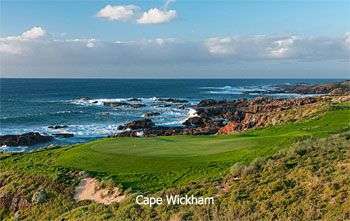
Second Hundred Golf Courses of the World 2016 We preview the challengers for the 2018 Top 100 Golf Courses of the World and list this season’s second hundred Having recently published the latest 2016 edition of our Top 100 Golf Courses of the World, we thought we’d take a look at the layouts that missed inclusion this time round. We’ve focused this Second Hundred Golf Courses of the World article on forty highlighted challengers, but it’s feasible that any of the hundred courses listed at the end of this article could make the next World Top 100. It’s also viable that numerous other courses could also make the grade. If you think we’ve missed a layout from our current World Top 100 or from our Second Hundred (listed in full at the end of this story), please click the “Respond to this article” link at the top and bottom of the page and share your opinion. The forty “challengers” are profiled by country below. At the end of this article we list the entire second hundred in alphabetical order. Australia Moonah is one of the toughest golf courses in Australia and it’s the headliner at the remarkable National Golf Club at Cape Schanck on the Mornington Peninsula. This modern Greg Norman/Bob Harrison links is not only dramatic but also raw and elemental. Two other National courses are also notable (Ocean course and Old course), which is why RTJ2 commented that the National is “one of the great golf complexes anywhere in the world”. No true golfer could disagree. King Island is situated in the Bass Strait, to the northwest of the main island of Tasmania, and it lies about half way between Tasmania and the mainland state of Victoria. It’s here that respected author Darius Oliver is said to have convinced businessman Duncan Andrews to develop the Cape Wickham site and subsequently American architect Mike DeVries was hired to lay out this dramatic links, which opened in 2015. It’s too early to say whether or not this project will be sustainable due to the remote island location and the vicious Roaring Forties, which batter King Island. It might be a step too far for all but the most intrepid golfers. The East course at Royal Melbourne is undoubtedly the West’s understudy. According to James Spence, author of the Finest Golf Courses of Asia and Australasia: “While it does not quite offer the grand theatre of the West, it is still a fantastic golfing experience and holds its own versus all other courses in the Melbourne area.” The Alister MacKenzie-designed Royal Adelaide has featured in our world hundred on numerous occasions but has missed out recently. James Spence commented as follows: “Although the sea hasn’t bordered the course at The Royal Adelaide for some 10,000 years, it remains, like Royal Lytham & St Annes, more of a links course than an inland course. Royal Adelaide is a favourite golf course of many Australian golfers and it’s easy to see why.” Seven Australian Opens, five Australian PGAs and ten other professional tournaments have been hosted at The Metropolitan Golf Club. The World Golf Championships Match Play Championship was held here in 2001 and this Sandbelt classic is polished to within an inch of its life. Fergal O'Leary, our US Consultant, played here recently and commented: “Attention to detail and conditioning at “Metro” is second to none, I even heard that some of the green-side bunkers have their edges hand-cut with scissors!” Bermuda The Mid Ocean Club is set on the northeastern tip of Bermuda in weathly Tucker's Town. The “Father of Golf Architecture”, Charles Blair Macdonald, originally laid out the course in 1921 adjacent to the Atlantic and it has been on the cusp of the World Top 100 for each edition. It’s a unique layout that’s routed across glorious undulating ground, but the Atlantic Ocean doesn’t play a major part in the design, merely providing a beautiful backdrop to a number of holes, the majority of which are set back a little further inland amongst the stately pines, the pretty glades and the dramatic valleys. Canada Hamilton Golf & Country Club, or Ancaster as it is known locally, is located on land which once known as Grange Farm and it is set most beautifully in elegant, heavily wooded seclusion. There are three loops of nine holes here, called South, West and East and the championship layout comprises of the West (front nine) and South (back nine). Although Hamilton’s club history can be traced back to 1894, the West and South were designed as two nine-hole courses by Harry S. Colt and both loops formally opened for play in 1916. It didn’t take long for Cabot Links to make a startling impact on the Canadian Top 100 rankings, soaring almost to the top of this prestigious national chart within months of its opening. No pressure then on Bill Coore & Ben Crenshaw to deliver when their much awaited Cabot Cliffs layout debuted three years later. Situated half a mile away from Cabot Links, the Cliffs course occupies a more diverse landscape than its predecessor, sitting atop the bluffs that overlook the Gulf of St Lawrence, with fairways transitioning seamlessly between woodland, wetland and meadowland areas. Somewhat unusually, the layout is configured with three par threes, three par fours and three par fives on each of the nines. England The Herbert Fowler-designed East course at Saunton has been on the threshold of a World Top 100 ranking for many years. For one reason or another it has never managed to muscle its way onto the world list. This winter a number of new bunkers are being added by Mackenzie & Ebert and a couple of spectacular green run off areas are being created. The East course is undeniably a serious contender as is the Church course at St Enodoc, which pitches and rolls over glorious Cornish linksland. It even wraps around the church where the Poet Laureate, Sir John Betjeman, is buried. The poem “Seaside Golf” was inspired by a rare three Sir John carded at St Enodoc. Alwoodley came very close to knocking Ganton off the Yorkshire top spot when we recently revised our Best In County rankings. Many golfers think that the home course of Dr. Alister MacKenzie (his first architectural design) is one of his best layouts and it continues to progress upwards in our Britain & Ireland Top 100. A recent poster said: “Certainly a course which should be ranked higher and can rival the likes of the Hotchkin Course at Woodhall Spa.” Royal Cinque Ports is one of England’s unsung links. It doesn’t have the dune drama of its near neighbour at Sandwich, but the greens complexes at Deal are as good as any links course in Britain, while the brutal closing stretch will sort the men from the boys. France Les Bordes was the brainchild of Baron Marcel Bich (the man behind Bic pens) and his friend Yoshiaki Sakurai. Together they committed to paper (presumably by biro) the wooded masterpiece that is consistently ranked as one of Europe’s greatest courses. Designed by the late Texan, Robert von Hagge, on a day when he was at his most wickedly creative. Les Bordes opened for play in 1986 and it’s a supreme challenge. The likeable Jean Van de Velde holds the current course record of 71 (one under par), so don’t visit Les Bordes expecting to play to handicap. This monster layout stretches to 7,062 yards from the tips and it really is as difficult as its reputation suggests. According to the old Big Bopper song, “Chantilly Lace had a pretty face and a wiggle in her walk”. Golf de Chantilly is far more than a pretty face; the Vineuil is one of Europe’s most glorious courses that’s set amidst the forest of the Ile de France, approximately 30 miles to the north of Paris. The club was originally founded in 1909 and it has played host to numerous French Opens, including the 1913 French Open, which George Duncan won. Germany Falkenstein is an attractive course, which is routed in all directions of the compass. The wooded location provides a genteel oasis to play golf, away from the hustle and bustle of Hamburg’s city centre. While tree-lined courses often have dull highway-like holes, here only the 2nd and 11th are relatively straight and that is just the right amount of diversion on a course full of doglegs and interest. Every hole presents a unique challenge, the bunkering is vintage Colt (with some modern alterations) and the green complexes provide great entertainment without going overboard. Indonesia In the words of Greg Norman: “When I first saw the site, I was immediately taken by the dramatic location, the fascinating local culture and the rolling hills covered with rice paddies. I was determined to keep all these features while building a golf course that would challenge even the world’s best. I’m proud to have played a part in developing this world-class golf course.” But is Nirwana Bali that good? Let’s find out from Kimi Hoshiyama, our China and Southern Asia Correspondent: “Nirwana Bali Golf Club features wonderful views overlooking the Indian Ocean. There are many rice terraces positioned on roughs and creeks crossing fairways on some holes. The rugged cliffs with three holes running along the Indian Ocean, terraced rice paddies and coastal landscape, have all been preserved to provide spectacular natural hazards. When the prevailing strong sea winds blow, the course becomes more difficult. The par 5 hole 6, the par 3 hole 7, the par 4 hole 13 and the par 3 hole 14 are superb, these holes are not only beautiful but also the ocean comes into play.” Japan The East and the West are two outstanding golf courses at Kasumigaseki Country Club. East or West, which is best? We’re really not too sure, but the East is the one that the members generally favour, so we think it’s prudent to stick with those in the know and Fergal agrees: “The site for the 2020 Olympics golf course. The East course has had some recent bunker work done by Tom Fazio, but the bigger challenge that the course is facing is to decide whether to consolidate the current “dual green system” into a single set of greens for the Olympics… We played on the old greens which are small and not very deep – certainly a challenge for the best of players. I am not in favour of consolidating the greens and adding numerous water features to the course as it takes away from one of the historic reasons why this club is so special. Having played this course twice now, my desire was not to touch the wonderful Charles Alison design and just let the best players in the world earn their gold medal.” Mexico At the end of 2014, the Golden Bear completed work on Quivira, his sixth Los Cabos layout, which is located on a truly stunning property at the end of the Baja peninsula, overlooking the Pacific Ocean. Focal point of the 1,850-acre luxury resort, this fabulous 18-hole layout is reputed to have taken around eight years to construct at a cost of $40 million. According to Javier Pintos, our Argentinean Correspondent: “WOW! One thousand times WOW!! This is maybe the most spectacular piece of land on which I have played golf in my entire life. It has dunes, level changes, Ocean, carries across cliffs, mountains, desert, sun and views of the new Tiger Woods Course at Diamante (El Cardonal). I was lucky to play here two days after Jack Nicklaus played it in its inaugural event last December 2014.” Netherlands In the early days, the Kennemer Golf & Country Club played on a rudimentary nine-hole course and when it moved to its present location in 1927, the brilliant Harry Colt was commissioned to lay out the course amongst the towering sand dunes and the result is still really good, despite damage caused by the occupying army during the Second World War. In 1985, Frank Pennink was tasked with adding nine new holes (Pennink’s last design before this death). Each nine has a name and is also referred to as the A, B and C course, so things can get a bit confusing. The A course is also called Van Hengel (named after Steven van Hengel who was a member and an eminent figurehead in Dutch golf), the B course is called Pennink and the C nine is called Colt. The Dutch Open utilises holes from all three nines, so play all 27 and then decide for yourself which two of the three loops combine to make the best course. New Zealand Kauri Cliffs dropped off our 2016 world hundred list to the amazement of many. Will it be back? Quite possibly – seaside golf doesn’t get much better than this. It’s hard not to be seduced by the magnificent ocean vistas that grab your attention the entire way round. Is the course itself good enough for a world ranking? That’s a tough question but many golfers would reply with a resounding yes. One of the few true links courses in the Southern Hemisphere and host to a dozen New Zealand Opens, Paraparaumu Beach is a household name and has twice been listed in our World Top 100 (2006 and 2012). Fergal O’Leary was very impressed when he played Paraparam almost twelve months ago: “Everything about the club is humble and unpretentious and fits every element of a golfing gem. If you’re looking for a course which will examine how accurate you are from the tee, then you’ve met your match.” Scotland According to Colin Montgomerie, “wherever Loch Lomond is ranked, it ought to be higher”, it’s therefore a no-brainer that this beautiful Tom Weiskopf and Jay Morrish design from 1993 must appear on this second hundred list. “The best golf experience in Europe” is how one reviewer described this unique course set on the bonnie, bonnie banks. Prestwick has been described as quirky, eccentric, strangely odd and rather confusing. This golfing monument often divides opinion. However, there’s no denying that this time-honoured links genuinely deserves consideration for a world ranking position. After all, this is where the Open Championship began and nobody could ever accuse it of being a bore. Machrihanish is widely loved by golf course architecture aficionados and frankly what’s not to like at this remote golfing outpost on the tip of the Kintyre peninsula? Perhaps if the round concluded half as strongly as it started, Machrihanish would be a permanent feature in the world hundred. Gleneagles is one of Europe’s finest destinations with a wonderful hotel and a Ryder Cup course within its portfolio. Let’s not dwell on the PGA Centenary course, which will never be a contender for this stellar ranking list, but concentrate on the regally named courses for a moment. The Queen’s is the favourite of many mid handicap golfers and it’s as pretty as pretty can be, but it’s the King’s course that’s knocking on the door. Often lauded as James Braid’s finest design, the King’s is hard not to like; the setting is glorious and the course big and bold, but perhaps it’s a little too refined for some. South Africa Durban is part of Africa’s Zulu Kingdom and it’s a bewitching seaside playground in the province known as KwaZulu-Natal. Amidst the hustle and bustle of this cosmopolitan city lies the serenity and calm of Durban Country Club. The Country Club course has not appeared in our world hundred since 2008, despite many rating this 1922 Laurie Waters and George Waterman design as the best in the land. Set on the edge of the Indian Ocean, hidden behind a high ridge of sand dunes, the layout undulates beautifully through lush and intimidating tropical vegetation. Durban could easily reappear in the World Top 100 but many golfers reckon there’s a better course down at Fancourt. The Links course at Fancourt opened for play in November 2000 and it represents a unique and very tough South African golfing experience. The course was designed by Gary Player, but only after the Black Knight’s team had studied in great detail the characteristics of classic Scottish links courses. The Links does indeed resemble a traditional seaside links, but so far they have failed to replicate the changeable British weather. Fergal played here recently: “The sheer scale and size of the Links course is a sight to behold by itself. It’s an immensely enjoyable and impressive course to play. Without debate, it’s Gary’s best design in his global portfolio. Don’t be fooled by the name, this is not a Links golf course by definition, however the inherent pot-bunkers, blind drives and swashbuckling fairways immediately give the sense that you are beside the seashore.” South Korea Author, James Spence, kindly allowed us to reprint his account of Nine Bridges from the Finest Golf Courses of Asia and Australasia: "The course was designed by Golf Plan whose two principles are Ronald Fream and David Dale. As befits a golf design firm led by a horticulturalist, the visual presentation and aesthetics of the course are excellent. The public relations releases talk about how the designers have sought to create a Scottish Highlands course and, for once, this is not mere hyperbole. The manicuring and finishing is of an order of perfection you are not liable to find in Scotland so, in truth, it more resembles an American course in a Scottish atmosphere. And this part of Jeju Island does indeed resemble Perthshire. The two nines have been laid out on a very generous allocation of land that wanders through pine-clad rolling land in the lee of Mount Halla, at 6,000 feet South Korea’s tallest mountain.” Spain Spain may have lost the fight to host the 2022 Ryder Cup, but the Spanish Ryder Cup bid course at PGA Catalunya is at the pinnacle of Spanish golf. The Stadium course is the culmination of more than ten years of planning and design by the European Tour who wanted to build their own Players Championship course to rival the PGA Tour’s TPC at Sawgrass. It has to be said that it was a decade well spent. The PGA Stadium is so good that within months of opening, it hosted the 1999 Gene Sarazen World Open and the Spanish Open in 2000. The Spanish Open returned to the Stadium course in 2009 (won by Thomas Levet) and in 2014 when veteran Miguel Angel Jiménez extended his own record as the oldest winner in European Tour history, prevailing in a three-man play-off. Sweden According to many, the Stadium course at Bro Hof Slott is Sweden’s best course and even architect RTJ2 thinks so: “Everything is big at Bro Hof! The holes are longer, the greens are bigger, the course has more water and the bunkers are larger and well placed. Besides which, the wind is always part of the game. On the dogleg holes you not only have to hit the balls a long way, you also have to get them to stop. Mother Earth must have created this area for a golf course. All I had to do was to walk around this beautiful landscape and see where the holes would fit in. There was an enormous amount of land and a large wallet. If, in spite of everything, there wasn’t enough land, we could get more.” Therefore, big really is better – you’ve been told. Thailand Formed in 2007 by thirty of Thailand’s wealthiest people, Ayodhya Links is one of the most exclusive golf clubs in Asia. Membership to the club is by invitation, so only the great and the good of Thai society mingle in the clubhouse – and unless you’re closely acquainted with one of these invitees, don’t hold your breath on getting a game here anytime soon. The design company of Thomson and Perrett created the course and they've laid out a tough track where water lies in wait at each and every one of the eighteen holes on the scorecard. If you add rolling fairways, lightning fast greens and a variety of deep bunkers into the golfing mix then it’s easy to see why Ayodhya is regarded as a real test of golf. USA Old Town Club in North Carolina is an obvious World Top 100 contender. It rocketed into our latest 2016 US Top 100 (#49) following the Bill Coore and Ben Crenshaw 2011 restoration of this Perry Maxwell classic. Gozzer Ranch in Idaho is widely regarded as Tom Fazio’s best design, perhaps even better than Shadow Creek (North) and Wade Hampton (which occupies a place in our current world hundred). Pete Dye has two contenders knocking on the door: The Honors Course in Tennessee and Harbour Town in South Carolina (which was a collaboration with Jack Nicklaus). Bandon Trails (Coore & Crenshaw) must also be a candidate, along with the classics of Yeamans Hall (Seth Raynor), Winged Foot (East) by AW Tillinghast, which has recently been restored by Gil Hanse, Myopia Hunt (Herbert Corey Leeds) described by a reviewer; “Mypoia is to America what Prestwick is to Scotland,” and the Valley Club of Montecito by Alister MacKenzie (with a little help from Robert Hunter and, more recently, Tom Doak). The nine highlighted USA courses above only scratch the surface, as there are perhaps two-dozen or more American layouts that could conceivably make the World Top 100. The depth and quality in the States is second to no other country. If only more clubs could be accessed by regular golfers. Keith Baxter Editor-in-Chief Top 100 Golf Courses
