20th July 2008
20% of Scots golf clubs 'in financial difficulty'
As golf's multi-millionaires battle it out today for the £4 million-plus Open Championship prize money, Scottish golf business experts predict as many as 20% of Scotland's cash-strapped golf clubs are performing well below par, with some threatened with extinction.
Haddington Golf Club in East Lothian was recently forced into a public denial that it was about to go bankrupt, and the Glen Golf Club at North Berwick last month announced redundancies, while the proprietor of Castle Park Golf Club committed suicide last year, reportedly as a result of business and personal problems.
Meanwhile, rumours abound about the plight of several high-profile golf clubs in Ayrshire, while Loch Lomond Golf Club, home to last week's showpiece Barclays Scottish Open is, according to its latest accounts lodged at Companies House, showing a 300% increase in annual losses to £19.2m, with the shareholder's deficit reported at £70m amid reports of crisis talks with its bankers, itself the troubled HBOS.
Nick Hunter, of Niche Marketing & Training, has worked directly with many golf clubs in Scotland and says: "There is no doubt there are a lot of clubs out there having trouble on the business front."
He explains: "The Scottish golf sector falls into three categories, namely the exclusive top-end private members' clubs, which are commercial ventures with exclusive, well-off memberships and are therefore largely insulated from the effects of the credit crunch, as are the hotel-led courses such as Turnberry, Fairmont St Andrews and Skibo Castle.
"At the other end of the spectrum are a number of well-run pay-to-play facilities, which appeal to the younger, more informal type of golfer.
"Then, in the middle, is a raft of members' clubs of varying standards with an ageing membership."
Hunter, a director of Golf Tourism Scotland and a prime mover in golf's Driving Change agenda, adds: "There are a number of clubs out there in a perilous position and there will be some that go to the wall during this economic downturn, because golf revenues are all predicated upon disposable income, which is being squeezed all round at present."
But, as some clubs stare into the financial abyss, top-end development continues, as Hunter explains.
"There is the 18-hole Jack Nicklaus championship course at the Ury Estate with a hotel, shooting range, tennis courts and equestrian and fishing facilities; Blairs College, a signature championship golf course, designed by former Open champion Paul Lawrie; and, of course, the Trump International proposal at the Menie Estate. So the top of the market is buoyant."
He predicts: "At that lower end, there will inevitably be casualties."
Golf business consultant Mike Williamson, of Edinburgh-based MW Associates, agrees the sport is in trouble, but says: "Over the past 10 to 15 years there has been a 20% growth in supply, but much slower growth in participation and golf tourism, and, given the demands on people's leisure time and disposable incomes, and changing social trends, it is not difficult to pinpoint why there are problems today."
He warns: "As many as 20% of traditional mid-range members' clubs could be in financial difficulties, faced with the double whammy of rising costs and falling revenues.
"Some may have to think the unthinkable of folding, amalgamation, or at least considering sharing clubhouse, management or greenkeeping operations. Rationalisation may be unpalatable, but it may become inevitable if they are to survive."
The winning bid for the 2014 Ryder Cup was supposed to provide a panacea for growth, but Williamson is sceptical: "The 2006 Ryder Cup Ireland experience shows the commercial reality did not measure up to the hype, and there has even been a negative, the rip-off Ireland' effect, which Scotland must avoid.
"The reality is that some golf clubs may not be around when the Ryder Cup comes to Gleneagles unless they take radical action now."
But Williamson insists there is no "silver bullet", explaining: "Housing might have been an option, although some traditional clubs have turned down joint ventures with developers and the current economic downturn has put such schemes on the back burner for the moment in any case."
Hamish Grey, CEO of the Scottish Golf Union, which is largely responsible for club golf in Scotland, said: "There are pockets of difficulty such as East Lothian and Fife, brought about by growth in supply allied to static demand and current problems over people's discretionary expenditure."
However, he insisted: "It is too early to speculate on foreclosures, although golf clubs, like any business, need to find solutions to the challenges they are facing."
The picture is not much brighter on the inward tourism front. Gary Wilkinson, managing director of golf tour operator Wilkinson Golf, says: "Times are tough for everyone. If the Old Course at St Andrews, previously considered recession-proof, has vacancies, then other courses are in trouble, and many of the prestigious hotel/golf course operators are offering deals that ensure only turnover and cash flow."
By Mike J Wilson -Sunday Herald
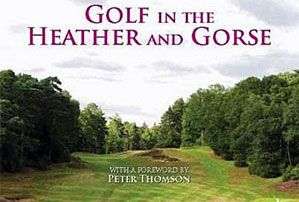
Golf in the Heather and Gorse Author David Worley’s Guide to the Inland Courses of Scotland and England David Worley’s new book Golf in the Heather and Gorse is a follow up to his two previous titles, Journey through the Links and Another Journey through the Links, where the author wrote extensively about his playing experiences at virtually every links course in the United Kingdom and Ireland. This time around, he concentrates on the non-links layouts of Scotland and England, visiting seventy-seven of the finest parkland, moorland and heathland courses in both countries. Most of these top tracks are located far from the coastline on either side of Hadrian’s Wall but the journey begins by the seaside in East Lothian at The Glen, which “occupies a spectacular piece of cliff-top land”. It’s not the only coastal layout to feature in the book as Worley plays four of the seven courses on the Isle of Arran and he also tees it up at Carlyon Bay in Cornwall – where “the golf course runs along the coastal cliffs” – for his penultimate round of golf. In Scotland, there’s a good mix of courses, with older established tracks such as the Kings’s and Queen’s at Gleneagles rubbing shoulders with modern layouts like The Carrick at Loch Lomond and Spey Valley in Aviemore. Boat of Garten (“fun to play but not a place for wild hitters”) and Ladybank (“challenging without being too difficult”) are amongst a number of second tier courses that also receive well deserved recognition. It’s good to see the book feature less well known Caledonian tracks like Strathpeffer Spa (a “beautiful Highland gem”) and the lovely 9-holer at Carradale (“an enjoyable little sporty course”), though excluding both Letham Grange (Old) and Lanark is a definite oversight. Furthermore, to not include at least one of the marvellous Renfrewshire moorland tracks at East Renfrewshire, Ranfurly Castle or Kilmacolm can only be regarded as another slip-up. After tackling thirty-three courses in Scotland, the author travels south of the border to continue his inland quest. Starting with Alister McKenzie’s Alwoodley in Yorkshire then progressing through to James Braid’s redesign at Berkhamsted in Hertfordshire, his golfing exploits along the spine of England in the chapter “From Leeds to London” only serves to whet the appetite for what follows on the heathland layouts to the south of the capital. The unrelenting quality of the golfing fayre in this region is simply stunning, stretching from Swinley Forest in Berkshire, through the Old and New courses at Sunningdale in Surrey to West Sussex in the county of Sussex. And with a lavish array of photographs to accompany the text, the reader is offered a uniquely personal and intimate insight into what’s it like to play these wonderful layouts, which is ideal for golfers planning a visit or just reliving similar playing experiences they’ve already had. The 44-course English portion of the tour tapers off nicely as the author plays the last of the big hitting layouts then moves along the World Heritage Jurassic Coast and into Cornwall, where he concludes his inland golf trail at Tehidy Park, an inauspicious parkland track located north of Camborne. David Worley’s travels are not quite the golfing equivalent of an epic John o’ Groats to Land’s End trek but they’re not that far wide of the mark. In the foreword, the respected 5-time Open Champion Peter Thomson calls the book “a precious document that shows off Britain’s treasures of the game of golf” and that’s a sentiment which Top 100 Golf Courses wholeheartedly endorses. Golf in the Heather and Gorse can be purchased via Amazon. Click the preceding link or the book cover image for full details. Jim McCann Editor Top 100 Golf Courses
Sergio Garcia to play in Scottish Open at Loch Lomond Sergio Garcia has confirmed that he is to play in the £2.4 million Scottish Open, ensuring spectators will have the opportunity to see nine of the World’s Top 20 players compete at Loch Lomond from July 13-16, with Retief Goosen (fourth), Ernie Els (seventh), Garcia (ninth), David Howell (10th), Luke Donald (12th), Colin Montgomerie (13th), José Maria Olazábal (14th), defending champion Tim Clark (17th) and Darren Clarke (20th) in the field. Garcia won the low amateur prize at Loch Lomond back in 1998 and the following year, after turning professional, he returned to Loch Lomond hot on the heels of his first European Tour victory at the Irish Open. An opening round of 62 on the Bonnie Banks saw him lead the event on the first three days, before he finished on 13 under par for a share of second place behind Scotland’s Colin Montgomerie. Garcia said:“It has been several years since I have participated in the event and I am looking forward to playing. It should be a fantastic week.” In addition to the stars from the top 20 of the Official World Golf Ranking, spectators will be in the company of former Major Winners Fred Couples, Hale Irwin, Paul Lawrie, Tom Lehman and Sandy Lyle.
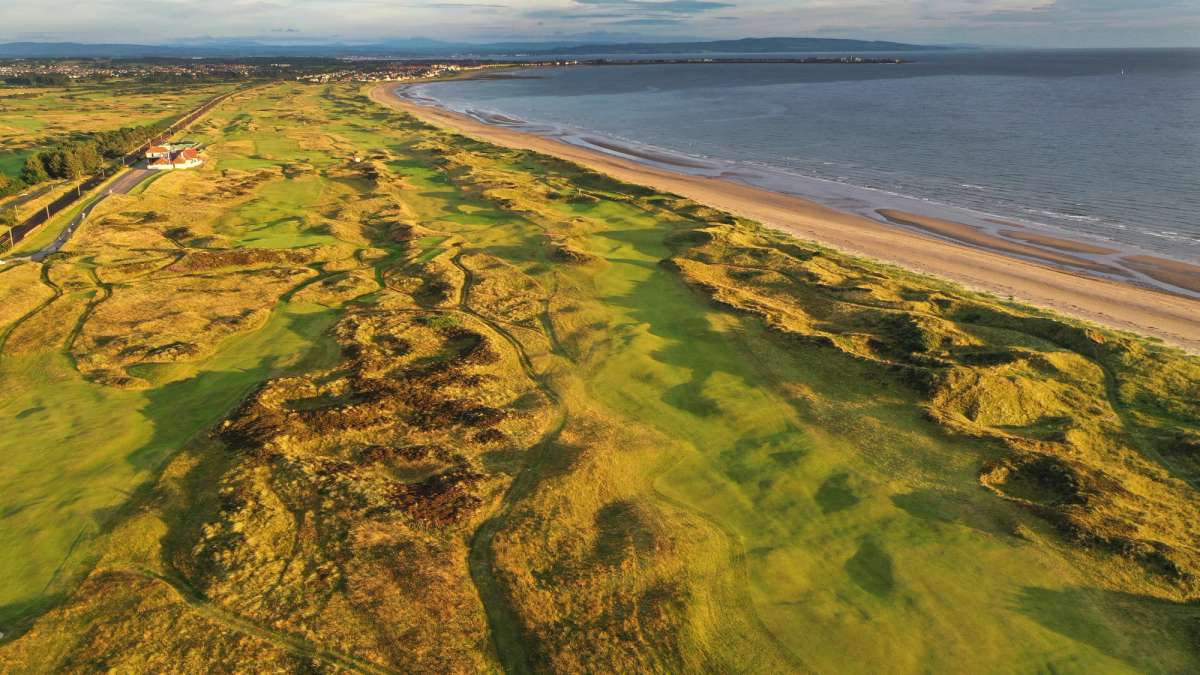
Scotland's west coast offers unique variety at reasonable prices. The Glasgow and Clyde Valley region combines world-class Open Championship venues with outstanding inland moorland courses designed by legendary architects. The region stretches from Glasgow south to the borders, featuring everything from Trump Turnberry's dramatic coastal holes to hidden moorland gems. The area's main appeal is the price point - championship-quality golf without the premium fees found elsewhere in Scotland. Glasgow Airport serves as the perfect gateway, with courses ranging from immediate airport vicinity options for beating jet lag to must-play venues requiring advance planning. Championship Golf in Glasgow & Clyde Valley Five world-class venues belong on every serious golfer's Scottish itinerary. Trump Turnberry Ailsa dominates the conversation with its dramatic clifftop holes and Open Championship pedigree. The iconic lighthouse backdrop and Bruce's Castle ruins create one of golf's most photographed settings. Prestwick Golf Club holds special significance as the birthplace of the Open Championship. This historic links demands strategic thinking with its blind shots and quirky features that have challenged golfers since 1860. Royal Troon presents the ultimate test of links golf with its demanding Old Course and the infamous Postage Stamp 8th hole. The recent Open Championship venue delivers an unforgettable championship experience. Western Gailes offers a slightly more accessible championship experience. This classic links layout provides excellent conditioning and strategic interest without the premium pricing of its more famous neighbours. Loch Lomond rounds out the premier tier with its stunning Highland setting and impeccable Tom Weiskopf design. Access requires planning and connections. Glasgow's Best Kept Golf Secrets The region's hidden gems showcase exceptional moorland courses that international visitors rarely discover. These offer outstanding value and unique playing experiences. Bonnyton Golf Club represents one of only four Dr. Alister MacKenzie designs in Scotland, featuring the master's signature undulating greens and strategic bunkering. Located within 30 minutes of Glasgow Airport, this hidden treasure costs approximately £80-100 (€95-115/$105-130) and provides an authentic MacKenzie experience without Augusta National's crowds. Ranfurly Castle Golf Club sits just 15-20 minutes from Glasgow towards Gourock, offering exceptional moorland golf in a stunning setting. The course combines strategic interest with beautiful Highland views at roughly £100-120 (€115-140/$130-155). Paisley Golf Club provides immediate airport access - just 5 miles from Glasgow Airport - making it perfect for jet lag rounds or quick golf fixes. This recently elevated Scottish Top 100 entry offers excellent value at approximately £60-80 (€70-95/$80-105) with same-day tee times often available. East Renfrewshire Golf Club and Kilmacolm Golf Club complete the moorland collection, both offering championship-standard conditioning at reasonable green fees around £80-120 (€95-140/$105-155). These courses feature layouts by respected designers on beautiful moorland terrain. Lanark Golf Club provides a recent Scottish Top 100 entry with solid design and stunning countryside views at budget-friendly rates of approximately £50-70 (€60-80/$65-90). Sample Itinerary: 5-Day Glasgow Golf Adventure Day 1 - Arrival: Land at Glasgow Airport, collect rental car, play at Paisley Golf Club for jet lag relief. Overnight in Prestwick for an authentic golf town atmosphere. Day 2 - Championship Links: Morning round at Prestwick Golf Club, afternoon at Western Gailes. Experience golf history and championship-quality links in one day. Evening meal and pints in Prestwick's traditional pubs. Day 3 - Moorland Discovery: Play Bonnyton in the morning for a rare MacKenzie experience, followed by an afternoon at Ranfurly Castle. Both courses offer unique inland Scottish golf within 45 minutes of each other. Day 4 - The Crown Jewel: Full day at Trump Turnberry Ailsa with proper caddie experience. Allow extra time for lunch in the hotel. Consider staying overnight at Trump Turnberry for the complete resort experience. Day 5 - Flexible Options: Royal Troon if booking is secured, or combine East Renfrewshire and Kilmacolm for exceptional moorland golf. End with a celebratory meal in Glasgow before departure. Glasgow Travel Logistics Getting to Glasgow's golf courses proves straightforward compared to more remote Scottish destinations. Glasgow Airport provides the ideal entry point, positioned 30-40 minutes from most courses with excellent rental car facilities. Transportation Strategy: Rental cars provide essential flexibility for course hopping, though many hidden gems sit within 30 minutes of Glasgow Airport. Edinburgh Airport works as an alternative, adding roughly 30 minutes to travel times but offering potentially better international connections. Weather Reality: Scottish weather demands preparation for all seasons, regardless of travel dates. April through June typically provides the most stable conditions, contrary to popular belief that summer months offer better golf weather. Pack layered clothing, including waterproofs, as conditions can shift dramatically during single rounds. Equipment Considerations: Most courses accommodate club rentals, but serious golfers should travel with their equipment. Caddie services are standard at championship venues - budget approximately £100 (€115/$130) including gratuity. Walking remains the predominant culture, though push trolleys are widely available. Cultural Preparation: Championship courses like Prestwick and Royal Troon maintain jacket-and-tie traditions for clubhouse dining, though visitor policies have relaxed slightly. Embracing these traditions enhances the Scottish golf experience. Language and Communication: Standard English throughout, though local golf terminology and accents may be difficult to understand initially. Scots are welcoming to international golfers, particularly those showing a genuine interest in golf heritage. Accommodation for Golf Adventures The region offers options from authentic golf towns to luxury resort experiences. Prestwick works as the optimal base for golf-focused visitors, providing an authentic Scottish golf town atmosphere like St Andrews but without the crowds. The town offers numerous B&Bs, small hotels, and holiday rentals within walking distance of traditional pubs and restaurants. Glasgow accommodation suits visitors wanting metropolitan amenities and cultural experiences beyond golf. The city provides excellent hotel options and easy access to both championship courses and hidden gems, though it adds 30-45 minutes to find golf on a daily basis. Trump Turnberry offers luxury resort accommodation for those prioritising premium amenities. The hotel provides world-class dining and spa facilities. Dundonald Estate provides surprising accommodation with stunning facilities and excellent dining. Many visitors choose Dundonald for luxury accommodation whilst playing elsewhere. Local B&Bs and guesthouses throughout the region offer authentic Scottish hospitality and insider knowledge from hosts who understand golf culture and can provide valuable local recommendations. Glasgow's Culinary Scene The region's dining culture is somewhere between urban sophistication and traditional coastal fare. Premium dining experiences centre around Glasgow, where its reputation has grown significantly, offering international visitors genuine fine dining. Traditional Scottish breakfast features Lorne sausage (square sausage), black pudding, haggis, and potato scones alongside standard breakfast items. Most accommodation providers offer authentic Scottish breakfast options. Coastal communities excel in fresh seafood, particularly around Largs and North Ayrshire, where numerous restaurants specialise in locally caught fish and chips. Prestwick's pub culture deserves special mention, with traditional establishments offering local ales, whisky selections, and hearty pub meals perfect for post-round discussions. The town's golf-centric atmosphere creates natural opportunities for meeting local golfers and sharing course experiences. Ice cream parlours throughout the region provide unexpected treats, with local establishments offering artisanal flavours and traditional Scottish ice cream experiences. Don't miss trying Irn-Bru, Scotland's iconic orange soft drink that outsells Coca-Cola locally. Booking Golf in Glasgow & Clyde Valley Advance planning requirements vary dramatically between championship venues and hidden gems, with booking essential for peak season access to premier courses. Championship courses require 6-12 months advance booking for peak season play (June-August), though shoulder seasons (April-May, September-October) offer better availability with only 2-3 months advance planning needed. Loch Lomond demands connections or corporate access. Hidden gems provide remarkable flexibility, with same-day bookings frequently available except during competition days. Courses like Paisley, Bonnyton, and East Renfrewshire accept walk-up players most days, making them perfect for spontaneous rounds or jet lag relief. Activities for Non-Golfing Partners The region offers compelling attractions for non-golfers, ensuring successful mixed-group travel experiences beyond championship golf courses. Ayr Racecourse provides exceptional entertainment value, hosting prestigious events including the Scottish Grand National and Ayr Gold Cup. Saturday race meetings offer full-day experiences with dining and betting entertainment. Robert Burns Heritage Trail centres around the poet's cottage and birthplace in Alloway, providing cultural immersion into Scotland's national poet's life and works. The Burns Museum and the surrounding countryside offer half-day cultural experiences. Glasgow Cultural Scene delivers world-class museums, galleries, and shopping districts. The Kelvingrove Art Gallery and Museum, Merchant City district, and West End provide full days of urban exploration with dining and entertainment options. Local Football Matches offer authentic Scottish cultural experiences, with several regional teams providing passionate atmospheres that American visitors particularly enjoy. Coastal Exploration includes ferry services to nearby islands, coastal walks, and traditional seaside towns that showcase Scotland's maritime heritage. These activities complement golf-focused itineraries without requiring extensive travel. Insider Local Knowledge Experienced local golfers share crucial insights that can transform visiting experiences from good to exceptional. Weather Timing: April, May, and June typically provide better weather than the peak summer months of July and August, when storms become more frequent. Local records show more rain delays during the traditional peak season than shoulder periods. Airport Strategy: Glasgow Airport's proximity to excellent courses makes it ideal for jet lag golf. Five quality courses within 30 minutes provide immediate options: Paisley (closest at 5 miles), Bonnyton, East Renfrewshire, Kilmacolm, and Ranfurly Castle. Cultural Integration: Embracing jacket-and-tie traditions at historic clubs enhances the complete Scottish golf experience. Prestwick's lunch service and green room atmosphere represent golf culture that's disappearing elsewhere in the world. Architecture Appreciation: The region's moorland courses showcase work by legendary architects, including MacKenzie, MacKenzie Ross, and James Braid. These inland courses offer architectural interest that many international visitors miss by focusing solely on links golf. Value Recognition: Second-tier courses often provide nearly championship-standard experiences at a fraction of premier venue costs, making extended golf holidays more affordable whilst maintaining quality expectations. Budget Planning & Travel Value Understanding realistic costs enables proper trip planning whilst maximising golf experiences within budget constraints. Championship Course Fees: Premier venues range from £200-500 (€230-580/$260-650) per round, with Trump Turnberry commanding top prices. Royal Troon and Prestwick fall in the £250-350 (€290-405/$320-450) range during peak season. Hidden Gem Value: Moorland courses provide exceptional value at £50-120 (€60-140/$65-155) per round, often delivering championship-standard conditioning and design at a fraction of premier venue costs. Total Trip Estimates: Luxury golf holidays including championship courses, quality accommodation, and dining average £300-500 (€350-580/$380-650) per person per day. Mid-range experiences focusing on hidden gems and B&B accommodation run £150-250 (€175-290/$195-320) daily. Money-Saving Strategies: Shoulder season travel (April-May, September-October) reduces green fees by 20-30% whilst often providing better weather conditions. Combining championship venues with hidden gems creates balanced itineraries without premium pricing throughout. Additional Costs: Factor £100 (€115/$130) per caddie, including gratuity at championship venues. The region's strength lies in offering genuine championship golf experiences alongside exceptional value options, creating flexible budget frameworks that accommodate various travel styles without compromising quality expectations.
