
A Golfer’s Dream
How a regular guy conquered America’s Top 100 Golf Courses
23rd September 2014
A Golfer’s Dream by Larry Berle tells the story about his extraordinary adventure that spanned 10 years, a journey which somehow transported him to the first tee at each and every one of America’s Top 100 golf courses.
A slightly above-average golfer, Larry has no handicap in networking skills and is not afraid to ask for help – especially when it comes to playing Top 100 golf courses.
This September, we asked Larry if he would rate the U.S. Top 100 for us using our simple 1-6 golf ball rating system. Larry agreed and also allowed us to post online a series of exclusive reviews, which are edited extracts from his book.
For the next 100 days there will be one of Larry’s reviews posted on the Top 100 website. Some of these reviews and ratings may surprise many golfers, because Larry has not rated the Top 100 courses against every golf course he has played, but instead he rated them in relation to each other within the Top 100. In some cases therefore, his rating may seem rather low.
Here’s a taste of what’s to come:
I was a very popular person with my golf buddies at home in the weeks leading up to my Cypress Point tee time. Cypress Point allows two unaccompanied foursomes every morning between 7:30 and 8:30, so I could bring three friends of my choosing to play on one of the most beautiful courses in the world.
It was my second experience playing a Top 100 course alone in wet conditions, but it was wonderful. Every putt left a trail on the green, and I took this opportunity to practice green reading. When I missed putts, I went back and putted again, with the dew trails teaching me their mysterious lessons. The overcast sky and mist-filled atmosphere made it feel like I was playing in a dream.
It played fine, but its appearance was a hot debate point among the members. It’s a bit strange to hear your playing partner say, “Good shot, you’re in the brown stuff”.
The course was designed by Robert Trent Jones, Sr., and hosted a U.S. Open in 1970, which brought it plenty of negative press when competitors such as Dave Hill said, “The only thing that Hazeltine is missing is 80 acres of corn and a few cows”.
The Honors Course sign was so small you had to look twice to see it. Why didn’t they just put up a big “Go away!” sign?
I hit my tee shot into the right fairway bunker, directly below Jack Nicklaus’ house. “I hope he’s not watching me through his front window,” I thought as I bladed my sand shot into the lip of the bunker and watched it dribble out onto the fairway. Then I hit a crisp 8-iron to that elevated green about 15 feet from the flag. “I hope you’re looking out that front window now, Jack,” I whispered as I proudly strolled up the fairway, imagining thousands of cheering fans surrounding this green on the final day of the Memorial Tournament.
I can’t understand why anyone other than the best of golfers who really enjoy being tested would want to join Oakmont. In my opinion, this collection of 18 holes is more like a penal colony than a golf course.
There are basically two velocities of wind here; windy and windier. On that rare occasion of calm, this would not be a very difficult golf course, so how difficult with wind you ask? Jack Nicklaus, in eight appearances here, never broke par. Sam Sneed, after his first look at the narrow fairway on Number 1, turned to the gallery and said. “Okay, folks, we’ll have to walk single file today.”
Riviera is not a club of celebrities like Bel-Air, but there are a few. O.J. was a member until his trial. And there’s the story about Dean Martin and two of his pals getting ready to tee off when Buddy Hackett spotted them and hurried over to join them. “Sorry, Buddy,” Dean said, “We already have a full threesome.”
A golfer’s dream is available in Kindle format and also on Kindle Unlimited via Amazon... click the link for more, or visit Larry website, www.golfersdreambook.com.
Keith Baxter
Editor-in-Chief
www.top100golfcourses.com

How to play the world’s most exclusive golf clubs We review John Sabino’s new book There’s no shortage of correspondents with extensive golfing experience in the Top 100 Team, with several of them setting formidable personal targets in their quest to play as many of the top tracks as possible. For instance, our US consultant Fergal O’Leary completed an 8-year pursuit to play the Top 100 in the World last year when he travelled to the Durban Country Club, South Africa. At 32, he became the youngest member of an elite group of thirty people who have so far managed to accomplish this global golfing feat. Our Netherlands-based International Correspondent David Davis recently undertook an extensive trip to Japan, China and several other Far Eastern countries as he also strives to play the World Top 100 (and quite a number of other courses that just fail to make the top rankings) – and with fewer than a dozen to go, it won’t be long until he also become a member of the exclusive World Top 100 Club. Another self-confessed golf nut named John Sabino set off “in pursuit of golf’s Holy Grail” a few years ago and his task was to play all of Golf Magazine’s World Top 100 as defined in their 2003 rankings. He wrote a blog as he progressed along his golfing journey before being approached by a book publisher to write about his experiences and give insights into how he gained access to some of the most restricted golf courses in the world. The highly entertaining book How to play the world’s most exclusive golf clubs is the result of his literary efforts. Strangely enough, more than half the Top 100 courses were played by following the standard booking procedure for guest play – no great mystique in that process then when all it takes is a letter or an email! Direct invitations from members, architects, greenkeepers or professionals accounted for another eighteen rounds and a further nine tee times were secured through hotel/tour operators or by a corporate invite or charity outing. Unsolicited invitations via the author’s blog gained him access to another few courses and one club in the United States rather surprisingly allowed him to play after he cold called to ask for a game! There’s extensive coverage in the book of a number of “special experience” venues like the Californian trio of Bel Air Country Club, Los Angeles Country Club and Cypress Point Club. Overseas clubs warranting particular attention include Morfontaine, Loch Lomond and Durban Country Club whilst there’s sizeable multi-page spreads devoted to both Augusta National and a handful of Japanese clubs, where the author thinks at least seven hours has to be devoted to playing golf, including pre-match coffee and post-round hot bath then drinks. A number of other private facilities are examined, most of them located in the United States. Sanctuary in Colorado, Porcupine Creek in California and Pocantico Hills in New York are just some of the ultra-exclusive tracks discussed. Elsewhere in the world, Ellerston in Australia, Goodwood in Canada and Prince de Provence in France – all three of which are nationally ranked by Top 100 Golf Courses – are also considered, though the author diplomatically offers no hints on how to gain access to any of these very privileged golfing playgrounds. Some of the most interesting parts of the book are those that have nothing to do with the author or his stated aim of getting golfers onto tracks that are tough to gain entry to. For example, chapter 6 (“Playing the World’s Elite Courses in an earlier era”) details the exploits of Ralph Kennedy, a traveling salesman for a pencil company who played Augusta National just after it opened in 1933 when the nines were played in reverse order. Known as “The Peripatetic Golfer,” it’s reckoned he walked the equivalent of twice the circumference of the earth, playing more than 3,000 courses in fourteen countries, over a forty-two-year period starting in 1921. Similarly, chapter 12 (“The Kiwi Miracle”) tells the story of two young New Zealand golfers who set out on a golfing adventure in 2010 to raise money for charity and play a round of golf every day around the world, starting at Kauri Cliffs on 1st January and ending at Cape Kidnappers on 31st December, passing through Australasia, the United States, the United Kingdom and Europe. Plenty of top courses were played in a semi-impromptu fashion along the way, from Cypress Point to Pine Valley in the United States, Loch Lomond to Ballybunion in Great Britain & Ireland, and from Morfontaine in France to the Emirates Golf Club in Dubai. John Sabino certainly calls it as he sees it, without fear or favour – early in the book, he states that he’s no great lover of the Old Course at St Andrews, going on to mention a caddy at Crail Golfing Society that was also not a big fan and who told him about a dozen times, “The Old Course is s****, and a lot of locals are afraid to tell you for fear of getting in trouble.” The author also cites eight courses (including the Vineuil at Chantilly, Old Head and Prestwick) that merit a place in the World Top 100 in his view but he doesn’t name the courses that should be excluded to make way for the newcomers – now that’s an opinion which might have ruffled a few feathers! How to play the world’s most exclusive golf clubs doesn’t really reveal anything the reader shouldn’t already know – that “the best way to access private courses is to find a member.” By networking with the right people, the author was able to play at many hard-to-access clubs through making the right connections. Other means of getting onto the best courses (such as playing in a pro-am, through membership of a golf society or becoming a course reviewer) pale into insignificance in comparison. John Sabino writes with unbridled enthusiasm, delivering lots of little snippets about life in and around the locker rooms at many of the best clubs in the world, and these anecdotes go a long way to make this book the enthralling read that it undoubtedly is. John's book is available at Amazon.com. Jim McCann Editor Top 100 Golf Courses

East Lake, Atlanta Athletic Club, Cypress Point and Olympic Club - four different ways to make golf very special by Javier PIntos During the last two months I had the chance during two trips to the USA to experience four private and very exclusive golf courses. All four are steeped in golf history and have hosted major events in the past. On April 1st, my friend Gastón Morgan and I had the chance to play both Atlanta Athletic Club (Highlands) and East Lake in one day after a 10-hour flight from Buenos Aires. It was one of the most special golf days I have ever had, playing two venues that are very special and also very different from each other. On May 19th, after two long flights from Buenos Aires to San Francisco, I drove directly to the first tee at Cypress Point to play it for the second time (first in 2011) with my friend Lucas Raznoznik and on May 20th we played the Olympic Club (Lake) which was a true test with an added bonus of playing the Cliffs course after lunch, which made for another very special golf day. The purpose of this article is not to review of each course, which I have done separately here at Top 100 Golf Courses (click the links above if you'd like to read my reviews), but to mark the differences between these venues and how each manages to make a visit unique in four very different ways. Of course there are aspects which are shared, but the experiences are all different. The Golf Courses The two features that mark the biggest difference between golf courses around the world come from the designer and the piece of land used to construct the golf course. Then you can put the grasses used to cover the surfaces, the landscaping and the climate in the region. Finally, but no less important, the maintenance, the type of sand, bunkers shaping and attention to detail where you will see the difference between very good venues and those you know are different from the rest. During these two trips I was able to see four very different courses and all of them have their own greatness. East Lake was the first I played in a 36-hole day during April. It is a true classic, a parkland with some great level chances and very challenging holes for an amateur. Greens are not big but they are firm and very fast, with the grain of the grass marking a huge difference... when it is in your direction (very fast putts) or against you (super slow ones). I had some situations where it was really impossible to leave it close to the hole... on the par five 15th I three putted from 8 feet without hitting a bad stroke. There are many tee shots which require power but there are also many where skill is much more important as you will need to fade or draw the ball to get a good angle to the pin. Missing greens often makes it very tough to have a chance of an up and down due to speed and slopes. But the course is fair and true, nothing is hidden and on a good day you can match your handicap. What's great about East Lake is that it's very playable for bogey golfers; the only forced carry is on the par three 6th, but it's a short iron even from the tips. As it's a regular PGA Tour venue (The Tour Championship) you visit familiar places and even try to replicate some shots. Unfortunately I could not try the Bill Haas recovery at the 17th because when they played the water level was 6 feet lower due to the dry summer that season. What is great about Bill's shot is that from where he was he could not see the higher part of the flag. After lunch we drove 20 miles to arrive just before our tee time at Atlanta Athletic Club and play the Highlands Course (host of the 2011 PGA Championship won by Keegan Bradley). So close to East Lake and yet so different. The Club has two courses, Riverside and Highlands, which despite being laid out over similar ground they are very different from each other. Even the front and back nines are very different on the Highlands course. The first nine is flatter and straighter with fewer doglegged tee shots and where almost always you see the green from the tee. But in my case I found it harder to score on the front side, finding holes 1, 8 and 9 the tougher holes. In my opinion, the back nine is better and more enjoyable to play, starting with two great par fours, with 11 a downhill dogleg left where the more you risk with the simpler the approach. Despite being tired on the back nine, I played really well hitting all nine GIRs but couldn’t score lower than even par as the greens were fast and with deep slopes, which sometimes made it very tough to get close with the first putt. We played the 6,900-yard tees and it was wet with drives only rolling a couple of yards. It was a monster. The pros played it from 7,600 yards in 2011, they play a totally different game. The par three 15th was where Dufner found the water and tripled, I managed to hit a 210-yard 4 iron to 25 feet but had a very hard job to get down in two putts. It is one of the toughest par threes I have ever played, but the forced carry needed on the 17th is also hard as a mishit shot will always end wet. We played the 18th as a 520-yard par five... from the same tee the pros played it as a par four. If I have to compare these first two courses, I have to say that for a scratch golfer they are both resistant to scoring, but for a bogey golfer East Lake is much more playable and enjoyable. At AAC a bad round for a bogey golfer can turn into really high numbers and common to both is that you need to be really good with the short game around the green. It's maybe the biggest challenge. Cypress Point… evokes the Wow! It was my second visit here and my only regret was not being able to enjoy more pre-game time as I arrived just in time to tee off after only hitting a couple of putts. This 6,700-yard classic course is a design jewel, as it has been untouched since it was created and remains just as it was. There are many aspects that make it unique: the quality and challenge of the greens, the variety in the design of the holes, the challenge and risk/reward situations (5, 8, 9, 16 being the more remarkable ones). It's true that if you look back down the hole from the greens, you won't see a single bunker (this camouflage technique was learned by MacKenzie during the war). I don’t wish to describe every single hole but I'll just mention some shots that are worthy. The second shot at the par five 5th hole is maybe one of the most engaging, but if you don't have a good lie you can’t go for it. The tee shot on 8th is where you can attempt to cut the dogleg - it's one of the most clear risk/reward situations I have played. Then on the 9th tee you feel that you have to go for it but a miss can be a disaster. Finally the 16th needs a carry of 220 yards to remain dry. Some people, including Tom Doak, think the 18th is a bad hole. In my opinion it's one of the greatest closing holes where you need two solid shots and a hot putter not to card a bogey. It is true that if they decide to change it and play it close to the 16th it could be a better hole, but as it is I love it! The course will never change, it is the playground of its members, it is a place where you play fast and where walking is one of the most enjoyable parts of the round. But if you can’t putt you will not score because the greens are the toughest challenge on this course. Not only that, holes 15, 16 and 17 are maybe the best trio of consecutive golf holes in the world. For bogey golfers it's another course that they will enjoy (the member who hosted us couldn't drive it further than 200 yards and his only lay up was at the 16th where he couldn’t carry the water and he made a very easy bogey!). The Olympic Club Lake Course is markedly different from the first three. From the opening hole to the last it shows it's a US Open venue. The rough wasn't as long as for the Open, but it was tough enough and the greens were running at 12 feet on the stimpmeter. A round of golf here is a true scoring challenge and every missed shot will be punished. But with no water and no forced carries, it is another course where a bogey player who can putt will have a very enjoyable day. It was not the best of the four courses, but there are some elements that are really charming. From the elevated tee on the par three 3rd hole you can see the Golden Gate in the distance, then there's the uphill par three 8th hole which heads to the clubhouse... it's one of the loveliest spots on the course. The par five 16th is a monster and the tee shot on the 18th is maybe the nicest shot you will hit on the course. The greens are big, very tough to read, fast and sloping, but they are true. Some tee shots require skill to draw or fade the ball to flight it to the correct spot. I scored very similarly on the four courses, but some weeks later I feel that it was the Olympic Lake course that really tested me; every missed shot punished me - I missed 6 GIR and could not get up and down. I even doubled holes 1 and 12 from beside the green. If I was asked to select one of these four courses to play tomorrow there are two possible answers: If I want a nice enjoyable walk, I'd choose Cypress Point, but if I want to test my game the choice will always be the Olympic. There are reasons that would make me choose East Lake (the clubhouse and staff hospitality) or Atlanta (the back nine for match play is really great). But ultimately I'd always choose the No.1 course in the World! The Pro Shops The pro shop is the place where visitors get their souvenirs and memories from their visit to these venues. There's a very big difference between Cypress Point and the other three pro shops. Cypress has a very nice but small shop where you can buy the typical stuff (shirts, sweaters, hats, club covers, pitch markers, cap pins, etc.) but where the two things I like most (pin flags and bag tags) are not available. The other three courses have much larger shops, with a wider variety of souvenirs and memories you be purchased. It is not that Cypress has no stuff, the shop is smaller because the course sees less rounds played than the other three. However, one interesting thing I brought from Cypress was the book “The Match”, which is a mandatory read after you have played the course. The two courses, Atlanta and Olympic, used to have a lot of corporate play and outings, which is why I think they are bigger and offer wider variety. Naturally I bought many things from every one! The Clubhouse Again Cypress is different to the other three. The first thing is that if you're not with a member, you cannot use the bar, grill and clubhouse, just the locker room (in 2011 I had an unaccompanied foursome, we left immediately after the game and pro shop purchases). The member who hosted us this time had to leave quickly, so we had just a short opportunity to walk around the clubhouse. I have to say the terrace facing the 16th hole is the best I've seen, no argument. Olympic’s clubhouse is immense, maybe necessary to host its 1000+ members. There are lots of spots where you see memories, pictures, scorecards and more from past US Opens. Atlanta Athletic is like a mix between a resort course and private clubhouse, big and with places where memorabilia from past tournaments is kept. The clubhouse at East Lake is something really special where you will find the memories of Bobby Jones everywhere. One of the most special things I found is the scorecard of the final golf round of his life. As a guest of a member you are allowed everywhere and the club staff proudly tell stories about the history of the club. It is a tough choice, but my favourite is between the simplicity of Cypress Point and the museum style of East Lake, both are very enjoyable to visit after the round of golf. The Locker Rooms All four were nice but I would say the only one not reaching "special" was Atlanta Athletic. I will say that East Lake, where I used Rory McIlroy’s locker, was my favourite. Cypress is small but the pictures shown there are pure history and display how extraordinary the course is, whereas Olympic is huge, with memories of past events everywhere. My small suggestion is that if you are invited to any private club you always take a look at the locker room.. History and Past Events Cypress Point has hosted the AT&T National ProAm in the past, but unfortunately for those who don’t know the course it is not likely to return here. It is the member’s playground and they just like to share it with their friends and guests. Of course pros will be allowed during the week of the ProAm. Caddies here are excellent and always have a story, Andy Bean being -7 at the 11th tee and scoring 80 is my favourite! If you are lucky enough to play here, you simply have to buy and read “The Match”. It's one of the best golf books I've ever read. For the Olympic Club you have to study their US Open stories and you'll learn much. My caddie showed me a lot of spots where historic shots were played, but the bush that buried Jim Furyk’s chances in 2012 is the most notorious as the tee shot was akin to a 24 handicap golfer rather than a pro! East Lake will always be special and holds a deep history related to Bobby Jones, but hosting The Tour Championship for a number of years has provided a lot of background on the current Tour Players and being able to use their lockers is the nicest touch. When playing the course you have to go to the 17th where Bill Haas played that dramatic hazard shot. From where he was you won’t be able to see the top of the flag! Atlanta Athletic hosted a wonderful 2011 PGA Championship and there is a lot of information about it and also about Bobby Jones, along with other past events. There are rooms specially dedicated to history and I always like to spend some time finding out what happened there. But remember that this course plays really tough and from the very back tees it's a monster. By Javier Pintos javier@wegolf.com.ar www.wegolf.com.ar
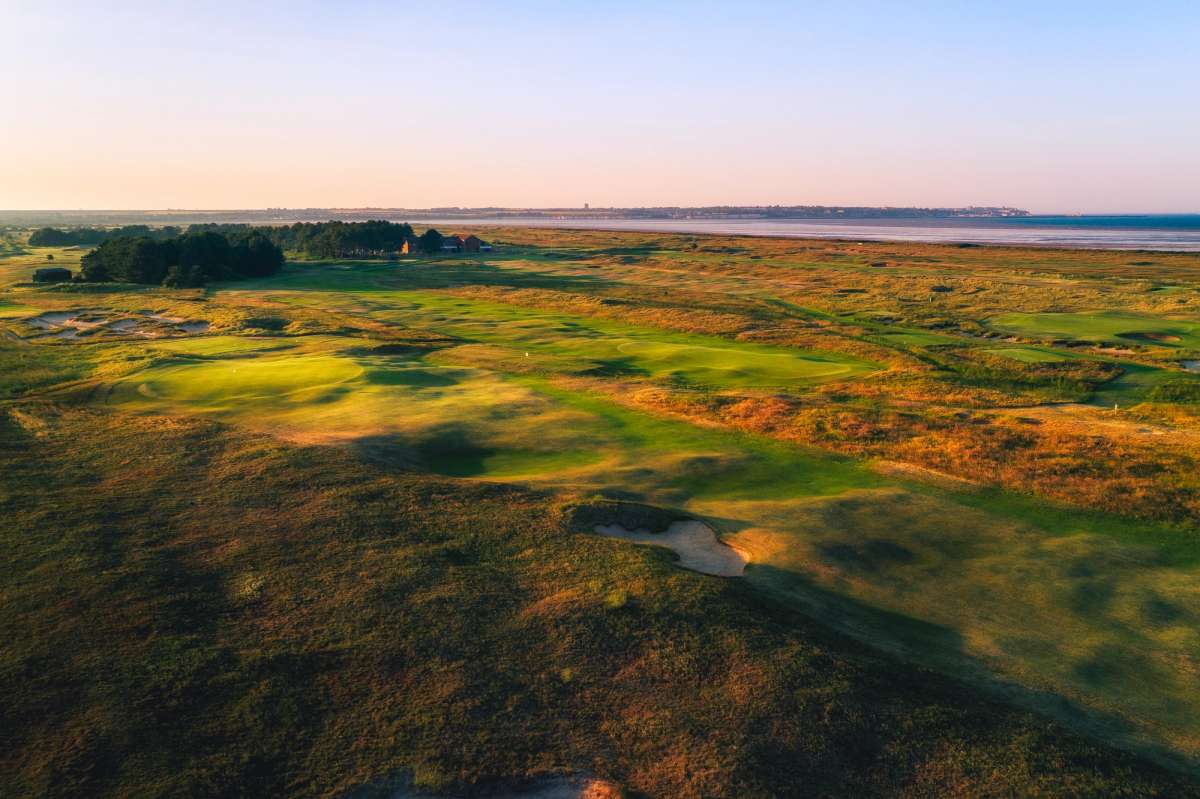
Top 100 Golf Courses has ranked every course that has hosted the Walker Cup since 1922. The rankings cover three categories and provide insight into the championship venues that have shaped amateur golf's most prestigious international competition. Three Complete Rankings The research has produced three specialised rankings: USA Walker Cup Venue Ranking - American courses that have hosted the biennial competition. Great Britain & Ireland Walker Cup Venue Ranking - Historic links courses and venues across the British Isles. Combined Walker Cup Venue Rankings - All American and international venues ranked together. The Walker Cup Competition The Walker Cup is a biennial match-play competition between 10-man amateur teams from the United States and Great Britain & Ireland. Named after George Herbert Walker, USGA president in 1920, the competition began in 1922 at the National Golf Links of America. The tournament has maintained its status as amateur golf's premier international competition for over a century, showcasing the world's finest golf courses. Top Venues in Combined Rankings Cypress Point Club leads the combined rankings. Alister MacKenzie's Pacific coast course will host the 50th Walker Cup in September 2025. The US won 15-9 when it previously hosted in 1981. Pine Valley Golf Club ranks second. George Crump's design is considered the ultimate penal golf course. It will host the 2044 Walker Cup and previously staged matches in 1936 (US won 9-0) and 1985 (US won 13-11). Royal County Down Golf Club is the highest-ranked international venue at third. Located beneath the Mountains of Mourne in Northern Ireland, it's consistently rated among the world's most scenic courses. Leading American Venues Shinnecock Hills Golf Club was one of the USGA's five founding members. The New York course features original American design from 1891, when Scottish professional Willie Davis worked with the Shinnecock Reservation. National Golf Links of America is the Walker Cup birthplace. Charles Blair Macdonald's 1922 course established the competition and introduced the term "golf architect." Oakmont Country Club represents championship golf's toughest test. Originally set to host in 2033, then moved to 2032, this Pennsylvania course has hosted multiple major championships. Great Britain & Ireland Leaders St Andrews Old Course has hosted nine Walker Cup matches—more than any other venue. The Home of Golf has also staged 29 Open Championships. Muirfield is home to The Honourable Company of Edinburgh Golfers (founded 1744). This East Lothian course pioneered the two-ring, nine-hole layout design. Turnberry Ailsa Course offers Scotland's most scenic championship golf. The course overlooks the Firth of Clyde with views of the Mull of Kintyre and Isle of Arran. Architectural Excellence Golden Age architects dominate the rankings. Merion Golf Club (East Course) represents Hugh Wilson's success as an amateur architect. Winged Foot Golf Club (West Course) is A.W. Tillinghast's finest work. The demanding layout has tested both amateur and professional golfers for decades. Bandon Dunes Golf Resort represents modern design. The Oregon resort has a USGA partnership through 2045 and will host the Walker Cup in 2028. International Links Tradition Lahinch Golf Club sits beside Liscannor Bay in Ireland. Old Tom Morris created the original layout before Dr. Alister MacKenzie redesigned it in 1926-27. Royal St George's Golf Club is a natural links course in Sandwich, England. It maintains traditional character while hosting major championships. Sunningdale Golf Club represents England's best inland course. The Old Course is considered Britain's most beautiful championship venue away from the coast. Future Walker Cup Venues Prince's Golf Club will host the 53rd Walker Cup after recent investments in facilities and course improvements. Walker Cup matches move to even years from 2026 to avoid conflicts with World Amateur Team Championships. Walker Cup Venue Excellence Both American and international courses contribute to the Walker Cup's legacy. These rankings celebrate golf architecture's finest examples, from MacKenzie's coastal designs to Macdonald's pioneering American courses. View the complete rankings: USA Walker Cup Venue Rankings Great Britain & Ireland Walker Cup Venue Rankings Combined Walker Cup Venue Rankings

