
Andy meets Monty at Golf Live 2011 launch
Billed as “the ultimate live golf event” our roving reporter caught up with Captain Monty
10th December 2010
Billed as “The Ultimate Golfers’ Day Out”, Golf Live is a unique and engaging golf event that first began in May 2010 at Stoke Park. Andy gatecrashed the launch party for the 2011 event (to be hosted at the ) on Wednesday and met up with Europe’s Ryder Cup Captain.
“I feel very proud to be an ambassador for this innovative golf show and am constantly thinking of ways we can build on the enormous success of last year's event,” said Colin Montgomerie. After brief pleasantries, Andy chatted to Monty about our new 2011 World Top 100 rankings and then put Monty on the spot, asking him to list his favourite three courses. After reasonable deliberation, Monty came up with: Turnberry (Ailsa), Loch Lomond and Cypress Point. Thankfully, all three courses are riding high in our latest list.
Andy later caught up with BBC golf commentator, Andrew Cotter, who was very complimentary about the Top 100 website, revealing that he is a fan of the site. Now on a roll, Andy asked Andrew to reveal his favourite three courses and the man from the “Beeb” came up with: Pine Valley, Loch Lomond and Corrie. “Corrie?” retorted Andy, scratching his head.
Now hold on a minute, let’s just reflect for while. Andrew Cotter, BBC sports broadcaster, has just listed a course that shares its name with a familiar soap opera but is not featured on the Top 100 website. We must check out the 9-holer at Corrie Golf Club on the Isle of Arran just as soon as we can.
To find our more about Golf Live 2011 click here
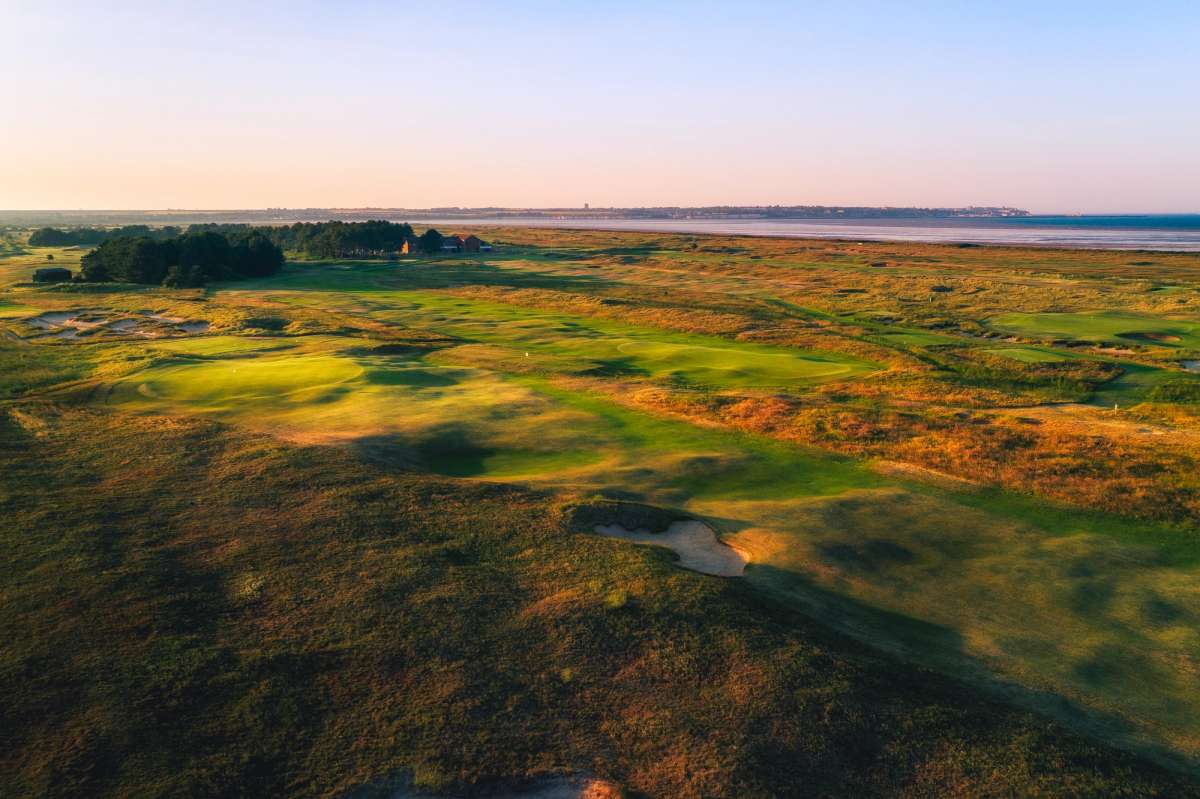
Top 100 Golf Courses has ranked every course that has hosted the Walker Cup since 1922. The rankings cover three categories and provide insight into the championship venues that have shaped amateur golf's most prestigious international competition. Three Complete Rankings The research has produced three specialised rankings: USA Walker Cup Venue Ranking - American courses that have hosted the biennial competition. Great Britain & Ireland Walker Cup Venue Ranking - Historic links courses and venues across the British Isles. Combined Walker Cup Venue Rankings - All American and international venues ranked together. The Walker Cup Competition The Walker Cup is a biennial match-play competition between 10-man amateur teams from the United States and Great Britain & Ireland. Named after George Herbert Walker, USGA president in 1920, the competition began in 1922 at the National Golf Links of America. The tournament has maintained its status as amateur golf's premier international competition for over a century, showcasing the world's finest golf courses. Top Venues in Combined Rankings Cypress Point Club leads the combined rankings. Alister MacKenzie's Pacific coast course will host the 50th Walker Cup in September 2025. The US won 15-9 when it previously hosted in 1981. Pine Valley Golf Club ranks second. George Crump's design is considered the ultimate penal golf course. It will host the 2044 Walker Cup and previously staged matches in 1936 (US won 9-0) and 1985 (US won 13-11). Royal County Down Golf Club is the highest-ranked international venue at third. Located beneath the Mountains of Mourne in Northern Ireland, it's consistently rated among the world's most scenic courses. Leading American Venues Shinnecock Hills Golf Club was one of the USGA's five founding members. The New York course features original American design from 1891, when Scottish professional Willie Davis worked with the Shinnecock Reservation. National Golf Links of America is the Walker Cup birthplace. Charles Blair Macdonald's 1922 course established the competition and introduced the term "golf architect." Oakmont Country Club represents championship golf's toughest test. Originally set to host in 2033, then moved to 2032, this Pennsylvania course has hosted multiple major championships. Great Britain & Ireland Leaders St Andrews Old Course has hosted nine Walker Cup matches—more than any other venue. The Home of Golf has also staged 29 Open Championships. Muirfield is home to The Honourable Company of Edinburgh Golfers (founded 1744). This East Lothian course pioneered the two-ring, nine-hole layout design. Turnberry Ailsa Course offers Scotland's most scenic championship golf. The course overlooks the Firth of Clyde with views of the Mull of Kintyre and Isle of Arran. Architectural Excellence Golden Age architects dominate the rankings. Merion Golf Club (East Course) represents Hugh Wilson's success as an amateur architect. Winged Foot Golf Club (West Course) is A.W. Tillinghast's finest work. The demanding layout has tested both amateur and professional golfers for decades. Bandon Dunes Golf Resort represents modern design. The Oregon resort has a USGA partnership through 2045 and will host the Walker Cup in 2028. International Links Tradition Lahinch Golf Club sits beside Liscannor Bay in Ireland. Old Tom Morris created the original layout before Dr. Alister MacKenzie redesigned it in 1926-27. Royal St George's Golf Club is a natural links course in Sandwich, England. It maintains traditional character while hosting major championships. Sunningdale Golf Club represents England's best inland course. The Old Course is considered Britain's most beautiful championship venue away from the coast. Future Walker Cup Venues Prince's Golf Club will host the 53rd Walker Cup after recent investments in facilities and course improvements. Walker Cup matches move to even years from 2026 to avoid conflicts with World Amateur Team Championships. Walker Cup Venue Excellence Both American and international courses contribute to the Walker Cup's legacy. These rankings celebrate golf architecture's finest examples, from MacKenzie's coastal designs to Macdonald's pioneering American courses. View the complete rankings: USA Walker Cup Venue Rankings Great Britain & Ireland Walker Cup Venue Rankings Combined Walker Cup Venue Rankings

Top 100 Golf Courses of the USA 2020 Welcome to the seventh revision of our biennial Top 100 for the USA, a chart which we first published at the end of 2005. A total of 163 courses have appeared in these listings down the years, some lasting for only one edition, others (like most of those that dropped out this time) enjoying long stretches in the national limelight before falling out of favour. Of course, bear in mind these standings represent the crème de la crème of golfing layouts in a vast country where it’s reckoned there are more than 16,500 courses coast to coast, almost 2,000 of which we promote across our US state ranking tables. We’ll also be updating those Best in State charts in the New Year, announcing the revised listings on a rolling basis over several months. In the latest edition of our Top 100 for the USA, 39 courses make upward moves, 16 remain in the same position and 45 slip down at least one position – with the 9 that have fallen away completely replaced by an equal number of new entries. So, without any further ado, here’s a brief overview of the main talking points in the new Top 100. Cypress Point in California, which replaced Pine Valley as the nation’s No. 1 in 2016, remains in the top spot. Set out next to the foothills of the Santa Lucia Mountains at the end of the Monterey Peninsula, this Alister MacKenzie design has been thrilling members and their invited guests since it first opened in 1928. It was also one of the courses used for the AT&T Pebble Beach Pro-Am event on the PGA Tour from 1947 until 1990 but those days are long gone, unfortunately, Cypress Point Club Our correspondent M. James Ward reviewed Cypress Point last year, calling it “the quintessential member’s course.” He went on to say: “The reputation of the layout embodies the central philosophy of Alister MacKenzie from start to finish. The intersection with Mother Nature is also central to the round of golf and the Good Doctor was wise enough to not attempt any heavy handed insertions.” In the runner-up spot at No.2, George Crump’s Pine Valley reverses a surprising fall of one position last time around. All three reviews this year have been of the 6-ball variety, attracting comments such as “a test of nerve and shot making,” keeps you concentrated from hole 1 to 18” and “hard to find anywhere better than Pine Valley”. Laid out within the Pine Barrens of New Jersey, it’s been the supreme golfing test for exactly a hundred years and it’s still as formidable to play today as it was when it first opened in 1919. Pine Valley Golf Club Until now, only ten courses have ever been listed within the top ten tier of the US chart but that has changed with Crystal Downs easing one place up to No. 10. Occupying a headland site that’s wedged between Lake Michigan and Crystal Lake in the state of Michigan, this early 1930s layout from Alister MacKenzie and Perry Maxwell has had Tom Doak (who’s a member) and his Renaissance Golf Design company quietly carrying out small but significant refinements in the last few years. Crystal Downs Country Club Four courses climb seven places in the top half of the table. A.W. Tillinghast’s Somerset Hills in New Jersey (at #24), the Macan/MacKenzie layout at the California Golf Club of San Francisco (at #28), Perry Maxwell’s Old Town Club in North Carolina (at #29) and the Seth Raynor-designed course at Shoreacres in Illinois (at #33) have all benefitted from recent architectural input from Brian Slawnik, Kyle Phillips, Bill Coore & Ben Crenshaw and Tom Doak, respectively so it’s no real surprise to see each of them take such positives steps forward in the new rankings. Old Town Club Mention must also be made of the four courses that currently comprise the brilliant Bandon Dunes golf facility in Oregon. The 18-hole layouts at Pacific Dunes, Bandon Dunes and Old Macdonald have all resided comfortably inside our Top 50 since 2012 and they’ve just been joined by Coore & Crenshaw’s course Bandon Trails (up nine to No. 42) which has also now become a World Top 100 track, entering recently at No. 99. Bandon Trails Absolutely no pressure then on Bill and Ben to deliver another golfing showpiece when their new Sheep Ranch course opens at Bandon Dunes in June next year! Laid out along a mile of coastline, this exciting new layout will feature the only holes on the entire Bandon Dunes property to require a shot over the cliffs to the double green at the 3rd and 16th on the Fivemile Point promontory . Three courses make major double digit advances. Essex County Club in Massachusetts (up thirteen to No. 40) is a century-old Donald Ross layout that was extended to eighteen holes by the architect early in his career, during his time there as club professional. Historically important as one of the first clubs to affiliate to the USGA, Essex came under the spotlight when it hosted the 36th edition of the Curtis Cup matches in 2010 and it’s only now starting to attain the recognition it rightly deserves. Essex County Club Piping Rock Club in New York (up twelve to No. 52) is a Charles Blair Macdonald design from 1911, with Seth Raynor building the course for his partner. Situated at Locust Valley on Long Island, it’s long been a favourite track of our US Consultant Fergal O’Leary, even before the renovation work conducted initially by Tom Doak and then his former Renaissance Golf Design associate Bruce Hepner. Piping Rock Club 13th hole - image courtesy of Jon Cavalier @LinksGems Fergal had this to say about Piping Rock in a review last year: “the renovation work across 2015/2016 involved significant tree clearance, green expansion and increased width to the lined fairways. With the introduction of those fabulous cross-bunkers, the wide fairways have revived the emphasis on attacking the treacherous greens from the best angles… a day at Piping Rock is an incredible privilege and a lot of fun, but most importantly, it’s an opportunity to absorb many of the greatest holes ever built.” The West and East nines at Ridgewood Country Club in New Jersey (up eleven to No. 71) have hosted several new millennium editions of the Northern Trust event on the PGA Tour (formerly known as The Barclays) but the club’s tournament pedigree stretches as far back as 1935, when the USA team played Great Britain in the Ryder Cup. Designed by A. W. Tillinghast, the three nines at the country club have been under the watchful eye of Gil Hanse for the last twenty five years. Ridgewood Country Club Another Gil Hanse project, this time an original production, is the 22-hole course at Ohoopee Match Club in Georgia, and it’s the first of nine new chart entries, arriving at No. 53. Laid out inside a massive 3,500-acre property that was once used for onion production, the twenty-two holes at Ohoopee are “overly wide and extremely generous” according to avid Top 100 blogger Paul Rudovsky, who visited last year. He continued: “the ‘ebb and flow’ of the course is brilliant… the property has about five different ‘looks/feels’ and the transition from one to another is seamless.” Ohoopee Match Club - image courtesy of Gil Hanse Three of the other eight newcomers are from New York state and Hanse Golf Course Design has had a hand in recent restoration work at all of them. The first two, The Creek in Locust Valley (new at #88) and the Upper course at Sleepy Hollow in Scarborough (new at #92) are classic Macdonald/Raynor ensembles, while the other one, St George’s in East Setauket (new at #100) is a Devereux Emmet track dating back to 1917, when the course was built by the architect to compete against his friend C.B. Macdonald’s National Golf Links of America. Sleepy Hollow Country Club 9th hole - image courtesy of Gil Hanse Rank/ To view the complete detailed list of the Top 100 Golf Courses of the USA click the link. Jim McCann Editor Top 100 Golf Courses

How to play the world’s most exclusive golf clubs We review John Sabino’s new book There’s no shortage of correspondents with extensive golfing experience in the Top 100 Team, with several of them setting formidable personal targets in their quest to play as many of the top tracks as possible. For instance, our US consultant Fergal O’Leary completed an 8-year pursuit to play the Top 100 in the World last year when he travelled to the Durban Country Club, South Africa. At 32, he became the youngest member of an elite group of thirty people who have so far managed to accomplish this global golfing feat. Our Netherlands-based International Correspondent David Davis recently undertook an extensive trip to Japan, China and several other Far Eastern countries as he also strives to play the World Top 100 (and quite a number of other courses that just fail to make the top rankings) – and with fewer than a dozen to go, it won’t be long until he also become a member of the exclusive World Top 100 Club. Another self-confessed golf nut named John Sabino set off “in pursuit of golf’s Holy Grail” a few years ago and his task was to play all of Golf Magazine’s World Top 100 as defined in their 2003 rankings. He wrote a blog as he progressed along his golfing journey before being approached by a book publisher to write about his experiences and give insights into how he gained access to some of the most restricted golf courses in the world. The highly entertaining book How to play the world’s most exclusive golf clubs is the result of his literary efforts. Strangely enough, more than half the Top 100 courses were played by following the standard booking procedure for guest play – no great mystique in that process then when all it takes is a letter or an email! Direct invitations from members, architects, greenkeepers or professionals accounted for another eighteen rounds and a further nine tee times were secured through hotel/tour operators or by a corporate invite or charity outing. Unsolicited invitations via the author’s blog gained him access to another few courses and one club in the United States rather surprisingly allowed him to play after he cold called to ask for a game! There’s extensive coverage in the book of a number of “special experience” venues like the Californian trio of Bel Air Country Club, Los Angeles Country Club and Cypress Point Club. Overseas clubs warranting particular attention include Morfontaine, Loch Lomond and Durban Country Club whilst there’s sizeable multi-page spreads devoted to both Augusta National and a handful of Japanese clubs, where the author thinks at least seven hours has to be devoted to playing golf, including pre-match coffee and post-round hot bath then drinks. A number of other private facilities are examined, most of them located in the United States. Sanctuary in Colorado, Porcupine Creek in California and Pocantico Hills in New York are just some of the ultra-exclusive tracks discussed. Elsewhere in the world, Ellerston in Australia, Goodwood in Canada and Prince de Provence in France – all three of which are nationally ranked by Top 100 Golf Courses – are also considered, though the author diplomatically offers no hints on how to gain access to any of these very privileged golfing playgrounds. Some of the most interesting parts of the book are those that have nothing to do with the author or his stated aim of getting golfers onto tracks that are tough to gain entry to. For example, chapter 6 (“Playing the World’s Elite Courses in an earlier era”) details the exploits of Ralph Kennedy, a traveling salesman for a pencil company who played Augusta National just after it opened in 1933 when the nines were played in reverse order. Known as “The Peripatetic Golfer,” it’s reckoned he walked the equivalent of twice the circumference of the earth, playing more than 3,000 courses in fourteen countries, over a forty-two-year period starting in 1921. Similarly, chapter 12 (“The Kiwi Miracle”) tells the story of two young New Zealand golfers who set out on a golfing adventure in 2010 to raise money for charity and play a round of golf every day around the world, starting at Kauri Cliffs on 1st January and ending at Cape Kidnappers on 31st December, passing through Australasia, the United States, the United Kingdom and Europe. Plenty of top courses were played in a semi-impromptu fashion along the way, from Cypress Point to Pine Valley in the United States, Loch Lomond to Ballybunion in Great Britain & Ireland, and from Morfontaine in France to the Emirates Golf Club in Dubai. John Sabino certainly calls it as he sees it, without fear or favour – early in the book, he states that he’s no great lover of the Old Course at St Andrews, going on to mention a caddy at Crail Golfing Society that was also not a big fan and who told him about a dozen times, “The Old Course is s****, and a lot of locals are afraid to tell you for fear of getting in trouble.” The author also cites eight courses (including the Vineuil at Chantilly, Old Head and Prestwick) that merit a place in the World Top 100 in his view but he doesn’t name the courses that should be excluded to make way for the newcomers – now that’s an opinion which might have ruffled a few feathers! How to play the world’s most exclusive golf clubs doesn’t really reveal anything the reader shouldn’t already know – that “the best way to access private courses is to find a member.” By networking with the right people, the author was able to play at many hard-to-access clubs through making the right connections. Other means of getting onto the best courses (such as playing in a pro-am, through membership of a golf society or becoming a course reviewer) pale into insignificance in comparison. John Sabino writes with unbridled enthusiasm, delivering lots of little snippets about life in and around the locker rooms at many of the best clubs in the world, and these anecdotes go a long way to make this book the enthralling read that it undoubtedly is. John's book is available at Amazon.com. Jim McCann Editor Top 100 Golf Courses

