
Britain and Ireland represent the spiritual heartland of golf. Nowhere else on earth can a golfer experience such density, diversity and sheer quality of courses within easy reach of one another — from the windswept links of the Outer Hebrides to the Surrey heathland belt, from the Antrim coast to the dunes of County Kerry. Eight new entries join the rankings alongside a series of significant climbers, while the summit remains as stable and formidable as ever.
The GB&I ranking draws on the assessments of a dedicated panel of well-travelled golf enthusiasts who evaluate courses across all five nations under consistent criteria. The result is the most authoritative cross-border ranking of golf in the British Isles — a resource for every golfer planning a links pilgrimage or seeking out a heathland gem closer to home.
The 2026 list spans links masterpieces, heathland classics, parkland gems and modern championship designs, offering something for every golfing traveller regardless of budget, geography or preferred style of play.
Eight courses make their debut in this edition, and Scotland leads the new-entry count with three. England adds four fresh names. Ireland contributes a landmark addition in Royal Portrush Valley, while Wales and the Isle of Man both contribute.
🏅 The Immovable Elite
The entire top 30 holds its position unchanged from 2025, which is due to the alignment with the world ranking. (European Club has been removed after its sale and new development).
Royal County Down (Championship) retains top spot, a position it has occupied since 2006. Harry Colt's masterpiece on the County Down coast remains the benchmark against which all others are measured. St Andrews Links (Old Course) holds second, Muirfield fourth, and Trump Turnberry Ailsa fifth, with Royal Dornoch sixth, completing a top-six that reads like the definitive roll-call of British links golf. Royal Porthcawl (21st) anchors the Welsh presence at the upper end of the table.
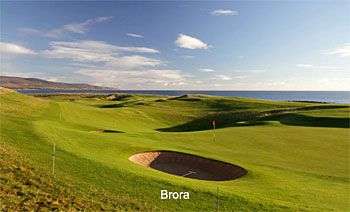
Brora Golf Club
Brora's rise signals a renewed appreciation for one of Scotland's most characterful links experiences. James Braid's Sutherland has long been cherished by those who make the pilgrimage north, and the panel's verdict this time around is emphatic.
St Andrews Links (New Course)
Tom Morris's New Course at St Andrews makes a similarly dramatic leap. Laid out on the same Fife linksland, the New Course offers a subtler but no less rewarding examination of links golf, and its rise reflects growing recognition among the panel of its considerable merits.
Pennard
Wales's most dramatic mover, Pennard's climb continues a strong upward trajectory for Welsh golf in this ranking. Set atop dramatic cliffs with views across Three Cliffs Bay, James Braid's coastal design delivers a links experience unlike anything else in the principality.
The Addington Golf Club
The Addington's extraordinary heath-and-heather landscape and inventive routing through woodland have always inspired devotion among connoisseurs of the inland game; the panel now recognises it more prominently within the national context.
Formby Golf Club
Formby's leap into the top 40 is particularly noteworthy. The Merseyside club, now sits among the top tier of English links venues. West Lancashire's rise reinforces the quality of the Lancashire coast corridor, which already features Royal Birkdale, Royal Lytham & St Annes, Hillside, Southport & Ainsdale and Wallasey.
Carne Golf Links (Wild Atlantic Dunes)
Three Irish courses make meaningful advances. Portstewart's Strand Course, County Louth, and Carne Golf Links on the wild Atlantic coast of County Mayo, shaped into the dunes by Eddie Hackett.
Eight courses make their debut in the 2026 GB&I Top 100:
England — 47 Courses
England accounts for nearly half the rankings — a reflection of both the volume and variety of world-class golf across the country. The Surrey and Berkshire heathland belt contributes a disproportionate share of the upper-table entries: Sunningdale Old (8th) and New (13th), Swinley Forest (18th), St George's Hill (27th), West Sussex (31st), Walton Heath Old (38th) and Hollinwell (41st) all feature within the top half. The links of Lancashire, Kent and East Anglia provide a contrasting but equally compelling strand of the English golfing story.
Four new entries — Aldeburgh, Hayling, Royal Ashdown Forest and Beau Desert — expand the list's geographic footprint into Suffolk, Hampshire, East Sussex and Staffordshire, demonstrating that England's golfing heritage extends well beyond its most celebrated corridors.
Scotland — 30 Courses
Scotland's 30 entries include five of the top six — a statistical dominance that reflects the country's unique concentration of championship links. St Andrews (2nd and 69th), Muirfield (4th), Turnberry Ailsa (5th) and Royal Dornoch (6th) anchor the Scottish contingent at the summit, while Carnoustie (11th), North Berwick (14th), Kingsbarns (15th), Ardfin (16th) and Cabot Highlands Castle Stuart (19th) complete a formidable top-20 presence.
Ireland — 18 Courses
Eighteen Irish courses feature across the island, with 11 of them sitting in the top 52 — a density of quality that underscores Ireland's claim to be the world's premier links destination. Royal County Down (1st) and Royal Portrush Dunluce (3rd) lead the charge from Northern Ireland, while Ballybunion Old (9th), Lahinch Old (10th), Rosapenna St Patrick's (12th) and Portmarnock (24th) anchor the Republic's contribution at the highest level.
Wales — 4 Courses
Wales holds four positions in the ranking, led by Royal Porthcawl. Pennard's rise is the Welsh highlight of 2026, with Royal St David's (77th) and Aberdovey (90th) completing the principality's quartet. The Welsh presence reflects a small but fiercely competitive national golfing scene whose best courses can match many of their more celebrated neighbours.
Isle of Man — 1 Course
Castletown enters the rankings at 93rd, extending the list's geographic scope to include what is perhaps the most underrated links destination in the British Isles. Designed on Langness Peninsula with views across Castletown Bay, the course offers a genuine links experience that few golfers beyond the island's shores have yet discovered.
Scotland's Mid-Table Revolution
Brora and the New Course at St Andrews both making gains along with three new Scottish entries arriving suggest that the expanded panel membership has brought fresh perspectives to the evaluation of Caledonian golf, reaching beyond the famous Fife and Ayrshire corridors into the Highlands and East Neuk.
England's Heathland Heritage Runs Deep
With 47 entries, England dominates the ranking numerically. But the nature of the English contribution is as interesting as the volume. The heathland courses of the Surrey and Berkshire sandbelt account for a remarkable cluster of entries in the top 40. Royal Ashdown Forest's debut as a bunkerless inland classic adds yet another dimension to the story of English golf design. The four new English entries span different eras and geographies, from the ancient links of Hayling Island to the heathland of Beau Desert.
Welsh Golf Reaching New Heights
Four Welsh courses in a combined GB&I Top 100 is genuinely significant. With Aberdovey re-entering the list at 90th, the principality now presents a quartet of genuinely diverse and compelling experiences.
The complete 2026 GB&I Top 100, with individual course pages, panellist commentary and regional breakdowns, is available at Top100GolfCourses.com. Each of the 100 courses links through to detailed profiles, visitor information, and review collections from thousands of golfers who have experienced them firsthand.
For regional perspectives within Britain and Ireland, the site also maintains separate Top 100 rankings for England and Scotland, a Top 50 for Wales, and individual rankings for Ireland and Northern Ireland — together covering nearly 700 distinct golf courses across the five nations.
Top 100 Golf Courses of Britain & Ireland 2016 Our latest Britain & Ireland Top 100 ranking list is unveiled Two years ago we said we’d whittled down our Britain and Ireland shortlist because it was taking too long to research more than 500 courses. We then had a rush of blood to the head and decided to contact every golf club in Britain & Ireland to help shape our regional/county rankings. The results from this survey have already been published and every regional ranking table (of which there are around 90) has been reordered. In our recent World Top 100 2016 release, I pointed out that this premier ranking table was complied using a different process from previous iterations, using feedback from many sources. Click here to read the story. This latest Britain & Ireland Top 100 list has been formulated using a combination of a top down (World 100) and bottom up (Regional/County) analysis. This “coming together” has resulted in some significant swings in our new GB&I table. Two years ago I felt confident I’d now be able to report that one of our team had managed to play the entire Britain & Ireland Top 100. Next time (2018), I’m sure that at least one of our direct team members will have played every course on the list. Brian Ward is closing in on completing the Britain & Ireland “holy grail”, having played 98 courses from our new 2016 rankings – Hankley Common (Up 15) and Ballyliffin (Old) (Up 4) are tantalisingly waiting for Brian to tick them off. Andy Newmarch is not far behind Brian with only a handful left to play – who will be first I wonder? A dozen or so years ago I needed to play only twenty more courses to complete the Britain and Ireland hundred, but now I still have fifteen on my “to-play” list, in part due to the ever-moving goalposts. However, I’m still working to our original 2004 list and I’ve only got ten left to play from that particular chart – it’s still a poor effort on my part though. It goes without saying that you need to be dedicated to complete any Top 100 ranking list. You also need a great deal of time and a fair amount of money. I know of only one person who has played the entire GB&I Top 100. Shaun Rhodes completed the task in 2006 and we joined up with him in Ireland to chronicle his achievement. If you’ve played them all, please get in touch with me – I’d love to hear your story. So what’s new for 2016? Well, quite a lot actually, but Royal County Down (Championship) still heads the table and St Andrews (Old) remains at No.2. However, three courses enter our Top 20 for the first time and they’re all Scottish. Castle Stuart moves up four places to 17th and I must say I thoroughly enjoyed playing this Gil Hanse delight earlier this year. Royal Aberdeen (Balgownie) rises seven places to 18th, while its near neighbour, Trump International jumps eleven places to 20th. I’m regularly asked which is the best area in Britain & Ireland for golf. The short answer is – it depends. If you love links golf, like I do, the Highlands is one of the (if not the) best golfing destinations in Britain & Ireland. There’s a second course (designed by Arnold Palmer) scheduled to open at Castle Stuart in 2019 and Mike Kaiser (of Bandon Dunes fame) is hatching a plan to build a new course at Embo near Dornoch. Today, the Championship courses at Royal Dornoch (up 1 place to 3rd) and Nairn (up 2 to 42nd) along with Skibo Castle and Brora (a new entry at 100th) and, of course, Castle Stuart, means that the Highlands can boast five links courses in our new Britain & Ireland Top 100 (only Ayrshire and Lancashire can also claim as many top rated links courses in our latest list). Well over half the layouts on this ranking list are links courses, which is no great surprise, but there are also some wonderful inland courses listed too and three of them are new entries – although Sherwood Forest (in at 95th) and the Old course at Royal Ashdown Forest (in at 99th) are both re-entries. Hindhead, on the other hand, appears on this table for the first time and it’s straight in at position 82. The Devil's Punchbowl is a large hollow of dry sandy heath to the west of Hindhead (the highest village in Surrey) and the front nine is laid out through these heather and bracken strewn Ice Age valleys, while the back nine plays on a hillside heathland plateau. It’s a truly dramatic setting and I’m delighted Hindhead has finally entered this stellar ranking list to join its Surrey heathland contemporaries – the Hindhead greenkeeping team should take a bow. Incidentally, if you like heathland golf (as I do) Surrey is impossible to beat. There are fourteen courses from this premier English county listed in this latest Top 100. Southport & Ainsdale (in at 95th) completes our quintet of new additions and makes up the fifth Lancashire links course (alongside Birkdale, Lytham, Formby and Hillside) to feature within this new chart. Improvements have been made to a number of courses that are upward movers in the rankings: Remedy Oak (up 7) has recently re-laid greens to USGA specification; Renaissance Club (up 17) has built three new holes along the East Lothian coastline; Swinley Forest (up 7) has invested significantly in improved maintenance and has cleared much undergrowth in order to return to firm and fast playing surfaces. Even the much-loved and highly ranked Turnberry, now owned by Trump, undergoes a major facelift. Courses that stand still are in danger of dropping down or even falling off this very competitive ranking list. An example is the West course at Wentworth (now under Chinese ownership). It’s going backwards at an alarming rate of knots (down 21 to 54th). While the club struggles with the quality of the greens on its flagship course, existing Wentworth members have recently been told they must pay £100,000 in order to remain at the club. My hope is that Wentworth comes through these challenges and injects a little TLC into my favourite course at Virginia Water. You know which one I mean, it’s the one they use for car parking when the big tournaments are played on the West. The East (up 1) is the original Harry Colt course at Wentworth and it’s the only heathland layout that remains at the property. However, without remedial action, it too will end up like the West – more parkland than heathland in nature. Next door to Wentworth, both courses at Sunningdale stand firm. The Old and New together are quite rightly considered to be the best pair of inland courses in Britain & Ireland, perhaps even the world. I wonder how many Wentworth members now wish they had joined the club next door? Ballyliffin continues to fly the Irish flag as the only club with more than one course (Glashedy and Old) in the GB&I rankings. Brian Ward is now regretting the fact that he didn’t play the Old course when he last visited Inishowen, because this classic links has consolidated its position (up 4 to 96) in the GB&I rankings. Twenty-two Irish courses appear in the hundred (eighteen from the Republic and four from the North); eight move up, nine go down and five remain in the same position as last time. Ireland continues to punch well above its weight in these rankings. Once again four Welsh courses appear in the chart, matched course-for-course by Northern Ireland’s quartet. It’s hard to imagine a fifth Welsh course breaking into the GB&I rankings unless something dramatic happens in the Principality. Some might say we’ve missed a trick by omitting the Twenty Ten Ryder Cup course, but it missed selection by some distance – although it will appear in our GB&I second hundred. We’ve continued to fly The Red Dragon flag for Pennard (up 1), which we feel is the Welsh equivalent of England’s St Enodoc (also up 1). Both courses started out following the marker pegs of James Braid and both are routed across hilly ground from where the golf and the views are sparkling. Two courses narrowly missed selection and both are worthy of mention. James Braid overcame his fear of sea travel to redesign La Moye in Jersey and it shares a common theme with Pennard and St Enodoc in that they were all touched by the five-time Open Champion and all three are laid out on high ground. La Moye has never been ranked in our GB&I listings, but it came close this time. Castletown on the Isle of Man was a regular in our GB&I rankings some years ago but fell out of favour. Castletown and La Moye suffer from being separated from the mainlands of Britain & Ireland but these two courses are serious contenders for inclusion in our 2018 GB&I Top 100. The question is, which courses might they replace? Feedback is always welcome, so please feel free to let us know what you think of our latest 2016 GB&I Top 100. Please click the “Respond to this article” link at the top and bottom of the page if you’d like to share your opinion. Additionally, if you’ve played an extensive number of Britain & Ireland’s Top 100, please get in touch. We’d love to hear your story. Over the next few weeks we’ll publish a GB&I second hundred for the first time. Keep an eye out for this release as it promises the odd surprise. Finally, you may be interested to note that thirty-one courses from this latest GB&I ranking table are also listed in our new World Top 100. It’s an impressive achievement considering the size of these diminutive islands. Keith Baxter Editor-in-Chief Top 100 Golf Courses Click to explore in detail our new 2016 Britain & Ireland Top 100 For those interested, the five courses that made way for the new entries are: Blairgowrie (Rosemount), Adare, Mount Juliet, Belfry (Brabazon) and Bearwood Lakes.

Wales remains Britain's ultimate undiscovered golf destination. While Scotland commands premium prices and Ireland attracts international crowds, the Principality quietly delivers exceptional value across 50 ranked courses that showcase everything from championship links to characterful common land layouts. The 2025/26 rankings reveal subtle movements that reflect golf's shifting values, with authentic experiences gaining recognition over heavily manicured resort tracks. Royal Porthcawl continues its unbroken reign at the summit since rankings began in 2006. The world-ranked links anchors a stellar collection that includes Pennard, Royal St David's, and Aberdovey, all featured in the Great Britain & Ireland Top 100. But Welsh golf's true strength lies deeper, in remarkable second-tier courses that provide outstanding experiences at refreshingly accessible prices. Top 100 Golf Courses now maintains dedicated regional rankings for North, South, Mid, and West Wales alongside the national Top 50. This structure helps visiting golfers navigate more than 60 profiled courses across varied terrain. Whether seeking windswept coastal tests or quirky inland challenges, Wales delivers without the premium tags attached to more famous destinations. Wales 'Always Fresh' Rankings: Stability at the Summit The latest rankings demonstrate remarkable consistency at the top. All seven courses occupying positions one through seven remain unchanged from the previous edition, a testament to their enduring quality. Royal Porthcawl, Pennard, Royal St David's, Aberdovey, Conwy, Southerndown, and Tenby form an elite group that represents Welsh golf at its finest. Behind this stable leadership, however, meaningful shifts occur throughout the rankings. Pyle & Kenfig rises one place to ninth, swapping positions with Celtic Manor's Twenty Ten course, which drops to tenth. The most dramatic movement comes from Welshpool, the James Braid common land gem that surges seven places to 18th position from 25th only as recently as 2023. This leap reflects golf's evolving appreciation for authentic, characterful layouts over perfectly conditioned resort golf. Welshpool's rugged charm and natural undulations now receive the recognition they deserve. Bull Bay climbs one spot to 11th, whilst Cardigan jumps three positions to 16th. Conversely, Rolls of Monmouth drops three places to 19th, and St Pierre (Old) falls three spots to 23rd, suggesting that traditional parkland layouts face stiffer competition from Wales's distinctive coastal and common land venues. Wales Top 50 At A Glance The Unchanged Elite Royal Porthcawl (1st) Pennard (2nd) Royal St David's (3rd) Aberdovey (4th) Conwy (5th) Southerndown (6th) Tenby (7th) The Rising Stars Cardigan (up 3 to 16th) - clifftop classic climbing steadily Newport (up 2 to 21st) - parkland quality acknowledged Radyr (up 2 to 28th) - Harry Colt design advancing Notable Movements Pyle & Kenfig (up 1 to 9th) - championship venue continues ascent Bull Bay (up 1 to 11th) - Herbert Fowler's links improving position. It is up 4 spots from 15 to 11 in the past few years - a significant threat for the Top 10 moving forward Borth & Ynyslas (up 1 to 17th) - Harry Colt links moving forward West Monmouthshire (up 4 to 45th) - significant climb Cardigan is also one to watch, rising to 16, trending in the right direction over the past few years The Decliners Celtic Manor Twenty Ten (down 1 to 10th) - Ryder Cup venue slips slightly Rolls of Monmouth (down 3 to 19th) - faces increased competition St Pierre Old (down 3 to 23rd) - falling in a tight field Vale Wales National (down 3 to 39th) - resort course declining Best Golf Courses by Region Wales's Top 50-ranked courses are distributed across four distinct regions, each offering unique golfing characteristics and experiences. South Wales dominates with 22 courses (44% of rankings), reflecting both the region's population density and golfing heritage. Royal Porthcawl and Pennard provide world-class links golf, whilst Celtic Manor's three courses showcase modern resort development. Hidden gems like Radyr and Newport demonstrate the region's depth. North Wales contributes 17 courses (34%), including three GB&I Top 100 venues: Royal St David's, Aberdovey, and Conwy. The region excels in coastal golf, with Bull Bay, Nefyn, and Porthmadog offering stunning seaside experiences. The common land layouts at North Wales Golf Club provide additional variety. West Wales features 6 courses (12%), led by championship venues Tenby and Ashburnham. The region's coastal courses benefit from dramatic clifftop settings, particularly at Cardigan and Borth & Ynyslas. Despite a sparse population, West Wales punches above its weight in golfing quality. Mid Wales contributes 5 courses (10%), the smallest representation reflecting the region's mountainous terrain and limited golfing infrastructure. Llandrindod Wells and Welshpool exemplify James Braid's democratic approach to course design, creating memorable golf on challenging landscapes. What the Rankings Tell Us Consistency at the Summit Royal Porthcawl's unbroken 19-year reign demonstrates exceptional quality. Martin Ebert's recent bunker renovations ensure this championship links remains fit for modern tournament golf whilst preserving its classic character. The course's position in both the World Top 100 and GB&I Top 100 validates its status as Wales's premier golfing venue. Royal St David's reclaims third place after brief spells lower in previous rankings. The tough par-69 layout concludes unusually with a par three, creating strategic tension right to the finish. James Braid's Democratic Legacy Scottish architect James Braid left an indelible mark across Wales. Unlike contemporaries focused on prestigious commissions, Braid seemed committed to democratising golf, bringing Scottish ideals to Welsh communities with limited resources. Welshpool exemplifies this philosophy. Created in 1929 on dramatically undulating common land, the course features rudimentary shaping that maximises natural terrain. Extending merely 5,700 yards with numerous short par fours, Welshpool rewards strategic thinking over power. Its seven-place climb reflects growing appreciation for authentic golf experiences. Llandrindod Wells, originally designed by Harry Vardon and then remodelled by Braid in 1935, occupies elevated ground offering stunning countryside views. Wrexham, Holyhead, Porthmadog, and Langland Bay all benefited from Braid's architectural input, creating enduring layouts that remain largely unchanged a century later. The Common Land Experience Wales's distinctive "common land" courses represent perhaps its most unique golfing offering. Welshpool, North Wales Golf Club, and Llandrindod Wells feature dramatically undulating terrain, fine fast-running turf, and macro-scale contours that create strategic challenges unlike traditional links or parkland golf. These courses require ground game approaches similar to links golf, but on exaggerated landscapes. Golfers must read terrain contours carefully to navigate elevated greens and significant slopes. The rudimentary features, constructed with basic tools and minimal earth movement, create authentic playing experiences that transcend modern construction techniques. This architectural school extends across the Wales-England border, linking Welsh common land courses with English counterparts like Cleeve Hill, Painswick, and Minchinhampton. Together they represent democratic golf at its finest, offering memorable experiences at remarkably accessible prices. Resort Courses Under Pressure Celtic Manor's three courses demonstrate shifting attitudes toward heavily resourced resort golf that can be played almost anywhere. The Twenty Ten Ryder Cup course drops one place to tenth, whilst the Montgomerie and Roman Road layouts occupy 24th and 26th positions respectively. These movements don't reflect diminished course quality. Rather, they indicate golf's evolving values. More rugged, characterful layouts now receive greater recognition than perfectly conditioned resort golf. Authentic golfing experiences gain appreciation over manufactured challenges. A Decade of Growth: 2011-2024 Wales's ranking history reveals consistent expansion and refinement. From humble beginnings with a Top 15 in 2006, the listings have grown to encompass 50 courses, providing comprehensive coverage of the country's golfing landscape. 2006: Top 15 The inaugural ranking listed just 15 courses. 35 golf courses have been added in the 20 years since its initial release. 2011: Expanding Recognition Top 100 Golf Courses published its first extended rankings for Wales, growing from Top 20 to Top 30. Royal Porthcawl and Royal St David's maintained their traditional dominance atop the table. Pyle & Kenfig emerged as the highest climber, with Conwy also advancing significantly. The rankings introduced Llandrindod Wells at number 12, the highest new entry, signalling Mid Wales's growing recognition. 2012: North Wales Dominates Quality The 2012 update maintained the Top 30 format whilst highlighting North Wales's exceptional depth. Royal Porthcawl and Royal St David's continued leading the national rankings. Four North Wales courses occupied Top 10 positions: Royal St David's, Aberdovey, Conwy, and Nefyn Old. Celtic Manor's Montgomerie course climbed six places to 14th, the biggest upward move. Pwllheli and Vale of Llangollen entered as new courses. 2014: Extending to Top 50 The rankings expanded from 30 to 50 courses. Royal Porthcawl and Royal St David's remained unchallenged at the summit, supported by Aberdovey and Pennard. Ashburnham and Southerndown entered the Top 10, recognising their architectural heritage. North Wales, Holyhead, and Bull Bay all climbed significantly. Nefyn Old fell four positions to 11th as competition intensified. Vale Wales National debuted at 29, the highest new entry. 2015: Regional Refinements Top 100 Golf Courses published updated regional rankings for North, South, Mid, and West Wales, providing detailed local perspectives. Royal St David's led North Wales's Top 20, with Bull Bay, Porthmadog, and Vale of Llangollen advancing. Royal Porthcawl, Pennard, and Celtic Manor Twenty Ten maintained South Wales's top three positions. Pyle & Kenfig, St Pierre Old, and Newport climbed in South Wales. Radyr soared seven places. Whitchurch and Glamorganshire entered the South Wales Top 20. Ashburnham headed West Wales, followed by Tenby and Machynys Peninsula. Llandrindod Wells led Mid Wales's Top 5. 2016: Stability Returns Little changed at the top, with all seven leading courses maintaining positions. Royal Porthcawl and Royal St David's continued their duopoly. Llandrindod Wells and St Pierre Old both climbed five places. Cardigan and Borth & Ynyslas advanced significantly in West Wales. Newport, Radyr, Prestatyn, and Llandudno Maesdu made double-digit upward moves. Whitchurch entered at 23, the highest newcomer. 2018: Ranking Philosophy Evolves Royal Porthcawl remained firmly established as Wales's premier course, with Martin Ebert's architectural input ensuring continued excellence. Aberdovey rose one place to second, with Pennard climbing to third. Royal St David's fell to fourth as competition intensified. Holyhead jumped four places to 24th. Rhuddlan also climbed four spots. Three new entries appeared: Padeswood & Buckley, Monmouth, and Aberystwyth joined the ranking. 2020: Championship Golf Celebrated The 2020 rankings appeared as Wales prepared for major championships. The Boys Home International played at Ashburnham, the Women's Senior Amateur at Royal St David's. The following year promised the Curtis Cup at Conwy, St Andrews Trophy at Royal Porthcawl, and both Girls and Ladies Home Internationals at Royal St David's. Royal Porthcawl maintained its position despite ongoing bunker renovation work by Martin Ebert. Pennard climbed two places to second following bunker renovation completion. Conwy rose two spots to fifth, preparing for the Curtis Cup in prime condition. Southerndown advanced three places to sixth. Welshpool climbed five positions to 26th, beginning its ascent. Aberystwyth jumped nine places to 41st. Four new entries appeared: Builth Wells (returning), St Mellons, Henllys, and Milford Haven. 2022: Recognising Heritage The ninth biennial rankings edition continued Wales's established pattern. Royal Porthcawl's dominance remained unchallenged, occupying its position since rankings began. Royal St David's regained second place after previous ranking adjustments. Ashburnham rose two places to sixth, receiving overdue recognition for its J.H. Taylor design. Bull Bay also climbed two spots to 13th, highlighting Herbert Fowler's 1913 creation. Langland Bay advanced eight positions to 26th. Wrexham climbed seven places to 30th. Mountain Ash entered at 41st, the highest new entry. Four courses departed: Builth Wells, Carmarthen, Henllys, and Wenvoe Castle. 2024: Contemporary Values Emerge Royal Porthcawl maintained its unbroken leadership. Pennard moved above Royal St David's from third to second place. Southerndown advanced two spots. Ashburnham declined two positions. The rankings noted "big resort courses slipping a little bit down" whilst "more rugged courses move up," presaging Welshpool's dramatic rise. Historical Performance Analysis Examining long-term trends reveals fascinating patterns in course development and recognition. The Most Consistent Performers Several courses demonstrate remarkable stability across seven years: Royal Porthcawl has never left first position since 2006, occupying the summit in every ranking edition. This consistency reflects world-class quality maintained through careful stewardship and judicious architectural input from Martin Ebert. Pennard fluctuated between second and fourth positions before settling at second in 2025/26. Tom Doak's bunker work restored strategic elements that helped the course regain its traditional standing. Aberdovey held second in 2018, moved to third in 2020, fourth in 2022 and 2024, maintaining its position in 2025/26. Conwy occupied fifth position in every ranking from 2020 onwards, demonstrating steady quality. Curtis Cup preparation elevated the course to peak condition. The Biggest Climbers Several courses achieved remarkable upward momentum: Welshpool showed the most dramatic ascent, rising from 31st in 2018 to 18th in the latest release, climbing 13 positions overall. The James Braid common land design benefits from golf's renewed appreciation for authentic experiences. Langland Bay advanced from 34th in 2018 to 27th in the latest release, rising seven places. Radyr climbed from 37th in 2018 to 28th in the latest release, advancing nine positions. Harry Colt's design finally receives appropriate acknowledgement. West Monmouthshire surged from unranked to 45th in the latest release, representing the highest new entry in recent years. The Notable Decliners Some courses experienced sustained declines: Celtic Manor Twenty Ten dropped from fifth in 2018 to tenth in the latest release, falling five positions. The Ryder Cup venue remains excellent but faces increased competition from more characterful alternatives. Vale Wales National declined from 28th in 2018 to 39th in the latest release, losing 11 places. Nefyn Old fell from fifth in 2018 to 13th in the latest release, dropping eight positions. St Pierre Old declined from 14th in 2018 to 23rd in the latest release, losing nine places in a competitive field. Planning Your Wales Golf Trip Wales offers exceptional value for destination golf, particularly during high season when Scotland and Ireland command premium prices. The compact geography allows combining multiple regions in extended trips, whilst focused itineraries can explore single areas in depth. The Championship Links Circuit Visiting golfers seeking world-class links experiences should prioritise the elite coastal venues. Royal Porthcawl provides the centrepiece, combining championship quality with stunning sea views. Book well in advance, as this world-ranked course attracts significant demand. Pennard lies 30 miles west on the Gower Peninsula, offering clifftop drama and quirky charm at accessible rates. Royal St David's and Aberdovey anchor North Wales coastal golf. The dramatic setting below Harlech Castle makes Royal St David's unforgettable, whilst Aberdovey's romantic location between mountains and estuary creates enchanting golf. Both welcome visitors and offer excellent value compared to famous Scottish links. Conwy merits inclusion in any serious Welsh itinerary. Curtis Cup standard conditioning combined with strategic interest makes this understated links worth travelling for. The course lies conveniently near Chester and Liverpool, facilitating travel connections. The North Wales Coastal Tour North Wales offers concentrated quality along relatively short distances. Royal St David's and Aberdovey provide anchor points, separated by spectacular coastal drive. Conwy lies further north, accessible via dramatic scenery. Bull Bay occupies Anglesey's northern tip, convenient for ferry travellers to Ireland. Nefyn Old features spectacular clifftop holes rivalling famous Irish courses. Porthmadog and North Wales Golf Club provide additional variety. Holyhead's convenient location near ferry ports makes it perfect for travellers with spare time. Pwllheli rounds out coastal options. This circuit can be completed comfortably in 4-5 days, with excellent accommodation options in Harlech, Porthmadog, and Conwy. Green fees remain remarkably affordable compared to Scotland's championship venues. The South Wales Value Experience South Wales combines championship golf with exceptional depth. Royal Porthcawl and Pennard lead the way, but Southerndown provides comparable quality at lower prices. Pyle & Kenfig offers championship pedigree without premium tags. Celtic Manor's three courses suit golfers seeking resort amenities. The Twenty Ten Ryder Cup course provides memorable experiences, whilst the Montgomerie and Roman Road layouts offer variety. Convenient location near the Severn Bridge makes Celtic Manor accessible from England. Newport, Rolls of Monmouth, Radyr, and St Pierre Old demonstrate South Wales's exceptional depth. These parkland tracks provide variety after coastal golf, with green fees rarely exceeding £60. Cardiff and Swansea offer numerous accommodation options at varying price points. The West Wales Hidden Gems West Wales rewards adventurous travellers with stunning coastal scenery and exceptional value. Tenby and Ashburnham anchor the region, both dating to the 1890s with impressive architectural pedigrees. Machynys Peninsula provides modern resort golf with Nicklaus Design credentials. Cardigan occupies dramatic clifftop terrain above the Teifi Estuary, described as one of Wales's best-kept secrets. Borth & Ynyslas showcases Harry Colt's links design in remote splendour. These courses rarely see international visitors, ensuring uncrowded fairways. Aberystwyth and Milford Haven provide additional options for extended trips. The region suits golfers seeking authentic experiences without tourist crowds, offering exceptional value throughout the season. The Mid Wales Common Land Adventure Mid Wales appeals to golfers appreciating quirky, characterful layouts. Llandrindod Wells occupies dramatically elevated terrain, offering stunning views alongside challenging golf. Welshpool delivers authentic common land experiences, with rugged terrain requiring strategic ground game approaches. Cradoc provides gentler parkland golf, whilst Builth Wells and Machynlleth offer compact layouts bursting with character. This region suits golfers breaking journeys between North and South Wales, or those specifically seeking unusual golfing experiences. Green fees in Mid Wales remain extremely affordable, rarely exceeding £40. Accommodation options include charming market town hotels and country inns, creating memorable non-golfing experiences. Practical Considerations Wales benefits from excellent road infrastructure, with the M4 motorway providing rapid access from England. Manchester, Birmingham, Liverpool, and Bristol airports all lie within reasonable driving distance. Ferry services from Holyhead connect to Ireland, allowing combined UK-Ireland golf tours. Green fee rates range from £30-60 at most courses, with only Royal Porthcawl commanding premium prices approaching £200. Advance booking secures the best rates and tee times. Many courses offer visitor packages combining multiple rounds. Accommodation varies from luxury resort hotels at Celtic Manor to characterful country inns in market towns. Coastal villages provide bed and breakfast options with local charm. Cardiff and Swansea offer urban amenities for those preferring city bases. Weather patterns favour spring and autumn visits, avoiding summer crowds whilst ensuring reasonable conditions. Wales's rainfall reputation is somewhat exaggerated; coastal areas receive less precipitation than popular perception suggests. Waterproofs remain advisable regardless of the season. Looking Ahead Wales's golf scene continues evolving, with several developments promising future improvements. Tourism development remains modest compared to Scotland and Ireland, preserving Wales's uncrowded character. Golfers seeking authentic experiences without tourist infrastructure appreciate this understated approach. Limited international marketing keeps Wales affordable whilst neighbouring countries face pricing pressures. The rankings will continue evolving as golf's values shift toward authentic experiences. Courses offering distinctive character at accessible prices should gain recognition. Resort developments may face continued pressure unless they provide exceptional strategic interest alongside conditioning standards. Wales's position as Britain's last undiscovered golf destination won't last forever. Savvy travellers increasingly recognise the exceptional value proposition. Visit sooner rather than later to experience uncrowded fairways at remarkable prices. For complete details of all Top 50 Golf Courses in Wales, including regional breakdowns for North Wales, South Wales, West Wales, and Mid Wales, visit Top100GolfCourses.com.

The purpose of the Review of The Month feature is twofold. Top100GolfCourses has always aimed to salute and encourage those who are putting admirable effort into reviewing the world’s great golf courses. Moving forward, we are also looking to learn from these experts! We’ll be chatting with the month’s star authors and discussing topics such as golf in their area, what they like to see in a strong course review, and of course dig a little deeper into their own winning review. September 2023’s Review of The Month comes from Mariano Martinez de Azagra, who avoided the tourist trends and found thrills at Kington Golf Club in Herefordshire. There are some courses that are obvious locales for international golfers when visiting England. Kington isn't one of them! How/why did you and your pals end up in Herefordshire during your trip? One of the things I like most about golf trips is their preparation. That is, the design of the itinerary, something like the routing of the trip. Therefore, I have a lot of fun researching in advance and then deciding which courses to include. In this case, we traveled to South Wales, where we enjoyed courses such as Porthcawl, Pennard and Southerndown, among others. But, as our flight arrived in Bristol, I saw the opportunity to make a short detour and head to Kington on our way to our base in Wales. As for Kington, the first reference I had was through Tom Doak's Confidential Guide, whose short review really intrigued me. And, from there, I visited the Top100GolfCourses website, in order to corroborate that impression with user reviews, which led me to Sean Arble's extensive chronicle for GolfClubAtlas. From there, it was clear to me that Kington had to be one of the highlights of our trip to Wales. Kington has undeniable charm (as you mentioned, sheep as greenskeepers). How much of a boost does such charm give a course like Kington, versus the well-established fame of championship-caliber clubs? For me it is fundamental. I find that courses like Kington combine two of the parameters that I value most in golf: charm and sustainability. In this sense, it shares the same characteristics as other of my favorite places in golf, such as Brora, Boat of Garten and Fraserburgh in Scotland, or Ballycastle and Dooks in Ireland. All of them are clubs located in small towns, with very controlled maintenance costs, and where the green fee price has not skyrocketed, unlike the most distinguished clubs. And it's also much easier and more satisfying to be able to stop and chat with members, as I was lucky enough to do at Kington. Like any golfer, I also enjoy the experience of visiting the most renowned clubs, with first-rate facilities and top conditioning, but it is not my priority when it comes to visiting new courses. C.K. Hutchison has not had a hand in many course designs, but those that he did are well known, especially Turnberry's Ailsa, West Sussex, and Gleneagles. Have you had an opportunity to play any of these? If so, notice any trends in his designs? Unfortunately, I have not been able to play any of these courses; I tried to visit West Sussex in 2019 but it wasn't possible. Of course, I have been pleased to see that where he did have some intervention was at the West Links in North Berwick, my all-time favorite, although I imagine that his contribution must not have been particularly significant. Many golf groups traveling to Spain will also be inclined to visit the "big names" on the list. As a well-informed Spanish golfer, are there any off-the-beaten-path gems akin to Kington that you would recommend? In my experience, no. Let me explain myself: in Spain, golf is much more recent, and does not enjoy the tradition of Great Britain and Ireland. Consequently, it is almost unthinkable to find a course of Kington's quality in a secluded location, and bearing the signature of a famous and competent architect. In fact, and in general, we are decades behind Great Britain when it comes to many of the issues that I value most in golf, such as the preparation of the courses (it is not unusual to find overwatered fairways and greens) or the slow pace of play (no one has even imagined tee times for foursomes or two balls). It is a matter of golf culture in which we have a long way to go. Of course, if I had to recommend a course in my country, it would be El Saler, in Valencia. I know it's moderately famous, but it's often off the beaten path of golf, and it's really good. A side note: While they are not of the quality of the British, there are more than acceptable courses everywhere in Spain. And, of course, what I can assure you is that the offer in any area of Spain is superior to Britain in aspects such as gastronomy, and leisure in general. And the weather factor also helps... Now that you're a celebrated "Review of The Month" winner, let us know what factors you appreciate in a strong golf course review! Basically, two things: On the one hand, it must provide useful information about the experience, which may include aspects about the club's services, but mainly about the course, although I do not need it to go into an extensive description of each of the holes. Rather, I am inclined to value an overview of the entire experience of the round of golf; something that convinces me that I want to go there... or not. On the other hand, I also appreciate certain originality, or some type of uniqueness, that can come from anecdotes or the description of the feelings that the round of golf, or the atmosphere of the club aroused in the reviewer. What's one course that you're excited to write a review for in the upcoming year? I am already planning my trip for next year, most likely to the West coast of Scotland and, within it, the courses I would most like to play (and review) are Machrihanish, Prestwick and Shiskine.

