
Yorkshire has long been one of England's most rewarding golf destinations. From the heathland giants of the north to the moorland courses above Bradford and Halifax, the White Rose County offers a breadth and quality that few English counties can match. The 2026 rankings confirm both the enduring strength at the very top of the table and a series of compelling movements in the middle order that reflect how well several clubs have been developing their courses in recent years.
With 45 courses now ranked, panellists have assessed layouts across all four corners of Yorkshire - North, West, South and East - rewarding courses that deliver genuine challenge, architectural integrity and a memorable experience for visiting golfers.
The top four positions in the 2026 rankings are unchanged, a testament to the enduring quality of Ganton, Alwoodley, Moortown and Lindrick. Below that settled elite, however, the rankings tell a more interesting story, with Hallamshire making a strong move into the top five and Cleveland Golf Club posting the most impressive climb in the entire list.
To view the complete Yorkshire rankings and explore individual course profiles, visit the Yorkshire Rankings page.
The Unchanged Elite
Ganton Golf Club retains its position as Yorkshire No.1 for the fourth successive ranking cycle, and it is difficult to imagine that changing any time soon. This extraordinary inland links near Scarborough has hosted Walker Cup, Curtis Cup and Ryder Cup matches and remains one of the finest inland tests in the British Isles. Its fearsome bunkering is the stuff of legend.
Alwoodley Golf Club and Moortown Golf Club hold firm at two and three, both occupying their now-familiar positions in the West Yorkshire heartland north of Leeds. Alwoodley's MacKenzie-designed layout remains among the most beautifully understated heathland courses in England, while Moortown — which hosted the first Ryder Cup on home soil in 1929 — continues to develop with considered restoration.

Lindrick Golf Club remains fourth, its place among Yorkshire's elite secured by a combination of Ryder Cup heritage and continued course development
The Rising Stars
Hallamshire Golf Club is the standout performer in the upper half of the table, climbing two places to fifth. Harry Colt's 1938 redesign of this Sheffield heathland layout produced something quietly special.
Cleveland Golf Club is the biggest mover in the entire Top 15. Yorkshire's oldest golf club, founded in 1887 at Redcar on the North Sea coast, Cleveland offers a links experience unlike anything else in the county. Its steady upward trajectory over successive rankings reflects a course that has been consistently well presented and increasingly appreciated by travelling golfers.
Halifax is perched on the hillsides above the Calder Valley. Halifax's moorland layout delivers spectacular views and a genuine challenge that the panel has now recognised with a well-deserved rise into the Top 15.
Headingley moves up one place to eleventh, a modest but consistent improvement for a club with deep architectural credentials — Alister MacKenzie remodelled the layout after the club moved to its current site in 1906, with Harry Colt later redesigning the bunkers.
West Yorkshire dominates the Top 15 with eight of the fifteen ranked courses drawn from the county's most populous region. The concentration of quality around Leeds, Bradford and Huddersfield reflects both the density of clubs in this area and the strong heritage of moorland and heathland golf that developed here from the late Victorian era onwards. Alwoodley, Moortown, Sand Moor, Huddersfield, Headingley, Halifax, Ilkley and Woodsome Hall all represent the West Yorkshire tradition at its finest.
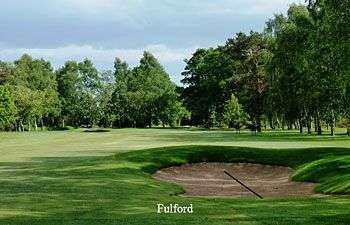
North Yorkshire contributes five courses — Ganton, Fulford, Cleveland, Pannal and York — spread across a large geographic area that takes in the coast, the Vale of York and the slopes of the North York Moors. This regional spread makes North Yorkshire one of the most rewarding areas in the county for a multi-course trip, with Ganton at the top of the rankings serving as the obvious anchor for any visit.
South Yorkshire accounts for two of the Top 15, with Lindrick and Hallamshire representing the Sheffield region. Both courses carry significant historical weight — Lindrick's Ryder Cup pedigree and Hallamshire's Colt heritage — and both sit comfortably in the top five of the overall rankings.
Stability at the Top Signals Enduring Quality
The fact that positions one through four are completely unchanged reinforces the message that Yorkshire's leading courses are in exceptional shape. Ganton, Alwoodley, Moortown and Lindrick are not simply coasting on historical reputations — they are courses that continue to deliver outstanding experiences. When a panel of experienced golfers independently assesses courses and returns the same top four, that unanimity is meaningful.
Golden Age Architecture Remains the Benchmark
The top ten is defined almost entirely by courses shaped by the great Golden Age designers. MacKenzie's fingerprints are visible at Alwoodley, Moortown, Headingley and Fulford. Colt's influence defines Hallamshire. Braid, MacKenzie and Simpson all contributed to Ganton. The rankings reaffirm that design quality, not reputation or heritage alone, sits at the heart of the panel's thinking.
Cleveland's Rise Highlights Coastal Yorkshire
Yorkshire's links golf is less celebrated than its moorland and heathland courses, yet Cleveland offers an experience that is genuinely different from anything else in the county. Its ascent invites golfers who might not have considered a trip to Redcar to reconsider. Combined with the wider North Yorkshire coast, a visit to Cleveland could anchor a genuine links-focused itinerary.
Halifax Opens Up the Pennine Hills
Halifax's rise is encouraging. Moorland golf in the West Riding has always attracted those who know where to look, but Halifax's promotion to the Top 15 now ensures it will appear on the radar of a wider travelling audience. The moorland loops above the Calder Valley deserve greater attention than they have historically received, and this ranking movement should help deliver it.
Yorkshire offers enough quality across a compact enough geography to reward a dedicated golf trip of three to five days. The obvious anchor is Ganton, which sits near Scarborough and provides a logical base for exploring the North Yorkshire coast and vale.
A West Yorkshire itinerary built around Leeds makes excellent sense for golfers wanting to experience the MacKenzie and Colt heritage in concentrated form. Alwoodley, Moortown, Sand Moor and Headingley all sit within a short drive of the city centre, with Pannal just to the south near Harrogate adding a moorland dimension. This cluster of courses represents one of the finest urban golf destinations in England — a point that is often underappreciated by those who have not played the area.
For something different, the Pennine routes through West Yorkshire open up Halifax, Huddersfield, Ilkley and Woodsome Hall — four courses that deliver spectacular moorland and parkland golf in some of the most dramatic landscapes in northern England.
Golfers with time to explore further afield should not overlook Cleveland at Redcar, which now sits eighth in the county rankings and offers the only genuine links experience among Yorkshire's elite courses. Combined with a visit to Ganton, an east-coast loop through North Yorkshire has real appeal for those chasing variety.
South Yorkshire is worth a dedicated visit for Lindrick and Hallamshire alone. Lindrick near Worksop and Hallamshire above Sheffield are different experiences — one a classic heathland course at the county boundary, the other a Colt moorland layout on Sheffield's western edge.
With Halifax and Cleveland both on upward trajectories and Headingley continuing its steady climb, the next Yorkshire ranking cycle has the potential for further movement in the middle order.
The question of whether any course can close the gap on Ganton at the top remains rhetorical for the time being. The depth of quality between positions five and fifteen suggests the competition for ranking places is as strong as it has ever been and represents an under-appreciated destination for travelling golfers.
To view the complete Yorkshire rankings and explore individual course profiles, visit the Yorkshire Rankings page.
Top 30 Golf Courses in Yorkshire 2015 Yorkshire Best in County rankings updated It goes without saying that Yorkshire and sporting excellence go hand in hand – indeed, it was recognised after the London Olympics in 2012 that the White Rose County would have finished twelfth in the medal table (with seven gold, two silver and three bronze medals) if it had been regarded as a separate nation during the Games. Many of the organised sports in the region date back to the mid-19th century, for instance, Sheffield FC, the world’s oldest football club, was founded in 1857 and Yorkshire County Cricket Club started out in 1863. If anything, the county’s oldest golf course at Cleveland was something of a latecomer, arriving in 1887. A lot has changed since then, of course, and there’s no shortage of places to play golf in the county these days, with almost two hundred golf clubs attached to the Yorkshire Union of Golf Clubs and Yorkshire Ladies’ County Golf Association. We don’t feature all of these clubs, but we do maintain a Top 30 chart of the very best courses. Following a consultation period with every club in the region, we’ve just finished updating our rankings for Yorkshire. Don’t expect any shocks at the top end of the table as positions 1 to 6 remain exactly the same as last time. A handful of new entries at the lower end of the chart are, however, worth a closer look. Ganton is still our Yorkshire No.1 and there can be no doubt about the allure of this fabulous inland links/heathland layout, where James Braid, Alister MacKenzie and Tom Simpson have all had a hand in the design. Host to Walker Cup, Curtis Cup and Ryder Cup matches down the years, this formidable course is famed for its fearsome bunkers. To a certain extent, Alwoodley and Moortown both live in Ganton’s shadow, reflected by their number 2 and number 3 positions in our revised Top 30 listings. Alwoodley was recently described by a reviewer as “a magnificently understated layout, immersed in a beautiful landscape“ whilst another person thought Moortown was “a fine course, in the top bracket of inland courses in England”. Like Ganton and Moortown, Lindrick is another Yorkshire course that enjoys a proud Ryder Cup heritage, the event having been held there in 1957. The layout sits at number 4 in our county chart and lies just outside the Top 50 for England. Architect Ken Moodie joined forces with the club recently to carry out an ambitious course upgrade program that will see a total of seven holes modified. At number 5, Fulford is probably best known as the first venue for the Benson & Hedges International Open, which the club hosted for eighteen years during the 1970s and 1980s. Located close to the city centre of York, the course is a beautiful heathland/parkland track that was originally laid out by Major Charles MacKenzie in the mid-1930s. Hallamshire occupies the number 6 position in our Yorkshire chart. The club dates back to 1897 when it leased part of the Duke of Norfolk’s estate for golf. Today’s heathland layout is largely the product of a Harry Colt redesign in 1938, when its signature par three 6th hole was first introduced. Two courses make upward moves at the top end of the rankings: Pannal, a fine moorland track located to the south of Harrogate, rises two spots to number 7 and Huddersfield, which had all eighteen greens re-laid to USGA specification a decade ago, advances one place to number 9. In the middle of the chart, another three courses head in the right direction: Bingley St Ives (up two to 11) has fairways routed around a mixed landscape of heathland and parkland, York (up three to 13) celebrates its 125th anniversary this year, and Rotherham (up two to 15), is a beautiful parkland track that’s set out within the impressive Thrybergh estate. Hornsea makes the biggest jump up the Top 30, soaring six places to number 23. The club moved to its present location in 1908, ten years after its formation, when Sandy Herd designed a layout that was subsequently modified by Alister MacKenzie then James Braid. Following a course audit by Swan Golf Designs five years ago, significant course improvements are now being carried out. At the lower end of the revised county listings, there are five new entries: Headingley (22) was formed in 1892 but the club moved to its current site in 1906, calling in Alister MacKenzie soon after to remodel the new layout. Harry Colt later redesigned the bunkers. Crosland Heath (25) is another MacKenzie design, with the architect setting out “The Heath” fairways on the site of an old quarry in the hills overlooking Huddersfield. The Welham and Park nines at Malton & Norton (27) are recognised as the principal 18-hole layout at a modern facility which first opened its doors in the mid-1990s. JH Taylor and Fred Hawtree laid out Selby (28) and its tree-lined fairways, which extend to 6,341 yards from the back tees, occupy a rather tight parcel of land. Oakdale (30) is yet another 18-layout from Alister MacKenzie, dating back to 1914. Measuring 6,484 yards these days, it’s certainly been stretched a little over the last 100 years. We’re grateful to everybody in the region who helped with our re-ranking process for Yorkshire. To view details of all the courses in our Yorkshire Top 30 rankings click the link. If you have extensive experience of playing across the northern region of England and would like to contribute to our next re-ranking exercise then please email Editor-in-Chief Keith Baxter at keith@top100golfcourses.com. Jim McCann Editor Top 100 Golf Courses
White rose adventure - playing more than 150 courses in Yorkshire Back in the winter of 2003 I was reading a leading golf magazine on a hotel sun bed in Cyprus while contemplating – in the words of Douglas Adams – life, the universe and everything. Four years earlier I won the Club Championship at South Leeds Golf Club off a handicap of five. Since then however I had become disillusioned with the game. A change of career meant I could only play one weekend in every four and when I did, the club competitions were won week in, week out by golfers whose handicaps were – putting it politely – not quite as low as they could have been. The magazine in question featured its biennial ranking of the UK’s top 100 golf courses. Reading the article made me realise that what I loved most about the game wasn’t trying to win meaningless trinkets of silverware and cut glass, rather playing as many courses as possible. Golf is probably unique in that every one of its playing areas are different and there are so many of them that we owe it to ourselves as golfers to try and scratch the surface by travelling about a bit rather than playing the same course all the time. With this in mind, having initially decided to play all the courses in my native West Yorkshire I needed to figure out what actually constitutes a golf course. I settled on 18-hole courses only, excluding those under 5,381 yards, that being standard scratch of not less than 66 based on yardage. This left 58 courses. My reason for doing so is that in West Yorkshire alone there are 26 nine holers, six courses under the above yardage – four of which are less than 5,000 yards – and a six holer. Only one of these 33 additional courses would have threatened the top fifty. I therefore took the difficult decision not to include these. On an unseasonably warm April day in 2004 I began my quest at Baildon. Baildon is a bit of a hidden gem on the moors high above Bradford in Bronte country. The course plays 6,231 yards from the back tees which unusually I was allowed to play from. It had originally been my intention to play all the courses from the tips however given the look of abject horror this request usually elicited, I soon gave up and ended up playing the regular “yellows” in most cases. I do find it particularly irksome that courses are quite happy to advertise their 7,500-yard championship course but having taken your green fee, they send you out from the much shorter yellow tees. By late 2008 I had played and ranked all the West Yorkshire courses. My criteria for ranking courses is similar to that used by Top100GolfCourses.com in that 60% of my mark goes on the design, 20% on condition and playability and 20% on location. My West Yorkshire top ten is as follows: 1. Alwoodley While Alwoodley and Moortown are both great courses designed by my personal favourite architect, Dr Alister MacKenzie, I feel Alwoodley is the better of the two, not only because of its more rural location but because the holes somehow seem to have a better flow. Having said that I’m sure the members’ lounge at Moortown is full of people who will disagree with me. Shipley and Sand Moor are both excellent MacKenzie tracks, the latter having arguably the best set of par threes anywhere in the country. Moor Allerton has three sets of nine and my favourite 18-hole combination comprises of the Blackmoor and High loops, which makes my top ten. It is also notable as being (as far as I’m aware) the only UK course designed by the late Robert Trent Jones Senior. Cookridge is one of the better courses to come out of the late twentieth century golf course boom and was designed by Karl Litten, the man responsible for Dubai’s first two grass courses. The remainder of the ten includes my own current club, Huddersfield, or Fixby as it’s known locally. Not hugely long by modern standards at 6,514 yards from the tips, but very strategic with penal rough. Having completed West Yorkshire in 2008 I was contacted by a fellow “course collector” by the name of Paul Gardner with whom I've played most of my forays around the rest of Yorkshire, a task I’ve recently completed. My top ten for the remaining parts of Yorkshire are as follows: North Yorkshire Ganton is undoubtedly the stand out course in the whole of Yorkshire and though not strictly a links course has beautiful springy links like turf. The bunkers are fiendish as are the greens which I found particularly difficult to read. Fulford was made famous in the 1970s as the host course to the European Tour’s Benson & Hedges Festival. During one tournament, Bernhard Langer played an approach shot by ascending the upper branches of a large oak tree. The course is often wrongly attributed to Alister MacKenzie who designed the original Fulford course. His brother Charles was actually responsible for this 1935 replacement. Oakdale is the only one of Alister’s designs on this particular list, although Middlesbrough and Filey were designed by another golden age legend, James Braid. The excellent course at Cleveland is notable for being the only true links course in Yorkshire although its architect appears to have been lost in the mists of time. South Yorkshire Styrrup Hall is perhaps the most controversial of my rankings. An extremely testing 6,745-yard course opened as recently as 2000 and featuring a signature par 5 measuring 712 yards. Unfortunately I have been unable to ascertain the designer despite calls to the club. Hallamshire and Lindrick would probably be one and two in most people’s South Yorkshire lists albeit in reverse order to mine. For me though Hallamshire is certainly the better of the two with Lindrick suffering from a couple of weak and rather strange holes, and relying heavily on its reputation as a former Ryder Cup venue, one of three in Yorkshire. East Yorkshire I have only mentioned a top three in East Yorkshire as due to the flat nature of the landscape, many of the other courses are rather similar and not particularly noteworthy. Hornsea and Hull are both fine James Braid courses. Of note at Hornsea are the tough closing five holes which, with the exception of the par three 17th, are all in excess of four hundred yards. Hessle moved to its current location in the early 1970s when construction of the Humber Bridge meant a necessary relocation. The current fine course was designed by the short-lived architectural partnership of Dave Thomas and Peter Alliss. Combining the above rankings gives my personal Yorkshire top fifty which is as follows: I am now looking forward to travelling further afield to sample the delights of Derbyshire, Lincolnshire, Greater Manchester and Lancashire. Mark Jessop
European Ryder Cup courses A brief look at the European Ryder Cup venues through the years September 2014 Surely nobody could argue that the change in 1979 which allowed Great Britain & Ireland to compete against the USA as Team Europe in the biennial Ryder Cup matches against the USA was anything other than a smart move – and probably the most important factor in turning the modern day version of the competition into the undeniable commercial success that it is today. Remember, up to that point in history, the American team had won twenty-one, drawn one and lost only three of the previous 25 events which had been held since 1927, when Walter Hagen and Ted Ray captained their respective professional teams in the inaugural tournament at Worcester Country Club in Massachusetts. If, however, you think the inclusion of golfers from continental Europe had an immediate effect on the outcome of the tournament then think again because, incredible as it might sound, it took another six years – and three further defeats against the United States – before the tide finally turned with a resounding 16½ - 11½ victory on the Brabazon course at the Belfry. And so – not to put too fine a point on things – the Top 100 Golf Courses look at the fourteen European courses which have hosted the Ryder Cup can be split into two distinct groupings: what might be termed “the dark ages before the Belfry” (between 1929 and 1981) and the “new dawn after the Belfry” (from 1985 up to the present time). The Alister MacKenzie-designed Moortown course in Leeds was the venue for the first series of Ryder Cup matches contested on this side of the Atlantic in 1929 and the home side recorded a 7-5 win against the visiting team. Surprisingly, even in those very early days, the fervent nature of the spectators was quite apparent, as Mark Rowlinson notes in his Globetrotter Golfer’s Guide England and Wales: “The cheering of the crowd of 10,000 during play was every bit as loud as that at football matches and partisan behaviour was apparently no different from that in the most recent encounters.” The next two Ryder Cup games in England were played at Southport & Ainsdale in 1933 and 1937, with Great Britain winning the first match 6½-5½ and losing the second match 8-4 to a team captained for the sixth and final time by Walter Hagen. S&A, as it’s affectionately known locally, is a fine course (ranked just outside the current GB&I Top 100) which James Finegan described in his book All Courses Great and Small as follows: “this links, laid out by James Braid in 1923, is endearingly old-fashioned, with its blind and semi-blind shots, low mounding… and an occasional cross bunker deceptively short of the putting surface… it is exhilarating golf from start to finish.” Due to the intervention of World War II, the next series of Ryder Cup matches on home soil didn’t take place until 1949, when Gantonwas chosen as the venue. Ben Hogan, captaining his American team for the second time, lifted the Ryder Cup for the winning side after a hard-fought 7-5 victory. Consistently ranked as one of the Top 100 golf courses in the World, Ganton has since played host to the top male and female amateurs on either side of the Atlantic in the Curtis Cup (2000) and Walker Cup (2003). Nick Edmund and George Oldham’s book Following the Fairways describes the course thus: “Ganton enjoys a beautiful peaceful setting nestling on the edge of the Vale of Pickering and the Yorkshire Moors… There are few inland courses with such cavernous bunkers – 111 in all! In addition to the many bunkers and the great spread of gorse, there are numerous fir trees and pines which can come into play following a wayward shot”. In 1953, the Ryder Cup moved south to another top golfing destination, the West course atWentworth, where Henry Cotton’s home side lost out narrowly to the Americans by a margin of 6½-5½ points. The ‘Burmah Road’ course, set out by Harry Colt in 1923, is a long, tough track and it lies within an enormous property that’s sufficient in acreage to accommodate another two 18-hole courses. As Nick Edmund states in his book Classic Courses of Great Britain and Ireland, “Wentworth is both classy and classic. You realise as much the instant you turn off the A30 and enter the opulent estate. Wentworth’s origins were not exactly humble. At one time Wentworth House was owned by the Duke of Wellington’s sister and it was later acquired by a Spanish count. In 1920 the 1,750-acre site was purchased by a property developer with… the very American dream of creating a golf and country club complex”. The next port of call for the Ryder Cup matches in the UK was at Lindrick in 1957, where the Great Britain team captured the trophy for the first time in 24 years, beating its American rivals by a score of 7½-4½ points. Mike Berners Price, in his book The Centurions of Golf, makes reference to the man responsible for bringing the competition to Yorkshire: “Sir Stuart Goodwin, a Sheffield industrialist, reached agreement with the PGA that he would sponsor the event at Lindrick. Goodwin was a member of the club but not on the Committee. The decision caused surprise away from Lindrick as the Club had no previous experience of hosting major events and the course was thought to be rather short for top competitions… The Club did not gain any immediate financial benefit from the Ryder Cup, but it was appreciative of Sir Stuart’s initiative and he became Club President in 1958.” Little did anybody imagine at the time that it would take another 28 years before a European team would win the event again. Moving into the 1960s, the Ryder Cup matches appeared to take semi-permanent residence in the north west of England as first Royal Lytham & St Annes (in 1961) then Royal Birkdale(in 1965 and 1969) were chosen as the home venues for the competition. The first two of this trio of matches resulted in emphatic victories for the USA (14½-9½ and 19½-12½) but the third series of games ended in a 16-16 draw, with Jack Nicklaus forever remembered for his sporting concession of Tony Jacklin’s tricky two-foot putt at the last hole of the final singles tie, resulting in a drawn match overall. Lytham and Birkdale have played host to all the most prestigious international tournaments down the years, including Walker Cup, Curtis Cup and the Open, and that impressive track record certainly speaks for itself. Donald Steel, in his book Classic Golf Links of England, Scotland, Wales and Ireland, is unstinting in his praise for both courses, describing the golfing test at the former as: “Lytham relies on a variety of hazards to weave its torment. There are bunkers galore, grassy hollows and dells to tease and divert shots… and several elevated greens to pose questions of judgement”. He then summarises the challenge at the latter in these terms: “Birkdale’s fairways are flat but they form valleys between mighty dunes, providing a sturdy frame to a landscape embellished by a profusion of tenacious buckthorn and willow scrub.” In 1973, players from the Republic of Ireland became eligible to join the British Team and the matches moved north of the border for the first time, to the home of the Honourable Company of Edinburgh Golfers at Muirfield, which Malcolm Campbell, in The Scottish Golf Book, believes is “the fairest examination of golf among all of Britain’s great and historic championship courses… an honest but hugely demanding test where the dangers are in open view for all to see. Good shots are usually handsomely rewarded, while the penalties for imperfection can be severe indeed.” The course may well have offered a just, equitable and upright challenge for all the competing golfers during that particular Ryder Cup but its fairness certainly didn’t prevent the USA from lifting the trophy for the eighth time in succession, with a winning margin of 19-13 points. After another trouncing on home territory at Lytham & St Annes in 1977, when captain Brian Hugget’s Great Britain & Ireland team (as it was now named) was defeated by a score of 12½-7½ points, the next opportunity to gain revenge within the shores of the UK – this time as Team Europe – took place at Walton Heath Golf Club in 1981, when a composite course consisting of fifteen holes from the Old course and three holes from the New course (the 12th, 13th and 18th) were used for the 24th edition of Ryder Cup matches. As mentioned by Phil Pilley in his Walton Heath centenary book entitled Heather and Heaven, none of the European team had won a Major going into the match (though Langer, Faldo and Lyle would later) whilst the USA team had claimed an astonishing 36 Major titles between them. Despite leading by a point after the first day’s play, the European team crumbled on day two, losing seven of the eight matches played, and it eventually capitulated to the Americans by a score of 18½ to 9½ points. Two years later, the European team came within a point of victory at the PGA National Golf Club in Florida but captain Tony Jacklin would have to wait a further couple of years before finally wresting the trophy from the grasp of his transatlantic golfing foes at the Belfry’s Brabazon course. It’s no over assertion to state that the 1985 Ryder Cup would change the complexion of the event for ever, as the record books show that Europe have since won nine, drawn one and lost only four of the 14 biennial competitions that have been played on either side of the Atlantic since then. At long last, the sporting public now witness a head-to-head golfing event that’s no longer a stroll for one of the sides. A mere whippersnapper in comparison to the nine older, more established UK courses that preceded it onto the Ryder Cup rota, the modern Belfry complex was nevertheless able to deliver the commercial returns to the PGA European Tour that the other more established courses could never come close to matching. The Brabazon was retained as the venue for the following two series of home matches in 1989 (which was drawn 14-14) and 1993, when captain Tom Watson led his USA team to a narrow 15-13 victory. The PGA European Tour’s move away from the Belfry to even more lucrative golfing destinations began in earnest in 1997, when Valderramain Spain became the first 18-hole layout in continental Europe to host the Ryder Cup. Acquired by Bolivian industrialist Jaime Ortiz-Patiño in 1984, the course had developed over the following decade into one of the finest in the world. As Geoffrey Giles writes in his book 101 Golf Courses, “Keen to host high-quality tournament golf, Ortiz-Patiño called back the designer of the course – the prolific architect Robert Trent Jones – to make alterations. Most significant of these changes was to reverse the two nines so the hardest run of holes would become the finishing stretch.” The revamped layout certainly threw up many exciting matches in the course of the three-day event, culminating in a repeat of the result from two years earlier at Oak Hill Country Club, when a Seve Ballesteros-inspired European team edged out its opponents in a thrilling match with a score of 14½ to 13½ points. The Brabazon course’s final hurrah came in 2002 (delayed by a year due to the terrorist attacks of 9/11), when it held its fourth series of Ryder Cup matches in seventeen years – a feat that’s very unlikely to ever be repeated in today’s highly profit-orientated golfing environment – with Sam Torrance captaining the European side to a 15½-12½ victory. And so to the Palmer course at the K Clubin 2006 where another self-made millionaire, Michael Smurfit, effectively bought the rights to host the Ryder Cup in Ireland. Richard Phinney and Scott Whitley, in their book Links of Heaven, had this to say about Arnie’s layout: “The course used for the Ryder Cup was cleverly rerouted, with the seventh and eighth holes, perhaps the best two on the course, becoming the sixteenth and seventeenth. This created some do-or-die excitement as the greatest players in the world flirted with the water.” And with Darren Clarke losing his wife to cancer earlier that year, it was rather an emotion-filled European team, led by captain Ian Woosnam, which eventually smashed the American team into submission, winning by the enormous margin of 18½ to 9½ points. Continuing the theme of high profile wealthy individuals with an unbridled passion for golf, Sir Terry Matthews was next up, delivering the Ryder Cup to Wales for the 2010 edition of the competition and he oversaw the construction of the Twenty Ten course at his Celtic Manor Resortspecifically for that event. Geoffrey Giles, author of 101 Golf Courses acknowledges the effort needed to bring the tournament to Newport: “Matthews was ambitious for his resort. He wanted to attract the biggest stars in the game to play there and he set out to bring the Ryder Cup to Wales for the first time. His problem was that none of his existing courses could accommodate such a tournament... drastic measures were needed and Matthews was not afraid to take bold decisions.” Abandoning the old Wentwood Hills layout, he retained nine of its upland holes and added a new nine routed through the Usk Valley to form the Twenty Ten course. Another tight match ensued, which ended in favour of the European team with an extremely tight score of 14½ to 13½ points. Finally, in 2014, we arrive at the point where the PGA Centenary course at Gleneaglesbecomes the 14th course to join the European Ryder Cup roster and only the second course in Scotland to host the event after Muirfield in 1973. Originally designed by Jack Nicklaus, the layout was extensively overhauled in the winter of 2011, specifically to knock the course into shape for the 40th edition of Ryder Cup matches, some three years down the line. All the greens had a SubAir system installed and all the bunkers were refurbished, with a number of fairway traps removed completely. Significantly, the prosaic approach to the home green was totally remodelled, resulting in a five-metre lowering of the fairway. After all that effort and expense, the course fully deserves whatever plaudits might come its way when the action starts at the end of September. I wonder what drama might unfold in that brand new sporting arena at the 18th hole? Jim McCann Editor www.top100golfcourses.com Follow our Ryder Cup trail by browsing any Ryder Cup course page on the Top 100 website and then click on the blue hyperlinks within the Ryder Cup information box to navigate to the next Ryder Cup venue. You may find a few surprising courses. Start at Worcester Country Club and finish at Gleneagles... it will be an interesting journey. We don't know anybody who has played every Ryder Cup course on both sides of the Atlantic, so if you've played the full set, please get in touch, we'd love to hear your story.

