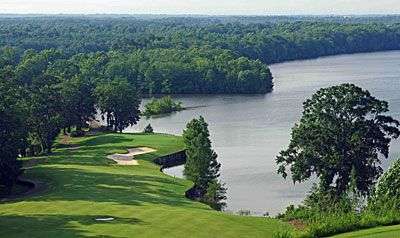
‘Build It And They Will Come’
Robert Trent Jones Golf Trail Celebrates 25 Years of Perfection
By Dave Finn
Kevin Costner’s iconic 1989 movie Field of Dreams may not have won an Oscar, but it sparked a winner. Let me take you behind the scenes, and tell you about another man’s vision.
A golfer’s dream may be to have 18 of their favorite holes, featured on a single course. Dr. David Bronner, the CEO of Retirement Systems of Alabama, had a dream to invest his organization’s pension funds and build 26 world-class golf courses that would challenge people enough that “they will want to come back and try again.”
Bronner may not have heard the voices Ray Kinsella heard but he listened to the call and tapped into his creativity and courage to do what no one could imagine. Once he lured the legendary Robert Trent Jones Sr. out of semi-retirement, there was no looking back.
With Jones as his co-director, the result is an extraordinary golf trail that meanders across Alabama, from the Appalachians in the north all the way to the Gulf of Mexico. Golf Digest declared the RJT Trail as “the number one value in the country for golf!”
“The very best courses are those where nature provides the canvas,” Jones said and, ”my job is to discover her secrets and reveal them.” Bronner was also convinced that the trail would attract tourism and industry to Alabama. He was right.
A golfer gets a feeling for a course based on what makes it a great experience. Here is what left a memorable impression on me after visiting the RTJ Trail during its 25th anniversary.
Scenery
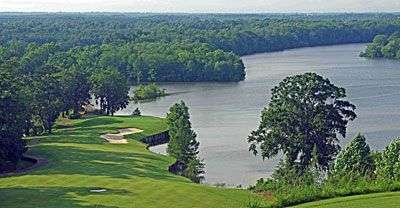
The Judge course at Capitol Hill has one of the most incredible opening holes in golf. As you stare down a 200-foot bluff to a sliver of a fairway with a well-protected peninsula green that juts out into the Alabama River, it will take your breath away.
The layout traverses 200 acres of river backwaters with 14 holes that feature water hazards, making accuracy more important than distance.
Here, you can also play the Legislator, a more traditional parkland course framed by tall pines and built along a large bluff, or the Senator, a Scottish links-style design with more than 150 sod-faced pot bunkers and mounds that stretch 40 feet towards the sky.
Challenge
Ross Bridge in Hooveris the fourth longest golf course in the world. From the very back tees, it plays all of 8,191 yards. Surrounded by the foothills, it features lots of elevation changes and forced carries that provide drama and danger.
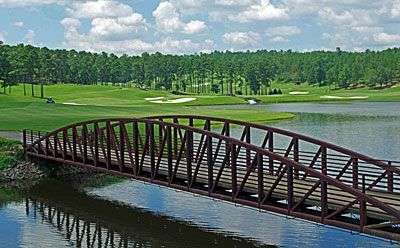
Ten holes play along the shoreline, and the waterfall that spills into the central lake is best viewed from the 9th and 18th tee blocks. Linger until dusk to hear the soulful sounds of a bagpiper as he makes his way to the putting green.
You’ll be transported ‘across the pond’ at this challenging course that once played host to the Regions Charity Classic on the Champions Tour.
Personality
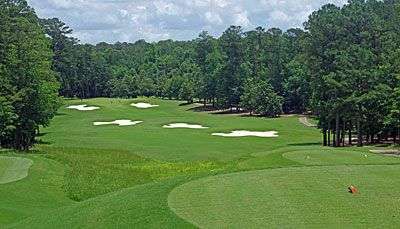
Grand National near Auburn/Opelika offers three 18-hole layouts. The Lake Course is the home of the PGA Tour’s Barbasol Championship that runs the same week as the British Open. Built around 600-acre Lake Saugahatchee, twelve holes nudge the shoreline and will test your skills against the pros.
The Links Course reportedly has the strongest finishing hole on the Trail, but the Short Course was my favorite. With a good combination of short and long holes, some uphill, some downhill and more than half touching the lake, every hole is unique and what I’d consider a signature hole anywhere else.
Design
Personally, I’m a big fan of huge elevation changes, and in this category, I’m torn between two contenders.
Oxmoor Valley near Birminghamliterally rocks. The Ridge, built on the site of a former mine once owned by U.S. Steel takes full advantage of the peaks and valleys of the Appalachian mountain range. It showcases towering shale formations, more than 150 feet in height and rich, dense forests.
Cambrian Ridgeboasts three nine-hole layouts. The Canyon was carved out of a former hunting ground, and the first hole will both inspire and intimidate you, a par-5 that drops 200 feet from the tee to the fairway. And that’s only the beginning of the adventure.
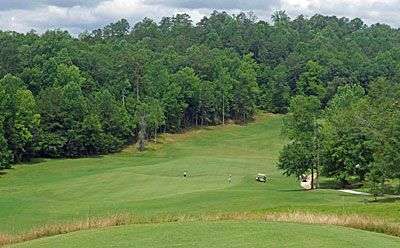
With 11 sites, 26 courses and 468 holes of golf, the Robert Trent Jones Trail is varied, fun, challenging and affordable. Often imitated but never replicated, it’s no wonder the New York Times has declared the RJT Trail, “the best public golf on earth.”
Dave Finn is our Canadian Correspondent. To read more about golf in Alabama visit his website at: http://golftravelandleisure.com/category/united-states/alabama-united-states/
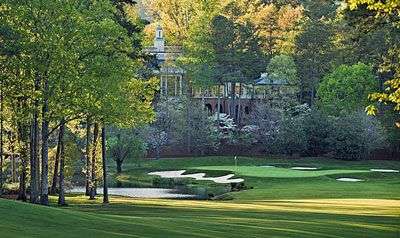
US East South Central Division Best in State Rankings 2020 Three weeks ago we revised the charts for the four states in the West South Central Division of the United States. We now turn our attention to Alabama, Kentucky, Mississippi and Tennessee in the East South Central Division, adding another twenty courses to the mix in the process, so we now feature a hundred courses across a geographical area extending to more than 180,000 square miles. Only one of these one hundred layouts – The Honors Course outside Chattanooga in Tennessee – makes the cut for a ranking position within our US Top 100 but don’t let that statistic lull you into thinking there’s little golfing interest to be found in this section of the American South. Hopefully, you’ll recognize there’s plenty to like here from the short profile of the courses mentioned below. Alabama It was something of a surprise when we last appraised the state listings to find out that Shoal Creek in Birmingham had been knocked off the top spot. Well, it’s not taken long for the course to bounce back, regaining its No. 1 status at the first opportunity. Designed by Bob Cupp when he was a lead architect for Nicklaus Design, the course has hosted a number of high profile national tournaments since it first opened in 1977, including a couple of PGA Championships. Shoal Creek Mark White, one of our regular contributors, commented earlier this year: “I do believe Shoal Creek is worthy of a Senior US Open championship or another US Women’s Open… and it could have another PGA, particularly since that major has moved to the month of May. It has heroic shots, decision making, builds to a nice finish, is challenging yet fair, has a good routing, is an easy walk, and has good green complexes. There really is not much missing from this golf course.” Ten courses have been added to our Alabama portfolio so it now extends to a Top 30. The highest new entry from this intake of newcomers arrives at No. 10 and it’s the George Cobb-designed layout at Vestavia Country Club which has recently undergone an extensive renovation by Lester George, who rebuilt more than half the holes, in addition to introducing water hazards and installing a new irrigation system. Vestavia Country Club Selective tree clearance has opened up views, sand hazards have been upgraded using Better Billy Bunker lining, and improved mowing lines have created extra width on fairways. Not only that, the introduction of template classics such as a Redan green on the 13th and a Biarritz green on the 15th has greatly enhanced the playing experience at Vestavia. The biggest upward move is made by the course at Ross Bridge on the Robert Trent Jones Golf Trail, rising three places to No. 11. A recent reviewer had this to say about it: “perhaps the only ‘weakness’ of the course is the somewhat monotonous demand for aerial shots on virtually every hole. Otherwise, with its fabulously manicured facilities, striking terrain, mix of corridors, and terrific all-round amenities, Ross Bridge was a solid, surprising, and bold golf experience.” Ross Bridge Rank/ Click the link to see full details of our latest Alabama Best in State rankings Kentucky The Donald Ross-designed course at Idle Hour Country Club in Lexington became the new No. 1 in the Bluegrass State during our 2018 state shake-up and it remains in the same position now. Originally laid out by Donald Ross in the 1920s, the course has benefitted from Ron Prichard restoring the bunkers, installing several water features, and adding some judicious length in order to ease this Golden age classic into the 21st century. Idle Hour Country Club The most substantial climb in our Kentucky table is made by the 18-hole layout at the University of Louisville Golf Club. A new entry in our chart last time around, it now soars seven spots to No.6. It’s the home club for the university’s men’s and women’s golf teams and it has hosted a number of prestigious competitions in the last few years, including the NCAA Men’s Regional in 2019, the state PGA Championship in 2017, and the Kentucky Women’s Open in 2015. University of Louisville Golf Club In the bottom half of the new chart, two courses with tournament pedigrees leap five places forward: Kearney Hill Golf Links (now at #12) is a Pete Dye/P. B. Dye co-design that held both the national men’s and women’s Amateur Public Links Championships before they were discontinued by the USGA; and the course at Cherry Blossom Golf Club in Georgetown (up to #13) has staged the State Amateur for both male and female golfers on separate occasions since 2014. Click the link to see full details of our latest Kentucky Best in State rankings Mississippi Fallen Oak, Tom Fazio’s 18-hole layout at the Beau Rivage Resort & Casino near Biloxi, recaptures the No. 1 spot in the new Mississippi state rankings. Located deep inside the De Soto National Forest, this course is part of the same Las Vegas MGM Mirage setup as Shadow Creek and some contend that, due its natural setting, it’s actually the better of the two Fazio tracks. Fallen Oak Reviewers from a few months ago made comments like: “I highly recommend Fallen Oak; it is fun yet challenging, peaceful and beautiful. Even if some of the terrain changes are not natural, there are plenty of rolling and undulating fairways. The wide fairways, lighter use of trees, and ponds create a spacious feeling on most of the holes... the routing is also quite inventive – moving to all corners of the property. Fazio doesn’t just present the famed ‘look’ where the style outshines the substance. At Fallen Oak there’s plenty of teeth ready to bite so you need to stay on your toes.” There’s only one new entry and it appears at No. 14 in the new chart. Mallard Pointe Golf Course in Sardis, owned and operated by the Mississippi Department of Wildlife, Fisheries and Parks, is a Bob Cupp design that’s routed around the southern shores of Sardis Lake and the course is complemented by a couple of golf villas, each with 4-bedroom suites, kitchenette and lounge overlooking the sparkling waters of the 58,000-acre lake. Mallard Pointe There’s not much movement in our new state listings as the most impressive advance is a mere 2-position improvement to No. 18 for the course at Timberton Golf Club in Hattiesburg. Mark McCumber set out the fairways here in the early 1990s and this tree-lined parkland course has been used for numerous USGA and PGA qualifying competitions since then. Click the link to see full details of our latest Mississippi Best in State rankings Tennessee The Honors Course retains its position at the top of the tree in the Volunteer State and it’s also firmly ensconced inside the US Top 100, having moved up one place to #75 when we re-ranked the national chart at the end of last year. It was founded in the early 1980s by Coca-Cola bottling heir Jack Lupton with the stated aim of providing a stern test for elite amateur players and the club has hosted top tournaments such as the 1991 US Amateur, the 1994 Curtis Cup, the 2011 US Senior Women’s Amateur and the 2016 US Junior Amateur, with many of the opinion that it’s one of Pete and P.B. Dye’s best designs. The Honors Course We’ve expanded our Tennessee standings to a Top 30 and the leading new entry is the early 1920s William Langford design at Chickasaw Country Club in Memphis, where Byron Nelson’s eleven PGA Tour event winning streak came to an end in 1945. Bill Bergin completed a restoration in 2018, reworking green complexes, bunkers and forward tees, as well as removing trees and converting grasses from bent to Bermuda. Chickasaw Country Club Regular correspondent Richard Smith visited last year and in his verdict was: “the strength of the course lies in the greens and the green complexes and Bill Bergin did a wonderful job of capturing the run offs and slopes that help make Langford courses unique… this is a classic old-style golf course that has been well updated moving forward in the 21st century. If I lived in the area this would be a great course to join as a member.” The most significant positional gain is a modest 3-place move up to No. 13 by the Bob Cupp-designed layout at Council Fire Golf Club, which is named after the decision making forum of the indigenous Cherokee people who originally populated the surrounding landscape. Council Fire converted greens from bent to bermuda in 2012 then Bill Bergin fashioned a new short game area four years later so the club certainly cannot be accused of dragging its heels in the new millennium. Council Fire Golf Club Click the link to see full details of our latest Tennessee Best in State rankings Next up: the seven West North Central Division states of Iowa, Kansas, Minnesota, Missouri, Nebraska, North Dakota and South Dakota. Jim McCann Editor Top 100 Golf Courses
USA Best In State Golf Course Rankings Launched Top 100 Golf Courses extends its rankings to “Best In State” The independent website, Top 100 Golf Courses, is excited to announce that it is extending its golf course rankings to focus on the USA’s “Best In State” golf courses. Top 100 Golf Courses features thousands of golf courses in more than 150 different countries in numerous ranking categories. After having extended our rankings for British & Irish counties and regions in 2011, we have progressed naturally to the USA. The Best In State process has started and will hopefully complete by June 2012. Numerous golf magazines have published Best In State rankings for some years, so our process is not unique. However, we have decided, in the case of a number of US states, to increase the number of ranked courses. This means that we will provide not only a more comprehensive list, but also far more information that will be permanently and freely available online to browsers. We’ve focused our attention initially on eight US states; Alabama, Arizona, California, Florida, New Hampshire, New York, North Carolina and South Carolina. The process included gathering all historical golf course ranking/rating data and polling professional and amateur golfers and golf journalists. Development of this new Best in State initiative is at an early stage, but we’ll keep you updated via periodic announcements across the Top 100 News Channel on the website and via Twitter. So, if you are not following us already, we hope you will now! To find out more about our Best in State rankings please navigate to our dedicated US state pages by clicking on the following links: Alabama Best In State Golf Courses (Top 10) Arizona Best In State Golf Courses (Top 30) California Best In State Golf Courses (Top 50) Florida Best In State Golf Courses (Top 50) New Hampshire Best In State Golf Courses (Top 10) New York Best In State Golf Courses (Top 40) North Carolina Best In State Golf Courses (Top 30) South Carolina Best In State Golf Courses (Top 30) The Top 100 Team If you are passionate about your home state’s golf courses and would like to help us further develop this initiative, then please send an email to info@top100golfcourses.com. We’d love to hear from you.

118th US Open - Shinnecock Hills Golf Club Behind the architectural curtain Interviews with M. James Ward After a fourteen-year absence, the championship of American golf -- the US Open -- returns to iconic Shinnecock Hills in Southampton, NY. In 2004, the event was hampered by poor decision making in not ensuring sufficient water was applied to the putting greens -- most notably the par-3 7th. The United States Golf Association (USGA) has expressed confidence such a situation will not happen this time around. Shinnecock Hills is rightly lauded as one of the top five courses in the world. The eastern area of Long Island is also a hotbed for golf and served as the foundation for golf in America in its earliest days. Among the more noted layouts near to Shinnecock Hills include such stalwarts as The National Golf Links of America, Maidstone and Southampton. With more recently opened and noted layouts such as Friar's Head, Sebonack, The Bridge, Atlantic and East Hampton joining the golf scene. Getting expertise from several different architects sheds additional insights into what happens behind the scenes. The unknown factors remain to be answered. What lessons did the USGA learn from Erin Hills in 2017? How will Shinnecock Hills play? What will the weather and wind conditions be like? How firm and fast will the William Flynn design play? Will Shinnecock provide high golf drama featuring the game's elite players? A founding member of the USGA, Shinnecock Hills will host its 5th US Open -- making the club the only one to have hosted the championship in three different centuries. The stage is set -- the curtain is about to rise. On a scale of 1-10 with 10 being "perfect" -- what number grade would you give the USGA in prepping the courses that have recently hosted the US Open? Dana Fry: 7 or 8. Obviously at Chambers Bay they had issues concerning the greens and the tough time spectators had walking the course. At Erin Hills, which I designed with Mike Hurdzan & Ron Whitten, the players had favorable comments for the most part but some writers and fans were concerned with the low scoring. What all this proves to me is just how difficult it is to set up a course for a US Open. If the wind had been blowing everyday 20+ mph everyday at Erin Hills I can assure you the results and comments would be far different. Nathan Crace : A 9 -- nobody's perfect. Hosting a tournament on that scale is a tremendous undertaking and you really have to hand it to the superintendents and their staff members at those courses. They have to walk a fine line working with the USGA to balance playability with challenging the best players in the world. When it comes to the US Open, I like to see the world's best be tested by par. Marc Westenborg: I cannot provide a specific number because having only watched the US Open on TV, it is not possible to form an accurate opinion on the prepping of the golf courses. Tripp Davis: Prepping and setting up a golf course for a US Open is a very tough thing to do. They've done an excellent job of providing test that doesn't favor anyone type of player, so I would give them a 9. Jeffrey Blume: I think that the USGA has done a remarkable job of customizing each year's open to the design and conditions of the host site. As an example, the wider fairways at last year's open at Erin Hills were appropriate due to the length and difficulty of the course. Tightening the widths at a place like Merion was also spot on. I am curious to see how the wider fairways at Shinnecock Hills will change the strategy for the players. Overall I would give the course set up at recent US Opens a solid 8. The only negatives have occurred when the courses have gotten overly firm and fast. If you could name one specific course, irrespective of logistics that has not already hosted the US Open, which one would you choose and why? Jeffrey Blume: I would love to see an Open hosted with 100% warm season grasses. With the talent of players that come out of the states of Texas and Florida, I think it is time for the US Open to be hosted by a facility in one of these states. Perhaps Seminole or Colonial would be appropriate. I know the heat in the south is a negative, but we Texans and Floridians play in hot weather all the time. Nathan Crace : Since the USGA is headed to Long Island for this year's US Open, how about National Golf Links at some point in the future? It's literally adjacent to Shinnecock, hosted the inaugural Walker Cup in 1922, and is perennially one of the top-rated courses in America. Dana Fry: Chicago Golf Club. There are many reasons why. It is a founding member of the USGA in 1894, it's an architectural masterpiece and a throwback to the old school of golf architecture, for historical reasons and mainly because I believe it could. The course sits on close to 200 acres so they have the room to add length to the course and the greens are perhaps the most challenging greens in the U.S. If Merion which sits on 126 acres can host the US Open then I am confident Chicago GC can. Tripp Davis: Pine Valley. I have played competitive golf there and there is no other course in the world that does as good a job of testing every part of your game, and it does not favor any one type of player. Marc Westenborg: Pine Valley. Its history and reputation as a tough highly strategic golf course along with what I would describe as “proper hazards”; unmaintained areas of sand. Allowing members of the public to experiences the golf course as spectators or TV viewers would be great for the game of golf. There has been internal debate within the USGA regarding the appropriateness of wider fairways for the championship. At Erin Hills, much wider fairways were used. At Shinnecock, the fairways will be wider than what was done at the three previous modern championships. Average width will be 42 yards. Can wider fairways really test the world's best players and is accuracy really being undermined by such a practice? Marc Westenborg: It very much depends on what hazards border the fairway. If strongly penal just off the edge then wide fairways are more justified. It could be argued that the wider the fairway, the greater number of possible angles of approaches to the green which only adds to the strategy and challenge of the golf hole. Narrow fairways very much result in similar angles of approach but a stiff challenge if dense trees or long rough borders them and this may encourage the use of more accurate irons and henceforth the requirement for longer approach shots. Jeffrey Blume: It depends on the individual course and its design. If wider fairways allow for optimum angles for approach shots, or bring certain hazards into play, then wider fairways can have a tremendous impact on strategy. Width for no reason would have a negative impact on the quality of the tactical examination, but done correctly and thoughtfully wider fairways on individual holes can create greater variety in shot making and test accuracy without the use of unnecessary rough. Tripp Davis: Wider fairways, with the right set up in firm/fast greens and tough hole locations, make it not just important to hit the fairway, but the proper part of the fairway to get the best angle and distance for the following shot. How that width is used is subjectively important in that you can add more width on the side of the fairway that does not leave a very good angle to the green, or you can cut that width off at certain distances from tees so length is not a dominant factor on too many holes, better testing every part of the game and not favoring anyone type of player in identifying the best player in the entire field. Nathan Crace: I think there's an important distinction between "playing width" and "fairway width." Widening playing corridors for the average golfer is a good thing because it increases enjoyment of the game, provides different angles from which to play a hole, and increases interest. But for a major being contested by the best golfers in the world, I like to see a blend of accuracy and shot making -- not one extreme or the other. Dana Fry: Everyone knows now that after Erin Hills the USGA had just over 7 acres of fairways removed at Shinnecock because of this very concern. The fairways this year will still be far wider than they were in 2004 the last time they had a US Open at Shinnecock when they were around 26 yards wide. It will be very interesting this year and I for one can't wait to see the outcome. I think ultimately the weather conditions will be the deciding factor. If the course plays soft and their is little wind I think the scores will be low but if the wind blows everyday and it plays fast and firm watch out for high scoring. What role should an architect play if called upon to assist with a US Open site? Nathan Crace: It depends on the course. I like the trend toward adding more public venues in recent years. But as with any project, the primary goal is to assess and meet the needs of the course and the client. We have a duty to them first and foremost. The US Open may only come to that course once every 10 or 20 years -- or perhaps only once at all. We have to think about who the golfers are that will be playing the course on those days in between and what best suits them. Dana Fry: In the case of Erin Hills the USGA was involved before it was awarded a USGA event. All issues were discussed ahead of time with focus being on tee locations, green contours, bunker locations, fairway widths, chipping areas, hospitality and access issues, turf grass varieties to be used, etc. The USGA did not tell the architect what to do they just made suggestions. It is imperative the USGA have an architect involved on issues concerning design integrity and they are great to work with. Marc Westenborg: I worked together with the R&A preparing Royal Liverpool for the 2014 Open. We concentrated on the finer details, new back tees, length of carries and fairness of bunkers; ensuring that balls would not end up in unplayable lies close at the foot of their revetted faces. We also re-profiled some of the green surrounds and areas between fairways, ensuring a variety of differing stances and angles and type of shot. However, it must be said that all these adjustments, were also for the membership; not specific to the Open. Hoylake hosting the Open was in many ways the catalyst to carry out improvements to the golf course. Jeffrey Blume: If the original architect of a course is involved in course set up, then I think his/her perspective on the course design is of prime importance. No one else would have a better understanding of the intricacies and intent of the design. If the host venue is a classic course where the original architect has passed on, then the study of the course by a modern architect can provide the same insight.. Tripp Davis: First would be to work with the USGA and the Club to possibly add tees, move tees, add or move bunkers, or modify greens to provide hole locations that better test the players. A good golf course architect is not only an expert in design, but in how to get desired results via a variety of construction and maintenance methods. Second, an architect that understands the game can be a part of the team that sets the course up day to day for the tournament, mostly to provide insight as to how far set up can push design.. When watching a golf telecast -- especially the US Open -- what do you pay particular attention to? Jeffrey Blume: I love to look at the bunkering of a course. How it describes the strategy of shot making, how the players adapt to bunker placement depending on the playing conditions of a given day, and how the bunkers can be used to challenge players strengths and weaknesses. The bunkering of every course is its most visible fingerprint, and how an architect uses the bunkers says a lot about their individual style, strategic philosophy, and aesthetic preferences. Marc Westenborg: One can never get a true understanding of a golf course by watching TV; undulations and changes in gradient are particularly hard to decipher. However, much of my current work is bunker renovations so I do enjoy seeing their different styles and ways they are landscaped; the bunkering at Erin Hills was of particular interest. Also of interest are the ball trackers and choice of golf club the golfers are using and the huge difference between amateurs and the professionals. Dana Fry: For me I pay most attention to weather conditions. If you have dry, windy and firm conditions the odds are you will have higher scoring. If you have soft conditions with little wind and good putting surfaces you will have much better scoring. The other issue that comes into play is the width of the fairways and height of the maintained rough. If you have the "old style" US Open fairway widths of 25 to 30 yards wide, cut at 4+ inches and fast, firm, windy conditions watch out because the scoring will be high. . Nathan Crace: I tend to get caught up on the details of green complexes, bunker placement, where the water hazards are, positioning of tees, and how they all fit together (or don't) in one big life size jigsaw puzzle of nature. I gravitate toward angles and strategy, but TV doesn't do justice to many courses because you're viewing a 3D landscape on a 2D screen. That said, the aerial footage and new tracer technology both add a dimension for viewers that helps see the big picture. Tripp Davis: The course set up and how players are choosing to play the course, strategically. I also like to watch the type of shots they are playing when being aggressive. The USGA and R&A have publicly indicated they are watching closely the impact of greater gains made from enhanced technology tied to golf balls. Is there an issue of concern and how realistic do you see a future action be jointly taken that actually rolls back the distances modern professional golf is achieving? Nathan Crace: I think that genie has long been out of that bottle. As much as I hate to see some of the classic courses being impacted by the length the Tour players can hit the ball, the fans like the longer ball and you still have to get the ball in the hole to score. The USGA and R&A might try to dial back advances in the ball going forward, but I think we are where we are right now. I'm not a fan of bifurcating the rules, but that might become a reality down the road.. Jeffrey Blume: I think the issue of how perceived length is affecting the modern game is one that certainly needs to be studied. I commend the USGA and R&A for their approach to looking into this issue without any pre-conceived notions. The issue is much more complex than simply looking into how far professionals can hit the golf ball. Of far more importance to me is how length affects the amateur game and the footprint on which the game is played. Changes in technology and golf ball distance is nothing new to the game, and golf has adapted to these changes in the past. I am sure that those of us in the golf industry will adapt again, whatever the USGA and R&A study reveals. Tripp Davis: Players are longer than a few years ago. How realistic a roll back may be is a better question for the USGA and the R&A. I do think design can be somewhat effective in “rolling the ball back” by making it less of advantage to hit it really long. In that we do have to value the precise players as much as we do the longer players. Dana Fry: I agree with what Jack Nicklaus has been saying -- we need a tournament ball. I spent a lot of time with the players the week before the US Open last year and quite a few told me they can easily fly the ball 300 yards in the air and if needed can fly it up to 320 yards in the air. I watched as several of them carried the bunkers that were 320 yard carries in the air then hitting downslopes and getting additional roll. Do we just keep adding distance? I hope not but is it the right thing to do to make every US Open course have 25 to 30 yard fairways and force the majority of the field to use long irons or utility clubs to hit the fairways? I don't think that is right either. I think the Master's is the only place that could implement a tournament ball and hope in the future it will happen. Marc Westenborg: The distance professionals are achieving does not concern me. Only a tiny portion of golfers worldwide can be described as professionals yet the advance in technology has benefited them significantly more than amateurs. If professionals continue to gain distance that is fine with me; just so long as it’s a “level playing field” for all. Spectators love the huge distances professionals are capable of and it must be remembered that the further the golf ball travels, the greater the need for accuracy. We must design new and adapt existing courses such that they challenge professional golfers without penalizing the amateur. There will come a point where technological advances reach a natural conclusion so I am of the opinion that the USGA and R&A’s time and money is better spent working together in growing the game of golf. Above photo identifications: *The first photo shows the demanding par-4 9th hole at Shinnecock Hills. *The second photo listed by the second question is the 10th hole at Pine Valley. *The third photo listed by the 3rd question is the 10th hole at Shinnecock Hills. *The final course photo is the iconic Stanford White clubhouse at Shinnecock Hills. The participating architects Dana Fry – Started in the business in 1983 working for Tom Fazio. Among his most noted design efforts include Erin Hills Golf Course-site of the 2017 US Open, Devil’s Pulpit, Devil’s Paintbrush, Calusa Pines Golf Club, Naples National Golf Club, Hamilton Farm Golf Club, Philadelphia Cricket Club, Farmlinks Golf Club & Shelter Harbor Golf Club. Jeffrey D. Blume – Blume is President of the American Society of Golf Course architects and managing general partner of Jeffrey D. Blume, Limited, a golf course architecture firm based in Houston, Texas. He is also a former General Chairman of the Shell Houston Open. Over twenty eight years in the golf course design profession, he has completed commissions both domestically and internationally. Some of his more notable designs include Grand Pines Golf Club at Bentwater, Sterling Country Club, and the renovation of The Golf Club at Texas A&M. Tripp Davis – Since starting his own design firm in 1994, has created 19 original designs around the world, including China and Mexico, and is one of the leading golf course renovation and restoration specialist in the US. Most notable original design include the Old American Golf Club near Dallas, Texas, recent and future host of the LPGA Tour, and his most notable renovation/restoration has been Oak Tree National in Oklahoma, which hosted the 2014 US Senior Open following his work. Marc Westenborg – Started his design career with Hawtree for whom he worked for 14 years before founding Westenborg Golf Design. Worked on over 50 projects worldwide; his most high profile being Dun Laoghaire, Dooks, Cobh and Cork in Ireland, Rockliffe Hall in the UK and La Zagaleta in Spain. A Senior Member of the European Institute of Golf Course Architects the company is based in the United Kingdom. Nathan Crace – After attending Mississippi State University and graduating from their Professional Golf Management program, he went on to work for an upstart design firm before founding his own firm eight years later. Designing courses for nearly 25 years--including Copper Mill Golf Club near Baton Rouge, Louisiana named Golf Digest's "Best New Public Course in America" in 2004. Crace is a native of Louisville, KY and raised in Charlestown, IN.
