
De Rosendaelsche Golf Club
Our intrepid Benelux correspondent continues his journey around Holland's greatest golf courses
December 2011
All photographs courtesy of de Rosendaelsche Golf Club (except where stated)
When I arranged to play a round at De Rosendaelsche Golf Club, I was surprised to find that the club is not located at Roosendaal as I had always expected. Sure it doesn’t take a rocket scientist to realize the spelling is slightly different, however in my defense we are in the Netherlands and Dutch spelling doesn’t always follow expected rules. It turned out that De Rosendaelsche Golf Club is in Arnhem near the village of Rozendaal. Luckily, the distance from Amsterdam was about the same, but an hour’s drive southeast. On arrival at the club I noticed two things. First of all the freeway literally exits right onto the front doorstep of the club and secondly, as I’d been warned, they are in the process of renovating everything, which is not always a good thing.
I was informed immediately that De Rosendaelsche has the oldest golf course in The Netherlands, dating back to 1908 (the club itself dates back to 1895). This is an interesting fact because it naturally means the course predates the highway by many, many years. I’m developing an intense dislike of noise pollution from government highways that have failed to take golf courses into consideration in the Netherlands. Anyway, it’s not the club’s fault that this freeway is on its doorstep and while De Rosendaelsche is blessed with some of the most beautiful land in The Netherlands, the road noise is, sadly, unavoidable.
Unfortunately, De Rosendaelsche has garnered a reputation for being satisfied to be the oldest course and has traditionally followed a rather frugal development and maintenance policy. I would like to make one thing clear. This is no longer the case. De Rosendaelsche is implementing major improvements to bring this beautiful course up to the highest championship standard. Many of these improvements are already visible, for example Christoph Städler, a renowned German golf course architect, has reshaped all the bunkers on the course – he’s also responsible for the overall renovation programme. I have to say there is nothing better than a classic course that is renovated by someone who respects the original design and does a fantastic job of complementing the playability of the course and the aesthetics. The new bunkering at De Rosendaelsche is a real improvement, both functionally and aesthetically pleasing.
A round at the Rosendaelsche starts with a 366-meter par 4 with a blind tee shot over a high ridge of heather to a generous tree-lined fairway (incidentally all the fairways are tree-lined so that’s certainly not unusual here). The approach is played to a severe right to left sloping green that flattens out on the left side. This green will be lengthened to the left in the redesign, which will be an improvement.

The 2nd hole is a long par 4 of 388 meters with another blind tee shot over a small hill level with the ladies tees. A good drive will leave a mid to low iron to a very long green that is protected by a bunker front left. Nearly all the greens on the course are characterized by gentle borrows that make even short putts challenging.
The 3rd hole is another testing par 4 that doglegs left. A good drive will leave a blind approach shot over a hill to a green protected by a bunker on the left front and trees on the right. The green slopes from left to right and back to front. A new championship tee is being added to this hole to make sure the long hitting pros still have to deal with the blind shot into the green.

The 4th hole is a long, straight and rather boring par 4. Part of this hole is being turned into the new 300-meter driving range that will also have grass practice tees – a rarity in the Netherlands – and they could not have picked a better hole to replace. The 5th hole is a 470-meter par 5 with a sharp dogleg left confronting you from the tee box – notably this hole will also receive a new championship back tee. After the dogleg, the fairway rises all the way up to the green which is a two-tiered green protected by bunkers on the left and right.
The 6th is an excellent par 4 with a dogleg to the right requiring a precise shot to a right to left sloping fairway, which will set up an approach to a green protected by a bunker on the right side with a ridge running through the center.
The 7th is a long uphill par 3, which incidentally plays over the 4th fairway. This is quite a nice hole but it too will be sacrificed shortly for two new holes deep in the forest (a new par 3 6th and a new par 4 7th). The par 5 5th will become the new 4th hole and the par 4 6th the new 5th hole. These new improvements in my view will essentially eliminate the two weak holes on the course. It’s rare that such an inspired change can easily be made to fit perfectly within land already owned by the club and not compromise the routing.

The 8th hole is a 493-meter par 5 with a dogleg right and the undulating fairway heads to a large recently renovated green that will again be rebuilt. This is a fitting example that poor renovation decisions can destroy an otherwise excellent golf course, but I’m certain Mr. Städler will do justice to this hole when the green is finished. The 9th is an excellent little par 3 that is protected by bunkers on the left and front right and there’s a large fir tree that must be circumnavigated. This hole is short but plays into the prevailing wind and is a challenging finish to an excellent front nine.
The 10th heralds the start of the newer of the two nines and makes its way into rolling, forested hills. The par 4 doglegs to the right at about the 150-meter mark and the approach is played to a long flat green protected by a bunker front left. The par 4 11th is one of the most beautiful driving holes on the course. From the tee, the green is not visible due to a large hill covered with heather on the left side. Visually the hole looks extremely narrow and is rather intimidating, however there is far more room than you think and drives hit towards the hill make their way back down to the right. Drives ending on the right will have a view of the flag, but drives finishing left will have a blind approach over the hill to a green that is slightly raised and has run offs to the left and right. The 11th is one of my favorite holes on the course.

The 12th is a great uphill par 3 and at 169 meters into the wind it’s one of the most challenging holes on the course. The left to right, back to front sloping green is protected by a large bunker front right, which gives the hole a very narrow and visually challenging look. This is without doubt one of the most intimidating tee shots on the course and deserves its stroke index 4 rating. The 13th is an old-fashioned, drivable par 4 with a dogleg to the left. From the right side of the tee box the green is just visible but, in order to reach it, a solid, right to left tee shot will be required. It is also possible to play this hole down into the valley, leaving a short iron approach to a highly elevated green protected by a large bunker to the left, which is also significantly lower than the level of the green.
The 14th and 15th are arguably the two best holes on the course, both offer amazing tee box views of fairways that play into either side of a valley. The elevated tee shot of the monster par 4 14th plunges down into the valley inviting the shoulders to be opened, but even the long hitters will be left with a long uphill approach to a narrow back to front sloping green. The par 5 15th (also being lengthened with a new set of championship tees) has a bunker placed on the right side of the fairway, exactly where I like to hit my tee shots. At about 150 meters, the fairway doglegs around trees to a highly elevated two tiered green. This hole is reachable in two but requires an approach over relatively tall trees, which is supremely challenging.

The par 3 16th is an excellent short hole and is my favorite tee shot on the course playing from a highly elevated tee. There are two beautifully renovated bunkers to the left and right protecting a very narrow and longish green nestled between hills of heather.
The 17th and 18th are perfect finishing holes that are also routed through rolling hills. The par 5 17th (which will also receive a new set of championship tees) challenges the driver with a tee shot from an elevated tee into the wind leaving a blind second shot over a hill to a narrow fairway lightly doglegging to the right. The green is narrow and protected by bunkers on the left and right. The mid-length par 4 18th doglegs left requiring a drive to the right side of the fairway to avoid being blocked out by the trees to the left. The green is protected by a large bunker on the right side and lightly tilts back to front.
In retrospect, De Rosendaelsche really surprised me. I’d heard a lot about the course but I think it may be the most underrated layout in the Netherlands. It’s refreshing to see they have clearly stepped up the quality of course maintenance and are really tackling the renovations in a positive way. The result will be a much-improved course that is aesthetically pleasing, playable, great fun for the members but also a stern challenge for any field during championships. Rosendaelsche is very good, with the exception of two holes that are being removed and replaced and this course possibly has the strongest finishing stretch in the country, starting at the par 3 12th.
It will be really exciting to go back and play again next summer to see the renovation progress. Now, if they could only figure out how to move, or at least block out the sound from that darn highway, Rosendaelsche would make my personal NL Top 5 once the renovations are completed. On the other hand, I could always wear noise reduction headphones, playing a chill-out CD with forest sounds and bird song, which would fit the setting perfectly and make the experience as audibly pleasurable as it is visually and technically. David Davis

Utrechtse Golf Club 'De Pan' An essay composed by our Benelux correspondent on Utrechtse Golf Club 'De Pan' August 2012 A few weeks ago I had the honor of playing De Pan which is The Netherlands answer to the great Heathland courses such as Sunningdale and Woodhall Spa of England and arguably among Harry Colt’s top masterpieces. I had the added pleasure of catching it on a sunny warm day and playing with two highly knowledgeable gentlemen. All the makings for a perfect day of golf! De Pan has my vote as being the best members club of The Netherlands. In clarifying what I mean I would point towards the complete package it offers. The course has an excellent layout in a quiet forest setting, it’s compact and very easy to walk yet so many holes allow you a secluded feeling. The course is fair and relatively forgiving in comparison to other top courses in The Netherlands and “YES” this is a good thing for members. It allows for the highest level of pleasure and playability regardless of the hcp’s without losing 10 balls per round in doing so. That is not to say it’s not challenging for all levels just that it’s fair and playable for them. Even this summer which has been one of the wettest on record they have managed to keep the course playable and the rough out of the ball losing standards of the top links courses in NL. It is also notable that most of the holes at De Pan allow many choices of shots and strategies as well as proper usage of the ground game, which I highly enjoy. Since there is so little to be critical of at De Pan I will start with a couple comments I’m intending to be lightly sarcastic but true to my personal experience. First of all it’s very difficult to find for the first time, I remember laughing to myself and thinking they don’t want to be found. I believe they like this but it hasn’t been admitted to me first hand. The first time I went I used a route finder in my car. I was happy that it recognized the course. Too bad it led me to a destination close by, in fact someplace near the backside of the course where you could see it but not access it yet and still be at least 10 minutes away, even more if like me you had relied on the route finder. I had to call after 15 minutes more of searching. Google maps also indicates the wrong route. I note this is not a fault of the club most likely just a quirk with these route finders. Quickly I learned that trying to determine your distances to the pin position on the course is similar to trying to find it. I’d recommend all guests get a couple extra shots in their matches against the members that invite them. Actually De Pan does have distances on sprinkler heads and if you inform in advance you will be fine. The trick is the distances are to the front of the greens, not unique if you are in Spain for example but in The Netherlands it’s the only course I’ve run into that measures it’s distances like that. I say this partially in fun but on the other hand I played the first round there in it’s entirety before I was told by a member on the terrace that the distances were to the front of the greens. As to the course related comments I have these can be found below in my hole-by hole descriptions. 1st hole – 443 meter par 5 (S.I. 15) – called ‘Zandverstuiving’ (Sand Drift) This is an excellent and classic Colt gentle start. Open tee shot to a highly undulated rolling fairway that is quite wide. A good tee shot down the middle will offer a shot of reaching the green in two. Heather and trees line both sides of this fairway as well as a sandy waste area on the right hand side. The first green is 33 meters long and sets the tone for the large undulated green complexes Colt has designed on this lovely course. 2nd hole – 376 meter par 4 (S.I. 5) – called ‘Pijpenstrootje’ (Purple Moor Grass) This is a tough little par 4 characterized by a tight drive to a fairly narrow fairway with bunkers, heather and rough protecting both the left and right sides. Hitting the fairway is a must on this hole if you want a chance at the 27 meter deep gently undulated green protected by two bunkers front left and right side. 3rd hole – 158 meter par 3 (S.I. 17) – called ‘Ree’ (Deer) This medium short part 3 is essentially all carry over heather protected by two deep bunkers left and right front. The green slopes from front to back and is all of 32 meters long. While short still a challenging hole due to the visual presentation of the lowered green. 4th hole – 395 meter par 4 (S.I. 3) – called ‘Grub’ (Ditch) The back tees on this hole start just off the back right side of the 3rd and is the first blind tee shot over heather. The ideal shape for the drive is a slight fade. The fairways is not extremely wide and the hole looks quite narrow from the tee. An intimidating tee shot if you don’t know the course. A strong drive will leave a long iron or hybrid to a lowered green that is protect by a single bunker front right as well as run offs from the green on the back and left side over the greenside swale. The on the backside of this green it is connected to the green of the 8th hole. 5th hole – 485 meter par 5 (S.I. 11) – called ‘Brem’ (Broom) This 485 meter par 5 starts in excellent fashion but leads to one of the only architectural question marks on the course. A long drive over heather and to a relatively narrow fairway sets up a second shot that needs to be played to the left side of the fairway in able to have an open shot at this green. This hole was changed from Colt’s original desigen by Hawtree. Honestly, I’m not sure what he was thinking but he made a mess of it by moving the green to a sharp dogleg right at the end. The green is totally blocked out on the right side now by two huge beech trees. It’s a shame as it takes all the Colt characteristics away from the hole and leaves a bad taste in your mouth regardless of your score. The best thing they could do if it were an option is to have this green redone, moved or have the hole rerouted and remove some trees in order to fix the approach. It is really the only poor hole on the entire course and luckily a relatively easy fix. 6th hole – 391 meter par 4 (S.I. 1) – called ‘Bosbessen’ (Blueberry) This long and difficult par 4 requires a excellent tee shot to a blind landing area to the right side of the fairways. The tee shot from the back tees is under and through two large trees 20 meters in front of the tee box. This forces you to hit driver. A carry of 206 meters gets over the large swale running through the fairway and allows for the chance to reach this green in two. The approach is also blind however the green allows for running approaches and the fairway feeds down onto the green which you can’t see from the approach area. The green is large, 30 meters deep and has significant undulations that are tricky to read. 7th hole – 304 meter par 4 (S.I. 9) – called ‘Rode Mierenhoop’ (Red Anthill) This short par 4 is one of my favorite holes on the course although not without controversy. A 3 wood or hybrid off the tee that carries about 170 meters will carry a short valley of heather and waste area leaving a wedge approach to a back to front sloping green with protected by a large bunker front right side. This bunker has no a characteristics of a Colt bunker as it was redone and while the hole is a great hole the bunker change takes away from the consistency of the course and therefore is questionable and a strange choice seeing as how it would have been just as easy to maintain the bunkering theme throughout the course and keep it in Colt’s style. 8th hole – 196 meter par 3 (S.I. 13) – called ‘Schapenzuring’ (Sheep’s Sorrel) The 8th is a long one shotter that requires a carry over heather and several bunkers. With some of the nicest bunkering on the course and a very undulated green there are several excellent pin positions and even the shortest of puts as I learned is quite a challenge. I hit perhaps my best tee shot of the day to about 3 feet and was faced with a hard breaking quick downhill slider of a put that robbed me of my birdie. However, it’s still a great hole. 9th hole – 390 meter par 4 (S.I. 7) – called ‘Buizard’ (Buzzard) This long par 4 requires a tee shot over the corner of the 8th green from the back tees and a carry over heather. It sets up very well for a fade. A long tee shot will leave a mid to long iron approach to a green heavily protected by undulations and one large bunker 24 meters in front of the green to the right which makes the run up a little more of a challenge. It ends back at the clubhouse. 10th hole – 339 meter par 4 (S.I. 6) – called ‘Driekleurig viooltje’ (Three Colored Violet) This medium length 2-shotter is one of my favorites on the course. A 3 wood or hybrid tee shot to a visually deceiving landing area that is nestled between hills and heather and appears very narrow will leave a challenging semi blind approach over a couple ridges and bunkers to a 27 meter deep green that has run offs to the left side to catch longer shots. Notable on this hole is that the approach is really tough visually and requires a carry pretty much all the way to the green as short is trouble in a big way. 11th hole – 459 meter par 5 (S.I.10) – called ‘Erica of Dopheide’ (Heather) This medium length par 5 doglegs to the right and starts with a very tight drive through the heather covered hills. With a strong drive certainly reachable in two but an excellent drive is really a challenge. The green is large 31 meters deep and has a couple distinctive slopes. 12th hole – 174 meter par 3 (S.I.16) – called ‘Gekraagde roodstaart’ (Redstart) This classic 1-shotter is typical of a Colt heathland course. A tee shot requiring carry over the heather and light wasteland to a slight elevated green protected by bunkers on the left and right front as well as back left. The green has several undulations and some light run offs. Another excellent hole. 13th hole – 409 meter par 4 (S.I. 2) – called ‘Grove Den’ (Pine Tree) This long par 4 dog leg left requires a long and accurate drive to have a realistic chance of reaching the green in two. The approach to the green is semi blind unless the drive ends up long enough and on the right side of the fairway. The green has several undulations and can be played with a running approach. 14th hole – 325 meter par 4 (S.I. 8) – called ‘Rendiermos’ (Reindeer Moss) This short par 4 plays from an elevated tee down to a fairly generous and wide fairway protected by one bunker at 195 meters on the right side. The green slopes severely from back to front with a significant false front and is protected by a large bunker on the front left of the hole. 15th hole – 159 meter par 3 (S.I. 18) – called ‘Trosvlier’ (Red Elder) This short one shotter is certainly one of the best par 3’s on the course. From an elevated tee a good shot clears the heather and false front to this long green protected on the right side by trees and a large bunker below the green. Depending on the pin position missing to the left side is pretty safe as everything roles down the hill as long as it’s long enough. This is visually a really beautiful hole to see from the tee and very fun to play as well. 16th hole – 340 meter par 4 (S.I. 4) – called ‘Vingerhoedskruid’ (Foxglove) This is another great hole with a simply majestic view from the tee box. This medium length par 4 requires a solid drive with a 3 wood or driver that avoids the bunkers left and right as well as the heather. Basically there is one play, the fairway which is generous in the landing area even though I still managed to miss it and hit the large bunker. The green is heavily protected by huge bunkers on the left and right and undulates from back to front. 17th hole – 291meter par 4 (S.I. 14) – called ‘Krentenboompjes’ (Service Berry) This par 4 is yet another great hole from a highly elevated back tee you hit down into the valley to a narrow fairway lined by heather on both sides. A 3 wood or hybrid leaves a short to middle iron shot to a high elevated green which needs to be hit on the fly. It’s protected by bunkers on the bottom of the hill right and in front of the green to the right. 18th hole – 470 meter par 5 (S.I. 12) – called ‘Bosuil’ (Wood Owl) The final 3 shotter is a great finishing hole requiring a straight drive from a high elevated and wooded tee back down to the fairway lined with heather on both sides. A long drive finding the fairway offer a legitimate shot at the green in two. The green slopes from back to front and is protected by 3 bunkers left front and side and right front. The terrace of the 19th hole sits to the right allowing for a clear view from the would be peanut gallery to admire or be amused by everyone’s approaches. In finalizing, De Pan is a Colt Classic, perfectly manicured and maintained in a lovely Heathland landscape. The course is extremely fun and a wonderful place for members of all levels to enjoy. It’s a must on any trip to The Netherlands if you aim to play the best courses. Please note however that it is very private so Friday’s and weekends will be nearly impossible to arrange tee times if you are not the guest of a member. They do allow limited play during the week. However, you will have to find it first. David Davis
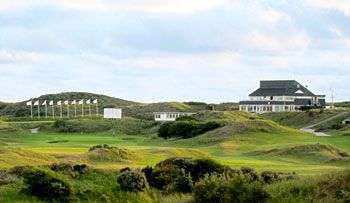
De Noordwijkse Golf Club An essay composed by our Benelux correspondent on his home club – De Noordwijkse In order for a golf course to be considered a great course and really belong to the group that makes up the world’s best, there are several things that have to be considered and many requirements that a course has to satisfy. My personal test is to take a quick look back after I have finished my round and see how many holes I can recall. I ask myself how many holes stick out as great holes and then consider what I like to call the “wow” factor. For me the “wow” factor has to do mainly with location, for example, the last 6 holes at Cypress Point, the rocky cliffs, the break of the Pacific and the cypress trees. That’s a “wow” worthy of only the top course in the world. In The Netherlands granted there are some nice courses, however, there is only one course that can possibly provide a certain “wow” in my view. That course is De Noordwijkse. The moment you turn off the coastal highway and onto the entrance driveway proceeding through the wooded coastal pine forest you realise you might be in for something special and unique. Upon breaking out of the pine forest and entering through the entrance gate the landscape opens up to the purest of links land. That to which any jolly Scot or Irishman would be incredibly proud. Upon arrival in the clubhouse you experience the “wow” factor I’m talking about. It’s a view I can only compare to that of Cruden Bay or even Chambers Bay where you look out from the highly perched clubhouses and first see what lies in wait before you. The view allows you to look out over much of the course and the rugged, undulated dunes land. It’s tough to hold back the excitement from this point. At De Noordwijkse it’s clear that everything revolves around one thing and one thing only, that my friends is golf. Everything else is understated, the clubhouse is very nice and cozy, a great place to sit inside before and after your round. However, it’s incredibly understated and from the outside looks like something you might see in the dunes in Scotland or Ireland. The facilities are nice and cozy but the only real luxury is the view, that is, until you’re standing on the first tee. De Noordwijkse starts with a mid-length par 4 with a dogleg to the left, curving around large dunes. The green is protected by bunkers front right and on the left side, it has a false front and a runoff to the back forcing a decision to run the ball up to the green or fly it on. Although a fine hole in and of itself, it is one of the few points of the course where I feel I can be critical. What’s not so good about this as a starting hole is that the elevated tee looks out over the driving range which big hitters can easily reach if they hit it straight off the tee instead of with the dogleg. Incidentally this hole is going to be replaced and moved to the left into the dunes as part of a major renovation of the whole course. While the new hole is possibly two years away, I won’t be going out on a limb by saying that the landscape of the new hole is phenomenal, adding a semi blind first tee shot into rolling dunes with an elevated green. It will be the best starting hole in The Netherlands by a long shot. It will also clear up the only major criticisms I could offer regarding the routing of the course. The new renovation of hole 1 will also free up space for a new driving range that will be placed under the dunes in front of the current women’s tee thus out of sight from the clubhouse and out of play from the 1st tee. The length of the new driving range will be increased to close to 300m, eliminate crossfire danger of people on the practice range hitting over the dune into the 2nd fairway and aesthetically it will remove this rather ugly building from the driving range area and move it under the dunes completely out of view. With the addition of practice bunkers and grass tees the practice facility will be among the best in the country as well. The 2nd hole is a classic par 5 characterised by an extremely difficult blind second shot up over a dune. I do have to mention that the drive most often faces a right to left wind as well and while the fairway seems fairly wide it’s one of the most difficult driving holes you are going to run into. There is a small pond, in fact the only water on the entire course right of the fairway exactly in the landing zone of many an errant drive, on the left side is gorse so you really don’t have much margin for error. The trick about the blind second shot is that the fairway at the top of the hill is narrow and if you don’t reach the top of the hill you are left with an extremely difficult blind approach of 150 meters or more to an elevated and undulated green with two levels and a ridge running through the middle of it. The green also has a steep false front punishing short approaches by sending them 20 meters plus back down the slope leaving a tricky chip. This hole has an index rating of 5 however, I believe it’s far tougher than that. The 3rd hole is a tricky short par 3. The new design will add a bunker on the front left of this hole making it visually even better. It plays from an elevated tee through a small valley to a two level green with a steep ridge in the middle. The green is protected on the right by a large dune and on the left by trees and another dune. When the wind is blowing which it literally always is, and the pin is placed on the top ridge of the green, this hole becomes an extremely tough par. The 4th is a tough stroke index 1 par 4 that doglegs to the right and plays up hill most of the way to an elevated green with a false front. One unique characteristic of this hole is that it starts a stretch of tree-lined links holes that are simply fantastic. This hole is rightfully the toughest hole on the course, especially from the back tees. The drive is narrow and very challenging and has to be long in order to have a decent shot at hitting the green in two. Missing left is fatal while missing right and short ends up in the pine trees. From the medal tees it’s possible to reach a plateau with a right miss that should still provide a nice line to approach the green from. The green is undulated and protected by a steep slope in front and a bunker left. The 5th is another very tough tree-lined par 4 with a sharp dogleg right that goes down the hill. This is another hole that requires a perfectly hit drive to the left side of a highly undulated fairway. The landing area is very narrow and your second shot will be blind unless you hit a very aggressive drive that flirts with the end of the fairway. The wind plays havoc with the drive as well as the approach on this hole, but you do have the option to fly the green or play a low runner. The green is currently a little too flat but will receive some added undulations as part of the renovations. The 6th hole is a tight and visually intimidating par 3. The green is protected at the front by trees and dunes on both the right and left, a bunker on the right side and a sharp but rough down slope to the left. The green is very narrow, about 12 paces across. A par here is a great score. The short par 4 7th has a very narrow tee shot to a fairway that sharply doglegs to the left. This hole is always challenging and a good drive will clear the dogleg and allow a straight shot to one of the larger greens on the course protected by a bunker on the right front and a run off to the left side. This is perhaps the only architecturally questionable hole on the course, mainly due to the narrowness of the tee shot with the dogleg. It doesn’t leave many options and is not highly playable for various levels of golfers. The current plan, as far as the renovations are concerned, is to clear some of the trees out of the dogleg to the left and add a bunker. Also, more undulations will be added to this large green. The 8th is a 325-meter (369 from the highly elevated back tee) par 4 with a sharp dogleg left up the hill and then down around a large dune to the left with a blind tee shot. The medal tee allows a great risk/reward drive opportunity up over the dune leaving a very short iron to a lightly undulated green guarded by bunkers on the front right and on the left side. Notable is the view from the back tee, which is very high up on a dune, worth walking up to the top just to take in the scenery. The drive from the back tee requires a long carry in order to avoid a blind approach to the green. In the wind it’s one of the tougher drives on the course. The 9th is a great par 5 running back towards the clubhouse and normally plays into the prevailing wind. The tee shot plays to a severely undulating fairway short of a sand dune ridge running across the left side. Any shots to the left face a blind second shot. The two-tiered green slopes back to front, is elevated with a false front and protected by bunkers left and right. The 10th is another stern par 4. The fairway is visually very narrow and the shot needs to be played a little more left than what the eye tells you. The landing zone is in a deep swale leaving a blind approach to a green with a false front, falling away to the left and back. From the back tees a good drive require about a 200-meter carry in order to enjoy the extra yardage gained by running the ball down into the swale. The 11th hole is a very short (457m from the back tee) but beautiful par 5. The tee is highly elevated and the back tee is one of the highest points on the course with a fantastic view of several holes looking back at the clubhouse high on the dunes. The drive is rather tricky and the fairway slopes from left to right with two pot bunkers waiting to catch shots missed slightly to the right. Longer hitters can have as little as an uphill 7 iron to the green making this hole simply too short for good players, especially since the prevailing wind is helping the golfer. This hole is also going to be changed during the renovation, which will see the hole lengthened by 35-40 meters and the green moved higher up in the dunes. This will be a big improvement in terms of making the hole more challenging for lower handicappers and more playable for all other levels. It will still be reachable in two but there will be a considerable risk/reward present for those that dare to go for it. The 12th is a short but very tight par 3. The tee is again elevated and plays through the trees to a green guarded by a bunker front left. On this hole there is really only one safe shot and that’s on the green and straight. The renovation will see this green moved another 15 meters further away, having a false front, back and right side. The tee box will be widened and some trees will be cleared out of the way. The par 4 13th is one of the tougher driving holes playing back out of the trees and into the open dunes. Anything slightly left or right is likely to be in danger. The approach is to one of the most difficult greens on the course with a steep false front that slopes to the left where there is a large deep pot bunker waiting to catch anything short. The choice must be made between a low runner to the right side or trying to fly and stop the ball on the very shallow green. The 14th is a par 5 with elevated front and back tees. The back tee is up on the same high dune as the back tee from the 11th hole. You can once again enjoy the beautiful view. The fairway has a double dogleg first to the right for the tee shot requiring a fade or risky high draw over a couple of lone trees, bushes and dunes for longer hitters. The fairways slopes right to left. The second shot has a blind landing area and the approach is also blind and up and over the hill to a long green protected by a small valley to the left and a dune to the right, a bunker on the right and a dune to the front left. Normally playing into the prevailing wind this is almost always a good three-shot par 5. The 15th is a short risk/reward par 4 with a completely blind tee shot over a large dune. Since the fairway doglegs off to the right rather sharply, this hole plays tricks on anyone not knowing the course. Aiming in the middle of the fairway will most often result in trouble. A well struck drive that clears the dune and subsequent valley to the right will leave an approach of 100 m or less to a undulated green protected by deep bunkers on the left and right, landing in either one will make par a certain struggle. The par 4 16th is one of the most difficult two-shot holes on the course. It’s played from elevated tees normally into the prevailing wind from the left. The fairway slopes from left to right, so a solid drive to the left of center is ideal. Most of these shots run down to the right and leave a semi-blind to blind approach shot to one of the more difficult greens to hit on the course. It’s characterized by a very steep false front running diagonally away to the left side and protected by dunes on the left and right. Perfect judgment of the wind and your distance is required on this testing approach. The green slopes from back to front severely and has gentle undulations. The 17th is the best par 3 on the course and a links style classic that plays up hill to a raised green nestled in the dunes. The green is tough to hit, especially in the wind and has a severe false front, dropping anything a little short a good 5 meters below the green and leaving a very tough blind chip up the hill. The safest tee shot is to the left side of the green where the false front is less severe. The green is also protected on both the right and left by the dunes and rough. A long tee shot will leave a nerve-racking putt due to a back to front sloping green where long will see you rolling back down the hill and starting all over again. This hole has ruined many a good round. The 18th is a par 4 that doglegs around two pot bunkers and severe rough then runs back up to the clubhouse for the approach. It’s an excellent finishing hole where the drive narrows at the level of the bunkers. A strongly hit drive right down the center can run out of fairway and end in the gorse, so there is a fair bit of decision involved in order to play it correctly. Hold up short of the bunkers and be left with a 140-meter plus uphill approach, or take on the bunkers and the rough and be rewarded with a shorter more direct line in. This green also has a false front and the left side runs off down towards the parking lot, which may well be a rather tempting choice after 17 holes of being beaten up by this great course. In the upcoming renovation, the back tee of this hole will be moved another 15 meters back bringing the bunkers back into play for the longer hitters as well. It’s also worth mentioning that the prevailing wind is left to right here further complicating matters and making those pot bunkers and the deep rough a happy backstop for anything but an excellent drive. The 19th hole, high up on dunes overlooking the course, provides the ideal backdrop to breathe in, or perhaps drink in the fact that you’ve just survived the most brutal course in Holland. Naturally I mean that in a good way. De Noordwijkse will test you constantly and never lets up until your clubs are tucked safely away in the back of your car. The back tees present the most challenging test in the country and the course has also been called unforgiving at times. Miss the fairway in the summer, even by the smallest of margins, and the knee-deep rough might just make you wish you’d played that 3rd provisional. However, as I’ve learned the hard way, as long as you are straight, long, on top of your game, showing sublime touch around the greens, have a red hot putter and have Lady Luck on your side, you’ll be fine. Otherwise, you’ll need to be able to laugh at yourself, accept the punishment and enjoy the ride. Many of the best courses are undergoing or have undergone renovations in The Netherlands, these are to be expected and most old courses have to go through them at some point as clubs look to modernize, lengthen and make their courses playable for all levels and maintained for future generations. It’s extremely important that clubs, especially with classic courses and links courses, take these renovations extremely seriously when looking how to bring their courses up to date. A poor renovation can literally make or break a great course. Think about continuity of greens as a perfect example. De Noordwijkse has commissioned the firm of Mackenzie & Ebert for the upcoming renovations. These designers completed some unbelievable work at Turnberry ahead of the 2010 Open Championship, so rest assured, De Noordwijkse is in good hands. De Noordwijkse is as close to golfing perfection as you will find in The Netherlands. It’s the only course with 18 excellent and memorable holes that maintain continuity and are still unique, presenting different challenges. The wind and elements always play a factor and the course rarely plays the same two days in a row. It’s certainly a course that takes some time to get to know if you want to play it well. Even a little breeze finds a way to breakdown the strongest golfers. The average green size is roughly 400 square meters. Trust me they are very small… think Pebble Beach small. Most shots require a stance that’s uneven in some way with up, down and side lies and you are always required to make choices of how to approach the greens, be it by running the ball on or flying it in and then trying to stop it. These are great characteristics of a true links course. The location and picturesque setting are simply rare and almost unimaginable to find in one of the most densely populated countries in the world. Standing on the terrace looking out over the course and beautiful Nature you find it hard to believe there are around 10 million people living within a 50 km semi circle of this paradise. There are certainly no signs of it here. Apart from a single white radar mast there are no highways, low flying airplanes, ugly factories, fairway-side housing or apartment buildings polluting the view. You have to really search deep and be extremely critical to find weak aspects of De Noordwijkse and once the renovations are finished every single aspect of the course will be top drawer, even when compared with the best courses in the world. David Davis All photographs courtesy of Arjan Bor

There’s no “Going Dutch” at The Dutch Invited to play the most exclusive golfing facility in the Netherlands, our Benelux correspondent shares The Dutch experience November 2011 A day at The Dutch is really a unique experience, which up until now has not been equaled in the Netherlands. It all starts when you drive up to the manned entrance house and gate. Here you are immediately met by a gentleman with a smile on his face and clipboard in hand, something that rarely happens in Holland unless there is a police officer issuing a speeding ticket or a utilities company meter reader knocking on your door to penalize you for excessive use of lighting during the dark winters. This gentleman welcomes you and checks you off the guest list. As you drive down the approach to the beautiful clubhouse, the very best practice facilities in the Netherlands appear to your right and you sense a great day is in store. Two young men meet you and welcome you, asking you to leave your clubs in the car and just take your clothes into the clubhouse. They inform you that when you are ready your clubs will be waiting at the practice facility. This is a rather unique level of service in golf and reminiscent of some very special places… Whistling Straits, Bandon Dunes, Shoreacres and Loch Lomond spring to mind. As you make your way into the clubhouse it is evident that an enormous amount of attention has been paid to the fine details here at the Dutch. On top of that it’s clear that no expense has been spared with the furnishings from the quaint whisky and cigar room, equipped with private lockers for the members, to the cozy meeting rooms, Board Room and library. Various paintings, maps and old golf collectibles decorate the walls, many with the purpose of drawing as many parallels as possible between the Netherlands and Scotland – arguably the two homes of golf. Of all the features the clubhouse has to offer, the men’s dressing room is unquestionably the most memorable as it’s one of only a few in the world that has a fully equipped bar taking your orders and offering drinks upon entrance. With lounging chairs all around and flat screen TV’s in abundance, a trip to the men’s room takes on new meaning here at the Dutch. It provides the perfect setting to tempt your opponent into a few pre-round drinks to establish that ever so important competitive edge. The practice range is where I could easily spend my day. First of all, it’s one of the few in the Netherlands where you can practice from real turf instead of mats. The balls are stacked and waiting, both at the chipping and pitching range as well as the driving range. As always, a trip to the first tee is not complete without a stop at the putting green. At the Dutch, this is an absolute must and it will shock most golfers because the greens are incredibly fast and very undulating. In my opinion, The Dutch is the only course in the Netherlands with world-class green complexes and I was personally thrilled with them. I honestly didn’t think that any club in club in Holland would build greens as good as these – if anyone gets the chance to play this course, I’d highly recommend paying very close attention to their features. I think greens are an essential element that separates good and world-class courses. It’s also one reason why there are only a couple of courses in Continental Europe that ever make the World Top 100. Completely ready for the start of my round and having mainly focused on the facilities to this point, which are phenomenal in every sense of the word, it’s important to also look at things with a critical eye. In doing so I’d like to quote my favorite and most respected architect, Alister MacKenzie, upon seeing the property at Cypress Point, California: "It would be difficult to over-estimate the great possibilities of a golf course at Cypress Point. I am fully acquainted with the world's greatest golf courses and have no hesitation in saying that in the beauty of its surrounding, the magnificence of its sand dunes, its spectacular sea views, its glorious Cypress trees - there is no better opportunity of making [a golf course] which should be superior to any other.” You may wonder what’s the point of that quote being placed here? My point is simple. The greatest golf courses with few exceptions find themselves in the greatest locations, full of natural beauty with magnificent landscapes. While it’s clear to me that no expense was spared in creating the Dutch – and they performed miracles with what they had – in the end, what they started with was arguably one of THE worst locations to build a top course. Apparently, the site was so bad that European Golf Design (after surveying the property) left, refusing to build the course. The ground was simply a large, perfectly flat and rather square parcel of land that I would call swamp. On top of this, the location is two well-hit drivers away from a freeway, which makes the club easily accessible, but constant road noise is the flipside. Standing on the 1st tee, which is a short par 4, the main thing that caught my eye was the first green but, with the exception of the drive on the 2nd hole, which was a bit intimidating with water running down the right side, it was the only thing that left a significant impression on me until I reached the 8th hole. Commentators have previously stated that the Dutch really begins at the 8th. But to be fair, there is nothing wrong with the first seven holes. In fact, they are tremendous fun, they’re fair and playable for all levels of golfer but they are rather unspectacular, apart from the green complexes. However, the 8th hole is a perfect little par 3 and my favourite hole on the course, which plays 169 meters from the tips. Bunkers left, right, front and back heavily protect the raised green complex. The various run offs combine to make one of the most beautifully shaped, heavily undulating greens I’ve ever seen. The 9th hole is a strong par 4 at 425 meters and a tough driving hole with fairway bunkers to the right and left. The green is often out of play for the second shot, or at least leaves a very testing long iron over water that lies short of another very undulating green. Holes 10 and 11 pick up where the front nine ended in terms of challenge. 10 is a tough par 3 that normally plays into the prevailing wind. Water skirts along the right side all the way to the front of a slightly elevated green that is guarded by mounds of rough and bunkers to the left and right. 11 is a challenging and long par 4 that also plays into the prevailing wind. Long hitters will have to beware of the burn running through the fairway. The green is again slightly elevated and short approaches will feed right into the bunker protecting the right side of the green. This green is sloping left to right and front to back with tricky undulations throughout. The 12th hole is a short and tricky par 4 with a sharp dogleg left. A good drive will leave a short iron approach to a long, narrow, back to front sloping green protected by water on the left and bunkers on the right. Literally danger waits on every corner of this lovely little hole, which is the toughest hole on the scorecard. The 13th is a long par 5 that certainly challenges you from tee through to green. The drive is narrow with water on the right and bunkers left. The second shot must again take the burn into consideration. Lay up short of the burn and you are left with a long iron or wood to a highly elevated and undulated green. In fact, this green is the highest point on the course, which probably rises to the dizzy height of three meters below sea level! The 14th is another excellent par 3 with another undulated green surrounded by deep bunkers. The 15th is another very long and testing par 5 with water just short of the green and when this hole plays into the wind there will be absolutely no easy approach shots. Water again comes into play on the par 3 16th which at 158 meters (183m championship tees) is certainly no pushover as it’s all carry to the green over water and the further left you hit the longer the carry… as I found out the hard way. The par 4 17th is in my opinion one of the hardest holes with the most danger. Its index rating is set at 13, but it presents a tough drive with hazards everywhere. With an approach to a small, undulated, two-level green, water short left, bunkers both sides and no option of hitting long, it’s one of the best and toughest holes on the course. The home hole is a mammoth par 5 where the second shot and the approach shot are challenged with water on the right side and bunkers to the left. The green is very large and again very undulated, sloping in places towards the water to catch slightly errant shots. It was great to see that after a solid but unspectacular first 7 holes the Dutch really stepped up and produced a simply fantastic last 12 holes. Yes, I’m including the 19th, which is very special indeed and starts when you hit the men’s room where you are immediately treated to your first post match drinks, which can accompany you straight into the shower or sauna. A great way to round off a perfect day on the golf course! In the end I’m really impressed with the experience created by Made in Scotland at the Dutch. Despite the location they have done sublimely well with an amazingly unspectacular piece of ground. The outstanding green complexes are the highlight of the course and they set a new world-class standard for the Netherlands. These greens alone are more than enough to make me want to play the course over and over again in various weather conditions. Unfortunately, the vast majority of golfing Holland and myself will not be able to watch The Dutch mature over the coming years. That luxury is reserved for the members and their very fortunate guests. David Davis

