France beats favourites Spain to host 2018 Ryder Cup
France has been named as the host country for the Ryder Cup in 2018, beating off favourites Spain. Le Golf National course, near Paris, was chosen ahead of other bids from Portugal, Germany and the Netherlands.
It will be the first time France has hosted the biennial Europe versus United States match and only the second time to be played on mainland Europe.
The first was in 1997, when the late Seve Ballesteros captained Europe to a narrow victory at Valderrama in Spain.
There had been calls to award the event to Spain in honour of the five-time major winner, who was patron of the Madrid bid and died earlier this month after a long battle with cancer.
| RYDER CUP VENUES 2012 - Medinah, Illinois 2014 - Gleneagles, Scotland 2016 - Hazeltine, Minnesota 2018 - Le National, Versailles 2020 - Whistling Straits, Wisconsin |
|---|
But the European Tour resisted the emotional pull to select a venue which has hosted 18 of the last 20 French Open tournaments for the 42nd edition of the Ryder Cup, which continues to grow in popularity.
"France's bid was exceptional. They have a first-class tournament venue already built," said European Tour chief executive George O'Grady.
"In these tough economic times we can see where we are going. We are leaving nothing to chance on building a new course.
"The plans for the new courses in Portugal and Spain are absolutely superb.
"Seven and a half years sounds a long time but developing new areas with all the hotels, offices and roads is a big ask in that time. That is why I think their time will come.
"You could say, in that sense, we have gone for the certainty."
To fund the French bid, every registered golfer in the country has donated one euro to the cause, while organisers hope that landing the tournament will boost the development of golf in France, who has promised to build more than 100 urban golf courses.
The French bid says it wants the number of registered players to increase from 400,000 to 700,000 by 2022, and it is also aiming to have three native players in Europe's Ryder Cup team by 2022.
European Ryder Cup director Richard Hills was full of praise for the French bid.
"The winning bid from France stands out for a number of reasons," he said.
"The venue for the 2018 Ryder Cup, Le Golf National, is a truly outstanding golf course, providing excellent spectator viewing and the promise of spectacular climaxes to the matches. Transportation, logistical and infrastructure plans are also of the highest quality.
"There's no doubt that the 2018 Ryder Cup will be memorable and dramatic, and which thousands of golf fans will be able to enjoy."
French Ryder Cup committee president Pascal Grizot was thrilled that his country's bid had been successful.
"It is a real honour for our country, for the French gold federation and for all private and public partners who have supported our bid," he said.
"Above all, it is a huge accolade for all the French golfers who have as one contributed to this project. We are particularly proud of this collective support we have had on this journey."
On Ballesteros, he added: "We all remember Severiano Ballesteros as an icon in our sport and someone who epitomised the spirit of the Ryder Cup. He is in our thoughts today."
French professional Jean van der Velde, who was part of the country's bid team, told BBC Radio 5 live that the course would provide a real spectacle.
"Our course is phenomenal," he said. "It was built with the vision that it could one day host the Ryder Cup, as that is now a reality.
"It has a very linksy feel, but at the same time it is a little like a course in the United States, where you have to hit it over water a lot. It's definitely a course where you need a lot of shots in your bag.
"Over the last four holes you can have 100,000 watching. It will provide a great finish for great drama."
On Twitter, Rory McIlroy said: "France 2018... Hopefully that will be my 5th Ryder Cup! I'll be nearly 30.... Oh dear, let's not think about that!!"
World number three Martin Kaymer was disappointed that his native Germany lost out, but had no doubts about the merits of the victorious proposal.
"The French bid had a lot of support from the French government - and I think the most important thing is that they have a fantastic golf course," he said.
Germany was proposing it be held at Wittelsbacher Golf Club, an hour north of Munich; Portugal offered the new Comporta Dunes project, south of Lisbon on the Alentejo coast; and the Netherlands put forward The Dutch, 45 minutes from Amsterdam and Rotterdam.
Source the BBC
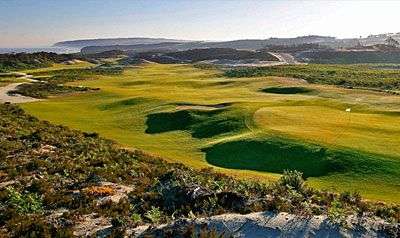
Top 100 Golf Courses of Continental Europe 2018 Unlike many recent listings we’ve published, where there’s been little movement in the upper reaches of the chart and we’ve seen only a few new entries to freshen things up, the Top 100 for Continental Europe is positively bristling with volatility, such is the nature of the re-ranking process in this wide-ranging part of the golfing world, encompassing forty-eight countries. There are many large leaps up the table and quite a few heavy falls. Astonishingly, only six courses remain in the same position, and four of those appear within the top six positions. Fifteen courses drop out of the standings, with two of their replacements arriving in the top half of the hundred. The European Top 100 is dominated by courses from Spain, France and Portugal, with these three nations accounting for almost half the chart entries. Although only the top three European courses are listed in the 2018 edition of our World Top 100, don’t for a minute think the standard of golfing layouts within this vast region is in any way inferior to many of those that appear in our global rankings – it’s a very thin line that separates the really great from the truly exceptional. Some might even claim there’s a bias against Europe in US-centric world ranking charts which favour courses in less deserving geographical locations but that’s an argument for another time, perhaps. The Top 100 Team didn’t play every single contender during the last two-year ranking period but we visited a large percentage of them, trusting our network of continental contacts to keep us fully informed about the others. If you have played extensively through Europe then we’d love to hear from you with a view to helping us with our next chart revision. The more informed opinions we assimilate into our process, the more authentic and authoritative our rankings will become, hopefully. And so to our revised Continental Europe Top 100, where the Grand Parcours at Morfontaine remains in the number 1 slot, a position that it’s held for five of the six editions that we’ve published since 2008. Laid out by Tom Simpson in the late 1920s, the course is still being refined in the modern era by Kyle Phillips, though the architect has told us his work there involves nothing other than “trophy polishing”. One of our core team members, Brian Ward, who’s played more than 1,000 courses worldwide, visited Golf de Morfontaine last year, describing it as “a class act and one of my best experiences in golf.” Three more French courses reside within the Top 10, two of which are also Tom Simpson layouts – the Vineuil at Chantilly (still at number 5) and Fontainebleau (still at number 6) – along with Robert von Hagge’s mid 1980s design at Les Bordes (down four to number 8) so there’s absolutely no denying the strength in depth of this often underrated golfing nation. At number 2 in our new continental listings, the course at Koninklijke Haagsche (Royal Hague) in The Netherlands holds onto the runner-up spot, having risen seven places last time around. A Harry Colt and Hugh Alison redesign from 1939, the course was pronounced as “a mighty encounter on a gorgeous piece of property with a dynamic routing that will joyfully bring you to your knees” by a recent reviewer. One place behind, soaring six places to number 3, the Utrecht de Pan course is another Colt/Alison Dutch design that has enjoyed the most sensational progression in our chart, ever since it debuted at #85 in 2008. “It’s lovely here,” is how a reviewer portrayed it a couple of months ago, with a second person marvelling at “the brilliance of the strategic routing, the magnificent short par fours and the mouth-watering charm of the par threes.” Three old Dutch Masters also make very strong upward moves in our latest European listings: two more fabulous Harry Colt layouts at Eindhovensche (up sixteen to 29) and Hilversumsche (up twenty to 34), together with Frank Pennink’s remodelled Rosendaelsche (up twenty-six to 46). The Netherlands has been notoriously reluctant to promote its top golf facilities but we’re catching up fast with what’s on offer and will continue to provide a prominent platform for the very best layouts within that country. Spain is one of the “Big Three” in European golf, with three of its courses ranked inside our Top 10, but the big Iberian story is about Javier Arana’a masterpiece at El Saler, which just misses out on a place in the top tier, climbing thirteen places to number 11. It’s a rather unappreciated layout that our two most travelled correspondents, David Davis and Fergal O’Leary visited last year. David had this to say: “there is a lot to like about El Saler… very interesting green complexes and surrounds… fantastic bunkering” and Fergal ended his review with: “El Saler is not only the #1 course in Spain, but it’s a glaring omission from the Top 100 courses in the World.” Three more Spanish tracks make great strides up the top half of the table. Two of these courses are located along the famous golfing playground of Costa del Sol: Finca Cortesin (up six to 19) has hosted four editions of the Volvo World Match Play starting in 2009 and has also recently relaid its greens with environmentally-friendly Bermuda grass. Real las Brisas (up ten to 37) was where the 1973 World Cup of Golf and the 1987 Spanish Open events were held and the third big mover Son Gual (up nine to 42) is situated on the holiday island of Majorca, close to the international airport. The first of our new entries arrives in a rather conspicuous position at number 16 and it’s the Cynthia Dye-designed West Cliffs course on Portugal’s spectacular Silver Coast, which was unveiled this summer. Already it’s received rave reviews with comments such as, “ridiculously good… exhilarating… a staggeringly scenic golf course… out of this world!” and we have to agree with one reviewer’s assertion that this fantastic links layout is a possible World Top 100 course in the future. West Cliffs isn’t the highest ranked Portuguese course in our listings however as that accolade belongs to the stellar Jack Nickaus Signature layout at Monte Rei (North) in the eastern Algarve, which eases up one position to number 9. Other honourable mentions for courses in mainland Europe’s westernmost country include Robert Trent Jones Senior’s terrific Troia (up fourteen to 22), the much-loved late-1980s Joe Lee design at San Lorenzo (up eleven to 32), the splendid Robert Trent Jones Junior renovation at Palmares (Praia & Lagos) (up twenty-six to 41) and Cabell Robinson’s exceptional late-1990s layout at Praia D’El Rey (up twenty-five to 48). The second highest placed newcomer in our European Top 100 might surprise a few people as it didn’t seem to attract the same media coverage as other new build courses which opened this year. And so, flying a little under the conventional golfing radar, we present Great Northern in Denmark as our new number 27. This 27-hole facility is funded by Thomas Kirk Kristiansen, vice chairman of the LEGO company, and no expense appears to have been spared when constructing the course and its inherent infrastructure. As our Scandinavian correspondent Jan Nordstrom noticed, “upon arrival at Great Northern… one can immediately sense the attention to detail that has gone into the development of the Great Northern resort.” Another Nordic entry appears for the first time in our rankings at number 51 and it’s the remote Lofoten Links course in Norway. Our man Jan recently made a 3,000-kilometre round trip (including a 2.5-hour ferry trip each way) from his home in Oslo to play there and was suitably impressed by what he found. One reviewer has called it “a spectacular course with fantastic views” with another reviewer endorsing that sentiment by saying “the views are just gorgeous to the extent that the golf is almost incidental”. Other chart highlights include prodigious surges up the table from a couple of courses in France’s Côte d’Opale region, where Brian Ward, our aforementioned correspondent for the Midlands and North of England, visited a few months ago. The Les Pins course at Hardelot (up thirty-six to 23) and La Mer course at Le Touquet (up twenty-one to 35) are early 1930s designs from Tom Simpson and Harry Colt which are managed by Open Golf Club, the well-respected golf facility operator. Both courses have benefitted from a substantial financial investment – involving tree removal, green enlargement, fairway widening and bunker reconstruction – which was undertaken by architect Frank Pont and Patrice Boissonnas, whose family own Open Golf Club, and their efforts are now reflected in the vastly improved chart positions of the layouts. Brian, in his reviews, felt Le Touquet had “all the ingredients for the perfect golf break” and he was spot on when he said of Les Pins: “a big move forwards in the Continental Europe rankings during the next few years is all but guaranteed.” A couple of Turkish tracks also leap up the listings and it’s no big shock to learn that they’re both located in the golf-intensive Belek area, which has grown from nothing to a major resort golf destination in the last twenty years. The Tim Lobb-designed course at Regnum Carya Golf & Spa Resort, currently the host venue for the Turkish Airlines Open, advances twenty places to number 40 and Nick Faldo’s Prince layout at the 27-hole Cornlia Resort jumps up from number 75 to 59, an impressive sixteen-place rise. What about other leading countries you might ask? Well, the 1930s Harry Colt layout at Hamburger Falkenstein remains the German #1 (though it’s down one to 13). The classic old links at Falsterbo holds onto its #2 status in Sweden (rising six to 24) and Fred Hawtree’s mid-1960s design at Royal Limburg also retains its position as national #2 in Belgium, climbing four to 33. Villa d’Este assumes the mantle of Italian #1, rising fourteen to 49, and this 1920s Peter Gannon layout is a timeless classic, revered by golfing connoisseurs who readily appreciate its undoubted charms. Eight courses that filled the final ten positions in the last published hundred have fallen by the wayside, with some interesting replacements from a few unlikely places now ensconced in the lowest tier of the standings. For instance, the Dunes course at Costa Navarino in Greece squeezes in at number 98, the King’s course at Royal Bled in Slovenia slips in at number 96 and the Parnu Bay Golf Links in Estonia enters at number 94. It’ll be interesting to see if these (and the other new entries in the lower reaches of the chart) progress further when we re-rank in another two years. Perhaps in that next edition, we’ll see new entries from some of the other central European countries, like Poland or the Czech Republic, where we plan to visit next year. Sometimes it’s only by getting out and about to the more unheralded golfing destinations that you might just discover the odd nugget here and there. We might even explore what’s happening on the golf front in some of the new emerging nations such as Azerbaijan or Croatia, you never know. We appreciate your comments when publishing an international ranking list like this so please take the opportunity to let us know what you think of our new Top 100 for Continental Europe. Is there a glaring omission from the chart or have we included a course that really shouldn’t be there? Perhaps we’ve promoted one too strongly or allowed another to slide too far down the list? Whatever you’re thinking, click the “Respond to this article” link at the bottom of the page to share your view. Rank/ To view the complete detailed list of the 2018 Continental Europe Top 100 click the link. Jim McCann Editor Top 100 Golf Courses

The two-year countdown to the 2018 Ryder Cup is underway Andy previews the 2018 Ryder Cup venue and samples a pair of Gallic gems In a little under two years’ time, the 2018 Ryder Cup will be in full flow at Le Golf National close to Paris. Their L’Albatros course is an ideal venue with many similarities to previous European Ryder Cup layouts at Gleneagles, Celtic Manor and four-time host, The Belfry. I have just returned from a trip, hosted by Brittany Ferries, to showcase the 2018 Ryder Cup course and the wonderful city of Versailles, home to centuries of history and, of course, the famous Palace. The trip started with an overnight sailing from Portsmouth to Caen, which provided a refreshing way to arrive in France – no airport hassles, no extra baggage charges and you can take your own vehicle. Le Golf Parc Robert Hersant The first golf course we visited was the Robert Hersant at Le Golf Parc, in La Chaussée-d'Ivry. This is a strong layout that’s currently ranked #76 in our French Top 100. The biggest challenge facing golfers here is water – and there’s plenty of it – with only two holes (5th and 6th) that have no aquatic danger. My favourite three holes at the venue named after the late media magnate are all spectacular. The 4th is a big par four at around 450 yards with the last 120 yards all-carry over a massive lake. The par five 12th is, in my opinion, the best hole here bar none, a shortish par five arcing all the way around the lake, to an island green – you have got to be brave to take this green on in two! The 15th is another par five, which on paper does not have distance as protection. In a similar vein to the 12th hole, there’s water on the right, but there are also two lake tributaries to cross on the way to the hole – the term “risk and reward” could have been coined for this three-shotter. A few holes would benefit from a little attention in terms of presentation but I believe Le Golf Parc Robert Hersant has many memorable holes, a very smart clubhouse and is well worth a visit. We moved on towards Paris and stopped around 20 miles to the west of the romantic city at Versailles. Hotel Le Versailles then became our home for a couple of nights and it’s very well positioned to explore the wonderful city on foot. Golf de Rochefort The next experience was Golf de Rochefort, a course designed by Fred Hawtree and operated by the Exculsiv Golf group. Currently the layout is not featured in our French rankings, but I feel this is an error as it’s a good course in a Woburn-like style, with majestic tree-lined holes sweeping this way and that. The 9th could be the hardest par four I’ve played for many years, which doglegs to the left with a fairway sloping to the right. After the dogleg, there’s a long uphill shot to a well-protected green. It’s a brilliant hole. The Woburn feel is definitely in mind on the very next hole. The par three 10th is similar to the par three 9th on the Duke’s course – just a tee, a huge dip and then the green. The par five 11th ends a strong run of three holes. From an elevated tee, the hole turns a little left and it was just about reachable for me – although I did still manage to three putt! If you visit Golf de Rochefort I recommend spending spend some time off of the course, the property’s buildings are impressive. Surprisingly, Golf de Rochefort was the course highlight for me on this visit to France. Golf National (L’Albatros) Our final round was played on the 2018 Ryder Cup course at Le Golf National and it’s always a real privilege to play on any course that has staged golf’s greatest team spectacle. To have intimate first-hand experience when it all unfolds again in 2018 will be very special. L’ Albatros has hosted the French Open for the last quarter of a century and the tour pros love the layout. It’s a very technical course, where the yardage book needs to be close to hand for the whole round because knowing the exact distances is the key to attack the greens in the best possible way. The course is bound to evoke exciting Ryder Cup drama right from the start with water on the opening par four and then more water on the par three 2nd. I would not be surprised if some matches are either two up or two down after these two holes. Not too far away from these dramatic opening holes are the closing four. I sincerely hope that many matches reach this latter part of the course, as it promises much excitement. The 15th, 16th and 18th are among the best on offer at Golf National, all with greens cut close to lakes. This layout was fashioned for tournament golf and in two years’ time it will host the greatest golf show on earth. We then made the return journey from Caen to Portsmouth and overall it was a memorable trip. I thoroughly recommend the ferry crossing option and if you’re considering a French golf holiday, here are some headline points from our hosts at Brittany Ferries: Crowd free fairways in Brittany, Normandy and The Loire Pack all you need in your car Price match guarantee Sailings from Portsmouth, Plymouth and Poole Experts on the golf desk – making all your arrangements Andy Newmarch Top 100 Golf Courses
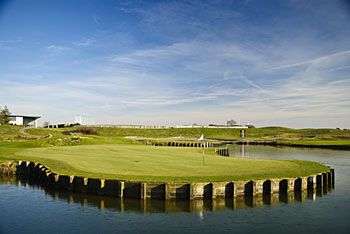
Changes planned for 2018 Ryder Cup course 2018 Ryder Cup course design preparations under way at Le Golf National Sunningdale, UK – March 21, 2012 Preliminary course design work to prepare the venue of The 2018 Ryder Cup, Le Golf National, Paris, for one of the world biggest sporting events, has begun. It may be six and a half years away, but the European Tour Destination’s Albatross Course is benefiting from the expertise of European Golf Design (EGD) whose senior design team is liaising with the European Tour and the French Golf Federation as planning commences. EGD was widely praised for producing the Celtic Manor Resort’s Twenty Ten Course, which enabled the 2010 Ryder Cup to be completed despite extraordinary rainfall, is now assessing masterplans for the golf course as well as the logistics and facilities required to make the venue a global sporting arena. Ross McMurray, Designer of the Twenty Ten Course, said: “There are many aspects to the course that golfers, professional and amateur, really enjoy, so we don’t wish to alter its popular appeal and the overall experience. However, there are a number of bunkers that will need to be moved for strategic reasons, because they are no longer in play for the longer hitters, while others will be upgraded. “Some tees may also be placed in more interesting positions, and the Ryder Cup will demand a greater variety of flag positions than the existing greens currently offer.” As the course is in regular use on the European Tour, the main challenge facing the designers relates more to the scale of the event and the consequential increase in footfall rather than re-modelling what is already a world-class course. Jeremy Slessor, Managing Director of European Golf Design said: “Le Golf National is a very different project compared with Celtic Manor, but the experience that we gained in Wales will be crucial as we embark on delivering another Ryder Cup venue. “Planning a course for a Ryder Cup is quite unlike typical tour competitions as the vast crowds only have a limited amount of golf to follow. “Put simply, it’s a case of forecasting what might occur and finding the best solution. For example, the Alstom Open de France is played in summer when it’s less likely to rain. However, given that the Ryder Cup will be held in September, we need to ensure that the drainage system is up to coping with more substantial rainfall – something we were insistent on at The Celtic Manor Resort.” The Alstom Open de France has been hosted at Le Golf National on 18 occasions since 1991 and is a popular event in The European Tour schedule, boasting many former Ryder Cup stalwarts as past champions including, Nick Faldo, Colin Montgomerie, Sam Torrance and 2012 European Ryder Cup Team captain, José María Olazábal. EGD, which is the golf course design company of The European Tour and IMG, is now aiming to make it an iconic course and an historic Ryder Cup venue. Pascal GRIZOT, President of the FFGolf Ryder Cup 2018 Committee said: “Hosting the Ryder Cup is a tremendous honor and an enormous responsibility. It seems that the venues get better and better with every passing event and European Golf Design will be invaluable in preparing Le Golf National for the world’s media, the vast crowds and of course, the best players from America and Europe.” “The Albatros Course, built in 1990, was the brain child of Hubert Chesneau. From the early days Hubert and the French Golf Federation have pursued the ambition for the Golf National to become a Ryder Cup venue. It is now a reality, however a great deal of work remains, if we want this to become a dream come true”. For more information about European Golf Design, visit www.egd.com
