Jasper Miners, lead panellist for Top100 Golf Courses, shares his thoughts on what separates a good golf course from a great one. From green sites and variety to conditioning and course management, he explains why the best courses are not always the ones with the biggest budgets or the most immaculate presentation.
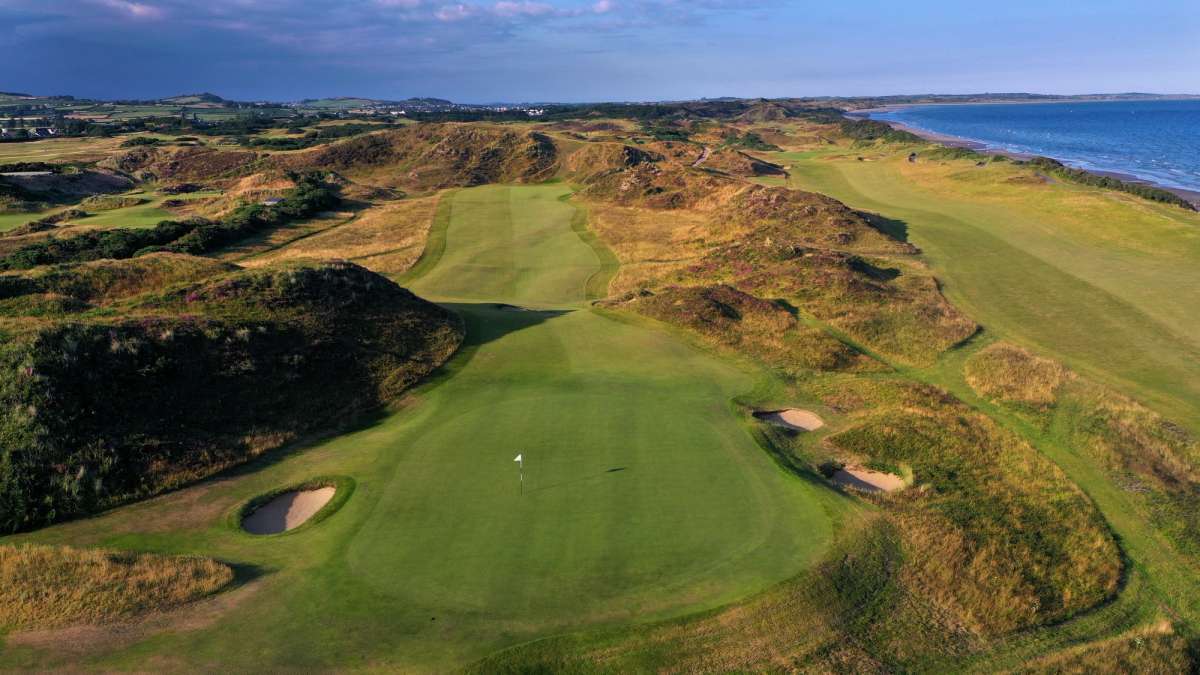
Green sites. You can have an amazing golf course, well-routed, on a great piece of land with spectacular views, but if the green sites aren’t brilliant, it’ll be mediocre at best.
If you don’t get the greens right, the golf course just doesn’t work.
I think, for me, the best golf holes are ones that make you think from the tee.
If you’re the type of golfer who’s only going to play a golf course once, it probably doesn’t make much difference. But if you’re a member at a golf club – the kind of club you’d actually want to belong to – it’s the golf holes that allow you to solve a puzzle that needs to be gradually understood and figured out.
Golf holes that make you think, offer variety and are cerebral and intellectually stimulating. They engage more than just the physical aspect of the game, such as whether you can execute a shot. They also test whether you can think your way around a golf course.
I think that also lends itself to longevity. I can be a member at my golf club from the time I’m eight years old to the time I’m 88, and it’s still going to be a great golf course because it does those things well.
Massive. Variety, it’s true, is the spice of life, and it’s not just variety for variety’s sake.
There’s a reason golf has divided itself into three main hole types: par threes, par fours and par fives. That in and of itself tells you something. If the greatest golf holes in the world were just par threes, more of our golf courses would be all par threes.
The element of great golf is variety. The very fabric of the game is based on that; it’s a pillar. Whether it’s links golf, heathland golf, desert golf or whatever it might be, there’s variety intrinsically because everywhere you go is slightly different.
Then there’s the make-up of each course, those three basic elements that go into it, and an infinite amount of variety within that. How do the greens work? What kind of hazards are there? You have constantly changing elements, especially the wind. I think wind is probably one of the most underrated elements in golf.
An Open can be considered a great Open or a mediocre Open, especially on links courses, simply because the wind may or may not blow.
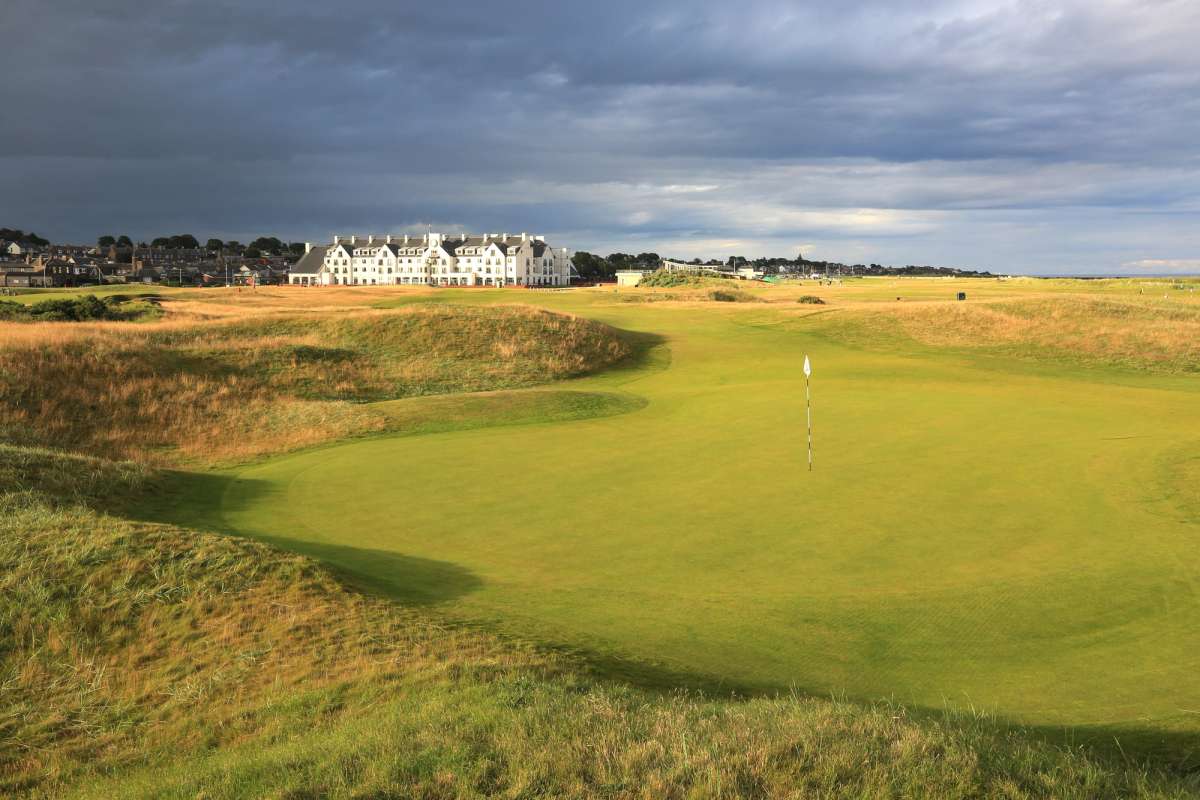
Yes. I think we’re getting past that now. The best golf courses are usually the ones that are difficult. You look at Royal County Down, Carnoustie and Royal Dornoch, and I think the reason is that difficulty keeps you coming back.
Nobody plays golf because it’s easy. But if it’s impossible, it’s not particularly fun either.
If there’s just that sliver of hope where you can think to yourself, “I know that on a good day, if I execute this properly, I can accomplish this and have a chance,” that’s where I think there’s a delicate balance between giving people an opportunity and a chance.
Even if eight times out of ten you can’t necessarily pull off the shot, it’s the two times you can that will keep you coming back.
It’s a difficult balance because punishing bad shots isn’t a recipe for good golf. But demanding a very high level of golf in order to take advantage of good golf architecture is an element of great golf.
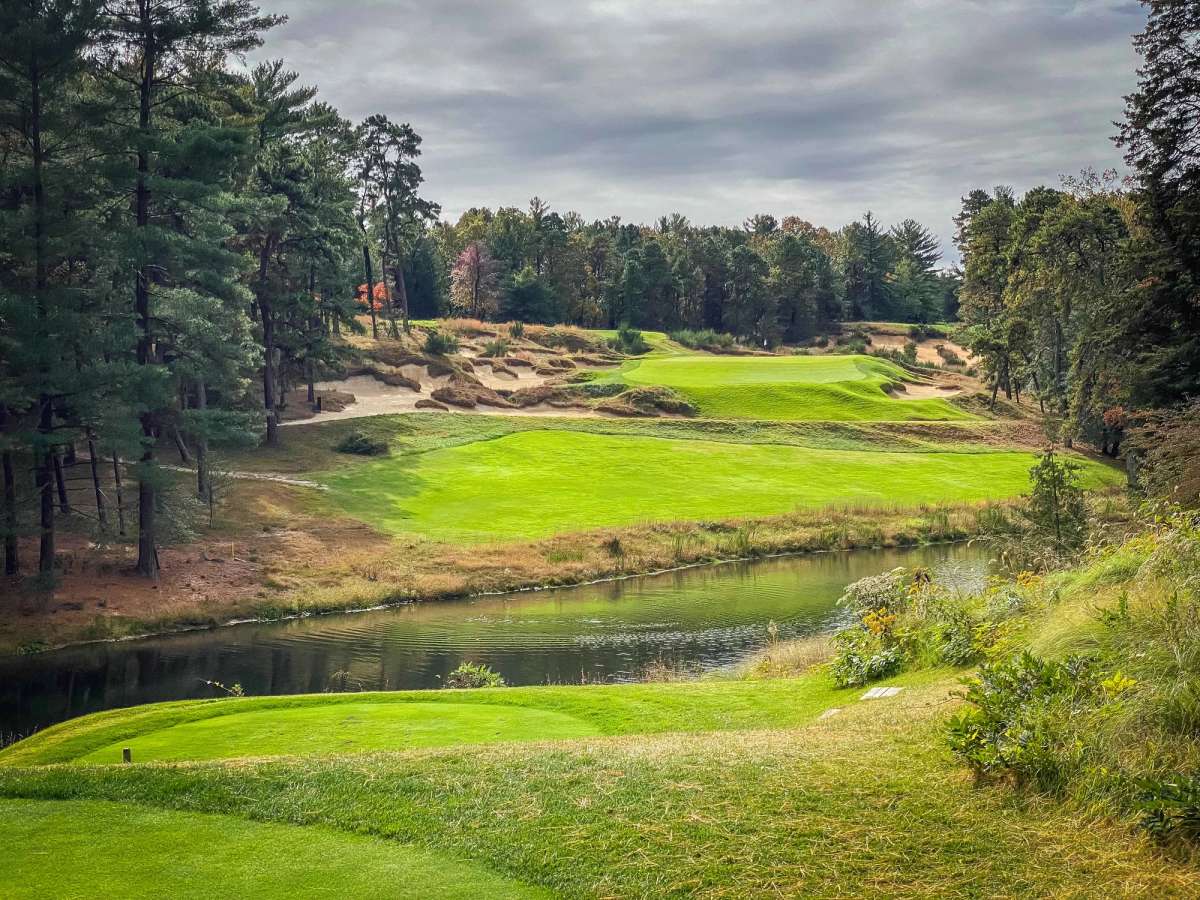
If difficulty is a blunt instrument, as opposed to a skilfully used tool, that’s where difficult courses can become terrible experiences. But if it’s on that right edge, a really difficult golf course can end up being one of the best in the world, like Pine Valley.
If you arrive at a golf course and it’s immaculate, I know that, for me, you start to wonder: what are you trying to gloss over? Why do you have to try so hard? That’s not to say we don’t like good conditioning.
Conditioning can be an interesting thing because you can get soft greens that run at 14. They’re cut short and they’ve been rolled, and the greens are really fast and run true, but I don’t necessarily think that makes for great golf because it eliminates the running part of the game.
Course conditioning is also one of those things where, if you haven’t managed your trees well, your rough is really long and you lose balls if you’re a yard off the fairway, or you have soft approaches, aprons and greens, I don’t care what the greens run at or how true they are. If I have to play target golf, it’s not going to be as good as playing on slower greens that might have different grass varieties but are firm and fast.
I’d far rather play on less-than-perfect greens and approaches that are firm than on greens that are tilted towards you, are soft and are very suited to aerial golf.
All of our panellists should be aware that just because something has multiple mowing heights or a nice cross-hatched fairway, that doesn’t make it better.
The craziest thing about golf courses and the amount of money they spend is that they spend a disproportionate amount on bunkers. Bunkers are tremendously expensive to build and maintain, and the average golfer visits a bunker a couple of times in a round.
What does every golfer spend time on? Greens. Everybody plays on approaches, but people get caught up in the visual. Because a bunker looks amazing, it has that wow factor, and people get enamoured with it.
When it comes to golf courses and using budgets wisely, the big three things that any good consulting architect would look at first are mowing lines, tree management and green complexes.
It’s amazing how many golf courses rebuild a green to give themselves more pinnable areas when all they needed to do was mow it out.
I’ve been at multiple Top 100 clubs around the world this year, and they haven’t mown their greens out to the full size of their green pads. Those are the best courses in the world, and they still don’t get it right.
Mowing lines, tree management, greens and green surrounds: spend your money there. If you don’t have a lot of money, don’t spend it on bunkers.
I think turf quality is the one. By turf quality, we don’t mean that it’s fancy or a monoculture. I’ve been to a hell of a lot of common-land golf courses that you can play for less than £20 that have better turf quality than some World Top 100 courses.
Oftentimes in golf, the more money you put into a course, the worse it becomes.
Sometimes the best golf courses are the ones you leave alone.
Sometimes, having too much money for all the shiny new things that too many architects tell you that you need to put into a golf course is where you go wrong.

For generations, 18 holes has been the accepted standard for a round of golf. But with people becoming increasingly time-poor, a growing number of clubs are questioning whether it still needs to be the default. After running into financial difficulties in 2019, Eastwood Golf Club - a moorland course on the outskirts of Glasgow in Scotland's central belt - was forced to appoint an administrator and shut its doors after 126 years in operation. Enter Glasgow-based property developer Colin Whitelaw, who took over the land at the end of 2019, three months before the Covid-19 pandemic forced a change in his plans. “Instead of thinking it was a land deal, I had to really think about whether I was going to continue maintaining the golf course,” Whitelaw told Top100 Golf Courses. “That was the big issue, and wondering whether there was value in that. We decided there would be.” As a member of Prestwick Golf Club, where the first nine Open Championships were played over the layout, and a long-time player at Shiskine Golf Club on the Isle of Arran, Whitelaw was familiar with the concept of a shorter format. “We’ve played Shiskine for 35 years or something and just loved the whole idea of going out and playing for two-and-a-quarter hours…. It’s just a lovely number.” Whitelaw said he reflected on the fact that there were a handful of 18-hole members-only clubs in and around the south side of Glasgow that he would have to compete with if he kept the original layout of Eastwood Golf Club. “Why would we establish another 18-hole members-only course that had already failed?” he said. The idea for a 12-hole course was developed in 2021, with Eastwood Twelve opening its gates in June 2025. ‘It’s been a rollercoaster’: Building Eastwood Twelve Eastwood's existing parcel of land contained a collection of holes that Whitelaw believed could work in the shorter format. The resulting course has five par threes and seven par fours, including two par fours of more than 400 yards. “It’s actually a very good test of golf, and we established a set of three tees so we could have something for the higher handicappers, but a real challenge for the low handicappers,” Whitelaw said. Just over a year after opening, Eastwood Twelve has amassed more than 320 members. Roughly half of its rounds are being played by visitors. Whitelaw said there was plenty of demand after opening, with curious visitors coming from afar to test the new layout, and that the club’s only hiccup this year was the “appalling” weather during spring, which he estimated had lost them 10% of their turnover. “It’s been a rollercoaster… but it’s all going in the right direction,” he said. The club has also taken a different approach to marketing. Whitelaw credits his daughter Samantha, the club's general manager, with building its presence on social media platforms Instagram and TikTok. “The power of Instagram and TikTok has driven our business, without a doubt. If you look at our figures in terms of followers, it’s quite amazing for a wee company. That’s been a big eye-opener for me.” The result has been a club that draws both members and visitors, rather than relying solely on traditional membership. ‘That’s a brilliant number’: The Two-And-A-Quarter Golf Round Whitelaw said a lot of people want to get out and hit a ball, but many think that 18 holes is too many and 9 isn’t enough. “When people come off the golf course… particularly the ones that have not been before, the first thing they say is, ‘12 holes, that’s a brilliant number’. “To get dressed up, to get your kit out and go out for an hour-and-a-half is just not quite enough, but to go out for 12 holes, two-and-a-quarter hours, is a much better prospect.” As for the demographic of golfers attracted by Eastwood Twelve, Whitelaw said the vast majority were time-precious people aged 30 to 50 who would play before, after or during the working day for a few hours. “We have a lot of business owners who can nick away, but we don’t actually have a lot of older people.” Whitelaw said the club has worked hard to improve the quality of the course, including through investment in five robotic mowers. “The quality of the cut and everything… The fairways are fantastic because of that.” ‘A market for it’: Is 12-Hole Golf the Future? Whitelaw says there were fewer than 10 12-hole courses around the world when he first began looking seriously at the concept. He now puts the number at 33, including around eight in the UK. Asked if 12-hole courses would become more prevalent in golf’s future, he said “definitely”. “People are more time-precious. I think the modern man is not allowed to disappear on a Saturday morning at 8am and come home at 5pm, that’s a big factor. There’s just so much more going on in life… there’s so much to do. “I think the demands on people nowadays are more inclusive, I think families are more inclusive. People want to still play golf, but they recognise they can’t escape for seven hours.” Talking about the state of Scotland’s golfing market, which has approximately 550 to 600 courses, Whitelaw said there are too many for the playing population, meaning “a lot of courses are on the margin”. “Scotland is overshopped, that’s the problem, there’s so much choice. “There’s this problem, and you can see it happening, that the poorer facilities go and chase the market down, and they spiral out of control and get into this situation where you get £10 Tuesdays. It’s just nonsense, and there’s no future in that, but I’m not sure what you do about that because they survive, just.” He suggested that developing a new 12-hole course would be too expensive given the potential returns, but there was a real market for transforming an existing course. “I think there’s definitely a market for it. “I think quality is the key to the element, it’s not the quantity, actually. If you’ve got a quality product, people will come up and pay for it.” He referenced the quality of Cabot Highlands in the heart of the Scottish Highlands, and how people would happily travel to experience it. “That whole Moray-Firth neck from Royal Dornoch right to Nairn is just becoming so exciting, and people are really happy to go up there and travel to play these links courses, it’s fantastic.” Whitelaw said if he were to open another 12-hole course, he would try to do it with a links layout, “because you get better all-year-round play”. “But as I say, we inherited this situation, and it’s a moorland course, but it plays more like a parkland course frankly.” As for Eastwood Twelve, a full seven-day membership is currently priced at £795, which Whitelaw says will increase once the club has built a solid membership base. “It’s less than two-thirds of what the equivalent courses are nearby… We’re very competitive at the moment, but obviously hoping longer term that will nudge its way up.”
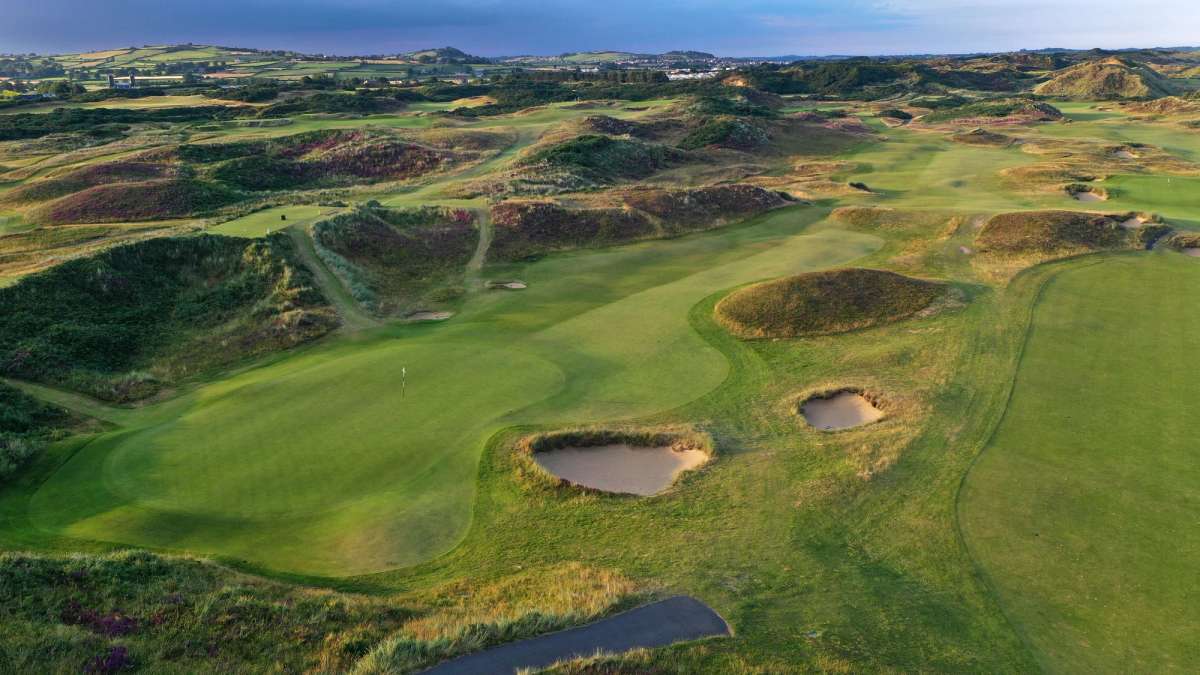
For golfers planning their first serious links trip, the choice often comes down to two destinations: Scotland or Ireland. Both offer some of the finest links courses in the world, dramatic coastal landscapes, historic clubs and enough quality to fill several days without playing the same type of golf twice. Scotland has the strongest claim to being the home of the game, with St Andrews, Muirfield, Carnoustie and Royal Dornoch among its headline acts. Ireland, meanwhile, can counter with Royal County Down, Royal Portrush, Ballybunion, Lahinch and Rosapenna. There is no wrong answer. But if you only have one major links trip to make, which country should come first? The Headline Courses Scotland has an almost unfair collection of famous links. The Old Course at St Andrews remains the obvious pilgrimage, while Muirfield, Turnberry Ailsa, Royal Dornoch and Carnoustie provide four very different reasons to keep travelling beyond the Home of Golf. North Berwick and Kingsbarns add further depth, and there is no shortage of excellent options once you move away from the biggest names. Ireland has an equally compelling collection. Royal County Down’s Championship course currently sits at No.1 in the Top100 GB&I ranking, with Royal Portrush at No.3, Ballybunion, Lahinch and Rosapenna Golf Resort’s St Patrick's Links adding further heavyweight options. That means neither country is short of a bucket-list course. Scotland perhaps has the deeper bench of instantly recognisable names, but Ireland can comfortably match it at the very top. Winner: Scotland The Links Experience The character of the golf is one of the biggest differences between the two destinations. Scotland gives you an extraordinary range of links experiences. The Old Course at St Andrews is steeped in history, Carnoustie has its fearsome reputation, Royal Dornoch delivers a more remote Highland setting, while North Berwick and Turnberry offer their own very different takes on seaside golf. Ireland's great strength is the way its links interact with the landscape. At Royal County Down, the Mountains of Mourne provide a spectacular backdrop. Royal Portrush winds through some of the biggest dunes in the British Isles, while Ballybunion, Lahinch and Rosapenna put the Atlantic firmly into the equation. That doesn't necessarily make Ireland's golf better, but it does give many of its standout courses a particularly strong sense of place. The landscape is part of the experience of playing the course. For golfers looking for variety, Scotland has the edge. For those who want their links golf to feel wild and dramatic, Ireland takes the cake. Winner: Ireland Building The Perfect Itinerary For the travelling golfer, the quality of individual courses is only half the equation. The other question is how easily you can string them together. This is one of Scotland's greatest strengths. A St Andrews trip can be built around the Old Course and supplemented by the six other courses at the St Andrews Links complex (New, Jubilee, Castle, Eden, Balgove, and Strathtyrum), alongside Kingsbarns Golf Links and Crail Golfing Society. An East Lothian trip can combine Muirfield with North Berwick, Gullane and Dunbar. Further west, the Ayrshire coast offers Turnberry, Royal Troon, Prestwick and Western Gailes. Then there is the Highlands, where Royal Dornoch, Castle Stuart and Nairn provide the foundations for another outstanding trip. Ireland has excellent clusters of its own. Dublin and the east coast provide several strong options, while the southwest combines Ballybunion, Lahinch and Waterville. Further north, Royal County Down and Royal Portrush provide the kind of double act that could justify an entire trip. But Scotland gives you more ways to construct the itinerary. You can build a four-day trip around one region or spend a week travelling between some of the game's most famous courses without running out of options. Winner: Scotland The Scenery and Atmosphere Both countries offer more than enough scenery to make the journey worthwhile, but they create very different kinds of golf trips. Scotland has the history and sense of occasion. A day at St Andrews can feel like a pilgrimage, while travelling through East Lothian or Ayrshire takes you between courses that have been part of the game for generations. Ireland's appeal is slightly less about pilgrimage and more about exploration. The best trips often involve following the coastline, travelling between small towns and remote clubs, and arriving at courses where the dunes and sea dominate the view. The golf can feel like part of a wider road trip, with the day's round followed by a trip to the pub to dissect it. Scotland has the stronger sense of golfing history, but Ireland arguably offers the more rounded sense of adventure. Winner: Ireland Value for Money Neither Scotland nor Ireland is a destination for the golfer looking for a bargain-basement holiday. The headline courses can command substantial visitor fees, particularly during the summer, but neither country requires you to play the most expensive courses every day. Scotland's depth is particularly useful, with an enormous range of courses allowing you to mix marquee names with excellent, less expensive links. That depth also means you can build an itinerary around value rather than simply ticking off the most famous names. Ireland competes strongly, particularly if you are prepared to venture beyond its biggest tourist destinations. But Scotland's sheer number of quality options makes it easier to put together a varied trip without paying a premium every day. Winner: Scotland The Verdict For your first links trip, choose Scotland. It has the history, depth, variety and concentration of world-class courses to make almost any itinerary work. The Old Course alone is enough to justify the journey, but Scotland's greatest strength is what comes after it. There are enough outstanding links to turn one trip into several without simply repeating the same experience. Ireland is the destination to choose when you want something a little more adventurous. Its great links are often dramatic, windswept and surrounded by scenery that can be as memorable as the golf itself. Royal County Down, Royal Portrush, Ballybunion, Lahinch and Rosapenna form an extraordinary collection, and the wider experience of travelling around the island only adds to the appeal. So Scotland wins the first-trip argument. But once you've made the journey, Ireland won't be far behind on the list.
As green fees at some of Britain and Ireland’s most celebrated courses continue to climb, Top100 Golf Courses' lead panellist Jasper Miners argues that golfers need to separate the quality of the course from the price of getting onto it. A round of golf at one of Great Britain and Ireland’s most prestigious courses can now cost £400, £500 or even £1,000. But does paying more guarantee a better golfing experience? For Top100 Golf Courses' lead panellist Jasper Miners, the answer is no. While some of the world’s finest courses command premium green fees for good reason, he believes golfers can too easily confuse price with quality. “Price can be exclusivity, it can be quality, it can be difficulty to access, it can also just be damn good branding,” he says. “I've played a lot of golf courses that are very expensive to play and I'd never want to play them again.” The distinction is becoming increasingly relevant as visitor fees at the top end of the game continue to rise. Research published by National Club Golfer in 2026 found that 15 courses in its Great Britain and Ireland Top 100 list charged £400 or more for a peak-summer round, up from eight the previous year. Turnberry's Ailsa Course retained its £1,000 headline fee, while Royal Birkdale's rose to £495. Those prices reflect more than the quality of the golf itself. Reputation, international demand, limited visitor access and the appeal of playing a famous course all contribute to what golfers are willing to pay. “People spend money on an experience, and it's cognitive dissonance: you convince yourself that it's good,” he says. Scotland shows the gap between price and quality Scotland offers a useful illustration of the difference between headline prices and the wider market. Top100's analysis of 94 ranked Scottish courses with published summer visitor fees in 2026 found a median price of £140, compared with an average of £194. The difference is significant: a relatively small number of expensive courses pull the average upwards, while more than half of the courses in the analysis could be played for £140 or less. Twenty-seven charged under £100. That doesn't mean £140 is inexpensive for every golfer, nor does it suggest that all courses offer the same experience. It does, however, challenge the idea that playing highly ranked golf necessarily requires a four-figure budget. The price of some famous venues has risen considerably. The Old Course at St Andrews, for example, went from a summer green fee of £195 in 2021 to £355 in 2026. Yet Scotland's wider selection of highly ranked courses offers alternatives at a fraction of that price. The same principle applies beyond Scotland. Top100's list of the ten cheapest visitor-accessible courses in its current World Top 100 includes Australia's St Andrews Beach at £74 and Bethpage Black in New York, a major championship venue, from £106. These examples do not mean that every lower-priced course offers the same facilities or experience as the most expensive venues. They do show that a high ranking and a substantial green fee do not always go hand in hand. The market, however, does not operate on quality alone. Miners points to Scotscraig Golfing Club as an example of how perceptions can change alongside pricing. He says the course has gone from attracting relatively little visitor attention to charging £225 and selling out. “In America, if you're good, you can charge more, so price becomes equated with quality,” he says. “Scotland has been a beneficiary of that.” He believes the relationship between price and demand can become self-reinforcing. A higher fee can contribute to a course's image as an exclusive destination, and that exclusivity can itself become part of the attraction. The challenge for lesser-known courses For courses without the international recognition of St Andrews, Muirfield or Royal County Down, competing for attention can be more difficult. A lower green fee may make a course attractive to golfers looking for value, but it can also leave it competing against venues whose reputations have been built over generations. Miners believes independent rankings and editorial coverage have a role to play in identifying courses that deserve attention, regardless of what they charge. “Hopefully, a website like Top100 is doing that work where we're going and saying, actually, this is not expensive and that's not part of our criteria, this is worth going to play,” he says. Simply increasing prices to appear more prestigious is not a universal solution, either. A strategy that works in a high-demand Scottish golf destination may not work in Wales, where raising green fees substantially will not necessarily persuade more people to visit. For clubs, the challenge is to establish what their course offers, understand their market and communicate its appeal. A famous name can command a premium, but a lesser-known venue may have more to gain by demonstrating the quality of its golf and the value of the overall experience. Golf is a business, too There is another side to the debate. While golfers may understandably want affordable access to good courses, clubs have to cover the costs of maintaining their facilities and operating their businesses. “I don't think [the industry needs to do more to challenge the idea that the best experiences are the most expensive],” Miners says. “As much as we don't want to admit it, golf is a capitalist sport.” He points out that many members' clubs depend on visitor income to support their finances, particularly when membership fees and subscriptions alone are insufficient to cover operating costs. “There are very few clubs that can run on a very modest budget with a very low membership that doesn't need outside play,” he says. That commercial reality makes it difficult to argue that clubs should simply charge less. Golfers in Britain and Ireland may be accustomed to playing regularly at prices that seem modest by international standards, but maintaining a golf course is expensive, and visitor income can be essential to a club's survival. Where demand is strong and tee times are limited, higher visitor fees may be a rational business decision. “If their tee sheet is full and they can charge a lot of money for people to come play, good for them,” he says. “The issue is mine, not theirs.” The question, then, is not whether every expensive course should lower its fees, or whether lower-priced courses should charge more. It is whether golfers can look beyond the number on the booking page and judge a course on its own merits. For golfers planning their next trip, that means looking beyond the obvious names. For clubs, it means recognising that price is only one part of the proposition. And for the industry, it is a reminder that the most expensive round and the best golfing experience are not necessarily the same thing.
