Golf in the Heather and Gorse
Author David Worley’s Guide to the Inland Courses of Scotland and England
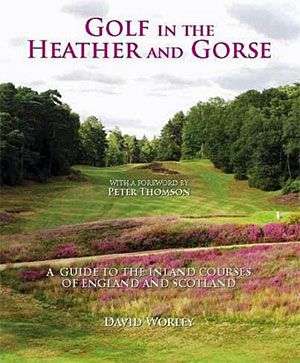
David Worley’s new book Golf in the Heather and Gorse is a follow up to his two previous titles, Journey through the Links and Another Journey through the Links, where the author wrote extensively about his playing experiences at virtually every links course in the United Kingdom and Ireland. This time around, he concentrates on the non-links layouts of Scotland and England, visiting seventy-seven of the finest parkland, moorland and heathland courses in both countries.
Most of these top tracks are located far from the coastline on either side of Hadrian’s Wall but the journey begins by the seaside in East Lothian at The Glen, which “occupies a spectacular piece of cliff-top land”. It’s not the only coastal layout to feature in the book as Worley plays four of the seven courses on the Isle of Arran and he also tees it up at Carlyon Bay in Cornwall – where “the golf course runs along the coastal cliffs” – for his penultimate round of golf.
In Scotland, there’s a good mix of courses, with older established tracks such as the and at Gleneagles rubbing shoulders with modern layouts like at Loch Lomond and in Aviemore. (“fun to play but not a place for wild hitters”) and (“challenging without being too difficult”) are amongst a number of second tier courses that also receive well deserved recognition.
It’s good to see the book feature less well known Caledonian tracks like Strathpeffer Spa (a “beautiful Highland gem”) and the lovely 9-holer at Carradale (“an enjoyable little sporty course”), though excluding both Letham Grange (Old) and Lanark is a definite oversight. Furthermore, to not include at least one of the marvellous Renfrewshire moorland tracks at East Renfrewshire, Ranfurly Castle or Kilmacolm can only be regarded as another slip-up.
After tackling thirty-three courses in Scotland, the author travels south of the border to continue his inland quest. Starting with Alister McKenzie’s Alwoodley in Yorkshire then progressing through to James Braid’s redesign at Berkhamsted in Hertfordshire, his golfing exploits along the spine of England in the chapter “From Leeds to London” only serves to whet the appetite for what follows on the heathland layouts to the south of the capital.
The unrelenting quality of the golfing fayre in this region is simply stunning, stretching from Swinley Forest in Berkshire, through the Old and New courses at Sunningdale in Surrey to West Sussex in the county of Sussex. And with a lavish array of photographs to accompany the text, the reader is offered a uniquely personal and intimate insight into what’s it like to play these wonderful layouts, which is ideal for golfers planning a visit or just reliving similar playing experiences they’ve already had.
The 44-course English portion of the tour tapers off nicely as the author plays the last of the big hitting layouts then moves along the World Heritage Jurassic Coast and into Cornwall, where he concludes his inland golf trail at Tehidy Park, an inauspicious parkland track located north of Camborne. David Worley’s travels are not quite the golfing equivalent of an epic John o’ Groats to Land’s End trek but they’re not that far wide of the mark. In the foreword, the respected 5-time Open Champion Peter Thomson calls the book “a precious document that shows off Britain’s treasures of the game of golf” and that’s a sentiment which Top 100 Golf Courses wholeheartedly endorses.
Golf in the Heather and Gorse can be purchased via Amazon. Click the preceding link or the book cover image for full details.
Jim McCann
Editor
Top 100 Golf Courses
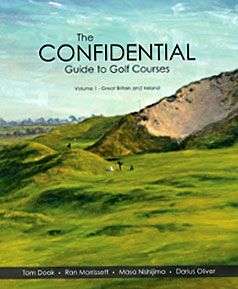
The Confidential Guide revealed Tom Doak’s updated “Confidential Guide” book: a Scottish perspective The updated version of Tom Doak’s cult golf book “The Confidential Guide to Golf Courses” will be released in five volumes, the first of which has just been published. For those who don’t know, earlier editions of The Confidential Guide – where Doak reviews and marks courses on a scale of 0 to 10 – change hands for substantial amounts of money amongst acolytes of the minimalist designer. Along with Ran Morrissett (founder of the Golf Club Atlas website), Darius Oliver (writer and publisher of the Planet Golf books) and Masa Nishijima (long-time international consultant at Top 100 Golf Courses and author of Analysis of a Golf Course), Doak now aims to rate and critique more than 2,000 golf courses around the world, the first 289 of which, in Great Britain and Ireland, appear in Volume 1. There’s quite a bit to digest in this particular volume, so we thought it might be worth having an initial look at the book from a more specific Caledonian perspective, leaving an examination of the other countries for future articles. The original Confidential Guide first appeared in 1988, when 53 of the layouts assessed by Tom Doak were located in Scotland. The new revised edition of the book almost doubles the number of courses that lie to the north of the border with England, adding all the top courses that have opened for business in the last quarter of a century, with three glaring exceptions. Most prominent of these is Spey Valley in Aviemore, an exuberant Dave Thomas-designed layout that sits comfortably in the top half of our Scottish Top 100 chart. The exclusion of the other two courses is even more puzzling because the Fidraand Dirleton courses at Archerfield Links – currently number 32 and 39 in our Tartan Top 100 – are located immediately adjacent to Tom Doak’s only Scottish design at Renaissance Club in East Lothian, which is ranked above both its near neighbours at number 27 in Scotland. Cynics might speculate the absence of both Archerfield courses from the book is understandable due to commercial rivalry – we’d like to believe it was simply an oversight. Actually, there are a number of other noteworthy courses that are also missing, three of them on the west coast at Glasgow (Gailes), Kilmarnock (Barassie) and Irvine (all of which have been used in the past as Final Open Qualifying venues) and the expansive parkland layout of Downfield in Dundee. The reason given in the book for leaving out Downfield (a former Scottish Open venue) was that it couldn’t be found after driving around for half an hour in search of it. A rather lame excuse surely? In fairness, to counterbalance any controversy over leaving out (inadvertently or otherwise) those leading Scottish courses, the book does make reference to a raft of lesser layouts, such as Braid Hills, Peebles and Strathpeffer Spa. Also, dare I mention it, there’s even appraisals of other little-known courses, such as Braemar, Cullen and Dunaverty. Furthermore, several wee 9-holers – Carradale, Killin and Rosehearty amongst them – are also considered, so full credit to the authors for this depth of coverage. As it’s perfectly entitled to, the new volume reappraises the “Doak scale” ratings that were originally given to more than a dozen Tartan tracks, with most of these layouts marked up one point from 3 to 4, 4 to 5 or 5 to 6. Nevertheless, eyebrows will be raised at three courses – Lundin, St Andrews (Jubilee) and Dunbar – which have jumped up 2 points from a 3 (“about the level of the average golf course in the world”) to a 5 (“well above the average golf course, but probably about the average among courses covered by this book”). If those ranking alterations are surprising, the three point jump of Shiskinefrom a humdrum Doak scale-2 (“a mediocre golf course with little or no architectural interest”) to a more than respectable 5 (where although “it’s certainly not everybody’s cup of tea… Shiskine is not to be missed”) might well have some people wondering if Arran was under a blanket of fog when the course was first visited. Eighteen of the courses in the book have been selected for special attention, forming what’s been termed “The Gourmet’s Choice,” and five of these favourite tracks – all links layouts – are located north of Hadrian’s Wall: St Andrew’s (Old), Prestwick, North Berwick (West), Royal Dornoch (Championship) and, rather surprisingly, Askernish. These courses are described as “places that stir our souls, and will reward the visitor with something out of the ordinary”. Simply put, the authors think that they’re “courses we would take a good friend to play”. An eclectic 18-hole course for GB & I has also been assembled in the new Confidential Guide, with eight of the holes fashioned from Scottish links courses. The more predictable of these – No. 1 (“Battery”) at Machrihanish (Championship), No. 8 (“Postage Stamp”) on Royal Troon (Old), No.14 (“Foxy”) at Royal Dornoch (Championship) and No. 17 (“Alps”) on Prestwick – are joined by the par four 2nd on St Andrews (Old), the par five 6th at Carnoustie (Championship), the par three 13th at Muirfield and the par three 15th at North Berwick (West). Individual holes on a number of courses attract criticism from the authors – the “uncomfortably American” 18th at Skibo Castle – Carnegie Club and the “ridiculous uphill par-3” 3rd at Gullane No.2 are two that spring to mind – but the most damning narrative is reserved for all 18 holes on the St Andrews (Castle) course, controversially awarded a score of 0 (“a course so contrived and unnatural that it may poison your mind”), where the considered opinion is that “trying to one-up Kingsbarns turned out to be a formula for excess”. Unnecessarily harsh words indeed for a modern layout that currently resides at number 22 in our national rankings for Scotland, only one position behind its illustrious stablemate St Andrews (New). Then again, it’s very fashionable amongst many in the golfing architectural fraternity these days to lambast just about anything the St Andrews Links Trust does. Despite the gap of "local" European knowledge, the authors have, overall, performed a reasonable job from a Scottish golf course perspective. Ralph Thompson and the other golfing islanders on South Uist will no doubt be delighted to have their Askernish course lauded so loudly in the book. However, I'm doubtful that architects David J. Russell and David McLay Kidd will be overwhelmed. Jim McCann Editor Top 100 Golf Courses of the World
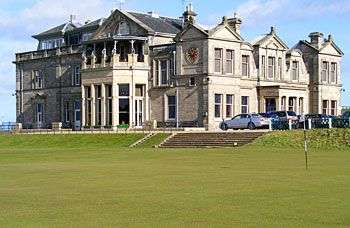
Golf’s Royal Clubs Architect Scott Macpherson's book on the clubs honoured by the British Royal Family 1833-2013 22nd December 2014 Architect and author Scott Macpherson, a New Zealander now living and working in Scotland, had his first golf book St Andrews: The Evolution of the Old Course published in 2007. To mark the Diamond Jubilee of her Majesty Queen Elizabeth II in 2012, the R&A commissioned Scott to write another book about the golf clubs that have acquired their royal title from the British monarchy. The result is a lavishly photographed book crammed full of facts and figures about these special clubs, supported by course related items such as maps, scorecards and full design credit details. It took four years of research, with the author visiting 57 of the 66 Royal clubs still in existence, to produce a wonderful account of just how close the links are between the game of golf and the British Royal family. Not that there’s always been such a harmonious relationship between the sport and the ruling sovereign, right enough. In Scotland, where the game first began, King James II outlawed ‘golfe’ by an Act of Parliament in 1457 – only to have King James IV take up the game forty-five years later after he’d signed the Treaty of Glasgow with Henry VII of England! A number of the clubs listed have had members of the Royal family act as Club Captain or Club President and most of the clubs have had a Royal Patron, though patronage has never automatically given clubs the right to use the royal title and several prominent clubs have fallen foul of that fact down the years. The process of obtaining royal status has evolved over time and applications nowadays would be expected to include a history of the club, details of its administration and membership, recent reports and accounts and information on any other royal or government associations. The standard of the club’s course has not always been a determining factor on whether royal title could be given though Home Office guidelines in the 1919 did state that “the status of the course is a most important factor, and the decision would perhaps depend largely on whether or not the club’s course is a championship one or in the championship class”. Nine-hole layouts like the one at Royal Worlington and Newmarket would probably have failed that particular test if it had been in operation when the club was added to the royal portfolio in 1895. Royal Perth Golfing Society was the first to be given the royal prefix in 1833 and it remains one of only four royal clubs - along with the R&A, Royal Montrose and Royal Epping Forest - to play on a public course. Royal Cromer is the only club to receive its royal designation before it actually opened, with its status announced on Christmas Day in 1887, eight days before the club officially debuted on 2 January 1888. By way of contrast, it took Royal Lytham & St Annes five attempts before its royal title was finally conferred in 1926. Some may be surprised to learn that, in more recent times, the reigning British monarch allowed Marianske Lazne Golf Club in the Czech Republic to use the royal title in March of 2003 and she repeated this investiture a decade later in April of 2013 when Homburger Golf Club in Germany was also given permission to use the royal title. It’s an interesting matter of golfing speculation now to try and figure out which of the many other esteemed golf clubs in Europe (and beyond) are currently lining up their application… If you’ve read and enjoyed John de St. Jorre’s Legendary Golf Clubs of Scotland, England, Wales and Ireland, where seven of the twelve clubs featured have the Royal prefix, then you’ll love this book. It’s only available to purchase through the R&A at the moment (contact Catherine McGirk on +44 (0)1334 460153, email catherinemcgirk@randa.org) but it may become more widely available in due course. The ISBN to look out for is 978-0-9926240-2-6. Highly recommended as a worthy addition to any golf book library. Jim McCann Editor Top 100 Golf Courses of the World
The World's Greatest Golf Courses Are More Accessible Than You Think For decades, golfers have dreamed about playing the world's best golf courses, only to discover that many top-ranked venues are private clubs accessible only through member invitations. That changes now with our groundbreaking Best Golf Courses in the World You Can Play ranking—the definitive list of world-class golf courses you can book with a simple phone call and credit card. About the Best Golf Courses You Can Play Ranking Top 100 Golf Courses has always focused on identifying the world's finest golf courses, regardless of accessibility. Our new Best Golf Courses in the World You Can Play ranking changes that approach by highlighting exceptional courses that welcome public play. This comprehensive ranking is a carefully curated derivative of our prestigious World Top 100 ranking, examining golf courses from both our main list and contenders that accept green fee players. The result: 70 of the world's most spectacular golf courses you can actually play. Key Differences from Traditional Rankings Unlike other "courses you can play" lists, our ranking focuses on true world-class quality rather than simply public accessibility. We've excluded most American private clubs (except resort destinations like Sand Valley and Bandon Dunes, plus publicly-owned courses like Bethpage Black) to focus on genuinely accessible world-class golf. Remarkable Statistics: World's Best Golf Made Accessible The numbers tell an incredible story about golf accessibility outside the United States: You can pay to play the world's #3-ranked golf course 5 of the world's top 10 courses are accessible via green fee 11 of the world's top 25 courses accept public bookings 23 of the world's top 50 courses welcome green fee players 56 of the world's top 100 courses are open to public play These statistics shatter the myth that golf's greatest venues are exclusively private. Great Britain & Ireland: The Undisputed Champion of Public Golf Our analysis reveals that Great Britain and Ireland dominates accessible world-class golf. The region's links courses represent golf in its purest form, and most welcome visitors who book in advance and pay appropriate green fees. Scotland leads with legendary venues like St. Andrews, Royal Dornoch, and Turnberry. England contributes classics including Sunningdale and Royal St. George's. Ireland and Northern Ireland add gems like Lahinch and Royal County Down. Countries with World-Class Public Golf Courses Pay-and-Play Golf Powers The following countries offer their very best golf courses to green fee players: GB&I: England, Ireland, Northern Ireland, Scotland, Wales, Europe: Norway, Spain Asia: Australia, South Korea Americas: Bermuda, Dominican Republic Middle East: United Arab Emirates Africa: South Africa Australia and New Zealand: Accessibility Done Right Both Australia and New Zealand have embraced the British philosophy of making world-class golf accessible to visitors. Australia shines with 10 entries in our ranking, including Royal Melbourne West and the spectacular Cape Wickham Links. New Zealand contributes several outstanding courses, with only the ultra-exclusive Tara Iti as the exception to the general rule of accessible golf in New Zealand. American Golf: Resort Destinations Lead the Way While most top American courses remain private, several resort destinations offer world-class golf: Bandon Dunes Resort, Oregon - Features four courses in our top 70, establishing itself as the world's premier golf resort for serious players Sand Valley Resort, Wisconsin - Multiple courses including Sand Valley and Mammoth Dunes Streamsong Resort, Florida - All three courses (Red, Blue, and Black) welcome public play Kiawah Island, South Carolina - The Ocean Course, site of multiple major championships Bethpage State Park, New York - The Black Course proves that municipal golf can achieve world-class status Booking Tips for the World's Best Public Golf Courses Advanced Planning Essential Most world-class courses accepting public play require advance booking: 6-12 months ahead for peak season at top venues Off-season opportunities often available with shorter notice Package deals through golf travel specialists can secure access Expert Golf Travel Planning: For golfers serious about accessing the world's best courses, consider partnering with specialists who understand the booking intricacies of elite venues. Lockhart Travel Club offers members exclusive access to world-class golf exploration and adventure, with expertise in securing tee times at the most sought-after courses globally. Their insider knowledge and established relationships can be invaluable when planning once-in-a-lifetime golf experiences at courses that typically book out months in advance. Green Fee Investment Expect premium pricing for premium golf: Links courses in Britain/Ireland: £100-400+ per round Australian championship courses: AUD $200-500+ per round American resort courses: $200-600+ per round Seasonal variations can significantly impact pricing Accommodation Packages Some courses offer preferential booking through on-site accommodation or partner hotels—particularly valuable for international visitors. Coming Soon: Value and Budget Rankings We're developing additional resources for golfers seeking world-class experiences at various price points: Lowest Price Best Golf Courses in the World You Can Play - Highlighting exceptional quality at accessible prices Value Indexed Best Golf Courses in the World You Can Play - Ranking courses by quality-to-price ratio The Future of Golf Accessibility Despite golf's reputation as an elitist sport, our research proves that the majority of the world's greatest golf courses (outside the USA) welcome visitors willing to pay green fees. This accessibility makes golf travel more rewarding than ever for passionate golfers. The Best Golf Courses in the World You Can Play ranking demonstrates that dream golf is more attainable than most golfers realize. Whether you're planning a pilgrimage to St. Andrews, a links tour of Scotland and Ireland, or an Australian golf adventure, world-class golf awaits your booking. Subscribe today to access detailed course profiles, booking information, and insider tips for playing the world's greatest accessible golf courses.
