11th January 2011
Huddersfield & Pleasington Golf Clubs to host new strokeplay competition.
The Fixby Challenge, a new individual strokeplay tournament for amateur golfers, will be held at Huddersfield Golf Club on Friday 17th June 2011. And the event will have one of the biggest prizes on offer in the country – a place in the all-expenses paid two-day grand final of the Northern Matchplay Golf Championship at Alwoodley Golf Club.
The Northern Matchplay is a season-long knockout competition for amateur golfers across the North of England. The winners of each county – Cheshire, Cumbria, Durham, Lancashire, Northumberland and Yorkshire – will progress to the 72-hole climax at Alwoodley next September.
The winners of two stand-alone tournaments, one of which is the Fixby event, will also join them. The other competition is to be held at Pleasington Golf Club, near Blackburn in Lancashire, on Thursday 18th August 2011
Organiser of the championship, Edward Battye, explained, “The main route to the grand final is by entering the matchplay section and becoming the champion of your county. However, I also wanted to add an extra dimension and provide another way for golfers to qualify. A stand-alone tournament, where effectively the winner takes all, should add for some great excitement and tension.”
Battye, a former member at Huddersfield added, “When the opportunity arose to bring the event to Fixby it was an easy decision. The course speaks for itself and it’s perfectly located for golfers across the North. It’s a true test of golf and whoever comes out on top will be a worthy winner.”
Huddersfield Golf Club, one of the finest championship courses in the North of England, has famously staged European Tour Seniors events in the past and is a regular venue for the Yorkshire Amateur County Championship. In 2009 it was a qualifying course for the prestigious Brabazon Trophy and since work was carried out on the greens about a decade ago, bringing them up to USGA standard, it has received many plaudits nationwide.
Whilst the player returning the best nett score on the day lines up at Alwoodley a prize voucher of £200 will also be awarded to the player returning the lowest gross score over the 18 holes. That’s sure to tempt many of the regions better players who are familiar with the course.
Entry to the Huddersfield event is £40 and includes soup and sandwiches although anybody entering before January 31st can do so at a reduce price of just £30.
The Pleasington event is excellent value at £70 per pair, which includes soup and sandwiches.
More details and an entry-form can be found on www.northernmatchplay.com

Yorkshire has long been one of England's most rewarding golf destinations. From the heathland giants of the north to the moorland courses above Bradford and Halifax, the White Rose County offers a breadth and quality that few English counties can match. The 2026 rankings confirm both the enduring strength at the very top of the table and a series of compelling movements in the middle order that reflect how well several clubs have been developing their courses in recent years. With 45 courses now ranked, panellists have assessed layouts across all four corners of Yorkshire - North, West, South and East - rewarding courses that deliver genuine challenge, architectural integrity and a memorable experience for visiting golfers. 2026 Updated Rankings: Yorkshire's Top 15 The top four positions in the 2026 rankings are unchanged, a testament to the enduring quality of Ganton, Alwoodley, Moortown and Lindrick. Below that settled elite, however, the rankings tell a more interesting story, with Hallamshire making a strong move into the top five and Cleveland Golf Club posting the most impressive climb in the entire list. To view the complete Yorkshire rankings and explore individual course profiles, visit the Yorkshire Rankings page. 2026 Top 15 At A Glance The Unchanged Elite Ganton Golf Club retains its position as Yorkshire No.1 for the fourth successive ranking cycle, and it is difficult to imagine that changing any time soon. This extraordinary inland links near Scarborough has hosted Walker Cup, Curtis Cup and Ryder Cup matches and remains one of the finest inland tests in the British Isles. Its fearsome bunkering is the stuff of legend. Alwoodley Golf Club and Moortown Golf Club hold firm at two and three, both occupying their now-familiar positions in the West Yorkshire heartland north of Leeds. Alwoodley's MacKenzie-designed layout remains among the most beautifully understated heathland courses in England, while Moortown — which hosted the first Ryder Cup on home soil in 1929 — continues to develop with considered restoration. Lindrick Golf Club remains fourth, its place among Yorkshire's elite secured by a combination of Ryder Cup heritage and continued course development The Rising Stars Hallamshire Golf Club is the standout performer in the upper half of the table, climbing two places to fifth. Harry Colt's 1938 redesign of this Sheffield heathland layout produced something quietly special. Cleveland Golf Club is the biggest mover in the entire Top 15. Yorkshire's oldest golf club, founded in 1887 at Redcar on the North Sea coast, Cleveland offers a links experience unlike anything else in the county. Its steady upward trajectory over successive rankings reflects a course that has been consistently well presented and increasingly appreciated by travelling golfers. Halifax is perched on the hillsides above the Calder Valley. Halifax's moorland layout delivers spectacular views and a genuine challenge that the panel has now recognised with a well-deserved rise into the Top 15. Headingley moves up one place to eleventh, a modest but consistent improvement for a club with deep architectural credentials — Alister MacKenzie remodelled the layout after the club moved to its current site in 1906, with Harry Colt later redesigning the bunkers. Best Yorkshire Golf Courses by Region West Yorkshire dominates the Top 15 with eight of the fifteen ranked courses drawn from the county's most populous region. The concentration of quality around Leeds, Bradford and Huddersfield reflects both the density of clubs in this area and the strong heritage of moorland and heathland golf that developed here from the late Victorian era onwards. Alwoodley, Moortown, Sand Moor, Huddersfield, Headingley, Halifax, Ilkley and Woodsome Hall all represent the West Yorkshire tradition at its finest. North Yorkshire contributes five courses — Ganton, Fulford, Cleveland, Pannal and York — spread across a large geographic area that takes in the coast, the Vale of York and the slopes of the North York Moors. This regional spread makes North Yorkshire one of the most rewarding areas in the county for a multi-course trip, with Ganton at the top of the rankings serving as the obvious anchor for any visit. South Yorkshire accounts for two of the Top 15, with Lindrick and Hallamshire representing the Sheffield region. Both courses carry significant historical weight — Lindrick's Ryder Cup pedigree and Hallamshire's Colt heritage — and both sit comfortably in the top five of the overall rankings. What the Updated Rankings Tell Us Stability at the Top Signals Enduring Quality The fact that positions one through four are completely unchanged reinforces the message that Yorkshire's leading courses are in exceptional shape. Ganton, Alwoodley, Moortown and Lindrick are not simply coasting on historical reputations — they are courses that continue to deliver outstanding experiences. When a panel of experienced golfers independently assesses courses and returns the same top four, that unanimity is meaningful. Golden Age Architecture Remains the Benchmark The top ten is defined almost entirely by courses shaped by the great Golden Age designers. MacKenzie's fingerprints are visible at Alwoodley, Moortown, Headingley and Fulford. Colt's influence defines Hallamshire. Braid, MacKenzie and Simpson all contributed to Ganton. The rankings reaffirm that design quality, not reputation or heritage alone, sits at the heart of the panel's thinking. Cleveland's Rise Highlights Coastal Yorkshire Yorkshire's links golf is less celebrated than its moorland and heathland courses, yet Cleveland offers an experience that is genuinely different from anything else in the county. Its ascent invites golfers who might not have considered a trip to Redcar to reconsider. Combined with the wider North Yorkshire coast, a visit to Cleveland could anchor a genuine links-focused itinerary. Halifax Opens Up the Pennine Hills Halifax's rise is encouraging. Moorland golf in the West Riding has always attracted those who know where to look, but Halifax's promotion to the Top 15 now ensures it will appear on the radar of a wider travelling audience. The moorland loops above the Calder Valley deserve greater attention than they have historically received, and this ranking movement should help deliver it. Planning Your Yorkshire Golf Trip Yorkshire offers enough quality across a compact enough geography to reward a dedicated golf trip of three to five days. The obvious anchor is Ganton, which sits near Scarborough and provides a logical base for exploring the North Yorkshire coast and vale. A West Yorkshire itinerary built around Leeds makes excellent sense for golfers wanting to experience the MacKenzie and Colt heritage in concentrated form. Alwoodley, Moortown, Sand Moor and Headingley all sit within a short drive of the city centre, with Pannal just to the south near Harrogate adding a moorland dimension. This cluster of courses represents one of the finest urban golf destinations in England — a point that is often underappreciated by those who have not played the area. For something different, the Pennine routes through West Yorkshire open up Halifax, Huddersfield, Ilkley and Woodsome Hall — four courses that deliver spectacular moorland and parkland golf in some of the most dramatic landscapes in northern England. Golfers with time to explore further afield should not overlook Cleveland at Redcar, which now sits eighth in the county rankings and offers the only genuine links experience among Yorkshire's elite courses. Combined with a visit to Ganton, an east-coast loop through North Yorkshire has real appeal for those chasing variety. South Yorkshire is worth a dedicated visit for Lindrick and Hallamshire alone. Lindrick near Worksop and Hallamshire above Sheffield are different experiences — one a classic heathland course at the county boundary, the other a Colt moorland layout on Sheffield's western edge. Looking Ahead With Halifax and Cleveland both on upward trajectories and Headingley continuing its steady climb, the next Yorkshire ranking cycle has the potential for further movement in the middle order. The question of whether any course can close the gap on Ganton at the top remains rhetorical for the time being. The depth of quality between positions five and fifteen suggests the competition for ranking places is as strong as it has ever been and represents an under-appreciated destination for travelling golfers. To view the complete Yorkshire rankings and explore individual course profiles, visit the Yorkshire Rankings page.
White rose adventure - playing more than 150 courses in Yorkshire Back in the winter of 2003 I was reading a leading golf magazine on a hotel sun bed in Cyprus while contemplating – in the words of Douglas Adams – life, the universe and everything. Four years earlier I won the Club Championship at South Leeds Golf Club off a handicap of five. Since then however I had become disillusioned with the game. A change of career meant I could only play one weekend in every four and when I did, the club competitions were won week in, week out by golfers whose handicaps were – putting it politely – not quite as low as they could have been. The magazine in question featured its biennial ranking of the UK’s top 100 golf courses. Reading the article made me realise that what I loved most about the game wasn’t trying to win meaningless trinkets of silverware and cut glass, rather playing as many courses as possible. Golf is probably unique in that every one of its playing areas are different and there are so many of them that we owe it to ourselves as golfers to try and scratch the surface by travelling about a bit rather than playing the same course all the time. With this in mind, having initially decided to play all the courses in my native West Yorkshire I needed to figure out what actually constitutes a golf course. I settled on 18-hole courses only, excluding those under 5,381 yards, that being standard scratch of not less than 66 based on yardage. This left 58 courses. My reason for doing so is that in West Yorkshire alone there are 26 nine holers, six courses under the above yardage – four of which are less than 5,000 yards – and a six holer. Only one of these 33 additional courses would have threatened the top fifty. I therefore took the difficult decision not to include these. On an unseasonably warm April day in 2004 I began my quest at Baildon. Baildon is a bit of a hidden gem on the moors high above Bradford in Bronte country. The course plays 6,231 yards from the back tees which unusually I was allowed to play from. It had originally been my intention to play all the courses from the tips however given the look of abject horror this request usually elicited, I soon gave up and ended up playing the regular “yellows” in most cases. I do find it particularly irksome that courses are quite happy to advertise their 7,500-yard championship course but having taken your green fee, they send you out from the much shorter yellow tees. By late 2008 I had played and ranked all the West Yorkshire courses. My criteria for ranking courses is similar to that used by Top100GolfCourses.com in that 60% of my mark goes on the design, 20% on condition and playability and 20% on location. My West Yorkshire top ten is as follows: 1. Alwoodley While Alwoodley and Moortown are both great courses designed by my personal favourite architect, Dr Alister MacKenzie, I feel Alwoodley is the better of the two, not only because of its more rural location but because the holes somehow seem to have a better flow. Having said that I’m sure the members’ lounge at Moortown is full of people who will disagree with me. Shipley and Sand Moor are both excellent MacKenzie tracks, the latter having arguably the best set of par threes anywhere in the country. Moor Allerton has three sets of nine and my favourite 18-hole combination comprises of the Blackmoor and High loops, which makes my top ten. It is also notable as being (as far as I’m aware) the only UK course designed by the late Robert Trent Jones Senior. Cookridge is one of the better courses to come out of the late twentieth century golf course boom and was designed by Karl Litten, the man responsible for Dubai’s first two grass courses. The remainder of the ten includes my own current club, Huddersfield, or Fixby as it’s known locally. Not hugely long by modern standards at 6,514 yards from the tips, but very strategic with penal rough. Having completed West Yorkshire in 2008 I was contacted by a fellow “course collector” by the name of Paul Gardner with whom I've played most of my forays around the rest of Yorkshire, a task I’ve recently completed. My top ten for the remaining parts of Yorkshire are as follows: North Yorkshire Ganton is undoubtedly the stand out course in the whole of Yorkshire and though not strictly a links course has beautiful springy links like turf. The bunkers are fiendish as are the greens which I found particularly difficult to read. Fulford was made famous in the 1970s as the host course to the European Tour’s Benson & Hedges Festival. During one tournament, Bernhard Langer played an approach shot by ascending the upper branches of a large oak tree. The course is often wrongly attributed to Alister MacKenzie who designed the original Fulford course. His brother Charles was actually responsible for this 1935 replacement. Oakdale is the only one of Alister’s designs on this particular list, although Middlesbrough and Filey were designed by another golden age legend, James Braid. The excellent course at Cleveland is notable for being the only true links course in Yorkshire although its architect appears to have been lost in the mists of time. South Yorkshire Styrrup Hall is perhaps the most controversial of my rankings. An extremely testing 6,745-yard course opened as recently as 2000 and featuring a signature par 5 measuring 712 yards. Unfortunately I have been unable to ascertain the designer despite calls to the club. Hallamshire and Lindrick would probably be one and two in most people’s South Yorkshire lists albeit in reverse order to mine. For me though Hallamshire is certainly the better of the two with Lindrick suffering from a couple of weak and rather strange holes, and relying heavily on its reputation as a former Ryder Cup venue, one of three in Yorkshire. East Yorkshire I have only mentioned a top three in East Yorkshire as due to the flat nature of the landscape, many of the other courses are rather similar and not particularly noteworthy. Hornsea and Hull are both fine James Braid courses. Of note at Hornsea are the tough closing five holes which, with the exception of the par three 17th, are all in excess of four hundred yards. Hessle moved to its current location in the early 1970s when construction of the Humber Bridge meant a necessary relocation. The current fine course was designed by the short-lived architectural partnership of Dave Thomas and Peter Alliss. Combining the above rankings gives my personal Yorkshire top fifty which is as follows: I am now looking forward to travelling further afield to sample the delights of Derbyshire, Lincolnshire, Greater Manchester and Lancashire. Mark Jessop
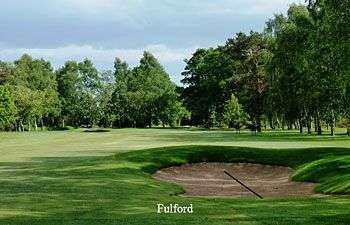
Top 30 Golf Courses in Yorkshire 2015 Yorkshire Best in County rankings updated It goes without saying that Yorkshire and sporting excellence go hand in hand – indeed, it was recognised after the London Olympics in 2012 that the White Rose County would have finished twelfth in the medal table (with seven gold, two silver and three bronze medals) if it had been regarded as a separate nation during the Games. Many of the organised sports in the region date back to the mid-19th century, for instance, Sheffield FC, the world’s oldest football club, was founded in 1857 and Yorkshire County Cricket Club started out in 1863. If anything, the county’s oldest golf course at Cleveland was something of a latecomer, arriving in 1887. A lot has changed since then, of course, and there’s no shortage of places to play golf in the county these days, with almost two hundred golf clubs attached to the Yorkshire Union of Golf Clubs and Yorkshire Ladies’ County Golf Association. We don’t feature all of these clubs, but we do maintain a Top 30 chart of the very best courses. Following a consultation period with every club in the region, we’ve just finished updating our rankings for Yorkshire. Don’t expect any shocks at the top end of the table as positions 1 to 6 remain exactly the same as last time. A handful of new entries at the lower end of the chart are, however, worth a closer look. Ganton is still our Yorkshire No.1 and there can be no doubt about the allure of this fabulous inland links/heathland layout, where James Braid, Alister MacKenzie and Tom Simpson have all had a hand in the design. Host to Walker Cup, Curtis Cup and Ryder Cup matches down the years, this formidable course is famed for its fearsome bunkers. To a certain extent, Alwoodley and Moortown both live in Ganton’s shadow, reflected by their number 2 and number 3 positions in our revised Top 30 listings. Alwoodley was recently described by a reviewer as “a magnificently understated layout, immersed in a beautiful landscape“ whilst another person thought Moortown was “a fine course, in the top bracket of inland courses in England”. Like Ganton and Moortown, Lindrick is another Yorkshire course that enjoys a proud Ryder Cup heritage, the event having been held there in 1957. The layout sits at number 4 in our county chart and lies just outside the Top 50 for England. Architect Ken Moodie joined forces with the club recently to carry out an ambitious course upgrade program that will see a total of seven holes modified. At number 5, Fulford is probably best known as the first venue for the Benson & Hedges International Open, which the club hosted for eighteen years during the 1970s and 1980s. Located close to the city centre of York, the course is a beautiful heathland/parkland track that was originally laid out by Major Charles MacKenzie in the mid-1930s. Hallamshire occupies the number 6 position in our Yorkshire chart. The club dates back to 1897 when it leased part of the Duke of Norfolk’s estate for golf. Today’s heathland layout is largely the product of a Harry Colt redesign in 1938, when its signature par three 6th hole was first introduced. Two courses make upward moves at the top end of the rankings: Pannal, a fine moorland track located to the south of Harrogate, rises two spots to number 7 and Huddersfield, which had all eighteen greens re-laid to USGA specification a decade ago, advances one place to number 9. In the middle of the chart, another three courses head in the right direction: Bingley St Ives (up two to 11) has fairways routed around a mixed landscape of heathland and parkland, York (up three to 13) celebrates its 125th anniversary this year, and Rotherham (up two to 15), is a beautiful parkland track that’s set out within the impressive Thrybergh estate. Hornsea makes the biggest jump up the Top 30, soaring six places to number 23. The club moved to its present location in 1908, ten years after its formation, when Sandy Herd designed a layout that was subsequently modified by Alister MacKenzie then James Braid. Following a course audit by Swan Golf Designs five years ago, significant course improvements are now being carried out. At the lower end of the revised county listings, there are five new entries: Headingley (22) was formed in 1892 but the club moved to its current site in 1906, calling in Alister MacKenzie soon after to remodel the new layout. Harry Colt later redesigned the bunkers. Crosland Heath (25) is another MacKenzie design, with the architect setting out “The Heath” fairways on the site of an old quarry in the hills overlooking Huddersfield. The Welham and Park nines at Malton & Norton (27) are recognised as the principal 18-hole layout at a modern facility which first opened its doors in the mid-1990s. JH Taylor and Fred Hawtree laid out Selby (28) and its tree-lined fairways, which extend to 6,341 yards from the back tees, occupy a rather tight parcel of land. Oakdale (30) is yet another 18-layout from Alister MacKenzie, dating back to 1914. Measuring 6,484 yards these days, it’s certainly been stretched a little over the last 100 years. We’re grateful to everybody in the region who helped with our re-ranking process for Yorkshire. To view details of all the courses in our Yorkshire Top 30 rankings click the link. If you have extensive experience of playing across the northern region of England and would like to contribute to our next re-ranking exercise then please email Editor-in-Chief Keith Baxter at keith@top100golfcourses.com. Jim McCann Editor Top 100 Golf Courses
