Kingston Heath Golf Club denies discrimination
The prestigious Melbourne golf club has denied accusations of anti-Semitism after a Jewish golfer’s application was turned down.
26 March 2010
By Naomi Levin The Australian Jewish News
Kingston Heath Golf Club has strongly denied allegations of discrimination.
Kingston Heath Golf Club, the course where Tiger Woods won the 2009 Australian Open, said rumours it recently rejected membership based on the applicants’ faith were unfounded.
Gregg Chapple, Kingston Heath’s general manager said the Jewish golfer in question – a man known to be a champion golfer – was turned down because his application did not have enough referees. He had two but the membership committee expects up to five – it was, in Chapple’s words, “thin on the ground”.
The membership proposer took a message from the committee that if the applicant wanted more referees he was invited to play golf the following week with club members. The committee also recommended he get referees from Metropolitan Golf Club, where he is already a member.
Chapple said the applicant then raised the matter of his faith, which the proposer denied had come into the committee’s calculations.
The general manager called it a “quantum leap” for anyone to assume the applicant was knocked back because of his faith.
“Application forms do not have anywhere a question that contains their faith.”
The applicant was also invited to speak with Steve Zamel, a Jewish Kingston Heath member, and also a committee member with the Maccabi Golf Club.
“The proposer is miffed that the interpretation was anything other than that [the referee issue] … He was shocked when he raised it,” Chapple said.
While he could not list the club’s Jewish members, the general manager said Kingston Heath’s president knows of Jewish club members and “we have a Smorgon on the waiting list and a Smorgon who has applied for membership”.
It is not the first time one of Victoria’s famous “sand belt” golf clubs has been accused of anti-Semitism.
Speaking to radio station 3AW this week, former Victorian Liberal politician and Melbourne Football Club champion Brian Dixon said he too knew of a Jewish applicant who was knocked back from the club. He said that rejection led him to cancel his own membership.
Chapple said the scenario Dixon was referring to happened three decades ago and club members had informed him the application was problematic for other reasons.
However, the general manager admitted the club does not appear particularly multicultural.
“If you walk in here, it looks pretty white, Anglo-Saxon,” he said.
He blamed this on the nature of the 100-year-old club, which is slow to reflect the changing make up of Australian society.
“It’ll take time, but this place, in another 100 years, will be completely different,” he said. “These clubs take a bit longer to catch up.”
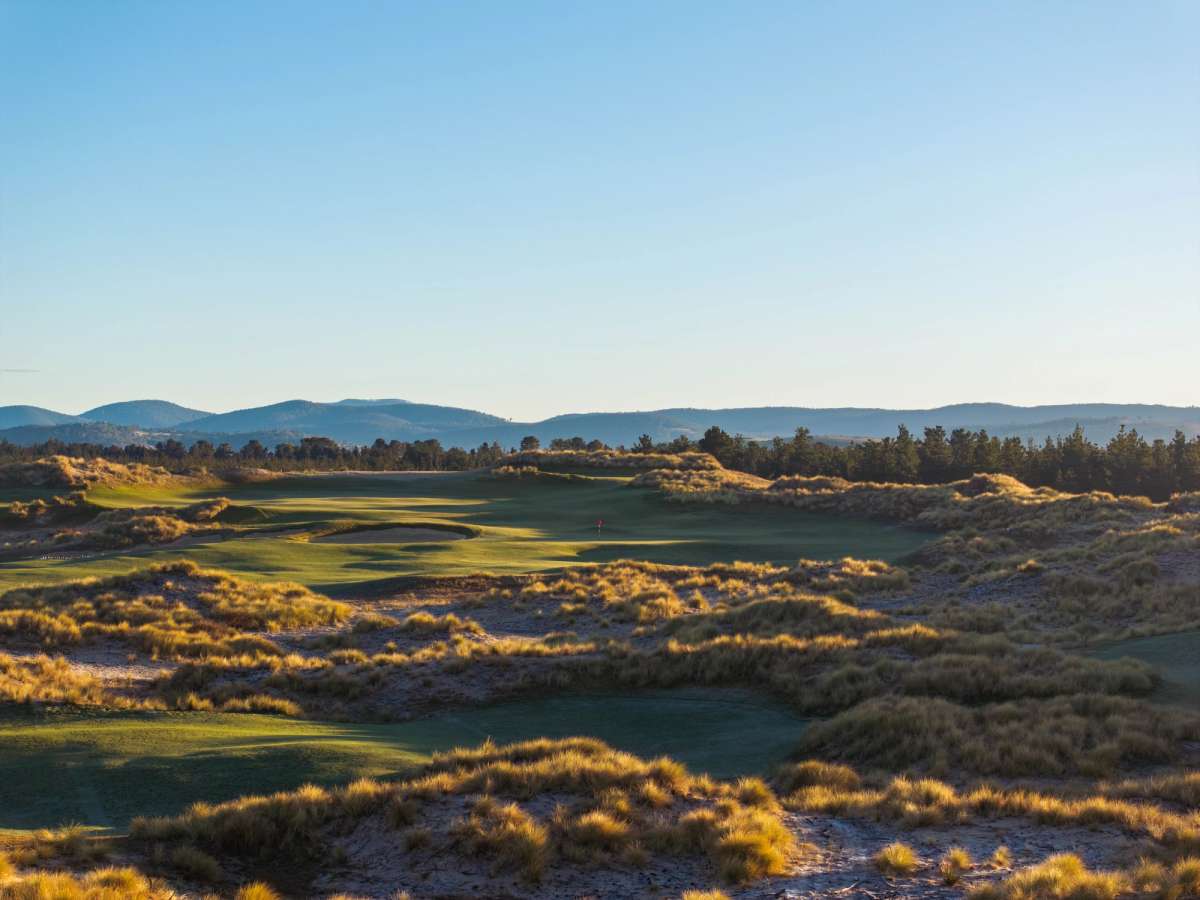
Australia has earned its reputation as one of the world's great golf destinations, with courses that rival anything found in Scotland, Ireland, or the United States. From the legendary sandbelt layouts of Melbourne to the windswept links of Tasmania, the country offers an extraordinary diversity of world-class golf experiences. The latest Top 100 rankings showcase not just the elite courses that golfers travel halfway around the globe to play, but the remarkable depth of quality that extends well beyond the marquee names. This year's rankings reflect a comprehensive reassessment by a new panel featuring significantly expanded global voices with deep play experience across Australia's finest layouts. With 41 courses climbing and only six maintaining their positions, these rankings capture the dynamic state of Australian golf as it continues to evolve. Six Australian courses now occupy positions in the World Top 100, cementing the nation's status alongside the game's most celebrated golfing regions. 2025/26 Rankings: Consistency Meets Change 🏆 The top of Australian golf tells a story of enduring excellence. Royal Melbourne (West), Kingston Heath, Barnbougle (Dunes), and Cape Wickham have occupied the first four positions since 2012—a remarkable 13-year run that speaks to their timeless quality. These aren't courses that rely on gimmicks or resort amenities; they're pure golf experiences that have stood the test of time and the scrutiny of thousands of discerning players. ⭐ The biggest news arrives at number 10, where Seven Mile Beach makes an immediate impact as the highest new entry. The Clayton DeVries & Pont design, which opened at the end of 2025 near Hobart, joins three Barnbougle layouts in Tasmania's Top 10. This marks the first time since 2017 that a new course has broken into the Top 10, underlining the significance of this links masterpiece. 🌏 Beyond the Top 100 featured here, Australia boasts nearly 200 additional courses ranked across state and territory listings, demonstrating a depth of quality that few nations can match. 2025/26 Top 100 At A Glance The Unchanged Elite (All World-Ranked) 🌍 The top six positions remain exactly as they were in 2024, with all six courses also holding positions in the World Top 100: Royal Melbourne (West) - Victoria (World #6) Kingston Heath - Victoria (World #17) Barnbougle (Dunes) - Tasmania (World #25) Cape Wickham - Tasmania (World #47) New South Wales GC - New South Wales (World #68) St. Andrews Beach - Victoria (World #89) The Game-Changer 🎯 #10 Seven Mile Beach - Tasmania (NEW ENTRY) The Rising Stars ⬆️ Exceptional Climbers (15+ places): 🥇 RACV Healesville #43 (▲32 from #75) - Victoria 🥈 Narooma #70 (▲24 from #94) - New South Wales 🥉 Rosebud (North) #75 (▲22 from #97) - Victoria Royal Sydney #28 (▲18 from #46) - New South Wales Tasmania #68 (▲16 from #84) - Tasmania Major Climbers (10-14 places): Cypress Lakes #74 (▲12) - New South Wales Federal #87 (▲11) - Australian Capital Territory Curlewis #60 (▲10) - Victoria Amstel (Ranfurlie) #77 (▲10) - Victoria Strong Climbers (6-9 places): Commonwealth #19 (▲9) - Victoria Port Fairy #35 (▲8) - Victoria Portsea #36 (▲8) - Victoria Elanora #47 (▲8) - New South Wales St. Michael's #69 (▲8) - New South Wales 13th Beach (Beach) #23 (▲6) - Victoria New Entries 🆕 Murray Downs #84 - New South Wales The Heritage (St. John) #89 - Victoria Yarrawonga (Murray) #90 - New South Wales Noosa Springs #97 - Queensland View Complete Rankings 🔗 For the full Top 100 Australian golf courses with detailed information, visit the Australian rankings page. State and Territory Rankings: 🏛️ Australian Capital Territory 🌊 New South Wales 🌏 Northern Territory ☀️ Queensland 🍷 South Australia 🌲 Tasmania 🏙️ Victoria 🦘 Western Australia Best Golf Courses by State and Territory 🏙️ Victoria Dominates (40 courses, 40%) Victoria claims 40 of the 100 ranked courses, with the Melbourne sandbelt accounting for much of this concentration. The world's densest collection of championship courses sits within a 20-kilometre radius of central Melbourne. Five of Australia's top ten courses call Victoria home, including Royal Melbourne's twin masterpieces, Kingston Heath, Victoria, and St. Andrews Beach. 🌊 New South Wales (22 courses, 22%) Led by New South Wales Golf Club at Botany Bay at number five, the state's strength extends from Sydney's premium courses through exceptional coastal layouts along the south coast. Royal Sydney's remarkable 18-place climb to #28 demonstrates renewed appreciation for Gil Hanse’ new design. 🌲 Tasmania (7 courses, 7%) Tasmania punches well above its weight with seven courses, including four in the Top 10. This island state has evolved from regional player to world-class destination, with Barnbougle Resort's three layouts and Seven Mile Beach leading the charge. ☀️ Queensland (12 courses, 12%) Royal Queensland leads at #33, with the state offering strong resort golf experiences across tropical locations from the Gold Coast to the Whitsundays. 🦘 Western Australia (10 courses, 10%) Lake Karrinyup leads at #26, with Perth's courses offering quality golf in a region that sees fewer international visitors but rewards those who make the journey. 🍷 South Australia (7 courses, 7%) Royal Adelaide at #12 anchors the state's golf scene, with strong depth across Adelaide's parkland courses and coastal layouts on the Fleurieu Peninsula. 🏛️ Australian Capital Territory (2 courses, 2%) Royal Canberra at #27 and Federal at #87 (up 11 places) represent the nation's capital with distinction. What the Rankings Tell Us 🏆 Consistency at the Summit: Thirteen Years of Excellence The top four positions have remained unchanged: Royal Melbourne (West), Kingston Heath, Barnbougle (Dunes), and Cape Wickham. Royal Melbourne has held the number one position since the first Australian rankings were compiled in 2007, an 18-year reign that reflects its status as one of the world's truly great courses. 🌟 Melbourne Sandbelt: The World's Premier Golfing Precinct Five of the top 12 Australian courses reside in Melbourne's sandbelt, and 12 of the top 20 call Victoria home. This concentration of excellence within such a compact geographic area remains unique in world golf. Royal Melbourne's twin courses occupy positions one and nine, while Kingston Heath, Victoria, Peninsula Kingswood (x2), Metropolitan and Woodlands all rank in the top 20. Commonwealth's nine-place jump to #19 following the Doak /Slawnik renovation adds another strong voice to this remarkable chorus. 🌲 Tasmania's Emergence as World-Class Destination Tasmania now hosts four courses in the Top 10—a remarkable achievement for an island state with a population of just over 500,000. Barnbougle Resort's three layouts (Dunes #3, Lost Farm #7, Bougle Run #61) created the initial momentum. Seven Mile Beach's arrival at #10 confirms this isn't a one-off phenomenon but a sustained elevation to world-class status. The Clayton DeVries & Pont design at Seven Mile Beach fulfils the promise made in the 2021 rankings article, which predicted a major impact upon opening. Set among coastal dunes near Hobart, the course offers genuine links golf with views across Storm Bay. The routing makes brilliant use of dramatic duneland, with fairways that tumble through valleys and greens perched on plateaus. King Island, situated in Bass Strait between Tasmania and Victoria, hosts both Cape Wickham at #4 and Ocean Dunes at #32. Both courses remain firmly in the Top 50, confirming the island's status as a must-visit destination for serious golfers. Ocean Dunes fell steeply due to conditioning issues that detrimentally affected play. A Journey Through Australian Golf: 2012-2024 📅 2012: The First Top 100 Expansion The 2012 rankings marked the expansion from a Top 50 to Top 100, with Barnbougle Lost Farm hurtling in at an astonishing #5. This 20-hole links on Tasmania's northeast coast signalled the beginning of Tasmania's transformation. Twelve new courses entered, including Healesville at #35 and Hamilton Island at #41. St Andrews Beach climbed 13 places to #13. 📅 2014: Consolidation and Refinement Just six new entries made 2014 the most selective update. Stonecutters Ridge debuted at #64 as Sydney's first Greg Norman course, while Kalgoorlie Golf Course entered at #73. Bonnie Doon returned at #80 during its Clayton/Ogilvy redesign. 📅 2017: The King Island Revolution Cape Wickham's debut at #8 represented the second course to break into the Top 10 since rankings began. The Mike DeVries and Darius Oliver collaboration immediately established itself as one of Australia's premier designs. Ocean Dunes ranked at #35, giving King Island two nationally recognised courses. Royal Canberra rose 21 to #29, and Bonnie Doon climbed 31 to #49 following OCCM renovations. 📅 2019: Tom Doak's Impact Emerges Cape Wickham continued its ascent to #5, while Royal Adelaide returned to the Top 10 at #9 following Tom Doak's restoration. Cathedral Lodge debuted at #14, Peninsula Kingswood (South) entered at #36, and Ocean Dunes surged 13 spots to #22. The top three positions remained unchanged, establishing what would become a 13-year pattern of consistency. 📅 2021: Peninsula Kingswood's Breakthrough Peninsula Kingswood's North course soared 14 places to #10, and South climbed 12 to #24. The National's Gunnamatta course made the biggest jump, up 29 positions to #12 following Tom Doak's overhaul. Pipeline projects at Seven Mile Beach and Arm End in Tasmania were announced, with predictions that both would "have a big impact on future rankings." 📅 2024: Fresh Panel Assessment The top three maintained their familiar order. Barnbougle Lost Farm rose two to #5, Peninsula Kingswood (North) climbed two to #8, and Lonsdale Links debuted at #34. Yarra Yarra rose five to #26 as Doak's restoration gained recognition. The 2024 article noted Seven Mile Beach was "due to open at the end of this year"—a prediction now confirmed with the course arriving at #10. Looking Ahead 🔮 Seven Mile Beach's immediate Top 10 arrival demonstrates that Australian golf continues to produce courses capable of competing at the highest level. The Clayton DeVries & Pont design sets a new benchmark for modern Australian course development. As the course matures and more panellists experience it, further upward movement seems likely. The long-awaited Arm End project in Tasmania remains in development, with OCM promising to add another distinctive layout to Tasmania's growing reputation. The project's multi-use public recreation reserve concept offers a potentially new model for sustainable course development. Darius Oliver's clifftop project on Kangaroo Island in South Australia continues to progress. Oliver's track record with Cape Wickham and Ocean Dunes suggests this project could eventually rival those courses. The target completion date of late 2025 or early 2026 means the next ranking revision could see Kangaroo Island join King Island as a remote island hosting world-class golf. Beyond new construction, ongoing restoration and renovation work at established courses will continue to influence rankings. Tom Doak's multi-phase restoration at Yarra Yarra shows positive momentum, while numerous sandbelt courses pursue sympathetic enhancement projects. The collective impact of these efforts should elevate the overall standard of Australian golf. For the complete Top 100 Australian golf courses rankings with detailed course information and world rankings, visit the Australian rankings page.
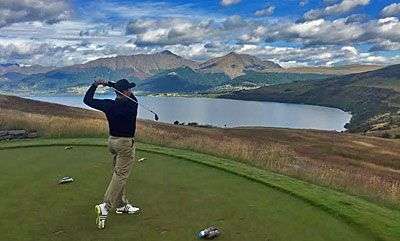
Fergal O’Leary returns to the land down under A return journey to the Sandbelt highlights just how fortunate our Aussie friends are to have so many world-class golf courses in such close proximity. With various reciprocal relationships among the clubs, it promotes the opportunity to enjoy them all. With the rise of golf in Tasmania and on King Island, golf in Australia is arguably the hottest destination on the planet these days. After fifteen hours in the air, I was staring out the cabin window hoping our landing pattern would take us over the Sandbelt allowing my Google Earth research to come to life. Royal Melbourne (West) continues to be number one in the Australian rankings. This is due to the fabulous piece of land the holes sit on, but more so the genius of the green complexes. It certainly feels like the golfing cathedral of the southern hemisphere, armed with the ability to break a man’s heart as he begs for more. The course continually asks for heroic approach shots judged to perfection, or face almost impossible ups and downs to save par. It’s Australia’s toughest examination of your skill set. With that said, I developed a deeper love for Kingston Heath on this trip and was fortunate to play it on three occasions with various Pennant (interclub team scratch match play competition) level members. Although on a flatter piece of land, the strategy for ball placement is truly paramount in order to get the best angle into the greens. MacKenzie continually asks golfers to hit the ball as close to hazards/bunkers/doglegs as possible. Of all the golf courses in the Sandbelt, I would hands-down choose to play Kingston Heath the most. The simplicity of its creation married with the genius of the strategy to negotiate each hole, offers up what I consider to be the greatest course in Melbourne. No matter which way the wind blows, no two rounds are the same and this old lady deservedly wears a crown. While the back nine at Victoria Golf Club has possibly the greatest collection of holes in the Sandbelt, it is sometimes let down by conditioning, especially on the greens. Victoria was my favourite course on my last trip to the Sandbelt and I jumped at the opportunity to play it again. Some people knock it due to its back-to-back par five conclusion to each nine and the fact that three of the four par threes play uphill. Having played the course multiple times myself to establish my own independent perspective, you see something new every time. Admittedly, I did find that the 18th hole downwind is not an exciting or stimulating finishing hole. Furthermore, I continue to personally dislike the design of the greenside bunker on number 12, it’s very “un-Sandbelt like” and out of character with the rest of the bunkers on the property. I will forever absolutely love the course and the clubhouse accommodation experience, and it’s only after playing it multiple times that you appreciate different aspects. The large strategic MacKenzie bunkering, mouth-watering rolling topography and impressive raised greensites continue to keep Victoria in the upper echelon of Sandbelt golf. Given the proximity of Royal Melbourne (West) to Victoria, if God ever combined the back nine at Victoria with the main paddock of Royal Melbourne, there wouldn’t be a better golf course known to man. From a development perspective, the mouth-watering renovations at Peninsula Kingswood (in the Sandbelt) being undertaken by Michael Clayton and the construction of Cathedral Lodge Golf Club by Greg Norman, two hours north of the city, are just more reasons to get excited about world-class golf in Melbourne. I took a tour of Cathedral Lodge, and it looks like Ellerston has a rival. The Barnbougle resort on mainland Tasmania proves that man will literally go to the end of the earth to find sand dunes worthy of championship golf. The popularity of the resort among both domestic and international golfers is certainly on the rise, especially with both Barnbougle Dunes and Barnbougle Lost Farm ranked comfortably in the Top 100 Golf Courses in the World. The onsite accommodation and an increasing number of airlines making the journey is a great foundation for an enjoyable golf trip. Then came King Island, also governed under Tasmania. A forty-minute flight from Melbourne across the Bass Strait introduces us to two more world-class golf courses. Like we needed another reason to travel to the bottom of the earth! All 18 holes at Ocean Dunes were completed in June 2016. This coastal masterpiece was built by Graeme Grant, who has a decorated CV, including being head greenkeeper at Kingston Heath for 16 years. I had the pleasure of Graeme’s company for the trip – so his in-depth personal insights were wonderful. Land down along the west coast of King Island is rugged, and the opening stretch of Ocean Dunes brings you straight out into the rocky action with ocean-pounding backdrops. There is no delay in exposing golfers to the magnificent violent coastline with dramatic changes in elevation, heroic carries over water and danger in all directions. The turf has a lot of maturing to do, and many dollars are needed to support the conditioning of the course. Given the land they had to deal with, and the rock that needed to be moved, this course was considerably more difficult to build than Cape Wickham. A tremendous amount has already been written about the glory of the golf course, but I focused heavily on the skill it took to merely construct the layout. Graeme lived onsite for three years, having to deal with extreme winds and brutal conditions. Fairways had to be planted multiple times, sacrifices had to be made in certain parts of the property. But I am of the opinion that Ocean Dunes certainly holds its weight architecturally with its neighbour up the coastline. The infinity greens and fabulous short par fours were a delight to play. As with any dramatic coastal golf course, the holes along the water typically get all the attention. Admittedly, many of my favourite holes at Ocean Dunes were not immediately on the water. For example, the short uphill par four 13th hole plays up an enormous dune to a tiny infinity Biarritz style green. Its beauty will be etched in my memory forever. I had the benefit of getting a tour of the course from the air before we landed, and was fascinated with the contours of the land. It always helps when the pilot of a small airplane is a keen golfer. Walking the course, you can see how Graeme found breath-taking green sites, which include a Biarritz, a large punchbowl, a short over water and a boomerang. It was disappointing that the final couple of holes don’t bring you back to the ocean for a vivid climax – instead you finish in an amphitheatre of dunes. It doesn’t require rocket science to work out from where they got the club name. It was clear that they had already used as much of the coastal land as they owned. The largest and most immediate challenge for Ocean Dunes is funding. The course doesn’t yet have a clubhouse or onsite accommodation. Another current logistical challenge for the entire island is that the airport does not (yet) have refuelling capabilities for aircraft. Ocean Dunes club purchased a hotel in the nearby town of Currie, which I stayed at and thoroughly enjoyed. The Ocean Dunes ownership has a big challenge regarding onsite accommodations in order to stay above water financially. Furthermore, the current green keeping staff are poorly trained and not taking care of a number of the greens and tee boxes, especially those along the coast. Drainage issues have also impacted spots on certain fairways that have not been fixed properly. Filling in patchy areas with sand is not the agronomic solution. However, the bones of this layout are glorious and with investment to help with conditioning, the sky is the limit for this infant course. The property at Cape Wickham was the number one choice on King Island for golf developers. Mike deVries, with input from Darius Oliver, serve golfers from the same menu by launching into the dramatic coastal holes. The fairways are generous and the fun is endless. Play it on a typical windy day and you’ll certainly have your hands full. On both nines, there are holes with forced carries off the tee, which won’t suit every level of player as this makes a number of holes unplayable due to the strong winds. This was my main issue with the course. The course and coastline are so beautiful, that you need to play here multiple times just so you can concentrate on the architecture. After the mind-blowing opening stretch, the course begins to move inland with plenty of raised greens and wonderful contours. Cape Wickham will overload your imagination like nowhere else, as it’s a guessing game as to how the ball will react once it lands. Holes 9 through 12 are the best stretch, despite how good the opening introductory holes are. The 9th is a double-dogleg par five to a perched green, the 10th is straight downhill to an ocean-side green, 11th is a mind-blowing par three playing over the rugged coastline and the 12th is a short cape hole that wraps along a cliff-edge to an exposed green. You have to see it to believe it. I travel the world to see golf like this. The 13th is an inland par five that actually brings you back to the clubhouse, before you migrate to the other side of the property next to the iconic lighthouse. The view from the 14th tee highlighted a difference in my mind between Cape Wickham and Ocean Dunes. Many of the holes at Cape Wickham were sitting on the land and could be visualized a little easier. The cambered fairways, the greensites and even the positioning of the tee-boxes are all there for the taking. Ocean Dunes, I felt, was a much more difficult project. Cape Wickham certainly has a cracking closing stretch with one epic hole after the next. The par four 16th is a fabulous short hole touching the water’s edge and gives you glimpse of the final two holes ahead of you. The 17th is a downhill glorious par three, giving players plenty of tee-boxes to choose from. The waves crashing into the shoreline just add to the excitement. The tee-shot on 18th across the body of water to a diagonal fairway will be on every postcard home. It’s truly a roller coaster golf course that offers more fun than you could ever expect. The course also has the benefit of superior conditioning and beautiful playing surfaces thanks to the owner's solid financial structure. Overall, I rate Cape Wickham higher than Ocean Dunes, but only by a whisker. The golfing public need to give Ocean Dunes a chance to mature and appreciate how impressive the layout is. I just hope you like small airplanes and don’t mind being asked how much you weigh boarding an aircraft. Yes, that’s the joy of King Island Airlines. Heading North up the eastern coastline, golf in the Sydney area doesn’t have the same level of attraction as that of Melbourne or Tasmania. I did play The Australian Golf Club and made a welcome return journey to New South Wales Golf Club. The Australian is a prestigious club with a pleasant golf course. Water comes into play on at least nine holes, but it’s still an easy walk on a relativity tame piece of land with little to no traces of Alister MacKenzie’s original design. We all know that Jack got his hands on this place 30+ years ago and the writing was on the wall from then on. I can’t imagine rushing back from an architecture perspective, but for general member play or if looking for a good game while in the area, it’s certainly a great day out. One peculiarity I’ll mention was that none of the ladies’ apparel in the pro-shop has the club logo, as apparently the lady members don’t like the logo on their clothes. Make sure your wife knows this in advance. New South Wales Golf Club is so good that even members of the Sandbelt courses give it praise. While discussing various Australian cities and giving compliments to somewhere other than your hometown, I laughed when one of my Melbourne mates said, “it’s just not the done thing, it’s like going to Sydney and admitting that you liked it”. The routing at New South Wales is jaw dropping, and MacKenzie certainly took advantage of the La Perouse coastline. Much has been written regarding the downhill approach shot into the par five 5th hole and with good reason, because it is among the top 20 long holes in golf. Heartbreakingly, I learned that the public walkways between the 5th and 6th holes are forcing the relocation of the world famous par three 6th green, which will move 30 metres away from the position it has occupied for the past 90 years. The greensite is now deemed a health and safety risk to the public. The clubhouse has explanations of the legal situation pinned up on the walls, accompanied by drawings of the proposed new tee box and green locations. This is very sad in my humble opinion, but unfortunately craziness like this is too common in today’s world. Little do the protestors realise what they are doing to one of the most photographed par threes in Australia. I still maintain that holes 11 to 17 at New South Wales are the toughest closing holes of any back-nine you’ll play in Australia. The last hole is a bit pedestrian, but with additional bunkers, the hole is much more commendable than in the past. It would be fantastic if more professional events were played at NSW, rather than insisting we watch Royal Sydney or the Lakes on TV late at night! I just hope that the character of the 6th hole will be maintained and the dramatic tee shot from that rugged piece of exposed rock will continue to win the hearts of golfers from all over the world. Moving east across the Tasman Sea lands you on the North Island of gorgeous New Zealand. The most celebrated architects of today’s golfing world do not let distance hold them back from creating a masterpiece on a fitting piece of land. In the past ten years, we’ve seen the introduction of Cape Kidnappers and Kauri Cliffs, and with the addition of the spectacular Tara Iti, two hours north of Auckland, the talents of Tom Doak have no end in sight. With the backing of financial powerhouse, Ric Kayne, Tara Iti Golf Club has burst onto the golfing map with emphatic fanfare and exclusivity. The history behind where the club got its name from is intriguing. The New Zealand fairy tern, also known as the Tara-Iti in Maori native language, is a small tern which breeds on the lower half of the Northland Peninsula of the North Island. It is the smallest tern breeding in New Zealand and is a subspecies of the fairy tern. There are only forty fairy terns left in existence and they are all based at the far end of the golf property. The golf club has dedicated its name and logo to this rare bird. The land on which the golf course is routed was once a dense forest along the Te Arai coastline and the trees were growing over magnificent sand dunes. The most difficult aspect during construction was the removal of tens of thousands of tree stumps. The result was a wide expansive area of sand perfect for golf. Ric Kayne commissioned Tom Doak to create the layout, which is fun for all levels of golfer. The visuals throughout the course in all directions are those of large sprawling sand areas, often negatively affected by the strength of the gusty winds. There are rippling contours with humps and bumps to ensure you have a wonderful walk. My main gripe with the layout is that the visuals throughout the course get repetitive, leading to a lack of approach shot variety. Despite the visual intimidation and deception, it’s almost impossible to lose a ball which helps with pace of play. The ‘ground-game’ is paramount at Tara Iti as you continually use the rolling tumbling topography to navigate your ball towards the flagstick – it reminds you of The Old Course. The coastal scenery is without doubt spectacular, but the real prize is the genius of Tom Doak and his use of the land. This is a very private club with the routing permitting a view of the ocean on all 18 holes, as it meanders through natural dunes. It’s a true seaside golf experience with fescue grass from tee to green, and although there is sand as far as the eye can see, there are no official bunkers. An important note is how playable it is for all levels, which is a major plus in my book. My wife, a beginner, said it was the most enjoyment she’s ever had on a course. The layout is all about having fun, playing quirky imaginative shots and enjoying this private retreat. Highlights for me include the short par fours at the 4th and 7th holes which test the limits of your course management, and also the remarkable 11th and 12th holes, which run parallel to each other – Doak has christened them as his “Par 9”. The 11th is a par five and the 12th is a par four, however depending on the direction of the wind, the par of the holes will flip. The overall expectation is that nine strokes will be taken on these two holes on any given day. Rumour has it that Doak has wanted to implement this design for a long time. It reminded me of his unique concept at The Loop. Additionally, I did cherish the par threes at #15 and #17 that hug the coastline and emphasize Doak’s skill to find incredible greensites – the course shaping team were the best that money can buy. Everything at Tara Iti is world class – including the course conditioning, the accommodations, the chef, the hospitality and certainly the handpicked members. In addition to the golf on King Island, this Oceania region of the world now has a third candidate that will surge into the Top 100 world rankings. While the North Island has by far the superior golf, the South Island gifts us with a snow-capped mountainous landscape of Hollywood proportions. Sitting at the base of Queenstown mountain range known as “The Remarkables”, the South Island showcases some commendable golf courses too. Jack’s Point, designed by John Darby, will be the most awe-inspiring course you’ll ever play. People will look at photographs and think it’s fake, but it’s really that perfect. You’re essentially playing golf in a Lord of the Rings movie set. Your head will be on a swivel looking at the enormous mountains that tower over you and Lake Wakatipu. It’s arguably the most sensational, almost surreal, setting for a golf course. Thankfully the layout is pretty good too! Along with dinner at ‘Fergburger’, Jack’s Point must be on every golfer’s wish list while visiting bustling Queenstown. The jewel in the South Island’s crown from a golfing perspective is Arrowtown Golf Club. It’s a short bundle of fun that flies under the radar of its more famous neighbours: The Hills and Millbrook Resort. After Tara Iti and Paraparaumu Beach, I confidently hold Arrowtown in my top 3 favourite courses to play in New Zealand. Despite its short length, the tight fairways and seemingly unbelievable landing areas, this mountainous terrain will get your heart racing. It’s the type of golf course where you’d love to learn the game and can’t wait to step back onto the 1st tee. Article and photos by Fergal O’Leary
Fergal’s adventure to the Melbourne Sandbelt Fergal inches closer to completing the Top 100 Golf Courses of the World It’s an indisputable fact that, for those golfers who are determined to play the greatest courses on earth, a trip to the legendary Melbourne Sandbelt is a necessity. Years of preparation was bearing fruit as I made my way to the bottom of the planet seeking out these globally acclaimed clubs. Nothing gets the blood flowing like an aerial view of the tightly knit Sandbelt gems as you land into Tullamarine airport on a clear day. After two weeks of golfing, and many in-depth discussions with club members, here is a summary, in no particular order, of key observations which I made on my journey: 1. The continual evolution of housing around the Sandbelt courses has forced certain clubs to re-route holes away from boundary lines which has been to the detriment of many configurations. 2. Alister MacKenzie gets a lot of credit for work actually done by other virtually unheralded people (eg: Morcom, Soutar, Meader, Damman). The glory of MacKenzie’s mastermind is absolutely undeniable, but it’s important to appreciate and congratulate the lesser-known names. 3. In recent years, architects have been hired, architects have been fired, and then more architects have been hired to fix previous modifications. 4. Frequently heard comments related to the dramatic bunkering around many of the iconic par 3s, such as, “they wouldn’t get away with that if designed today”. 5. A number of the clubs have a 19th hole whereby they rotate their usage of certain par three holes and make use of the additional hole on the property to give greens a break. 6. The location of a few Sandbelt clubs today is not the same location as where the clubs first started out. The increasing need for more land forced clubs to re-locate. 7. Almost all of the clubhouses and locker rooms, with the exception of Victoria, have gone through recent renovations and redesigns. 8. Red Gum trees in bloom are a beautiful thing. 9. There’s certainly a sense of ‘tiering’ among the Sandbelt courses, which is a frequent discussion point among honourable gentlemen. 10. At one stage in recent years, Royal Melbourne, Kingston Heath, Victoria, Huntingdale, Commonwealth and Metropolitan were all ranked in the Top 100 in the World, which is a testament to the quality of the golf in this precious area. 11. The most important thing to do after you play each hole in the Sandbelt is to look backwards. The holes are as exciting to look at backwards as they are to play forwards. Some of the most exciting photographs and educational learnings of Golden Age architecture will come from taking a moment to reflect back upon the celebrated fairways and features that will outlast us all. Kingston Heath Kingston Heath was originally formed as the Elsternwick Golf Club in 1909, and was located at present day Elsternwick Park, before relocating to its present location in Heatherton in 1925 and renaming the club as Kingston Heath. Dan Soutar is the gentleman who created the current routing which appears relatively flat, however the gentle flow of the land presents the golfer with six or seven blind tee shots (and even the infamous blind approach to the par four 17th hole) where the green is not visible. The gentle rise and fall of the property is evident from the 1st tee shot. As noted previously, Alister MacKenzie was consulted on improving the bunkering, and went one step further in his ingenious transformation of the 15th hole from a par four shortened to a far superior par three on top of a hill, which is arguably the signature hole of this masterpiece. This fabled layout has some very noticeable characteristics and trademark features. The iconic Sandbelt bunkering offers enormous sand traps perfectly placed to fuel the need for strategic placement. If you study the best angle to approach the par fours and par fives at Kingston Heath, you’ll see that Soutar and MacKenzie positioned the fairway bunkers in the ideal position from where the golfer wants to approach the greens. There lies the genius and the corresponding challenge – hit your tee shots as close to the fairway bunkers as possible in order to have the optimal angle into the greens. Push a tee shot or take a more conservative route from the tee and you’ll frequently fall victim to a daunting approach shot over a sea of sand with smaller landing areas. The mastermind continues by the frequent demonstration that length is not needed to increase the examination of your game. Due to the intimidating and overwhelming bunker complexes, hitting these greens in regulation is as sweet as apple pie. The 16th hole is the index 1 and mightily deserves this title. After the long walk down the hill from the 15th green (note: the original 15th green was close to the 16th tee prior to MacKenzie shortening it to a par three), the blind drive on the 16th hole tumbles into a dogleg left to right that swoops around the corner to a well-protected green, and consummates the essence of how Kingston Heath examines your skills. The course is located next to Moorabbin airport, which is the most active airport in Australia and will have propeller engines ringing in your ears all day. Enjoyable aspects of the club are the significantly improved practice ground, the fun 6-hole loop that brings you back to the clubhouse and the preservation of the original lockers in the Ikea influenced men’s changing room. My favourite feature of Kingston Heath is the angles that it creates and the subtle movements that can turn a smile upside down in the blink of an eye. Kingston Heath gets its well-deserved high ranking due to superior design variety with short and long par fours and a wonderful collection of globally celebrated par threes (although a lot more should have been done to the 19th hole as opposed to creating useless bunkers half way up the hole). The most memorable and photographed holes are the epic short par four 3rd hole, and the iconic par three 10th and 15th holes. Despite all three par fives going in the same direction, this does not at all take away from the enjoyment of the round. Kingston Heath is living proof that the second shot on a par five is not the most boring shot in golf. The par five 14th hole may have the most strategic second shot on any par five I’ve ever played. The enormous MacKenzie bunker complex that wrestles the land between the 14th and 15th holes will strangle your attention and guards the high point in the land that blocks your view of the green. Precision is your only option – which is a common theme at “The Heath”. Overall, this property is a sanctuary for studying a classic layout that is regarded as the best course in the country. Metropolitan Having recently hosted the Australian Masters, I had the good fortune of seeing the golf course on television a few weeks before my departure to whet my already golf starved appetite. When people think of Metropolitan, the focus is on the world-class conditioning of the entire property. This reputation for wonderful playing surfaces is supported by a healthy green-keeping budget and a well-educated team. Without doubt, the most memorable feature of the entire course is the greatest designed bunkers on the Sandbelt. Although you’ll probably spend most of your Sandbelt vacation taking pictures of the bunkers, the traps at Metropolitan are in a league of their own. They are cut directly into the greens like razors, and are deep, bare and have no sympathy for anyone. You’re either on the green or you’re not. Period. Attention to detail and conditioning at “Metro” is second to none, I even heard that some of the green-side bunkers have their edges hand-cut with a scissors! To help you visualize the bunkers, imagine a set of waves about to crash onto the shore. Imagine the waves as they rise to a crescendo, take their last breath and fight for position before unleashing their power. Fortunately, the greens are very large, which is an act of fairness given the brutality of the bunkers that ravenously hunt your golf ball. Most of the holes have some movement and offer very firm and bouncy playing conditions. Among a collection of world-class holes, my favourite hole was the par five 6th hole which moves uphill from left to right and possibly has the most interesting green on the Sandbelt. Wonderful contours swim their way between the hostile bunkers and add to the best stretch of the course. Metro is regarded as a “tier 1” course and I support the motion. Royal Melbourne (West) When Alister MacKenzie visited the Sandbelt in 1926, his primary focus was the creation of the West course and he left us with can only be described as the Cathedral of Australian golf. The holes on the main paddock (and the vast majority of Victoria Golf Club next door) reside upon mouth-watering changes in topography as the holes move effortlessly around the rolling land. All holes on the main paddock have a change in elevation or significant movement. Furthermore you can’t see the greens while standing on the 2nd, 3rd, 4th, 6th, 9th, 11th, 12th, 17th and 18th tee boxes (all on the main paddock). To say that MacKenzie implemented his expertise with camouflage and his infamous 13 general principles of architecture is an understatement. There is little walking between greens and tees and the course is laid out for all levels of golfer to thoroughly enjoy. The opener is a relatively straightforward hole to get the round moving away from the clubhouse, followed by a par five which turns right away and brings you back up the hill. For me, the real genius (and possible the toughest shot on all 36 holes at the club) is the approach shot into the short par four 3rd hole. The green tilts strongly from front to back and left to right, and even with a well-placed tee shot up the right side of the sloping fairway, your next shot is one that requires great care. Precision and strategy is what elevates this old lady towards the top of the world rankings. Clearing the elevated bunker complex from the tee on the 4th hole offers the first real exposure to how the fairways on the West course swoop from one direction to another. It’s another “wow” moment on the front nine making your way over the hill on the 4th fairway and seeing what your next shot will look like. So many holes on this course are iconic, well documented and globally recognizable. The par three 5th hole is at the top of this list. Anywhere from 120 to 160 meters in length, the eye-opening bunkers on either side of the false-front green will make club selection a well-thought out process. God forbid if the wind is blowing. The epic nature of the front nine continues to stimulate on the par four 6th hole. A downhill enticing tee shot moving left to right offers golfers the luring opportunity to cut the well-protected corner. The approach shot to the 6th will fuel your fire as you turn the bend and gaze up at an intimidating green which almost feels like it’s laughing at the thought of your ball resting on its surface. The uphill approach into the treacherous 9th green rounds out an outstanding opening stretch. The back nine starts with a short uphill par four with probably the most recognisable bunker in the Sandbelt. It’s so large and so long that it climbs up the hill and covers your view of the green. The obvious play is to stay to the right and leave yourself with a wedge into the green, but golf isn’t always that easy when you have a bunker wanting to swallow you up. The 11th hole is index 1 and swoops from right to left uphill to a green that runs from back to front. It’s the beginning of Royal Melbourne’s Amen corner (11, 12, 17, and 18) on the main paddock. The dramatic swooping doglegs on the front side continue magnificently on the back nine, with the 11th and 12th holes. The entire course is not on the same paddock. The 13th to 16th holes require golfers to leave the paddock, cross a street and play on a piece of flat land that looks and feels different. None of these holes are on the composite layout (note: the configuration of the composite course has changed at least six times since it was first used). The 13th is a well-bunkered par three, the 14th is a short par four with a turtle back green offering the only memorable feature, the 15th is a very reachable par five with an attractive bunker complex at the green. The 16th is a bear of a par three and by far the longest par three on the course at 230 yards. The huge bunkers are spread out in all directions making the putting surface look like a needle in a haystack. Both the 17th and 18th offer blind tee shots and play downhill to the respective green-sites. Club selection on the 18th hole is significantly influenced by the wind direction, and I can confirm that hitting this shot downwind is more difficult to keep your ball on the fairway as it tumbles downhill towards boundary lines. I was fortunate to play the West course a few times on my trip and I appreciated new aspects and nuances each time I played it. It’s a never-ending education. These greens only accept precisely struck irons as the false fronts, run offs and firm conditions are too severe. Time has no meaning when your eyes are filled with the genius that lies before you. It’s a place of pilgrimage for golfers of all abilities and undeniably a course that you should try to play before you look down from heaven. The holes are as fascinating to look at as they are to play. It’s been said that, over the past 90 years, modern course architects have not been able to make another Royal Melbourne – which is a testament to its unparalleled quality decades after its sacred creation. Royal Melbourne (East) Alex Russell leveraged the philosophies of Alister MacKenzie’s West course during the creation of the East course. Holes 1-4 and 16-18 are part of the composite course and by far the best holes – unsurprisingly, these holes are all on the main paddock. The rolling terrain of the opening stretch was superb, especially looking uphill to the 2nd green that makes you say “wow” over and over again, downhill to the 3rd green and up again to the long par three 4th hole. Right from the start, you’re dealing with doglegs and elevation changes that test your club selection from the tee and making sure you’re playing into the optimal spot for the approach. You cross the road multiple times between the 5th and 16th holes. I felt that crossing the road broke the flow and you lose the sense of continuity. It made it feel like the 18 holes were on 3 different isolated and independent pieces of land. Victoria Situated next to the vast Royal Melbourne Golf Club property, Victoria is another example of a world-class course with forgotten heroes (William Meader and Oscar Damman) who laid out the outstanding current routing. MacKenzie was consulted on the bunker complexes and few of the greens during his 1926 visit to the Sandbelt. The course opens with a short impressively bunkered par four which is reachable downwind with a 4 iron, followed by two par fours which play in the same direction along the boundary line and are awfully similar in length and look to each other. The tame nature of the opening three holes fortunately improves with a number of very demanding par threes with raised greens and outstanding bunker complexes with the front nine finishing with back to back lengthy par fives that rumble and tumble across the land. If somebody told me that the back nine at Victoria would be the most impressive nine holes I would play in Melbourne, I’m not sure I would have believed them. Right from the 10th tee, I fell in love and the quality of the course multiplied. You swoop from right to left and uphill to the turtle back 10th green, followed by one of my favourite holes ever. The 11th is an uphill par four with mouth-watering fairway bunker designs that are shared with the dangerous 15th. The Cypress trees around the course make the 11th hole picture perfect. What a thrilling start to the back nine! The 12th plays downhill and moves from left to right, however, my only criticism of the 12th hole is the greenside bunker recently created. It’s outrageously uncharacteristic with Sandbelt bunkering with its cookie-cutter shocking edges. Thankfully this moment of disgust is short-lived as the 13th hole (index 1) offers a blind tee shot over a rise of land that looks down on a green site which is staggeringly similar to the 5th green on Royal Melbourne (West). The par three 14th hole plays uphill displaying the best of MacKenzie expertise with sand traps. The more holes you play, the more difficult it becomes to pick a favourite. The holes are so good that they almost bring the best out of you. If you only play some of these Sandbelt gems once in your life, it’s one of those moments in your golfing career where you really want to hit the perfect shot every time rather than walking away with regret. Life’s too short to play bad golf! The 15th is yet another example of a drivable par four riddled with danger. The endless sea of swishing bunkers down the left-hand side will examine your course management. Yet again, a strategic and well thought out tee shot is demanded. A fool hits a driver, whereas the crusty veteran reaches for his 5 iron. The land rises up to the location of the par three 16th green asking the golfer to carry over a superb collection of bunkers that look like they are ready to make you cry. The bunkering on this course is a visual delight no matter which direction you look. Similar to the front nine, the back nine finishes with two par fives, with the 17th being significantly longer than the reachable 18th hole. The rise and fall of the precious land doesn’t allow you to see the greens from the tees, but it will ensure that you have a smile on your face when shaking hands with your playing partners. I can’t wait to play here again. Huntingdale Huntingdale was home to the ‘Australian Masters’ tournament for 30 years between 1979 and 2008. It borders the Metropolitan Golf Club, but looks and feels very different. This course has a reputation for having too many holes that play parallel to each other offering a monotony of playing up and down again. Each hole is tight and fairways don’t have the same width as other Sandbelt courses. Upon careful reflection, despite the tree lined nature of the course, everything is in the right place, the course was in fantastic condition and I didn’t get the feeling that trees were overgrown or needed to be cut down. In fact, I concluded that the trees framed the holes so well with delightful backdrops. I thought Huntingdale had bunker complexes just as impressive as Kingston Heath and Royal Melbourne (West). Commonwealth Standing on the first tee offers a magnificent view of the mown grass between the 1st and 18th holes. The short opening hole is mobbed with iconic Sandbelt bunkers, and although the green is not in its original location, my hopes were up for the other 17 holes. Holes 14 to 18 are by far the greatest stretch of holes on the course, yet tree/bush removal continues to be required. The 18th hole is a glorious walk back towards the clubhouse. Woodlands A golf course that doesn’t get a lot of attention but that changes with the 2019 Australian Amateur Championship – which is a great honour for the club. The greens on the front side were scarily small, but are a consistent delight throughout the round which you won’t want to end. Woodlands is certainly worth playing multiple times as it’s great fun! The club’s motto is “Naturally Inviting”, which is a perfect representation of the welcome that you will receive. Yarra Yarra All the re-positioning of holes on the front side affected the 2nd, 3rd, 4th and 7th holes. Additionally, the 4th and 8th greens have been softened and re-shaped. Thankfully the par three 4th hole is still a gem and the par four 5th hole is the best hole on the course with a blind tee shot strategically moving uphill to a green that sits below the clubhouse. It’s the par threes at Yarra Yarra that are among the highlights. The par three 11th and 15th holes are without doubt the shining stars. The 11th has a sensational enormous bunker in front of the green with tongues coming at you from all angles. The 15th is strongly tilted from back to front surrounded with six of seven bunkers cut into the green. It’s the “wow-factor” on steroids for sure. Article and photos (except Metropolitan - photo courtesy of the club) by our US Consultant, Fergal O'Leary, who approaches the final hurdle of his mission to become the youngest person to play the Top 100 Golf Courses of the World.
