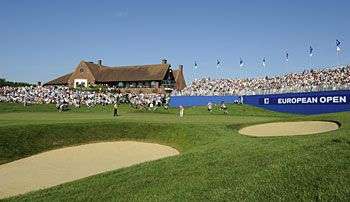
London Golf Club unveil plans for new 5-star hotel
New 5-star hotel and spa will make London Golf Club a world-class golf destination
June 16, 2011
London Golf Club, a European Tour Destination and host venue of the 2008 and 2009 European Open, has unveiled plans for a new 5-star hotel and spa.
The proposed 130-bedroom luxury hotel and leisure development in Ash, Kent, will complement the venue’s two existing Jack Nicklaus-designed signature golf courses, established in 1993, and brings to fruition the vision for a world-class golf resort just 20 miles south-east of central London.
The development has been innovatively created in the style of a traditional Kentish village, and will nestle in terrain overlooking the opening holes of the Heritage Course.
Following close co-operation with local authority Tonbridge and Malling Borough Council, planning permission has been received. This heralds a significant development for a fast-growing region that is benefiting from a long-term golf travel marketing strategy supported by Visit Kent, the county’s official tourism website – the Open Championship returns to Kent in July 2011 – and the London 2012 Olympic Games.
George O'Grady, Chief Executive of The European Tour, said: “When we announced our joint venture partnership with London Golf Club at the European Open in 2009, the vision was to create a world-class golf destination.
“The golf facilities are proven at every level, from hosting full European Tour competitions to special events such as the recent Golf LIVE show, which was a huge success and attended by 13,000 golfers and their families.
“Now, with the development of a striking 5-star hotel and spa within convenient proximity of London and its international airports, plus fast, efficient road and rail links to continental Europe and the rest of the UK, London Golf Club is set to position itself among the world’s elite golf resorts and we plan to host major European Tour events in years to come.”
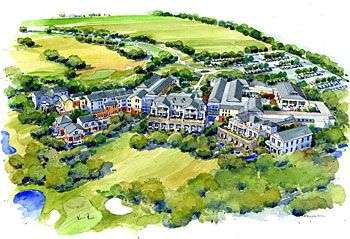
George O’Grady confirmed that a European Tour Regional Office would be included as part of the development. Plans to build a European Tour Performance Institute are also at an advanced stage, giving players of all abilities, including newcomers, access to the very latest biomechanical technology as well as a full range of health and fitness advice previously only available to tournament professionals.
The hotel, developed around an attractive Arrival Courtyard and Main House, will offer the highest international service standards and feature 130 guestrooms, including junior suites, butler-service suites and a presidential/VIP suite. There will also be a variety of dining options, including a speciality restaurant, banqueting and meeting accommodation, valet parking and landscaped gardens.
The spa will be linked to the hotel and enjoy separate access from the Arrival Courtyard enabling club members, day visitors and the local community to enjoy the facilities. An extensive array of treatment rooms will be complemented by a relaxing pool that will also be open to non-residents.
Charles Fairweather, Chairman of London Golf Club, said: “This is a significant hotel and leisure development for London and south-east England, and is set to become an important destination for The European Tour, international golf tourists from continental Europe and further afield, as well as golfers from London and the UK.
“While this is a sizeable development with 5-star facilities and service, we are proud of the design work that has gone into creating an intimate, village-style resort that will nestle in the landscape, stepping down the contours to minimise visual impact.”
Charles Fairweather added: “This is just the beginning of the first phase of development. The long-term strategy for London Golf Club is to create a world-class destination and venue that will host the biggest and best sporting events over the next 20 years.”
For more information on London Golf Club visit www.londongolf.co.uk
Words taken from the European Tour The European Open will return to England for the first time since 1994 when the 31st edition of the tournament takes place over the Jack Nicklaus-designed Heritage course at The London Golf Club in Kent from July 3-6, 2008. Eight-time European Tour Order of Merit winner Colin Montgomerie of Scotland is set to defend his title when The London Golf Club becomes the seventh venue to host the European Open, following Walton Heath, Turnberry, Royal Liverpool, Sunningdale, East Sussex National and, for the past 13 years, The K Club in Co. Kildare, Ireland. Situated close to Brands Hatch in North Kent and boasting two outstanding courses in The Heritage and The International, The London Golf Club first hosted the European Seniors Tour in 1995 when South African John Bland won the inaugural London Masters. For the past three years, the Club’s owners, the Bendinat Group, have been title sponsors of the London Seniors Masters, won twice on the 6,434 yard par 72 Heritage layout by Scotland’s Sam Torrance (in 2005 and 2007) and once by Italy’s Giuseppe Cali in 2006. American Bobby Wadkins won the first European Open at Walton Heath in Surrey in 1978. Since then, eight Major Champions have captured the prestigious titles, namely Michael Campbell, Nick Faldo, Retief Goosen, Tom Kite, Bernhard Langer, Sandy Lyle, Greg Norman and Ian Woosnam. Montgomerie, who won his 31st European Tour title at The K Club in 2007, said: “I was delighted to be the last winner of the European Open at The K Club, after coming close there on a few occasions. That victory was very important in terms of my World Ranking. I am now looking forward to defending one of the most prestigious titles on The European Tour at The London Golf Club in July. “It’s great that we have a London venue on the Schedule. Having played there quite recently, I know that it will unquestionably provide a stern examination for my Tour colleagues and myself, and we can all look forward to a wonderful week in Kent.” Heath Harvey, General Manager for The London Golf Club, said: “There was much speculation over where this event would go after its enormously successful run of 13 years at The K Club. To secure such a renowned tournament is testament to the Club’s aspiration to be recognised as one of Europe’s foremost golfing venues. “A tournament of this magnitude will undoubtedly put Kent in the European golfing spotlight. We look forward to welcoming some of the world’s top professionals for what will surely be the county’s largest sporting event of the year.” George O’Grady, Chief Executive of The European Tour, said: “The European Open has been a superb fixture on The European Tour International Schedule for the past three decades, and since 1995 we have witnessed 13 tremendous editions of the event at The K Club in Co. Kildare. “However, we are delighted to return to the UK in 2008 and to an outstanding venue in The Heritage course at The London Golf Club, which carries the stamp of its designer, Jack Nicklaus. Our Members always enjoy visiting new locations, and The London Golf Club will provide an enjoyable and demanding examination in July.”
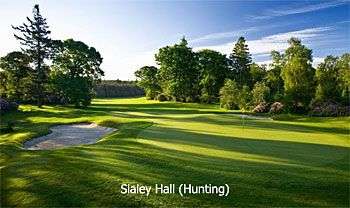
The Second Hundred Golf Courses of England 2016 We preview the challengers for the next Top 100 Golf Courses of England rankings and list the second hundred Having recently published the latest 2016 edition of our Top 100 for England, we thought we’d look into our golfing crystal ball to see if we could predict which English courses might make it into the top hundred next time around. We’ve focused this article on twenty-five challengers, but it’s feasible that any of the hundred courses listed at the end of this feature could make the next English Top 100 in 2018. It’s also viable that numerous other courses could also make the grade. If you think we’ve missed a layout from our current England Top 100 or from our Second Hundred (listed in full at the end of this story), please click the “Respond to this article” link at the top and bottom of the page and share your opinion. Fifteen of the twenty-five challengers have appeared in previous editions of our England Top 100 and these are spread across seventeen counties from Northumberland to Kent. Berwick-upon-Tweed has been listed in four previous editions and this old-fashioned James Braid-designed links at Goswick may well be knocking on the door in 2018 again. In the same county, the Hunting course at Slaley Hall tends to divide opinion but there is no denying its tournament credentials with famous champions winning here, including Retief Goosen and Colin Montgomerie. At the other end of the country, in Kent’s Garden of England, Wildernesse may not be a familiar name, but this tree-lined gem has hosted Open Championship Qualifying and continues to challenge golfers in the modern age. Chart Hills plummeted from grace due to a decline in conditioning but this could easily be remedied and I wouldn’t bet against it bouncing back into the top-flight. Knole Park is the antithesis of Chart Hills, it’s a quirky John Abercromby design from the Golden Age, described by a reviewer as; “a country park that has a golf course on it rather than primarily a golf course and for me that gave the flow of holes a slightly awkward feel.” Bob Cupp’s West course at East Sussex National is the preferred course of many at this 36-hole facility, despite the European Open pedigree of its sibling, the East. The West is the more intimate and the prettier of the two courses where attractive views of the South Downs are freely included. Rockliffe Hall in County Durham opened in 2009 and this multi-million pound course is one of Europe’s longest tracks, measuring a whopping 7,879 yards from the tips. Built with championship golf in mind, Rockliffe is a stern test, not only due to its length, but also due to its strategic and occasionally penal design. Ilkley is the third oldest golf club in Yorkshire and has been listed in three previous editions of the English hundred. Refashioned by Harry Colt and Alister MacKenzie, Ilkley is where Monty learnt his trade and he still holds the course record of 64. Pannal has never appeared in the top list before, but it has been around since 1906 and the doyen of golf writers, Bernard Darwin, described Pannal as follows: “It stands high up on a breezy down, where there are some steep slopes and big valleys, and pretty clumps of gorse, and the wind, I should suspect, always blows keenly. At least it did so when I was there, and I can still feel myself walking against it with bowed head, and then being blown along by it as if I were a feather.” Across the Pennines into Lancashire, St Annes Old Links may be a challenger for just one hole – perhaps the best one-shotter in Lancs. The 9th, with its long green which is hardly visible from the tee is a corker. According to reports, Bobby Jones took detailed measurements of this hole, called “Cannon”, when playing here before the 1926 Open. The English Midlands has some wonderful golf courses and a few are underrated. Enville’s Highgate course in Staffordshire is a heathland cum woodland layout that hosted Open Championship Regional Qualifying from 2007 to 2011. In Nottinghamshire, Coxmoor is sited on an elevated heathland plateau, one of the highest points in the county. This popular club has staged Regional Qualifying for the Open Championship as well as the British Seniors Amateur Open Championship. Two challengers from the county of Oxfordshire are chalk and cheese. The prolific golf course architect Rees Jones designed the course at the Oxfordshire Golf Club and it opened for play in 1993 after significant earth works. Host to the B&H International Open and the Ladies’ English Open, the Oxfordshire is far from classical, unlike Willie Park Junior’s Huntercombe, which sparked a revolution in inland golf design. Walter Travis said it’s “the best laid course that I have ever played over anywhere” and Harold Hilton agreed; “in links architecture his two great creations have been Sunningdale and Huntercombe and of the two I am distinctly inclined to look upon Huntercombe as the greater effort of the two”. Surrey already has more than its fair share of courses in the English Top 100 but the course currently ranked 21st in Surrey has to be a challenger for the main list. It’s another Willie Park layout that Harry Colt redesigned in the 1920s. “A wonderful place is this new Wimbledon course," wrote Bernard Darwin in 1910, "for as soon as we are on it all signs of men, houses and omnibuses, and other symptoms of a busy suburb disappear as if by magic, and a prospect of glorious solitary woods stretches away into the distance in every direction.” Hertfordshire is a lovely golfing county that doesn’t have the vast sandy terrain of Surrey, but has some of the finest parklands in England instead. One such swathe can be found at Brocket Hall in Welwyn Garden City where there are two courses on offer, with the best being the newer Donald Steel-designed Palmerston that has appeared four times in earlier English Top 100 editions. A few miles to the east of Welwyn lies Hanbury Manor near Hertford, a former English Open and Women’s European Open venue that was formerly a Top 100 regular. If you like golf as Nature intended, or if sand bunker play is not a strong part of your game, head further west to the Chiltern Hills where you’ll find Hertfordshire’s oldest golf club, Berkhamsted, which has been listed three times in previous Top 100 charts. Many golfers think that the Buckinghamshire Golf Club should be inside the Top 100. This elegant John Jacobs design is set in more than 200 acres of mature parkland and it’s polished to perfection. Despite its relatively flat topography, it’s a firm favourite, having previously appeared three times in the Top 100. Devon’s Bovey Castle has appeared in four former Top 100 editions and it’s my home course that’s set gorgeously within the Dartmoor National Park. I agree wholeheartedly with Bernard Darwin: “In short, this is the ideal course to have at the end of the garden. There never was one better suited to a cheerful foursome, for there is plenty of scope for strategy in deciding who is to drive against who, and at which of the river holes.” If only the first tee was at the end of my garden. Ross-on-Wye heads our Gloucestershire Best In County rankings despite the club being physically located in Herefordshire. This is due to the club’s affiliation to the Gloucestershire Golf Union. Why? Who knows? Anyhow, the golf course is incredibly narrow with fairways carved through chutes of trees where driving accuracy is far more important than length. Holes run in every conceivable compass direction and it is impossible to tell where you are in this maze-like, mature forest. Over in the east of England, Luffenham Heath has been listed in the Top 100 five times, which is a feat that can be claimed by only a handful of other clubs. More common land than heath land, many great designers including the famous partnership of Harry Colt and CH Alison have touched the course at Luffenham, with James Braid and C K Cotton making further alterations down the years. Peter Alliss and Dave Thomas fashioned the course at King’s Lynn Golf Club in 1975 and it’s set in near ideal golfing country, well drained, heavily wooded and exceptionally pretty. If you’re not keen on doglegs and your driving is a little wayward, you’ll be quickly frustrated, but there’s no denying the course has charm. The county of Suffolk rounds up our whistle stop tour of England’s Top 100 challengers where you’ll find James Braid’s Thorpeness, a course that’s underrated in my opinion. A recent bunker renovation programme was undertaken ahead of the 2012 English Seniors Championship, which Thorpeness co-hosted with Aldeburgh – some golfers reckon the ranking for Aldeburgh should be swapped with Thorpeness. Finally we come to the Martello course at Felixstowe Ferry, originally designed by Tom Dunn in 1880 and later altered by Alister MacKenzie. The course was virtually obliterated when it became part of the war defences in 1939 and was almost washed away in the 1949 flooding. Miraculously, in 1950, the links rose like a phoenix and has remained a favourite ever since. Brian Ward (our Midlands and North of England Correspondent) played the Martello recently; “I very much enjoyed my first visit to Felixstowe Ferry… the certain historical charm makes me want to return as soon as possible.” The full second hundred list is as follows with the challengers highlighted. Comments are welcome – click the “Respond to this article” link at the top and bottom of the page to voice your opinion. Keith Baxter Editor-in-Chief Top 100 Golf Courses
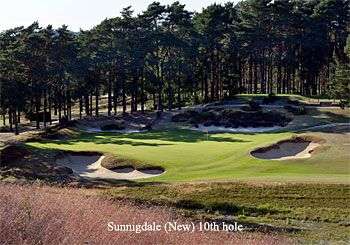
Golf Course Architects head “To Heath & Links” Seventy of the world’s leading golf course architects are set to gather in South-East England next week for their 2015 Study Tour Organised by the European Institute of Golf Course Architects and supported by the Toro Company, the ‘To Heath & Links’ tour will take in four of England’s greatest links and heathland golf courses. Those taking part include members of the European Institute of Golf Course Architects, the Society of Australian Golf Course Architects and the American Society of Golf Course Architects. The 2015 Study Tour follows the hugely successful tours arranged by the Australian and American societies in 2009 and 2012 respectively. The week will begin at Sunningdale Golf Club with a tour of Harry Colt’s “Lost Holes” which were lost following major reconstruction in 1934. Because of the more strenuous walk required to play them, the holes were unpopular with the members and were replaced by Tom Simpson, whose own work was subsequently revised by Harry Colt’s partner, John Morrison. The New Course certainly provides a great insight into the tensions and rivalries between two highly respected design practices and a tour of these lost holes provides a fantastic opportunity to step back in time. Golf starts in earnest the following day on the New Course, undoubtedly one of Harry Colt’s best courses and is perhaps unfairly overshadowed sometimes by the Old Course. Many believe the green complexes on the New to be greatly superior to those on its sister course and the stretch of holes between 2 and 14 are difficult to match anywhere. Its dramatically rolling, open heathland landscape makes it perhaps the prime example of this type of course. From Sunningdale, the tour moves just down the road to experience the work of the great eccentric golf course architect Herbert Fowler and The Red Course at The Berkshire. The Berkshire was the last work by Fowler and remains one of his least altered creations. The final two days are devoted to seaside golf on the Kent Coast playing two of England’s best links courses, both of which have hosted The Open - Royal St George's and Royal Cinque Ports. Courses with finer and more challenging green complexes would be hard to find. Royal St George's hosted its first of 14 Open Championships in 1894 and its most recent in 2011 when Darren Clarke unexpectedly triumphed. Originally laid out by Laidlaw Purves, the course has evolved gradually to become a favourite for many links enthusiasts. Royal Cinque Ports, in the town of Deal in Kent, hosted The Open twice in the early 20th century and was set to do so again in 1949 until the course was flooded by the sea. Although sea defence work caused significant disturbance it remains a top class links that still hosts major amateur events. As well as playing golf there will be the opportunity to learn about the history of all the courses as well as the environmental and ecological importance of their landscapes. Speaking on behalf of the EIGCA, the Institute’s President, Tom Mackenzie, said: “We are confident that we have organised an event that will more than live up to the standards already set by the previous study tours organised by the SAGCA and the ASGCA. The itinerary we have arranged represents a wonderful opportunity for us to enjoy the very best of English golf. “I would like to thank all four golf clubs for their tremendous enthusiasm and assistance in helping the EIGCA organise this study tour, and I particularly want to acknowledge the generous support of the TORO Company which has done so much to make this event possible.” Approximately thirty golf course architects each from Europe and North America and a further ten from Australia will be taking part in the study tour which ends with a banquet at the historic Leeds Castle in Kent. For more information please contact the EIGCA at enquiries@eigca.org
