Machrihanish Dunes to open in July
Golf course to tee off with US cash injection
It finally appears that golfers making the pilgrimage to Scotland’s historic Machrihanish Golf Club will have the chance to play its much-anticipated sister course.
An American resort developer has stepped in to ensure that the West Coast of Scotland's first new links golf course in more than a century opens this summer.
Southworth Development, based in Massachusetts, announced yesterday that it had bought a controlling interest in the Machrihanish Dunes development and would be injecting “several million pounds” to complete the estimated £30 million project.
After taking a minority stake in 2006, the US developer has acquired control of Kintyre Development Company (KDC), which in addition to the golf course owns the Ugadale Hotel and golf cottages in Machrihanish, and the Royal Hotel at Campbeltown.
The move by Southworth follows delays to the landmark development amid persistent rumours over KDC's ability to fund the mounting cost of the project. Brian Keating, the founder of KDC, will remain a shareholder and a director.
Like Southworth Developments more grandiose £500 million golf development on the opposite coast of Scotland, Machrihanish Dunes has been the subject of controversy because of its potential impact on the environment.
Much of the 259-acre site is designated as being of special scientific interest, and securing planning consent has involved numerous hurdles.
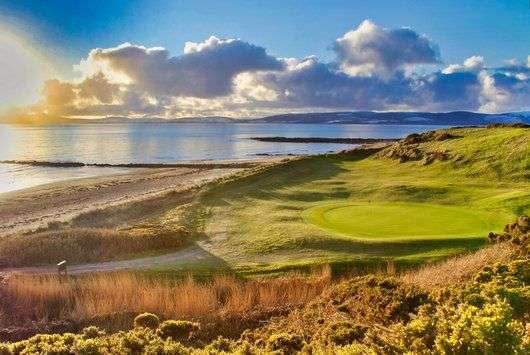
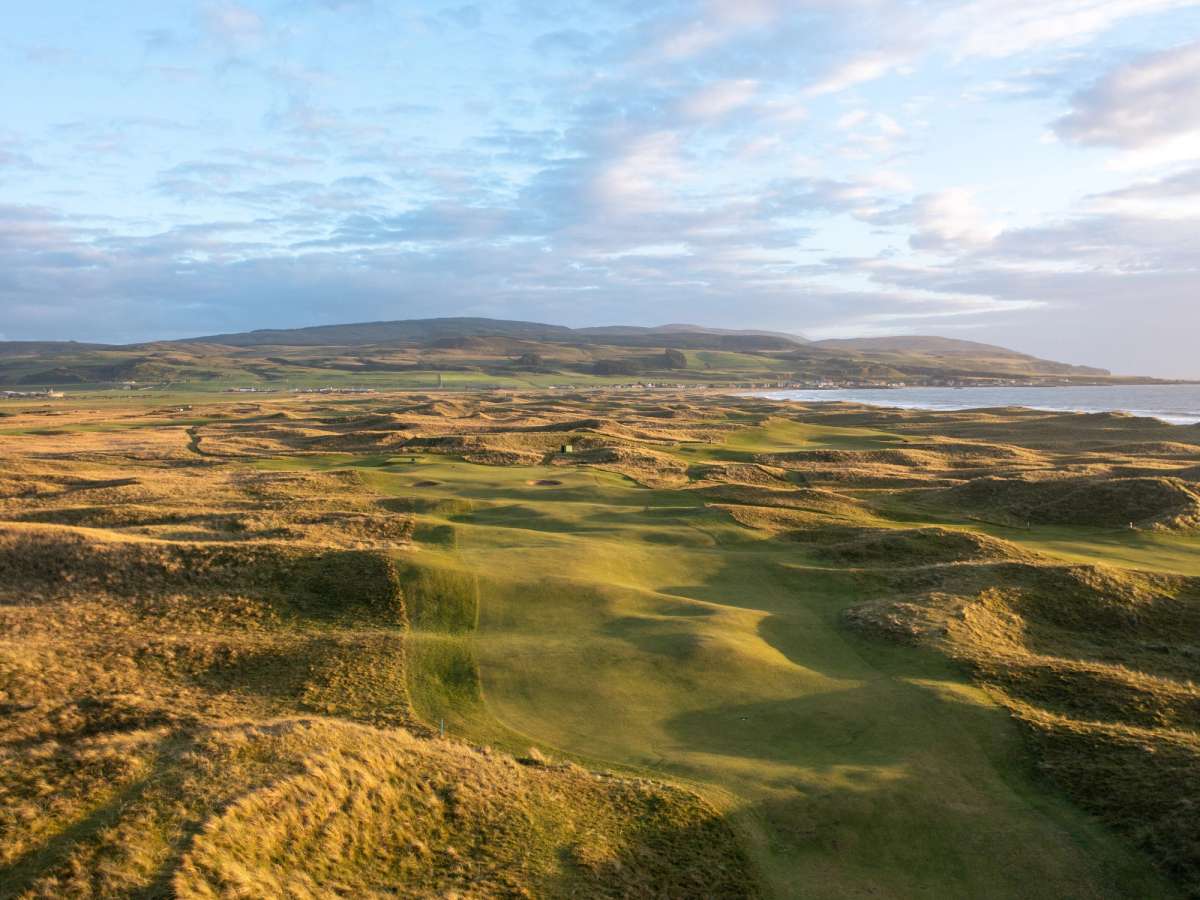
The championship links, which is being built next door to the famous Machrihanish Golf Club designed by Old Tom Morris, has been created by David McLay Kidd, a Scots designer whose previous work includes the Castle course in St Andrews and Bandon Dunes in Oregon. Six of its greens border the Atlantic.
Machrihanish Dunes Golf Club, is scheduled for a soft opening May 2, with an official opening July 21, two days after the 2009 Open Championship reaches its climax at Turnberry. The 7,300-yard seaside links sits adjacent to historic Machrihanish Golf Club, an Old Tom Morris design, about five miles west of Campbeltown on the southern tip of the Kintyre Peninsula in southwest Scotland.
Campbeltown used to be a busy port town with nearly three dozen whisky distilleries, and Campbeltown Airport has one of the longest runways in Europe. But the region has been hammered economically in recent decades. With the addition of the second course, the Machrihanish developers and tour operators envision the area becoming a popular stay-and-play destination. To that end, Southworth Development is building golf cottages and renovating the Ugadale Hotel in Machrihanish and the Royal Hotel in Campbeltown.
Southworth is one of the biggest golf resort developers in the world, with courses in the United States, Puerto Rico, the Dominican Republic and the Bahamas.
From: The Times & Golfweek
Alex Frolish has been a pilot for approaching 20 years and now travels to all corners of the globe in his role as a commercial airline pilot. His passion for flight is only equalled by his passion for golf and golf travel. Having picked up a golf club over 35 years ago when aged just 3 years old, Alex has played nearly 600 courses across every continent on planet earth furnished with a fairway. Over the next few months you’ll be able to follow Alex’s golfing travels as he brings you anecdotes of his life both in the air and on the course. The month of June couldn’t come quickly enough. Since the international recovery from the pandemic, my flying roster has slowly built back to pre-pandemic levels, and the start of 2023 has felt particularly manic. Luckily, June was a month with the majority my calendar filled with annual leave, booked in part to head on a family holiday to Spain and afterwards, on a golfing pilgrimage to Scotland. Spain was a week dedicated to time away from golf and spent with the people I love the most. It didn’t mean I wasn’t filled with excitement for my Scottish trip the following week however. My good friend Joe and I had crafted a trip containing the perfect blend of Top100 bucket list courses and slightly less heralded (but no less special) gems. Prestwick, Machrihanish, Machrihanish Dunes and Turnberry (Ailsa) were the four big hitting names, with an addition of two courses I’d wanted to visit for many years, Dunaverty and the exquisitely crafted 12 holes of Shiskine located on the Isle of Arran. I dragged myself out of bed a little after 4.45am on the morning of our drive north. The birds had barely begun to stir. A little over 10 hours later, as the clock struck 3pm on the clubhouse clock on Prestwick’s clubhouse clock, I drew back my 5-iron and sent a ball off in the general direction of one of the most elusive 1st links fairways in the world. Those of you that have played it will know, but the 1st hole at Prestwick is one hell of an opening par 4, bordered tightly on the right by a train line and to the left by some tangled and gnarly looking rough. The anticipation (and nerves) grew as we watched groups negotiating the 1st as we took on some well needed pre-round food and drink after our long drive. I was glad to see my cautiously chosen 5 iron find the short grass, and it left me about 180 yards to the green into a gentle breeze. I played one of the best shots of my life to hit my approach to around a foot away, for an improbable birdie on the 1st. What a way to start the trip! Prestwick left me quite in awe of its majesty, unimaginable quirkiness, memorable features and all the while, oozing in history. This was an opening scene that was going to be a tough act to follow. If the previous mornings alarm call had been painful, the 3.50am alarm on day two exceeded it by some margin. I really think you get an insight into someone’s level of golfing obsession by how early they are willing to set an alarm to head off to the course. Our early start was due to our long drive and early tee time at Machrihanish Dunes, the relatively new David McKay-Kidd design located on the western edge of the Kintyre peninsula. It was a beautiful morning, clear skies and not a breath of wind touching the waters of Loch Lomond as we passed by. Mach Dunes is a routed amongst the most beautiful of links landscapes. The dune land is protected and thus, the course was carefully constructed using non-invasive construction techniques. Maintenance wise, the course surrounds are left as much as possible to their own devices. It really does feel like the course has been here for 100 hundred years or more, and that is credit to all those that have been involved so far in this brilliant project. In the afternoon, the revered links of Machrihanish Golf Club awaited us. June had been excessively warm and dry in Scotland and the world famous fairway of the 1st hole was looking decidedly crispy, just how I like my links courses. Our host Robbie navigated us through the quite magnificent opening nine like a tug boat captain steering an ailing ship into port. The truth was that we were flagging after two long days on the road and in the heat, but Robbie’s measured advice meant we managed to keep our balls (for the main part) on the path Old Tom Morris had intended. I don’t think my head touched the pillow before I was asleep that evening in our B&B in Campbeltown. Dunaverty followed by Shiskine was a day that I will never forget. Many of you may have heard of these two courses, while some may need the aid of Google to familiarise themselves with them. Dunaverty offers the type of golf that is full of pure enjoyment, golf that is good for the soul, the course positioned in the most glorious spot, clinging to the southern coastline of the Kintyre peninsula in touching distance of Northern Ireland. We played early, the first to venture on to the course, moving watering hoses aside as we putted out on the opening 6 greens. I stopped on a number of occasions as we played and took a moment to take it all in. You couldn’t help but smile at the setting and the fun nature of the holes here. I will be back to visit this magical place again some day. The drive to the ferry to Arran was around an hour and we had crafted our schedule in such a way that meant we had little room for manoeuvre. We hadn’t accounted for the last 8 miles to the ferry station being on a single track road and being against the flow of traffic leaving the very ferry we were racing to board. As we waved our boat goodbye from the jetty of the Claonaig ferry terminal, having missed it by just a few minutes, we both silently accepted that sometimes, plans are just that, and everything on a golf trip has an element of fluidity to it. Delayed but undeterred, we teed off a little over an hour after our scheduled time at Shiskine, but it didn’t matter in the slightest. Light wasn’t an issue for us and we were in no rush. Shiskine is a mind-boggling and breathtaking natural assault on the senses, crammed into 12 of the most characterful golf holes you could wish to play by the sea. It was so good, we played it twice in a little over 3 hours. We stopped, we took photographs, we laughed at the sheer audacity of the holes and marvelled at the brilliant use of the land. Don’t overlook Shiskine because it is a little hard to get to (or because there are only 12 holes here), it is worth the effort. Tunrberry Ailsa was our final act, one that probably deserved to be played by golfers with a few more yards left in their legs. My round began as it had done at Prestwick, with a regulation birdie, but soon enough the course began to bare its teeth, and Joe and I played the majority of the run for home from areas on the periphery of the line of play. Politics aside, Ailsa is peerless to me in the list of links courses I have played. It’s beauty is matched by its character, strategic brilliance and supreme conditioning; a quite powerful quartet. We couldn’t have hoped for a finer finish to the trip. Spain and Scotland had filled my battery back up in many ways, but it was now time to head back to the skies. My first flight back was to Mumbai, where the summer rains meant no golf was played. And a trip to Singapore and onto Sydney spanned the month boundary between June and July, so I will tell you about the golf in Australia next time. Apart from that, trips to Boston, San Francisco and Pittsburgh are planned in July, with plenty of scope for some bucket list golf. I also have a trip to Wales planned, to play a couple of lesser known courses I’d been wanting to visit for some time. Until next time, wherever you are and whatever you have planned, I wish you the straightest of drives, well negotiated four- footers and happy rounds.
Contrary to popular belief, experiencing the very best golf courses in the world doesn't require a network of connections, generational wealth, or selling a vital organ. While headlines scream about £1,000 green fees at Turnberry and $1,250 rounds at Shadow Creek, the reality is far more encouraging for passionate golfers who simply want to test themselves on legendary layouts. The Surprising Truth About World-Class Access 9 of the world's top 100 golf courses can be played for less than £100. This remarkable list includes venues like St Andrews Beach in Australia, the spectacular Barnbougle Dunes in Tasmania, Yas Links in Abu Dhabi, Scotland's historic Machrihanish Championship Course, and Cape Wickham. For the price of a decent dinner for two, you can experience these masterpieces - more on that later... 22 of the world's top 100 can be played for £150 or less – including icons like Bethpage Black (host of multiple US Opens and the Ryder Cup), Muirfield (venue for 16 Open Championships), Turnberry (when not at peak rates), Royal Aberdeen, Bandon Dunes Resort's multiple championship courses, and Royal Porthcawl. Value in Context: Golf vs Other Leisure Pursuits To put this in perspective, consider how golf compares to other premium leisure experiences: Cinema Experience: A premium cinema ticket with drinks and snacks costs around £25-30 for 2.5 hours of entertainment (£10-12 per hour) Concert Tickets: New York's Broadway or London's West End shows average £80-150 for 2.5 hours (£32-60 per hour) Spa Day: Premium spa treatments range from £150-300 for 3-4 hours (£40-75 per hour) Fine Dining: Michelin-starred restaurants charge £150-300 for a 3-hour experience (£50-100 per hour) A round of golf at a world-class course priced at £150 delivers 4.5 hours of premium entertainment for £33 per hour – exceptional value compared to other luxury leisure activities. The Accessible Elite: A Global Journey of Excellence The 22 courses available for £150 or less represent an extraordinary global golf journey: Links Legends: From Scotland's Machrihanish and Cruden Bay to Wales's Royal Porthcawl and England's Royal Cinque Ports – classic seaside golf at its purest Championship Venues: Bethpage Black (US Open host), Muirfield (Open Championship venue), Turnberry (major championship site) – walk in the footsteps of golfing legends Modern Masterpieces: Barnbougle Dunes and Cape Wickham in Australia, Bandon Dunes Resort's quartet in Oregon, Cabot Links in Nova Scotia – contemporary designs that capture golf's timeless spirit Hidden Gems: Yas Links in Abu Dhabi, Lofoten Links in Norway above the Arctic Circle, Paraparaumu Beach in New Zealand – unique golfing experiences in spectacular settings Mountain Majesty: Jasper Park Lodge in the Canadian Rockies – where golf meets wilderness in perfect harmony These aren't compromise choices or "budget alternatives." These are genuine world-class venues that happen to prioritise accessibility over exclusivity. Why This Accessibility Matters This democratisation of world-class golf represents something remarkable in modern leisure: true meritocracy of experience over exclusivity. You don't need to know someone who knows someone. You don't need a trust fund or corporate hospitality. You need passion for the game, a willingness to travel and the price of a quality restaurant meal. In fact, for most, there is probably a World Top 100 golf course near them that is on the list that doesn't require a long haul flight or resort stay. The Remarkable Scope of Accessible Excellence Consider what £150 or less grants you access to: US Open venues like Bethpage Black Open Championship hosts, including Muirfield and Turnberry Internationally acclaimed courses across four continents Architectural masterpieces by the greatest golf course designers in history Scenic wonders from Arctic Norway to the Australian coast Resort destinations that define modern golf travel This collection spans every style of golf architecture, every type of natural setting, and every era of course design – from Victorian-era links to contemporary resort masterpieces. The New Golf Economy Does this accessibility reflect a shift in the golf industry's economic model? Perhaps not. While headline-grabbing courses chase ultra-wealthy tourists, hundreds of equally magnificent venues focus on providing exceptional experiences at reasonable prices. They understand that golf's future depends on accessibility, not exclusivity. Perhaps bemoaning golf as becoming unaffordable is true in some instances but certainly not true in all... The Ultimate Value Equation This isn't about compromise or "settling for less." This is about discovering that the very best in golf – the artistry, the challenge, the natural beauty, the history – is far more accessible than anyone dares to tell you. The only thing standing between many and world-class golf isn't their wallet – it's simply booking the tee time.
Top 100 Golf Courses of Britain & Ireland - 2011 8th December 2010 We are pleased to announce our latest Britain & Ireland Top 100 rankings following thorough research and analysis of more than 200 British and Irish courses. In a similar vein to our newly published World Top 100, our Britain & Ireland rankings looks very familiar. So let's put the cards on the table. The reality is that there will be few, if any, new contenders for a Top 20 place. There are perhaps thirty courses that vie for a Top 20 spot and the last course to break into that group was Kingsbarns, which opened for play in 2000. Castle Stuart is our highest new entry - straight in at position 41. We've featured this Scottish Highland course as a Gem since 2008, a full nine months before it officially opened its tees for play. Mark Parsinen - the man who developed Kingsbarns - also developed Castle Stuart and his ambitious dream is to host a future Open Championship at Castle Stuart. As usual, England has more Top 100 ranked courses than any other home country, but what England enjoys in quantity, Scotland has in sheer quality. There are six Scottish courses in the Top 10 alone and we welcome four Scottish new entries, Castle Stuart (41), Panmure (76), Machrihanish Dunes (93) and Montrose Medal (100). There is some significant up and down movement for Irish courses, three of which we believe were positioned too far down in our last ranking table. County Louth moves up 23 places, County Sligo rockets 34 places and Mount Juliet jumps 27 spots. We also welcome a new entry, Portmarnock Hotel and Golf Links, straight in at 89th. Northern Ireland now has five courses in the Top 100 with Lough Erne making its first appearance at 87th. But no course can shake Royal County Down from the head of our table. Since 2005, and for the fourth consecutive time, the famous Newcastle links is our No.1 course in Britain & Ireland. To explore our new 2011-2012 Britain & Ireland Top 100 in detail, click here: This is the second of numerous Top 100 re-rankings which we will be implementing this year. If you'd like to receive further updates from us and you are not already on our mailing list, click here to join.

