
The new golf course building revolution in South Carolina continues to sprint along. Amidst the high-profile new offerings of Old Barnwell, The Tree Farm, and Anson Point, the maiden solo effort from architect Tyler Rae flies a little under the radar at Old Sawmill Golf Club.
Tyler Rae is a graduate of the University of Kentucky and has extensive work experience with notable architects Ron Pritchard, Keith Foster, Coore and Crenshaw, Tom Doak, and Bruce Hepner, amongst others. His experience in the field of restorations of Ross, Raynor, Flynn, and Tillinghast has enabled him to access a vast array of styles upon which he can draw for this first solo project.
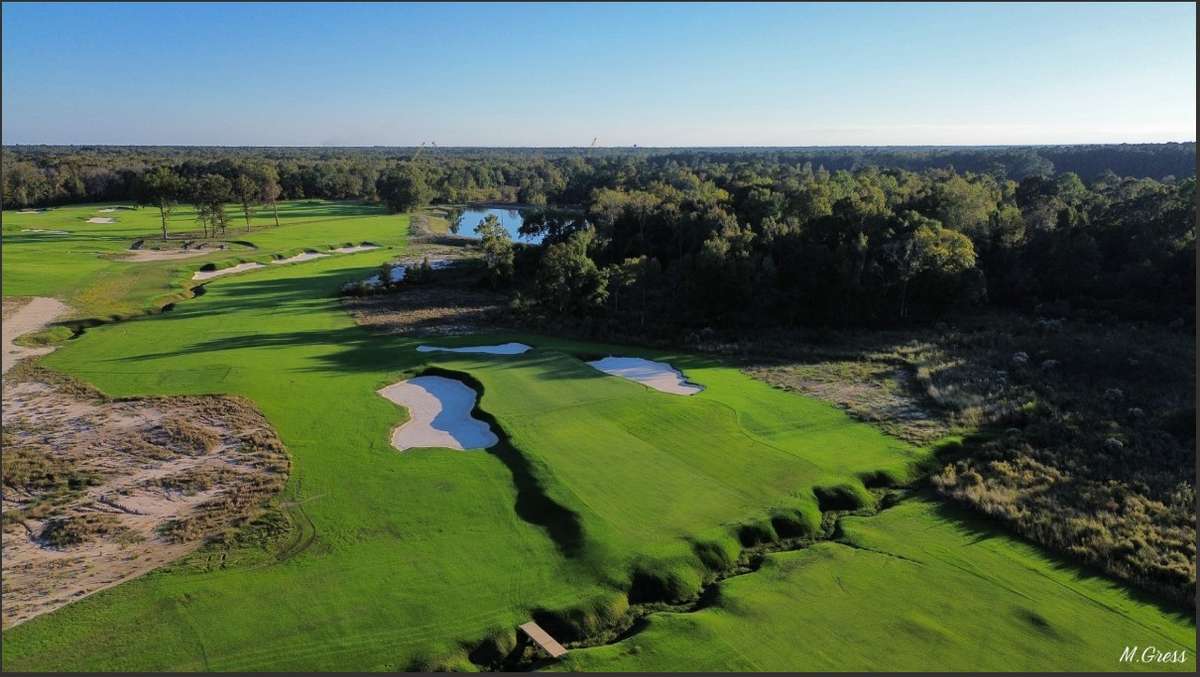
Old Sawmill is located about 30 miles northwest of Charleston, near the town of Ridgeville, and about two hours from the rising mecca of South Carolina golf, Aiken. The course is built on former farmland, and the business model is once again an exclusive private club with high-end initiation fees and predominantly national memberships that have thrived in the post-COVID golf boom era.
The Old Sawmill site, previously farmland, is in no way laden with striking natural features or topography, which is in no way a disclaimer for what Tyler Rae has created, quite the opposite. It is more of an homage to what he has been able to lay out for the golfer. The final product reflects an old-school Golden Age layout and presents a finished landscape somewhat reminiscent of the Chicago Golf Club.
First impressions upon arrival are underwhelming, and it’s hard to see how this land can create an interesting course. That feeling is soon changed as the course progresses. Tyler Rae has obviously absorbed all of the fabulous experiences from his restoration projects of that Golden Age period, because whilst playing Old Sawmill, one is constantly reminded of the likes of Ross, Raynor, and even Pete Dye as your eyes feast on the product laid out before you.
The delightfully intimate routing is so reminiscent of Donald Ross, as the holes turn and meander in every direction to all four corners of the property. The sparse landscape of native grasses and the spectacular green sites that one will play later creates an atmosphere of anticipation. It is a very walkable experience, with any elevation changes masterfully utilised to perfection in the routing. Ample fairway playing lanes — but often with Dye-like visual illusions — create a wonderfully inviting playing experience.

The pièce de résistance of the course, however, are the green complexes and beautiful bunkering, both in the fairways and greenside. In fact, the bunkering is quite stunning: wonderful contouring, but without being overdone in any shape or form. It is often accompanied by steep grass-faced bunkers and elevated greens that combine to create exciting visual approaches.
Selecting favourite holes is not easy. The stretch from holes 2–8 is all you can handle, and is really the least of the course as far as the scorecard is concerned.
The 2nd is a stunning Raynor-like par three, playing from 150–200 yards to a rectangular green with gorgeous step bunkers to the right, followed by a series of three tough par fours ranging from 370–495 yards — all wonderful holes.
The par-five 8th is very cool, said to be the first hole created on the course and based upon a hole Tyler designed as a teenager. A huge mountain of a mound guards the right side approach to the green and creates the most wonderful strategic hazard to be negotiated — simply brilliant design.
On the back nine, a creek runs through the property and is strategically used by Rae, starting as a hazard to be crossed in front of the spectacular 11th green. It comes into play again on the 12th hole Punchbowl. The 13th is a drivable Cape par four that combines the visual language of Dye with the aforementioned Cape template — again, quite brilliant.
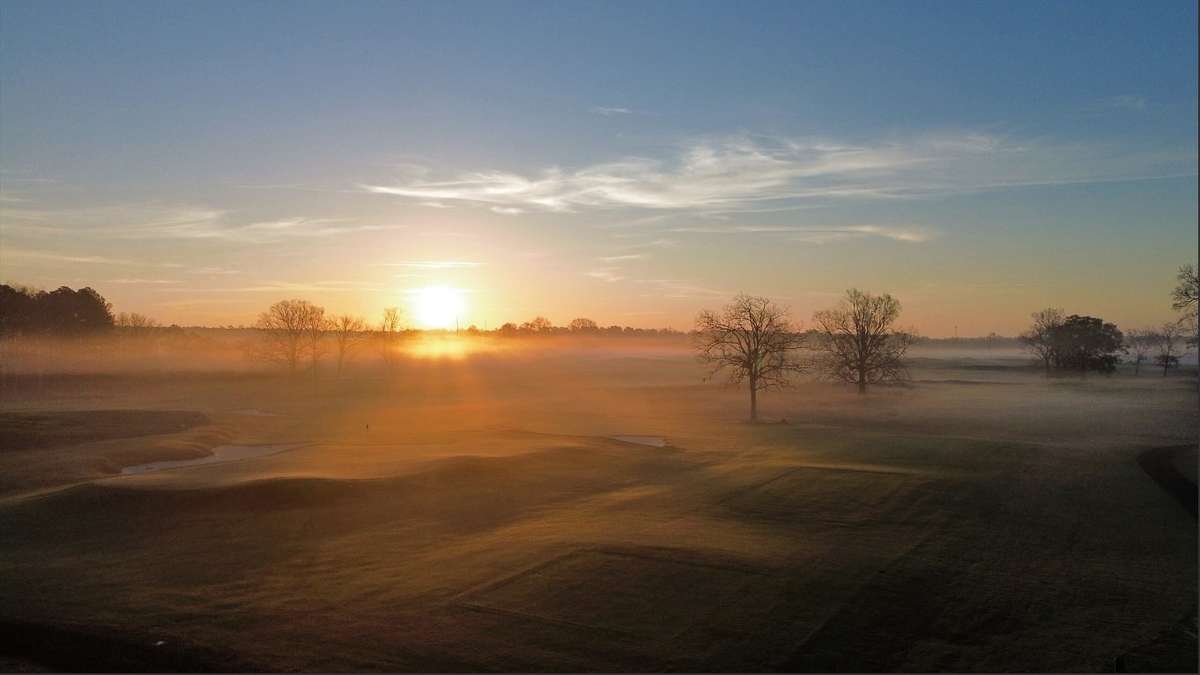
A wonderfully designed golf course. Massive kudos to Tyler Rae on his first solo design. On the evidence of Old Sawmill, his name is going to be mentioned extensively in the future.
Contributed Words - Michael Wharton Palmer
Edited - Jasper Miners

Until recently, most international golfers had never heard of Aiken, South Carolina. That's changing rapidly as this charming Southern town establishes itself as one of America's most exciting golf destinations. What makes Aiken special isn't just the golf—though with courses like Old Barnwell setting new standards for modern design, the golf is exceptional. It's the combination of world-class courses, authentic Southern culture, and strategic location that creates something truly memorable. Here's why Aiken deserves serious consideration for your next American golf adventure: • Unmatched variety: Play legendary Alister MacKenzie & Donald Ross courses alongside revolutionary new designs that are reshaping modern golf • Strategic location: One hour from Augusta, two and a half hours from Pinehurst—perfect for a comprehensive Southeastern golf tour • Exceptional value: Mix premium experiences with accessible local courses for trips that suit any budget • Authentic culture: Experience genuine Southern hospitality in a town where golf and equestrian traditions run deep Championship Golf in Aiken Aiken's premier courses represent both golf's golden age heritage and its innovative future. These are the must-play experiences that serious golfers travel thousands of miles to enjoy. Most require member introductions or careful planning to access when visitor play is permitted. Old Barnwell Golf Club stands as perhaps the most revolutionary course built in decades. This Brian Schneider and Blake Conant creation brilliantly blends Walter Travis-inspired features with modern minimalism, creating something genuinely new in golf architecture. The result feels both timeless and cutting-edge. Palmetto Golf Club remains the area's crown jewel, a Donald Ross & Alister MacKenzie masterpiece that has challenged golfers since 1892. This intensely private club epitomises everything wonderful about golden age architecture, with Ross's trademark crowned greens and strategic bunkering perfectly suited to the sandy terrain. Access requires proper introductions through members. Sage Valley Golf Club brings Tom Fazio's modern resort-style architecture to Aiken's sandy soil. Built with significant investment and meticulous attention to conditioning, Sage Valley offers the polished experience many golfers expect from premium American courses. Broomsedge Golf Club represents the newest entry into Aiken's championship tier. Kyle Franz's design features green complexes reminiscent of Harry Colt's work set within a minimalist framework. The course uses the natural topography brilliantly, particularly on holes five through eighteen where the design really finds its rhythm. Currently in preview play with public access planned for select days monthly. Tree Farm rounds out the modern championship offerings with a course that showcases exceptional conditioning and ambitious design concepts. The Tree Farm delivers memorable golf on outstanding terrain with Kye Goalby, PGA Tour Player Zac Blair and Tom Doak all playing a rol. 21 Club represents the newest addition to Aiken's championship tier, currently under development with claims of being based on Alister MacKenzie's legendary missing design from Argentina. The site itself offers exceptional potential for world-class golf. Expected to open in the coming years, adding another premium option to the region's already impressive lineup. Aiken's Best Kept Golf Secrets Beyond the headline courses, Aiken offers exceptional golf experiences that are publicly accessible with advance planning. These represent the preferred choices if the championship venues prove inaccessible, delivering outstanding value and authentic local character without compromising on quality. Camden Country Club represents the area's best-kept secret—a classic Donald Ross design that flies completely under the radar despite being every bit as good as more famous Ross courses. The green complexes showcase the master's strategic thinking while the tree-lined layout provides a different character from Aiken's sandy courses. Quixote Club underwent extensive renovation by Kris Spence roughly five years ago, transforming it into one of the region's standout experiences. Spence's green complexes are particularly noteworthy, offering challenging but fair pin positions throughout. Aiken Golf Club provides the area's historical foundation, having anchored local golf culture for generations. While not as architecturally significant as its famous neighbours, this traditional layout offers an authentic glimpse into Southern golf culture at very reasonable rates. Sample Itinerary: 7-Day Aiken Golf Adventure This itinerary assumes access to Aiken's premier private clubs through member introductions or during limited visitor periods. If Old Barnwell, Sage Valley, Quixote Club, Broomsedge, Tree Farm, or 21 Club prove unavailable, substitute any courses from Aiken's publicly accessible options detailed in the "Best Kept Secrets" section—these provide excellent golf while maintaining the week's quality and flow. Day 1 - Arrival & Warm-Up Arrive in Aiken, settle into accommodation, and play Cedar Creek or Woodside for an easy introduction to local conditions. Evening exploring downtown Aiken's dining scene. Day 2 - Ross Heritage Morning round at Camden Country Club to experience authentic Donald Ross architecture. Afternoon exploring Aiken's equestrian culture or visiting local historical sites. Day 3 - Modern Masterpiece Old Barnwell Golf Club with caddie—allow extra time to absorb this revolutionary design. Day 4 - Championship Experience Sage Valley Golf Club for the full premium American golf experience. Afternoon rest or exploring Aiken's shopping and cultural attractions. Day 5 - Traditional Excellence Quixote Club to experience Kris Spence's renovation work. This provides nice contrast between modern and traditional approaches to course design. Day 6 - Local Discovery The Reserve Club for a more relaxed round, followed by exploration of surrounding areas or day trip to nearby attractions. Day 7 - Farewell Round Final round at Broomsedge (if accessible) or return to favourite course from the week. Departure or continuation to Augusta/ Pinehurst. Seasonal Variations: September through November offers ideal conditions with changing foliage. March through May provides excellent weather before summer heat arrives. Avoid Masters week when courses become inaccessible and prices surge. Aiken Travel Logistics Getting There Augusta Regional Airport sits one hour away, with direct connections to major American hubs. Charleston International Airport (two hours) offers more international flight options. Rental cars are essential as public transport is virtually non-existent between courses. Weather & Packing Summer months (June-August) see many courses close for 6+ weeks due to extreme heat and humidity. Ideal visiting seasons run September-November and March-May. Pack layers for variable spring/autumn conditions. Summer visits require early morning tee times and serious sun protection. Local Transportation Courses spread across roughly 60-minute radius. Factor driving time between venues and accommodation when planning daily schedules. Cultural Considerations Golf cart culture predominates at most courses except Old Barnwell (walking with caddies) and Broom's Edge (walking encouraged). Pace of play generally relaxed compared to British standards. Where to Stay for Aiken Golf Upscale Southern Hospitality The Willcox and Carriage House represent Aiken's premier accommodation options, delivering authentic Southern hospitality with luxury amenities. These historic properties place guests in the heart of Aiken's cultural district while providing the refined service and attention to detail that serious golfers appreciate. Historic Downtown Options Beyond the flagship properties, Aiken's charming downtown district offers additional boutique inns and historic properties that provide an authentic Southern atmosphere. These locations put you within walking distance of restaurants and cultural attractions while maintaining reasonable access to golf courses. Golf Resort Accommodation Several properties cater specifically to golf groups, offering package deals that include rounds at accessible courses. These typically provide shuttle services to partner courses and golf-specific amenities like club storage and early breakfast options. Extended Stay Properties For week-long visits, furnished apartments and extended stay hotels offer value and convenience. These work particularly well for groups wanting to prepare some meals and maintain flexible schedules. Luxury Estate Rentals Large groups often find exceptional value in renting entire properties, particularly historic estates that showcase Southern architecture and hospitality. Many feature private grounds and entertainment areas perfect for post-round gatherings. Budget-Conscious Choices Chain hotels on Aiken's outskirts provide clean, reliable accommodation at reasonable rates. While lacking character, these options allow more budget allocation toward golf experiences and dining. Aiken's Culinary Scene Breakfast Culture Southern breakfast represents the region's culinary highlight. Expect chicken and waffles, biscuits and gravy, shrimp and grits, and other hearty fare designed to fuel long days. Local diners often provide the most authentic experiences at excellent value. Barbecue Traditions Carolina barbecue features vinegar-based sauces quite different from Texas or Memphis styles. The tangy approach may surprise visitors expecting heavier, sweeter sauces. Local establishments take fierce pride in their unique recipes and cooking methods. Fine Dining Despite its small-town character, Aiken supports several restaurants offering sophisticated cuisine. These establishments often feature locally-sourced ingredients prepared with techniques that would impress in much larger cities. Booking Golf in Aiken Championship Course Access Old Barnwell, Palmetto, and Sage Valley require advance planning and proper introductions. Industry connections help significantly, though Old Barnwell offers limited charity play opportunities around Masters time. Seasonal Availability Book 6-12 months ahead for autumn visits when conditions peak. Spring bookings (March-May) need similar planning. Summer availability increases dramatically as demand drops due to weather conditions. Weather Contingencies Build flexibility into schedules—afternoon thunderstorms are common in summer months. Many courses offer rain checks or rescheduling options for weather-affected rounds. Explore Beyond Golf Equestrian Heritage Aiken's horse culture rivals its golf reputation. Thoroughbred training facilities, polo grounds, and racing venues offer fascinating glimpses into another Southern sporting tradition. Many Canadian trotting horses winter here for training. Natural Beauty & Recreation The Trails at Hitchcock Woods provide exceptional hiking and equestrian experiences through one of the largest urban forests in America. These pristine trails showcase the natural beauty that first attracted wealthy Northerners to winter in Aiken. Hopeland Gardens offers stunning botanical displays and peaceful walking paths, particularly spectacular during spring blooming seasons and autumn colour changes. Historical Significance The region played crucial roles in both the Revolutionary and Civil Wars. Nearby Sumter claims one of the Civil War's first battles, while various historical sites provide context for America's founding struggles. Regional Adventures Atlantic beaches lie two hours southeast, while the Appalachian and Blue Ridge Mountains rise three hours northwest. Day trips easily incorporate coastal relaxation or mountain scenery. Downtown Charm Aiken's historic downtown rewards leisurely exploration. Antique shops, local boutiques, and tree-lined streets showcase small-town American charm at its finest. Cultural Activities Seasonal festivals celebrate everything from steeplechase racing to local arts. These events provide authentic glimpses into Southern community life beyond tourist attractions. Insider Local Knowledge Avoid Common Mistakes Don't underestimate summer heat—even morning rounds become gruelling by July. Respect private club protocols and dress codes, which remain stricter than many international destinations. Book dining reservations well ahead, particularly weekends. Local Advantages Southern hospitality extends genuine welcomes to international visitors who show proper respect for local customs. Golf professionals often provide valuable course management advice—listen carefully to their suggestions. Cultural Etiquette Pace of play tends more relaxed than British standards, but maintain reasonable progress. Tipping culture important for service staff. Appreciate the genuine friendliness without assuming excessive familiarity. Strategic Planning Combine Aiken with Augusta or Pinehurst visits for comprehensive Southeastern golf experiences. Flying into Charleston provides coastal experiences before inland golf adventures. Equipment Reality Quality rental clubs available at premium courses, though bringing personal equipment recommended for extended stays. Club shipping services work well for multi-destination tours. Budget Planning & Travel Value Aiken represents golf tourism at its finest—combining world-class courses with authentic American culture in a destination that remains refreshingly uncommercialized. Whether you're drawn by revolutionary new designs like Old Barnwell or timeless classics like Palmetto, Aiken delivers experiences that justify the journey from anywhere in the world. This charming Southern town proves that sometimes the best destinations are the ones you haven't heard of yet.

Wade Hampton – A Fazio Design Like No Other by Marc Bender Wade Hampton is one of those courses that has been on my “must play” list for quite a while for several reasons: First, I have played a plethora of Tom Fazio courses all over the country that were designed at different phases of his career, and I definitely felt I was missing out having not seen what many have touted as Mr. Fazio’s best work. Second, of all the Top 100 ranked courses in the USA, Wade Hampton is one that flies under the radar, creating intrigue, and I love to see great golf courses that aren’t talked about ad nauseam. Similar to other highly ranked courses, such as Yeamans Hall, Crystal Downs, Old Town Club and Gozzer Ranch, you just don’t hear too many people talking about Wade Hampton. My trip to Wade Hampton took place right in the middle of the Covid-19 virus pandemic. The relevance of mentioning this is that I live in South Florida and under normal circumstances I would have been able to take a short flight to Atlanta and then a manageable 2.5-hour drive to Wade Hampton. However, being extra cautious, I decided to plan a short vacation in nearby South Carolina and decided that driving the whole way would be the practical choice, which meant an 11-hour trip each way. Similar to designs by Coore & Crenshaw or Pete Dye, you can almost always tell when you are playing a Tom Fazio golf course. However, when you’ve played countless courses by a single architect, it becomes harder and harder to be “wowed” and genuinely distinguish one course from another unless there is something unique about the design or land. One of the hardest things an architect faces when designing a golf course is creating variety and interest for all 18 holes while building a golf course that is still cohesive. Few courses accomplish this rare feat and those that do are consistently and deservingly the top ranked. Of all the Fazio designed courses I have been fortunate enough to play, the gold standard for me has long been Shadow Creek in Las Vegas. Nearly every single hole at Shadow is memorable and special. Shadow is one of those courses that should be on everyone’s to-play list – it ranks inside my personal top 25 in the United States. There are other excellent Fazio courses that I find memorable as great overall experiences such as Hudson National, Galloway National, The Summit Club, Wynn Golf Club, The Estancia Club, Black Diamond Ranch, Whisper Rock Upper Course, Emerald Dunes, Jupiter Hills Club, Pablo Creek, and Caves Valley. The difference between all of these and Shadow Creek is that there are far more individual holes at Shadow Creek that stand out as special and memorable with an overall outstanding 18-hole experience. I have yet to play Gozzer Ranch, Congaree, The Alotian Club,and Frederica, but now after playing Wade Hampton I have seen all the other well-known Fazio designs. Now that you have the backstory of why the standard was set so high for my visit to Wade Hampton I’m going to share with you why I titled this review “A Fazio Design Like No Other”. I had the privilege of playing my round with Wade Hampton’s Director of Golf, Pete Mathews, and a passionate 20-year member named Steve. Both had a wealth of information on the history of Wade Hampton to share with me and I could not have had a more enjoyable time unless the late founder William McKee or Tom Fazio himself were in our group. Before I share some specific hole highlights allow me to leave out the dramatic build up and give you the bottom line right now, Wade Hampton is nothing short of an exceptional golf course and experience. Thanks to the incredible vision and execution by the late founder, William McKee, there is not a single detail overlooked at Wade Hampton from the moment you arrive until the second you leave. While the course was built in 1987 and the greens were renovated in 2017, you would think the entire club is brand new, that is just how pristine everything is at this incredibly well-run slice of golfing heaven. The layout of the property is perfect. A nice putting green sits near the clubhouse and it takes a decent length golf cart ride to get to the practice range, practice pitching greens, and a second putting green. A short walk from the practice area brings you to the first tee. Before you walk onto the tee box to start your round, you can’t miss a lifelike statue of Mr. McKee – everyone is reminded who made it all possible each and every time they get to play this course. Mr. Mathews gave me great insight into Mr. McKee’s high-energy personality and driving passion to live life to the fullest, and he made sure Wade Hampton is one of the best golf experiences in the world. Wade Hampton has a routing and flow that feels like it was just meant to be this way. One of its unusual features is that, to my knowledge, it’s one of only two courses ranked in the top 50 on any list that both starts and ends with a par-5 {Shoreacres in Illinois is the other}. I think that’s a super cool and distinguishing feature. For a good golfer, a par-5 is a great hole to start and finish your round with because every good golfer mentally prepares for what should be a great birdie opportunity and most often a straightforward par. Thus, for a good amateur golfer or a professional, Wade Hampton starts and finishes with what should be a positive memory. So, with that preamble, I am ready to share my journey through Wade Hampton with you. The highest elevation on the golf course comes on your very first tee shot, which is one of the most forgiving on the course. The hole is somewhat reachable with a well-placed, long drive that finds the center or right side of the fairway. As Mr. Mathews pointed out, his solid drive that wound up on the left side of the fairway left him nearly a blind lay up. My drive luckily found the right side of the fairway and gave me a terrific view of the entire approach to the first green. Even though I hit a decent drive, with 284 yards left, reaching in two was not a high probability. The approach to the moderately sloped first green allows for any type of shot and a great birdie opportunity. By all standards a terrific opening hole. Don’t be fooled into thinking that Wade Hampton is a pushover because the first hole was not very difficult; I assure you when you arrive at the 2nd tee you had better wake up really fast as you are about to play a hard hole. I have no doubt that many have started their round by making birdie on the opener and following it up with a quick bogey on the 2nd. The 2nd hole is a brute by all standards. You can’t miss the majestic view from the tee which is shaped by a mountain far in the distance, fescue is in view right of the fairway, trees left, and beautiful bunkering in the distance. Now, take a deep breath as you must quickly focus on this very long and challenging hole which requires a moderately uphill tee shot that makes you want to swing out of your shoes. After finding the fairway, you have a slightly downhill approach shot with a generous opening to a large green. More likely than not you will face a long approach shot. Like the first, the 2nd green has some moderate movement, but nothing too extreme, finding the putting surface in regulation is the big challenge. This is a fantastic par 4 that excites you for the holes still to come. After arriving at the 3rd tee, Mr. Mathews provided some great insight as to how the final course routing came about. Originally, the 3rd hole did not exist in the routing and the first several holes were in a different order. Luckily, Mr. Fazio and Mr. McKee eventually discovered the land where the 3rd hole resides, It’s hard to imagine anyone not absolutely loving this hole. The 3rd hole at Wade Hampton is one of the greatest par-3s in the world. When standing on the tee it just has the look of a hole that is a canvas painting, one that simply cannot be real. Golf holes that are not surrounded by the ocean just don’t look like this in real life. Yet, after a few seconds of digesting the beauty and setting, you realize the hole is in fact real and you actually have to hit a tee shot. Beyond the beauty of this hole, the design is equally awesome. With water fronting the entire left side of the green you definitely want to play to the right side or center of the green to have a birdie or par opportunity. Just right of the green is a hill that usually yields a generous bounce onto the putting surface, which is always a fun feeling when that happens. We played the hole at 195 yards and with a back left pin... a thought flashed through my mind that this would certainly be the most unreal hole on which to make a hole-in-one. Can you guess what I did next? That’s right, I hit a towering 5 iron that missed the green no less than 20 yards to the right. That left me in knee high fescue grass with a sidehill downhill 40-yard shot. I subsequently hit a miraculous lob wedge to 9 feet from the hole, followed up by a curling putt that went right in to save par. With no intent to brag, I sure felt good when Steve told me that was the greatest three he had seen on that hole in his 20-years as a member of Wade Hampton. Like the 7th at Pebble Beach, the 12th at Augusta National, the 17th at TPC Sawgrass and the 16th at Cabot Cliffs, the 3rd at Wade Hampton is a par-3 that one will never forget. After playing the challenging but enjoyable par-5 4th hole I was looking forward to seeing the hardest hole on the course, the 5th. The 5th hole is framed phenomenally well. Standing on the tee the framing of the hole makes it clear that you want your drive to be on the right center of the fairway. A Fazio signature going back to at least 1987 is his usage of trees that define holes and approach shots. Placing trees just off of fairways or obstructing an approach shot with a tree on one side of a green is a consistent Fazio signature that you are welcome to either love or hate but better get used to navigating. Standing on the 5th tee 3 very tall skinny trees guard the left side of the fairway. A pulled tee shot will likely hit these trees and a hooked tee shot will leave you even worse off with nothing more than a pitch out unless you can work the ball like Bubba Watson out of dense bluegrass rough or pine straw. At 455 yards from the back tee, you are going to have somewhere between 155-175 left into this green if you are a reasonably long hitter. Add about 15 yards for the severe uphill approach shot to the shallowest green on the course and you have all the challenge you’d ever want on a single golf shot. As if that were not enough, the closely mown area short of the green ensures that if your approach shot comes up even a yard short your ball will roll 30 yards down the hill leaving an extremely challenging up and down. A couple of things to note, remember when I said earlier that not a single detail is overlooked at Wade Hampton? Well, one example of this as that the hill behind this green has the Wade Hampton club logo mowed into it, surrounded by fescue. I love this feature and it further demonstrates the pride that this membership and the agronomy team have in their course. The other detail not to be missed on the 5th hole is that this is one superb green complex. It runs diagonally and is pretty severe from back to front and left to right, as well as a bit shallower on the right side of the green. It would be nice to see the back left section of this green enlarged a little bit since the approach shot here is so severely uphill, it seems likely will come into the green with a lower trajectory and I am not sure that the left back section of this green is receptive to receive anything less than a perfect shot at that trajectory without the risk of winding up long and leaving yourself a treacherous and delicate pitch shot. The pin for my round was front right and I was quite pleased to make my 4 and head to the 6th hole. Must give a shout out to Mr. Mathews who hit his approach shot a yard short of the green and then watched his ball roll back 35 yards down the hill, only to follow that up with a beautiful pitch shot to one foot to save par. As I headed to the par-3 6th tee, I had the natural expectation of a letdown hole compared to the par-3 3rd. How could any hole compare to that? It couldn’t and the 6th didn’t, but I have to tell you the 6th hole is a darn good and fun par-3 that goes downhill over two creeks that merge to form a peaceful flow of water guarding the entire front of the green. The backdrop is absolutely beautiful and on nearly any other course, this hole would be considered a signature hole. While the 6th only plays about 150 yards when factoring in the downhill, this green has plenty of movement that can easily cause a 3 putt to sneak up on you. As a matter of fact, we played to a front right-side pin placement and Mr. Mathews pointed out that a front left pin is devilish and that most golfers don’t realize how fast this green putts from right to left. I tried this putt and can confirm that this is spot on. Kudos to Steve who just barely missed a hole-in-one here as his tee shot never left the stick and literally just missed flying into the hole. If you have read my other reviews, you likely know that I am rarely one to give nearly 18-hole coverage of a golf course. How many holes can really be that special that a course deserves more than a few individual hole highlights? More often than not, the answer is only a few, but by now you are starting to get a feel for how special Wade Hampton is since I can’t seem to skip many holes in my review, and we are just through the first third of the course. The 7th, 8th and 9th holes all move right to left, I would only call the 8th a true “dogleg”. Even so, as a fader of the ball off the tee (as I am), you still have plenty of room to find each of these three fairways. And trust me, each of them requires you to hit the generous landing zones or you will be hard pressed to par any of them. All three of these holes are par 4’s and they each have plenty of challenge. Interestingly, the 7th is on relatively flat terrain. The 8th plays from a super elevated tee {that requires a 90 second cardio hike up about 40 steps that will remind many of us we should spend a bit more time on the treadmill}, followed up by straight uphill approach shot to the green. The 9th tee shot is slightly downhill followed by a straight downhill approach to the green. Each of these holes rewards players who find the right side of the fairway leaving the best angle to approach the green. Let’s take a look at the last three holes on the front 9 in a bit more detail. The approach shot to the 7th hole is one of my favorites on the course. The 7th is the shortest par-4 on the front 9, leaving a short approach shot, yet the green has 3 distinct sections to it and you better make sure that you hit your approach on the proper section or you will have a very challenging putt; yet if you play too aggressively, each of these 3 sections are very well protected, just the way a short approach shot should be on a championship golf course. If the pin is back left (as it was the day I played the course), you do not want to go long, or you will have a treacherous chip shot that is very hard to stop near the hole. I know from experience as I did go just a yard over the green and was quite lucky to hit a bladed wedge to about 5 feet which easily couldn’t gone 30 feet past the hole down a ridge to a different section has I not pulled off the shot. A front left pin brings the water fronting the green into play and a right-side pin is much shallower with two well placed bunkers behind the green. The 7th is as good a hole under 400 yards as you’ll find anywhere. Add to that a gorgeous setting off the tee and behind the green {which are two totally different views} and you have a hole that like the 6th could be another signature hole on most other golf courses. The 8th hole is a little bit different story. I feel every Fazio course has at least two or three “discussion” holes. These are holes that you can either love or hate. Here’s the deal with the 8th at Wade Hampton, it’s not a very long hole and if you hit the fairway off the tee as you should, the approach shot while uphill is quite manageable as you are hitting a relatively short iron approach shot. But if you miss this fairway, it’s a severe penalty, because the false front on this green is dramatic and your chances to get up and down are not very good. Once on the green, there are no easy putts. This is a green where making nearly any putt is quite challenging as it’s hard to read the green and a 3-putt is a real possibility. Miss the green on the wrong side of the pin and getting anywhere near the hole is just about impossible. Nobody ever said golf was supposed to be easy and having a couple of holes that can play extra tough isn’t necessarily a bad thing. I can see many thinking this is a great medium length par 4 and I can see others not liking this hole at all. The hole is beautiful to look at but was not one of my favorites on the course. One of the unique features of Wade Hampton is that the fairway areas from about 30 yards short of the greens are mowed at just a shade about green height, more on this later, but if you didn’t know any better you would think these closely mown areas are actually part of the green, the grass is that tight and rolls that purely. If you putt off this grass you could be fooled into thinking you are on the actual green since the ball rolls so well off of it. More on this later when I discuss conditioning. As to why the 8th isn’t one of my favorite holes, I think the false front is too severe and the chances to get up and down from the area short of the green is overly tough. The argument against what I am saying is that these are the types of holes that keep a golf round interesting as it progresses and having a few holes with drama is a great thing. For me, I’d soften the degree of this false front a good amount to offer golfers a better chance to recover. The 9th hole at Wade is wonderful, one of my favorites on the course. Mr. Mathews told me in the fairway that this is his favorite approach shot on the entire course and I can see why. This is a generous fairway to hit, but don’t be get complacent because you MUST hit this fairway or a double bogey or worse can quickly creep on you. If your tee ball finds the far-left side of the fairway, you have four tall Fazio-esque trees that obstruct the left side of the green. You don’t want your approach shot to wind up on that side of the green anyway, but nonetheless, it makes for a much harder approach shot as your effective area to hit your approach shot is shrunk. As you can see in the picture here it’s a majestic setting with a green that has just the right amount of movement. After finishing this hole, you will definitely want to look backwards as you have another great view to enjoy. Wow, that was a lot of words to describe only 9 holes, I promise the back 9 will not be nearly as long but surely feature plenty of highlights. For an opening 9 holes, you’d be hard pressed to find a better and more balanced 9. Outside of the 8th hole, I absolutely loved the front 9. As we arrived on the 10th tee, I briefly thought to myself, can the back 9 equal the front in terms of quality, variety, interest, etc.? The short answer is almost, but not quite. The 10th hole is a hard dogleg to the right with a tricky angle to hit the fairway. Very long hitters have a shot to reach this green in two, but the vast majority of us will be laying up and its critical to approach this green from the proper side. Why? Because this is the most dramatic green on the entire course with a rippling effect of 3 distinct tiers that can embarrass you quickly if you are putting from the wrong one. All in all, the best part of the hole is the approach shot and green and my favorite green complex on the course. While many will probably find this green to be torturous I thought it was fantastic. The 11th is a slightly downhill medium length par-3. Keep in mind, the standard set earlier in the round for par 3’s at Wade Hampton are unlike just about anywhere else based on the high quality of the 3rd and 6th holes. So, I wouldn’t call the 11th a letdown per se but it certainly doesn’t have the drama or memorability of the two par 3’s on the front 9. The 11th at Wade is just like any other gorgeous and solid Tom Fazio designed par 3. It’s just not the hole you are going be talking much about after your round, and that is perfectly fine. The 12th is in theory a reachable short par-4. At 317 yards going uphill, there’s a handful of younger kids that can give it a go, but for most of us, it’s a layup and a precise wedge for a great birdie opportunity. The hole is solidly designed with a majestic backdrop of the mountains. From the tee the majority of the green cannot be seen as it extends all the way to the right side. The green has very little movement to it, it’s just super wide. After stepping off the 12th green, Mr. Mathews asked me “so, what do you think of the first 12 holes at Wade Hampton? I responded by saying “it’s a very special place”. Then Mr. Mathews said, “If Mr. McKee were here he would say the last 6 holes is where the course begins.” And on that note, off we went to the 13th. The 12th was the first of five par 4’s in a row. I always find it challenging for an architect to captivate a golfer and keep their interest when you have a series of so many par 4’s in a row. Fortunately, Mr. Fazio did not disappoint in living up to this standard. The 13th offers a controversial tee shot depending on which tee box you play from because of two tall trees that stick out on the left side and make the already intimidating tee shot that much tougher, especially if you are a left to right fader of the ball. Similar to the 9th hole, the tee shot and landing area is plenty wide but missing the fairway by much is going to yield a severe punishment. The hole is not overly long, but it isn’t short either. It’s 446 yards from the Fazio tees (the tips) and 406 from the second set of tees, which by the way are called the McKee tees. I actually found the tips here to be an easier and better looking tee shot because the golfer feels as if they have more room off the tee, just because you are further back from these two trees that I refer to (as you can see in the picture). A smart golfer that has enough length off the tee can hit a 3 wood off the McKee tees here and will probably be better off. After navigating your tee shot, you are in for a fun and inviting approach shot. The green is huge and offers several different pin placements, a couple of which were expanded and added after the recent green’s renovation just a couple of years ago. This is superb green that is perfectly fitting for the hole. I really love this hole overall and if it were me, I would either take those two trees down that obstruct the view off the tee because you have two great fairway bunkers right past them to protect this hole or I would move the McKee tee box over at least 10 yards which would create a better tee shot. But, guess what? I do not have the golf course portfolio that Mr. Fazio does, so if he thinks these trees belong as they are, so be it! The 14th hole is wonderful. When standing on this tee, you just know you are playing a special golf course. It’s the perfect “14th hole”. It’s not brutal and not easy. Five perfectly placed fairway bunkers frame this hole along with tall trees and the mountain in the distance. All of these fairway bunkers are very playable, which is a great thing because the hole doglegs right and goes uphill, so you really want the golfer to have a recovery option if you find one of these bunkers. This green is the just the right size for the approach shot. You must have good distance control here because going long on this hole is a BIG no-no, as all three of us found out. The green is pitched severely from back to front, so you want to try and stay below the pin. Easier said than done because there is a brilliantly placed greenside bunker right in front of this green so optically a smart golfer reminds themself to hit enough club to get over this intimidating bunker. Just an awesome hole all around. The 15th hole is the 2nd hardest hole on the golf course. It plays uphill, feels like a narrow area to hit your tee shot, the approach shot to the green must be flown onto the surface or it will roll back some 30 yards; on top of that, the green is a real torture test, hit the wrong spot of this green and your ball also could roll right off the front of it and down the hill. All I can tell you is any 4 on this hole should be greatly appreciated. Like the 8th, it’s a hole to love or hate. This is just the type of hole that can make or break your round. If you are having a good round, a par here will go a long way to helping you finish strong. I have to imagine you hear more heartbreaking stories about the 15th than any other hole at Wade Hampton. The 16th hole is another very challenging par 4. It’s long and requires two really solid shots to hit this green in regulation. The entire right side is guarded by tall trees with a water hazard viewable in the distance. The fairway has loads of humps and bumps likely leaving you anything but a flat lie as you hit your approach to this green, which is all carry, meaning do not come up short. As long as you don’t miss your tee ball to the right, this hole is much more manageable than the 15th you just played. You can more likely make a double bogey on 15 compared to 16 and you will surely make more pars on the 16th over time than you will on the 15th. The look backwards on the 16th after finishing the hole is even nicer than looking forwards and that is the picture you are looking at here. Like the 9th, this is a view you want to take in and enjoy before heading to 17. We now finally arrive at the last par-3, the 17th. Hard to believe there are only 2 holes left in the round. Will there be a letdown or will this course finish as strongly as it started? The 17th it’s a dramatic par-3 with the mountains as the backdrop, a narrow creek that runs just short of the entire front of the green and all the way around the back-right side. This green is about 50 yards deep and has some great pin placements. The back-right pin becomes narrower and makes for a much longer hole since the green is so deep. Mr. Mathews astutely pointed out that many don’t recognize the creek really comes into play for that back right or middle right pin placements. Finally, you have two tall signature Fazio design trees that guard both sides of the green forcing you to hit a “field goal” with your tee shot to hit this green in regulation. A fantastic bunker is left of the green, but it probably does not get much activity because they cannot use a pin on the left side of the green since the left tree impedes that pin position. I love everything about this hole except for the positioning of the tree on the left side. The concept of these two distinguishing trees is great and creates uniqueness. However, this would be an even better hole if this tree were moved just 6 yards to the left. This would open up the entire left side of the green that is currently not usable for a pin placement and create an even more stunning view. I totally respect the current design of this hole recognizing that golf courses in general can be boring and redundant; Mr. Fazio did many distinguishing things to create Wade Hampton and its these unique features that lead to great discussion and memories. Reality is, there is still plenty of room to put your ball onto this green, so is the location of this left tree really that bothersome? I would like to ask Mr. Fazio if he positioned this left side tree where he did to intentionally create controversy and offer a memory each time that a golfer hits this tree? Either way, this is a great hole, even in spite of my wish for this tree to be about 6 yards further left of where it is. As we walked off the 17th green, Mr. Mathews was kind enough to share one final bit of Wade Hampton history with me. When Mr. McKee and Mr. Fazio were working on the routing, Mr. McKee said to Mr. Fazio, “what do you think is the most exciting par-5 in golf?” They discussed this for a bit, and both concluded that it was the 13th hole at Augusta National Golf Club. Then Mr. McKee said, “the only thing that would make the 13th at Augusta National better if it were the 18th hole instead. At that moment, the 13th hole at Augusta became the inspiration for the 18th hole at Wade Hampton. The 18th at Wade Hampton is a site to be seen. It’s more of a modest dogleg to the left than the 13th at Augusta but similarly it has a narrow creek running down the entire left side of the hole and on top of that it has 8 fairway bunkers that guard the entire right side of the hole. At 535 yards from the McKee tees longer hitters that can thread their drives into this fairway offering a chance to knock it on this green in two shots. There is a generous opening to bounce your approach shot onto the green creating even more temptation it’s borderline whether to give it a go. The only place worthwhile missing is to the right of this green since there is water covering the entire left side of this approach shot. This green has hardly any slope so just about any putt is makeable to end your round on a high note. This finishing hole has everything you could possibly ask for, quality design, excitement, beauty and most of all a hole that should ensure many lasting memories for the membership and their guests. Mr. McKee easily accomplished his goal of making this one of the most exciting finishing holes in golf. I’d love to see an additional tee box added at 510 yards on the right side that the club could rotate into play which would create even more excitement as it would tempt players to thread the needle between the slew of fairway bunkers and water that runs up the left side. Players would be forced to tee off with a 3-wood laying up short of most of the trouble or taking on the bunkers and water where is successful would leave just 210-230 yards to this green. I think the members would really enjoy this alternate tee option to play on certain days. Before I wrap this up with a couple of final thoughts, I would not be doing Wade Hampton justice if I did not mention the agronomy program. I’ve previously said that Peachtree Golf Club was likely the best conditioned course I had ever played; I can say with confidence that the conditioning at Wade Hampton rivals Peachtree and the greens rolled every bit as good. Kudos to Eric Shomaker, Director of Agronomy and his team including Assistant Superintendent Colby Major and everyone else who takes great pride in keeping Wade Hampton at this level of conditioning. Very few courses are able to maintain this many different grass cuts, five to be precise when you include the thick rough, light rough, the fringe, the greens, and a closely mown area fronting the greens that rolls so pure, it’s like you are actually on the greens. Each and every blade of grass at Wade Hampton is as pristine as if you are looking at a perfect picture as opposed to real grass. Standing on the third tee, I recall thinking that I really did not want to take a divot and botch up these incredible tee boxes. The greens rolled at about a 12 on the stimpmeter which is the perfect speed relative to the slopes and there was not a single putt hit in my group that even came close to leaving the ground. I got around Wade Hampton with only 25 putts and 10 on the entire back 9. This would not have been possible but for greens that roll this perfectly. A big thank you to Pete Mathews, who provided tremendous insight throughout the round sharing many of the nuances that were taken into account when building the course in 1987 and renovating it just a couple of years ago. Playing with Pete helped me understand many aspects of the architecture and we had a great time out there. It was fun to have Steve join us who is very passionate about golf and Wade Hampton. The entire club offers genuine hospitality that makes members and guests feel welcomed. Wade Hampton is clearly a world class golf course and one of my favorites. I haven’t seen every mountain course in the world, but it would be unlikely I’d ever find one better than this. Some very creative work was done to build a course in the mountains that doesn’t make you dizzy with the typical terrain change one would expect. There are a few points during the round where the elevation change and backdrops remind you that you are in fact in the mountains, but overall, you would think you are just playing a fantastic golf course with moderate elevation change thanks to some great routing and architecture by Tom Fazio. Comparing Wade to the other modern era top ranked courses in the USA, it’s right near the very top of my list. If I were forced to rank it specifically, I would say that only Sand Hills and Friar’s Head are better in the modern era of architecture. Whether or not Shadow Creek is better is tough to say; from a creativity standpoint, Shadow Creek is #1 in the world for me based on the fact that a satellite view shows you there was nothing on that land but desert and now when you look at the property, you are convinced you are playing golf in Vermont or North Carolina, but surely not in the middle of the desert in Las Vegas. As it relates to pure architecture, overall it’s a coin flip, but Wade Hampton and Shadow Creek are definitely #3 & #4 on my top modern courses list. In case you were curious, Ballyneal rounds out my top 5 best modern era courses. I hope to have the opportunity one day soon to play Wade Hampton again, what a treat! Marc Bender Read more about Wade Hampton

2017 PGA Championship - Quail Hollow Club Behind the architectural curtain by M. James Ward The 99th PGA Championship commenced Thursday with Quail Hollow Club serving as host site. Significant changes were made to the course following the 2016 Wells Fargo event – this is the first time the "new" course is unveiled for the world to see. Acclaimed architect Tom Fazio and his team expedited the changes immediately following the '16 Wells Fargo event. The issue of when courses go through various "changes" can mean a wide array of responses in terms of the finished product. The late Clifford Roberts, long time major domo at The Masters, was quizzed by a reporter regarding specific "changes" made at Augusta National. Roberts furled his brow and corrected the reporter by saying Augusta doesn't make "changes" but makes "improvements." This is the first return to the Southeast since the PGA was held in 2012 at The Ocean Course at Kiawah in South Carolina. How will the players react is unknown at this point. Quail Hollow has always been a stern test of golf and whoever emerges as champion will clearly savor the moment in hoisting the Wannamaker Trophy. The architectural panel for this installment weighs in on a variety of topics. Q1. Quail Hollow added several new holes into its design for this week's PGA Championship specifically – how tough is it architecturally to blend the previous with the new? JOHN FOUGHT: If you have the same type of property, and you are renovating the entire course it is not difficult. I have worked on several projects in the last few years in which this was accomplished flawlessly. It is much more difficult if you are trying to match a different type of property – open vs treed – or to work with a course where the design motif is not consistent. But overall I think integrating new holes or features is not difficult but it is meticulous work. JEFF BRAUER: There have sure been some great efforts in the last decade to match styles old and new, whereas 30 years ago, everyone figured you couldn’t really do it, so why try? I visited Inverness in Toledo, OH last year, and that was probably the course that set off the restoration craze, because Fazio’s new holes were completely different than the old Ross holes. Funny thing is, over time, they seem to have blended together pretty well. Initially its always going to look different, but if you get it close, over time course evolution and maybe people’s memory and attention to detail help out the cause. REES JONES: Every project is different, with a wide range of variables, but blending the old and the new can definitely be challenging. In this specific case, I don’t think it was too difficult. Course owner Johnny Harris and the Fazio group have been remodeling the original George Cobb layout for the past fifteen years. A great deal of work was already completed and a consistent design style already established. These recent changes are simply a continuation and extension of the earlier work. JEFFREY BLUME: Stylistically speaking, blending the old and new is not that difficult particularly if the work is being done by the same architect or by a past or present associate of the original architect. The task is more difficult if the characteristics of the property for the new holes are different (topo, vegetation, configuration, etc.). Also, if the course is an old classic design where the original architect has passed away, then a tremendous amount of research needs to be done to match the styles, philosophy and architectural expression. Q2. Given the desire by host organizations (USGA, R&A, PGA of America, Masters) and the respective host clubs when getting ready for the world's best players have we reached a point where it's necessary to have bifurcated rules in equipment so that future clubs do not have to keep adding more and more distance as well as ramping up overall difficulty? JEFFREY BLUME: I think that the U.S. Open at Merion showed that length is not the only, or most important tactical examination for the best players in the world. At the end of the day, the player that gets the ball in the hole in the fewest strokes wins regardless of his/her relation to par. I am not a fan of bifurcation, and I think one of the great things about our game is that we all play under the same rules. JEFF BRAUER: Rather than implementing a special tournament ball, I favor the current direction of using newer courses, with suitable length and difficulty. Part of that would be designing for spectators and TV, not unlike the TPC network, which Erin Hills and Chambers Bay might have done better. Another would be adopting a more limited rotation of courses for the US Open and PGA. We all love seeing the classic courses and Jordan Spieth tackling nearly the same course as previous golf greats, but forgoing traditional courses seems better than disfiguring them, at least to me. REES JONES: It’s been talked about a lot, but I don’t think bifurcation is ever going to happen. The major golf associations don’t seem to be as concerned as they used to be about the final number players shoot under par. Adding length and tightening up the target areas are options, but the course set-up should be transitioned back to an easier set-up after the event to encourage existing players to stay with the game and encourage new ones, especially younger people, to get involved. The key for the future of golf is making sure the game is accessible, affordable and fun to play. JOHN FOUGHT: While I don’t think the USGA or R&A will bifurcate the rules I think it is what should be done. The alternative is to limit distance for everyone, which they are clearly not willing to do. When golf courses have to be enlarged (lengthened) to accommodate the best players they get more expensive to maintain which makes the overall game more expensive; this is not what we need to do. And many of our great classic courses can’t be lengthen so they have become obsolete for major tournament play. This is sad. Q3. When people are watching this week's telecast of the PGA Championship or any major event is there something you pay particular attention / notice as an architect more so than the casual viewer? JEFFREY BLUME: Course conditions and set up are of particular interest to me. I find it fascinating to see how the competition/rules committees respond to differing weather conditions. I also enjoy watching the players adjust to the conditions from day to day and even hole to hole. The design of the course is also interesting, but most of the major championship venues are well known so the small tweaks that are made usually only impact a few holes. JOHN FOUGHT: Does the course include the need for all types of shots – long to mid irons on par fours. Does it have nice variety – interesting short, medium and long holes? I love strategic design providing options for players. A mix of holes testing a player’s ability to manage their game. Ben Hogan always preached to me to be a successful tournament player you had to learn to think your way around the course. This is the essence of tournament golf at the highest level. JEFF BRAUER: I am always looking at unique little features, like unusual bunkers or creative slopes. I usually have my doodle pad on my lap, and when I see something I like, I hit rewind, pause, and sketch out those features. I have drawers full of them, and pull them out every so often if I think a situation might benefit from them. REES JONES: I observe how the players attack the holes. So much has changed, because of the increased distance factor and how proficient the world’s best players are today. We set the stage as architects – but it’s the tournament committees who set the conditions of play. It's more difficult for architects now. In the past, professional events were generally played from the back tees, so our tournament designs were structured with that mindset. Now, the host organizations are introducing more variety with course set-up, throughout the duration of an event, so our designs must continue to evolve and accommodate that accordingly. Q4. What's the best restoration of a course that has hosted a major? REES JONES: The Country Club, which hosted the 1988 US Open, really initiated the restoration movement. We essentially removed all of the changes that had been implemented over the years that really didn’t fit and lacked cohesion and brought back to life the original design elements and characteristics that made the course such a great test. Bethpage Black has been another significant restoration that has hosted two US Opens and will soon host a PGA Championship and Ryder Cup event. Our work there re-established the qualities and intent Tillinghast originally envisioned. JEFF BRAUER: I haven’t seen them all, of course, but was always impressed with Rees work at Brookline. JOHN FOUGHT: Oakmont. A great historic championship course that removed its debilitating tree cover. Oakmont was never meant to have trees line every fairway. It simply inhibited the original design. The course today is back to being one of the greats and it has led the way for other clubs to restore the shot values through tree removal which has improved the overall golf IQ of the game. JEFFREY BLUME: Oakmont prior to the U.S. Open Cabrera won. The de-forestation was a radical change resulting in a golf course that played dramatically different. It also made it a little easier on we architects that needed to remove overgrown areas on our projects. “If Oakmont did it, then why shouldn’t you”. Q5. What's your take on the PGA Championship possibly moving from its traditional August time frame to a May date because of the needs of other such as the PGA Tour and the Summer Olympics? JOHN FOUGHT: I love the idea of finishing the regular tour schedule by Labor Day thereby not conflicting with football. I also like the idea in having a major in successive months – April, May, June and July. This is logical and makes the Fed-Ex season-ending playoff series even more exciting. The one downside is that the PGA would have to be played in the Sunbelt areas because May is probably too early for places like Minnesota, New York, etc. However, that might also allow some of the better southern venues a new opportunity. Overall I like the idea. JEFFREY BLUME: Moving the PGA is an interesting idea. On one hand, the move to May might allow other courses in states such as Texas and Florida to host the event before the weather gets too hot. I think it is a shame that two of the most populous states get ignored by the major championships, particularly when so many champions call those two states home. On the other hand, August is traditionally a slow sports month and the PGA is a marquis event in a slow sports news time. If it moved to May, it would have to compete with the NBA and NHL playoffs as well as the early part of the baseball season. It would also be interesting to see how a move would impact the PGA Tour schedule. REES JONES: I see it being beneficial to all parties, as well as the game itself. I think golf viewership is perhaps strongest in the spring. Moving the Player's Championship back to its original date in March would be very positive. I think by moving the PGA to May and eliminating the current gap month between majors is also a good idea; however, I would have some concern about the PGA in May, due to the potential of a late spring and less than ideal conditions when a more northern course hosts the event. The move also benefits The Tour Championship and ends the season on a high note, as the event no longer would compete with college and pro football. On balance -- I think it makes a lot of sense. JEFF BRAUER: Everyone here in DFW would be glad to give you the Byron Nelson May dates – it always seems to be raining then. I like it as a permanent idea because I think the British Open will always be well regarded, and it would create more interest in the PGA championship. It might limit venues to southern and mid south locations, although playing in too cool weather would just replace playing in too hot weather in August. I have read that Valhalla might be the permanent home. Not sure I would go that far, but would favor the PGA creating a limited rotation too. The participating architects JEFFREY D. BRAUER – Formed his own Arlington, Texas based golf course design firm in 1984. He has since designed or renovated over 100 courses. Among his most noted designs are The Wilderness at Fortune Bay, The Quarry and Legend Courses at Giants Ridge, and the newly renovated Superior National Golf Course, all in Minnesota. He also designed the three top rated public courses in Kansas, Firekeeper, Colbert Hills Golf Club, and Sand Creek Station. Has won three “Best New Course” awards among his other honors. He has been a member of the American Society of Golf Course Architects since 1981 and served as President in their 50th Anniversary Year of 1996. REES JONES – Born into the game of golf. Grew up traveling with his family to golf courses all over the world and worked summers for his father, renowned golf course architect Robert Trent Jones. After college at Yale and graduate studies at Harvard, went to work in 1965 as a principal in Robert Trent Jones, Inc. In 1974, founded his own design firm, Rees Jones, Inc. Has designed or redesigned more than 225 golf courses in his career. Among his notable recent remodels, renovations and restorations are Baltusrol Golf Club (Lower and Upper Courses), Hazeltine National Golf Club, East Lake Golf Club, City Park Golf Course, among others. Jones has earned the moniker "The Open Doctor" for his redesign of courses in preparation for major championships including seven U.S. Open venues, eight PGA Championship courses, five Ryder Cup and two Walker Cup sites as well as the President's Cup. Among his awards include the ASGCA’s 2013 Donald Ross Award, the GCBAA’s 2014 Don Rossi Award, and the GCSAA’s 2004 Old Tom Morris Award. JOHN FOUGHT – Former US Amateur Champion PGA tour player. When a spine injury forced him to suspend his player career he turned his passion for golf to designing golf courses. He has been involved with more than 70 golf design projects. His courses has been the host venue to more than 60 national championship events. JEFFREY D. BLUME – Managing general partner of Jeffrey D. Blume, Limited, a golf course architecture firm based in Houston, Texas. He is the current Vice President of the American Society of Golf Course Architects, and a former General Chairman of the Shell Houston Open. Over twenty eight years in the golf course design profession, he has completed commissions both domestically and internationally. Some of his more notable designs include Grand Pines Golf Club at Bentwater, Sterling Country Club, and the renovation of The Golf Club at Texas A&M.

