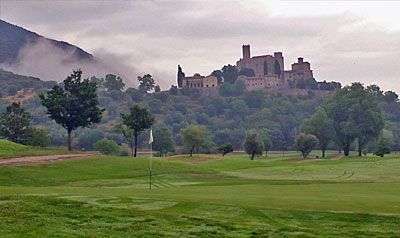
On the Robert Trent Jones Jr. Trail in Italy
For some strange reason Italy doesn't have the same golfing appeal as some other Continental European countries, such as France, Portugal and Spain. That's not to say Italy should be overlooked as a golfing destination – far from it.
We reported on the Friuli Venezia Giulia region during 2016 then travelled to Sicily the following year. We decided it was high time to head back to this beautiful country to check out further golfing options, this time in Italy's heartland.
Our contact at Braemar Golf recently informed us about a renovated Robert Trent Jones Jr. layout in Central Italy that might be of interest to us so we investigated further and found there were another couple of RTJII tracks within easy reach, prompting us to build a short trip around visiting all of these modern designs.
The American architect now has around thirty courses to his name in Europe, including Lubker and Miklagard in Scandinavia, Palmares and Penha Longa in Portugal, Lage Vuursche in The Netherlands and Zala Springs in Hungary.
We also decided to add a few other courses to our itinerary to shine a light on further golfing options between Rome and Florence, in the beautiful regions of Tuscany, Umbria and Lazio.
After flying into Rome’s Fiumicino airport, we drove two hours north towards Perugia then a little further on to the village of San Giovanni del Pantano, where Antognolla sits in hilly, wooded seclusion. Because a 12th century castle overlooks it, this course is located in rather a fairytale setting.
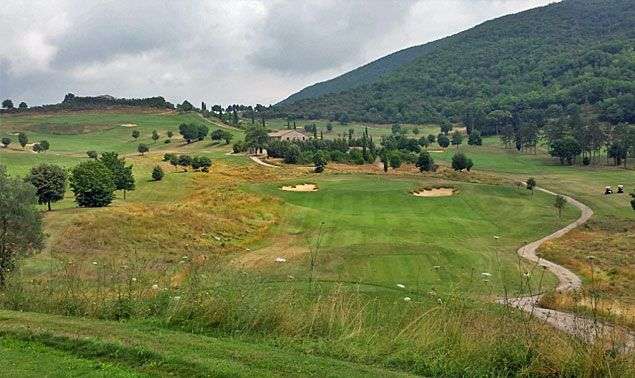
It actually opened at the end of the 1990s but the property has changed hands a few times since then, with the current owners investing heavily in Robert Trent Jones Jr.’s renovation of the golf facility. New irrigation and drainage systems have been installed to improve playing conditions and the bunker upgrade work is of the highest order.
The club is hosting the 43rd edition of the PGA of Italy Championship, played over three rounds, between the 14th and 16th September, and César Burguière, Director of Golf commented: “we have made huge progress in the last eighteen months and hosting this prestigious event is a great reward for all the hard work from the team.”
A 1.5-hour drive west of Antognolla brings you to La Bagnaia Golf and Spa Resort, situated a short distance from Siena, one of the cultural jewels in the Tuscany crown. The 18-hole layout here nestles within a huge, 1,100-hectare estate that dates back many centuries and spreads across two adjacent hamlets, Borgo Bagnaia and Borgo Filetta.
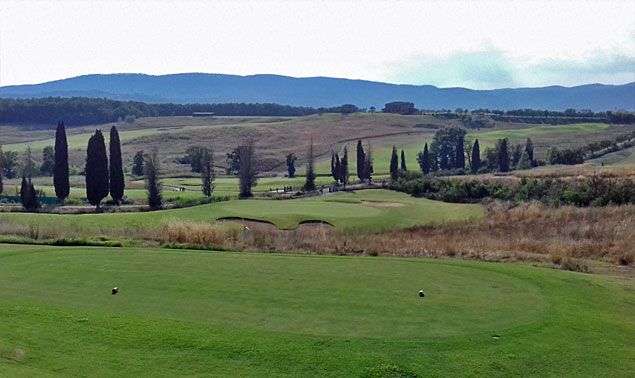
The course is another RTJII design which opened in 2011, designed in the style of an “inland links,” and fairways have been fashioned across a gently undulating landscape with the golf component complemented by a selection of accommodation options at a Curio Collection by Hilton boutique hotel. There’s also a nearby Buddha Spa by Clarins for post golf relaxation.
We then headed back south, taking in a couple of courses en route to our next Robert Trent Jones Jr. layout at Terre dei Consoli, close to the capital city of Rome. The first of these tracks on our sideways swipe was encountered at the Argentario Golf Resort & Spa on the Tyrrhenian coast, where the resort is set out on the Monte Argentario promontory.
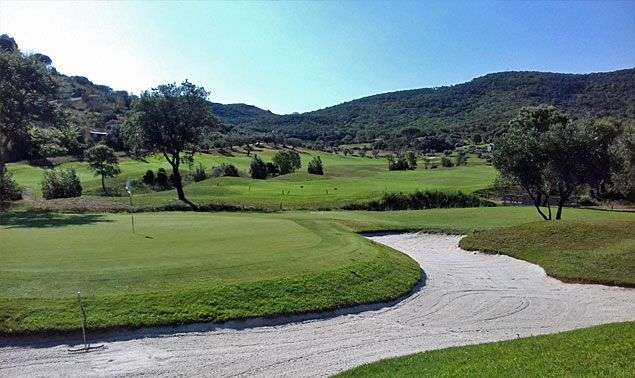
It’s a spectacular place to play golf, especially on the front nine as golfers are afforded fabulous long views out over Orbetello Lagoon. In such a natural spot, you can hardly imagine that part of the golf layout was built on a former landfill site.
The club has recently received the designation “PGA National Italy” – becoming the only PGA-licensed golf facility in the country – and it will hold this title for the next ten years. The venue has also been chosen to host the next four annual editions of the SkyCaddie Pro-Captain Challenge, when ten regional qualifiers from the UK will fly in to compete for the first prize.
Just over an hour’s drive inland from Argentario, the course at Terme di Saturnia occupies a stunning site between Montemerano and Poggio Murella in the province of Grosseto, and hot sulphurous springs have been used in the spa town of Saturnia to recuperate the mind and body for many decades now.
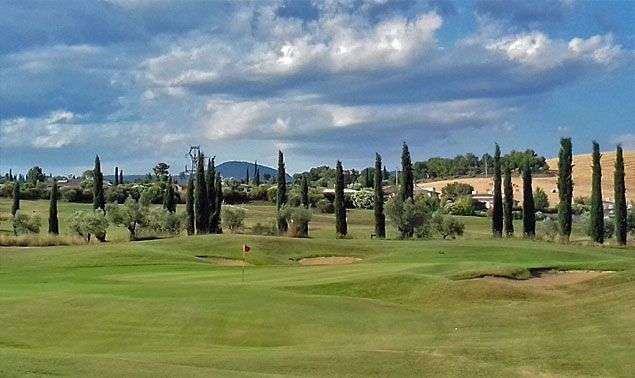
Opened for play in 2007, the 18-hole layout is a Ron Fream design (from his days working all over the world with Golfplan) which was built to respect and safeguard local nature, securing Italian Golf Federation ecological certification in the process. This easy-walking terrain now teems with a wide variety of birds that are attracted to the man-made water features on the course.
The third and final Robert Trent Jones Jr. course on our trip was situated outside Rome at Terre dei Consoli, next to the small town of Monterosi. There are actually twenty-seven holes in play here, comprising the 18-hole Championship course and a 9-hole Family course. A brand new clubhouse is nearly finished and will soon be in operation.
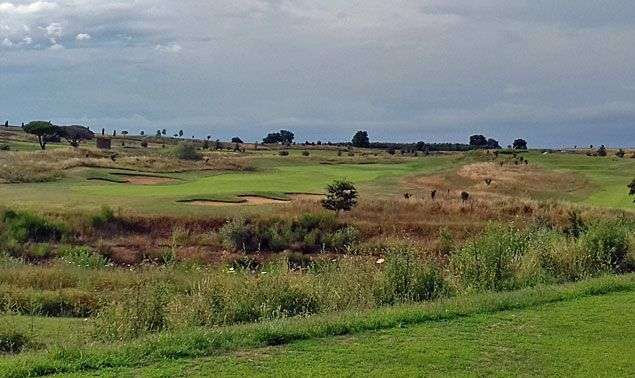
Interestingly, the historical pilgrim route called the Via Francigena – which starts at Calais in France and ends in Rome – runs through the course, though numbers walking this road are far fewer than the many thousands who travel annually on the Camino de Santiago in Spain, so golfers should not expect to see too many backpackers on foot heading for St Peter’s Basilica when they play here.
It made sense to round off our visit to Italy by checking out the three top rated courses in our Central Italy rankings, starting at Golf Nazionale, which is located immediately to the north of the Terre dei Consoli property. Previously known as Le Querce Golf Club, it hosted the World Cup of Golf in 1991, only a year after the club was launched.
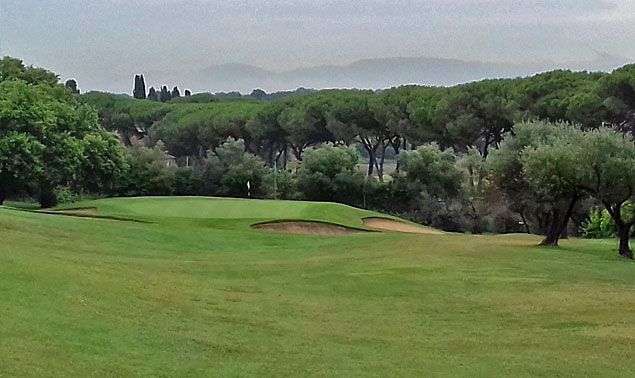
Ranked #3 regionally and #9 in the national listings, Golf Nazionale is a formidable 18-hole woodland track that’s laid out across a lovely rolling tract of land. It can be stretched to almost 6,500 metres from the back tees though it’s set in such an enormous property it could easily be extended further if required for big time competitions.
The West course at Olgiata Golf Club (ranked #2 regionally and #6 in Italy) is a 1960s production from the design studio of the English architect C. K. Cotton, who partnered Frank Penninck on many of the firm’s overseas projects. The layout has since undergone a new millennium makeover by Jim Fazio, with modifications made to fifteen holes.
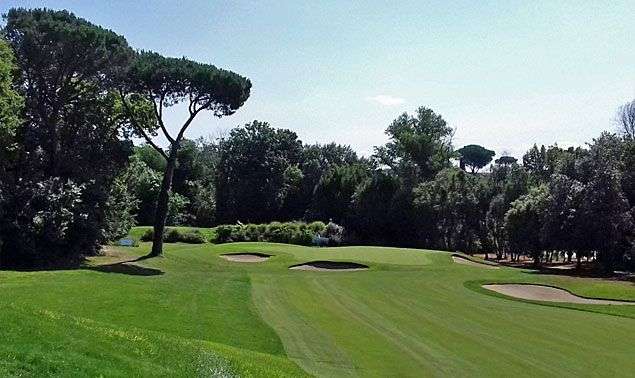
The club hosted the World Amateur Team Championship (1964) and World Cup for professionals (1968) not long after it first opened and it has since held another World Cup in 1984, along with a couple of Italian Opens (1973 and 2002) and this important international event returns to Olgiata in October.
On the other side of the Eternal City, not far from Leonardo da Vinci International Airport, you’ll find the century-old course at Circolo del Golf Roma Acquasanta, founded in 1903 by British expatriate golfers. According to The World Atlas of Golf, this layout “is not only the oldest surviving golf course in Rome but also in Italy”.
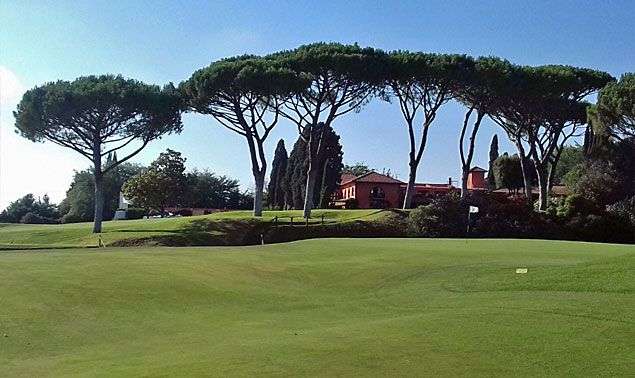
Ranked #1 regionally and #5 in the country, Roma Acquasanta also entered our Continental Europe chart at #90 two years ago. When first founded, the course was on the outskirts of the city but now it is surrounded by suburbia on all sides, though a certain timeless aura still exists around the clubhouse, especially with old ruins like the Claudius aqueduct close by.
One that got away
Before heading back to the UK, we thought we had also managed to set up a visit to the Championship course at Marco Simone to see how things were shaping up with the renovation work that’s currently underway on the course at it prepares to host the 2022 Ryder Cup matches.
We had even lined up Dave Sampson from European Golf Design who’d agreed to show us around, as he would be there at that time. Alas, the rug was pulled from under our feet at the last minute so that particular site visit had to be hastily cancelled. Still, there’s always next year (or even the year after)…
Jim McCann
Editor
Top 100 Golf Courses

A year in architecture – 2018 newsmakers (Part 1 of 3) by M. James Ward The 2018 calendar is drawing to a close and looking back there were a number of key newsmakers clearly providing a significant impact on the architectural side of things. In some cases the headliners of 2018 will carry forward into 2019. The golf world is quickly evolving on a range of fronts and the new year ahead will certainly carry both opportunities and challenges. The case of the Opens – R&A and USGA The two most significant major championships in golf are also the two oldest – The Open and US Open respectively. Hats off to the leadership of the R&A, starting with head man Martin Slumbers, in setting up Carnoustie for a grand event. Not that many years ago when The Open was played at Carnoustie in 1999 the layout was poorly prepared and a winning tally of +6 resulted in a three-man playoff – famous for the meltdown of Frenchman Jean van de Velde on the 18th hole but often forgotten was the sensational record ten stroke come from behind win by Scotsman Paul Lawrie. That year's Open was nothing less than a survivor's test with fairways choked with nearly impenetrable rough. Fast-forward to this year's event and the competitors uniformly praised the course. The eventual winner – Francesco Molinari – earned Italy's first possession of the famed Claret Jug. Carnoustie allowed for the full range of scoring possibilities and given the ultra firm and fast conditions it was a true test of nerve, skill and patience. The R&A and the team at Carnoustie showed how to properly showcase a true gem of architectural pedigree. Now with Royal Portrush on deck for the 2019 edition, the momentum for a grand event there is certainly a mouth-watering opportunity and one the golfing world will be primed to see. On the flip side was the USGA. The 2018 Open at famed Shinnecock Hills was touted by the association to be a lesson in remembrance from the colossal meltdown that happened during the last championship played there in 2004. At that event the USGA failed to supply needed water to a number of the greens – most notably the Redan par three 7th. Mike Davis, the USGA's top man, stated that the USGA had goofed at the 2004 event, however, all systems were ready to deliver a tournament that would not be marred with any such repeat situations. Those predictions were thrown out of the window during the event's 3rd round. Several pin locations were placed too near edges to render superior shot making to no effect. Instead of properly testing skill, competitors had to hope for Divine intervention, and luck, during the play of those holes. Complicating matters was the action of Phil Mickelson who clownishly struck a moving ball when he putted the 13th hole. Instead of swiftly giving Lefty the boot the USGA capitulated and applied only a two-stroke penalty. During Sunday's final round the USGA opted change tack and set up a benign Shinnecock Hills. A gritty final round performance by the defending champion Brooks Koepka helped reroute the storyline, but what should have been a positive glow from returning to eastern Long Island was dampened. Now with the 2019 event going to Pebble Beach for the 100th anniversary of that storied California layout's opening, there will be plenty of eyes watching to see if lessons learned from Shinnecock have clearly been heeded. Reversible courses The Old Course at St Andrews in Scotland is among the most revered layouts in all of golf. It is also quite unique in that the course has been played both in the traditional manner with the 1st tee commencing in front of the Royal & Ancient clubhouse and proceeding to an approach over the Swilcan Burn to the 1st green. But from 1872 to at least 1904 the Old Course was played in a reverse manner at certain times. One would start from the 1st tee but then play to the 17th green and so forth until the final hole being played from the 2nd tee and heading to the 18th green. Interestingly, while no Open Championship was played in a reverse manner, the 1886 British Amateur was played in that fashion. The idea of having a reversible course has been attempted in some form or fashion since then but in 2018 the concept gained momentum with distinct entries in that design category. Tom Doak, one of golf's most celebrated modern designers, proposed such an idea at Forest Dunes, a facility which already has a most successful resort layout called Forest Dunes. Doak, along with his design team, fashioned a pure reversible layout called The Loop, with the Black 18 played clockwise and the Red 18 played counter clockwise. The course in play alternates on a daily basis. Though opened in 2016, The Loop has gained plenty of attention from architectural gurus for its overall inventiveness. Fescue fairways also allow for a serious ground game option which provides for total elasticity in terms of strategic calculations. The Loop also has gigantic greens – averaging 9,800 square feet – thereby allowing for approaches from two different locations. Another version has come forward with Silvies Valley Ranch in Seneca, Oregon. Here architect Brad Hixson – the man responsible for the first rate effort at Wine Valley in nearby Walla Walla, WA – created a course that is not a pure reversible such as The Loop, but it does provide for a modified version that clearly adds to the versatility of the facility. Only last month the new reversible Bobby Jones Golf Course opened on the outskirts of Atlanta, with two flags on each of nine massive double-greens. Named after the champion golfer, the original 18-hole course opened in 1933. The idea for the reversible concept came from the late architect Bob Cupp – his son Bobby completed the work. This movement is not just limited to America. Frank Pont from Infinity Variety Design has also been busy on the reversible front and has created a 9-hole layout called Links Valley in the Netherlands and also at Golfanlage Patting Hochrieblick in Germany. Why is all of this important? Golf is facing serious challenges in bringing new people to play the game. Maximizing the virtues of any site is also a critical component and reversible courses attempt to provide a high degree of elasticity with playability a central dimension. Will the trend continue? Possibly. In certain circumstances with different variations providing a whole slew of golf course options. Ironically, it's very possible reversible courses are indeed going forward – no pun intended. The Hanse ascendancy Determining the best in any field is no easy task, especially when the topic of golf architecture is involved and art and science are woven together. But over the last several years it has become obvious to those with eyes to see that Gil Hanse sits at the top of the design pyramid. The 55-year-old started his career in the late 1980s as a design associate with another talent Tom Doak – both Cornell alums. Hanse moved on from Doak and opened his own practice – Hanse Golf Course Design, Inc., in 1993. Hanse also was one of the very few Americans to have designed a course in Scotland with the Craighead Links for the Crail Golf Society. Providing restoration and the updating of classic courses also became part of his strong suit and involved numerous courses throughout the Northeast section of America with work at Fenway, Ridgewood, Sleepy Hollow (with George Bahto), Fishers Island, Plainfield, Quaker Ridge, Essex County Country Club (with George Bahto), Aronimink and TPC Boston, to name just a few. The break through moment came when Hanse was selected from a highly competitive field to be the lead designer for the Olympic Course in staging the 2016 Summer Olympics in Rio de Janeiro. Hanse personally lived at the location to get things up and running and the course received praise for its inventive design. But, even before the Olympic breakthrough, Hanse demonstrated a major follow-up effort in Scotland in working with Mark Parsinen in the opening of Castle Stuart in 2009. Located near to Inverness the layout is regularly cited as being one of the very best modern courses to have opened in the last 25 years and has hosted several Scottish Opens. Hanse's star has continued to rise with the 3rd addition to the highly successful Streamsong project in central Florida, namely the Black Course. The layout features an impressive array of holes highlighted by generous fairway widths encouraging different playing angles and bolstered by massive putting greens with a range of different internal contours. This past October Ohoopee Match Club in Georgia opened and is already being touted as another Hanse gem worthy of possible World Top 100 status. Hanse also extended his relationship with Trump after his work at Doral Blue Monster with his effort at Trump International in Dubai, which opened in 2017. In addition, he updated two classical courses – Winged Foot (West) and LACC (North), which will host the US Open in 2020 and 2023 respectively. The event at LACC will be especially noteworthy as the venue was pursued for many years by the USGA in hosting America's national championship, but the ultra-private club had always turned it down. Hanse's involvement has resurrected a number of the design features created by George Thomas but also with a desire to test the world's best players. There's also the work he's engaged with now – revamping the famed South Course at Oakland Hills just outside of Detroit – dubbed the famed "monster" by Ben Hogan when winning the 1951 US Open. There's also been his active involvement with the St Andrews of American golf -- Pinehurst. Hanse completely reinvigorated a much-changed #4 course and provided a result more in tune with the sand hills region. His effort in Pinehurst went even further with his creation of The Cradle – a 9-hole short course that just completed its first full season. The Hanse impact is in all corners of the globe – consulting with Royal Sidney in Australia and in Ireland at Narin and Portnoo. There's also a new effort in Thailand at Ban Rakat Golf Club with a course called "Ballyshear" – the name of the house C.B. Macdonald occupied next to The National Golf Links of America on Long Island. Hanse is also committed to add a second course at Les Bordes in France. He is also being considered for a new layout in Frisco, TX on a property where the PGA of America will be relocating with its national headquarters shortly. That specific course could very well be the host site for future PGA Championships and Ryder Cup Matches. And there's also been major speculation that when a third course is broken at Forest Dunes in Roscommon, MI, his name will be the one selected for an 18-hole layout and related short course. The Hanse impact has carried over to television and his involvement with the Fox Network when doing golf broadcasts – most notably at the US Open when providing architectural analysis. What's amazing in this progression of designs is the level of detail each of the succeeding courses have carried forward. The Hanse batting average is truly without peer.

We produced an Italian resort article last summer which focused on several golf facilities spread across the mainland of Italy. We’re now revisiting this country, starting in the north then working our way south but this time we’re including the Mediterranean islands of Sicily and Sardinia, where we shine a light on half a dozen resorts that are worthy of closer scrutiny. Of all the “mainstream” golfing nations in Europe, Italy’s the one that hides its light under a bushel the most. Perhaps in this year of the Ryder Cup in Rome it’s time we knew a little more about it. Le Le Robinie Our latest Italian resort journey starts outside Milan near Malpensa airport, at Le Robinie Golf Club, where Jack Nicklaus designed his first Italian course in the early 1990s. The terrain’s pretty flat around here so a fair amount of soil was shifted to fashion the fairways, with the closing holes on both nines routed around a couple of lakes located close to the clubhouse. There’s also a fair number of bunkers dotted around this parkland layout so, with water and sand much in evidence, it’s resort golf all the way during a round at this modern facility. The accommodation extends to a number of guest rooms within the clubhouse, all with air conditioning and private bathroom with hot tub or shower. An additional seventy apartments – comprising studio, 2-room or 3-room apartments – are also available, each with a private patio, terrace or balcony. The leisure complex includes a swimming pool and a well-equipped gymnasium and the Restaurant Le Robinie (consisting of three dining rooms spread across three levels) serves dishes from a Mediterranean-themed menu. Poggio dei Medici Three hundred kilometres southeast of Milan, outside Florence, lies Poggio dei Medici Golf Club which opened for play thirty years ago. Anchored by a 16th-century hunting lodge, the Villa di Cignano, which acts as the clubhouse, the course is set amongst rolling hills with open parkland holes weaving across a picture postcard landscape. Starting in 1999, five consecutive editions of the Ladies Italian Open were staged here, with the five winners emerging from five different countries for these events. The Unahotels accommodation offers 70 guest rooms equipped with things like a mini fridge, flat-screen TV, bathrobes and dressing gowns. A cold buffet breakfast is served here every morning and the bar serves a wide variety of drinks throughout the day. There’s an outdoor swimming pool, jacuzzi and sauna and the spa centre also provides fitness classes. Guests who want more than just golf can expend more energy with mountain biking, horse riding and tennis. Terme di Saturnia A leisurely 3-hour drive south from Florence through beautiful Tuscan terrain brings us to the golf course in the old spa town of Terme di Saturnia, where the climate and the hot sulphurous springs are intended to aid recuperation and restoration of body, mind and spirit. Ron Fream set out the course here 16 years ago and it was built with the prime consideration of respecting and safeguarding local nature in order to gain Italian Golf Federation ecological certification. There are 124 guest rooms (39 of which are suites) at the resort and they vary in size from 18-25 square metre for a superior room to 75 square metres for a grand suite. The world-class spa has a thermal lake in the centre of the complex and there are 5 outdoor thermal pools, along with whirlpools, a sauna, sensory showers and a whole range of massages, body treatments, wellness and beauty programs – thermal therapies are even available for locals who are entitled to one cycle per year paid by the Italian NHS! Il Picciolo Etna We leave the Italian mainland now and head to the Mediterranean island of Sicily, where the 18-hole layout at Il Picciolo Etna Golf Resort & Spa has operated since the late 1980s. Host venue for the Ladies Italian Open from 1995 to 1997 (and again in 2011), the course occupies hilly ground to the north of Mount Etna, where holes are set out as two returning nines. Measuring almost 5,900 metres from the back markers, the course is a Luigi Rota Caremoli design which plays to a par of 72, with the very short par three 15th one of the feature holes on the scorecard. Accommodation amounts to 98 air-conditioned guest rooms within the hotel (21 deluxe, 22 cottage, 46 classic and 9 suites) along with 6 clubhouse rooms. Breakfast and dinner are served in La Ghiandaia restaurant, with lunch available in the Il Palmento clubhouse restaurant. The Birdie Bar is open in the evening and the Pool Bar is also available for refreshments from mid-morning to early evening during the summer. The Spa centre offers a number of services – from heated swimming pool to sensory showers – and there’s a range of body treatments and massages which can be arranged by appointment. Borgo di Luce I Monasteri On the south side of Mount Etna, positioned between the UNESCO World Heritage sites of Syracuse and Noto, the Borgo di Luce I Monasteri Golf Resort features an 18-hole (par 71) layout designed by architects David and Vincenzo Mezzacane. Holes are set out among groves of citrus trees and prickly pear cactus, with water hazards to be negotiated on several holes, most noticeably at the par three 9th and par four 18th where a pond separates the greens. The 5-star on-site hotel is a former Benedictine monastery comprising 102 exquisitely furnished guest rooms and suites located on the ground floor in various parts of the hotel’s three main buildings. The pool bar provides light lunches, while Le Ceramiche restaurant serves à la carte dinners based on Mediterranean cuisine. The Zagara spa offering guests the use of a Turkish bath, sensory shower, sauna, hot tub, relaxation area and a range of treatments. Verdura Occupying a wonderful 2-kilometre stretch of coastline on the west side of Sicily, the Verdura Resort’s 45-hole golf facility was designed by Kyle Phillips, opening for play just over a decade ago now. The two championship 18-hole layouts – East and West – are the main attraction, supported by a 9-hole par three course, driving range and practice area. Unfortunately, severe storms in late 2018 caused an embankment to breach, resulting in extensive flooding across both the original layouts. Not to worry, the architect was quickly called in to rearrange the routing and introduce several remodelled holes and before you know it, business was back to normal once again! The 5-star hotel is a member of the famous Rocco Forte Hotels Group, offering 156 guest rooms, 35 suites and 20 villas. Apart from golf, on-site activities include a Water Sports Club, Tennis Club, football pitch and an enormous 60-metre outdoor pool. For relaxation, there’s a luxurious spa set amid the olive, orange and lemon trees, with four thalassotherapy pools, a 20-metre lap pool, steam bath, sauna and 11 treatment rooms. The hotel’s organic farm is handpicked daily, with produce used in the preparation of gourmet meals for the six restaurants and bars. Is Molas Three hundred kilometres from the north coast of Sicily lies the south coast of Sardinia and the 27-hole golf complex at the Is Molas resort,near the small town of Pula. The original Championship 18-hole course was designed by the British partnership of Ken Cotton, Charles Lawrie and Frank Pennink in the mid-1970s, and there are views from the fairways to the nearby tower of Nora on the coastal ruins of an ancient Roman city. Fairways are routed over moderately undulating terrain, with water hazards coming into play between the 9th and 14th holes. The on-site 4-star hotel contains 70 air-conditioned guest rooms in four categories (classic, comfort, family and superior) and there are 2-room apartments in the nearby Residence Le Ginestre residential development. The restaurant seats up to 160 people in the garden of the hotel, facing on to the swimming pool. The covered terrace of the hotel pool bar (La Pergola) serves drinks, snacks and light meals prepared with typical Sardinian products while La 19, the “Golf Pool Club” is the ideal chill out place to relax after a round. Is Arenas Drive 2 hours northwest from Is Molas and you’ll arrive at the Is Arenas resort on the west coast of Sardinia, where Robert von Hagge carved out the resort’s 18-hole layout from dense woodland twenty years ago. Juniper and pine trees frame every hole here as the course winds its way across a mildly contoured, sandy-soiled landscape. The flamboyant American architect had this to say when asked what it took to produce such a fine golfing layout: “all the natural elements that it offers – sand dunes, forest, water and an exceptional climate – are a perfect combination for a unique experience (providing) an unlimited carpet of colours, fragrances and vital energies.” Accommodation at the Is Arenas Private Golf Foresterie boutique hotel is for golfers only – with a maximum occupancy of 40 players – and it comprises a number of air-conditioned villas, houses and suites nestled in the trees next to the golf course. Located one and a half kilometres away towards the beach, the 5-star Is Arenas Resort provides 70 guest rooms (varying from 30 square metre Classic rooms to 43 square metre Junior Suites) along with a wellness centre that incorporates a whirlpool, Turkish bath, fitness room and a variety of treatments. The beach is a 5-minute walk away, extending to six kilometres along the coastline. Pevero Another 2½-hour drive northeast from Is Arenas brings us to the smart Costa Smeralda district in the northeast corner of Sardinia and Pevero Golf Club. Fifty years ago, Robert Trent Jones Senior and Ron Kirby were engaged by none other than the Aga Khan to set out eighteen holes on the peninsula between the bays of Cala di Volpe and Volpero and six years after it first opened for play, the 35th edition of the Italian Open was staged here in 1978, with South African Dale Hayes winning the event by three shots from his nearest rivals. Overlooking the Mediterranean Sea, it’s a spectacular place to play but when the infamous Mistral wind blows then controlling a golf ball round this course is a tough task for even the professional players – as evidenced by the Dale Hayes aggregate total of five over par when he claimed the national Open 45 years ago. The golf club has close associations with four local hotels. The first, and nearest, is Hotel Cala Di Volpe, with 121 guest rooms and a large, lagoon-like saltwater pool. Close by, Hotel Romazzino has 100 guest rooms, including a Presidential Suite on the top floor. To the north of the golf course, the Cervo Hotel in the adjacent resort of Porto Servo has 80 guestrooms, ranging from 16 square metre classic rooms to a 142 square metre Presidential Suite. On the other side of this small seaside town sits the Hotel Pitrizza, with 66 suites and villas that look out onto the shimmering waters of Liscia di Vacca bay. If you have any comment to make on the above article then please use the “WRITE A RESPONSE” link at the bottom of this page. Jim McCann Editor Top 100 Golf Courses

Italian golf resort options We’ve been to France, Portugal and Spain during our latest series on golf resorts around Europe and we now switch our attention a little further east to Italy. There are approximately 92,000 registered golfers playing on around 240 courses across the country and there’s plenty of scope for visiting golfers being able to tee it up at one of the nation’s many non-private golf facilities. Bogogno We begin in Piedmont, in the northwest of Italy, at the 36-hole Bogogno Golf Resort. The 50-bedroomed hotel has operated since 2014 and its leisure amenities include a spa, swimming pools, small football pitch, tennis and floodlit padel courts. The restaurant and bistro next to the clubhouse offers Mediterranean-inspired cuisine, with a wine list selected from famous Italian and international wineries. Located just over an hour’s drive to the northwest of Milan, the resort lies in the foothills of the Monte Rosa massif mountain range with two late 1990s Robert von Hagge-designed 18-holes in play, named Bonora and Conte. The facility actually opened with only one course initially but it proved so popular the architect was asked to return to split this layout in two then add another nine holes to each half of the original. Castelconturbia Just a few kilometres away from Bogogno lies Golf Club Castelconturbia, with 27 holes in play. The on-site boutique hotel boasts 19 elegantly furnished guest rooms, all with air conditioning, satellite TV and views of the internal garden. The adjoining restaurant has a large, covered terrace and splendid views of the finishing holes on all three nines. Here you can sample the specialties of regional and international cuisine, accompanied by special labels from the wine cellar. Golf was played here until the early 1960s but the course then fell into disrepair and the club was abandoned. Twenty years later, Robert Trent Jones Senior revived the original 9-holer and added another couple of nines to form the layout that’s in operation today. Golfers who’d like to play the 18-hole course that staged the Italian Open twice during the 1990s should tackle the Blue and Yellow nines. Arzaga A 2-hour drive east from Castelconturbia will take you via Milan, Bergamo and Brescia to Lake Garda, with the 27-hole Arzaga Golf resort located close to the crystal-clear waters of the lake. The on-site Palazzo Arzaga Hotel and Spa are currently closed for renovation but there’s alternative accommodation meantime in the nearby Borgo di Drugolo, consisting of a dozen apartments that can each house between 2 and 8 guests or there’s Villa Montecroce, comprising four 2-8 person apartments with a large garden and outdoor swimming pool. The original 18-hole course opened in the late 1990s, designed by Jack Nicklaus II, making it one of Jack Junior’s rare golf projects located outside America. Gary Player added another nine holes so there’s quite an eclectic mix of styles here. The two layouts are quite different so it makes sense to play all 27 holes then make up your mind which nines you prefer. Castelfalfi Moving south into Tuscany, the 5-star hotel at the Toscana Resort Castelfalfi features a rather unique 31-room accommodation building – having been converted from a former tobacco warehouse – and there are also villas and apartments to rent. The property also features a wellness centre, along with heated indoor and outdoor swimming pools, and there are six restaurants serving high quality dishes prepared from Tuscan produce. The golfing element at Castelfalfi dates back to the early 1990s but Wilfried Moroder and Rainer Preissmann were called in around ten years ago to remodel the layout, creating the 18-hole Mountain course and 9-hole Lake course. The former is a challenging, championship-standard design, while the latter is a shorter, more open layout that’s suitable for a fun game with golfers of all abilities. La Bagnaia A pleasant one-hour journey further south through the beautiful Tuscan countryside will see you arrive at La Bagnaia Golf & Spa Resort, on the other side of Siena. It’s an IMG Prestige property with two medieval settlements, Borgo Filetta and Borgo Bagnaia, providing 99 room and suite accommodation options. There’s also a swimming pool, wellness centre and relaxing garden to stroll around. The 18-hole golf course is a Robert Trent Jones Jr. design, one of only three Italian projects the American architect has worked on. Set out as an inland links with rolling fairways routed around five attractive lakes, the course at Royal Golf La Bagnaia occupies a huge 325-acre portion of an even larger estate so only the super fit golfer should consider walking here – buggies are virtually essential, allowing you to stop occasionally and take in the magnificent surrounding views. Argentario Another hour’s drive to the coast from La Bagnaia brings us to the Monte Argentario promontory and the 5-star Argentario Golf & Wellness Resort, which was recently licensed as the PGA National Italy, a designation it holds until 2029. The four floors of the hotel are home to 73 rooms, starting with minimalist contemporary designed units on the first floor and ending with master and business suites (along with a wellness centre and gymnasium) on the fourth floor. All rooms have private balconies and there are adjacent villas for those who might prefer a little more privacy. The golf course is a joint effort from David Mezzacane and Baldovino Dassù who laid out the holes in 2006. Located next to the Duna Feniglia Nature Reserve, the front nine holes play down towards then back from the Orbetello Lagoon, with the back nine routed around olive groves on higher ground close to the clubhouse. San Domenico We end our Italian golf resort feature on the other side of the country, near the small fishing village of Savelletri on the coastline of Puglia, where the 5-star Borgo Egnazi provides the main accommodation option for golfers visiting the San Domenico Golf resort. There are 63 hotel rooms and a spa in the main building and a further 92 casetta offering self-catering facilities, together with four swimming pools and several restaurants and trattoria (including the Michelin-starred Due Camini). The golf course is a European Golf Design project (Andrew Hagar was the lead architect before he moved to Faldo Design) and it opened for play almost 20 years ago. Original stone walls and olive trees on the former farmland were retained during construction and large waste areas of crushed rock and indigenous vegetation were added to emphasise the local landscape surroundings. Eight editions of the European Challenge Tour Grand Final were staged here from 2005 to 2012 so it’s a championship-standard layout which is more than capable of testing the professionals. Jim McCann Editor Top 100 Golf Courses

