Our Interpretation of “Links”
A links course should look like a links and play like a links.
To quote Donald Steel from his book Classic Golf Links of England, Scotland, Wales and Ireland: “A study of British and Irish seaside links remains the finest way to understand the principles of golf course architecture… Imagination, attention to detail and eye for land is what separates the good from the also-rans, the truly authentic links by the sea from others that are, at best, only thin imitations.”
What should links courses look like?
Links courses should look natural, the way Nature intended.
That’s not to say man-made features cannot be added to enhance the appearance of a course. Ditches and small burns are sometimes introduced, often just in front of putting surfaces, to help with fairway drainage. Rough, shaggy mounding or small sand hills can also be established behind greensites to hide teeing areas on the following hole or to mask unsightly maintenance buildings.
The land should be near the coast; it may appear austere and barren.
Even if it’s only the sound of waves crashing onto the shoreline that can be heard from the other side of the dunes, there’s no escaping the fact that close proximity to the sea is an absolute must for an authentic links. The visual aesthetics of looking out along a sandy beach are to be cherished but such views, though highly desirable, are not absolutely essential.
The ideal topography should be undulating or rippling with sufficient ground movement to provide interest – there might even be the odd blind shot to be played.
Even the less optically endearing courses at Royal Liverpool and Royal Troon (Old), where the opening and closing holes occupy relatively dull golfing ground, are not short of contoured terrain around the turn on either layout. It’s virtually impossible to imagine any links course, even a modern one that has been largely shaped by machine, fashioned with flat, largely featureless golf holes.
Sand dunes of varying sizes will be present, stabilised by coarse grasses and sturdy vegetation, such as buckthorn and gorse.
The fairways of many links courses are laid out along the valleys between the coastal sand dunes that run along the shoreline and that’s why a large number of older links layouts were built with a basic out-and-back routing. Some of these dune systems are absolutely enormous, with towering sand hills on either side of some holes offering almost complete isolation from the rest of the course.
Playing surfaces comprise of fine, close-growing grasses (usually bents and fescues) thriving on firm, sandy, free-draining soil.
There’s no real place for lush grasses on a links as verdant fairways and greens are not conducive to allowing the golf ball to bounce and roll.
Bunkers are generally of the “pot” variety – small and deep.
Bunker faces are often revetted with grass sods or sometimes lined with railway sleepers for support and an insurance against wind erosion. These are found close to putting surfaces, where gathering swales ensure inaccurate approach shots are suitably punished. Fairway bunkering, on the other hand, is often less penal, with traps adopting more of a ragged-edged appearance.
How should links courses play?
Links courses should play firm and fast. The turf sward has a distinctive quality – resistantand durable but somehow pliable.
Target golf is the name of the game on most inland courses where the golf ball is best played through the airbut wind conditions on the coast – an almost ever-present element – dictates a ground game playing strategy. Low punched iron shots, bump and run shots and putts from just off the fairway often yield better results than hitting high iron shots in windy conditions into firm greens.
Putting surfaces (some of which might be double greens) are often simple, lie of the land areas that have been built to blend in with the surrounding green complex. For some greens, there might be a big dip on the approach (a false front) and humps and hollows surrounding the undulating surface, all of which is designed to repel imprecise approach play to the pin position.
Other considerations
The landscape around the perimeter of the links can be varied. The presence of a few trees or indigenous bushes is not unusual but larger areas of buckthorn and gorse adjacent to fairways must be kept in check as they can very quickly encroach onto playing areas, stifling the space around tees and greens.
There may well be a shoreline on one side of the links (the beach on the 1st holes at Machrihanish and North Berwick (West) is in play), houses on another (or in the case of Royal Lytham & St Annes houses on all sides) but the course may also abut farmland, woodland, a road or a railway (as at Prestwick and Aberdovey).
A number of links have cemeteries located next to the course and there are plenty of instances where a mobile home park is situated adjacent to a top track (Ballybunion (Old) has both). Within the confines of a links, you might come across such diverse things such as an old ice house (Nairn (Championship)) or a prominent war monument (Turnberry (Ailsa)).
Expect to occasionally meet non-golfers walking across or alongside a links course as they use public rights of way and coastal paths. You might also, in the case of Brora and Royal North Devon, have to wait for horses, cattle or sheep to move out of your way as they have the right to graze on the fairways.
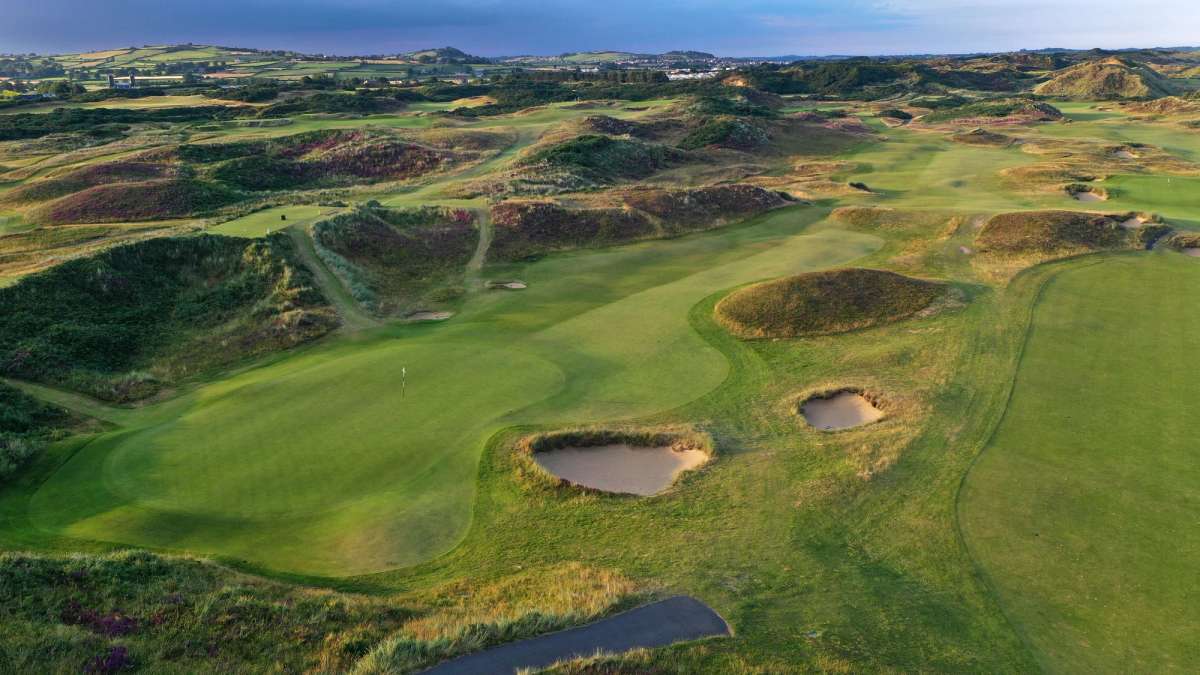
For golfers planning their first serious links trip, the choice often comes down to two destinations: Scotland or Ireland. Both offer some of the finest links courses in the world, dramatic coastal landscapes, historic clubs and enough quality to fill several days without playing the same type of golf twice. Scotland has the strongest claim to being the home of the game, with St Andrews, Muirfield, Carnoustie and Royal Dornoch among its headline acts. Ireland, meanwhile, can counter with Royal County Down, Royal Portrush, Ballybunion, Lahinch and Rosapenna. There is no wrong answer. But if you only have one major links trip to make, which country should come first? The Headline Courses Scotland has an almost unfair collection of famous links. The Old Course at St Andrews remains the obvious pilgrimage, while Muirfield, Turnberry Ailsa, Royal Dornoch and Carnoustie provide four very different reasons to keep travelling beyond the Home of Golf. North Berwick and Kingsbarns add further depth, and there is no shortage of excellent options once you move away from the biggest names. Ireland has an equally compelling collection. Royal County Down’s Championship course currently sits at No.1 in the Top100 GB&I ranking, with Royal Portrush at No.3, Ballybunion, Lahinch and Rosapenna Golf Resort’s St Patrick's Links adding further heavyweight options. That means neither country is short of a bucket-list course. Scotland perhaps has the deeper bench of instantly recognisable names, but Ireland can comfortably match it at the very top. Winner: Scotland The Links Experience The character of the golf is one of the biggest differences between the two destinations. Scotland gives you an extraordinary range of links experiences. The Old Course at St Andrews is steeped in history, Carnoustie has its fearsome reputation, Royal Dornoch delivers a more remote Highland setting, while North Berwick and Turnberry offer their own very different takes on seaside golf. Ireland's great strength is the way its links interact with the landscape. At Royal County Down, the Mountains of Mourne provide a spectacular backdrop. Royal Portrush winds through some of the biggest dunes in the British Isles, while Ballybunion, Lahinch and Rosapenna put the Atlantic firmly into the equation. That doesn't necessarily make Ireland's golf better, but it does give many of its standout courses a particularly strong sense of place. The landscape is part of the experience of playing the course. For golfers looking for variety, Scotland has the edge. For those who want their links golf to feel wild and dramatic, Ireland takes the cake. Winner: Ireland Building The Perfect Itinerary For the travelling golfer, the quality of individual courses is only half the equation. The other question is how easily you can string them together. This is one of Scotland's greatest strengths. A St Andrews trip can be built around the Old Course and supplemented by the six other courses at the St Andrews Links complex (New, Jubilee, Castle, Eden, Balgove, and Strathtyrum), alongside Kingsbarns Golf Links and Crail Golfing Society. An East Lothian trip can combine Muirfield with North Berwick, Gullane and Dunbar. Further west, the Ayrshire coast offers Turnberry, Royal Troon, Prestwick and Western Gailes. Then there is the Highlands, where Royal Dornoch, Castle Stuart and Nairn provide the foundations for another outstanding trip. Ireland has excellent clusters of its own. Dublin and the east coast provide several strong options, while the southwest combines Ballybunion, Lahinch and Waterville. Further north, Royal County Down and Royal Portrush provide the kind of double act that could justify an entire trip. But Scotland gives you more ways to construct the itinerary. You can build a four-day trip around one region or spend a week travelling between some of the game's most famous courses without running out of options. Winner: Scotland The Scenery and Atmosphere Both countries offer more than enough scenery to make the journey worthwhile, but they create very different kinds of golf trips. Scotland has the history and sense of occasion. A day at St Andrews can feel like a pilgrimage, while travelling through East Lothian or Ayrshire takes you between courses that have been part of the game for generations. Ireland's appeal is slightly less about pilgrimage and more about exploration. The best trips often involve following the coastline, travelling between small towns and remote clubs, and arriving at courses where the dunes and sea dominate the view. The golf can feel like part of a wider road trip, with the day's round followed by a trip to the pub to dissect it. Scotland has the stronger sense of golfing history, but Ireland arguably offers the more rounded sense of adventure. Winner: Ireland Value for Money Neither Scotland nor Ireland is a destination for the golfer looking for a bargain-basement holiday. The headline courses can command substantial visitor fees, particularly during the summer, but neither country requires you to play the most expensive courses every day. Scotland's depth is particularly useful, with an enormous range of courses allowing you to mix marquee names with excellent, less expensive links. That depth also means you can build an itinerary around value rather than simply ticking off the most famous names. Ireland competes strongly, particularly if you are prepared to venture beyond its biggest tourist destinations. But Scotland's sheer number of quality options makes it easier to put together a varied trip without paying a premium every day. Winner: Scotland The Verdict For your first links trip, choose Scotland. It has the history, depth, variety and concentration of world-class courses to make almost any itinerary work. The Old Course alone is enough to justify the journey, but Scotland's greatest strength is what comes after it. There are enough outstanding links to turn one trip into several without simply repeating the same experience. Ireland is the destination to choose when you want something a little more adventurous. Its great links are often dramatic, windswept and surrounded by scenery that can be as memorable as the golf itself. Royal County Down, Royal Portrush, Ballybunion, Lahinch and Rosapenna form an extraordinary collection, and the wider experience of travelling around the island only adds to the appeal. So Scotland wins the first-trip argument. But once you've made the journey, Ireland won't be far behind on the list.

Favourite Open Championship Courses Top 100 Editor finally gets round to playing all nine current Open Championship courses 5th October 2010 I recently played Royal Liverpool at Hoylake for the first time. Many people reading this will wonder why the Editor of Top 100 Golf Courses has taken until now to play one of – if not THE – most important and historical English golfing venue. The short answer is time, or rather lack of it. It takes a great deal of time – and money – to play different golf courses but I’m pleased to have played Hoylake even though it is my least favourite Open Championship course. I’ve now played all the current Open courses but my personal quest continues as I have yet to experience Musselburgh Old and Prince’s. The Open Championship was first played in 1860 at Prestwick and since then only fourteen venues have been used to host this reverent Major. Unlike many US Open venues, each and every one of these fourteen Open courses live up to their open reputation and can be played simply by booking a tee time in advance. The only exception to the rule is St Andrews, which will require a little luck in the daily ballot. Nine venues remain on the current Open rotation and they are all household names. I do not normally publish my personal thoughts about my favourite courses, but I thought there might be some interest and healthy debate from those who, like me, have played the full set of all nine current Open courses. If you have played them all, I’d be grateful if you would respond to this article by clicking on the “respond to this article” link at either the top or bottom of this feature. Please detail your favourite Open venues in your own personal ranking order. If you haven’t played them all, please keep your opinion under wraps until you have. Here’s my ranking for the current Open venues: 1. Turnberry (Ailsa) 2. Royal Birkdale 3. Royal Lytham & St Annes 4. Muirfield 5. Carnoustie (Championship) 6. Royal St George’s 7. St Andrews (Old) 8. Royal Troon (Old) 9. Royal Liverpool These are the other five venues that have hosted the Open: Royal Portrush (Dunluce), Prestwick, Royal Cinque Ports, Prince’s, Musselburgh Old. I'm aiming to play Prince's and Musselburgh Old as soon as I can. Keith Baxter – Editor

Scotland's west coast offers unique variety at reasonable prices. The Glasgow and Clyde Valley region combines world-class Open Championship venues with outstanding inland moorland courses designed by legendary architects. The region stretches from Glasgow south to the borders, featuring everything from Trump Turnberry's dramatic coastal holes to hidden moorland gems. The area's main appeal is the price point - championship-quality golf without the premium fees found elsewhere in Scotland. Glasgow Airport serves as the perfect gateway, with courses ranging from immediate airport vicinity options for beating jet lag to must-play venues requiring advance planning. Championship Golf in Glasgow & Clyde Valley Five world-class venues belong on every serious golfer's Scottish itinerary. Trump Turnberry Ailsa dominates the conversation with its dramatic clifftop holes and Open Championship pedigree. The iconic lighthouse backdrop and Bruce's Castle ruins create one of golf's most photographed settings. Prestwick Golf Club holds special significance as the birthplace of the Open Championship. This historic links demands strategic thinking with its blind shots and quirky features that have challenged golfers since 1860. Royal Troon presents the ultimate test of links golf with its demanding Old Course and the infamous Postage Stamp 8th hole. The recent Open Championship venue delivers an unforgettable championship experience. Western Gailes offers a slightly more accessible championship experience. This classic links layout provides excellent conditioning and strategic interest without the premium pricing of its more famous neighbours. Loch Lomond rounds out the premier tier with its stunning Highland setting and impeccable Tom Weiskopf design. Access requires planning and connections. Glasgow's Best Kept Golf Secrets The region's hidden gems showcase exceptional moorland courses that international visitors rarely discover. These offer outstanding value and unique playing experiences. Bonnyton Golf Club represents one of only four Dr. Alister MacKenzie designs in Scotland, featuring the master's signature undulating greens and strategic bunkering. Located within 30 minutes of Glasgow Airport, this hidden treasure costs approximately £80-100 (€95-115/$105-130) and provides an authentic MacKenzie experience without Augusta National's crowds. Ranfurly Castle Golf Club sits just 15-20 minutes from Glasgow towards Gourock, offering exceptional moorland golf in a stunning setting. The course combines strategic interest with beautiful Highland views at roughly £100-120 (€115-140/$130-155). Paisley Golf Club provides immediate airport access - just 5 miles from Glasgow Airport - making it perfect for jet lag rounds or quick golf fixes. This recently elevated Scottish Top 100 entry offers excellent value at approximately £60-80 (€70-95/$80-105) with same-day tee times often available. East Renfrewshire Golf Club and Kilmacolm Golf Club complete the moorland collection, both offering championship-standard conditioning at reasonable green fees around £80-120 (€95-140/$105-155). These courses feature layouts by respected designers on beautiful moorland terrain. Lanark Golf Club provides a recent Scottish Top 100 entry with solid design and stunning countryside views at budget-friendly rates of approximately £50-70 (€60-80/$65-90). Sample Itinerary: 5-Day Glasgow Golf Adventure Day 1 - Arrival: Land at Glasgow Airport, collect rental car, play at Paisley Golf Club for jet lag relief. Overnight in Prestwick for an authentic golf town atmosphere. Day 2 - Championship Links: Morning round at Prestwick Golf Club, afternoon at Western Gailes. Experience golf history and championship-quality links in one day. Evening meal and pints in Prestwick's traditional pubs. Day 3 - Moorland Discovery: Play Bonnyton in the morning for a rare MacKenzie experience, followed by an afternoon at Ranfurly Castle. Both courses offer unique inland Scottish golf within 45 minutes of each other. Day 4 - The Crown Jewel: Full day at Trump Turnberry Ailsa with proper caddie experience. Allow extra time for lunch in the hotel. Consider staying overnight at Trump Turnberry for the complete resort experience. Day 5 - Flexible Options: Royal Troon if booking is secured, or combine East Renfrewshire and Kilmacolm for exceptional moorland golf. End with a celebratory meal in Glasgow before departure. Glasgow Travel Logistics Getting to Glasgow's golf courses proves straightforward compared to more remote Scottish destinations. Glasgow Airport provides the ideal entry point, positioned 30-40 minutes from most courses with excellent rental car facilities. Transportation Strategy: Rental cars provide essential flexibility for course hopping, though many hidden gems sit within 30 minutes of Glasgow Airport. Edinburgh Airport works as an alternative, adding roughly 30 minutes to travel times but offering potentially better international connections. Weather Reality: Scottish weather demands preparation for all seasons, regardless of travel dates. April through June typically provides the most stable conditions, contrary to popular belief that summer months offer better golf weather. Pack layered clothing, including waterproofs, as conditions can shift dramatically during single rounds. Equipment Considerations: Most courses accommodate club rentals, but serious golfers should travel with their equipment. Caddie services are standard at championship venues - budget approximately £100 (€115/$130) including gratuity. Walking remains the predominant culture, though push trolleys are widely available. Cultural Preparation: Championship courses like Prestwick and Royal Troon maintain jacket-and-tie traditions for clubhouse dining, though visitor policies have relaxed slightly. Embracing these traditions enhances the Scottish golf experience. Language and Communication: Standard English throughout, though local golf terminology and accents may be difficult to understand initially. Scots are welcoming to international golfers, particularly those showing a genuine interest in golf heritage. Accommodation for Golf Adventures The region offers options from authentic golf towns to luxury resort experiences. Prestwick works as the optimal base for golf-focused visitors, providing an authentic Scottish golf town atmosphere like St Andrews but without the crowds. The town offers numerous B&Bs, small hotels, and holiday rentals within walking distance of traditional pubs and restaurants. Glasgow accommodation suits visitors wanting metropolitan amenities and cultural experiences beyond golf. The city provides excellent hotel options and easy access to both championship courses and hidden gems, though it adds 30-45 minutes to find golf on a daily basis. Trump Turnberry offers luxury resort accommodation for those prioritising premium amenities. The hotel provides world-class dining and spa facilities. Dundonald Estate provides surprising accommodation with stunning facilities and excellent dining. Many visitors choose Dundonald for luxury accommodation whilst playing elsewhere. Local B&Bs and guesthouses throughout the region offer authentic Scottish hospitality and insider knowledge from hosts who understand golf culture and can provide valuable local recommendations. Glasgow's Culinary Scene The region's dining culture is somewhere between urban sophistication and traditional coastal fare. Premium dining experiences centre around Glasgow, where its reputation has grown significantly, offering international visitors genuine fine dining. Traditional Scottish breakfast features Lorne sausage (square sausage), black pudding, haggis, and potato scones alongside standard breakfast items. Most accommodation providers offer authentic Scottish breakfast options. Coastal communities excel in fresh seafood, particularly around Largs and North Ayrshire, where numerous restaurants specialise in locally caught fish and chips. Prestwick's pub culture deserves special mention, with traditional establishments offering local ales, whisky selections, and hearty pub meals perfect for post-round discussions. The town's golf-centric atmosphere creates natural opportunities for meeting local golfers and sharing course experiences. Ice cream parlours throughout the region provide unexpected treats, with local establishments offering artisanal flavours and traditional Scottish ice cream experiences. Don't miss trying Irn-Bru, Scotland's iconic orange soft drink that outsells Coca-Cola locally. Booking Golf in Glasgow & Clyde Valley Advance planning requirements vary dramatically between championship venues and hidden gems, with booking essential for peak season access to premier courses. Championship courses require 6-12 months advance booking for peak season play (June-August), though shoulder seasons (April-May, September-October) offer better availability with only 2-3 months advance planning needed. Loch Lomond demands connections or corporate access. Hidden gems provide remarkable flexibility, with same-day bookings frequently available except during competition days. Courses like Paisley, Bonnyton, and East Renfrewshire accept walk-up players most days, making them perfect for spontaneous rounds or jet lag relief. Activities for Non-Golfing Partners The region offers compelling attractions for non-golfers, ensuring successful mixed-group travel experiences beyond championship golf courses. Ayr Racecourse provides exceptional entertainment value, hosting prestigious events including the Scottish Grand National and Ayr Gold Cup. Saturday race meetings offer full-day experiences with dining and betting entertainment. Robert Burns Heritage Trail centres around the poet's cottage and birthplace in Alloway, providing cultural immersion into Scotland's national poet's life and works. The Burns Museum and the surrounding countryside offer half-day cultural experiences. Glasgow Cultural Scene delivers world-class museums, galleries, and shopping districts. The Kelvingrove Art Gallery and Museum, Merchant City district, and West End provide full days of urban exploration with dining and entertainment options. Local Football Matches offer authentic Scottish cultural experiences, with several regional teams providing passionate atmospheres that American visitors particularly enjoy. Coastal Exploration includes ferry services to nearby islands, coastal walks, and traditional seaside towns that showcase Scotland's maritime heritage. These activities complement golf-focused itineraries without requiring extensive travel. Insider Local Knowledge Experienced local golfers share crucial insights that can transform visiting experiences from good to exceptional. Weather Timing: April, May, and June typically provide better weather than the peak summer months of July and August, when storms become more frequent. Local records show more rain delays during the traditional peak season than shoulder periods. Airport Strategy: Glasgow Airport's proximity to excellent courses makes it ideal for jet lag golf. Five quality courses within 30 minutes provide immediate options: Paisley (closest at 5 miles), Bonnyton, East Renfrewshire, Kilmacolm, and Ranfurly Castle. Cultural Integration: Embracing jacket-and-tie traditions at historic clubs enhances the complete Scottish golf experience. Prestwick's lunch service and green room atmosphere represent golf culture that's disappearing elsewhere in the world. Architecture Appreciation: The region's moorland courses showcase work by legendary architects, including MacKenzie, MacKenzie Ross, and James Braid. These inland courses offer architectural interest that many international visitors miss by focusing solely on links golf. Value Recognition: Second-tier courses often provide nearly championship-standard experiences at a fraction of premier venue costs, making extended golf holidays more affordable whilst maintaining quality expectations. Budget Planning & Travel Value Understanding realistic costs enables proper trip planning whilst maximising golf experiences within budget constraints. Championship Course Fees: Premier venues range from £200-500 (€230-580/$260-650) per round, with Trump Turnberry commanding top prices. Royal Troon and Prestwick fall in the £250-350 (€290-405/$320-450) range during peak season. Hidden Gem Value: Moorland courses provide exceptional value at £50-120 (€60-140/$65-155) per round, often delivering championship-standard conditioning and design at a fraction of premier venue costs. Total Trip Estimates: Luxury golf holidays including championship courses, quality accommodation, and dining average £300-500 (€350-580/$380-650) per person per day. Mid-range experiences focusing on hidden gems and B&B accommodation run £150-250 (€175-290/$195-320) daily. Money-Saving Strategies: Shoulder season travel (April-May, September-October) reduces green fees by 20-30% whilst often providing better weather conditions. Combining championship venues with hidden gems creates balanced itineraries without premium pricing throughout. Additional Costs: Factor £100 (€115/$130) per caddie, including gratuity at championship venues. The region's strength lies in offering genuine championship golf experiences alongside exceptional value options, creating flexible budget frameworks that accommodate various travel styles without compromising quality expectations.

