
Review of the Month May 2019 – Bethpage (Red)

Bethpage Black's notorious warning sign gets all of the attention on the clubhouse patio, yet the opening hole that merits such a sign belongs to the "Red" course.
The 460-yard opener does well to remind players upfront that it is "Baby Black" in the same sense that Venus is the second-best player in the Williams household. Although it lets up—mostly—following what some argue is the toughest opener in golf, the "Black-lite" references remain relevant.
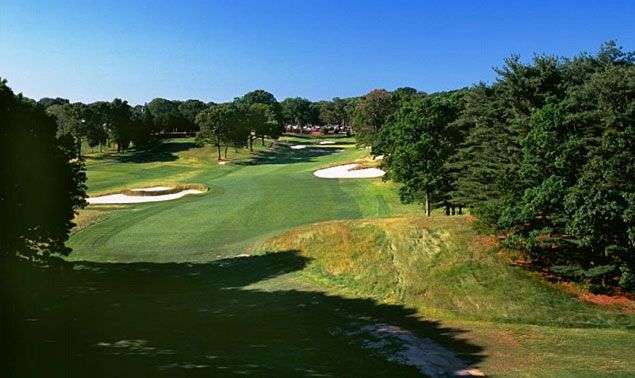
Bethpage Red 18th hole photo courtesy of Bethpage State Park
The yardage is long, and there are only two Par 5s to water it down. Tillinghast's bunkering takes a more merciful approach to mid-handicappers, and almost all of its greens will accept a run-up...at least more graciously than Big Brother. Still, several holes offer passable passes for the Black experience. No. 13 features its own "Great Hazard," and the "Red Redan" at No. 4 might not live up to Black No. 3, but it certainly surpasses the average municipal Par 3. And, at the end of the round, as has been stated countless times before us, is a Par 4 that is reportedly under consideration to sub-in for Black No. 18 come 2024.
If you thought Black's greens played rather boring for the PGA Championship, Red's will induce considerable yawns. But, if you ask the average Long Island resident, a simple two-putt is appreciated after challenging these fairways. Indeed, Red is the preferred route for lifers, while Black is a once-a-year treat/punishment.
Review of the Month May 2019 selected by Editor-in-Chief, Keith Baxter, and sponsored by TaylorMade – click to read Ryan's full review and more about Bethpage (Red).
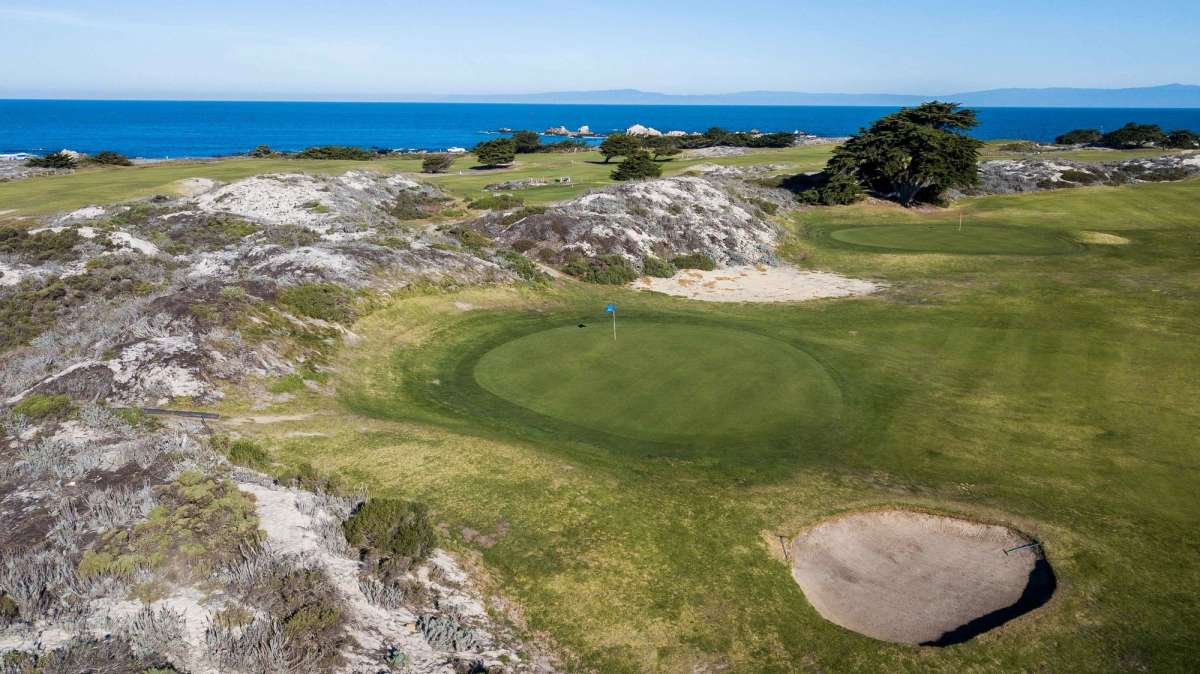
The stigma that good golf has to be expensive is one worth challenging. From windswept prairie in Nebraska and oceanfront holes in California to championship layouts in the shadow of Hazeltine and Bethpage, these are courses that offer much more than a cheap round. All 10 can be played for $100 or less, but the price is only part of the appeal. They have tournament history, famous designers, memorable settings and the kind of layouts that can stand alongside much more expensive golf. Green fees listed are standard rates and do not take twilight or off-season discounts into account, meaning some courses can be played for even less. Wild Horse Golf Club (Nebraska) Nebraska Ranking: 6th | Green Fees: From $68 Why Play it: Outstanding value on a natural prairie layout Best For: Golfers who love natural, windswept courses If you’re looking for proof that great golf doesn’t have to come with a great big price tag, head for the Nebraska prairie. Wild Horse Golf Club is one of the best-value public courses in America, combining excellent golf with a setting that feels a world away from the usual resort experience. Designed by Dave Axland and Dan Proctor, Wild Horse opened in 1999 after the pair spent more than a decade working for Ben Crenshaw’s design company. The result is a natural-looking layout shaped by native grasses, rolling prairie and dramatic blow-out bunkers rather than rows of manicured hazards. Wild Horse has earned plenty of recognition over the years, including a place in the Top100 US rankings, although it has sometimes been overshadowed by nearby Sand Hills. Tom Doak once described it as a “very good golf course” that is often overlooked because of its affordability. Warren Golf Course at Notre Dame (Indiana) Indiana Ranking: 7th | Green Fees: From $75 Why Play it: A Coore & Crenshaw design on the Notre Dame campus Best For: Fans of Coore & Crenshaw Set among 250 acres of woodland on the northern edge of the University of Notre Dame campus, the Warren Golf Course offers the unusual combination of championship pedigree and accessible green fees. Designed by Bill Coore and Ben Crenshaw, the course opened in 2000 and has since become one of Indiana’s most highly regarded public layouts. The Warren Course is home to Notre Dame’s men’s and women’s golf teams and has hosted a string of major amateur events, including NCAA Division I regional championships and the 2010 U.S. Women’s Amateur Public Links. It also hosted the U.S. Senior Open in 2019, bringing some of the biggest names in senior golf to South Bend. The setting is a big part of the appeal, with the course winding through mature woodland within a Certified Audubon Cooperative Sanctuary. For golfers visiting Notre Dame or passing through Indiana, the Warren Course offers a chance to experience one of America’s leading modern design partnerships without a leading-edge green fee. Pacific Grove Golf Links (California) California Ranking: 71st | Green Fees: From $66 Why Play it: Oceanfront golf just minutes from Pebble Beach Best For: Golfers looking for a Pebble Beach alternative Just five miles from Pebble Beach, Pacific Grove Golf Links offers a very different way to experience the Monterey Peninsula. This old-school municipal course runs along the Pacific Ocean, with a front nine that feels more like a traditional parkland course before the back nine heads into the dunes overlooking the water. The course has an impressive design lineage, too. US Amateur Champion Chandler Egan, who helped Alister MacKenzie redesign Pebble Beach, laid out the original nine holes in 1932, while Jack Neville, one of the original designers of Pebble Beach, later extended Pacific Grove to 18 holes. The result is a quirky and enjoyable layout, beginning with back-to-back par threes before throwing in consecutive par fives at the fifth and sixth. On the oceanfront back nine, short par fours and tumbling fairways provide plenty of character. Bethpage - Red Course (New York) New York Ranking: 6th | Green Fees: From $90 Why Play it: A championship-calibre course in the shadow of the Black Best For: Golfers who want a taste of Bethpage without playing the Black Bethpage Black might get all the attention, but the Red Course at Bethpage State Park is a formidable test in its own right. Known by some as “Baby Black”, the Red is widely regarded as the standout alternative to its more famous neighbour and offers a chance to experience Bethpage without the Black's famously difficult tee-time scramble. The course features a series of strong doglegs and demanding holes, with Tom Doak once suggesting that the Red might have received similar acclaim had its more famous neighbour never been built. He particularly praised the opening and closing holes, the long fifth and the short sixth, where an aggressive drive can quickly turn into trouble. The Red doesn't have the Black's enormous bunkers or intimidating reputation, but that doesn't make it easy. For golfers visiting Long Island, it offers another opportunity to play championship-level golf at one of America's most famous public facilities. Bandon Crossings (Oregon) Oregon Ranking: 21st | Green Fees: From $70 Why Play it: Affordable golf in one of America's biggest golf destinations Best For: Golfers visiting Bandon Bandon has become one of America's great golf destinations, but you don't have to play the resort courses to enjoy a round in the area. Bandon Crossings was created specifically to offer affordable public golf for locals and visitors, providing a lower-cost alternative to its famous neighbours. Built on the site of an old cattle and sheep ranch, the course was developed by local couple Rex and Carla Smith with Oregon architect Dan Hixson. Rather than compete directly with Bandon's collection of links courses, Crossings takes its inspiration from the heathland golf found around London. The course may sit away from the Pacific coastline, but that doesn't make it an afterthought. Its fairways move quickly across the property and around Twomile Creek, creating a challenging and enjoyable test that offers a different experience from the resort layouts. Montauk Downs State Park Golf Course (New York) New York Ranking: 80th | Green Fees: From $95 Why Play it: Robert Trent Jones design at the tip of Long Island Best For: Golfers exploring Long Island At the eastern tip of Long Island, around 120 miles from downtown New York City, Montauk Downs feels a long way from the hustle of Manhattan. Golf has been played here for decades, with the current layout shaped by Robert Trent Jones Sr. and his son Rees Jones in 1968. The Jones family connection is one of the course's biggest attractions, with Rees returning alongside Bryce Swanson in 2008 to restore the bunkers and tees on the par-three holes. The result is a classic parkland layout that combines the character of an older course with the challenge expected from a Jones design. Its location also makes Montauk Downs a natural addition to a Long Island golf trip, particularly for golfers looking to explore beyond the courses closer to New York City. Gold Mountain Golf Club - Olympic Course (Washington) Washington Ranking: 13th | Green Fees: From $35 Why Play it: Championship golf at a 36-hole public facility Best For: Golfers looking for a full day of golf The Olympic Course at Gold Mountain Golf Club is proof that you don't need a famous resort or hefty green fee to find championship-calibre golf. Part of a 36-hole public facility owned and operated by the City of Bremerton, the course was designed by John Harbottle III and opened in 1996, 25 years after the original Cascade Course. The tree-lined layout is slightly hillier than its older sibling but remains eminently walkable, with annual bluegrass covering the tees, fairways and greens. Its quality has been recognised on the national stage, hosting the U.S. Amateur Public Links Championship in 2006 and U.S. Junior Amateur Championship in 2011. There are plenty of memorable holes, including the short fourth, the water-guarded ninth and the 188-yard 16th, which plays across a lake to the green. The closing par four also offers a tempting birdie opportunity. With the Cascade Course next door, golfers can play 36 holes at Gold Mountain for less than $100, with green fees for the second 18 starting at just $30. Chaska Town Course (Minnesota) Minnesota Ranking: 26th | Green Fees: From $63 Why Play it: Championship golf just minutes from Hazeltine National Best For: Golfers visiting the Twin Cities Just a few miles from Hazeltine National, the Chaska Town Course offers a chance to play a highly regarded championship layout without the private-club price tag. Owned and operated by the local municipality, the course occupies 285 acres of oak groves, open prairie and marshland. Designed by Arthur Hills and opened in 1997, Chaska Town has even shared the stage with Hazeltine. The two courses co-hosted the 2006 U.S. Amateur Championship, while Chaska Town was also scheduled to co-host the 2020 U.S. Junior Amateur before the tournament was cancelled due to the COVID-19 pandemic. The layout plays to 6,817 yards from the back tees and features two returning nines, each finishing with a par five. The short fourth and 16th offer opportunities to score, while the right-doglegging ninth provides a tougher test. Brackenridge Park Golf Course (Texas) Green Fees: From $56 Why Play it: A Tillinghast classic with Texas Open history Best For: Golfers who love historic golf courses The oldest public 18-hole course in Texas, Brackenridge Park Golf Course has been a fixture in San Antonio golf for more than a century. Designed by A.W. Tillinghast in 1916, “Old Brack” went on to host 21 editions of the Texas Open between 1922 and 1959. The course has retained much of its historic character thanks to a restoration by John Colligan, who brought the layout back to life while preserving Tillinghast’s original design. The front nine is relatively tight, while the back nine opens out and provides some of the course’s strongest holes. Brackenridge is also part of the Alamo City Golf Trail, making it easy to combine with several other public courses in the San Antonio area. Brown Deer Park Golf Course (Milwaukee) Green Fees: $81 Why Play it: A former PGA Tour venue with Tiger Woods history Best For: Golfers who like tournament pedigree Brown Deer Park Golf Course combines affordable public golf with a notable place in PGA Tour history. Located just north of Milwaukee, the course hosted the Greater Milwaukee Open from 1994 to 2009, with Tiger Woods making his professional debut here in 1996. Founded in 1929, the course was originally designed by George Hansen before being partially redesigned by Andy North and Roger Packard. Today, its tree-lined fairways and stream that winds through the property provide a classic parkland setting. The Tiger Woods connection is an obvious draw, but Brown Deer offers more than a famous name in its history. Its accessible layout and location make it a practical option for golfers visiting Milwaukee. For golfers who enjoy playing courses with a tournament past, Brown Deer offers a chance to follow in the footsteps of some of the game's biggest names without paying resort-course prices.
Review of the Month April 2021 – Lawsonia (Links) Lawsonia is my favorite public course in America. And by public I mean accessible; $500 to play Whistling, Kiawah or Pebble is as high a barrier to entry you can have without closing the courses to guests. Andy Johnson put it best when he said you could rent a limo with your friends, drive up from Chicago, play 36, come back, have a steak dinner, and you'd still spend less money than you would just for the tee time at the Straits. And in my opinion, Lawsonia is a better golf course. It's a great test of golf with so many nuances mixed into the routing that creates an unforgettable golf experience. The first is a starter that perfectly encapsulates what Lawsonia is all about. A blind tee shot that curves to the right makes it tough to judge just where to aim, but to that effect it's almost fun. The green is extremely bold, but unless you miss left you don't really notice just how bold it is until you see it from five fairway, when you see the 12 foot high bank and think "We seriously already played that?!" The second is another blind tee shot with a second shot downhill over traps to a beautiful green site. The third is a short par 4 with old barns lining the property to the left. Nothing feels more Wisconsin than waving to the owner as she gets back to the farmhouse after walking her dog. Four is an uphill Redan type par 3. Because of its length and the depth of the green, it’s an easy GIR, but you'll have some extremely lengthy looks. Five is a short par 5 with one of the most severe greens sloping back to front except for a pocket in back right. Lawsonia Links 6th hole I was about to type that the stretch of 6-8 was the best on the property but then I changed it to 6-10, 6-12, 5-13, and then realized that I can't even name the best stretch of holes, the entire course is a stretch of 18 perfect ones. Six is a beautiful downhill driving hole that plays up to a green sitting on a knob guarded by a tough false front. Lawsonia Links 7th hole I've played hundreds of courses in my life, and therefore close to a thousand par threes, but seven is my favorite one shotter of them all. It’s a short distance to a green that seems to be just jutting out of the hillside. The urban legend is true – the green is in fact built atop an old boxcar, forcing a right miss to be nearly 20 feet below the surface. The green itself features cool rumples that make a good chance at birdie or a three putt depending on what side of the ridge you're on. When I played the 8th for the first time I kind of hated it, the fairway slopes away and you play up to a well-bunkered green. It's 300 yards but you really can't drive it. However, after playing it more and more I've understood just how strategic it is. Challenging the fescue allows a flat lie and good angle, but bailing out left puts the ball above your feet and the green running away from you. The ninth is almost reminiscent of the Great Hazard template of Tillinghast, with two massive bunkers protecting a shoot uphill to the green. The hole itself doglegs around a swath of fescue with the more aggressive player being rewarded with a chance at getting home in two (as I did with a driver off the deck). The tenth is one of those holes that reinforces how irrelevant par is. It’s a wild green and plays 230 even from the white tees. When the course was built, and still even to this day most people hit driver off the tee. But you can't go into a golf hole thinking, "this is stupid", but instead you have to realize "my competitor is playing the same hole". In that case, wouldn't it be more fun to play a type of hole you've never seen before? Lawsonia Links 10th hole Eleven is a welcome to the rolling back half of the property, playing over a massive valley. 12 is another Redan-ish style green that is so much fun to play. While 7 is my favorite par three in the world, 13 comes close to being my favorite par five (16 at Ballyneal takes the cake there). It’s a long hole and the entire strategy is set up for where you're going to leave your second shot. The main feature of the hole is the MASSIVE valley short of the green. Playing aggressively over the bunkers can give you an opportunity to get home in two, but at the same time missing 30 yards short can force you all the way down to the bottom with a blind shot. Bailing out right off the tee allows you to still get up within wedge distance, but you can also decide to lay back to have a view of the green. It’s a truly unique hole that just isn't seen in the modern design. Lawsonia Links 13th hole Fourteen is another all-world short one-shot hole with a million different bowls and ridges that can allow you to make any score from a one to a ten. 15 is a cool tee shot over the ridge that plays to a bowled elevated green. 16 is a lengthy uphill par four where par can be a huge swing in the match. 17 is a blind tee shot through a shoot to a perfectly guarded wedge green. 18 is a great closing par five with a green as severe as any. Lawsonia Links 14th hole I've gotta be honest, the first time I played Lawsonia I really didn't like it. You can really get kicked in the teeth if you're out of position, but after seeing the course over and over and understanding what each hole demands is beautiful. I've played the course at least ten times and each time I learn more and more. It’s such a unique course and a must play for anyone in the Chicago area, it might be the best course in Wisconsin, at a minimum top four. The three-hour drive from Chicago is 100% worth it, especially when you get to wave to the Amish folks driving by in their horse drawn buggies. Brian Moran Review of the Month April 2021 selected by Editor-in-Chief, Keith Baxter, and sponsored by TaylorMade – click to read more about Lawsonia (Links). Photos courtesy of Jeff KIssel

Review of the Month February 2021 – Vilamoura (Victoria) In a way, I think it’s tricky to fairly review a course you played on holiday. Everything seems better on holiday. You’re in Portugal. The weather is perfect. You’re with your best mates. You’ve got 4 bottles of ice-cold Super Bock in the buggy cooler. Your work phone is 2,000 miles away. Life is about as good as it can get for any golfer who isn’t a Tour pro or the owner of a diamond mine. But I digress. Here are the most objective thoughts I can muster about this course. It’s taken as gospel that the best track in Vilamoura is the Old. An elegant, mature course that gracefully winds its way through the umbrella pines over dramatically undulating terrain. The Victoria meanwhile is an open, largely flat, bulldozer scarred behemoth that’s lacking any scenic beauty, clearly designed to be a spectator course for European Tour events. But the thing is, I actually think the latter is more enjoyable. Yes, the front 9 is a bit ordinary in its architecture (the 4th and 7th standing out in my mind as exceptions) and I find the bunker on number 8 at best a gimmick, at worst an eyesore. But from the approach to the 10th green onwards, it’s rollocking good fun. Water is an ever-present threat on the back 9 but there is plenty of fairway to hit if you can keep your nerve. 11 is risk/reward off the tee as the fairway is pinched narrow by the lake at around the 240-yard (sorry we’re on the continent – 220-metre) mark, but successfully threading the needle offers up a much more simple second shot. The 12th is a monstrous par 5 that demands two carries over the lake. 13 is a beautiful par 3. 14 is a really fun par 4 with a stream dividing the fairway into two halves – a brave (and successful) tee shot gets rewarded with a simple approach. 15 is a drivable par 4 for the longer hitters. 16 is a tough, long par 3, though the green is much bigger than it looks. 17 is a spectacular par 5 that winds its way through babbling brooks, mini waterfalls and more dramatic lakes. Finally, 18 is one of the toughest holes on the course. A long par 4 with water threatening down the left of the fairway and bunkers guarding the safer right-hand side. The green is handsomely guarded by more water framed by classy looking stonework. In the end, perhaps this isn’t an objective review. Golf is the experience you have and it’s difficult to compartmentalise the different elements of that experience. Is the Victoria course a great layout worthy of the 5 ball rating I’m giving it? Its world ranking on this site would suggest not. Who am I to argue with the collective wisdom of those more experienced and articulate than I am? I’m just a guy who had the time of his life playing the Victoria course. And in the end, isn’t that all that matters? Jack Snell Review of the Month February 2021 selected by Editor-in-Chief, Keith Baxter, and sponsored by TaylorMade – click to read more about Vilamoura (Victoria). Photos courtesy of Dom Pedro Golf.

