The purpose of the Review of The Month feature is twofold. Top100GolfCourses has always aimed to salute and encourage those who are putting admirable effort into reviewing the world’s great golf courses. Moving forward, we are also looking to learn from these experts! We’ll be chatting with the month’s star authors and discussing topics such as golf in their area, what they like to see in a strong course review, and of course dig a little deeper into their own winning review.
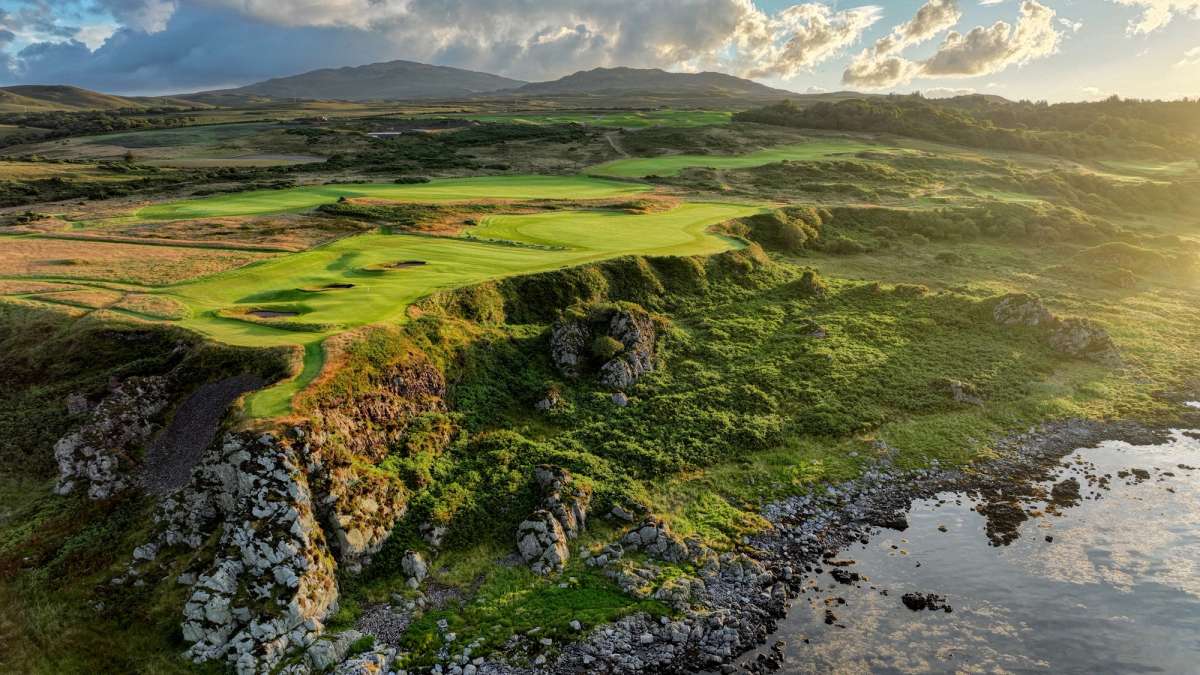
October 2022’s Review of The Month comes from Robert Blair, who had to tear his eye away from the scenery to focus on the golf course at the Ardfin Estate!
You mention that those who try to separate the quality of the hole from the landscape it sits on is "to miss the point." Could a glorious landscape like Ardfin provide a world-class experience without a world-class designer?
To explain my point in the review a little further, I was not suggesting the quality of the course planning was not great, or that the views could overshadow the golf course. I, as I’m sure many others, have played a new course where people have almost critiqued the course setup as you go round. I think that the combination of an absolutely fantastic course and setting should just be enjoyed to the fullest in the moment. Whether it’s course design, dramatic scenery or quality of presentation you most appreciate, this place has it in spades. It is surely a place to just appreciate that you are in a special place and enjoy the day.
To the question, I think a piece of land as dramatic as that could always produce a place you’d enjoy to go and play golf. However, to create a course that flows so naturally and effortlessly around the cliffs and raised land is a fantastic achievement. I always enjoy a course that has a good variety of shots asked of you along with a risk/reward approach. There is a wonderful combination of tight iron tee shots along with some where a driver is encouraged with width, small dangerous approaches and some open bigger greens where you can funnel the ball in off slopes. You can have magnificent courses without dramatic or even beautiful scenery, however when the two are combined it makes an amazing experience.
As a follow up to the above idea, is it possible — in your opinion — for architects to overthink a job on such property?
Now I am far from knowledgeable about the problems and issues that course architects have to encounter. I generally judge the courses I play on whether I think they are interesting and enjoyable. I guess that the architects really need to have a theme of how they’d like the course to play — is it a tough driving course, or is positioning off the tee key to get good approaches into flags? Does it give you lots of options or ask for particular shots? There have been one or two courses I’ve played from more recent designs that I’ve felt were a bit more style over substance. One looked amazing, but I could not think of how to plot my way around the course without having a 300-yard carry. It seemed to be just a punishing course that gave little option on how to play it without serious length. I was not playing anywhere near the back tees, just for info. I’ve found the very recent designs, in Scotland anyway, of trending more into an enjoyable, playable style of course. One where it can be hard to birdie, but is more playable and doesn’t punish you for every slight error.
It seems every visitor to Ardfin recommends bringing plentiful balls! Have you played any other great courses where the struggle to stay in play hasn't dampened the experience?
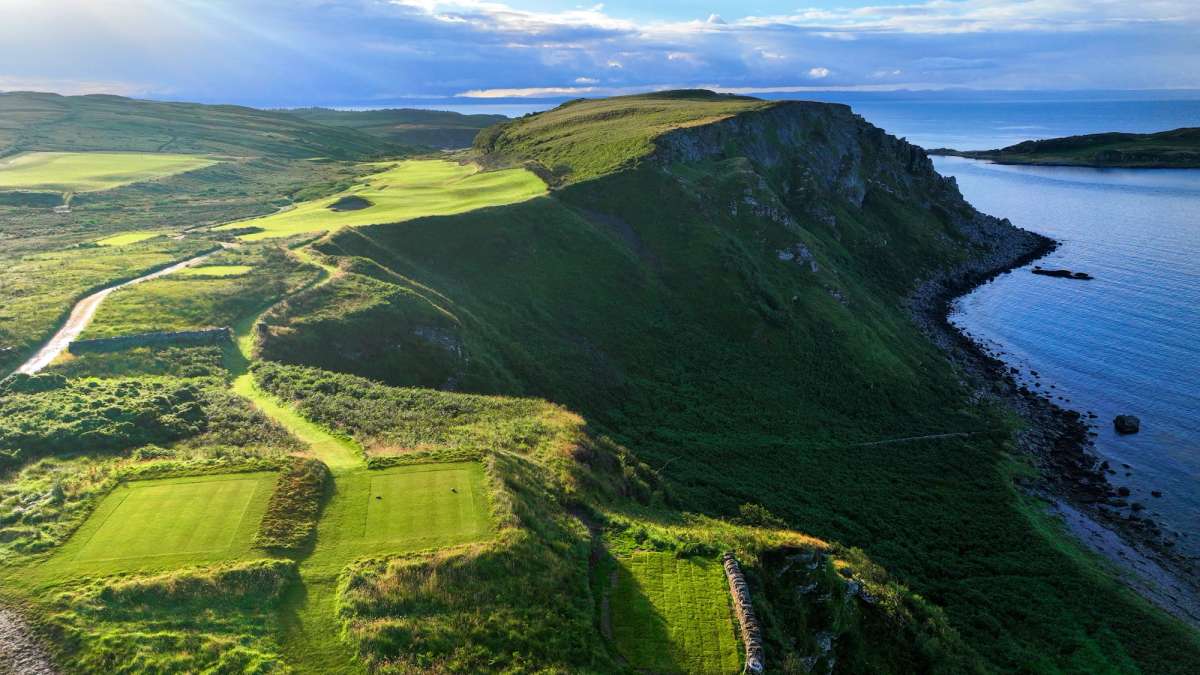
I think that everybody is well warned before they go out that they should probably say their last goodbyes to at least a few balls from the staff. Given the low numbers of people playing, the rough can be quite penal. I did think that the course was not overly penal, however we played with some extreme winds that made every shot a risk. I think some of the carries and clifftop shots are similar to the questions posed by the water at Pebble Beach. Perhaps Wolf Creek evoked the same feeling of excitement if you could pull off the remarkable shot, rather than worry if you could put a round together, despite being extremely different courses.
If you've been fortunate enough to play renowned links courses of old, does Ardfin separate itself as a modern take? Or does its character feel familiar to its linksland ancestors?
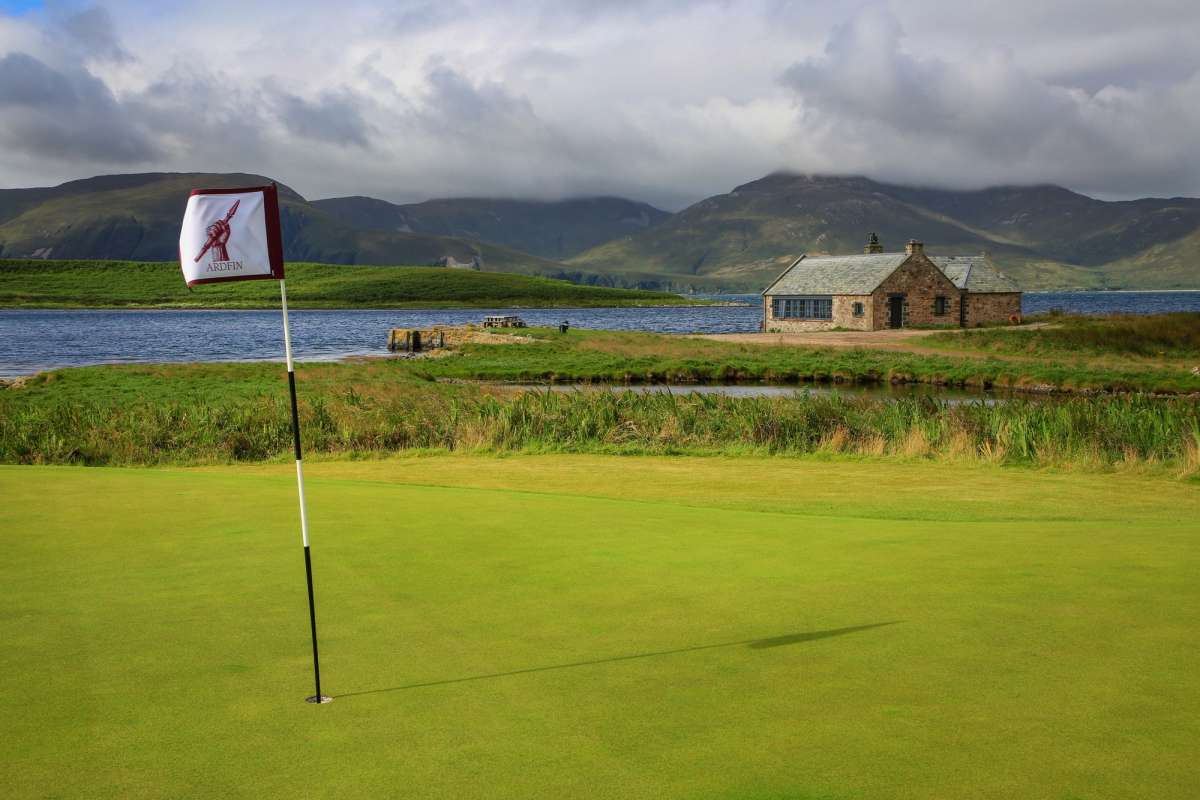
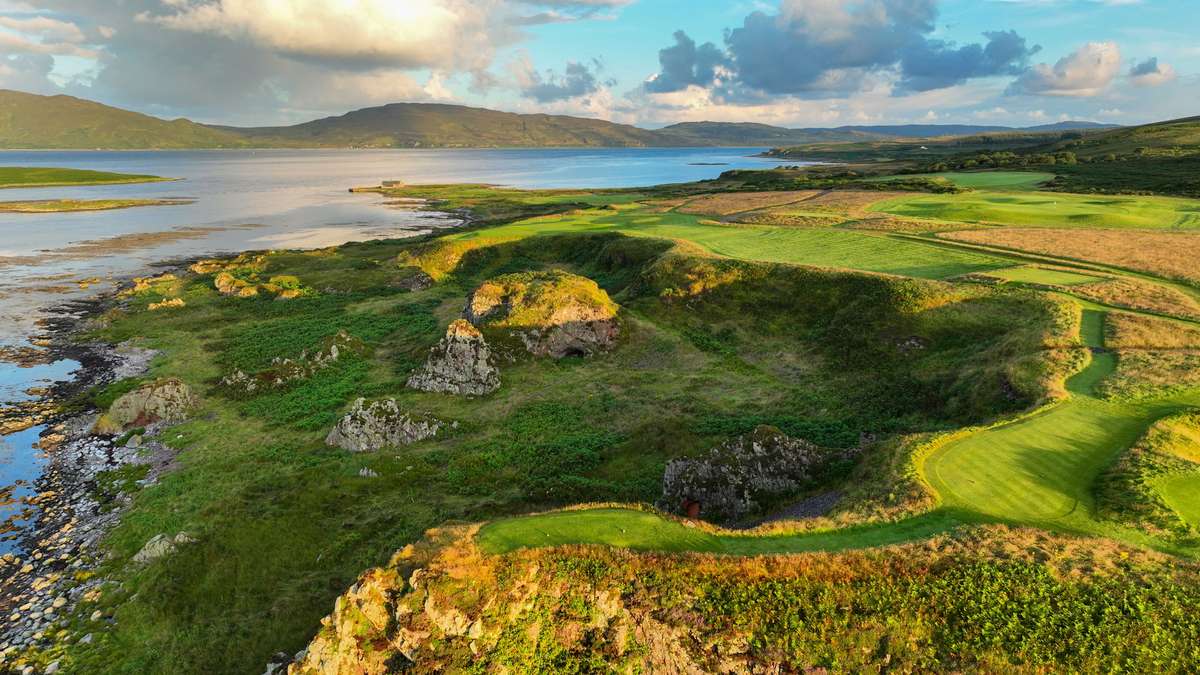
I think the older links really maximised the design on the land that was available for them. The quality of the land was directly related to the quality of the course produced. The natural feel can sometimes be lost in modern courses that have moved lots of land to create a dramatic landscape. Ardfin does feel quite natural and rugged to me, and is certainly positioned over a quite amazing piece of land. So in that sense, I think I can see the links to the past.However, while having a natural feel, it is probably too spectacular a layout to have the characteristics of really old courses.
Now that you're a celebrated "Review of The Month" winner, let us know what factors you appreciate in a strong golf course review!
I prefer a review that captures the feel and essence of a course, rather than just explaining each hole or how they were played. Explaining the style of the course or perhaps what shots/skills are needed, along with perhaps highlighting the big shots, and holes to look out for. That gets me more interested in a course over the basic layout.
What's one course that you'd love to write a review for in the near future?
I think like most people who go on the Top 100 site, you end up with quite an extensive list of courses you’d love to play. However, quite a lot seem unachievable. Cypress Point would be my dream round. Unless my friends suddenly get some very influential connections, it seems unlikely. I will be going to Florida next month, so I will be happy to review Streamsong and Sawgrass shortly.

The purpose of the Review of The Month feature is twofold. Top100GolfCourses has always aimed to salute and encourage those who are putting admirable effort into reviewing the world’s great golf courses. Moving forward, we are also looking to learn from these experts! We’ll be chatting with the month’s star authors and discussing topics such as golf in their area, what they like to see in a strong course review, and of course dig a little deeper into their own winning review. October 2022’s Review of The Month comes from Ralph Wardlaw, who — even after a lifetime of world-class golf — was awestruck when playing Shinnecock Hills Golf Club. Americans hold Scotland's great links courses in an almost reverential manner. Is there any similar feeling among UK residents when it comes to America's "Golden Age" icons? Yeah I would say there is. Probably the biggest difference for me is the access issue. I’m always conscious of how incredibly fortunate I am any time I get to tee it up at a top American club. That in some ways makes it arguably a more special experience than when Americans come to Scotland. Photo credit: Larry Lambrecht You compare Shinnecock to Carnoustie, your longtime home club. When comparing the two, do you need to factor for any bias resulting from one being a unique environment, and one being a club you've played your entire life? I have to take the Carnoustie factor into account when I compare any courses. When you grow up playing one of the best in the world, and you play it regularly, it does have an impact on you. In the past I’ve definitely looked down on some courses that were maybe a rung or two below Carnoustie, but having played much more and travelled much more the last five years or so, I don’t think I’m quite as bad when it comes to that. Just because a course isn’t an Open Championship course doesn’t make it a bad or less worthy course. There’s a time and a place for a course such as Fortrose and Rosemarkie just as there is for a Castle Stuart. The difficult thing I found at Shinnecock was expectation management. I’ve played a few top-rated courses in the past that for various reasons, my expectations were incredibly high. Shinnecock was similar. I’m always nervous of that and a course not living up to expectations. What’s maybe a bit more unique for me when comparing Carnoustie and Shinnecock, two of the hardest courses in their respective continents, is obviously having that huge Carnoustie knowledge and being able to compare it to a different style of golf in Shinnecock and being able to see what makes it so difficult. That was quite cool for me. We all know about Shinnecock Hills, being No. 3 in our world rankings and such. Did you play any gems while in the region, a bit more obscure? Yeah, I was fortunate enough to play St George’s Country Club, also on Long Island, as part of my trip. I’d never heard of it before, but I came away from it feeling that was a course I could easily play every day. Not overly long, a lot of undulations, nice and wide with a premium on angles. What’s not to like? I was fortunate enough to play with two super-nice members as well. I had a great day. Photo credit: Larry Lambrecht Now that you're a celebrated "Review of The Month" winner, let us know what factors you appreciate in a strong golf course review! I’m not a huge fan of reviews that go into hole-by-hole accounts of a course. I prefer reviews that give a general overview of a course whilst highlighting one or two aspects. What's one course that you'd love to write a review for in the near future? Outside of the obvious Cypress etc., my friends and I have just booked up to go to Bandon in 2024. So one of them!

Top100GolfCourses has always aimed to salute and encourage those who are putting admirable effort into reviewing the world’s great golf courses. February 2022’s Review of The Month comes from Maarten, who was charmed by the legendary links of Royal Dornoch. Here’s his words from February 19th: Having heard stories of golfers arriving at Dornoch in helicopters, I was surprised of the lowkeyness of the atmosphere upon arrival. The whole town of Dornoch is genuinely about golf. Being a Dutchman who never wore clogs and lives in an apartment instead than a windmill, I asked myself where other than in Scotland is it that world famous tourist attractions still ooze the character and authenticity they represent for their rich histories? The first tee experience is hard to beat and a fond memory in itself. After the obligatory picture of our foursome with the flags of Dornoch, my teeshot was interrupted 4 times by scattered golfers or cars crossing the public road to Dornoch beach in front of the tee box while I was ready to fire away. The gentle opener gives ample room to pick up some confidence early in the round, but the green is as challenging as the other 17. After a silly bogey with 4 shots within 100 yards of the pin, yet still sufficient reserves of confidence, the brutal par 3 2nd is there to kill all aspirations one might have, the back to front sloping target narrow and steeply falling down on all but the front raised with deadly bunkers in front. A good, but not good enough shot and a double bogey on the card later, you will tell yourself to get it together after this suckerpunch, and the walk to the 3rd tee will provide you with a breathtaking view over the Dornoch Firth, looking down over the piece of land where a large part of the Championship Links is exposed. A strong set of 3 consecutive par 4s follows, with brilliant strategic options and fantastic green complexes where you need to hit the right shot to the right spot as the greens (or at least certain pin positions) will repel the unsuspecting approach shots. The second par 3 ends the difficult opening stretch and is perhaps even narrower than the 2nd, and the fall-off on the right even steeper. As if that wasn’t enough defence, a few bunkers guard the front and side of the green. Hit the green or end up with an endless variety of recovery shots, or a lost ball if you bail out too much to the left. So much for the safe option! Hole after hole Dornoch challenges you but teases you with genuine chances to pick up shots. The back nine plays longer, usually into the prevailing wind. On a calm day, I reckon it will play a bit easier than the front 9 but into the wind it is a tough cookie with some long par 4s. Whereas the front nine, mainly due to the devilish set of par 3s, has a slightly penal spiciness to it, the back nine is all strategy with a bit more width. Dornoch’s best holes are brilliant because they are so simple and pure. The 14th, Foxy, will require no further introduction but 15 might even be better. It’s a reachable par 4 with a mound as an obstacle for the view from the tee. I hit a great drive towards the green and found myself in the greenside bunker with a front pin position. I hit a decent bunker shot, only to find my ball topple over the wrong side of the ridge and leave myself a difficult chip/putt to this raised green and walk off with a sour bogey. I also felt oddly satisfied and honored to be tricked by this elite golf course architecture. 17 is one of my favourite par 4s anywhere. It resembles the also brilliant 8th hole, but with a more difficult teeshot and a unique green complex. You have so many options to play this hole, I doubt one would experience them all being a member for a decade. The player must choose between keeping the ball on the high plateau, which will be rewarded with a visible target on the approach shot with a long iron, or a shorter approach from the lower fairway with a blind shot, but also risk hitting it through the fairway into the gorse. Also possible - to hit the tee shot through the middle and let faith decide whether the ball chooses the high or the low road. A running approach or one through the air must then be decided upon, with the green and its surrounds sloping left to right and back to front. It doesn’t get any better. Strategic golf of the highest order, with breathtaking views. On 18, you can start to soak in the entire experience, no wows on this hole, but nevertheless a worthy end to a glorious day of golf. Dornoch has its flaws and IMO is not a 10 on the Doak Scale. The 16th might be a steep slog uphill for the shorter hitter. And to be honest, the new Mackenzie and Ebert 7th didn’t quite impress me. Besides the astonishing panoramic views and the legendary green to tee walk from 6 to 7, it’s a long and wide par 4 with little visual or strategic interest and has a relatively flat green that is somewhat out of tune with the rest of the course. I appreciate that Dornoch is a course to play over and over again in order to reveal its secrets. Nonetheless, playing it for the first time at 28 years old was a privilege and I look forward to many more returns over the next 5 decades! MO
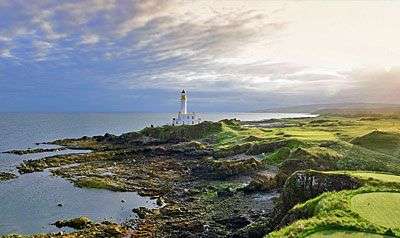
Review of the Month March 2018 - Trump Turnberry (Ailsa) Four Englishmen tried their luck with the Scottish weather and took advantage of an offer to play the new Ailsa course in March. I had played the old version a few times and considered, along with many others, the stretch from holes 4 to 11 as one of the very best I have ever played. Would the new version live up to the old? Fortune smiled on us and, despite snow drifts that day in parts of England we were treated to blue skies and crystal-clear views and temperatures above freezing for the first time in days. We were given mats to play off which felt a little disappointing at first having paid so much money, but several factors prevented this detracting from our enjoyment. Some of the time we simply moved our balls to the semi-rough (better than most club's fairways) and played from there – no problem. Also, the mats were of high quality and enabled perfectly decent golf shots to be played (not like the thin pieces of carpet I'd be given at other places. This all meant that the fairways looked spectacular and divot-free (unlike the soggy courses we'd left behind in Yorkshire). I should also point out that we played off the proper tees – we were offered the choice of white or yellow - and played on all proper greens so definitely received the full Turnberry experience. On to the course itself, were the changes a good idea? The simple answer is a resounding 'yes'. The best really can be made better. Although there are changes to most of the holes, it is probably most apparent on the famous 4-11 stretch. Once down by the sea on the 4th tee, with Ailsa Craig overlooking your tee shot, you really get a sense you're in golfing heaven. The par 3 tee shot is all carry (as indeed are all the par 3s). The green has been relocated closer to the sea and any degree of wind (we had around 10mph from the East) will cast doubts on the golfer's strategy and only a well-executed shot will hit the green. The next par 3 (6th) has been shortened but the new green is no less easy to hit being on top of a dune ridge. Again, anything other than finding the green and bogeys or worse will likely ensue. Holes 7 and 8 maintain the high standard, threading their way through dune valleys. It used to be that one strolled from the back of the 8th to the Open championship tee of the then Par 4 9th and marvelled at the carry the professionals must make over the rocky inlet with the sea crashing below. The amateur golfer then walked to a slightly inland teeing area to play a fairly straightforward par 4 without too much danger. Even for the Pros in modern times, this hole has been relatively easy unless there was a rare strong off-shore wind and so even for the Open the drama of the hole had diminished. Not so anymore. With the re-siting of the green close to the lighthouse, the Open tee is once again daunting as a 248-yard par 3 over the sea. However, unlike the previous version, us mere mortals also have a chasm to cross. Our group resorted to fairway woods into the breeze to carry the ocean below and our good shots were rewarded with a great sense of achievement. This seems to me the closest I will get to playing the 16th at Cypress Point. The 10th hole was previously one of my favourite holes in all golf, hugging the sweeping coastline as a very tough par 4, littered with bunkers and slopes. It still retains its place as one of the greats. The breath-taking views remain, possibly enhanced by the use of numerous (I think there are 7!) elevated tees all framed by the famous lighthouse behind. The green has been pushed further into the corner of the coastline allowing the hole to become a par 5 which at least gives the amateur golfer a better chance of better of a par if they are not distracted by the glorious scenery. Finally, we say goodbye to the sea along the 11th but this also has been redesigned to be more of an all-or-nothing par 3 where nothing but the green will do. Another stunning improvement. The remaining holes are still of a high standard (the 14th green is now almost back at the lighthouse) but it remains the coastline holes which will capture the imagination of every golfer that visits Turnberry. Needless to say the hospitality, facilities and attention are all of the high standard expected at a top tier golfing resort but it is the course itself that will live long in the memory. RdD By Richard Review of the Month March 2018 selected by Editor-in-Chief, Keith Baxter – click to read more about Trump Turnberry (Ailsa).

