
by M. James Ward
The greatness of Shinnecock Hills comes from its collective presentation. There is no one special hole or cluster of holes that stand apart. The sum of the William Flynn design is the total connection from the moment golfers arrive at the 1st tee until leaving the 18th green.
The quartet of par three holes certainly merit special attention, as each is totally different from the other. Players will be forced to hit a full array of different shots -- often determined by the ever-varying wind velocities that can whip through the property at any moment.
2nd Hole / 252 Yards
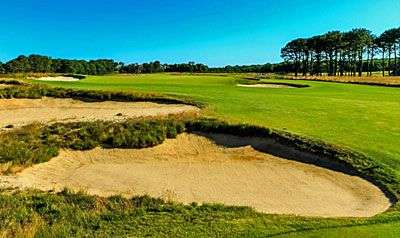
The overall distance has been increased 26 yards since the '04 championship. Generally, the hole plays with the prevailing southwest wind but if that should change the added length will likely have a significant impact. In downwind conditions -- look for players to hit mid-irons. The hole features a small upslope in the very front of the green. Approaches not hit sufficiently will not likely get deep into the green. There are fall-offs to the sides and in the rear area that are closely mown and can propel such shots a greater distance away from the hole.
Birdies will happen but they will not be plentiful. Getting off to a good start is central to scoring well at Shinnecock and getting through the 2nd hole will be a major plus in keeping the momentum going forward.
7th Hole / 189 Yards

The most infamous hole from the 2004 championship. The USGA fumbled the ball in a big time way by refusing to sufficiently water the green. The result? Players were unable to keep the ball on the green and scores ballooned. The debacle almost ended the relationship Shinnecock Hills had with the USGA concerning future host roles for the US Open.
The club and USGA have placed that matter in the rear view mirror, however, how the 7th plays for the duration of the championship will be keenly watched.
The Redan Hole is vexing -- especially when encountering headwinds which are the prevailing type from the southwest. The green slopes from front right to back left. There is a major dropoff to the right for those players unable to flight their approach correctly. Those finishing to the right of the green are left with a fiendish pitch to a green tilted severely away from their position. The green is quite deep so different clubs will be needed and handling the trajectory of one's shot from the tee will be an absolute must. Many who come to Southampton marvel at the 4th hole at the National Golf Links of America -- Shinnecock's esteemed next door neighbor. That Redan hole is also a replica of the famous 15th at North Berwick and is quite special, but the 7th at Shinnecock is no less impressive in its own right.
11th Hole / 159 Yards
Among the more truly noted "short" holes in championship golf includes the 12th at Augusta National, the 8th at Royal Troon and the 7th at Pebble Beach. Joining that conversation is the treacherous 11th at Shinnecock. The demands come immediately when standing on the tee. The green is elevated slightly higher and this position allows for the full impact of the wind to heavily influence club selection.
Generally the prevailing wind is helping from the left at the tee and failure to flight one's ball correctly can mean a clear mishap resulting in bogey or worse. The green has no backdrop to give players guidance. The putting surfaces slopes from back left to front right. Three bunkers eat into the right side of the hole and missing right allows for some sort of recovery if one can secure a playable lie. Those missing the green to the left will find a next to impossible recovery as the green falls abruptly away from that side.
There is an expanded rear pin position where only the brave -- or foolish -- will attempt to flight one's ball to that location. Should wind conditions change -- the 11th is equally demanding with a wind blowing either into the golfer's faces or worse yet with a devilish cross wind coming from the northeast.
17th hole / 180 Yards

The last of the par-3 holes occupies the penultimate hole position. The green was expanded in the rear left area. This has added overall depth of the green resulting in a series of different club selections depending upon pin location and velocity of the wind encountered. The prevailing breeze generally comes across the hole from the left. Those missing the green right can find a deep bunker guarding that side.
The contours of the green are varied and those finishing too far away will be under tremendous pressure to avoid a late round three-putt.
The par-3 17th for the '04 championship was a fairly benign hole. The improvements have smartly added more decision-making to the equation and given the hole's position in the round the need to flawlessly execute will be thoroughly tested.
Read more about Shinnecock Hills

118th US Open - Shinnecock Hills Golf Club Behind the architectural curtain Interviews with M. James Ward After a fourteen-year absence, the championship of American golf -- the US Open -- returns to iconic Shinnecock Hills in Southampton, NY. In 2004, the event was hampered by poor decision making in not ensuring sufficient water was applied to the putting greens -- most notably the par-3 7th. The United States Golf Association (USGA) has expressed confidence such a situation will not happen this time around. Shinnecock Hills is rightly lauded as one of the top five courses in the world. The eastern area of Long Island is also a hotbed for golf and served as the foundation for golf in America in its earliest days. Among the more noted layouts near to Shinnecock Hills include such stalwarts as The National Golf Links of America, Maidstone and Southampton. With more recently opened and noted layouts such as Friar's Head, Sebonack, The Bridge, Atlantic and East Hampton joining the golf scene. Getting expertise from several different architects sheds additional insights into what happens behind the scenes. The unknown factors remain to be answered. What lessons did the USGA learn from Erin Hills in 2017? How will Shinnecock Hills play? What will the weather and wind conditions be like? How firm and fast will the William Flynn design play? Will Shinnecock provide high golf drama featuring the game's elite players? A founding member of the USGA, Shinnecock Hills will host its 5th US Open -- making the club the only one to have hosted the championship in three different centuries. The stage is set -- the curtain is about to rise. On a scale of 1-10 with 10 being "perfect" -- what number grade would you give the USGA in prepping the courses that have recently hosted the US Open? Dana Fry: 7 or 8. Obviously at Chambers Bay they had issues concerning the greens and the tough time spectators had walking the course. At Erin Hills, which I designed with Mike Hurdzan & Ron Whitten, the players had favorable comments for the most part but some writers and fans were concerned with the low scoring. What all this proves to me is just how difficult it is to set up a course for a US Open. If the wind had been blowing everyday 20+ mph everyday at Erin Hills I can assure you the results and comments would be far different. Nathan Crace : A 9 -- nobody's perfect. Hosting a tournament on that scale is a tremendous undertaking and you really have to hand it to the superintendents and their staff members at those courses. They have to walk a fine line working with the USGA to balance playability with challenging the best players in the world. When it comes to the US Open, I like to see the world's best be tested by par. Marc Westenborg: I cannot provide a specific number because having only watched the US Open on TV, it is not possible to form an accurate opinion on the prepping of the golf courses. Tripp Davis: Prepping and setting up a golf course for a US Open is a very tough thing to do. They've done an excellent job of providing test that doesn't favor anyone type of player, so I would give them a 9. Jeffrey Blume: I think that the USGA has done a remarkable job of customizing each year's open to the design and conditions of the host site. As an example, the wider fairways at last year's open at Erin Hills were appropriate due to the length and difficulty of the course. Tightening the widths at a place like Merion was also spot on. I am curious to see how the wider fairways at Shinnecock Hills will change the strategy for the players. Overall I would give the course set up at recent US Opens a solid 8. The only negatives have occurred when the courses have gotten overly firm and fast. If you could name one specific course, irrespective of logistics that has not already hosted the US Open, which one would you choose and why? Jeffrey Blume: I would love to see an Open hosted with 100% warm season grasses. With the talent of players that come out of the states of Texas and Florida, I think it is time for the US Open to be hosted by a facility in one of these states. Perhaps Seminole or Colonial would be appropriate. I know the heat in the south is a negative, but we Texans and Floridians play in hot weather all the time. Nathan Crace : Since the USGA is headed to Long Island for this year's US Open, how about National Golf Links at some point in the future? It's literally adjacent to Shinnecock, hosted the inaugural Walker Cup in 1922, and is perennially one of the top-rated courses in America. Dana Fry: Chicago Golf Club. There are many reasons why. It is a founding member of the USGA in 1894, it's an architectural masterpiece and a throwback to the old school of golf architecture, for historical reasons and mainly because I believe it could. The course sits on close to 200 acres so they have the room to add length to the course and the greens are perhaps the most challenging greens in the U.S. If Merion which sits on 126 acres can host the US Open then I am confident Chicago GC can. Tripp Davis: Pine Valley. I have played competitive golf there and there is no other course in the world that does as good a job of testing every part of your game, and it does not favor any one type of player. Marc Westenborg: Pine Valley. Its history and reputation as a tough highly strategic golf course along with what I would describe as “proper hazards”; unmaintained areas of sand. Allowing members of the public to experiences the golf course as spectators or TV viewers would be great for the game of golf. There has been internal debate within the USGA regarding the appropriateness of wider fairways for the championship. At Erin Hills, much wider fairways were used. At Shinnecock, the fairways will be wider than what was done at the three previous modern championships. Average width will be 42 yards. Can wider fairways really test the world's best players and is accuracy really being undermined by such a practice? Marc Westenborg: It very much depends on what hazards border the fairway. If strongly penal just off the edge then wide fairways are more justified. It could be argued that the wider the fairway, the greater number of possible angles of approaches to the green which only adds to the strategy and challenge of the golf hole. Narrow fairways very much result in similar angles of approach but a stiff challenge if dense trees or long rough borders them and this may encourage the use of more accurate irons and henceforth the requirement for longer approach shots. Jeffrey Blume: It depends on the individual course and its design. If wider fairways allow for optimum angles for approach shots, or bring certain hazards into play, then wider fairways can have a tremendous impact on strategy. Width for no reason would have a negative impact on the quality of the tactical examination, but done correctly and thoughtfully wider fairways on individual holes can create greater variety in shot making and test accuracy without the use of unnecessary rough. Tripp Davis: Wider fairways, with the right set up in firm/fast greens and tough hole locations, make it not just important to hit the fairway, but the proper part of the fairway to get the best angle and distance for the following shot. How that width is used is subjectively important in that you can add more width on the side of the fairway that does not leave a very good angle to the green, or you can cut that width off at certain distances from tees so length is not a dominant factor on too many holes, better testing every part of the game and not favoring anyone type of player in identifying the best player in the entire field. Nathan Crace: I think there's an important distinction between "playing width" and "fairway width." Widening playing corridors for the average golfer is a good thing because it increases enjoyment of the game, provides different angles from which to play a hole, and increases interest. But for a major being contested by the best golfers in the world, I like to see a blend of accuracy and shot making -- not one extreme or the other. Dana Fry: Everyone knows now that after Erin Hills the USGA had just over 7 acres of fairways removed at Shinnecock because of this very concern. The fairways this year will still be far wider than they were in 2004 the last time they had a US Open at Shinnecock when they were around 26 yards wide. It will be very interesting this year and I for one can't wait to see the outcome. I think ultimately the weather conditions will be the deciding factor. If the course plays soft and their is little wind I think the scores will be low but if the wind blows everyday and it plays fast and firm watch out for high scoring. What role should an architect play if called upon to assist with a US Open site? Nathan Crace: It depends on the course. I like the trend toward adding more public venues in recent years. But as with any project, the primary goal is to assess and meet the needs of the course and the client. We have a duty to them first and foremost. The US Open may only come to that course once every 10 or 20 years -- or perhaps only once at all. We have to think about who the golfers are that will be playing the course on those days in between and what best suits them. Dana Fry: In the case of Erin Hills the USGA was involved before it was awarded a USGA event. All issues were discussed ahead of time with focus being on tee locations, green contours, bunker locations, fairway widths, chipping areas, hospitality and access issues, turf grass varieties to be used, etc. The USGA did not tell the architect what to do they just made suggestions. It is imperative the USGA have an architect involved on issues concerning design integrity and they are great to work with. Marc Westenborg: I worked together with the R&A preparing Royal Liverpool for the 2014 Open. We concentrated on the finer details, new back tees, length of carries and fairness of bunkers; ensuring that balls would not end up in unplayable lies close at the foot of their revetted faces. We also re-profiled some of the green surrounds and areas between fairways, ensuring a variety of differing stances and angles and type of shot. However, it must be said that all these adjustments, were also for the membership; not specific to the Open. Hoylake hosting the Open was in many ways the catalyst to carry out improvements to the golf course. Jeffrey Blume: If the original architect of a course is involved in course set up, then I think his/her perspective on the course design is of prime importance. No one else would have a better understanding of the intricacies and intent of the design. If the host venue is a classic course where the original architect has passed on, then the study of the course by a modern architect can provide the same insight.. Tripp Davis: First would be to work with the USGA and the Club to possibly add tees, move tees, add or move bunkers, or modify greens to provide hole locations that better test the players. A good golf course architect is not only an expert in design, but in how to get desired results via a variety of construction and maintenance methods. Second, an architect that understands the game can be a part of the team that sets the course up day to day for the tournament, mostly to provide insight as to how far set up can push design.. When watching a golf telecast -- especially the US Open -- what do you pay particular attention to? Jeffrey Blume: I love to look at the bunkering of a course. How it describes the strategy of shot making, how the players adapt to bunker placement depending on the playing conditions of a given day, and how the bunkers can be used to challenge players strengths and weaknesses. The bunkering of every course is its most visible fingerprint, and how an architect uses the bunkers says a lot about their individual style, strategic philosophy, and aesthetic preferences. Marc Westenborg: One can never get a true understanding of a golf course by watching TV; undulations and changes in gradient are particularly hard to decipher. However, much of my current work is bunker renovations so I do enjoy seeing their different styles and ways they are landscaped; the bunkering at Erin Hills was of particular interest. Also of interest are the ball trackers and choice of golf club the golfers are using and the huge difference between amateurs and the professionals. Dana Fry: For me I pay most attention to weather conditions. If you have dry, windy and firm conditions the odds are you will have higher scoring. If you have soft conditions with little wind and good putting surfaces you will have much better scoring. The other issue that comes into play is the width of the fairways and height of the maintained rough. If you have the "old style" US Open fairway widths of 25 to 30 yards wide, cut at 4+ inches and fast, firm, windy conditions watch out because the scoring will be high. . Nathan Crace: I tend to get caught up on the details of green complexes, bunker placement, where the water hazards are, positioning of tees, and how they all fit together (or don't) in one big life size jigsaw puzzle of nature. I gravitate toward angles and strategy, but TV doesn't do justice to many courses because you're viewing a 3D landscape on a 2D screen. That said, the aerial footage and new tracer technology both add a dimension for viewers that helps see the big picture. Tripp Davis: The course set up and how players are choosing to play the course, strategically. I also like to watch the type of shots they are playing when being aggressive. The USGA and R&A have publicly indicated they are watching closely the impact of greater gains made from enhanced technology tied to golf balls. Is there an issue of concern and how realistic do you see a future action be jointly taken that actually rolls back the distances modern professional golf is achieving? Nathan Crace: I think that genie has long been out of that bottle. As much as I hate to see some of the classic courses being impacted by the length the Tour players can hit the ball, the fans like the longer ball and you still have to get the ball in the hole to score. The USGA and R&A might try to dial back advances in the ball going forward, but I think we are where we are right now. I'm not a fan of bifurcating the rules, but that might become a reality down the road.. Jeffrey Blume: I think the issue of how perceived length is affecting the modern game is one that certainly needs to be studied. I commend the USGA and R&A for their approach to looking into this issue without any pre-conceived notions. The issue is much more complex than simply looking into how far professionals can hit the golf ball. Of far more importance to me is how length affects the amateur game and the footprint on which the game is played. Changes in technology and golf ball distance is nothing new to the game, and golf has adapted to these changes in the past. I am sure that those of us in the golf industry will adapt again, whatever the USGA and R&A study reveals. Tripp Davis: Players are longer than a few years ago. How realistic a roll back may be is a better question for the USGA and the R&A. I do think design can be somewhat effective in “rolling the ball back” by making it less of advantage to hit it really long. In that we do have to value the precise players as much as we do the longer players. Dana Fry: I agree with what Jack Nicklaus has been saying -- we need a tournament ball. I spent a lot of time with the players the week before the US Open last year and quite a few told me they can easily fly the ball 300 yards in the air and if needed can fly it up to 320 yards in the air. I watched as several of them carried the bunkers that were 320 yard carries in the air then hitting downslopes and getting additional roll. Do we just keep adding distance? I hope not but is it the right thing to do to make every US Open course have 25 to 30 yard fairways and force the majority of the field to use long irons or utility clubs to hit the fairways? I don't think that is right either. I think the Master's is the only place that could implement a tournament ball and hope in the future it will happen. Marc Westenborg: The distance professionals are achieving does not concern me. Only a tiny portion of golfers worldwide can be described as professionals yet the advance in technology has benefited them significantly more than amateurs. If professionals continue to gain distance that is fine with me; just so long as it’s a “level playing field” for all. Spectators love the huge distances professionals are capable of and it must be remembered that the further the golf ball travels, the greater the need for accuracy. We must design new and adapt existing courses such that they challenge professional golfers without penalizing the amateur. There will come a point where technological advances reach a natural conclusion so I am of the opinion that the USGA and R&A’s time and money is better spent working together in growing the game of golf. Above photo identifications: *The first photo shows the demanding par-4 9th hole at Shinnecock Hills. *The second photo listed by the second question is the 10th hole at Pine Valley. *The third photo listed by the 3rd question is the 10th hole at Shinnecock Hills. *The final course photo is the iconic Stanford White clubhouse at Shinnecock Hills. The participating architects Dana Fry – Started in the business in 1983 working for Tom Fazio. Among his most noted design efforts include Erin Hills Golf Course-site of the 2017 US Open, Devil’s Pulpit, Devil’s Paintbrush, Calusa Pines Golf Club, Naples National Golf Club, Hamilton Farm Golf Club, Philadelphia Cricket Club, Farmlinks Golf Club & Shelter Harbor Golf Club. Jeffrey D. Blume – Blume is President of the American Society of Golf Course architects and managing general partner of Jeffrey D. Blume, Limited, a golf course architecture firm based in Houston, Texas. He is also a former General Chairman of the Shell Houston Open. Over twenty eight years in the golf course design profession, he has completed commissions both domestically and internationally. Some of his more notable designs include Grand Pines Golf Club at Bentwater, Sterling Country Club, and the renovation of The Golf Club at Texas A&M. Tripp Davis – Since starting his own design firm in 1994, has created 19 original designs around the world, including China and Mexico, and is one of the leading golf course renovation and restoration specialist in the US. Most notable original design include the Old American Golf Club near Dallas, Texas, recent and future host of the LPGA Tour, and his most notable renovation/restoration has been Oak Tree National in Oklahoma, which hosted the 2014 US Senior Open following his work. Marc Westenborg – Started his design career with Hawtree for whom he worked for 14 years before founding Westenborg Golf Design. Worked on over 50 projects worldwide; his most high profile being Dun Laoghaire, Dooks, Cobh and Cork in Ireland, Rockliffe Hall in the UK and La Zagaleta in Spain. A Senior Member of the European Institute of Golf Course Architects the company is based in the United Kingdom. Nathan Crace – After attending Mississippi State University and graduating from their Professional Golf Management program, he went on to work for an upstart design firm before founding his own firm eight years later. Designing courses for nearly 25 years--including Copper Mill Golf Club near Baton Rouge, Louisiana named Golf Digest's "Best New Public Course in America" in 2004. Crace is a native of Louisville, KY and raised in Charlestown, IN.

US Open’s mojo -- fear or frivolity? What will Shinnecock show? by M. James Ward SOUTHAMPTON, NY. When the 117th US Open was drawing to a close the grimaces were not on the faces of the players -- they were on the faces of officials from the United State Golf Association (USGA). Anticipating daily winds the fairways at Erin Hills were kept especially wide -- giving players more latitude to hit drivers with impunity. Coupled with recent rains the course played docile-like and eventual champion Brooks Koepka finished with an amazing -16 total -- equaling the most under par for the championship -- set in 2011 when Rory McIlroy won the event by eight shots at rain-ravaged Congressional. In recent years the US Open has lost the edge in being the most demanding and most pain-inflicting event on the golfing calendar. With the exception of Bethpage Black in 2002 and 2009 and the events held at Oakmont in 2007 and 2016 -- the upper hand has moved noticeably to the player's side. I can remember as a 17-year-old attending the 1974 US Open with my father at Winged Foot. The memories are seared into my brain. I watched professionals face a course in no mood to tolerate the least made error. The final winning total was seven over par and even the winner Hale Irwin looked like a punch drunk boxer. Many of the professionals howled long and loud claiming the USGA was out to embarrass them. The late former USGA President Frank "Sandy" Tatum countered with an epic retort -- "We're not trying to humiliate the best players in the world," the chairman of the USGA's competition committee declared that day. "We're simply trying to identify who they are." This year's event at Shinnecock Hills marks a delicate dance for the USGA. It's been 14 years in returning to the storied Long island club. Between 1986 and 2004 the club hosted three US Opens. But the debacle at the 2004 event left many to wonder what the USGA was thinking in not watering sufficiently several of the greens -- most notably the tilted 7th green. In the final round in 2004 no player bested par. The greens were fried -- just like the players -- and the egg was being wiped off the faces of the USGA for the train wreck they created. Not long after the results were known at Erin Hills the USGA reassessed the set-up strategy for Shinnecock and opted to move away from fairways in the range of 60 yards wide. Unlike the earlier Opens in 1986, 1995 and 2004 which featured fairway widths in the range of 26 yards, the 2018 event will be in the range of 40-42 yards wide. The USGA saw the folly in giving players added width because the penalties for mishits was not sufficiently deterring players from simply going full tilt from the tee. The re-establishment of accuracy is something the USGA is determined to demonstrate at Shinnecock Hills. The modern professional game has seen a clear major move towards power players. Those able to hit drives exceptionally long distances still shoot very low scores because rough is anything but the true meaning of what it should be. The balancing act of fairness for the USGA has meant players have too much leeway in opting for power with little worry about misses. The fairways are wider for this year's event than in previous host roles but the length and depth of the rough just off the fairways is meant to reintroduce a fear component. US Opens for many years had a fear producing impact. Players realized that quality driving -- length with accuracy -- had to be delivered in order to score well. Unfortunately, world-class professionals have grown accustomed to host courses allowing them greater liberty -- not less. The key for Shinnecock will be if wind and firmness are front and center. Weather forecasts for the balance of the championship look dry with wind making its presence felt at times. The key for the USGA is making sure that when pushing the course to the edge they do not go over it. The 2004 shadow looms large. The line between sanity and insanity is a hard one to pin down and players have a tendency to whine with the least bit of discomfort. The theater of the championship will be impacted by the quality of the leaderboard. Jack Nicklaus was famous in saying he enjoyed hearing the comments when entering the locker room as players complained vociferously about the over-the-top presentation. The Golden Bear took such comments in stride and realized those who had talked themselves out of competing were one less golfer he needed to worry about when the event started. The US Open is the only time the USGA and world-class professionals operate under the same roof. What the players see as "fair" and how the USGA views matters can be vastly different. The preparation for Shinnecock has meant significant yardage gains to just over 7,400 yards. The USGA has wisely decided to provide for closely mown areas off a number of the greens. Players who are too aggressive or slightly off line will need to show great dexterity in recovery situations. Those finding the rough will be in for a painful lesson – as it should be. Sowing fear into the minds of players comes from having the seeds of doubt germinate. The players are keenly aware that the stakes for this week's event are quite rightly extremely high. Patience can be in short supply. Winning the US Open can be both a physical and mental grind. Getting into the heads of the best players in the world is what made earlier US Opens noteworthy. Golf should not have such a rigorous examination each week, but a US Open title is far more than who can hit the ball the furthest. Finding the appropriate balance between outright fear and utter frivolity will be the test. The 14-year wait is now over – it's time to see if lessons learned from 2004 have truly been learned. A US Open title should mean nothing less than total command of all shots with accuracy being a central star in a leading role. We shall see.

US Open just around the corner Shinnecock Hills ready for world’s best By M. James Ward Southampton, NY - This past Monday the United States Golf Association (USGA) staged their annual media day at this year's site for the 118th US Open -- the iconic Shinnecock Hills Golf Club in Southampton. The last time the championship of American golf was held at the Long Island club came 14 years ago. That event was marked in controversy as the USGA failed to properly water several of the putting surfaces -- most notably the par-3 7th. Nonetheless, the eventual winner South African Retief Goosen used just 11 putts over the final nine holes and withstood a challenge from Phil Mickelson to win his second US Open, by two strokes. The return to Shinnecock Hills next month will mark the 5th time the club has hosted the championship. Amazingly, Shinnecock is the only club to have hosted the US Open in three different decades. The club originated in 1891 and was one of the five founding members of the USGA which was formed in 1894. In 1896, Shinnecock hosted the 2nd US Open and US Amateur events. Willie Davis completed the first 12 holes in 1891 and head professional Willie Dunn contributed six holes by 1894. The path of the railroad line forced the club to acquire land north of the clubhouse, where from 1916-17, Charles Blair Macdonald, the father of American golf, fashioned six new holes for play. William Flynn then constructed 12 new holes and largely altered Macdonald's layout from 1929 to 1931. The clubhouse, built in 1892, underwent a major restoration in 2016 but remains substantially the same as a century ago. Driving onto the grounds was a far different situation than at other times. The intensity in building the various grandstands and corporate hospitality areas is moving at a feverish pace. My visit was helped by good fortune on the weather side. Unlike the previous week which had seen very cool and rainy weather, the Monday for the event was ideal, temps in the mid to high 70's and with a very changeable wind pattern in the 15-20 mph range. When Shinnecock first hosted the US Open the total yardage for the 18-holes was just under 4,500 yards. For the 2018 event the course will be stretched to a maximum of 7,445 yards and play to a par of 70. For the previous three US Opens in the modern era the max distance was just over 6,900 yards. Ten of the holes have had new championship tees prepared for usage. The key for Shinnecock Hills rests squarely on the vagaries of the wind. When I first arrived early Monday morning the wind was blowing in the 15-20 mph range from the northwest. Following the media press conference with various USGA and club officials the wind direction shifted noticeably to the prevailing southwest and then later in the day to the south / southeast direction. While the course is not located directly on the Atlantic Ocean, which is roughly less than two miles away, the course is on a narrow strip of land bracketed by the Atlantic to the south and the Great Peconic Bay to the north. Few people will ever forget the nasty nor'easter that impacted the first round in 1986. It was during that round that Jack Nicklaus lost his first ball in a major championship that was not hit into water. Jack's tee shot squirted right on the par-4 10th and despite an armada of people searching no ball was ever found in the wet thick foot high fescue grass. The Shinnecock I experienced on Monday featured putting greens that were quite slow. If one were using a Stimpmeter the speed would be in the 7-8 range. It's likely the USGA and club have opted to keep the grass from stressing out too soon before the event. Nonetheless, the greensites which Flynn created are nothing short of spectacular. As pointed out by Mike Davis, the USGA's top official, there will be numerous closely mown areas just off many of the putting surfaces. Players who take aggressive approach shots had best be mindful of where the ball can finish. For example, the back of the 1st green in the three previous modern Opens, had rough just off the green to prevent balls from bounding further and further away. That's not the case this time around. The firmness of the course is central to providing the course with real teeth. The poa annua fairways were extremely lush during my round and while there was roll the overall gains were quite modest when tee shots landed. The interesting dimension of Shinnecock is that many of the fairways move in different directions -- at times the fairways can appear to be comparable to the scene of a stormy ocean on a rough weather day. If the fairways get especially firm then taking the proper line of attack will be crucial for the players. Shaping shots off the tee is paramount at Shinnecock and one can look for those with significant skills in marrying length with accuracy. For that reason, it's no wonder Greg Norman did well in the 1986 and 1995 events -- although he won neither. Beyond the putting surfaces, which are tour de force for the movements and how they are shaped, the key for the event rests on the nature of the wind. Long Island can be an unpredictable location. Even with sunny skies the full velocity of the wind and how it can shift at a moment's notice can wreak havoc for those who are not striking the ball solidly. The growth of the rough was also interesting to observe. In spots the rough had some openings where advancing the ball was clearly doable. However, there were clear locations where the density and depth is severe. Golfers will have to know which sides offer the most elasticity because once you get into the really deep stuff the probability for reaching the green in the regulation stroke is hardly likely. What makes Shnnecock especially noteworthy is how the routing by Flynn keeps changing throughout the round. There's no set pattern -- no base predictability where routines can be set in stone. Being able to constantly adjust is essential for success here. There is no one particular style that works at Shinnecock. That's why you can have diverse players such as Greg Norman and Cory Pavin compete on an equal footing as they did in 1995. Length has a value at Shinnecock but it's not the all-consuming attribute as seen at Erin Hills from a year ago. During my round Monday I saw clearly the key inclusions that will make the 2018 event so different to the other three modern championships held at Shinnecock. What specific holes made a major impression? Five come to mind. Par-3 2nd hole / 252 yards Played at 220 yards for the other three modern Opens the 2nd can be stretched even further back. The prevailing wind is usually behind the player but if that should change, the demands faced will only intensify. The key is being able to align one's trajectory to whatever the wind pattern is that day. The green is also a challenge to hit and hold, as there are numerous fall-offs. As the longest of the par-3 holes, the 2nd will yield birdies in a limited manner. Par-4 9th hole / 485 yards Played at roughly 445 yards previously, now the added distance will force players to likely hit driver so that they are in a better position with their approaches. The wind usually is helping from the right so players able to "ride the wind" with the appropriate ball flight can really aid their cause. The key element comes with the approach, as the green is elevated a full 30-feet above the fairway. There's also devilish rough that is quick to strike against approach shots not sufficiently well hit. Oh, and there's another issue. The green is not overly big and the movements both internal and external are quite pronounced. The striking beauty of the hole is aided by having the clubhouse just to the right of the green. Players who bail out on that side will need to have a jeweler's touch to escape with a par. Sometimes hyperbole can be bandied about outside of reason, but when one talks about an all-world hole the 9th at Shinnecock is clearly front and center in that conversation. Heaven help the players should the wind turn from the prevailing southwest to a northeast direction. Par-4 10th hole / 415 yards This hole was the hardest during the 2004 championship and since it follows the 9th the players will be thoroughly tested to keep themselves from having a large number on their scorecard. The hole features a blind tee shot over a rolling fairway that heaves in all sorts of ways. Players can opt to hit towards the top of the hill and leave themselves 150-175 yards to the green. Those who feel up to the task can also hit driver and attempt to reach the bottom of the hill for a very short pitch shot of 100 yards or less. The green is elevated with a major false front to carry over with one's second shot. Go too far and the closely mown areas can propel the ball even further away. Those going too far then face an even scarier situation in pitching back to a green that falls abruptly away. Complicating matters is that there are few level lies in the fairway -- with the exception being those who lay back considerably. Like the 9th if the wind should turn from the prevailing southwest to northeast the overall demands will intensify greatly. When a listing of which two back-to-back par-4's in American golf are at the top of the list -- the 9th and 10th at Shinnecock are clearly in that conversation. *Par-4 14th hole / 519 yards This hole went from 445 yards to its new total. A shed that was used on property for many years was removed and the USGA was keen in having players hit more than 3-metal or less off the tee. The 14th -- named Thom's Elbow after the Scottish pro who came to Shinneock in 1906 -- is another striking hole visually and strategically. Generally, the hole plays downwind when the prevailing southwesterly is blowing. The drive zone features a few bunkers that were previously not in play which are now a formidable presence. As the hole name implies, the 14th swings to the right in the drive zone, narrowing more and more with the longer tee shot play. The green is significantly elevated high above the fairway and is well protected by bunkers and by Flynn's imaginative green contours. The USGA said they will make decisions on tee placement depending upon wind conditions. Should this hole play back into a northerly wind it will take two Herculean blows to get to the green. *Par-5 16th hole / 616 yards Played previously as 544 yards the hole was more of birdie option in earlier events even into the prevailing wind. The USGA placed the new championship tee significantly further back and carrying the left side fairway bunker at 245 yards is no sure thing for those who don't have sufficient clout with their driver. When facing a headwind from the prevailing southwest direction this is a clear three-shot hole. The serpentine fairway is also quite vexing as placement with the second shot is central so that the proper angle and distance for one's third shot approach is secured. Those missing the fairway will be hard pressed to get a reasonable third shot into the target. The putting green is sloped heavily on the left side and bunkers await the hapless play for those failing to hit sufficient club. The 16th provides a stunning vista as you see the clubhouse in the distance for the entire length of the hole. Shinnecock had 26-yard fairway widths in the previous modern Opens and candidly even the USGA admits that was far too narrow given the elements the course has to offer. This Open will have fairway widths at 42 yards for many of the holes. Due to what happened at Erin Hills in 2017 the USGA had favored even wider fairways -- some in the range of 65 yards -- but a healthy compromise was reached to make sure that driving is tested appropriately. I am thoroughly excited to see what will happen with this year's US Open. I have been able to play Shinnecock over the years and each time I stand at the 1st the rush of excitement is certainly present. The metro NY area is blessed with an incredible array of top tier golf and Long Island is at the epicenter for what became the birthplace for golf in America. When you stand on the porch of the Stanford White-designed clubhouse and gaze upon the rolling terrain you are utterly spellbound. In the nearby distance you see the windmill that identifies National Golf Links of America which straddles Shinnecock. I am thoroughly pleased that Shinnecock has returned in force as a US Open venue. In my mind, the likes of the Flynn design along with Oakmont, Pebble Beach and Pinehurst #2 should be constant hosts each ten years. Given the courses I have ever played Shinnecock would easily be in my personal top five and closer to the top than to the bottom of that grouping. In closing, I echo the words from architect Tom Doak who opined in his original Confidential Guide book when assessing Shinnecock Hills: "A great course to play every day, as well as a proven championship venue, not many courses can claim both.” Amen indeed. How will the USGA fare at Shinnecock Hills? Mike Davis spells it out with M.. James Ward It's been 14 years since the last time Shinnecck Hills hosted the championship of American golf and all eyes will be watching to see how the return engagement to that gem of a layout on Long Island comes through with the newest generation of players. In 2004, the USGA fumbled the ball in a big time way. Water was withheld from a number of greens -- the most glaring being the par-3 7th with its angled Redan green. Players could not remain on the surface and the USGA was forced to water the green in-between groups. The debacle impacted the relationship between the club and the USGA and was the main topic of conversation rather than highlighting Retief Goosen's second win in the event in three years. Mike Davis serves as the point person for the United States Golf Association (USGA) and his comments from the media day event held May 21 at Shinnecock Hills touched on a broad range of subjects. How important is the relationship between the USGA and Shinnecock Hills? The club is already scheduled to host its 6th championship with the 2026 event. The stakes are indeed quite high as the 118th rendition is just weeks away. Backgrounder – Mike Davis CEO / USGA Mike Davis began his tenure as the United States Golf Association’s executive director on March 2, 2011, and assumed the title of Chief Executive Officer in 2016. Davis is responsible for managing all aspects of the association’s day-to-day operations, including its core functions, essential programs, and human and financial resources. He is also a board member of the International Golf Federation, the World Golf Foundation and the World Golf Hall of Fame. Davis joined the USGA in April 1990 as assistant manager of championship relations, quickly being promoted to manager of championship relations in December 1990 and serving in that capacity until his promotion to director of championship relations nearly five years later. In 1997, he was named U.S. Open Championship director, responsible for managing the day-to-day organizational activities for the U.S. Open, and then assumed responsibilities as senior director of Rules and Competitions in 2005. As senior director of Rules and Competitions, Davis was charged with conducting the 13 national championships and two state team championships conducted by the USGA, as well as overseeing the Rules of Golf department. He was also responsible for the golf-course setup and Rules conduct of the U.S. Open, U.S. Women’s Open and U.S. Amateur championships. Davis also supervised the Walker Cup Match when it was contested in the United States. In addition to his championship duties, he has taught at PGA/USGA Rules of Golf Workshops and has officiated annually at non-USGA tournaments, including the Masters, the British Open, The Players Championship and the Presidents Cup. A native of Chambersburg, Pa., Davis was introduced to golf at age 8 by his father. He was the 1982 Pennsylvania State Junior champion and played NCAA Division I golf at Georgia Southern University. He has also played in several prominent national amateur tournaments. Davis graduated from Georgia Southern University with a bachelor’s degree in business in 1987. He and his wife, Cece, have one son, Grant, and reside in Pittstown, N.J. Mike’s comments follow… Shinnecock Hills is one of the five founding clubs of the United States Golf Association. One of its prominent members was Charles Blair Macdonald, the first U.S. Amateur champion and as I say a member here, that helped design, I won't say the original course, but the expanded course in the 1910s because of the move of the railroad. And Charles Blair Macdonald or C B Macdonald as many of you know, designed that architectural masterpiece next door at The National. But beyond that I think his influence is one of the reasons that he is known as the father of golf in the United States. This golf course hosted the second U.S. Open in 1896. It hosted the second U.S. Amateur in 1896. It hosted the 7th United States women's Amateur in 1900, so 118 years ago. And beyond that the oldest golf clubhouse. And it's been welcoming, it's been accessible really from day one. Women have been a part of it. *** At the 1896 U.S. Open there were two locals who played in the event. One an African American by the name of John Shippen and then a Shinnecock Indian by the name of Oscar Bunn. There was some players in that U.S. Open that didn't think that that was appropriate and I think one of the things that the USGA is so proud of and I know Shinnecock as a club is proud of is we stood up almost 125 years ago and did the right thing and made sure we were welcoming. So there's just been so much history made here and at Shinnecock. *** I dare say that in terms of where elite golf is played, I can't think of a better golf course in the world than Shinnecock Hills Golf Club. The architecture is just marvelous, it's timeless, the architect that came in when the golf course needed to be expanded in the late 1920s was William Flynn. *** William Flynn, he really is, at least in my book, a handful of the best architects that have ever lived. Beyond Shinnecock, courses like the Country Club up in Brookline Massachusetts, actually going to host our 2023 U.S. Open. Cherry Hills out in Denver, that hosted that great 1960 Open that Arnold Palmer won. Philadelphia Country Club that hosted the 1939 U.S. Open that Byron Nelson and Sam Snead battled in. The great golf course in the Cascades Golf Course at The Homestead. There's just so many and when you get out here what's so great about Shinnecock Hills and I think the thing, rather than talking about golf course setup today, let's talk a little bit about the great job, and I do mean great job, that this club has done with restoration. And so it really started the better part of 20 years ago, when the club began after the 1995 U.S. Open to really try to take it back to what Flynn had designed when it opened in 1931. *** There's 10 new teeing grounds for this U.S. Open. So the new -- if you look at the scorecard it will be 7,445 yards. We didn't add distance just to add distance, what we really did, and we did it in concert with the club itself and also with some work with Bill Coore and Ben Crenshaw, that architectural firm, is we really wanted to bring the shot value back to what Flynn had designed in the late 1920s. So we looked at each drive zone and said, what would it take to get the drive zone back into play. So I think we are excited because now all of a sudden some of the cross bunkers that are in play, some of the lateral bunkers that are in play or some of the shots, I mean take the second hole, it was always meant to be a long downwind par-3 that you can bounce the ball in. We now have that again. So I think we're excited about this added distance and one thing that's kind of interesting being here, the actual shortest played U.S. Open in history was here in 1896. And we're going to, as I mentioned, we're going to be over 7,400 yards, the last three U.S. Opens were a little over 6,9000 yards, but that U.S. Open back in 1896 was 4,423 yards. 4423. That was when we were playing with gutta percha's and hickories, but oh, how times have changed. *** Another difference is the fairway contours.So if you went back and you looked at aerials from 1996, excuse me, 1986, 1995 and 2004, you would have seen a very narrow golf course, almost hallway like. Those fairways back for those three Opens and the drive zones, the nonpar-3s averaged about 26 yards in width. About five years ago the club embarked on really this restoration program to widen the golf course out much more like it Flynn designed. So you had some of these 26 yard fairways going out to 65 yards. Brought bunkers more into play, brought angles more into play. So fast forward to last summer and really Jeff Hall, who partners with me on the golf course setup and I decided that there were some places simply put that we needed to have it narrower. We needed to make sure that we were true to the William Flynn design, we didn't want to take bunkers out of play, but at the same time, as you'll hear Jeff talk about, the U.S. Open really is, we consider, golf's ultimate test, and accuracy needed to play a bigger role in that. So fast forward to what you'll see today is those what used to be 26 yard wide fairways for a U.S. Open are averaging about 41 yards. So this is a wider U.S. Open, but we think it's appropriate. It really allows the players, the best players in the world, to use angles and brings bunkers into play and I think when you look at it aesthetically it by and large makes good sense. *** Another change that's taken place from last time we had the U.S. Open here 14 years ago was that you will see much larger closely mown areas around these greens. Many of these holes had rough right up against the greens, which is not how it was designed when Flynn built the course. So the club really did a marvelous job taking these out. So right off the bat when you play the first hole, when you used to go over that green it falls down a hill, used to go over the green. If you went over the green, you went into rough. Now all of a sudden you go down a hill -- and what these closely mown areas, I mean think about Pinehurst No. 2 -- what they do is they give options to the players, but they do not necessarily make it easier. So a player might be able to putt it, hit a bump and run, hit a pitch shot. But it puts options in the players, but it also gets a ball farther away from the green when you miss it. *** I really think the biggest difference for the U.S. Open is going to be how the club did a masterful job of taking the greens back to their original size from the 1930s. If you look at some of those -- in fact we have got it up on the screen, there's a picture of the 6th green. What that does is it, the golf course instead of just small ovals that just happened over the years because of agronomics with mowing with tri-plexes and so on, this allows Shinnecock to be much more strategic, we get better hole locations and frankly it just, it makes for a better golf experience. So I think it's on and around the greens that maybe -- and it's subtle, but it's really going to be the biggest difference I think for this U.S. Open. *** One of the questions I think we're going to get, so I'm just going to hit it straight on would be what happened that final round in 2004 of the U.S. Open, when I think everybody that either was here or watched it realized that we had a situation where on some holes and particularly the 7th hole itself, you were watching well executed shots not being rewarded. In fact, in the case of 7, you saw some well executed shots actually being penalized and I can assure you that is not what the USGA wanted. And so I would just say that it was 14 years ago, it was a different time, it was different people, and we as an organization, we learned from it. When you set up a U.S. Open it is golf's ultimate test, it's probably set up closer to the edge than any other event in golf and I think that the difference then versus now is there was a lot more, we have a lot more technology, a lot more data in our hands. What really happened then was just a lack of water. There just wasn't enough water put in and the plant, essentially the grass itself kind of went dormant, there wasn't enough friction on the greens. And now days we have got everything from firmness meters, we have got moisture meters in the greens, we have got -- obviously we can tell how fast a green is running. The meteorology is better, so we not only know where the wind are coming from but the velocities. And, frankly, there's better communication between the USGA and the grounds staff. So I think we're comfortable and in looking back at that 2004, even though there were parts of that final day, it was a magnificent day with Retief and Phil Mickelson coming down to the end. There are parts that I think we learned from and so I think we're happy that we have a mulligan this time. It was certainly a bogey last time. In fact maybe even a double bogey and equitable stroke control perhaps kicked in. But anyway it's great to be back to one of the greatest courses on the planet earth and I think that if you can't tell we are incredibly excited to be back and it is, as I say, a national golf treasure. *** How to decide a tie in one of our Open Championships has been a long-debated subject and we recently came to the conclusion, after really talking to the stakeholders in the U.S. Open. So who are the stakeholders? They're the players who play in the Open, they're the fans that watch it both on-site as well as broadcasted, linear TV and digitally, and it's the vendors, it's really the club itself. And we came to the conclusion that people wanted, assuming Mother Nature's cooperative, people wanted the U.S. Open to finish Sunday. Wouldn't say it was unanimous -- so we started with that premise. There is no right or wrong way to determine a tie. You can do it by hole by hole or so called sudden death, that's what the Masters does. You can do it by something less than 18 holes, which is what the British Open has done and what now the PGA does. It's actually it's what we do at the Women's Open. We felt that on balance I think the stakeholders just wanted us to finish. So we have made that change -- I would tell you that sitting up here sometimes when somebody raises their hand and says, can you explain why at the U.S. Women's Open, biggest most important event in women's golf on the planet, why are you deciding your ties by three holes aggregate there, but doing an 18-hole at the U.S. Open? Pretty hard to answer that question. So that's why we changed. Why we went to two holes? Simply put, we realized that we didn't want -- there was some reasons that we talked about that we thought going straight to a hole by hole or what some people know as a sudden death, maybe was a little much. It certainly isn't wrong, but I think that if a player shot a real low score and was done an hour and a half beforehand and had to sit around, that person would be in theory at a disadvantage. We also looked at it saying, we looked back in data and really the data suggested that whether it's three holes, which is our Women's Open used to be or believe it or not our U.S. Senior Open when we first went from 18 holes we went to a four hole aggregate, and that did seem to take a little too much time and sometimes it got to the last hole and it was already over. So we thought that by having two holes, that there would be more excitement, but it wouldn't necessarily be one shot over. And frankly, think about this week. If we needed, if we have a tie after 72 holes, we're going to play the par-3, 17th. Wonderful par-3. And then that great finishing hole 18. Next year at Pebble Beach, 17 and 18. How iconic are those holes? So again there's not a right or wrong but I think that's really on balance why we made the decision. *** The data would suggest that some U.S. Opens you get it in the heavy rough and it was pretty close to a half shot penalty. Others it was a little closer to a quarter shot penalty. But we believe and have long believed that we want to see all facets of the game tested. So we want to see your shot making ability, your ability to control your distance, your spin, your trajectory, your ability to recover around the greens, and I think by having it you use the term bomb and gouge, we think that the accuracy still needs to be a part of the test. We don't want to necessarily penalize somebody that can hit a ball a long way, if they can control the ball. So you will see at Shinnecock Hills this year, you're going to see penal rough and listen, when you go back and you start to study even more than a hundred years ago, there's traditions to that and I think we're proud of that tradition and it's going to, as I say, continue a month from now at the 118th playing of this U.S. Open. *** The 14th is a wonderful golf hole of the way it plays northeast, so the prevailing wind here is a southwest wind, if you were here for the last three Opens you know we couldn't go back any further with that tee. There was a cottage there or it was probably not in the best condition, so the club decided to take that down and that gave us a great opportunity on that hole (14th) But frankly, we were seeing irons played off that hole in previous U.S. Opens because it is downhill downwind with firm conditions and now I think that you will see some drivers, certainly probably some 3-woods as well. On 16 we added roughly 70 yards to that. There's two par-5s here, the 5th and the 16th holes. And that was a classic case, classic case of getting that Flynn architecture to work. That the further left you hit your tee shot or that you do hit your tee shot there, the better angle for your second shot, but it's a longer carry. When you look back in the last three U.S. Opens, simply put, the players were hitting it way past those cross bunkers that Flynn designed. So this was an opportunity to get that back into play. And I would just tell you that same thing on the 6th hole, same thing on the 8th hole, that it's just getting the architecture back where it needed to be. *** To set up Shinnecock properly you really do have to have a sense of what's going to happen with the wind. This is a -- wind is such a great part of a championship because it forces the players to control their trajectory, control their spin, but the difference between playing a southwest wind and let's say a north wind is significantly different here at Shinnecock. And it's not uncommon to have a two, two and a half club wind. So if you're playing downhill, I mean the 14th hole, that's 520 yards, par-4, and it makes sense because it's downhill, downwind with firm conditions. But all of a sudden if we got a north wind prediction there, we would very likely move the tee markers up some because you wouldn't have anybody in the field that could hit the green in two. When we're setting the course up, the risk really here at Shinnecock are not getting it right in terms of the wind. If you get a situation where the wind is blowing hard downwind, that's a case where we got to make sure that we have got the greens under control and frankly are a little slower. So if our meteorologist does a good job, we're going to know that ahead of time and probably prep those greens a little bit differently just because we do run that risk. *** We're lucky enough as the national governing body to get invited to come to some of these great courses like Shinnecock Hills. So in so many ways what we just try to do is showcase those courses, showcase the architecture, have the best players in that given group of players, whether it's the U.S. Girls Junior Amateur or whether it's the U.S. Open, that it's set up in such a way that it really allows them to determine how exciting the championship is. So everyone of these things you have to work with Mother Nature and you have to be flexible enough, sometimes there's awkward situations that came up like at Oakmont with the Dustin Johnson ruling, but those can happen, that could have happened at any event anywhere. But it just so happened at the U.S. Open. So I think here we're excited, we know we're at one of the world's greatest golf courses, and to me just get this golf course setup properly and then sit back and watch the 156 best players in the world compete for that silver trophy to my left and that Nicklaus gold medal. Photos courtesy of the USGA Click to read more about Shinnecock Hills Golf Club

