
South Region US Best In State Rankings 2014
Phase three of our revised and updated US Best In State rankings for 2014 is complete
20th March 2014
We are pleased to announce that the third phase of four Regional updates is now complete detailing our latest biennial US Best in State rankings.
The South Region of the USA, as defined by the US Census Bureau, comprises of sixteen states, the South Atlantic states of Delaware, Florida, Georgia, Maryland, North Carolina, South Carolina, Virginia and West Virginia; the East South Central states of Alabama, Kentucky, Mississippi and Tennessee; and the West South Central states of Arkansas, Louisiana, Oklahoma and Texas. For the purpose of grouping our Best in State updates, we have decided to implement the rollout in four regional phases (Northeast, Midwest, South and West).
The South is the USA’s most populous region with almost 40% of the nation’s residents living in the area. The South Atlantic Region with its eight states boasts fourteen of America’s Top 100 Golf Courses and the most famous and highly ranked of all is Georgia’s iconic Augusta National, home of The Masters. Three other household names can also be found in the South Atlantic Region; The Stadium course at TPC Sawgrass in Florida, Pinehurst (No.2) in NC and Harbour Town in SC.
The East and West South Central Regions of the South are less well endowed with national Top 100 Golf Courses, with only seven clubs featuring in the US hundred across eight states. Oklahoma’s Southern Hills is a Perry Maxwell design that dates back to 1935 and it’s currently the highest ranked national layout from the East and West South Central Regions.
A smidgen more than one fifth of the nation’s Top 100 Golf Courses are currently located in the South Region. This indicates that this heavily populated area of the USA punches below its weight. Thank goodness for the region’s standard bearers: Augusta National and Pinehurst (No.2).
We’ve extended most of our Best in State ranking lists since our first iteration some two years ago. North Carolina, South Carolina and Texas now feature Top 50s for the first time and Georgia and Virginia now profile Top 30s. Maryland now features a Top 25 and Alabama, Kentucky and Tennessee now display Top 15s. Florida is the first US State to receive the full Top 100 treatment and the Sunshine State now showcases one hundred ranked courses.
The latest revision of our Best In State rankings is simply work in progress, as we know there are many unheralded golf courses that we still need to feature. If you’re passionate about your home state’s golf courses and would like to help us further develop our Best In State initiative by shining a light on a hidden gem, then please send an email to info@top100golfcourses.com. We’d love to hear from you.
To find out more about our revised Best in State rankings for the South Region, please navigate to the dedicated US state pages by clicking on any one of the following links:
Alabama Best In State Golf Courses (Top 15)
Arkansas Best In State Golf Courses (Top 10)
Delaware Best In State Golf Courses (Top 10)
Florida Best In State Golf Courses (Top 100)
Georgia Best In State Golf Courses (Top 30)
Kentucky Best In State Golf Courses (Top 15)
Louisiana Best In State Golf Courses (Top 10)
Maryland Best In State Golf Courses (Top 25)
Mississippi Best In State Golf Courses (Top 10)
North Carolina Best In State Golf Courses (Top 50)
Oklahoma Best In State Golf Courses (Top 10)
South Carolina Best In State Golf Courses (Top 50)
Tennessee Best In State Golf Courses (Top 15)
Texas Best In State Golf Courses (Top 50)
Virginia Best In State Golf Courses (Top 30)
West Virginia Best In State Golf Courses (Top 10)
The Top 100 Team

For travelling golf enthusiasts who have dreamed of walking Augusta National's fairways, this insider account reveals the authentic experience of playing the world's most coveted course - with details you'll never see on television. Beyond What the Cameras Show Every April, millions of golf fans watch the Masters Tournament unfold on their screens, admiring Augusta National's pristine fairways, dramatic elevation changes, and lightning-fast greens. For most, playing on this hallowed ground remains a distant dream. But what is Augusta National truly like to play? What secrets and challenges exist that television cameras simply can't capture? This exclusive insider account comes from Paul Jones, who's played Augusta National nine times and has intimate knowledge of the course few others can claim. His revelations pull back the curtain on one of golf's most mysterious venues, offering insights that television broadcasts simply cannot convey. In this comprehensive guide, we'll explore what makes Augusta National so challenging beyond what television reveals, the meticulous attention to detail that defines the Augusta experience, and the invaluable playing strategy from someone who knows these hallowed grounds intimately. The Real Augusta Challenge: What Television Doesn't Show What makes Augusta truly challenging isn't always visible through the television lens. Paul reveals several key aspects of the course that surprise first-time players: The Elevation Changes and Uneven Lies "What I find to be difficult is unless you're on a tee box, you do not have a flat lie," Paul explains. "I struggle with the ball on a downslope. And that's why 10 gives me so much trouble." The famous 10th hole, which appears merely downhill on television, presents a particular challenge. Players face a combination of downhill stance with the ball often sitting above their feet – a setup that promotes a hook when the hole demands a fade from right-handed players. These elevation changes are dramatically understated on television. The drop from tee to green on the 10th is substantial, creating awkward lies that challenge even skilled players. Paul confesses that despite playing Augusta nine times and considering it his favourite hole, he's never managed to par the 10th – a testament to its true difficulty. "Some of the holes [are] so much different," Paul explains, "like hole seven. We play on the original tee box. Then you look back and that tee box is so far back there, like they're really hitting out of a chute." The Green Complexes: Strategic Nightmares Building on the challenge of uneven lies, Augusta's green complexes create the next layer of difficulty. They aren't merely fast – they're architectural marvels designed to test every aspect of a player's short game. "The greens are not only are the internal contours of the greens extremely severe, but the green sites are also laying upon a slope that's already at a severe grade. So you're getting undulated greens, but they're not undulated and flat. They're undulated and tilted", adds Jasper Miners. This double complexity creates situations where being on the wrong side of a hole means facing nearly impossible putts. Paul recounts a specific example at the 9th hole: "Twice, on nine, I had a really good yardage in... (after hitting the shot) I was like, 'God, I hit that perfect (and spun all the way off the green)." This positioning challenge explains why Augusta rewards experience and course knowledge. Even perfect shots to the wrong positions can leave players with no realistic chance of making par. Surprisingly Forgiving Bunkers While the lies and greens present significant challenges, the course offers one surprising reprieve. Contrary to what most would expect, Augusta's brilliant white bunkers (filled with crushed quartz, not sand) can actually be advantageous: "I love the bunkers, and I love that they're predictable. Every (single) one is perfect," Paul enthuses. "You could always see why the pros really like aiming for them. At most clubs you're like, you go in a bunker like, 'Oh no, I hope someone didn't rake it, or I'm in a footprint.' Where there, they're perfect." These meticulously maintained hazards are so consistent that Paul sometimes prefers them to being in the rough – a counterintuitive insight that showcases Augusta's unique character. The bunkers' pristine condition explains why professional players sometimes deliberately use them as aiming points or bailout areas during the Masters. Paul shares his most memorable shot at Augusta: "The greatest shot I've ever hit at Augusta was on hole 18. I was in that bunker and I was 185 yards. And I had a bet with my friend and we were tied going into 18, and I was like, I think I could get this five iron out. I could just barely make it... I hit it to probably seven feet and he played college golf and he was like, 'wow, that's the best shot I've seen.'" The Attention to Detail: Augusta's Pursuit of Perfection These playing characteristics don't happen by accident. What truly sets Augusta apart is the obsessive attention to detail that permeates every aspect of the experience – a philosophy that extends far beyond maintaining perfect playing surfaces. Augusta Green Packaging Mystery Solved "Do you know why everything you buy at Augusta is green?" Paul was asked by someone in the know. His response: "Oh, yeah. So you don't see it if it falls... on the ground." The answer reveals Augusta's extraordinary commitment to appearance: all packaging is green, so if accidentally dropped on the ground, it blends with the surroundings rather than appearing as litter on television. This seemingly small detail exemplifies Augusta's holistic approach to presentation. Nothing is too minor to escape attention when it might affect how the course appears, either in person or to the millions watching from home. Camera Angles and Facility Placement Building on this attention to aesthetic details, even camera positions are meticulously planned. Paul shares a story of Augusta officials noticing that a particular camera angle showed people entering and exiting a restroom facility in the background of shots. An adjustment was made to rectify the situation. This exemplifies Augusta National's commitment to visual perfection which extends beyond the playing surfaces to include every aspect of the viewer's experience. "Augusta has a pursuit of perfection that is unparalleled," notes Jasper Miners. "You can sense a real pride in what they're doing." The Balanced Architecture Despite what seems to be unlimited resources and a commitment to excellence that could easily lead to ostentation, Augusta maintains remarkably restrained architecture for its clubhouse and facilities: "I love how they keep the architecture, all the new buildings, they're white, with the shutters and everything seems like it belongs - like nothing really seems out of place," Paul shares admiringly. This balance of traditional aesthetics with modern functionality creates a harmonious environment where even new construction feels appropriate and timeless. Paul contrasts this with other prestigious clubs where modern additions clash with original buildings, noting: "I just love how they'll add on, but they'll keep the architecture." This commitment to consistency creates Augusta's unique atmosphere, where history and modernity coexist seamlessly. Practical Playing Tips from a Nine-Time Augusta Player Armed with an understanding of Augusta's challenges and philosophy, what practical advice would help someone fortunate enough to earn a playing opportunity? Paul offers strategy insights gained through nine rounds on these hallowed grounds, including his impressive achievement: "My super score is 62," he reveals, referring to his best score on each hole combined. "I parred or birdied every hole but 10. 10 is my favourite hole on the course. My first year I had the best chance of parring it and I three-putted." First Tee Nerves and the Par-3 Course "The first swing I ever took at Augusta, I (so) close from a hole-in-one on the par-three course," Paul recalls fondly. "I was like, wow, this is gonna be a great day." Augusta's Par-3 course serves as the perfect introduction to the experience. Playing this smaller course first helps settle nerves before tackling the championship course – a valuable sequence for anyone experiencing Augusta's intimidating reputation for the first time. Course Strategy Insights Building on everything we've learned about Augusta's characteristics, specific strategic advice emerges: On approach shots, position is everything. Paul describes this challenge on the 6th hole: "First time I played it, hole six, I hit it top right. I hit too much club and the caddy was like, 'okay, let's be realistic here. Our goal is to try to keep this ball on the green.' 'Cause the flag was at the bottom left. And he was right. I couldn't keep it on the green." Sometimes deliberately missing greens in favorable positions is better than risking ending up on the wrong side of Augusta's notorious slopes. On the 2nd hole: "On two I always make it over the bunker. And I actually like it better if I'm in the first cut because your ball's sitting up a little bit," Paul shares, explaining that the slightly elevated lie in the first cut of rough can be advantageous when "I'm hitting rescue or three wood or a long iron from there. So I prefer not to be in the fairway." The Value of Local Knowledge Perhaps most importantly, Paul emphasises the value of listening to Augusta's caddies. Their knowledge of the course's subtleties – especially the greens – provides invaluable guidance. "So what they do is they have caddies on every green. And on the par threes. And so what happens is when you get to that green, that caddy's been there all day, he knows exactly where the putt's gonna go." This local knowledge can save multiple strokes during a round. Paul's lowest official round at Augusta was impressive: "My lowest score is 75. I did break par. I shot 35 on the front one year, and in a separate year I shot 35 on the back." This achievement demonstrates that while Augusta is challenging, it's not impossible for skilled amateurs to post good scores when they understand its nuances. Conclusion: Beyond What We See on Television Augusta National exists in a unique position in the golf world - simultaneously one of the most visible courses through television coverage and yet one of the most mysterious and inaccessible. Through Paul Jones' experiences, we've gained invaluable insights into what makes the course truly special beyond what cameras reveal. What emerges from Paul's account isn't just the story of an immaculately maintained golf course but of an institution dedicated to preserving golf's traditions while maintaining an unwavering commitment to excellence. From the understated clubhouse to the meticulously planned sight lines for television viewers, from the strategic complexity of the green complexes to the surprisingly perfect bunkers, Augusta National represents a unique balance of tradition and innovation. The true magic of Augusta National isn't just in its manicured perfection or dramatic tournament moments – it's in the careful stewardship that has preserved it as golf's ultimate sanctuary. For golfers around the world, that commitment ensures that whether we ever walk those fairways ourselves or simply enjoy the Masters each April, Augusta National will remain golf's most fascinating and aspirational destination – a place where tradition, excellence, and the game's highest ideals converge.
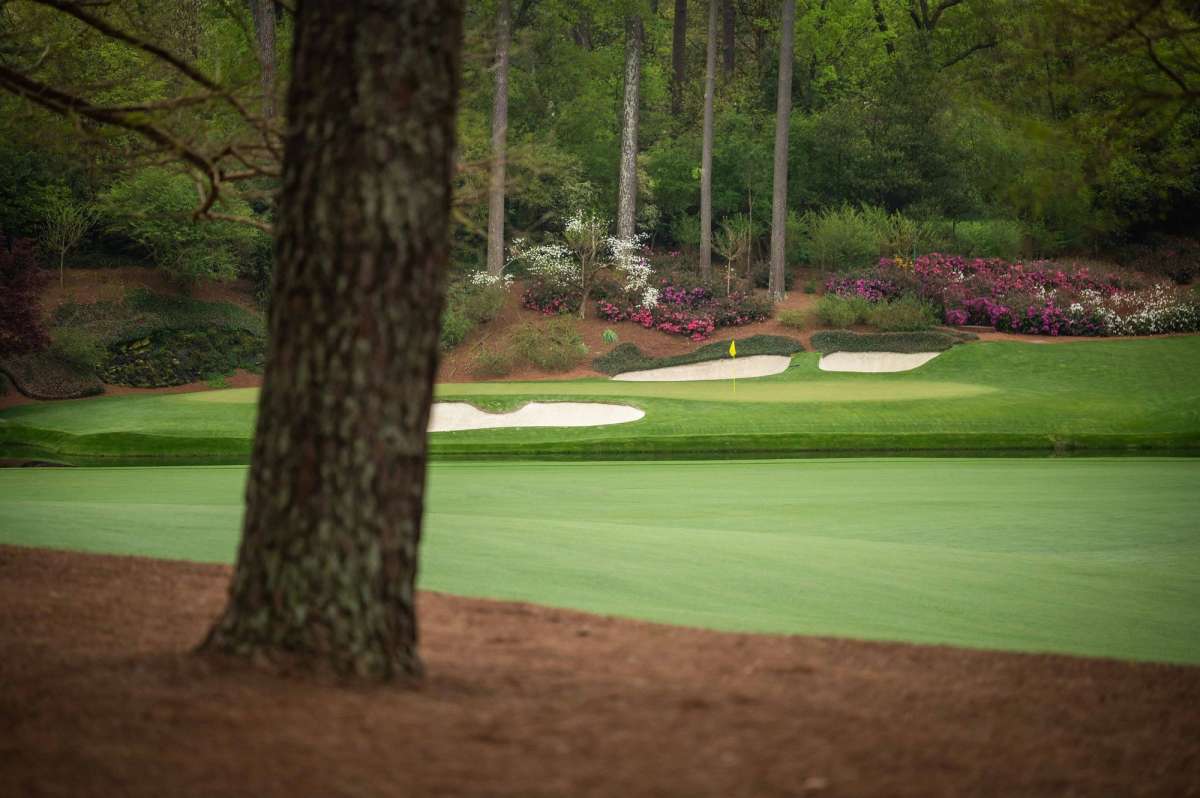
The Hidden Experience of Playing Augusta National - Golf's Most Exclusive Course For travelling golf enthusiasts who dream of playing the world's top 100 golf courses, Augusta National Golf Club represents the ultimate bucket list destination. While millions watch The Masters tournament each April, few will ever experience what lies beyond the famous gates on Washington Road. This insider guide reveals the authentic Augusta National experience that television cameras never capture. Finding the Entrance: Augusta National's Understated First Impression Despite hosting golf's most prestigious tournament, Augusta National's entrance remains remarkably understated. Located on busy Washington Road in Augusta, Georgia, many first-time visitors drive past the discreet gates multiple times before finding their way. Unlike other famous golf courses with prominent signage, Augusta National relies on its reputation rather than obvious markers. The exclusive nature of the club becomes immediately apparent—guests must arrive with a member host, as no visitors are permitted without member accompaniment. Security measures include mechanical barriers and police officers who verify names before granting access to Magnolia Lane. Once inside, the legendary service begins. Mysteriously, every staff member addresses guests by name from the moment of arrival. "Mr. Lewis, it's lovely to have you," they'll say to first-time visitors who haven't yet introduced themselves, recalls Connor T. Lewis, who has been fortunate enough to play Augusta multiple times. This attentive hospitality creates an immediate sense of belonging that distinguishes Augusta National from other top-ranked golf destinations. The Historic Augusta National Clubhouse Experience The Augusta National clubhouse represents a fascinating piece of American architectural history. As the oldest poured concrete building in the United States (dating to the 1800s), it offers a surprising contrast to the grand southern mansions typical of prestigious golf clubs. Originally slated for demolition when the club was founded, financial constraints preserved what would become one of golf's most iconic structures. Inside, golf history surrounds you. The Trophy Room features oil paintings of founders Bobby Jones and Clifford Roberts in their green jackets, alongside President Eisenhower. Most impressive are Bobby Jones' actual clubs used to win the Grand Slam, displayed in the left corner—a must-see for golf history enthusiasts. The clubhouse ambience remains refreshingly understated despite its prestige. "You think that everything's gonna be super fancy? And it's very understated. It's very relaxed," observes Connor T. Lewis, reflecting on his first impressions of the club. This understated elegance extends to the on-site accommodations, where guests stay in cabins named after golf legends, complete with Augusta National-branded amenities and panoramic views of the famous first hole. A Secret Nighttime Tradition at Augusta National While playing Augusta National ranks among golf's greatest thrills, the most magical moments often occur after sunset. After dinner in the clubhouse, knowledgeable guests participate in a special tradition—a moonlit walk to Amen Corner. "If you told me for the rest of my life that I could only go to Augusta National, not to play, but just to take that walk, I would accept that with pure happiness," confesses Connor T. Lewis about the moonlit tradition he now shares with other guests whenever possible. Under full moonlight, the fairways glow with an ethereal blue hue as guests make their way toward golf's most famous three-hole stretch. What few know is that Augusta National illuminates the 12th and 13th holes at night with special lighting. These spotlights transform Golden Bell and Azalea into theatrical stages, creating one of golf's most sublime spectacles. Many visitors report feeling the presence of golf legends like Hogan, Snead, and Jones during these nocturnal pilgrimages—a spiritual dimension to Augusta that television audiences never witness. Playing Augusta National: What Masters Broadcasts Don't Show Television coverage flattens Augusta National's dramatic topography. In reality, walking the course involves elevation changes equivalent to climbing approximately 20 stories throughout 18 holes. By the 18th fairway, even fit players feel the burn in their legs—a physical challenge entirely invisible to viewers. The optical illusions throughout Augusta National demonstrate designer Alister MacKenzie's genius. Having worked in military camouflage during World War II, MacKenzie created greens that deceive the eye. Putts that appear to break dramatically left often move right, making Augusta's legendary caddies invaluable guides through this visual trickery. Even accomplished golfers face psychological challenges at Augusta. Connor T. Lewis, a single-digit handicapper, recounts snap-hooking his first three drives at Augusta despite normally being consistent off the tee. "I go to the second hole, par five, and snap-hook another drive. Now on two, there are a lot of options. Snap-hook is not one of them," he jokes about his nerve-wracking start. The intimidation factor of playing where Palmer, Nicklaus, and Woods made history can transform good swings into momentary disasters. Among the most challenging shots at Augusta National: The intimidating tee shot on the 18th hole (even from member tees) The deceptive par-3 12th where swirling winds confound club selection The approach to the 14th green with its severe undulations The Essential Augusta National Mindset: Enjoying Golf's Greatest Experience The most valuable advice from Augusta National veterans transcends technique: forget your score. "You miss the point of Augusta National if you're trying to shoot your best round or break 80," advises Lewis. "Just take the time to float on the clouds for a little bit." This wisdom extends to any top 100 golf course experience. The greatest tragedy would be visiting golf's cathedral and remembering only your frustration over missed putts. "You never know when it's your last," explains Lewis. "Lightning could hit you tomorrow, and that might be the last opportunity you get to walk those storied links." For golfers lucky enough to receive an invitation to Augusta National—or any prestigious course—the ultimate advice from Connor T. Lewis distills to: "Don't let your golf game get in the way of playing golf." Experience the World's Top Golf Courses with the Right Perspective Augusta National exists in two realities: the immaculate tournament venue millions see on television, and the spiritual experience few will ever know—where fairways glow under moonlight, where history whispers from century-old walls, and where playing becomes a pilgrimage. While most golfers won't receive an invitation to Augusta National, this perspective applies to all bucket-list golf courses. Whether playing St. Andrews, Pebble Beach, Pine Valley, or Royal County Down, the scorecard matters less than absorbing the experience. As you plan your next golf adventure to top-ranked courses, remember that scores fade but experiences endure. Float on those clouds while you can, for you never know when such an opportunity might come again.
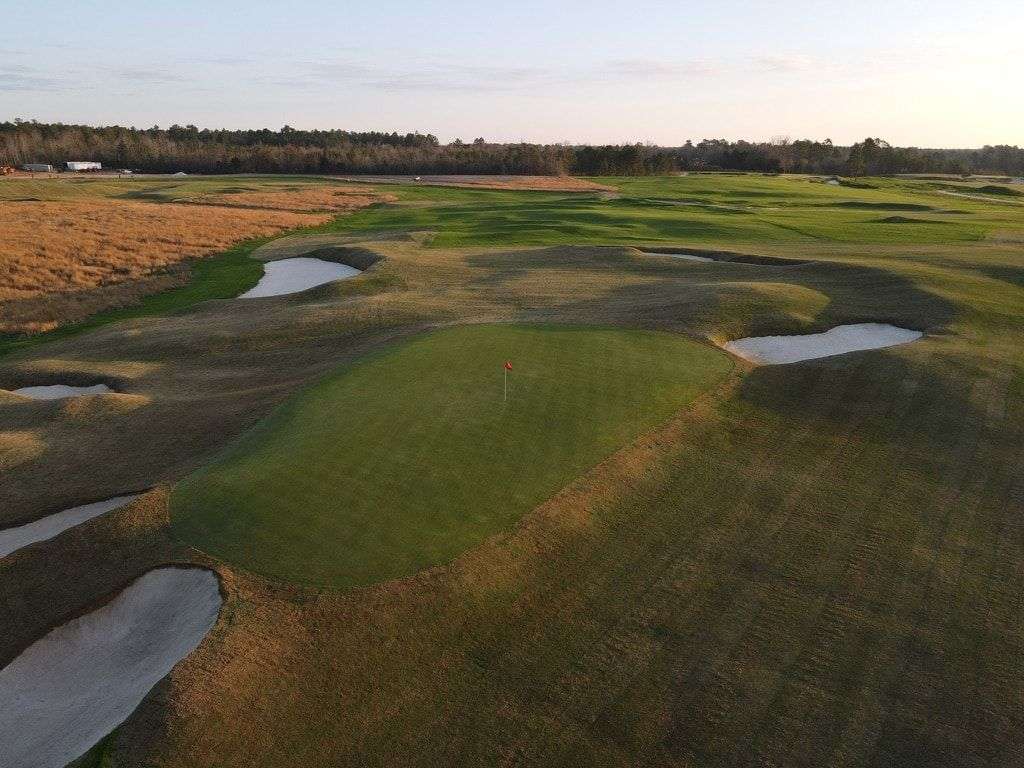
USA Top 100 Golf Courses Update There has been a plethora of great golf open up in America in the past few years and the competition is so tough... You could probably do the Next Best USA Top 100 and still add more to the list. From 75 onwards, there are probably 75 more that could be included or swapped out. However, we've done the heavy lifting and produced what will be the first of a few updates in 2025. Additionally, there is a plethora of new courses opening in both traditional and non-traditional markets. Whatever the case, the rankings will be updated in 2025 when we get more eyes on new builds and freshly opened courses after renovations and restorations. The rankings will be updated in an 'always up to date format' which will be introduced during 2025. We will refine the rankings during 2025 when we look again at the World, and North America Rankings and wait for new course openings. One thing for certain is that there is a lot of new and high-end golf state-side at the moment. Listen to the Podcast Discussing the Top 100 USA Rankings Listen to it on Apple iTunes Top 100 USA Highlights New Entries include Ladera at 83, Sedge Valley at 98, and Medinah No. 3 at 99. Old Barnwell is the biggest riser - up 24 spots to 47th. Some big names fall down the ranking, including Tree Farm, Southern Hills, and The Country Club. Two of Tom Doak's designs at Streamsong Blue and Sebonack both fall from the Top 100. The other golf course which may well be just a small hiatus is Yale. We await the re-opening and probable re-entry to the USA Top 100 Ranking. The Top 25 is pretty steady with most well and truly staples not only in America but also in the World's Top 100.

