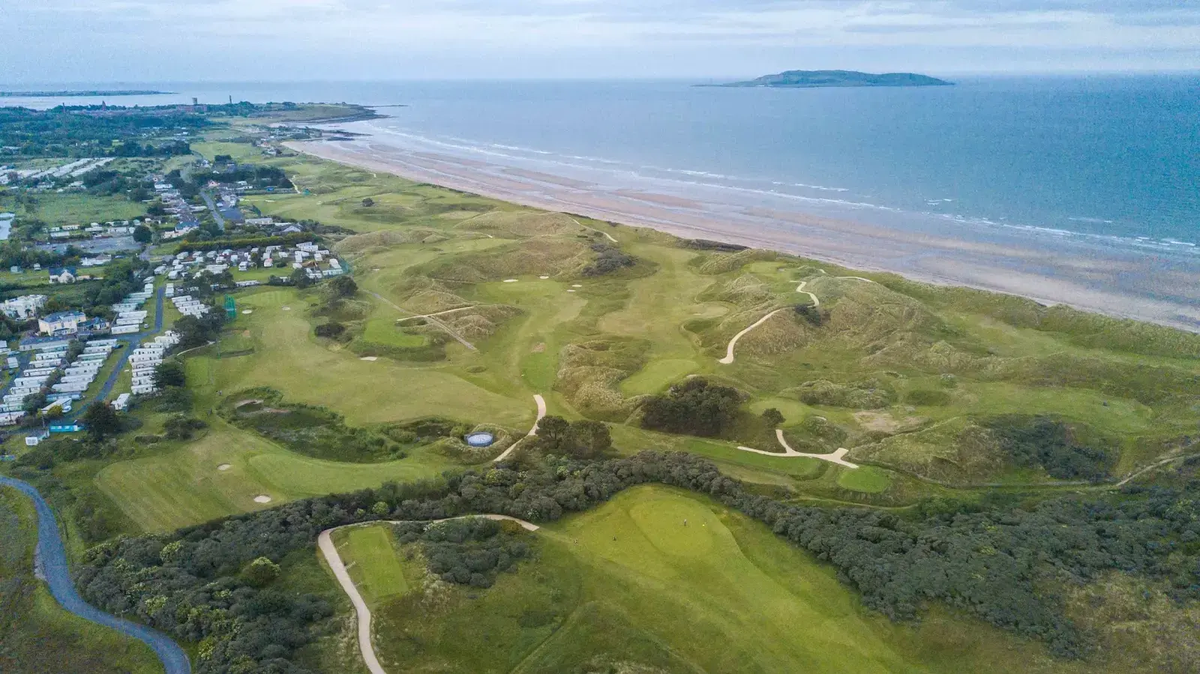
Alex Frolish has been a pilot for approaching 20 years and now travels to all corners of the globe in his role as a commercial airline pilot. His passion for flight is only equalled by his passion for golf and golf travel. Having picked up a golf club over 35 years ago when aged just 3 years old, Alex has played over 550 courses across every continent on planet earth furnished with a fairway. Over the next few months you’ll be able to follow Alex’s golfing travels as he brings you anecdotes of his life both in the air and on the course.
As an airline pilot, you tend to become mildly obsessed with your sleep (or lack there of) and of ways to maximise it. I often get asked how I deal with jet lag. The answer is really quite personal to the individual rather than there being one solution for all. One thing I have found is that flying to the east from the U.K. is particularly difficult on my body clock. So when I saw flights to Hong Kong and Singapore on my April roster, I envisaged many hours staring at my bedroom ceiling in the small hours.
Having spent one such night in my Hong Kong hotel room, I arrived for my morning tee time at Clearwater Bay Golf Club with my fuel tank on empty, just about surviving on caffeine power and a blurred sense of anticipation. I had read that Clearwater Bay made a good argument for being one of the most dramatic golf courses in Asia, occupying an improbable piece of craggy and vegetation covered coastal land looking out over the South China Sea. I’d even read one article that compared some of the course to Pebble Beach of all places! On arriving at the club and taking in the vista from the clubhouse balcony, I have to say, the reports were wholly accurate. The two nines are very distinct from each other in character, with the front nine named ‘Ocean’ and the back nine named ‘Highland’. The Pebble Beach comparisons come early in the front nine, as the course traverses a clifftop out on to the very tip of a peninsula, akin to the 7th at Pebble. What a remarkable stretch of golf it is.
My turnaround back in the U.K. after Hong Kong was minimal, but this time I was off as a passenger rather than a pilot. Ireland has a magnetic quality that leaves me plotting many a golfing trip (normally late at night when I’m meant to be sleeping) and one such trip came into being in mid-April. Four days on the East coast was going to encompass six rounds of golf on some of the best links land the Emerald Isle has to offer. A little more than an hour after landing at Dublin airport, we were standing on the 1st tee at The Island Golf Club, staring down its dune lined first fairway. The land here is spectacular and this was a more than fitting course to begin our trip (and special spot to sink our first Guinness).
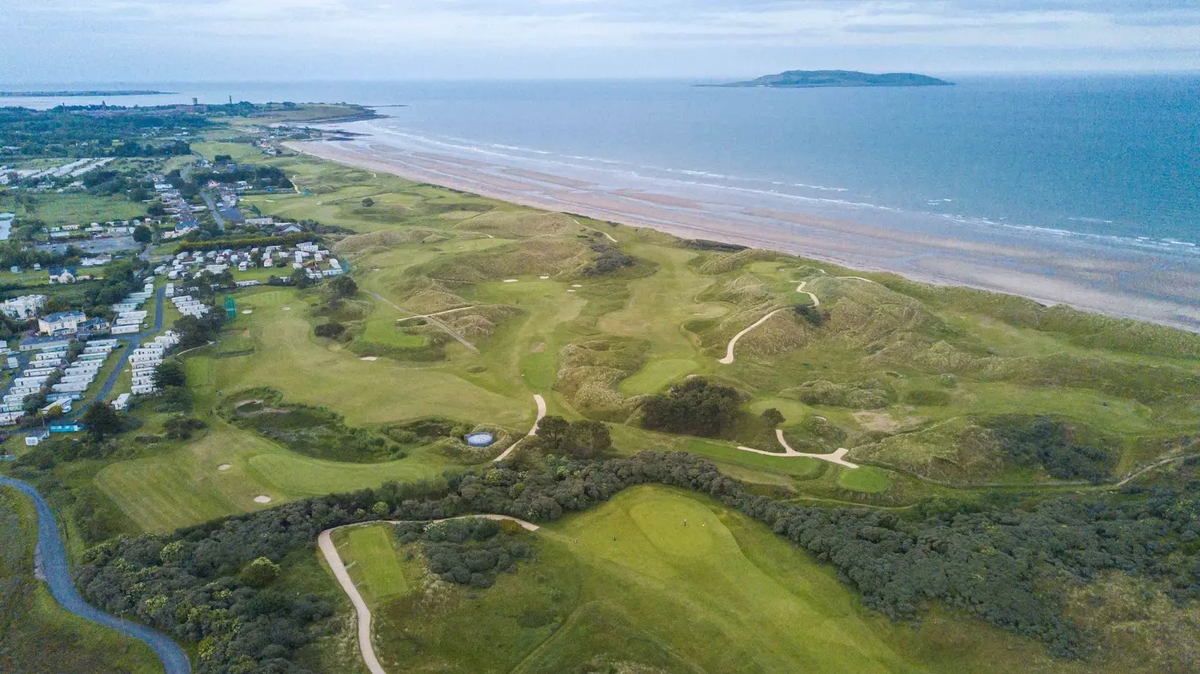
Photo credit: Patrick Koenig
We based ourselves at the Portmarnock Hotel for two nights and awoke the next morning to a beautiful view of the links. It was a historic course a few miles down the coast that was our destination on day 2 however. Royal Dublin, like The Island, is routed across a piece of land not fully attached to the mainland. It contrasts markedly to the towering dunes of The Island however, with Royal Dublin wandering out and back across mildly undulating links ground. The course has undergone a bunker renovation and transformation with the aim of re-injecting some of Colt’s original strategic questioning that had become muddied after years of conflicting course works. I love the subtlety of Colt architecture and truly believe the work at Royal Dublin has been hugely successful in returning some Colt character to this links layout.
The afternoon round was played across one of the best links golf courses in the world, Portmarnock. There aren’t enough compliments I can pay to describe my thoughts on this course and it has entered my personal list in the highest of echelons. A disappointing trend re-emerged here though on the 15th tee. I seem to be making a habit of playing the signature holes of world famous golf courses like an absolute beginner. As a single figure handicap golfer, and standing on the iconic par 3 15th tee here with a good round going, I managed to explicably shank my tee shot on to the beach. You had to laugh, and we did over many pints of the black stuff that night.
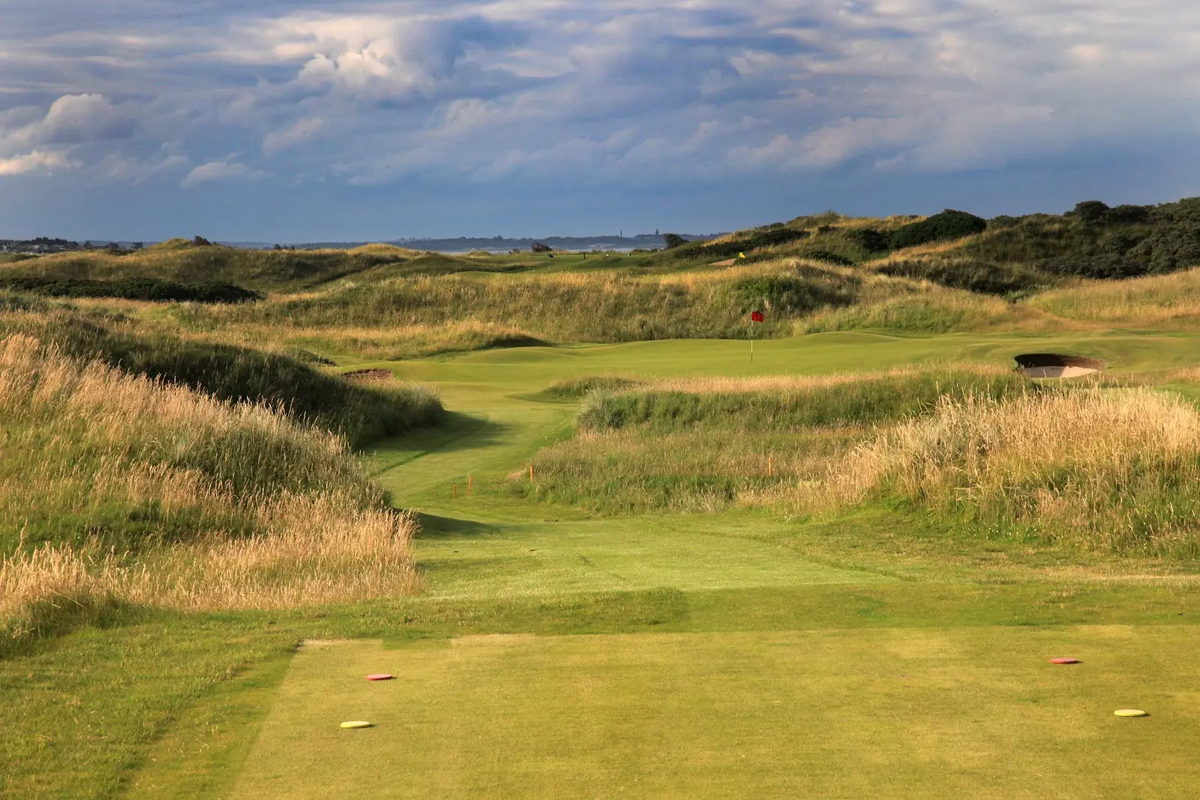
Photo credit: Gary Lisbon
Those of you who have read Tom Coyne’s ‘A Course Called Ireland’ will be aware of Ardglass and his passion for the town and the golf club. Day 3 took us north to play Royal County Down and then on to Ardglass and to a stay in Margaret’s Cottage B&B, the very spot Tom stayed in the book. What can I say about Royal County Down? It is ranked as the best links course in the world for a reason and it is one of the more stringent links examinations I have experienced.
Carried on a cloud of golfing contentment, we made our way up the coast to Ardglass that afternoon, our bodies weary but our minds very much excited for what lay ahead. With the Irish Sea crashing against the rocks to the left, the shadow of the 15th century castle clubhouse peering across the 1st tee and the town surrounding the course beyond the boundary wall, the opening spectacle here is as dramatic as any I have witnessed in world golf. The opening scene is not in isolation. Ardglass is a drama filled rollercoaster packed with many highlight moments and picture postcard views. I understand why Tom Coyne fell in love with this place.
Our departure day round was arranged at County Louth (Baltray to the locals). Of all the courses we played on this trip, this might be the one that I’d like to play once a week for the rest of my days. Not as bold as most of the other layouts, it however boasts a playability and enjoyment factor that is tough to rival. The land is attractively undulating and the beautifully crafted green sites are a feast for the eyes. I’d implore anybody visiting this area of Ireland to include County Louth on their itinerary.
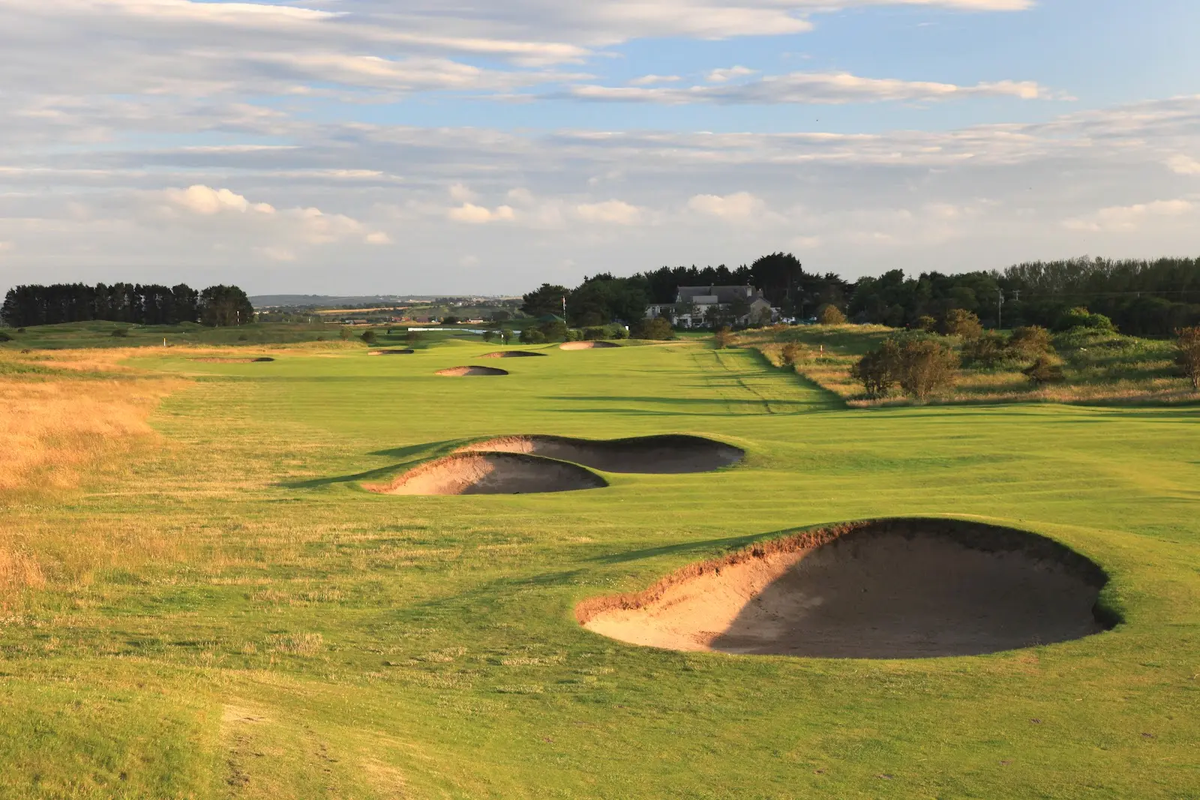
Photo credit: Gary Lisbon
My arrival back from Ireland placed me all too quickly in the flight deck once again, headed this time for the bright lights of Dubai. It may have been a quick turnaround, but Dubai is a destination I am always happy to see on my roster as you can normally guarantee some quality golf and sunshine. For this visit, I had arranged a first time visit to The Els Club, a course with a repute of being one of the hardest in the Middle East. It didn’t disappoint. The greens are like glass, the bunkers like bomb craters and the fairways seemingly wide but often improbably narrow in terms of where you need to be playing from. My four putt from 6 feet on the 2nd as well as my birdie on the 9th (probably the hardest hole on the course) suitably illustrates the highs and lows of my round here.
Pilots are always looking ahead to the next flight, the next layover and the next publication of their work roster. For me there is always the added anticipation of potential future golf to plan. The publication of my May roster was a pleasing one, and had been particularly kind to me in a golfing sense. Buenos Aires, New York, Pittsburgh and Portland all offered plenty of golfing food for thought. In the U.K., I had a number of games already arranged at some of the best courses in England that I’d yet to play. But that’s all for next time. In the mean time, wherever you are and whatever you have planned, I wish you the straightest of drives, well negotiated four- footers and happy rounds.
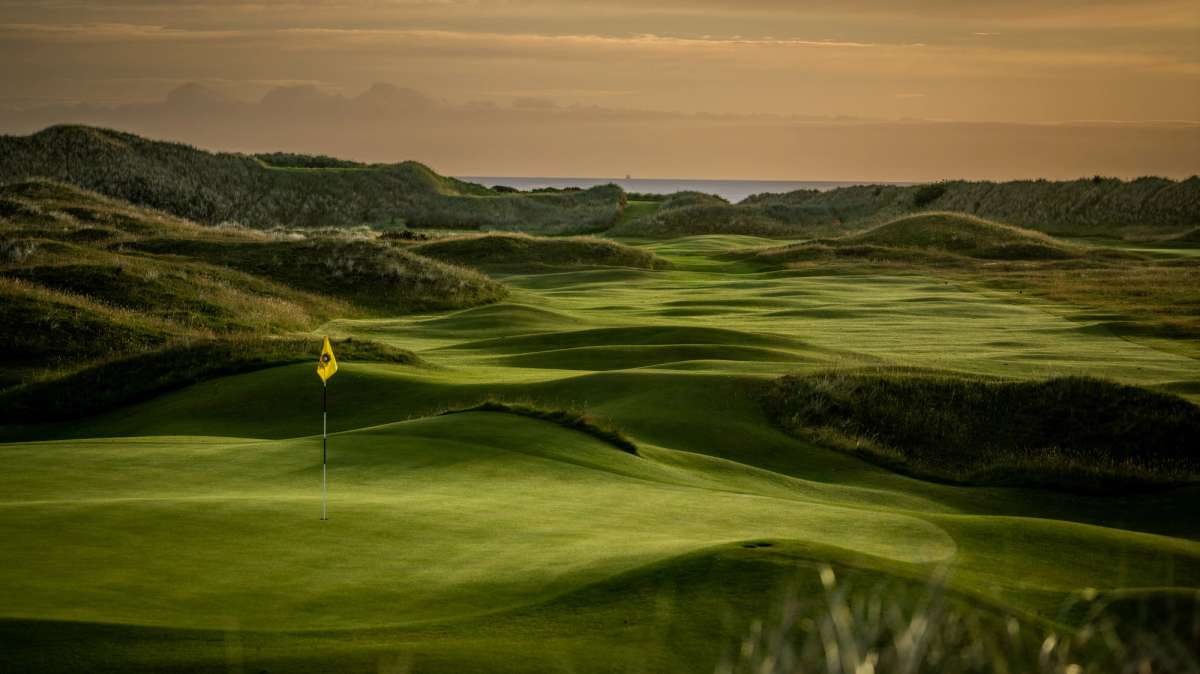
Five rounds of championship links golf, seven nights in Dublin and a day to explore the Irish capital – the Icon Links and Top100 Signature Departure offers a chance to experience some of the country's finest coastal courses without the hassle of organising the trip yourself. Ireland is one of the world's great golf destinations, and Dublin provides an excellent base for exploring its east coast. Within reach of the capital are some of the country's most celebrated links, each offering its own challenges and character. Running from 8–15 May 2027, the itinerary features rounds at Portmarnock, The Island, County Louth, Royal Dublin and Jameson Golf Links, with seven nights at The Alex Hotel and private airport transfers included. A free day in Dublin provides time to explore the city between rounds. Day 1: Arrive in Dublin The trip begins at Dublin Airport, where a private driver will meet the group for the transfer to The Alex Hotel, the base for all seven nights. Located near Merrion Square in the heart of the city, this four-star hotel puts Dublin's restaurants, traditional pubs and cultural attractions within easy reach. It's a convenient place to settle in before the golf begins, with the remainder of the day free to explore the Irish capital or relax after the journey. For a first taste of Dublin, O'Donoghue's on Merrion Row is a worthwhile stop for a pint and, if the timing is right, some traditional Irish music. Those who prefer to stretch their legs can take a stroll through Merrion Square, where the Georgian architecture and Oscar Wilde memorial offer an introduction to the city's character just around the corner from the hotel. With the first tee time scheduled for the following afternoon, there's no need to rush straight into the golfing itinerary. Day 2: Portmarnock Golf Club World Ranking: 74th | GB&I Ranking: 24th | Ireland Ranking: 4th The first round sets a high standard. Portmarnock Golf Club has been one of Ireland's most respected links courses since opening in 1894, with a championship history that includes 19 stagings of the Irish Open. Set on a sandy peninsula north of Dublin, the course is almost surrounded by water, with views across the Irish Sea towards Ireland's Eye and Howth. The landscape is relatively flat, but don't mistake that for an easy round. Exposed to the wind, Portmarnock rewards accurate driving, thoughtful positioning and a reliable putting game, with its fast greens adding another challenge. The closing stretch is particularly celebrated. Golf writer Bernard Darwin once declared that he knew of no greater finish in the world than Portmarnock's last five holes – a fitting endorsement of a course that has tested generations of leading professionals and amateurs. A 12.50pm tee time leaves the morning free to enjoy Dublin before heading out for the opening round. Lunch is included in the green fee, providing a welcome opportunity to refuel before taking on one of Irish golf's classic links tests. Day 3: The Island Golf Club GB&I Ranking: 49th | Ireland Ranking: 7th The second round takes the group to The Island Golf Club, a links course that feels a world away from the city despite being just north of Dublin. Founded in 1890, the club occupies a secluded stretch of land between the Irish Sea, Donabate beach and the Broadmeadow Estuary. Its towering, rugged dunes create natural corridors for the holes, giving the course a more dramatic landscape than many golfers might expect so close to the capital. The wind is a constant consideration, and finding the greens is no easy task. The standout hole is the long par-three 13th, which measures more than 220 yards and asks golfers to carry their tee shots towards a green with the beach providing a daunting backdrop. It's the kind of hole that can make club selection an interesting discussion in the group. With an 11.10am tee time, there's another full round to enjoy before returning to the city for the evening. Following Portmarnock the previous day, The Island provides a contrasting take on links golf, with its towering dunes and rugged natural setting making it one of the highlights of the trip. Day 4: A day at leisure in Dublin After two days on the links, the fourth day is free to explore Dublin at your own pace. With The Alex Hotel providing a central base, many of the city's best-known sights are within walking distance. Start with a visit to Trinity College Dublin, home to the famous Book of Kells, before wandering along Grafton Street towards St Stephen's Green. Those looking to learn more about Ireland's most famous export can head to the Guinness Storehouse, where the tour ends with a pint and panoramic views across the city from the Gravity Bar. For lunch or dinner, The Brazen Head is worth considering. Dating its origins to 1198, it is widely recognised as Dublin's oldest pub and offers a traditional setting for a meal. Alternatively, head to the Temple Bar district to explore its cobbled streets, lively pubs and live music. Whether the day is spent visiting historic landmarks, browsing the shops or enjoying a leisurely afternoon in a pub, it offers a chance to experience Dublin beyond the golf course before the trip continues at County Louth the following morning. Day 5: County Louth Golf Club GB&I Ranking: 42nd | Ireland Ranking: 6th Better known as Baltray, County Louth Golf Club is one of Ireland's finest links courses, and a highlight for golfers exploring the country's east coast. Established in 1892, the club's present course was designed by Tom Simpson and Molly Gourlay in 1938. Set among natural dunes near the mouth of the River Boyne, the layout takes full advantage of its coastal setting, with holes running in different directions to provide variety and keep the wind in play throughout the round. The greens are Baltray's calling card. Their contours and pace demand precision on approach and a confident touch with the putter, while the back nine brings several holes close to the shoreline, with distant views towards the Mountains of Mourne. The course also has a memorable place in Irish golf history. When Baltray hosted the Irish Open in 2009, local favourite Shane Lowry won as an amateur, beating England's Robert Rock in a playoff. It remains one of the tournament's most memorable finishes and helped launch Lowry towards a career that would culminate in his Open Championship victory a decade later. A 9.20am tee time means an early start from Dublin, but the reward is a round at a course that combines championship pedigree with the natural character of traditional Irish links golf. Note: A forecaddie is mandatory for each group, with the cost payable directly to County Louth Golf Club on the day. Day 6: The Royal Dublin Golf Club Ireland Ranking: 19th Founded in 1885, The Royal Dublin Golf Club is one of Ireland's oldest golf clubs, occupying a distinctive position on Bull Island in Dublin Bay. The island itself was formed by the construction of a sea wall in the early 19th century, creating the sandy terrain that makes it such a natural home for links golf. The course was rebuilt by renowned architect Harry Colt in 1920, following severe damage during the First World War, and retains the traditional out-and-back character of a classic links layout. Royal Dublin is relatively flat, but there's little room for careless golf. Narrow fairways and out-of-bounds stretches demand accuracy from the tee, while the wind can swirl across Dublin Bay and make the back nine particularly challenging. The greens are a highlight, although the deep bunkers guarding them can quickly punish an errant approach. The club also has a special place in Irish golf history through Christy O'Connor, who served as club professional for more than half a century and won the Irish Open at Royal Dublin in 1966. With a 10.10am tee time, the group has another chance to experience a historic Irish links without straying far from the Dublin base. Note: A forecaddie is mandatory for groups of three or more, with the cost payable directly to Royal Dublin Golf Club on the day. Day 7: Jameson Golf Links Ireland Ranking: 26th The final round takes the group to Jameson Golf Links at Portmarnock Resort, bringing the golfing week to a close beside the Irish Sea. Originally designed by Bernhard Langer and landscape architect Stan Eby, the course opened in 1995 on land once owned by the Jameson whiskey family. While it shares the Portmarnock coastline with its famous neighbour, this is a separate course with its own character. The opening holes play across gently rolling ground, with pot bunkers and varied grasses defining the fairways. Around the turn, the landscape becomes more dramatic as the holes weave through larger dunes, with views across Velvet Strand towards Ireland's Eye and Lambay Island. A significant renovation completed in 2023 brought changes to the layout, bunkering and greens, making greater use of the natural terrain. The result is a modern links experience that retains a natural feel while offering plenty of strategic interest. A 10am tee time gives the group a final chance to enjoy Ireland's coastal golf before the trip draws to a close. After five rounds across some of the East Coast's most notable links courses, Jameson provides a fitting final stop before the journey home. Day 8: Depart Dublin After seven nights in Dublin and five rounds of links golf, the trip comes to an end. Check out of The Alex Hotel and meet your private driver for the transfer to Dublin Airport. With rounds at Portmarnock, The Island, County Louth, Royal Dublin and Jameson Golf Links behind you, you'll leave Ireland with a memorable week of golf and plenty of reasons to return. Planning your Irish golf trip The Icon Links and Top100 Signature Departure runs from 8–15 May 2027, with seven nights in a king room at The Alex Hotel in Dublin and five scheduled rounds of golf. Departure prices: €6,375 per person sharing €8,025 per person in a single room The itinerary at a glance: Saturday, May 8: Arrive at Dublin Airport and transfer to The Alex Hotel. Sunday, May 9: Portmarnock Golf Club. Monday, May 10: The Island Golf Club. Tuesday, May 11: Day at leisure in Dublin. Wednesday, May 12: County Louth Golf Club (Baltray). Thursday, May 13: The Royal Dublin Golf Club. Friday, May 14: Jameson Golf Links. Saturday, May 15: Private transfer to Dublin Airport for departure. The itinerary keeps the same hotel throughout the trip, avoiding the need to move accommodation between rounds. Private transfers between The Alex Hotel and the golf courses, as well as airport transfers, are included. Five coastal rounds are balanced by a free day to explore Dublin. Forecaddie costs at County Louth and Royal Dublin should be factored into the trip budget, as these are payable directly to the clubs. Lunch is included in the Portmarnock green fee. Interested in joining the departure? Register your interest with Icon Links and Top100 to find out more about the trip.
Leinster is Ireland's eastern golfing powerhouse, and it doesn't shout about it. While international golfers make a pilgrimage to Kerry and the Wild Atlantic coast, the province anchored by Dublin quietly hosts one of the densest concentrations of world-class golf on earth. Within 90 minutes of Dublin Airport, you can play Portmarnock, County Louth (Baltray), The Island, Royal Dublin, The K Club, Druids Glen and soon Brittas Bay… whether links or manicured, resort-style parkland, you’ll find it here. What Leinster offers that the west doesn't is convenience. Dublin is your base: a brilliant city for food, music and Guinness, with championship golf on the doorstep. East-coast links are a bit more subtle than the west coast links, while the parkland estates of Kildare and Kilkenny offer five-star resort golf of the highest order. It's a destination you can build a serious itinerary around without the miles of cross-country driving. 🏆 Why Choose Leinster for Golf? World-class links on the doorstep — Portmarnock, The Island and Baltray (County Louth) form one of golf's great coastal clusters, all within 45 minutes of the airport Outstanding parkland variety — The K Club (Ryder Cup 2006), Mount Juliet (Jack Nicklaus), Druids Glen and Killeen Castle offer top-tier resort experiences Dublin as a base — one of Europe's most compelling cities for food, live music and post-round pints Year-round playability — East Coast links drain fast after rain; inland parklands stay beautifully conditioned Compact geography — five or six exceptional courses can be played in a single week without any long drives ⛳ Leinster's Best Golf Courses Portmarnock Golf Club The jewel of the East Coast, and the course against which all Irish links are measured. Portmarnock sits on a narrow peninsula 16km north of Dublin, founded in 1894 and almost surrounded by the Irish Sea. It has hosted 19 Irish Opens, the 1991 Walker Cup, and may yet stage The Open Championship. Bernard Darwin's famous verdict — that no greater finish exists than Portmarnock's closing five holes — holds as true today as when it was written. The course is relatively flat and wide, which fools visitors into underestimating it. The genius lies in the routing, the relentless crosswinds and the quality of every single hole. 🗓 Visitors: 1 April–31 October only 🚶 Walking only — no buggies for visitors County Louth Golf Club — Baltray Known simply as Baltray, County Louth is the great, undersung links of the east coast — quietly ranked in Ireland's top five and beloved by those who've played it. Located at the mouth of the River Boyne, 45 minutes north of Dublin Airport, the course was redesigned in 1938 by Tom Simpson and Molly Gourlay and has remained almost unchanged since. The clubhouse is warm, the soup and brown bread post-round is legendary, and tee times are more accessible than you'd expect for a course of this calibre. The Island Golf Club Established in 1890 and reached via a winding road alongside the Malahide estuary, The Island is one of those courses that rewards the effort made to find it. Surrounded on three sides by water and set among some of the highest dunes on the east coast, it has a raw, natural character that is rare even by links standards. Recent remodelling work transformed the front nine, adding variety and making fuller use of the dramatic terrain. Just 15 minutes from Dublin Airport, it's an ideal opening or closing round. Royal Dublin Golf Club Founded in 1885 and designed by H.S. Colt, Royal Dublin occupies North Bull Island in Dublin Bay — a UNESCO Biosphere Reserve where 40,000 migratory birds overwinter alongside the golfers. The approach across the wooden bridge from Clontarf sets the scene immediately. The links are flat, exposed and relentlessly honest. Multiple Irish Open host. Accessible by tram from Dublin city centre, and with competitive green fees for a course of this calibre, Royal Dublin is one of Leinster's best-value championship experiences. The K Club — Palmer North Course Ireland's most famous golf resort and host of the 2006 Ryder Cup, where Europe won by a record 18.5–9.5. The Palmer North Course was designed by Arnold Palmer and Ed Seay in 1991 and set within 550 acres of County Kildare countryside alongside the River Liffey. Grand, immaculate and definitively resort in character, it's the course golfers visit to stand where Darren Clarke, Luke Donald and Sergio García sealed European glory. 💎 Other Courses Nearby Druids Glen The "Augusta of Ireland" — a phrase that earns its credibility in late spring when the Wicklow parkland explodes with colour. Four-time Irish Open host in the 1990s. Stunning conditioning and a resort package including the adjacent Druids Heath course. Carlow Golf Club A wooded deer park with a sandy, springy feel underfoot that wouldn't look out of place on a Surrey heathland. Vastly underrated, quietly excellent. Tom Simpson & Molly Gourlay’s heritage and pedigree. Corballis Links A local cult classic, it’s a sneaky good 18-hole golf municipal that lies inthe same dunes as The Island… ✈️ Getting to Leinster Dublin Airport is one of Europe's best-connected hubs, with direct flights from across the UK, Europe, and North America (New York, Boston, Chicago, Toronto and beyond). Ryanair and Aer Lingus operate frequent UK routes; transatlantic golfers fly direct with Aer Lingus, United, American and Delta. Ferry option: Irish Ferries and Stena Line run Holyhead–Dublin Port crossings (approximately 3h 20m on the fast ferry), which are ideal for UK-based golfers carrying clubs who want to avoid airline bag fees. By car: Belfast to Dublin is around 90 minutes on the M1, making a combined Ulster–Leinster itinerary entirely realistic. 🚗 Getting Around Leinster A hire car is essential. All major international companies operate from Dublin Airport. The M50 ring road and M1, M2, and M4 motorways give fast access to courses across the province. GPS is reliable throughout; allow extra time on first visits to courses with complex approach roads — The Island in Donabate being the prime example. ☀️ Weather & When to Go Best months: May, June and September — good weather, long days, manageable visitor numbers and slightly lower green fees than peak summer. Peak season: July and August — longest days and firmest links conditions, but highest prices and most advanced planning required. Shoulder season: April and October — excellent value, variable weather, and a genuine chance of near-empty courses on weekday mornings. Leinster's east-coast climate is noticeably milder than the Atlantic coast — lower rainfall, less ferocious wind, more sunshine. Summer temperatures range from around 15–20°C (59–68°F). Pack a light waterproof jacket and a mid-layer regardless of the forecast. 🏨 Where to Stay Golf resorts: The K Club (Kildare), Druids Glen (Wicklow), Killeen Castle (Meath) and Carton House (Kildare) all offer full resort packages combining accommodation with golf on-site. Dublin city centre: Most flexible base for the coastal links cluster. Coastal villages: Malahide is ideally placed for the north Dublin links — 15 minutes from Portmarnock and The Island, with excellent restaurants and a harbour. Skerries is quieter and better positioned for Baltray day trips. South Wicklow: Powerscourt Hotel near Enniskerry for Wicklow parkland golf, or the market town of Kilkenny as a base for Mount Juliet. 🍽️ Where to Eat & Drink Fine dining: Restaurant Patrick Guilbaud near St Stephen's Green holds two Michelin stars and is Ireland's most decorated table. Authentic pubs: Order a Guinness and settle in at Temple Bar. Near the courses: The post-round clubhouse lunch at County Louth (Baltray) is part of the experience — traditional Irish cooking served with genuine warmth. The two-course meal is included in Portmarnock's green fee. In Malahide, the waterfront restaurants make excellent use of fresh Irish Sea produce. 💡 Insider Tips ⚠️ The European Club — 2026 Update: Pat Ruddy's European Club in County Wicklow — long one of Ireland's finest links — was sold in 2025 and immediately closed for a comprehensive redesign by Kyle Phillips. It is expected to reopen in 2027 as Brittas Bay Club. Do not include it in a 2026 itinerary. 🦶 Portmarnock - Be prepared to walk… No buggies for visitors, ever. The terrain is more or less flat, and walking is the point. 🏌️ Don't overlook Baltray: It's the most underestimated great links in Ireland. More accessible than Portmarnock, more authentic than the resorts, and the one course that serious golfers who've done the research tend to name as their best day. 🛬 Last-morning golf: The Island or Corballis is 15 minutes from Dublin Airport. If there's a late afternoon flight, a final morning round with the bags in the car is one of the more civilised ways to end a Leinster trip. 🗺️ Beyond Golf Glendalough — Sixth-century monastic settlement in a glacial Wicklow valley. One of Ireland's most atmospheric sites. Unmissable on any South Wicklow golf trip. The Boyne Valley — Newgrange (5,000 years old, predates Stonehenge) and the Hill of Tara, 40 minutes north of Dublin. Combine with a Baltray round for the most culturally satisfying day in Leinster. Trinity College & the Book of Kells — The Long Room library is among the world's most beautiful spaces. Free to walk the squares; the Book of Kells exhibition requires a ticket. Guinness Storehouse — The rooftop Gravity Bar with panoramic Dublin views justifies every overused superlative applied to it. Allow two to three hours. The Wicklow Mountains — The Military Road through Glencree and Glenmacnass is a genuinely spectacular drive. Best done slowly, with a stop at Sally Gap.
Fergal Makes History Fergal O’Leary becomes the youngest man in history to play the World’s Top 100 Golf Courses AUGUST 2015, South Africa – This summer, Dublin-native Fergal O’Leary will prove the catch-phrase ‘luck of the Irish’ and become the youngest man in history to play the World’s Top 100 Golf Courses. The 32-year old will conclude his quest at the Durban Country Club in South Africa this August. Born and raised in Dublin, Ireland, O’Leary grew up in the backyard of one of the world’s greatest links, Portmarnock Golf Club. Rapidly becoming a talented and passionate golfer, he began to play competitive club level golf at the age of twelve. He took a summer job as a caddy, at a comparable course in the United States, the reputable ‘The Country Club’ in Brookline, Massachusetts. Being privy to such elite clubs and courses sparked a strong aspiration to continue identifying and playing the unique, high caliber greens – majority of which are private clubs. Using his relationships gained as a caddy and his ‘scratch’ handicap, he requested invitations for the opportunity to play on the courses. In 2007, US-based O’Leary set a long-term goal to play on the country’s top 50 clubs including Cypress Point, Sand Hills, Shinnecock Hills, Augusta National and Ballyneal, where he shot an impressive 66. Maintaining a full-time job as an IT Risk Assurance Professional, where he was required to travel on a regular basis, O’Leary devoted all of his downtime including weekends and holidays to visit the individual courses. Many of the courses were in clusters and he was able to play several in one weekend. The momentum continued and in September 2011, 28-year old Fergal played the original course at Sutton Bay, a course that no longer exists, to complete the Top 100 courses in the United States. He became the youngest person, as well as, the first Irishman to accomplish this in history. O’Leary is constantly inspired by the words of David Forgan from 1899, “Golf is a science, the study of a lifetime, in which you may exhaust yourself but never your subject. It is a contest, a duel, a calling for skill, courage, strategy and self-control. It is a test of temper, a trial of honour, and a revealer of character. It means going into God’s out-of-doors, getting close to nature and fresh air. It includes companionship with friends, opportunities for courtesy, kindness and generosity to an opponent.” To date, twenty-six people have played a World Top 100 list, twenty-one of whom are still alive today. Not one of these successors has derived from Ireland. Traveling to countries including the United Kingdom, Spain, France, Portugal, China, Australia and New Zealand, O’Leary’s dream to complete this challenge as both the first Irish man, as well as, the youngest man in history will be reached this summer. O’Leary resides in Boston, Massachusetts and holds the title of Golf Magazine’s Top 100 panelist, Golf Digest’s panelist and the US correspondent for Top 100 Golf Courses of the World in the United Kingdom. For all press inquiries: Elizabeth Tuke, Elizabeth@elizabethtuke.com
