
There’s more to the Isle of Man than just the TT races…
On the sports front, the Isle of Man is internationally recognised as a world-class destination for motorbike enthusiasts through the Tourist Trophy time-trial races that take place every year on a 38-mile mountain course on the island. The Circuit of Mann, an all-terrain rally challenge over forest trails, mountain tracks and parts of the TT circuit, is also held here.
Away from the roads, other big sporting occasions include the International Festival of Darts and the Crown Green Bowling Festival – both of these tournaments have become permanent fixtures in the island’s events calendar. What’s maybe not so well known is that the Isle of Man is also totally geared up to attract visiting golfers to all of its eight golf courses, every one of which is open for fifty-two weeks of the year.
Last month, we accepted an invitation from the island’s tourism authority (www.visitisleofman.com) to visit these golf facilities and find out for ourselves what golfers will discover after taking the ferry over to Douglas or a flight into Castletown. On checking the Isle of Man Golf website before departure, we were pleasantly surprised to learn that seven Manx courses were 18-hole layouts, with only one 9-holer in operation.
What’s more, nearly all of the golf clubs have been in existence for well over a hundred years – and renowned architects such as Old Tom Morris, James Braid and Alistair MacKenzie have all played a significant role in their development – so there’s a very strong golfing tradition on the Isle of Man that has stood the test of time since the beginning of the 1890s.
Where better to start a golfing tour of the island than on the links at Castletown, situated right next to the airport? The club was founded in 1892 and Old Tom Morris is credited with the design of the course shortly thereafter. Philip Mackenzie Ross carried out modifications after World War II and a few of the holes have been re-sequenced in more recent years.

The links is laid out on Langness Peninsula, a Site of Special Scientific Interest which is more commonly known as Fort Island, and it’s bounded on three sides by the Irish Sea, with many of the holes played well above sea level, affording sweeping views from the tight-knit, quick-draining fairways across the cliffs, rock outcrops and surrounding seascape.

There are a number of truly memorable holes at Castletown. The tough “Road” hole at the 5th is a beast of a par four, as is the “Hog’s Back” 9th with its convex fairway. On the inward half, the 133-yard 13th is a lovely little par three and the drive at “Gully” from the 17th tee brings the cliffs right into play. However, all of these wonderful holes might soon be eclipsed by the new 18th, as it now mandates an intimidating approach over a rocky inlet to the home green.
It’s a real pity the adjacent hotel stands derelict. If only an agreement could be reached with the owners to restore it to its former glory because it would be such a tourist asset to the whole island, helping the local economy in much the same way that the Machrie Hotel now does on the island of Islay in Scotland.
The course at Douglas Golf Club is a municipal golf facility that was designed by Alister MacKenzie and built by the British Golf Construction Company, opening for play on 8th August 1927. Known locally as Pulrose, the club was established in 1946 following the merger of Douglas Golf Club with Pulrose Golf Club and the course is operated by Douglas Borough Council from the Meadow Pavilion, a community-based building that opened ten years ago.

Measuring a modest 5,836 yards from the back tees and playing to a par of 69, the course is routed over rolling terrain on the periphery of the capital, featuring five par threes and only two par fives. Although many changes have been made since the course was first unveiled, a handful of the original MacKenzie greensites remain intact.

It’s just a shame that the introduction of modern grass cutting machinery and the installation of sprinkler heads immediately next to putting surfaces has led to greens shrinking substantially, negating the architect’s original intent of allowing golfers a far wider range of putting options from tightly mown grass around the pin positions.
Three miles to the north of Douglas, on what was formerly the Howstrake Estate, Old Tom Morris laid out a 9-hole course in 1892. Two years later, Old Tom and George Lowe, the Lytham & St Annes professional, expanded the layout to eighteen holes. Sad to say, that original course is long gone.

In the 1920s, a new 18-hole set-up was created when additional land became available to increase the acreage available for golf. In the early 1970s, the course closed before re-opening a couple of years later over a revised site consisting of 14 holes on a 55-acre site.
New owners changed the club’s name to King Edward Bay Golf Club in 1989 and eighteen holes were brought into play in 1991. Today, the course measures a mere 5,231 yards from the tips, with six par threes and only one par five on the card but a standard scratch score of 68 versus a par of 67 tells you these eighteen holes are no pushover.

That’s because it’s set out on top of a headland, where sheep and goats were probably the only living things to ever venture here before golfers. The front nine rises up then drops down from this big hill, but the back nine goes back up then skirts around the outside of the promontory, offering a thrilling roller coaster ride between the 11th and 16th, with sensational views over Douglas Bay.
The Comis Mount Murray resort lies just off the A5 main road between Douglas and Castletown. Dewar Wishart from Bingley Sports Turf Research, which is now known as STRI, designed the course. The hotel changed hands in 2016 and the new owner has already heavily invested in development plans for the entire property.

The hotel has been totally refurbished, the clubhouse is currently being revamped and a new 10-bay driving range will replace the old two-storey set-up. Out on the course, it’s intended to eliminate the long walks between some of the holes and this will be greatly assisted by the introduction of a tunnel under the road that passes through the property.

Mount Murray now measures 6,356 yards from the back markers, with par set at 71, and the current course configuration reflects several changes made to the routing since it debuted back in the early 1990s. There’s no doubt a reputable architect – mention has been made of Scott Macpherson who designed the courses at Close House in Northumberland – could make a significant impact on the future of this currently under achieving layout.
The fishing port of Peel lies on the west coast of the island, only a 20-minute drive from Castletown, and it’s here that the Huddersfield Golf Club professional Sandy Herd fashioned a 12-hole course for the members soon after the club’s formation in 1895.

It’s unknown who extended the layout to an 18-hole course (or when this happened) but James Braid is credited with designing the course that’s in play today, following a visit he made to the Isle of Man the year before Peel hosted the Manx Championship in 1930.
Laid out on higher ground to the north of the River Neb, the course gets off to a quiet start on the opening couple of holes before blossoming into a wonderful moorland-style track that really picks up in pace in the stretch between the 7th and the 12th, in particular.

The quality of these holes around the turn is underlined by the beautifully bunkered Biarritz green at the short par four 9th and the long, right to left sloping lie-of-the-land putting surface on the tough par four 11th – two holes that will not be forgotten in a hurry.
The 9-hole course at Port St Mary overlooks the little fishing village of the same name in the southwest corner of the island and golf has been played in this spot since 1903, though the present course is a 1936 design from yet another Open Champion from Scotland, George Duncan. With only two long par threes on the scorecard, it extends to just less than 2,900 yards.

For those who prefer their golf to be simple and straightforward then Port St Mary fits the bill – except that it involves a steep climb to the top of a hill looking down over Perwick Bay, Port St Mary and Bay Ny Carrickey. Of course, what goes up must come down, and after soaking in the surroundings from the elevated tee position on the par three 6th, golfers are then able to free wheel back down to sea level and the comfort of the clubhouse.
Located in the north of the island, Ramsey Golf Club began as a 12-hole course designed by Old Tom Morris in 1891, with the first official competition played on 5th January the following year. By the time James Braid visited to redesign the layout in 1929, the course had been increased in size to eighteen holes.

These days, the course weighs in at just a touch short of 6,000 yards from the championship tees, starting with a par five and finishing, rather unusually, with consecutive par threes. It’s the closest the island has to a pure parkland track and there’s good use made of a burn that flows through the property on some of the early holes.

Unfortunately, a lot of the holes occupy flat ground, which makes for easy walking but doesn’t help with visual stimulation – though there’s an attempt to liven things up on the par five 11th with a hedge cutting across the fairway as it doglegs to the green. Although fairways are tree-lined, it never feels too constricting, and the greenside bunkering is of a generally high standard throughout.
Rowany sits above the seaside village of Port Erin in the southwest corner of the island and the club dates back to 1895, when George Lowe established a basic 9-hole track that was doubled in size a decade later by W.J. Leaver, the Wisley professional. More than a hundred years have passed since then but not much has changed here during that time, with many of the greens still cut as old-fashioned rectangular putting surfaces.

The early holes run up and down in parallel from the 2nd to the 7th, highlighted by the par five 5th which plays up and over the top of the hill to a blind green beyond. On the back nine, a couple of terrific par fours at the 12th and 14th wouldn’t look out of place on any of the highly ranked courses on the mainland.

The club almost folded a few years ago so it’s great to see it making such a spirited comeback. And, just like the golfing experience at Boat of Garten in the Scottish Highlands, it’s such an inspiration while out on the course to hear the occasional whistle of the steam train on the Isle of Man Railway as it passes nearby on its way to and from Douglas.
Glen Truan
During our short visit to the Isle of Man, we heard of an ongoing golf project at Glen Truan in the far north of the island, on a property that is apparently pure sand. If a big-name architect such as Tom Doak, Gil Hanse or Bill Coore could be tempted into designing a properly shaped links on this site, then this would surely rocket the Isle of Man onto the world golfing stage. You only need to look at the remote King Island in Tasmania where two new seaside courses were recently built, turning the island into a red hot golfing destination.

For now, the Isle of Man is still well worth a trip to play the various golfing venues on the island. Perhaps in time the golfing powers that be might even arrange a week-long golf festival to rival all the other sporting festivals on the island, enticing golfers to participate in a competition spread over a number of different clubs. Food for thought maybe…
Thanks
Thanks to the following for their help in making this fact-finding golf trip happen:
Laura Dalton at Visit Isle of Man, Jed Power at Isle of Man Golf Holidays, Johnny Evans in Castletown, Seamus Byrne in Mount Murray, Phil Hassel in Peel, Niall Keenan and Gordon Pairman from Isle of Man Golf.
Jim McCann
Editor
Top 100 Golf Courses
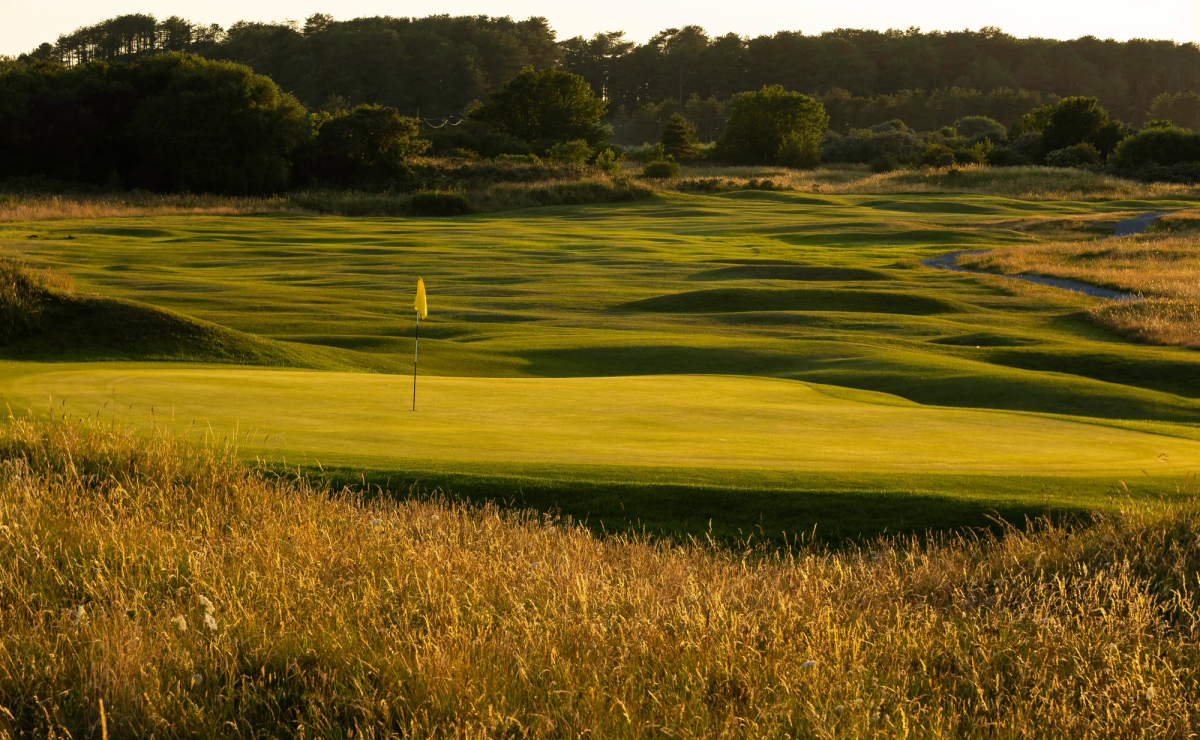
Alex Frolish has been a pilot for approaching 20 years and now travels to all corners of the globe in his role as a commercial airline pilot. His passion for flight is only equalled by his passion for golf and golf travel. Having picked up a golf club over 35 years ago when aged just 3 years old, Alex has played over 600 courses across every continent on planet earth furnished with a fairway. Over the next few months you’ll be able to follow Alex’s golfing travels as he brings you anecdotes of his life both in the air and on the course. There are times on the course when you just have to smile and make the best of a bad piece of luck. A plugged ball in the face of a pot bunker after the best strike of the day. That impossible horseshoe when the ball loops around the cup, seemingly defying gravity. Or walking out into the fairway to find your ball nestled in a wedge created crater the size and shape of a Viking long boat. My DVT (Deep Vein Thrombosis) diagnosis seemed like one such point of misfortune, a random act of bad luck that could not be dwelled upon. The prognosis was positive, we’d caught it nice and early and most importantly, the Doctor had prescribed plenty of walking in my enforced time off. It was time to get over the bad break and birdie the next hole. My life as a commercial pilot has meant I have spent an average of 150 days away a year during the last 15 years, meaning a lot of my golf is played while on my travels. This unplanned break presented an opportunity that was too good to miss; to look closer to home and make it to some of those gems in the UK that I had been meaning to visit for some time. My first inclination was to look west from my home in Gloucestershire. I have an affinity for the rugged variety that Welsh golf has to offer. From cragged links courses that hug the Welsh coastlines, to the heavily contoured courses on the mountain tops and valley bottoms further inland, I have found much pleasure exploring Wales’s many less heralded tracks. I decided I would make two forays into Wales in September, playing 36 holes on each day. Photo credit: Ashburnham Golf Club The first such trip encompassed one of the finest links double salvos in Wales. Tenby has long been regarded as one of the rawest and most naturally beautiful links courses in the UK. The land here (for the main part) is wild, offering many of the usual links conundrums such as blind shots, crumpled and irregular fairway lies and heavily defended green sites, where if you miss the target, there may be severe repercussions. I wanted to go back out again as soon as I had finished, and I could remember every hole easily with little reference to the scorecard; two surefire signs that the course boasts plenty of engaging qualities. Their extensive clubhouse and lodging renovations are going to make Tenby an interesting stay and play option for lovers of links golf in the coming years. Anyway, leave I must as the still and sun soaked afternoon promised a round along the coast at the highly acclaimed links with championship pedigree at Ashburnham. This is a classy club, benefiting from a clubhouse boasting beautiful views and equally appealing atmospheric vibes and more importantly, a stretch of links golf that is up there with some of the best stuff I’ve seen in Wales. Buoyed by the success of my first trip over the Severn Bridge, I returned some two weeks later to repeat the mission, this time taking on the characterful moorland course (boasting wonderful sea views) at Clyne, and the self proclaimed ‘Pebble Beach of Wales’ at Langland Bay. Those of you that know me or have followed my travels for some time, will know I love a natural course that is played in the way golf was first imagined; on the ground and battling the elements. The welcome from the wild horses and sheep grazing the fairways of Clyne only adds to the intrigue. Go with that image in your mind's eye and embrace the challenge and you will surely enjoy this charmer. The wind started to bristle for our afternoon visit to Langland Bay, where the clifftop section of the course in particular boasts some of the most spectacular golf I have seen in the UK, with plentiful views of the sea and some quite jaw dropping precipitous holes. Four golf courses, four very different characters and plenty to admire. Photo credit: Stoneham Golf Club The depth in the middle tiers of the English Top 100 is one of the most staggering facets of U.K. golf course architecture. There is so much to admire, both in Golden Age architecture from historically significant architects, to newer designs crafted with big budgets and bold plans. My English September travels contained a plentiful mix of all of those qualities, with trips to Stoneham, Isle of Purbeck, Knole Park, Piltdown, Remedy Oak, JCB and Tandridge. In that itinerary, there lay some classic work from the likes of Willie Park Jr, Harry Colt, John Abercromby (assisted by Herbert Fowler) and JH Taylor. In more recent times, John Jacobs and Robin Hiseman had worked on the more modern layouts. I’ll let you mentally test yourself as to which courses were designed by who…I could easily write a page or two on each of my visits, such was the quality and variety to behold. However, it was my experiences at Stoneham, Tandridge and JCB that deserve special mention. Stoneham is just splendid, and its splendour comes from its abundance of variety and the iconic routing. Whether you define it heathland or parkland, it doesn’t matter. It is a fine inland golf course, made finer still by the recent renovation work that has taken place to the course (and practice facilities). This piece of land is quite frankly magnificent, an undulating old deer park that has taken on a heathland demeanour, and the blend of the best bits of both types of golf course makes Stoneham a special place indeed. Photo credit: Tandridge Golf Club Tandridge, crafted by my favourite architect (not declared so as not to ruin the quiz above) is a course that boasts two nines distinct in character from each other, the front a subtle yet exacting test around the greens and in terms of strategy, and the back nine a wild rollercoaster of picture postcard views and wow moments played across tumbling terrain. Not relevant to the golf course but it has to be mentioned; this clubhouse might be one of my favourites in the land. The bar is named after the architect, and a drop of your favourite tipple in those surroundings tastes all the sweeter. As for the lunch, well it is the stuff of legend! Make sure to sample the infamous Tandridge Pudding! JCB is a rarity in UK golf circles as it one of the few golf courses that you can’t access by paying a guest green fee, much more in line with a US country club model, as it was initially built by Lord Bamford for the benefit and enjoyment of JCB staff and clients. That lack of accessibility means that the quality of the course has been seen by fewer eyes, so it flies slightly under the radar. However, this is a fine golf course, possibly the finest golf course built on parkland ground in England. It is the boldness of the design features and the quality of the playing surfaces that elevates it above its peers. I have played a significant portion of my golf in the USA, and in both conditioning and architectural boldness, this course is more reminiscent of sights I have seen stateside than anything I have seen on British soil. This may not have been a month to rack up the air miles due to my enforced layoff from work, but it has been incredibly memorable in terms of the fine British courses I have visited. Next month, there is much more of the same planned, with a little jaunt over to Ireland thrown into the mix. In the meantime, wherever you are reading this and whatever your October has in store, I wish you many well struck drives, a minimum of lost balls and most importantly, plentiful happy rounds.
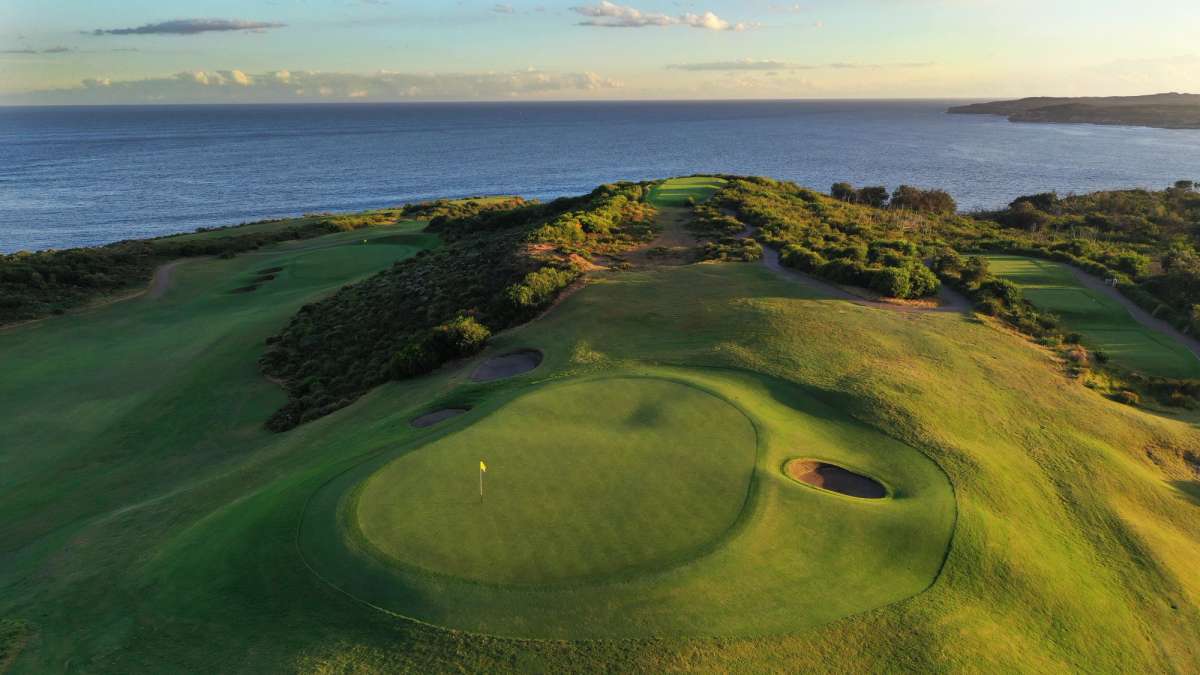
Alex Frolish has been a pilot for approaching 20 years and now travels to all corners of the globe in his role as a commercial airline pilot. His passion for flight is only equalled by his passion for golf and golf travel. Having picked up a golf club over 35 years ago when aged just 3 years old, Alex has played over 600 courses across every continent on planet earth furnished with a fairway. Over the next few months you’ll be able to follow Alex’s golfing travels as he brings you anecdotes of his life both in the air and on the course. Eleven rounds of golf, played on four different continents, in one month. It sounds crazy when you say it out loud. Even crazier still is that, in travelling to those rounds of golf I flew over 24000 air miles and spent over sixty five hours some six miles above the surface of the earth. You could well assume I was severely inefficient in my golf planning, were it not for the fact that most of my golf is played while I’m away on my travels as a commercial pilot. The month started in Australia, at a golf course that is the furthest from my home in the U.K. that I have ever played. I had visited the peninsula where New South Wales Golf Club is located once before, playing at St Michaels Golf Club on a previous visit. The course was very pleasant and a decent challenge, but I would be lying if I said I wasn’t looking enviously over the boundary fence toward the Alister Mackenzie crafted greens of New South Wales. Our flight landed in Sydney a little after 5am, and our flight path meant I got a birds-eye view of the golf course on our final approach. A little over 3 hours later, I was standing on the 1st tee of the 49th best golf course in the world, teeing it up in the Saturday morning medal competition! Surreal is an understatement. Now you would think that with pretty much no sleep and barely enough time to collect my golf bag, never mind time for some breakfast and a practice putt, my golf might have arrived in a rather jet-lagged state. It was as much of a surprise to me as it was to my playing partners when I found the first fairway, followed by the first green, and subsequently holed the 10 foot putt for the most improbable of birdie starts. Everyone knows the old golfing adage, never birdie the 1st hole, and even though my ball striking remained surprisingly intact, Dr. Mackenzie slowly exacted his pound of flesh, and by the middle of the back nine my card was in no danger of producing an out-of-towner upset. New South Wales is one of the most unique and beautiful golf courses you could ever play. The green sites and bunkering are wondrous, the routing through the native bush is playful and utilises the ground wonderfully, while the reveal as you crest the hill on the par 5 5th and the walk to the par 3 6th tee, before you play your shot over the crashing waves, has to be one of the most jaw dropping experiences on any of my golfing travels. My next round would be played just over 48 hours later, well over 3000 miles away in Asia. SICC Bukit sounds like an item you might need after a late night in the bar at the annual member/guest, but the Bukit course at Singapore Island Country Club is much more tasteful than that. The variety of the native foliage and trees, the improbably undulating land and the supremely pure playing surfaces made this a memorable jaunt in the jungle to complete my trip out east. My next round would be some 18 time zones west of where I’d played my game in Sydney just a few days before. San Francisco and the surrounding Bay Area is one of my favourite places in the world. Life over here is nearly as good as the golf, and although I’d visited many of the famous haunts, San Francisco Golf Club had always been one that had eluded me. On this trip, I was lucky enough to change that. SFGC is a traditional and private place. The club sign outside the gates probably rivals Augusta for being one of the most photographed golf signs in the world. Due to the club employing a strict no phones policy, that photograph is often the only evidence that you visited here. For the trip, I rented a car from Avis, plumping for a mid-size that I hoped would be low key and not to brash so as not to ruffle too many feathers at the gate. Imagine my horror when I was told I’d been upgraded due to a lack of cars to a Jeep Wrangler Rubicon 4XE, a car that cries ‘I’m here’ at the top of its lungs! As the gates drew open to allow my car inside, I crawled along the driveway, parking as far away from sight as possible. My exit from the car was akin to that of a special forces raid, extracting myself and my clubs in record time, without anybody noticing. The golf course at SFGC is truly spectacular, routed across ground that contains a historic site in the political history of the U.S.A. I’m no American history expert, but even I can could feel the significance of setting eyes on the spot where the last legal duel took place between Senator David C. Broderick and Justice David S. Terry in 1859. Terry shot Broderick somewhere beside the now 7th tee, sparking a chain of events that would eventually propel Abraham Lincoln to the Presidency. The front nine here is dramatic as the history of the ground, with the holes navigating through and over impressive ridges and two impressively deep valleys, creating some dramatic precipitous drives and eye catching chute fairways. The way the ground is utilised is the real master of the piece, and this is as perfect a nine holes as you could ever wish to play. The back nine is less dramatic but still perfectly formed and as an experience, it will linger in my golfing daydreams for many years. More golf in California was followed by a quick fire trifecta of Welsh golf, at St Pierre (Old), Cradoc and Builth Wells, visiting each for the first time on Top100 duty. St Pierre has hosted some notable professional events in years gone by, and you could feel the course would pose a decent test to the professionals, particularly through the closing stretch. Cradoc, nestled in the lee of Pen Y Fan and the rest of Brecon Beacons is a parkland golf course that ranks high on good vibes, while also boasting plenty of quality. And just down the road in the Wye Valley, Builth Wells bursts with quirk, particularly on the back nine, and I left Wales with my enthusiasm for seeing some of the hidden gems in British golf truly reinvigorated. Pennsylvania was the destination for my final long haul voyage in July. We played at an underrated course named Treesdale on our first day, where Arnold Palmer carved 27 testing holes through the undulating and heavily wooded terrain. The golf and the company were tremendous, but it was difficult not to get ahead of myself, as what lay ahead the following day had been keeping me awake at night for weeks. Henry Fownes left the ultimate architectural mic drop out in the suburbs of Pittsburgh; one world beating layout and he was done. It really is some legacy. Oakmont has been undergoing a renovation under the guidance of Gil Hanse, in preparation for the US Open in 2025, and it was touch and go whether we would be able to make it out for a game, with the works and weather a dangerous duo to navigate. However my luck was in, it had been member/guest weekend which meant the works were minimised, while the storms had rolled off into the distance, leaving us with one of world golf’s finest golf courses almost to ourselves on a sun kissed summer afternoon. My take away from playing Oakmont is that it is even more testing than I had imagined, yet somehow, it is still eminently enjoyable golf, which really explains why it is so highly regarded. It is undoubtedly much harder than most of the elite clubs I have played in the USA. Your strategical nous and execution is heavily tested throughout, the bunkers admonish most of the punishment, but you can make a big score by merely missing the treacherous greens (which are kept close to US Open pace routinely) on the wrong side by a only couple of yards. My July might have been the most varied and far reaching month of golf in my life to date. Three world Top100 courses, 25,000 miles of golf travel on the ground and in the air, and a camera roll of memories (both physical and in my head) to last a life time. August would be no lighter on the air miles, with more trips to the Far East and North America planned. In the mean time, wherever you are reading this and whatever your August has in store, I wish you the straightest of drives, well negotiated four- footers and happy rounds.
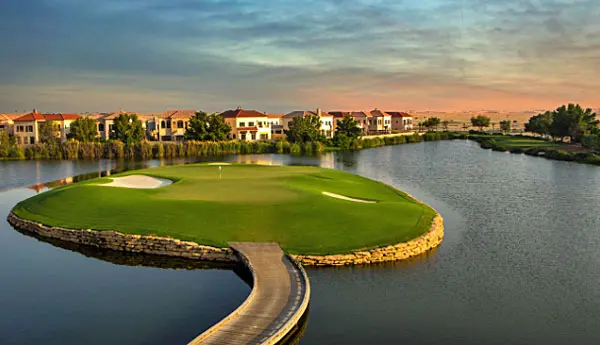
Alex Frolish has been a pilot for approaching 20 years and now travels to all corners of the globe in his role as a commercial airline pilot. His passion for flight is only equalled by his passion for golf and golf travel. Having picked up a golf club over 35 years ago when aged just 3 years old, Alex has played over 550 courses across every continent on planet earth furnished with a fairway. Over the next few months you’ll be able to follow Alex’s golfing travels as he brings you anecdotes of his life both in the air and on the course. East, West, Earth and Fire From 40000 feet above the Earth, you get to see our planet from the most privileged of positions. Whether it be the vastness of the oceans or the sheer scale of the rainforests, there are sights that can only truly be appreciated from seven miles above the ground. You also become pretty attuned to the weather in the places you fly over, and it turns out that, in the main, the Northern Hemisphere is a bleak old place in early February. With that in mind, my northern hemisphere heavy February flying roster provided plenty of potential for cancellations and disruption. However, after a bad run of exactly that over the last few months, it turns out that if you keep making golf plans, eventually some of them will come together. It started with a flight to San Francisco and a trip to a course that had been on my radar for a while. Yocha Dehe means ‘home by the spring water’ in the Patwin language spoken by the Wintun tribe from this area of California, and this golf course attached to a resort and hotel is rapidly gaining critical acclaim as one of the best newer public courses on the west coast of the USA. For most normal people, that round would have been enough for one day. But it was something that the starter had said to me that had peaked my interest. ‘You going back to San Francisco today? You want to check out Rancho Solano on the way home if you have the time, some of the best greens in the area’. The answer really was that I didn’t have the time, it was already 8pm on my UK body clock and I had a two hour drive back to my hotel, but as I found myself staring down the 1st hole at Rancho Solano some 30 minutes later having filled a last minute slot on the tee sheet, I knew I had done the right thing. When there is golf to be played and light left in the day, play it I will. My next layover was a couple of days later on a flight to Nashville. We landed on Super Bowl Sunday and only had 24hrs off and to be honest, it felt only right to focus on other sports for this trip. I took the decision to leave the clubs at home and instead, I got my sporting fix from the vantage point of a bar stool in Kid Rock’s bar on Broadway. St Enodoc, photo credit: Stuart Morley I said that the February weather had been kind to me, but there was an exception. Back in the U.K, there is one course I had failed to play having had games arranged there more than any other. Twice I had sat in the clubhouse at St Enodoc watching the weather curtail my plans, and as I sat in the car park once again, watching the lashing rain envelope my windscreen, I thought I may never get to play this wonderful golf course. However, the rain eased (for a few minutes) and we ventured into the mist and finally, I got to see why so many people love this characterful golf course. The rain came with a vengeance as we encircled the church on the back nine, but no finer compliment can be paid to the course than that I would have happily ventured straight back out to play again if I hadn’t had a 4 hour drive ahead of me. A quick trip to a place where the weather is rarely in question, Dubai, allowed me to go inside the ropes for the very first time at the home of the DP World Tour, the Earth course at Jumeirah Estates. My summary is that Greg Norman clearly likes the beach; the scale of his bunkering on this golf course can not be fully seen from the TV, but it is extensive. Very much like my San Francisco trip, the opportunity for more golf came suddenly and once presented, seemed inevitable. Both courses at Jumeirah Estates are Greg Norman designs and when one of the staff mentioned a tee time had become free that same afternoon to play the Fire course, I felt it only right to go and spend another 4 hours in the sand. Rustic Canyon, photo credit: Patrick Koenig My final trip of the month was possibly my most surreal adventure for some time. As we crested the mountains encircling the Los Angeles bowl in our descent into LAX, the snow covered more than just the peaks. The weather had been so foul that snow had sprinkled the streets of downtown LA (a rare occurrence indeed) over the preceding few days, and I expected we might not even venture out of the hotel, never mind onto the golf course. But a friend was in town, plans were made and we set off with hope to Rustic Canyon, a golf course that had been mooted as one of the best value green fees in America. Gil Hanse and Geoff Shackelford have created a wondrous masterpiece out in this valley north of LA, but it would have been even more pleasant to see it without rain water running down the inside of my underwear. Move forward 24 hours, and surreally, we found ourselves standing on the putting green at Los Angeles Country Club, a site where just 72 hours before, snow had covered the ground and now conversely, was bathed in warm spring sunshine. The North course has been renovated in recent times by Gil Hanse, and although Rustic Canyon and LACC North sit at opposing ends of the golfing spectrum in many ways, they are bound by the way they elicit pure enjoyment from those that experience them. We were the last set of visitors to play before the course was closed to non-members prior to the US Open later in the year. I can confirm we are all in for treat in a few months time. That was it for my February adventures, a month that for the first time in a long time, was complete in terms of plans fulfilled. Looking forward to March, my travels are planned to take me to Japan, Mexico and to Oregon. In the U.K, I have some more early season links golf in the offing. Wherever you are and what ever you have planned, I wish you the straightest of drives, well negotiated four- footers and happy rounds.

