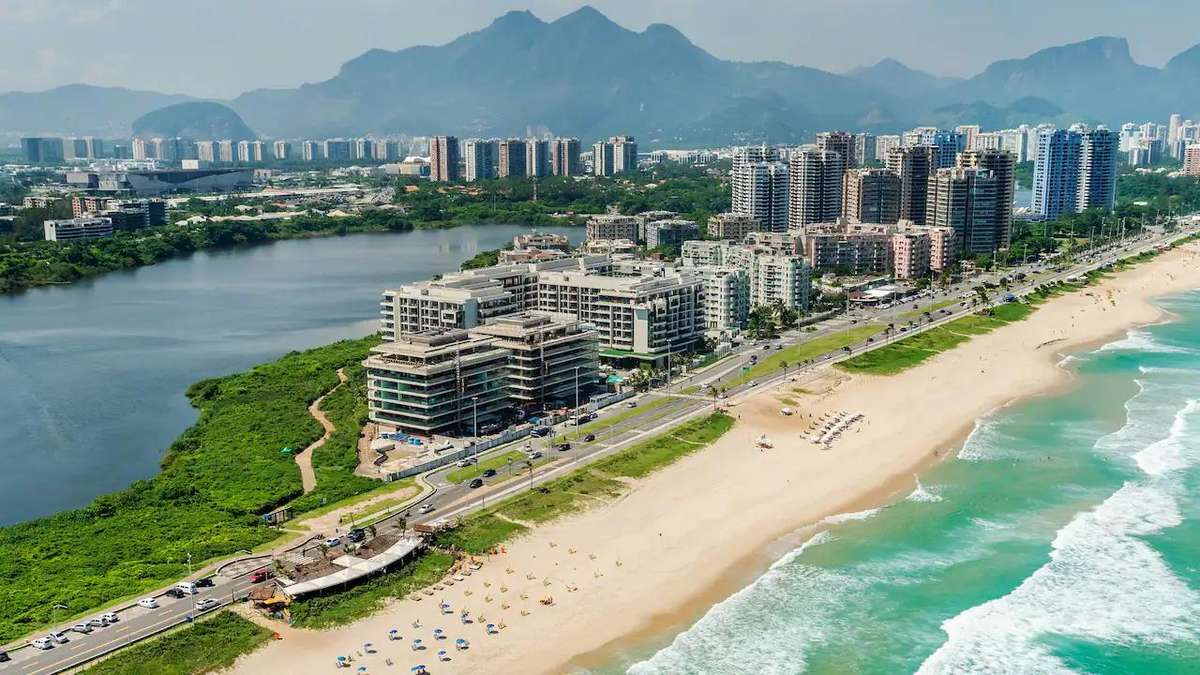
Things to See and do Around the Olympic Golf Course
The area around the Rio 2016 Olympic Golf Course in Rio de Janeiro offers a variety of attractions and activities that cater to different interests. Here are some things to see and do:
These activities offer a mix of outdoor adventure, relaxation, and cultural exploration, making the most of what Rio de Janeiro has to offer near the Olympic Golf Course area.
Why not register today to be the 1st to Receive World Rankings releases for 2024.
Lockhart Travel Club Concierge Services FAQ
What is the Lockhart Travel Club?
Lockhart Travel Club is dedicated to offering its members unique opportunities for world-class golf exploration and adventure. It connects members with like-minded individuals worldwide, aiming to fulfil their desire to play at the best golf courses globally. The club originated from Robert Lockhart's passion, a Scotsman who introduced golf to America in the late 19th century, and it continues to embody his spirit of golf travel (Lockhart Travel Club).
Who are the members of the Lockhart Travel Club?
Members are individuals from some of the world's greatest clubs, sharing a common passion for golf and adventure. The club welcomes golfers eager to travel, play, and check off their bucket list of courses. They are driven by the opportunity to see and play the best courses worldwide, taking advantage of the club's network.
What kind of experiences does Lockhart Travel Club offer?
In 2023, the club provided opportunities to play in various top-ranked courses and locations, including the Sand Hills of Nebraska and Colorado, the best of Japan and Korea, the English Heathlands, the classic courses of France, and the best of New Zealand’s North Island. The 2024 schedule promises unique experiences in 19 different countries, including Thailand & China, Brazil, South Africa, the Northeast USA, and Australia.
How do I join Lockhart Travel Club?
Interested individuals can inquire about membership by contacting the club directly via their official email. The club values connections among golf enthusiasts and strives to plan unique, unforgettable opportunities for its members throughout the year.
For more detailed inquiries or to apply for membership, please refer directly to the Lockhart Travel Club's official website or contact their membership services.
Lockhart Travel Club About Us: Learn more about the club
Top 100 Golf Courses - Lockhart Travel Club: Explore member experiences and trips.
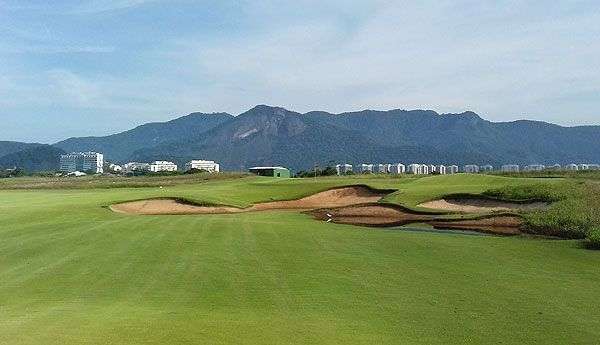
Interesting facts about Rio 2016 Olympic Golf Course in Rio de Janeiro The Rio 2016 Olympic Golf Course, located in Rio de Janeiro, Brazil, has several interesting aspects: Designed for the Olympics: This golf course was specifically designed for the 2016 Summer Olympics, marking the return of golf to the Olympic Games after a 112-year absence. The course was designed by American golf course architect Gil Hanse. Environmental Concerns and Sustainability: The construction of the golf course faced significant environmental concerns, as it was built in a nature reserve. Measures were taken to minimise ecological impact, such as planting native vegetation and creating wildlife corridors. The course is recognised for its efforts towards sustainability. Public Accessibility: Post-Olympics, the course was intended to become a public facility, one of the few Olympic venues designed with a clear post-Games legacy in mind. Its role is to promote golf in Brazil and make the sport more accessible to the public. Unique Design: The course features a links-style layout, uncommon in Brazil. It is known for its undulating fairways, strategic bunkering, and native vegetation, which present a unique challenge to golfers. Wildlife: The course has become a habitat for various wildlife species, enhancing its ecological value. Players and visitors can often spot capybaras, the world’s largest rodents, which have become somewhat of a mascot for the course. Legacy and Impact: Hosting the Olympics helped raise the profile of golf in Brazil, a country where the sport has traditionally not been very popular. The event was considered a success in terms of showcasing Brazil's capability to host major sporting events and promoting golf tourism in the region. The Rio 2016 Olympic Golf Course stands as a testament to the potential for sporting venues to have a sustainable and beneficial legacy post-major event.Top of Form Find out more about travel toOlympic Golf Course in Rio de Janeiro Why not register today to be the 1st to Receive World Rankings releases for 2024. Lockhart Travel Club Concierge Services FAQ What is the Lockhart Travel Club? Lockhart Travel Club is dedicated to offering its members unique opportunities for world-class golf exploration and adventure. It connects members with like-minded individuals worldwide, aiming to fulfil their desire to play at the best golf courses globally. The club originated from Robert Lockhart's passion, a Scotsman who introduced golf to America in the late 19th century, and it continues to embody his spirit of golf travel (Lockhart Travel Club). Who are the members of the Lockhart Travel Club? Members are individuals from some of the world's greatest clubs, sharing a common passion for golf and adventure. The club welcomes golfers eager to travel, play, and check off their bucket list of courses. They are driven by the opportunity to see and play the best courses worldwide, taking advantage of the club's network. What kind of experiences does Lockhart Travel Club offer? In 2023, the club provided opportunities to play in various top-ranked courses and locations, including the Sand Hills of Nebraska and Colorado, the best of Japan and Korea, the English Heathlands, the classic courses of France, and the best of New Zealand’s North Island. The 2024 schedule promises unique experiences in 19 different countries, including Thailand & China, Brazil, South Africa, the Northeast USA, and Australia. How do I join Lockhart Travel Club? Interested individuals can inquire about membership by contacting the club directly via their official email. The club values connections among golf enthusiasts and strives to plan unique, unforgettable opportunities for its members throughout the year. For more detailed inquiries or to apply for membership, please refer directly to the Lockhart Travel Club's official website or contact their membership services. Lockhart Travel Club About Us: Learn more about the club Top 100 Golf Courses - Lockhart Travel Club: Explore member experiences and trips.

Dining options near the Rio 2016 Olympic Golf Course: Loire Bistro: This restaurant serves French and European dishes in a sophisticated setting, perfect for those looking for an international dining experience. Tragga Vogue Square: Specialises in traditional Brazilian barbecue, offering a robust selection of grilled meats. Rio Brasa: A well-known barbecue spot that is ideal for meat lovers, providing a taste of local flavours and techniques. Barra Grill: Another excellent choice for Brazilian steak, focusing on high-quality cuts and traditional grilling. Picanha e Etc: Offers a variety of Brazilian dishes, with an emphasis on Picanha, a popular cut of beef. La Mole: A chain restaurant that brings Italian cuisine to Rio, with a menu that includes pizzas, pastas, and other classics. T.T. Burger: Famous for its gourmet burgers, this restaurant uses high-quality ingredients to create unique burger combinations. Gurumê: This contemporary Japanese restaurant merges traditional sushi with modern culinary techniques. Pe'ahi: Focuses on sushi and Japanese cuisine, known for its fresh seafood and creative rolls. Venchi: An Italian gelateria offering a wide range of gelato flavours, made with natural ingredients and authentic recipes. These restaurants offer a mix of local and international cuisines, each providing a unique dining experience that caters to different tastes and preferences. Find out more about travel toOlympic Golf Course in Rio de Janeiro Why not register today to be the 1st to Receive World Rankings releases for 2024. Lockhart Travel Club Concierge Services FAQ What is the Lockhart Travel Club? Lockhart Travel Club is dedicated to offering its members unique opportunities for world-class golf exploration and adventure. It connects members with like-minded individuals worldwide, aiming to fulfil their desire to play at the best golf courses globally. The club originated from Robert Lockhart's passion, a Scotsman who introduced golf to America in the late 19th century, and it continues to embody his spirit of golf travel (Lockhart Travel Club). Who are the members of the Lockhart Travel Club? Members are individuals from some of the world's greatest clubs, sharing a common passion for golf and adventure. The club welcomes golfers eager to travel, play, and check off their bucket list of courses. They are driven by the opportunity to see and play the best courses worldwide, taking advantage of the club's network. What kind of experiences does Lockhart Travel Club offer? In 2023, the club provided opportunities to play in various top-ranked courses and locations, including the Sand Hills of Nebraska and Colorado, the best of Japan and Korea, the English Heathlands, the classic courses of France, and the best of New Zealand’s North Island. The 2024 schedule promises unique experiences in 19 different countries, including Thailand & China, Brazil, South Africa, the Northeast USA, and Australia. How do I join Lockhart Travel Club? Interested individuals can inquire about membership by contacting the club directly via their official email. The club values connections among golf enthusiasts and strives to plan unique, unforgettable opportunities for its members throughout the year. For more detailed inquiries or to apply for membership, please refer directly to the Lockhart Travel Club's official website or contact their membership services. Lockhart Travel Club About Us: Learn more about the club Top 100 Golf Courses - Lockhart Travel Club: Explore member experiences and trips.
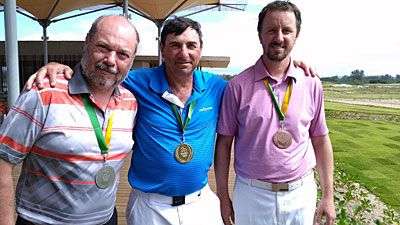
Playing the Rio de Janeiro Olympic Golf Course By Nicolas Iorio nicolas@wegolf.com.ar www.wegolf.com.ar On October 29, WeGolf finished the first international golf tournament for amateurs at the Olympic Golf Course located in Barra da Tijuca, Rio de Janeiro, Brazil. We tried to replicate the Olympic Games experience where amateurs from different countries participated in a 36-hole competition, awarding the first three positions with exact replicas of the Olympic medals won by Kuchar, Stenson and Rose. It was amazing! We knew we had to face a challenge. Being first is always a plus and a risk at the same time. The golf links, amid conflicts and controversies, was co-developed by IGF (International Golf Federation) and the IOC (International Olympic Committee). They had total control of the site and facilities from the very beginning of the works until the day Justin Rose won – and, just like a nomad camp, a few days later, they took everything away and left the facilities “empty” until the new steering committee takes charge. Luckily, maintenance of the course is undertaken every day with the same work group hired at the beginning. At dawn, a battalion with state-of-the-art machinery goes out to repair each divot, cutting fairways and rolling greens. The result is perfection rarely seen – the fairways look like carpet and the greens are perfect, firm and very fast. When you arrive you realize that you are in front of something special. Considered one of the five best architectural clubhouse designs in the world, the creation of the Olympic Golf Links building is all about minimal modernity, expressed in pure straight lines, where only three basic elements (concrete, glass and wood) have the dual role of matter and form that harmonise perfectly. The clubhouse also has an environmental and sustainable plus side. The roof of its central plaza, measuring more than 1,000 sq metres, is made of an innovative system of square canopies which, seen from above, create a giant chessboard. These canopies are funnels that collect and channel rainwater to a pipe system that feeds an enormous underground reservoir tank which is then used to irrigate the golf course. The golf links should have closed after the Brazil Open (won by Argentine Jorge Fernandez-Valdes) but the Tourism Board “Visit Rio” remained true to their word and kept the course open until the completion of the event organized by WeGolf. On October 31, after our tournament ended, the course closed its doors and hopefully will re-open as a functioning organized golf club in January 2017. But let’s get on to what’s important… the golf course Gil Hanse won the bid for the design. Many consider him: “The designer of the moment.” Among his works we can mention: Castle Stuart (Scotland), the re-design of the Blue Monster at Trump National Doral (Miami), Crail’s Craighead course (Scotland) and the new Black course at Streamsong (near Orlando). When you play the Olympic course you realize why Hanse fashioned what he did. The ground is quite flat, surrounded by lagoons and only a few meters away from the sea, where the strong prevailing winds come from. So a golf “links” is what Hanse attempted to create, but it’s more from the strategic point of view than from an aesthetic one. It does not have impenetrable rough, protected by sand dunes, but the fairways have gentle undulations allowing the ball to run and the greens are firm and fast enabling many shots typical of links golf. Wind is a determinant factor due to its proximity to the sea and usually after midday the wind blows strongly. The routing rotates in its orientation all the time and has only three pairs of consecutive holes aligned in the same direction, so the varying winds ensure each hole plays differently from day to day. The employees told us that during the week of the Olympic Games there was very little wind and Justin Rose shot 16-under-par, but during the Brazil Open it was blowing hard and Jorge Fernandez-Valdes won with 4-under-par. The Brazil Open caddies told us that professionals couldn’t even reach the greens with driver and then a 3-wood on a trio of par fours. Sand was one of the conflicts that delayed the build because the course extends into a wildlife reserve where there are varieties of protected birds and different types of capybara. Changing the areas that existed prior to the construction of the course, or adding elements that did not naturally belong, was prohibited. Consequently three different types of local sand was used for the bunkers and waste areas. According to Gil Hanse: "It’s a unique, sand-based site with a variety of different sands: bright white, brown and orange. Whatever sand was native to a given hole, that’s what we used. On the same hole, you’ll even see different sand in each of the bunkers." I've certainly never seen anything like it before and behind the driving range you can see the same type of geology occurring naturally in the mountains. I’ve never played a course with such a unique design, where all the character comes from the architect’s hand. There are few trees, almost no water – the architect fashioned everything. Each hill, each slope, each bunker, each green design, everything was Hanse and his team’s vision. It’s a par 71, with five par threes and the course stretches to 7,163 yards from the black tees (rating 73,9) and 6,616 yards from the blue tees (rating 71,4). Apart from five holes with “normal” distances (1, 6, 10, 15 and 18), the remaining thirteen holes are “very short” or “very long” which makes it a really enjoyable layout. Among these “very short” par four holes, I’d like to mention #3 (306 yards), #9 (344 yards) and #16 (304 yards). These are all drivable for long hitters, but the designer has played with the golfer’s temptation. They are sheltered by mounds which hide the flag (#9) or they have very small greens (#9 and #16), or blind landing areas where, if the ball reaches a slope, it goes into a deep pit (#16). Moreover, it’s virtually impossible to leave the ball near the flags. In the “very long” par four category there’s #2 (452 yards), #7 (442 yards), #11 (462 yards), #12 (496 yards), #13 (454 yards) and then there’s the par three 14th at 213 yards. These holes are not only long, but depending on the predominant wind, many of them are played into a headwind! This is the main reason that during the Olympic Games many players played easily under par on the front nine and then struggled. How to play it? You must try and take advantage of the first nine holes to make birdies, but be careful at #2 and #7, both long par fours. Then you need to try and get through (as unscathed as possible) the “death string” of the next five extremely difficult holes, which run from #10 to #14. Finally, if you have any energy left, try and make some birdies between #15 and #18. The closing par five 18th decided the Olympic Games. There was nothing to separate Justin Rose and Henrik Stenson through 71 holes, but Rose birdied the final hole while Stenson could only manage bogey and had to settle for the silver medal. My Favorite Holes #2 Par 4, 452 yards – If you can strike a tee shot around 260 yards on the edge of the bunker at the dogleg, it will catch a slope that will run an extra 30 yards. Then there’s a tough semi-blind approach where a hill obstructs the vision of the whole right side and back side of the kidney-shaped green that’s set close to a lagoon. #7 Par4, 442 yards – The rolling fairway is protected on the right-hand side by deep hidden bunkers that cannot be seen from the tee. The 55-yard long green has a murderous false front that feels straight out of Pinehurst. When this hole has the flag cut back right it’s the most difficult hole on the course. #9 is a jewel of a hole that measures only 334 yards. From the tee, there’s a small dune at around 120 yards where there’s a cashew tree growing which creates a semi-blind tee shot. It doesn’t block the vision of the whole fairway, so you can see the tiny green (the smallest on the course) to the right-hand side with a high mound that hides the whole of the right half of the green. Behind the mound there’s a downhill slope which makes it almost impossible to get the ball near the pin. #11 is one the most scenic holes. This Par 4 of 462 yards is protected on the left side from tee to green by a bunker and waste areas full of native grasses. The green is very long and diagonally offset from left to right, it’s also raised and protected by a grassy hollow on the left and a bunker on the right and behind the green. #16 arrives at a potentially defining moment in a tight match. It’s the shortest Par 4 on the course and intentionally driveable, but with a tiny, narrow, hourglass-shaped, two-tiered green with a mound in the middle of the fairway protecting the entrance some 20 yards short of the green it’s not easy to find. There’s a deep fall-off to the left of the green and a bunker on the right. Flagstick locations on this hole can be extreme. #17 – What could be more attractive than facing a short Par 3 of 110 yards needing a birdie to win? This tricky one-shotter has an inverted U-shaped green, with deep bunkers in front and at the rear on the right (in the direction where the wind comes from). It offers many flag positions and it is often played with a cross-wind from right to left, which pushes the tee shot towards an area of deep trouble on the left. Our Conclusion We sincerely hope that the new Steering Committee (responsible for the course and its facilities) cherish and appreciate the extraordinary value of this unique golfing gem for all Latin Americans and every other visiting nationality. It’s a living monument celebrating the history of this sport which will always have the magic spirit of the Olympic Games flowing through the air. It offers an architecturally awesome clubhouse, practice facilities of Major championship quality and a world-class golf course with design character and soul that is difficult to find anywhere in the world. Moreover, we are very lucky to have direct flights that arrive in Rio 2½ hours from leaving Buenos Aires, enabling us to play a Ryder Cup match with friends at the weekend. The Olympic golf course is totally unique and simply has to be experienced! By Nicolas Iorio nicolas@wegolf.com.ar www.wegolf.com.ar
