Top 10 Golf Courses in Northumberland 2015
Northumberland Best In County rankings updated
The northernmost county in England, Northumberland is also one of the country's least densely populated regions, but there are plenty of golf courses to be enjoyed in the county (more than forty) and a number are well worth close inspection.
When we first started ranking Northumberland’s courses back in 2011, we featured a Top 15 for the county. Having reassessed the situation, we decided to reduce our Northumberland ranking table to a Top 10, which roughly represents the county’s best twenty percent.
Magdalene Fields (which didn’t make the cut) lies closest to Hadrian’s Wall and the border with Scotland, but a little further down the North Sea coast sits one of the premier courses in Northumberland, Berwick-upon-Tweed Golf Club. Goswick Links, as it is commonly known, has featured in our English Top 100 since 2006 when we became the first publication to rank England’s golf courses. However, there’s a new Northumberland upstart that has overtaken Goswick.
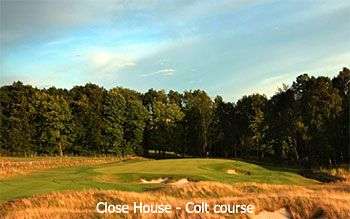
Newcastle University sold the Close House mansion and Estate in 2004 to local entrepreneur Graham Wylie, who lovingly redeveloped the property into a luxurious golfing retreat. He then commissioned Scott Macpherson, of design company Turner Macpherson, to lay out a course over 170 acres of new land. Macpherson spent eighteen months researching designs by architect Harry Colt and developed a plan to create a modern course for Close House that doffs the hat to the Golden Age of golf course architecture.
Opened by Lee Westwood – Close House’s ‘Attached Tour Professional’ – in May 2011 and measuring a respectable 6,850 yards from the tips, the Colt course has matured into a thoroughly engaging layout that incorporates many of the site’s historical features in its routing, including a Roman Fort, ha-ha walls, ancient woodland and Ice Lake.
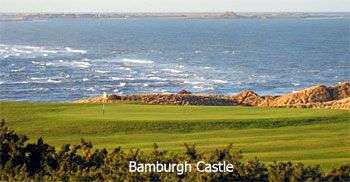
Slaley Hall continues to be a popular golfing destination with its Hunting course moving up to third position, swapping places with Northumberland Golf Club, which drops one spot. Bamburgh Castle stays in 5th position and is one of the most popular golfing locations, thanks in no small part to its breathtaking coastal site.
Unfortunately, due to cutting back our table from fifteen to ten, we’ve had to say farewell to some courses, including Newbiggin and Dunstanburgh Castle. However, we’ve kept Linden Hall alive as a GEM and we’ve included the Filly course at Close House as a new GEM due to the 2013 upgrade of the old Newcastle University course by Lee Westwood, who collaborated with Scott Macpherson adding forty new bunkers, half a dozen new tees and a couple of lakes.
To see our new 2015 Northumberland Top 10, click the link. If you have played golf extensively across any English county and would like to have your say, please contact me (keith@top100golfcourses.com). In the meanwhile a big thank you to everyone who contributed to our Northumberland Best In County ranking process.
Keith Baxter
Editor-in-Chief
Top 100 Golf Courses

North East England may not be the first destination that comes to mind when planning a golf trip, but this former industrial heartland offers a remarkably rich and varied golfing landscape. Spanning the counties of Northumberland, Durham and Tyne & Wear, the region stretches from the wild Northumbrian coastline in the north to the links at Seaton Carew in the south, taking in parkland, moorland and coastal layouts along the way. Across these three counties, more than 50 courses are now ranked — a figure that reflects just how much quality golf exists here, and how many experiences reward the travelling golfer willing to venture off the beaten track. View the complete North East of England Rankings The current rankings represent a significant expansion of the region's listings, with Tyne & Wear appearing as a standalone county chart for the first time. A panel of dedicated reviewers with deep, first-hand experience of the region has shaped these standings, and the results paint a compelling picture of a golfing area with genuine world-class credentials alongside a strong supporting cast of quality local clubs. North East England Golf Courses: Rankings At A Glance Tyne & Wear Tyne & Wear makes its debut as a ranked county in this cycle, with three courses receiving official standings for the first time. The metropolitan county embracing Newcastle, Gateshead, Sunderland and the coastal suburbs has always housed some of the region's finest clubs — they simply hadn't previously been disaggregated from the broader North East listings. Northumberland Golf Club is the county's clear number one, an assessment that commands broad consensus across the panel. Located in Gosforth in the north of the city, this private members' club offers a demanding and beautifully presented parkland test that belies its suburban setting. Whitley Bay holds second position with Tyneside in third — a traditional parkland course set near the River Tyne with strong architectural bones and a devoted membership that has kept the layout in fine condition. For the full Tyne & Wear county rankings, visit the Tyne & Wear golf courses page. Durham Durham is anchored by Seaton Carew, one of the most significant links courses in English golf, and supported by a group of inland clubs that offer variety and quality in equal measure. The top five positions reflect the settled hierarchy at the upper end of the county. Seaton Carew Golf Club has been Durham's county number one since the panel first established Best in County rankings, and its status remains unchallenged. The club's founding in 1874 makes it the tenth oldest in England, and the layout carries the definitive architectural influence of Alister MacKenzie, who redesigned it in 1925, adding holes closer to the coast. With 22 holes spread across five possible configurations — the Old, Brabazon, Micklem, New and Bishop — Seaton Carew offers a flexibility that few clubs in England can match, and it holds a well-earned place in the England Top 100. Rockliffe Hall holds second, a luxury resort course near Darlington that has established itself as one of the region's most polished golfing experiences. Brancepeth Castle Golf Club is third, set within the grounds of a medieval castle and offering a parkland layout of considerable charm and character. Hartlepool climbs one place to fourth, edging ahead of Wynyard Golf Club, which drops one position to fifth. Both are strong inland courses that justify their places in the county's upper tier. Further down the table, Ramside Hall's Cathedral course rises to sixth, South Moor holds seventh, and the Prince Bishops' course at Ramside Hall makes a notable climb to eighth. Bishop Auckland holds ninth and Castle Eden rounds out the top ten. For the full Durham county rankings, visit the Durham golf courses page. Northumberland Northumberland is the jewel of the region. England's most northerly county delivers a concentration of coastal links and inland parkland courses that would compare favourably with any English county. Goswick Links leads the way as it has done since 2017, while Dunstanburgh Castle Golf Course makes the most significant upward move in this cycle, climbing to second and displacing Close House's Colt course in the process. Goswick holds its number one position and its place in the England Top 100. Established in 1890, the course sits a few miles south of Berwick-upon-Tweed and has been shaped over more than a century by Willie Park Junior, James Braid and F.W. Hawtree. The result is a links layout of genuine character: varied, challenging and rich with architectural history. Tom Mackenzie has also been overseeing a front nine upgrade project in recent years, ensuring Goswick continues to evolve. Dunstanburgh Castle, now second, is one of the most visually dramatic layouts in the country. Set on the Northumberland coast with fairways looking out towards Embleton Bay, James Braid extended the course to eighteen holes in 1920, and the combination of coastal scenery and architectural heritage makes Dunstanburgh one of the North East's most compelling experiences. Close House's Lee Westwood Colt course drops one position to third but remains one of the most impressive modern designs in northern England. Hexham climbs one place to fourth, a parkland course with deep roots: Harry Vardon laid out a course on the Spital estate in 1907, James Braid re-bunkered it in 1920, and Ken Cotton set out the layout broadly in play today in the early 1950s. Newbiggin makes the most dramatic move in the entire Northumberland rankings, rising to fifth. Alnmouth Golf Club holds sixth, Slaley Hall's Hunting course drops to seventh, and Bamburgh Castle slips one to eighth, with both remaining essential visits for anyone touring the county. Alnmouth Village climbs to ninth, and Matfen Hall (comprising the Douglas and Standing Stone nines) rounds out the top ten. For the full Northumberland county rankings, visit the Northumberland golf courses page. What the Rankings Tell Us Coastal Northumberland Leads the Region The concentration of quality along the Northumberland coastline is extraordinary. Goswick at the northern end, Dunstanburgh and Alnmouth in the middle, and Bamburgh and Newbiggin completing the coastal cluster give this stretch of North Sea shoreline a claim to be one of England's most underrated golfing corridors. All were shaped or influenced by architects of the calibre of James Braid, Willie Park Junior and F.W. Hawtree. Seaton Carew's Enduring Authority Durham's top spot has been occupied by Seaton Carew for as long as these rankings have existed — a tribute to the quality MacKenzie's 1925 redesign instilled in a course that pre-dates even the great architect's involvement by half a century. Its place in the England Top 100 reflects a national standing the course thoroughly deserves, despite the industrial backdrop that some visitors find unexpected. Tyne & Wear Earns Its Place The introduction of Tyne & Wear as a standalone ranking helps travelling golfers who are visiting the urban area golf clubs of Newcastle, Gateshead and the coastal suburbs. This will no doubt deepen on successive rankings. Golden Age Architecture Runs Through the Region It would be difficult to name another English region where the architectural fingerprints of James Braid are more evident. Goswick, Dunstanburgh, Hexham and Brancepeth Castle all carry Braid's influence, while MacKenzie's mark on Seaton Carew is definitive. Alongside Harry Vardon, F.W. Hawtree, Ken Cotton and Scott Macpherson, the region's architectural heritage is both deep and varied. Ranking History: North East England Northumberland Top 10, 2015 The Northumberland county rankings were revised in 2015, with the ranking being reduced from fifteen to ten courses. Close House's Colt course, opened by Lee Westwood in 2011, entered the rankings at number one — the first time Goswick had been displaced as county leader. Slaley Hall's Hunting course moved up to third, while Bamburgh Castle held fifth. Newbiggin and Dunstanburgh Castle were not included after the table was reduced. North East Best in County Rankings, 2019 In 2019, Goswick reclaimed the Northumberland number one position it had held before 2015. The Durham chart remained stable at the top, with Seaton Carew retaining its county lead. Whitley Bay entered the Northumberland rankings at tenth following Jonathan Gaunt's remodelling work. North East Best in County Rankings, 2023 The most recent update before the current cycle expanded all three county charts and introduced fifteen new entries across the region. Seaton Carew retained its Durham lead, Goswick held Northumberland's top position, and Dunstanburgh Castle rose to third in Northumberland. Matfen Hall, Linden Hall, Close House Filly, Newbiggin and Alnmouth Village all entered the Northumberland listings as new entries, while Bishop Auckland was the highest new Durham entry at tenth. Planning Your North East England Golf Trip The North East lends itself to a structured itinerary based around its three distinct golfing zones. The Northumberland coast is the centrepiece for most visiting golfers — a journey between Goswick in the north and Alnmouth in the south, taking in Bamburgh Castle and Dunstanburgh along the way, provides one of English golf's most scenic sequences of courses. Berwick-upon-Tweed serves as a natural northern base, with Alnwick a useful midpoint. Durham golf is anchored by Seaton Carew, which warrants a standalone visit for any serious golfer exploring the region. The links sit between Hartlepool and Teesside, and combining it with Brancepeth Castle inland makes for a compelling two-course day that covers both of the county's dominant styles. Rockliffe Hall, near Darlington, is the most resort-friendly option in the county for those travelling with non-golfers. The Tyne & Wear courses — Northumberland Golf Club, Whitley Bay and Tyneside — are all accessible from Newcastle city centre, making them a natural addition to any North East itinerary that begins or ends in the city. Newcastle Airport also provides the most practical entry point for golfers arriving from further afield. For the complete county rankings, visit the Northumberland, Durham and Tyne & Wear listing pages on Top 100 Golf Courses.

The Second Hundred Golf Courses of England 2016 We preview the challengers for the next Top 100 Golf Courses of England rankings and list the second hundred Having recently published the latest 2016 edition of our Top 100 for England, we thought we’d look into our golfing crystal ball to see if we could predict which English courses might make it into the top hundred next time around. We’ve focused this article on twenty-five challengers, but it’s feasible that any of the hundred courses listed at the end of this feature could make the next English Top 100 in 2018. It’s also viable that numerous other courses could also make the grade. If you think we’ve missed a layout from our current England Top 100 or from our Second Hundred (listed in full at the end of this story), please click the “Respond to this article” link at the top and bottom of the page and share your opinion. Fifteen of the twenty-five challengers have appeared in previous editions of our England Top 100 and these are spread across seventeen counties from Northumberland to Kent. Berwick-upon-Tweed has been listed in four previous editions and this old-fashioned James Braid-designed links at Goswick may well be knocking on the door in 2018 again. In the same county, the Hunting course at Slaley Hall tends to divide opinion but there is no denying its tournament credentials with famous champions winning here, including Retief Goosen and Colin Montgomerie. At the other end of the country, in Kent’s Garden of England, Wildernesse may not be a familiar name, but this tree-lined gem has hosted Open Championship Qualifying and continues to challenge golfers in the modern age. Chart Hills plummeted from grace due to a decline in conditioning but this could easily be remedied and I wouldn’t bet against it bouncing back into the top-flight. Knole Park is the antithesis of Chart Hills, it’s a quirky John Abercromby design from the Golden Age, described by a reviewer as; “a country park that has a golf course on it rather than primarily a golf course and for me that gave the flow of holes a slightly awkward feel.” Bob Cupp’s West course at East Sussex National is the preferred course of many at this 36-hole facility, despite the European Open pedigree of its sibling, the East. The West is the more intimate and the prettier of the two courses where attractive views of the South Downs are freely included. Rockliffe Hall in County Durham opened in 2009 and this multi-million pound course is one of Europe’s longest tracks, measuring a whopping 7,879 yards from the tips. Built with championship golf in mind, Rockliffe is a stern test, not only due to its length, but also due to its strategic and occasionally penal design. Ilkley is the third oldest golf club in Yorkshire and has been listed in three previous editions of the English hundred. Refashioned by Harry Colt and Alister MacKenzie, Ilkley is where Monty learnt his trade and he still holds the course record of 64. Pannal has never appeared in the top list before, but it has been around since 1906 and the doyen of golf writers, Bernard Darwin, described Pannal as follows: “It stands high up on a breezy down, where there are some steep slopes and big valleys, and pretty clumps of gorse, and the wind, I should suspect, always blows keenly. At least it did so when I was there, and I can still feel myself walking against it with bowed head, and then being blown along by it as if I were a feather.” Across the Pennines into Lancashire, St Annes Old Links may be a challenger for just one hole – perhaps the best one-shotter in Lancs. The 9th, with its long green which is hardly visible from the tee is a corker. According to reports, Bobby Jones took detailed measurements of this hole, called “Cannon”, when playing here before the 1926 Open. The English Midlands has some wonderful golf courses and a few are underrated. Enville’s Highgate course in Staffordshire is a heathland cum woodland layout that hosted Open Championship Regional Qualifying from 2007 to 2011. In Nottinghamshire, Coxmoor is sited on an elevated heathland plateau, one of the highest points in the county. This popular club has staged Regional Qualifying for the Open Championship as well as the British Seniors Amateur Open Championship. Two challengers from the county of Oxfordshire are chalk and cheese. The prolific golf course architect Rees Jones designed the course at the Oxfordshire Golf Club and it opened for play in 1993 after significant earth works. Host to the B&H International Open and the Ladies’ English Open, the Oxfordshire is far from classical, unlike Willie Park Junior’s Huntercombe, which sparked a revolution in inland golf design. Walter Travis said it’s “the best laid course that I have ever played over anywhere” and Harold Hilton agreed; “in links architecture his two great creations have been Sunningdale and Huntercombe and of the two I am distinctly inclined to look upon Huntercombe as the greater effort of the two”. Surrey already has more than its fair share of courses in the English Top 100 but the course currently ranked 21st in Surrey has to be a challenger for the main list. It’s another Willie Park layout that Harry Colt redesigned in the 1920s. “A wonderful place is this new Wimbledon course," wrote Bernard Darwin in 1910, "for as soon as we are on it all signs of men, houses and omnibuses, and other symptoms of a busy suburb disappear as if by magic, and a prospect of glorious solitary woods stretches away into the distance in every direction.” Hertfordshire is a lovely golfing county that doesn’t have the vast sandy terrain of Surrey, but has some of the finest parklands in England instead. One such swathe can be found at Brocket Hall in Welwyn Garden City where there are two courses on offer, with the best being the newer Donald Steel-designed Palmerston that has appeared four times in earlier English Top 100 editions. A few miles to the east of Welwyn lies Hanbury Manor near Hertford, a former English Open and Women’s European Open venue that was formerly a Top 100 regular. If you like golf as Nature intended, or if sand bunker play is not a strong part of your game, head further west to the Chiltern Hills where you’ll find Hertfordshire’s oldest golf club, Berkhamsted, which has been listed three times in previous Top 100 charts. Many golfers think that the Buckinghamshire Golf Club should be inside the Top 100. This elegant John Jacobs design is set in more than 200 acres of mature parkland and it’s polished to perfection. Despite its relatively flat topography, it’s a firm favourite, having previously appeared three times in the Top 100. Devon’s Bovey Castle has appeared in four former Top 100 editions and it’s my home course that’s set gorgeously within the Dartmoor National Park. I agree wholeheartedly with Bernard Darwin: “In short, this is the ideal course to have at the end of the garden. There never was one better suited to a cheerful foursome, for there is plenty of scope for strategy in deciding who is to drive against who, and at which of the river holes.” If only the first tee was at the end of my garden. Ross-on-Wye heads our Gloucestershire Best In County rankings despite the club being physically located in Herefordshire. This is due to the club’s affiliation to the Gloucestershire Golf Union. Why? Who knows? Anyhow, the golf course is incredibly narrow with fairways carved through chutes of trees where driving accuracy is far more important than length. Holes run in every conceivable compass direction and it is impossible to tell where you are in this maze-like, mature forest. Over in the east of England, Luffenham Heath has been listed in the Top 100 five times, which is a feat that can be claimed by only a handful of other clubs. More common land than heath land, many great designers including the famous partnership of Harry Colt and CH Alison have touched the course at Luffenham, with James Braid and C K Cotton making further alterations down the years. Peter Alliss and Dave Thomas fashioned the course at King’s Lynn Golf Club in 1975 and it’s set in near ideal golfing country, well drained, heavily wooded and exceptionally pretty. If you’re not keen on doglegs and your driving is a little wayward, you’ll be quickly frustrated, but there’s no denying the course has charm. The county of Suffolk rounds up our whistle stop tour of England’s Top 100 challengers where you’ll find James Braid’s Thorpeness, a course that’s underrated in my opinion. A recent bunker renovation programme was undertaken ahead of the 2012 English Seniors Championship, which Thorpeness co-hosted with Aldeburgh – some golfers reckon the ranking for Aldeburgh should be swapped with Thorpeness. Finally we come to the Martello course at Felixstowe Ferry, originally designed by Tom Dunn in 1880 and later altered by Alister MacKenzie. The course was virtually obliterated when it became part of the war defences in 1939 and was almost washed away in the 1949 flooding. Miraculously, in 1950, the links rose like a phoenix and has remained a favourite ever since. Brian Ward (our Midlands and North of England Correspondent) played the Martello recently; “I very much enjoyed my first visit to Felixstowe Ferry… the certain historical charm makes me want to return as soon as possible.” The full second hundred list is as follows with the challengers highlighted. Comments are welcome – click the “Respond to this article” link at the top and bottom of the page to voice your opinion. Keith Baxter Editor-in-Chief Top 100 Golf Courses

Woburn Golf Club is the only club in England with all three of its courses continuously ranked in the Top 100, and all three sit within 15 minutes of Milton Keynes town centre. For any golfer visiting the area, whether for business or leisure, that is an offer that simply does not exist anywhere else in England. ⛳️ Top 3 Golf Courses in Milton Keynes 🥇 Best Golf Course in Milton Keynes — Woburn Golf Club (Marquess) #59 England · #1 Buckinghamshire Access: Visitors Welcome — Weekdays Only Best Time to Visit: Apr–Oct Distance from City Centre: 15 min Set within 200 acres of majestic mature woodland on the Woburn Abbey estate, the Marquess opened in 2000 as the youngest and most expansive of Woburn's three courses. Fairways are wider and more undulating than its siblings, featuring oak, yew, chestnut, rowan and beech rather than dense pine, measuring well over 7,000 yards from the back tees. It has hosted the British Masters four times and the Women's British Open twice, cementing its place as the standout course of one of England's finest golfing venues. 🥈 Golf Course in Milton Keynes — Woburn Golf Club (Duke's) #73 England · #2 Buckinghamshire Access: Visitors Welcome — Weekdays Only Best Time to Visit: Apr–Oct Distance from City Centre: 15 min The original Woburn course, opened in 1976, is classical rather than modern in its design. Subtle dog-legs and holes played in magnificent isolation from one another define the layout, with the famous downhill par-three 3rd standing out as one of the most memorable short holes in English parkland golf. It has hosted the Dunlop Masters, the British Masters and the Women's British Open. A must-play. 🥉 #3 Golf Course in Milton Keynes — Woburn Golf Club (Duchess) #100 England · #3 Buckinghamshire Access: Visitors Welcome — Weekdays Only Best Time to Visit: Apr–Oct Distance from City Centre: 15 min The tightest and most intimate of the three Woburn courses, opened in 1979. At 6,651 yards it is the shortest of the three, but towering pine trees make every hole appear exceptionally narrow. Use your driver sparingly on a course where keeping the ball in play is everything, and one many members quietly regard as their personal favourite. 🔁 Can't Play the Top 3? Best Alternative Golf Courses Near Milton Keynes Northamptonshire County Golf Club #96 England · #1 Northamptonshire Access: Contact Club Prior to Visit Best Time to Visit: Year-round Distance from City Centre: 45 min Designed by Harry Colt in 1909 on the borders of the Althorp Estate in Church Brampton, this is a traditional layout that carries a distinctive heathland feel despite its parkland setting. Donald Steel described it as offering a test of inland golf that, of its type, is as good as any. Exceptionally well-drained and playable year-round, it is a genuine hidden gem within easy reach of Milton Keynes. Aspley Guise & Woburn Sands Golf Club #2 Bedfordshire Access: Contact Club Prior to Visit Best Time to Visit: Year-round Distance from City Centre: 10 min Sandy Herd's 1914 parkland design sits just ten minutes from Milton Keynes town centre, making it the most accessible alternative when Woburn is unavailable. Extended from nine to eighteen holes in the 1970s, it is a mature and well-regarded layout that hosted the 2009 County Championships and drains well throughout the year. 📋 More Golf Courses Near Milton Keynes Milton Keynes borders three counties, giving travelling golfers a wide choice of verified courses within 60 minutes of the town centre. In Buckinghamshire: Bedfordshire Golf Club, Buckinghamshire Golf Club. In Bedfordshire: Bedford & County Golf Club, Millbrook Golf Club, South Beds Golf Club. In Northamptonshire, north and east of Milton Keynes: Brampton Heath Golf Centre, Collingtree Park Golf Club, Kettering Golf Club, Kingsthorpe Golf Club, Northampton Golf Club, Staverton Park Hotel & Golf Club, Wellingborough Golf Club and Whittlebury Park. Full rankings and reviews for all courses are available at top100golfcourses.com. ❓ Frequently Asked Questions — Golf in Milton Keynes How many Top 100-ranked golf courses are near Milton Keynes? Three — all at Woburn Golf Club. The Marquess (#59 England), Duke's (#73 England) and Duchess (#100 England) are each independently ranked and all sit within 15 minutes of Milton Keynes town centre. Is Woburn Golf Club open to visitors? Yes, but on weekdays only. All three courses welcome visiting golfers from Monday to Friday throughout the year. Advance booking is required and a handicap certificate is recommended. Woburn is closed to visitors at weekends. What is the best golf course in Milton Keynes? The Marquess at Woburn Golf Club is ranked #59 in England and #1 in Buckinghamshire, making it the highest-ranked course within reach of Milton Keynes. It is the recommended first choice for any travelling golfer visiting the area. ✈️ Getting to Milton Keynes for Golf Milton Keynes Central station sits on the West Coast Main Line with direct services into London Euston from 32 minutes. London Luton Airport (LTN) is the nearest airport at 40km (25 miles) from Milton Keynes town centre, approximately 35 minutes by car to Woburn. London Heathrow (LHR) offers the widest international connections at 70km (43 miles) from Milton Keynes town centre, around 55 minutes by car to Woburn. Car rental is available at both airports and is strongly recommended for reaching Woburn, Northamptonshire County and the wider area. 🌤️ Best Time to Play Golf in Milton Keynes May through September offers the most reliable playing conditions, with temperatures ranging from 15°C (59°F) to 22°C (72°F) and monthly rainfall averaging 50–60mm (2–2.4in). October brings superb autumn colour through Woburn's pine and beech woodland. Northamptonshire County and Aspley Guise drain exceptionally well and are playable through winter. The Woburn courses play best from April onwards. Plan Your Milton Keynes Golf Trip Full rankings, reviews and course details for every course listed on this page are available at top100golfcourses.com.

