
Top 100 Golf Courses of Asia 2018
Welcome to our inaugural rankings of the Top 100 Golf Courses of Asia.
Since the new millennium, the development of new courses in Asia has reached a remarkable number. Among these new courses are layouts aimed at holding events on the Asian and European Tours, along with resort courses attracting tourists from abroad.
However, in South Korea, most new courses are owned by private golf clubs whose focus is on satisfying Seoul’s celebrities. In some cases, these private clubs also offer nine public access holes so non-members can also pay-and-play at these private 27-hole facilities.
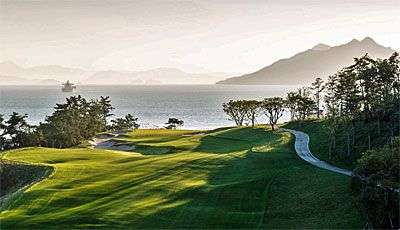
Woo Jeong Hills (#26), Pinx (#91) and Nine Bridges (#9) were the first Korean golf clubs to be actively promoted via the Korean media to the world at large. Regulations were strict at that time, development of the coastline was not permitted, and the course had to include water across more than 3% of the site’s overall area. However, since 2008 the development regulations have been relaxed and new courses are appearing in wonderful locations overlooking the sea, such as South Cape (#3) and Pine Beach (#39).
South Cape genuinely deserves to be higher rated than Nine Bridges, despite Nine Bridges being much more highly acclaimed in GOLF Magazine’s latest World Top 100. Whistling Rock (ranked #10) is an original Ted Robinson Jr. design, but since 2016, Tom Doak's Renaissance Design team has reinstated the strategic and aesthetic qualities of classic architecture, reviving this delightful mountain course.
The start of Chinese golf course history began in 1985, but recently issued regulations by the Chinese government for golf courses were shocking. 100 courses were destroyed and many lost their operational rights. Some golfers will remember the former World Top 100 ranked Stone Forest Leaders Peak course, laid out by Schmidt-Curley Design within a spectacular UNESCO world heritage site. Unfortunately the course no longer exists.

Various Chinese clubs that were cleared by the government to operate were instructed by the state to relinquish some holes for environmental policy reasons, such as developing windbreaks. Even Shanqin Bay, #4 in the new Asian Top 100 and the only Chinese course ranked in the World Top 100, has also lost a fairway to the planting of a windbreak forest. Despite the elimination of much of the corruption surrounding the illegal building of golf courses, it’s hard to understand what these central government policies actually mean and whether or not there will be an end.

Vietnam is now attracting attention instead of China for all the right reasons. The Bluffs Ho Tram Strip (ranked #7) is a course laid out in a sand dune area with elevation changes of 150 feet. However, as Fergal O'Leary has also commented, the layout and routing of holes 4 and 15 are peculiar. In order for the club to become a true World Top 100 contender, improvements to these two holes are essential.
The FLC Quy Nhon Mountain course (#12), designed by Brian Curley, also received high praise. Additionally, Brian has laid out a course at Halong Bay from where there are views of the World Heritage site’s towering limestone pillars, topped with woodland rising up from the sparkling waters of the Gulf of Tonkin. This new FLC Halong Bay development will celebrate the grand opening later this year.
Vietnam is blessed with a wonderful coastal sand dune area that stretches for more than 600 miles. In the future, world-class golf courses will be born in these sand dunes. But, unfortunately, in Vietnam’s ongoing development, residential and resort hotel building is the main focus rather than golf courses. Therefore building developers are commandeering sites facing the coastline. The oversupply of housing developments is deeply concerning for the future of golf tourism.

Courses around Bangkok in Thailand have many courses that feature water hazards as strategies due to the area’s wetlands. The premier course in Thailand, Ayodhya Links (#11), has been designed with water in play across all eighteen holes. It’s not an easy course to objectively rate.
The Lodhi course at Delhi Golf Club in India (#93) has been renovated and improved down the years, but generally the number of Indian golfers is small by comparison to the country’s long golfing history.
Wonderful courses have been developed in Southeast Asia, but many are design concepts that are more conscious of PGA tournaments rather than creating a club atmosphere, which to my mind is a prerequisite for fathering genuine golf club culture for future generations.
More than 1,000 golf courses were built in Japan during the bubble economy of the 1980s, leaving no spare acreage to develop new courses. Consequently over the last twenty years or so Japan has missed out on the new millennium’s architectural “Golden Age”. Tokyo Classic (#31) is one of Japan’s first new courses to be introduced for decades and it was sympathetically fashioned by Nicklaus Design. However, just as much attention was paid to creating a genuine club that combines golf with horse riding and polo.

Coore & Crenshaw’s redesign work at Yokohama Country Club West Course (#5) received high praise from many raters. Before being redesigned, Yokohama was not even on the nomination list for inclusion in the Top 50 golf courses in Japan. However, the unique topography and elevation of the terrain was such an asset that we felt it could be a top-class course if someone completed a great renovation – and so it came to pass. Gil Hanse is now renovating the traditional Japanese dual greens at Tokyo Golf Club (#8) and he’s also performing the remodelling at Karuizawa Golf Club (#36).
Logan Fazio’s renovation of the Kasumigaseki East course (#13) disappointed some Japanese raters. The essence of the East course centres on the classical dual greens and bunkering. However, post renovation, raters felt that the East had been transformed into a modern Florida-styled course, in fact, respected course commentator, Darius Oliver, formerly rated Kasumigaseki East above Tokyo GC and Kawana (Fuji) (#2). You can judge for yourself when the world’s spotlight shines on the East course at the 2020 Tokyo Olympics.
Masa Nishijima
Rank/
Producing this inaugural Asian Top 100 was extremely challenging. Selecting just one hundred courses from forty or so Asian countries not only required breadth of knowledge but also many lengthy debates. If you'd like to share an opinion, then let us know by using the “Respond to this article” link at the top or at the bottom of this page.
To view further details of the Top 100 Golf Courses of Asia click the link.

Top 40 Golf Courses of South Korea 2018 After extending our South Korean listings to a Top 30 when we last re-ranked this country, we’re now expanding the rankings even further by producing a Top 40, so our coverage across this golfing nation has doubled in just a couple of years. In this edition of our Korean standings, five courses remain in the same position as last time, seven move up, eighteen drop down and ten make a first-time appearance. At number 1, holding onto the top spot, we have South Cape Owners Club, a Kyle Phillips masterpiece that has been operating for around five years now. The course appeared at number 3 in our newly established Asian Top 100 and it also holds down a place in our World Top 100 at number 90 so there’s absolutely no doubt about the quality of this fabulous layout. Located on Namhae Island, just off the southeast coast of South Korea, the course is accessible to stay and play golfers, albeit those who are prepared to pay a premium for the privilege. Two of our well-travelled correspondents, David Davis and Fergal O’Leary, have played here and both were rather taken with what they found. David speculated that the course might be regarded as “Kyle Phillips’ best gift to the golf world” while Fergal thought: “what Kyle Phillips created at South Cape makes a lot of old classics shiver in their boots.” These two experienced critics don’t award 6-ball reviews lightly but they had no hesitation in doing so after visiting a dramatic coastal layout that’s been given the sobriquet of “Pebble Beach on steroids” by some commentators. South Cape remains at #1 then but for how much longer we wonder as there are a couple of contenders fast closing in on the top ranked position, with the gap at the very pinnacle narrowing now. The first of these challengers is The Club at Nine Bridges on Jeju Island – a former number 1 that now retains the runner-up position – which has just boosted its tournament-hosting credentials with the inauguration of the CJ Cup @ Nine Bridges professional event in October last year, the first PGA Tour championship ever held in South Korea. The other main protagonist in the fight for the number 1 slot is the 27-hole facility at Whistling Rock Country Club, where the Temple and Cocoon nines leap an impressive four places to number 3. Designed by Ted Robinson Jnr almost a decade ago, the course has recently been renovated by Eric Iverson of Renaissance Golf Design, with his work primarily focused on softening the green contours, though he also redesigned the last two holes on the Temple loop to become a short par four and all-or-nothing par three. The overall playability of the course has been improved, as has the strategic value and variety of the original layout. Two other courses make significant upward moves within the Top 10 positions of our Korean listings. The first of these rising stars is David Dale of Golfplan’s design at Pine Beach Golf Links (up three to number 7) on the coastline of Haenam county, where the architect took every opportunity to expose the course to the edge of the cliffs. The second upwardly mobile track is the Griffin & Wyvern 18-hole configuration at the ultra-private Wellington Country Club near Icheon (up seven to number 10), which attracts the great and the good of Korean society, with a sprinkling of wealthy celebrities thrown into the mix to no doubt enhance the clubhouse ambience. The highest of our ten new entries is the course at Trinity Club, located fifty kilometres southeast of the capital, which enters at a commendable number 9. Designed by Tom Fazio II, the course was built for the daughter of the man who founded Samsung, and it’s operated as an ultra-exclusive golf facility. Some might question why any layout built for a woman should come with a design brief of “construct a world-class, difficult, masculine course” but that’s just what the architect was asked to produce. Perhaps the attraction of hosting a prestigious professional tournament was part of the owner’s thought process, who knows? The finished article is certainly tough enough to do just that. The biggest chart climber, the Old course at La Vie est Belle Country Club in the hills of Chuncheon, is something of a dark horse, rocketing an amazing thirteen places up to number 11. Opened for play in 2015, this 36-hole golf facility has separate clubhouses, built in traditional Hanok style for the Old course and a modern design for the Dunes course. Owned by the Kolon Group and designed by local developer Mun-hwan Ahn, the club and its facilities are set out in the style of an old-fashioned Korean paradise, with the Old course looking back towards the heyday of the Cho-sun Dynasty. A little further down the table, two courses from American architects make significant progress with five-place moves in the right direction: The first is Robert Trent Jones Jnr’s 18-hole layout comprising the South and East nines at Rainbow Hills Country Club in North Chungcheong Province (now #20), and the second is the Jim Fazio II-designed layout at South Springs Country Club to the south of Icheon City (now #21), where the Lake and Mountain nines form the first-rate 18-hole course at a facility originally named Phoenix Springs Country Club. Rank/ To view further details of our South Korea Top 40 rankings click the link. Hwa Young Nam Korean Correspondent Top 100 Golf Courses
Top 30 Golf Courses of South Korea 2017 South Cape Owners Club remains at the top of our newly expanded South Korean chart Observant browsers might notice it’s been only twelve months since we last extended and re-ranked our South Korean listings, when normally we conduct a chart revision every two years. Well, such is the eagerness of our Korean correspondent Hwa Young Nam to showcase the very best courses in his country, we’re steaming a year ahead of schedule with the addition of another ten tracks, giving us a new Top 30. Young, who’s a panellist for one of the leading golf magazines, the Chief Editor at Herald Sports and a member of the International Golf and Travel Writers Association, has played more than a hundred courses in his native land so he’s well equipped to both ratify and validate the new courses that we’re publicising. With Hwa Young's thoughtful feedback and considered input from Masa Nishijima (our International Consultant), we feel we’re now presenting the most up to date picture of golf facilities on the Korean peninsula. With no need for further introduction, let’s take a look at some of the chart highlights, where South Cape Owners Club remains at number 1. This Kyle Phillips design on Namhae Island – a new entry in the November 2015 edition of our World Top 100 – was visited by our International Correspondent David Davis last summer, and he was very impressed with a public facility that’s been called “Pebble Beach on steroids” by one commentator. David’s review declared “a course that is constantly full of ‘wow’ moments,” mentioning it was “one of those rare properties and courses where water is in view from every single hole.” He thought the greens were “very interesting and as diverse as the routing full of contours” and the bunkering was “very playable and aesthetically engaging yet challenging” – all of which contributed to his “I’d highly recommend a visit to South Cape Owner’s Club” endorsement. The most significant climber in our standings is Woo Jeong Hills (up three to number 4), a Perry Dye layout that has hosted the Korea Open several times since it was first held here in 2003. Laid out as a big, brash tournament track, this course is notable for its now rather clichéd Dye design trait – an island green, which appears at the long par three 13th hole. Rising one spot to number 5, the West and East nines at Jade Palace Golf Club were designed by Harley Kruse from Greg Norman Design, first opening for play in 2004. Set out in the hills to the north east of Seoul, the fairways are nicely routed around a rolling landscape with spectacular flash-faced bunkers and cleverly constructed greensites the main golfing points of interest on a very modern golf facility. Nudging up one place to number 7, the Temple and Cocoon nines at the 27-hole Whistling Rock Country Club complex is an audacious Ted Robinson Jnr design where the construction crew literally blasted the fairways from the hills that overlook the Chuncheon Lake basin, 100 kilometres northeast of the capital. Eric Iverson from Renaissance Golf Design has since renovated the layout. Also creeping up one position to number 16, the East and West nines at Pinx Golf Club on Jeju island is another Ted Robinson Jnr project, only this time he shares the design credit with his late father, Ted Snr, who was known as the “king of the waterscapes”. This layout has the distinction of hosting Korea’s first European Tour event, the Ballantines’s Championship, which the club hosted for three years, starting in 2008. The only remaining upward mover in our new chart is Wellington Country Club (up two to number 17) where the Griffin and Phoenix nines were laid out by Song Ho Golf Design in 2013. A third 9-hole circuit (named Wyvern) is now under construction at this exclusive facility which is currently managed by the highly talented (and multi-lingual) Jenny Lee, the former LPGA Tour player. The accolade of “highest new entry” belongs to the Yeosu Gyundo Golf & Resort on Gyundo Island, in Jeollanam-do province, where the Geumo and Dolsan nines leap into our chart at number 9. Originally intended as a David McLay Kidd design, it appears there was a disagreement of some description between the client (JNDC) and the design company, with the developers completing this offshore project themselves. There are a few facilities that we’re keeping tabs on as they could possibly feature in the next edition of our South Korean rankings. The most significant is the ultra-private project at Trinity Country Club, financed by Lee Myung-hee, daughter of the Samsung founder. The Trinity architect, Tom Fazio II, describes this layout as “one of the hardest, maybe the hardest in South Korea.” Perhaps we’ll have something more to say about it next time around. Rank/ To view further details of our newly revised South Korea Top 30 rankingsclick the link. If you’d like to comment on our South Korean listings then please do so via the “Respond to this article” link at the top or at the bottom of this page. We appreciate receiving feedback whenever we re-rank a national chart so if you have a strong opinion about anything you’re read in this article then feel free to let us know what you’re thinking. Jim McCann Editor Top 100 Golf Courses

Top 20 Golf Courses of South Korea 2016 We extend our coverage of courses in South Korea with the introduction of a new Top 20 chart We’re always grateful for input from local correspondents in countries around the world who can help define our golf course rankings. We’re constantly researching, trying to keep abreast of the changing golf landscape, but there’s really nothing to beat having an experienced person on the ground with their finger on the pulse keeping a regional watch on new golfing developments. We connected with one such contributor last year, Hwa Young Nam, our Korea Correspondent, who’s a member of the International Golf Travel Writers Association and a rating panellist for one of the leading golf magazines. He’s played well over a hundred courses in his native country and his insight has been instrumental in shaping our latest edition of the South Korean chart. Without Young’s local knowledge, we’d never have been able to contemplate extending our coverage for South Korea so we’re grateful for his assistance during the re-ranking process. His input not only verified and endorsed the relative positions of the top courses in relation to one another, it also identified six truly worthwhile additions, making the expansion to a Top 20 a more meaningful exercise – Seowan Valley unfortunately had to step aside for the new entrants. Without further ado, we’ll now take a look at the major points concerning our new South Korean chart. First of all, there’s a new number 1, with South Cape Owners Club climbing three places from number 4 to reach the top of the chart. Located on Namhae Island, off the southeast coast of the mainland, this course also entered our recent World Top 100 at number 91 so there’s no denying the new-found status of this place as one of the best new golfing layouts on the planet. Opened at the end of 2013, the course is the focal point of a luxury resort developed by successful Korean businessman Jae Bong Chung which includes a 40-suite boutique hotel and 130 private sea view villas. As a recent reviewer said of the course; “What Kyle Phillips created at South Cape makes a lot of old classics shiver in their boots. The golf world needs to brace itself, as this whole experience takes you to unimaginable levels of euphoria.” The Golfplan design firm –where globe-trotting architect Ron Fream was once a senior partner – is headed these days by David Dale and Kevin Ramsey and the company has worked on around twenty South Korean projects over the last twenty-five years. Their Nine Bridges course on Jeju Island had been our top ranked Korean course since 2009 but it now drops down to the runner-up position. It’s not all bad though for the California-based company because another course in its portfolio, Haesley Nine Bridges, rises three places to number 5 in our revised listings. This 18-hole layout was constructed for the same developer that commissioned the offshore Nine Bridges course and it has been built to top spec, with sub-air and hydronics systems installed in all eighteen greens under the direction of the director of agronomy at Augusta National. The only other course to make an upward move in our Korean standings is the spectacular layout at the 27-hole Whistling Rock Country Club complex (up five to number 8) where the Temple and Cloud nines form the principal 18-hole course. Ted Robinson Jnr fashioned the three 9-hole circuits here, a decade after his father Ted Snr laid out Pinx on Jeju Island in 1999, with his team having to dynamite thousands of tons of rock to clear a route for many of the playing corridors. The highest of our new entries is Blackstone Icheon at number 10, with the North and West circuits forming the best 18-hole combination at this 27-hole club. Brian Costello of the JMP Golf Design Group laid out the course in 2010 (four years after he constructed the Blackstone course on Jeju Island) and it announced its arrival in dramatic style by hosting three editions of the short-lived Ballantine’s Championship on the European Tour, starting in 2011. We always welcome opinions when we publish updated national rankings so feel free to let us know what you think of our new South Korean Top 20 chart. Have we omitted a course which should be listed or do we include a layout that really shouldn’t be there? Please click the “Respond to this article” link at the top or at the bottom of the page if you’d like to make us aware of your thoughts. To view further details of the South Korean Top 20 click the link Jim McCann Editor Top 100 Golf Courses

