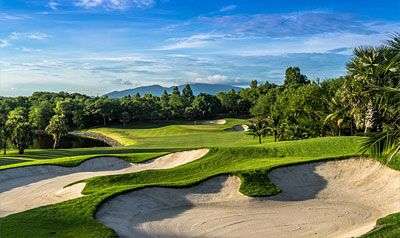
Top 100 Golf Courses of Asia 2020
This is the first revision of the Top 100 rankings for Asia, a chart that we introduced two years ago. We’ve spent the last few months updating individual national listings in that part of the world, producing three regional reports – for East, South and Southeast Asia – during that process. Now that we’ve collated all the data, it’s time to reveal what we believe to be the best hundred golfing layouts within the largest and most populous continent on the planet.
In terms of statistics, there are sixteen countries represented in these standings, with courses in Japan (25), South Korea (16) and China (13) comprising more than half the chart. Another third of the entries originate in Vietnam (10), Thailand (7), Indonesia (7), Philippines (5) and Malaysia (4). In quite a turbulent new table, there are twenty new courses and only eight non-movers, with thirty-three courses moving up and thirty-nine dropping down.
Once again, we have to thank our panel of journalists who are spread out over a vast area for their valuable input. In particular, we’re grateful to our Asia correspondent Kimi Hoshiyama for his unstinting efforts. He’s now played 91 of the courses featured in these listings so it shouldn’t be too long until he becomes the first person to play the Top 100 in Asia.
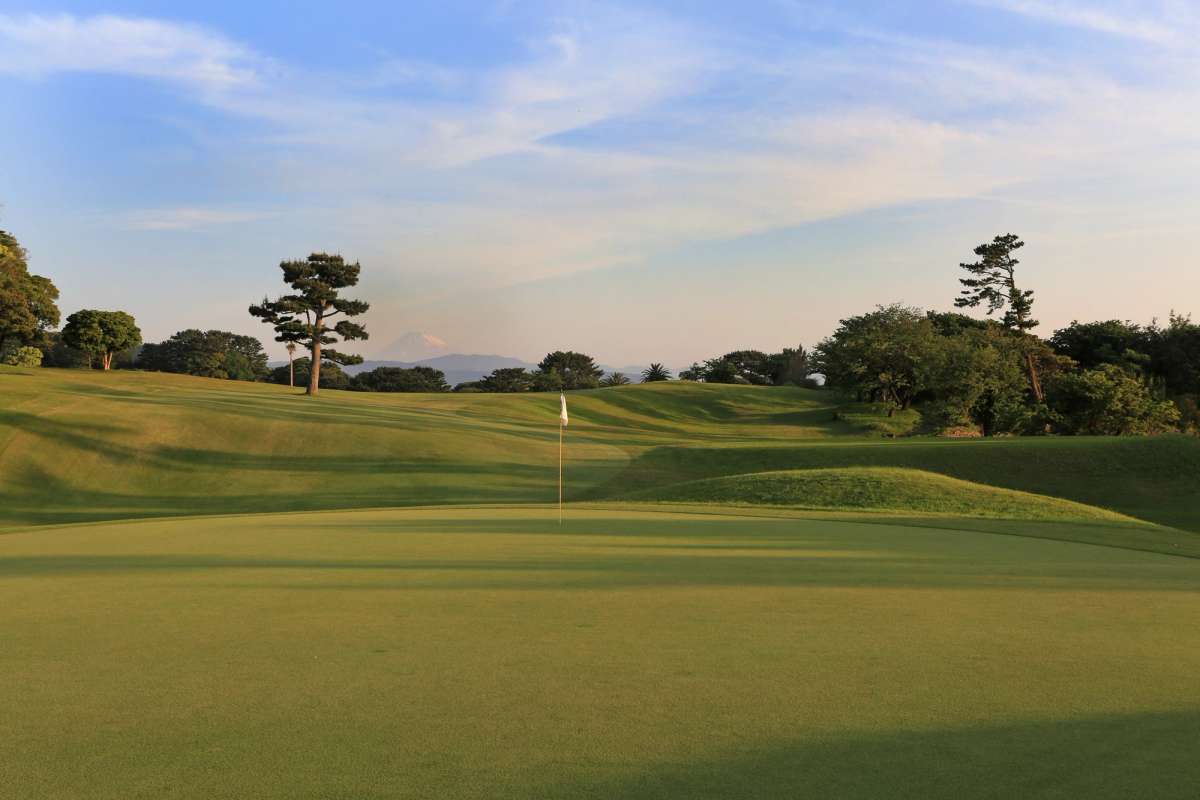
The top three positions remain exactly as they were when we last carried out this biennial exercise which means the course at Hirono Golf Club is still the No. 1 course in Asia. Designed by C. H. Alison back in the early 1930s, the course recently underwent an extensive restoration by Martin Ebert, using Alison’s plans, club photographs and old aerial photographs from the 1940s and 1960s to recreate the original design intent of Harry Colt’s partner.
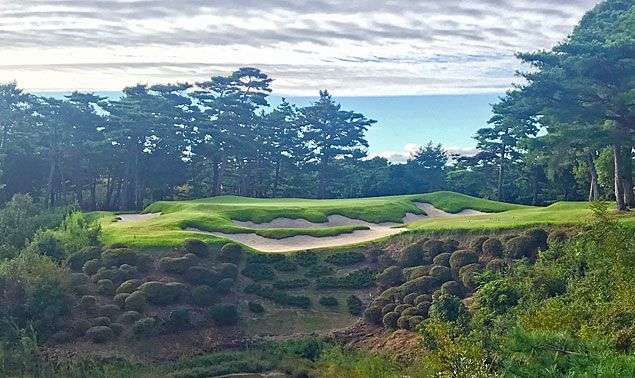
Hirono Golf Club
Our US Consultant Fergal O’Leary has seen the outcome of this upgrade and posted recently about the widespread tree clearance, the introduction of sizeable waste areas on a number of holes, the resurfacing of the greens and the refurbishment of all the bunkers. “The renovations are sublime,” he said, before adding: “It’s absolutely the top dog in Japan and Asia”. The course is also currently #33 in the world, having risen three places when our global rankings were refreshed six months ago.
Yangtze Dunes at Lanhai International Country Club in China is the first of our twenty new entries, crashing into the continental Top 100 at #5. The course was first set out by Jack Nicklaus almost a decade ago but a subsequent change in ownership brought about dramatic changes with a radical renovation by Australian firm Ogilvy, Clayton, Cocking and Mead leading to the rebuilding of greens, the introduction of sandy waste areas and blow-out bunkers.

Yangtze Dunes at Lanhai International Country Club
Our man Fergal was also here last year and he felt Yangtze Dunes was one of the best courses he played in 2019: “it’s completely different to anything you’ll find in Asia, especially given how firm the course is kept… the course has a magnificent sandy base that provided the catalyst for the designers to take the linksy route with their plans, and the results are sensational… this course has a more impressive mix of holes and topography than many of the courses that sadly linger on ranking lists.”
Just a little further behind this front running debutant we have a couple of Vietnamese newcomers, Hoiana Shores (at #12) and KN Golf Links Cam Ranh (at #16), both of which reside on the South Central Coast in that country. The former course is a Robert Trent Jones Jr. design that was just unveiled last year and the latter is Greg Norman’s third project to open in Vietnam. Occupying substantial sandy sites overlooking the South China Sea, each of these new tracks plays firm and fast, exhibiting many of the playing characteristics found on links layouts in Great Britain & Ireland, with a tropical twist.
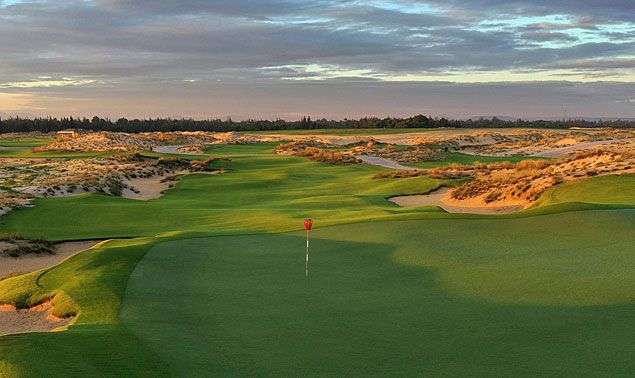
Hoiana Shores Golf Club
Quite a few courses make significant double-digit moves up the new Asian standings, most notably a trio of 18-hole layouts from South Korea, led by Anyang Country Club (up thirty-two to #23) which Robert Trent Jones Jr. redesigned in the late 1990s. Also making a massive climb up the table, we have the Griffin and Wyvern nines at Wellington Country Club in Incheon (up twenty-three to #47) and Haesley Nine Bridges (up twenty to #69), where David Dale and Kevin Ramsey of Golfplan set out the course a decade ago now.
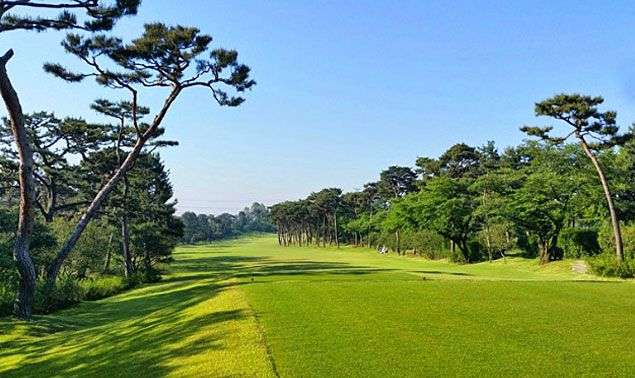
Anyang Country Club
Three Indonesian layouts also make outstanding chart progress. The first two are mid-1990s Jack Nicklaus designs at Taman Dayu Golf Club & Resort (up fifteen to #30), billed as “a heavenly escape in the lush green foothills of Mount Welirang,” and the Bumi Serpong Dama – known as “the spirit of the hills” – at the 36-hole Damai Indah Golf complex outside Jakarta (up fourteen to #42). The third track from Indonesia to make a big impact is Royale Jakarta (West & South), a JMP Design production from Bob Moore that rises thirteen places to No. 52.
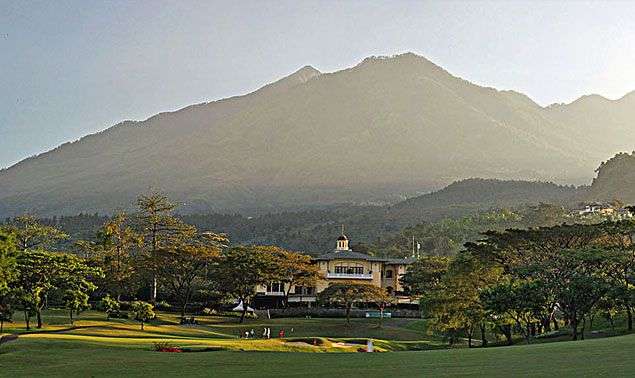
Taman Daya Golf Club & Resort
The #1 course in the Philippines, The Country Club in Canlubang, advances eleven rungs up the ladder to No. 46. Designed by Tom Weiskopf, the layout has recently been lengthened, enabling it to host major national events like the Philippine Open which has been held here since 2017. It’s a tough track, described by one reviewer as “by far the hardest course I have ever played from the tips” so that’s fair warning for anybody fortunate enough to get a rare invite here to choose their tees very carefully.
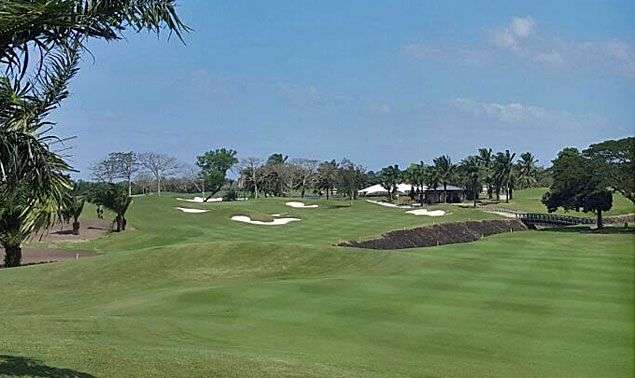
The Country Club
In the bottom half of the new listings, the largest leap upwards is made by the course at Amata Spring Country Club, soaring twenty-five spots to No.63. Located midway between Bangkok and Pattaya in Thailand, this Schmidt & Curley design was the venue for four editions of the now defunct Royal Trophy, played between 8-man professional teams from Europe and Asia – and who can ever forget television images of this event and the ferryboat carrying golfers to and from the floating green at the par three 17th?
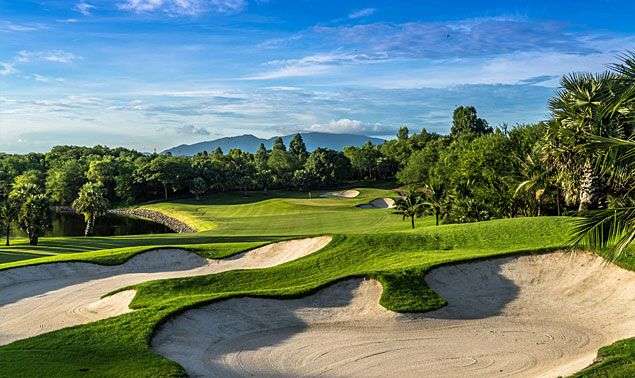
Amata Spring Country Club
Another couple of new entries are worth comment.
Himalayan in Nepal (new at #55) is one of the most remarkable courses in the world, framed by the towering Annapurna Massif and with fairways laid out inside the walls of a deep canyon formed over many thousands of years by the snowmelt waters of the Bijayapur River. Architect Ron Fream first brought this place to the attention of the golfing world many years ago but it’s only now, with Tom Doak picking up on it, that it’s getting the wider recognition it deserves. Tom reckons “you have to see this course sometime in your life” which is high praise indeed for a course built entirely by hand with local manual labour.

Himalayan Golf Course
Myotha National in Myanmar (new at #86) is a Schmidt-Curley design that’s laid out within a large industrial and residential development an hour’s drive southwest of Mandalay. The course is boldly bunkered, in keeping with the scale of the property, and the greens are also large, featuring strong slopes and backstops. Importantly, it’s conditioned to play firm and fast, which is a playing characteristic that now appears to be finding favour with quite a few of the new courses that have opened for business in Asia over the last year or so.
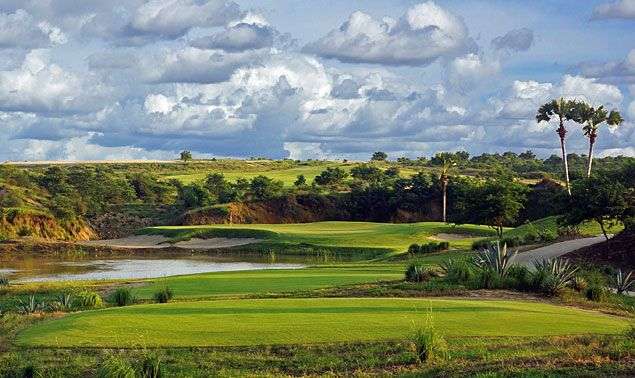
Myotha National Golf Club
Jim McCann
Editor
Top 100 Golf Courses
Japan remains one of Asia's premier golf destinations, where Golden Age architecture meets meticulous course conditioning across nearly 2,500 layouts. The top three positions hold steady for another cycle, with Charles Hugh Alison's masterpieces at Hirono and Kawana continuing their decade-long dominance. This focused Top 50 represents Japan's upper echelon, where architectural pedigree from designers like Alison, Seiichi Inoue, and Kinya Fujita meets modern championship standards. Explore the entire updated Rankings for Japan Explore the entire updated Rankings for Chubu Explore the entire updated Rankings for Kinki Kansai Explore the entire updated Rankings for Kanto Explore the entire updated Rankings for Chugoku Explore the entire updated Rankings for Hokkaido Explore the entire updated Rankings for Kyushu Explore the entire updated Rankings for Tohoku 2026 Rankings: Return to Top 50 After expanding to a Top 80 in 2020, the 2026 rankings refocus on Japan's elite tier with a carefully curated Top 50. This streamlined approach highlights courses that truly warrant international travel, from Alison's revered Golden Age designs to acclaimed modern layouts by Jack Nicklaus, Robert Trent Jones Jnr, and Coore & Crenshaw. Beyond the ranked fifty, dozens of additional layouts offer exceptional golf experiences. The concentration of quality throughout Japan's eight main regions means travellers can build comprehensive itineraries without venturing far from major transport hubs. 2026 Top 50 At A Glance The Unchanged Elite Three courses maintain their positions at the summit. Hirono Golf Club (#1), Kawana Hotel Fuji Course (#2), and Naruo Golf Club (#3) form Japan's untouchable triumvirate, all featuring distinctive Alison architectural DNA. The Dramatic Climbers Osaka Golf Club rises 22 positions to #11 Golden Valley Golf Club surges 15 spots to #12 Katayamazu Hakusan climbs 15 places to #21 Sapporo Wattsu advances 15 positions to #34 Ibusuki Kaimon gains 15 spots to #35 Fukuoka Wajiro jumps 11 places to #28 Caledonian rises 9 positions to #29 Notable Movements Within Top 20 Tokyo Golf Club advances 2 to #4 Ryugasaki climbs 5 to #7 Shimonoseki rises 6 to #9 Abiko slips from #2 to #6 Kasumigaseki East drops 2 to #10 Regional Distribution Kanto: 21 courses (42%) Kinki Kansai: 10 courses (20%) Chubu: 5 courses (10%) Kyushu: 5 courses (10%) Hokkaido: 5 courses (10%) Tohoku: 2 courses (4%) Chugoku: 1 course (2%) Best Golf Courses by Region Kanto Dominance From Golden Age designs at Tokyo Golf Club and Abiko to modern classics like Caledonian and The Royal Golf Club, the region offers an exceptional variety within easy reach of the capital. Kinki Kansai Heritage Osaka-Kobe corridor delivers architectural gravitas through Alison masterworks and their spiritual successors. All three podium finishers call this region home, alongside the rising star Osaka Golf Club. Hokkaido's Resort Appeal The northern island punches above its weight with five courses, led by Hokkaido Classic (#17) and Katsura (#18). Cooler summers and dramatic topography create distinctive playing conditions compared to the main island. Chubu and Kyushu Balance Chubu benefits from Kawana's prestige and Katayamazu's surge, while Kyushu anchors Japan's southern golf culture through Phoenix and multiple climbing entries. Explore the entire updated Rankings for Japan Explore the entire updated Rankings for Chubu Explore the entire updated Rankings for Kinki Kansai Explore the entire updated Rankings for Kanto Explore the entire updated Rankings for Chugoku Explore the entire updated Rankings for Hokkaido Explore the entire updated Rankings for Kyushu Explore the entire updated Rankings for Tohoku What the Rankings Tell Us Consistency at the Summit Hirono, Kawana, and Naruo have occupied the top three positions across multiple ranking cycles. This unprecedented stability reflects architectural timelessness rather than ranking inertia. Each course underwent sensitive restoration work that honoured original design intent while meeting modern playing standards. Gil Hanse's work at Tokyo Golf Club demonstrates how thoughtful updates can elevate standing without compromising architectural integrity. Alison's Enduring Legacy Charles Hugh Alison spent just three months in Japan in 1930, yet his influence permeates the rankings. Four of the top five courses bear his architectural fingerprints, either through direct design work or profound influence on protégés like Kinya Fujita and Seiichi Inoue. The distinctive "Alison bunker" - deep, boldly contoured, and strategically menacing - remains the defining feature of Japanese golf architecture. These hazards function as effectively today as when first shaped, proof of Alison's tactical genius and understanding of eternal golf principles. Kanto's Architectural Depth Tokyo's surrounding region claims 21 of 50 ranked courses, showcasing remarkable architectural diversity. Golden Age classics sit alongside acclaimed modern works from international architects. The concentration allows passionate golfers to experience multiple elite courses without extensive travel. A Decade of Evolution: 2015-2020 Top 30 Golf Courses of Japan 2015 Japan's first expanded Top 30 arrived in February 2015, doubling previous Top 15 coverage. The top five remained unchanged, cementing Hirono, Kawana, Naruo, Tokyo, and Abiko as undisputed leaders. The rankings emphasised Alison's lasting impact, noting that any deep, bold bunker throughout Japan remained known simply as "an Alison" nearly 85 years after his brief visit. Top 30 Golf Courses of Japan 2017 The 2017 update maintained the Top 30 structure with minimal disruption at the summit. Hirono through Naruo, held their positions for the fourth consecutive cycle, demonstrating extraordinary consistency across nearly a decade of evaluation. Notable developments included Ono climbing five spots to #5 and Osaka advancing eight positions to #8, both Osamu Ueda designs gaining recognition for strategic merit. Yokohama Country Club West burst onto the scene at #6 following an extensive Coore & Crenshaw renovation that eliminated the traditional two-green system for modern single greens with sub-air cooling. Top 50 Golf Courses of Japan 2018 March 2018 brought Japan's first Top 50 rankings, expanding coverage to showcase deeper architectural quality. Yokohama Country Club West continued its meteoric rise, climbing three positions to #3 following widespread acclaim for the Coore & Crenshaw transformation. Nikko Country Club advanced three spots to #11, showcasing Seiichi Inoue's understated approach through tree-lined fairways and strategic bunkering. The layout features no water hazards yet maintains compelling challenge through terrain movement and hazard placement. Hokkaido Classic and Phoenix Country Club each jumped eight positions, highlighting expanding panel appreciation for courses beyond traditional Kanto-Kansai strongholds. Planning Your Japan Golf Trip Tokyo Hub Strategy Base yourself in Tokyo to access 15 ranked courses within 90 minutes. The capital's excellent train network makes day trips effortless, with courses like Tokyo Golf Club, Abiko, and Kasumigaseki East all reachable by morning tee times. Premium options include Yokohama Country Club West and Ryugasaki for modern course conditioning married to strategic design. Kansai Cultural Circuit Osaka and Kobe offer ten-ranked courses alongside exceptional cultural attractions. Hirono Golf Club represents the ultimate pilgrimage for architecture enthusiasts, while Naruo and Ono deliver similarly compelling Golden Age experiences. The region's historical significance and culinary excellence create perfect golf-cultural balance. Northern Exposure Hokkaido's five-ranked courses justify dedicated northern travel, particularly during summer when the main island's heat proves challenging. Hokkaido Classic leads the region at #17, with Katsura, Sapporo Wattsu, Otaru, and Eniwa offering varied architectural approaches across dramatic terrain. Summer temperatures 5-10 degrees cooler than Tokyo make Hokkaido golf refreshingly pleasant during July and August. The island's natural beauty and fresh seafood cuisine enhance the golfing experience. Southern Warmth Kyushu's five courses anchor Japan's southern golf culture, led by Phoenix at #26 and rising star Ibusuki Kaimon at #35. Winter golf proves viable when northern regions face seasonal closure, making Kyushu ideal for December through March travel. The region's volcanic hot springs and subtropical climate create a distinctive atmosphere compared to metropolitan Kanto-Kansai. Fukuoka serves as the natural hub, with courses like Fukuoka Wajiro (#28) and Koga (#15) within comfortable driving distance. Looking Ahead The Japanese golf scene continues evolving through sensitive restoration work and selective new development. Several courses outside the current Top 50 have undertaken renovations aimed at revealing original architectural intent, potentially reshaping future rankings. The complete Top 50 golf courses in Japan offers detailed information about each ranked layout, including course details, review options, and travel logistics for planning your Japanese golf adventure. Explore the entire updated Rankings for Japan Explore the entire updated Rankings for Chubu Explore the entire updated Rankings for Kinki Kansai Explore the entire updated Rankings for Kanto Explore the entire updated Rankings for Chugoku Explore the entire updated Rankings for Hokkaido Explore the entire updated Rankings for Kyushu Explore the entire updated Rankings for Tohoku
Top 50 Golf Courses of Japan 2018 It’s almost eighteen months since we published our last Japanese article, the Top 30 Golf Courses of Japan 2017, so that particular biennial chart was not due to be updated for another six months. However, having just produced our first ranking list for the Top 100 Golf Courses of Asia, which contained twenty-eight courses from the Land of the Rising Sun, we decided it’s now time to refresh the national standings for Japan. The big news is that the chart has been expanded from a Top 30 to a Top 50 and for that we must thank our International Consultant Masa Nishijima, who looks after a large network of contributors assisting him with the maintenance of the national listings. Masa has been advising us for many years now and we’re grateful for his extensive knowledge across a golf rich country with around 2,500 courses in play. Hirono Golf Club is still our number 1 and it holds off the challenge of the Fuji course at Kawana, which remains in the runner-up position. That’s how things have been at the top of the table for nearly a decade now, with these two courses hogging all the limelight, and who’s to say it won’t be the shape of things to come for the foreseeable future? Each of these 1930s designs from Harry Colt’s associate, C.H. Alison, occupy positions in the top half of our World Top 100 so they’re obviously a class apart from the others. Both layouts have changed quite a bit since they were first built, largely due to tree growth narrowing the playing corridors, but the deep sand traps (known to this day as “Alison bunkers”) remain as fearsome as ever in the modern era. Climbing three places to number 3, the West course at Yokohama Country Club continues its meteoric rise in our charts – it’s also just entered our World Top 100 – thanks to an extensive renovation carried out recently by the design partnership of Coore and Crenshaw when they virtually rebuilt the course, eliminating the old two-green system for single greens with sub-air cooling. Fergal O’Leary, our US Consultant, played here last year and had this to say: “It absolutely knocked the socks off me... the greens are truly remarkable, with Coore personally crafting the contours, the bunkering is arguably their best ever, and the undulating land is perfectly suited for swooping wide fairways and large aprons surrounding the greens… it is a seriously impressive and thrilling golf course worthy of global acclaim.” Another course advancing three places is the 18-hole layout at Nikko Country Club (now ranked number 11), situated an hour’s drive north of Tochigi. Originally designed by Seiichi Inoue, former assistant of Kinya Fujita who worked with Hugh Alison during his short time in Japan at the start of the 1930s, the course was modified by Taizo Kawata at the start of the new millennium. It’s an understated track with no water hazards, less than forty bunkers, and tree-lined fairways set as two returning loops, with those on the back nine playing clockwise to the counter-clockwise holes on the outward half. The other fifteen courses to make an upward move in the chart all rise just one place, except for two courses, both of which soar eight spots to their new position in the listings. The first of these is Hokkaido Classic (now #18), an early 1990s Jack Nicklaus Signature course near Sapporo – which is just one of around thirty tracks designed by the Golden Bear in Japan – and the second course lies 2,000 kilometers further south at Phoenix Country Club (now #20) in Miyazaki, where the club has hosted the prestigious Dunlop Phoenix Tournament since 1973. Rank/ To view further details of our newly extended Japan Top 50 chart click the link. We’re always happy to receive feedback after re-ranking our national standings so please make use of the “Respond to this article” link at the top or the bottom of this page if you have any strong views on our Top 50 for Japan. By all means tell us what we’ve got right or what might be improved. Top 100 Golf Courses has never claimed to produce “definitive” listings but we do think we publish the “most informed” rankings so every contribution that you submit counts. Jim McCann Editor Top 100 Golf Courses
Top 100 Golf Courses updates its East Asia rankings In recent years we’ve published quite a number of individual reports when revising the rankings for Asian countries. This time, we plan to rationalise things by grouping nations into regional releases. This is the first of three such news items, looking at China, Japan and South Korea under the banner of East Asia. We’ll produce further articles for Southeast Asia and South Asia but for now we’re concentrating on the three major golf markets in the eastern part of the continent. China We’ve extended our coverage in China to a Top 60, even though the overall golf provision in the country has contracted in the last few years. In our new listings, only four courses remain in the same position with fourteen others moving up, thirty-one dropping down, one falling out altogether (Tiger Beach, due to closure), and eleven layouts entering for the first time. With those numbers in mind, you might well be entitled to think there’s been something of a golfing shake-up in the People’s Republic. Our new national #1 is Yangtze Dunes at Lanhai International Country Club on Chongming Island, at the mouth of the mighty Yangtze River. It rises an incredible sixteen spots from its previous chart position following a fantastic renovation of the former Jack Nicklaus-designed layout by the Australian design company Ogilvy, Clayton, Cocking and Mead. This course upgrade also propelled it into our World 100 at #92 a few months ago. Yangtze Dunes at Lanhai International Country Club Our US Consultant Fergal O’Leary posted this after visiting last year: “The introduction of mouth-watering sand dunes, waste areas, sprawling rugged bunkers using Bermuda fairways and Bent greens makes this place rise above its peers across the continent. It’s completely different to anything you’ll find in Asia; especially given how firm the course is kept… this course has a more impressive mix of holes and topography than many of the courses that sadly linger on ranking lists” The highest new entry appears at an impressive #12 and it’s the Linksland course at Dongzhuang Beach Golf Club next to Shanghai Pudong International Airport which was designed by Mark Hollinger of the JMP Golf Design Group. The club presents its members with two contrasting 18-hole layouts; the Parkland course features tree-lined fairways and a variety of water features while the Linksland course offers a links-like experience with firm and fast playing conditions. Dongzhuang Beach Golf Club - Linksland course Our China and Southern Asia correspondent Kimi Hoshiyama was here just over a year ago and reported as follows: “Dongzhuang Beach Golf Club has thirty-six holes built on tidal flats and marshes on the coastline… The Linksland course is a classic links-style seaside course with artificially created dunes, long rough to knee height and pot bunkers… Some ponds come into play and many bunkers are strategically placed. When the sea winds are strong, the course becomes really tough.” A couple of courses make double digit advances in the new chart for China. Lakeview Golf Club Kunming, on the northern shores of Dianchi Lake in Yunnan Province, is an early new millennium project from Nick Faldo that now climbs ten spots to #29. The club is a member of the IMG Prestige network of high-end golf facilities (one of only six in China) and the course is a typical Faldo track; strategic but fun to play, with well-positioned bunkers, rolling fairways and beautifully contoured greens. Lakeview Golf Club Kunming Soaring an incredible seventeen slots to #32, the 18-hole layout at Beijing CBD International is a Brit Stenson design situated less than 15 kilometres east of downtown Beijing. Occupying a rather flat 135-acre property where a number of little lakes were built to provide fill for contouring, the course hosted two consecutive editions of the Volvo China Open (in 2008 and 2009) soon after it first opened for play. Rank/ To view the complete detailed list of the Top 60 Golf Courses of China click the link. Japan Thanks to the efforts of Kimi Hoshiyama and our extended team of raters, we’re expanding our rankings quite dramatically for Japan from a Top 50 to a Top 80. The new listings can be broken down numerically as follows: just four courses retain the same position as last time, fifteen move up, thirty-one drop down and thirty newcomers make their debut. As with the new Chinese table above, you might be forgiven if you think we’ve given the golf tree a good shake in the Land of the Rising Sun. Having stated that, there’s no change at the top of the standings, with the world-class course at Hirono Golf Club still commanding the #1 berth in our Japanese chart. Laid out by Harry Colt’s design partner Hugh Alison back in 1932, it’s been altered by a number of architects down the years but the very recent modifications by Martin Ebert have elevated it to another level altogether. Hirono Golf Club Our well-travelled correspondent Fergal O’Leary visited six months ago and had this to say: “Every bunker has a handsome new look with aggressive edging and sharp-looking lines… Large dramatic waste areas between tees and the start of fairways have been introduced… All the greens have been resurfaced and mirror previous undulations… It’s absolutely the top dog in Japan and Asia.” Fergal, with his tongue firmly in his cheek, then ended the review with his own little snippet of ancient Taoist philosophy: “Faces get older, swings get shorter, but as time goes by at Hirono, smiles get wider and horizons stronger”. The accolade of “highest-placed newcomer” in our chart belongs to the course at Fujizakura Country Club as it enters at #14. Lying in the shadow of Mount Fuji, which peaks ten kilometres to the south, it’s a mid-1970s design from Noriyuki Miyoshi that has hosted the Fujisankei Classic event on the Japan Golf Tour since the 33rd edition of the annual professional tournament was moved to the club in 2005. Fujizakura Country Club Three courses make impressive positional gains in the new listings. One of the first Japanese courses not to employ the dual green system, the course at Golden Valley Golf Club (up sixteen to #27) is a late 1980s Robert Trent Jones Jr. layout located deep in the hills to the north of Kobe. Here, the architect carved narrow playing corridors through three thickly forested valleys, with fairways laid out alongside a series of rock-lined creeks, making this one of the toughest tracks in the country. Golden Valley Golf Club Unveiled in 1992, the 18-hole layout at Passage Kinkai Island Golf Club (up thirteen to #35) isn’t actually set out set on an island at all as it’s situated on a peninsula on the west side of Omura Bay, directly opposite Nagasaki airport, with tree-lined fairways routed close to the water’s edge. Interestingly, visiting golfers can take a 20-minute ferry ride from the club’s marina across the bay to catch a plane home, as our man Kimi Hoshiyama did when he played here a while back. Passage Kinkai Island Golf Club The Royal Golf Club’s course (up twelve to #37) lies a 1.5-hour drive northeast of downtown Tokyo. Opened in 2016, it was designed by Nagato Yoichi, former Advisor to the Japan Tour Golf Association, who was brutally frank when describing this monster 8,143-yard layout: “There’s no course in the world that is tough on pro golfers and kind to amateurs. The Royal Golf Club course is equally difficult for both pro golfers and amateurs... I call holes that force players to swing with all their strength as ‘Yin holes’ and holes that let them think ‘Yang holes.’ When designing this course, I spent lots of time to strike a balance between Yin and Yang.” To view the complete detailed list of the Top 80 Golf Courses of Japan click the link. South Korea Our leading Korean correspondent Hwa-Young Nam has been of invaluable assistance with enlarging our table to a Top 50 and we’re grateful for the input he’s provided for this revision. With 798 courses in play at 440 facilities (according to a recent R&A report), the Republic of Korea is the eighth largest golfing nation in the world by number of courses so it’s only right that we give it due prominence. Statistically, in this latest chart edition, six courses stay as they were, twelve make upward moves, twenty-two slide downwards and ten make their first appearance. One of the non-movers is our national #1, South Cape Owners Club, which took over from Nine Bridges as the best course in Korea when we re-ranked the country in 2016. South Cape Owners Club Set out on a spectacular site along the coastline of Namhae Island, just off the Korean mainland, this modern design lies at the heart of a luxury resort which was developed by businessman Jae Bong Chung, opening for business in 2013. Since 2016, the club has hosted the Descente Korea Munsingwear Matchplay tournament on the men’s Korean Tour. Fergal O’Leary thinks that “what Kyle Phillips created at South Cape makes a lot of old classics shiver in the boots” while David Davis wonders “if, in the long run, it’s recognized as Kyle Phillips’ best gift to the golf world”. There’s no doubt this is one of the best pay and play golf facilities in the world, with off course amenities matching the fabulous playing experience out on the fairways. A significant 5-place climb to #3 is made by Anyang Country Club, whose course was established by the founder of the Samsung Group back in the late 1960s to compete against any of the top golfing layouts located elsewhere in the world. It’s been renovated a couple of times since then, most notably by Robert Trent Jones Jr. in the late 1990s, to keep the “Korean Home of Golf” as playable and up to date with new trends, especially with regard to its putting surfaces. Anyang Country Club The biggest leap up the ladder is made by the Dream and Vision nines at Sagewood Country Club (up seven to #18) which form the leading 18-hole layout at a well-regarded 27-hole golf complex from Nicklaus Design in the mountainous district of Hongcheon in Gangwon Province. Opening its doors to golfers as Blue Mountain Country Club in 2013, this renamed golf club lies 765 metres above sea level, with golf played out in a harmonious environment where ‘the blue sky meets the mountains’ according to the club’s publicity material. Sagewood Country Club The highest of ten newcomers shows up at #31 and it’s the course at NamChon Golf Club, which was renovated by Kyle Phillips in 2016, the year after it had hosted two editions of the KB Financial Star Championship on the LPGA of Korea Tour. With Zoysia fairways and Creeping Bent greens, the playing surfaces of the East and West nines at Namchon are second to none on a layout that can now be stretched to just over 7,000 yards for tournament play. NamChon Golf Club To view the complete detailed list of the Top 50 Golf Courses of South Korea click the link. Jim McCann Editor Top 100 Golf Courses

