
Top 100 Golf Courses of Britain & Ireland 2018
Having produced updated ranking lists for England, Northern Ireland, Republic of Ireland, Scotland and Wales over the last couple of months, we’ve now gone through the process of merging those national charts then siphoning off the top one hundred courses to create an all-embracing Top 100 table for the geographical location which is commonly known as the British Isles.
Several UK-based members of the Top 100 Team have each played more than 75% of the new GB&I standings but spare a thought for our Midlands and North of England correspondent Brian Ward, who thought he’d recently completed the hundred, only to now discover there’s a Scottish new entry in this edition that he’s not yet played!
For those interested in statistics, the chart contains 45 English courses, 30 Scottish courses, 18 from the Republic of Ireland, 4 from Wales and 3 from Northern Ireland. Overall, 39 courses move up, 34 go down, there are 23 non movers and 4 new entries. The four courses dropping out (Lough Erne, Druids Glen, Moortown and Sherwood Forest) join 34 others which have appeared in at least one of the seven previous editions before falling out of favour.
At the top of the chart, the Championship course at Royal County Down in Northern Ireland retains the number 1 position, holding off four very strong Scottish contenders in positions 2 to 5. It’s been at the top of our chart since 2006 and, quite frankly, something really extraordinary will have to happen to see the course dislodged from the top spot. A reviewer described it like this earlier in the year: “the course once again never ceases to amaze me… RCD is a wonderful golf course not to be missed by those who truly love golf and the magical places and topography upon which it is played.”
There’s not much movement within the Top 20. The “re-born” Ailsa at Trump Turnberry (# 5) swaps places with the Dunluce at Royal Portrush (# 6) – both of these Open venues have just undergone extensive renovations by Martin Ebert – and the New course at Sunningdale (#14) and West course at North Berwick (#15) each advance one position at the expense of the Championship course at Portmarnock (#16). Royal Lytham & St Annes (#18) and the Balgownie at Royal Aberdeen (#19) also switch positions.
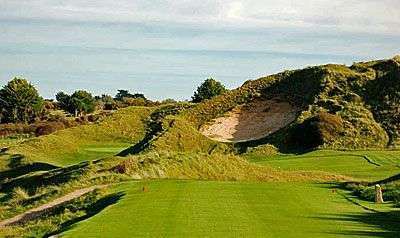
Two English courses make it into the Top 30 for the first time. The James Braid-designed Church course at St Enodoc in Cornwall climbs a creditable nine places to number 28 and the Sir Guy Campbell and Major C K Hutchison co-designed layout at West Sussex in Pulborough leaps up eleven spots to number 30. Don’t be at all surprised if these two 18-hole tracks also make a first appearance in our World Top 100 when it’s published next month.

Opened in 2002 and recently remodelled by Martin Hawtree, the Trump International Golf Links at Doonbeg soars an incredible thirty five places to number 41 in our revised Top 100, which is actually the same position it held in the 2006 edition of our GB& I chart. Our correspondent Fergal O’Leary visited the course a couple of months ago and he had nothing but praise for what he found: “I wholeheartedly encourage everybody to visit Trump Doonbeg… the playing conditions, the fun and the beauty are all a sight to behold. Doonbeg is once again ready for the world to arrive.”

A decade ago, the West course at Wentworth occupied a position just outside the Top 20 in these rankings but it took a mighty tumble when we last reappraised the chart two years ago, falling out of the Top 50. After publishing an article back in March entitled The rise and fall of the troubled Burma Road, we think a climb of eight positions in the new chart to number 46 indicates the latest round of renovation work (involving the costly installation of a sub-air system on new bent grass greens) has gone some way toward rekindling affections for this much maligned Harry Colt track.
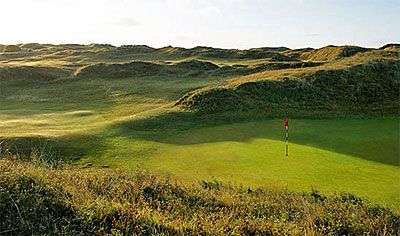
Also making an impressive leap in the listings (up fourteen to 50), the course at The Island in Donabate, near Dublin, has benefitted from a raft of course improvements in the last few years. Under the direction of course superintendent David Edmonston, the club has returned native links grasses to the playing surfaces, improved its rough management and removed unsightly areas of seabuckthorn to open out vistas over the Malahide estuary. Architect Martin Ebert has also advised on the redesign of a number of fairway bunkers, using a technique called “marram slabbing”.
In the lower half of the new Top 100, the following five courses make substantial positive moves.
Renaissance Club, where the Senior Scottish Open was held this year on the European Senior Tour, rises twelve places to number 55. This Tom Doak design entered the GB&I chart in 2014 at number 84 then advanced to number 67 in 2016 so it’s following a clear path of upward progression. The club doesn’t exactly seek out casual golfers but it does offer a “One Time Experience” which many consider worth the hefty green fee in order to sample the playing privileges for a day at this private members’ club.
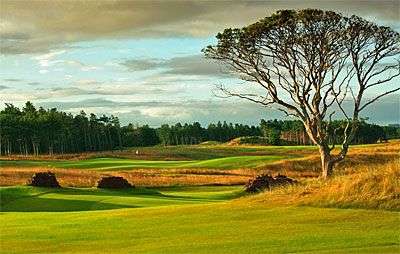
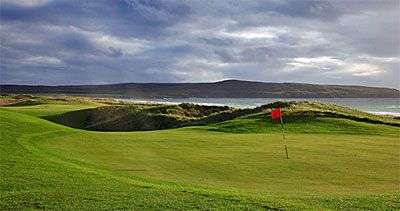
Many were concerned when The Machrie closed for extensive remodelling a while back. Essentially, those who had previously played this old Willie Campbell layout on the Isle of Islay were probably thinking this late 19th century layout would lose much of its old-fashioned charm with a modern makeover. Well, we visited just three months ago and were mightily relieved to discover that architect DJ Russell has not just replaced what was there before, he’s vastly improved the links layout with a sympathetic new routing, completely revitalising the old course. Once the new hotel is finished next year, Machrie (up seventeen to number 56) should become a really formidable 21st century links golf destination.
Broadstone in Dorset progresses thirteen positions to number 73. First set out by Tom Dunn in 1898, the course has been modified at various times by the likes of Willie Park Jnr, Herbert Fowler and Harry Colt so there’s never been any doubt about its architectural integrity. Ed Battye, a regular Top 100 reviewer and founder of the Golf Empire website, had this to say about the course six months ago: “Broadstone is a wonderful golf course on a truly amazing property in an area of the country that is quickly establishing itself as a region for top class golf. Traversing some superb golfing terrain it is an idyllic place to play golf with a spaciousness that few other courses can boast.”

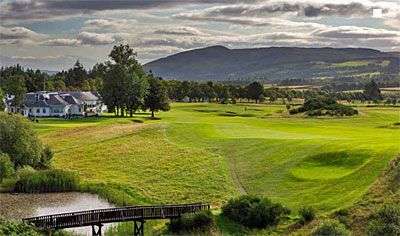
The Queen's course at Gleneagles rockets a sensational 24 places up to number 74. We invited four Scottish members from the ranking panel of a leading golf magazine to assist with our biennial chart revision north of the border this year and it was largely their collective opinion that made us realise we’ve been undervaluing this lovely old track for some time now. As a recent reviewer said: “it’s possible, and most likely probably, that the Queen’s at Gleneagles is the best golf course under 6,000 yards. Not just in Scotland, but anywhere” – and we’re not going to argue against that assertion.
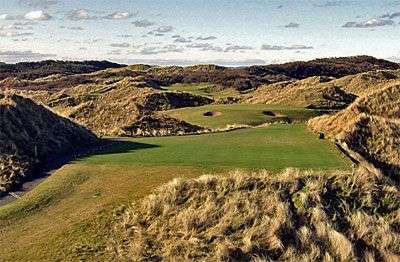
The Strand course at Portstewart makes an impressive 17-place upward move to number 76. Numerous course improvements were implemented ahead of the 2017 Irish Open, won by Jon Rahm. New tees have been added and one of the most dramatic is on the 8th hole (“Portnahapple”), which is set on the highest point of the course, from where you can see the adjacent Riverside course and the flowing waters of the River Bann. The club has also installed its own “Big Nellie” bunker on the short par five 14th (“The Hill”), where the tee has been offset to create a sweeping dogleg and an extra 30 yards of length. The back nine cannot compete with the drama of the stellar front nine, but these changes have markedly improved this impressive links course.
There are four new entries in our Britain and Ireland Top 100.
The first of these is Portmarnock Hotel & Golf Links (new at number 90), located less than half an hour’s drive to the north of Dublin City centre on the ancestral family estate of the Jameson whiskey family. A mid-1990s co-design from Bernhard Langer and Stan Eby, the course and attached hotel were acquired by new owners in 2014 and a significant level of investment has been made to upgrade the visitor experience both on and off the course here. Links Superintendent Fintan Brennan has overseen the revetting of bunkers, the introduction of turf paths, the implementation of a rough management programme and the return of putting surfaces to fescue dominated grasses.
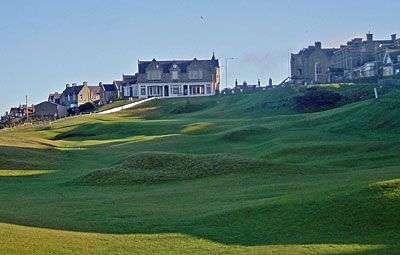
Two places behind, at number 92, the Old course at Moray in Lossiemouth makes its debut in the GB&I hundred. The Moray Firth area is fast becoming something of a golfing hotspot, what with the championship courses at Royal Dornoch, Castle Stuart and The Nairn all within easy reach of Inverness airport. The 36-hole golf club at Moray lies just a little further away from this triumvirate, between the RAF Lossiemouth base and the Covesea Skerries Lighthouse, so it’s often overlooked by visiting golfers, which is a big mistake. Truth be told, the unpretentious Old and New courses at Moray offer as good a day’s play out on the links as you might find anywhere in Scotland.
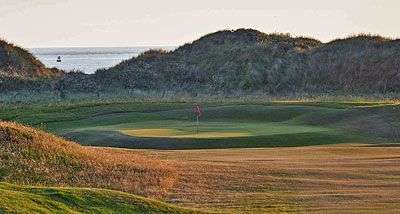
New at number 99, the course at West Lancashire dates back to 1873, when the club was founded. A number of prominent architects have made revisions to the layout over the last 144 years, including Ken Cotton and Fred Hawtree in the early 1960s, but it’s the club’s recent appointment of Course Manager Stuart Hogg that has elevated the layout to its new found position among the elite of Britain and Ireland. Stuart’s a firm advocate of the firm and fast game and his staff have carried out lots of little projects around the course to emphasise its link credentials, from reintroducing natural swales around greensites to refurbishing many of the revetted bunkers.
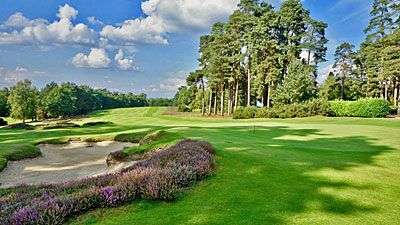
The final new entry arrives at number 100 and it’s Liphook, which is currently the number 1 course in Hampshire and the number 45 in England. Strictly speaking, it’s actually a re-entry into these rankings as it featured in our inaugural chart back in 2004 at #96 before making another brief appearance at #94 in 2010. First opened for play as an 18-hole layout in 1923, the course was designed by Arthur Croome, a partner in the architectural firm of Fowler, Abercromby, Simpson and Croome. It’s a charming heathland layout that’s much appreciated by golfing connoisseurs who don’t mind travelling the extra mile to savour the delights of such a delightful, understated course.
We welcome feedback when we produce new rankings so please feel free to share your opinion of our new Top 100 for Britain & Ireland. Is there a top track that we’ve overlooked or is there a layout included that really has no business being there? Maybe a certain course is resting on its laurels or there’s one that should be higher in the standings? Whatever your view, click the “Respond to this article” link at the bottom of the page to let us know what you’re thinking.
Rank/
To view the complete detailed list of the 2018 Britain & Ireland Top 100 click the link.
Jim McCann
Editor
Top 100 Golf Courses
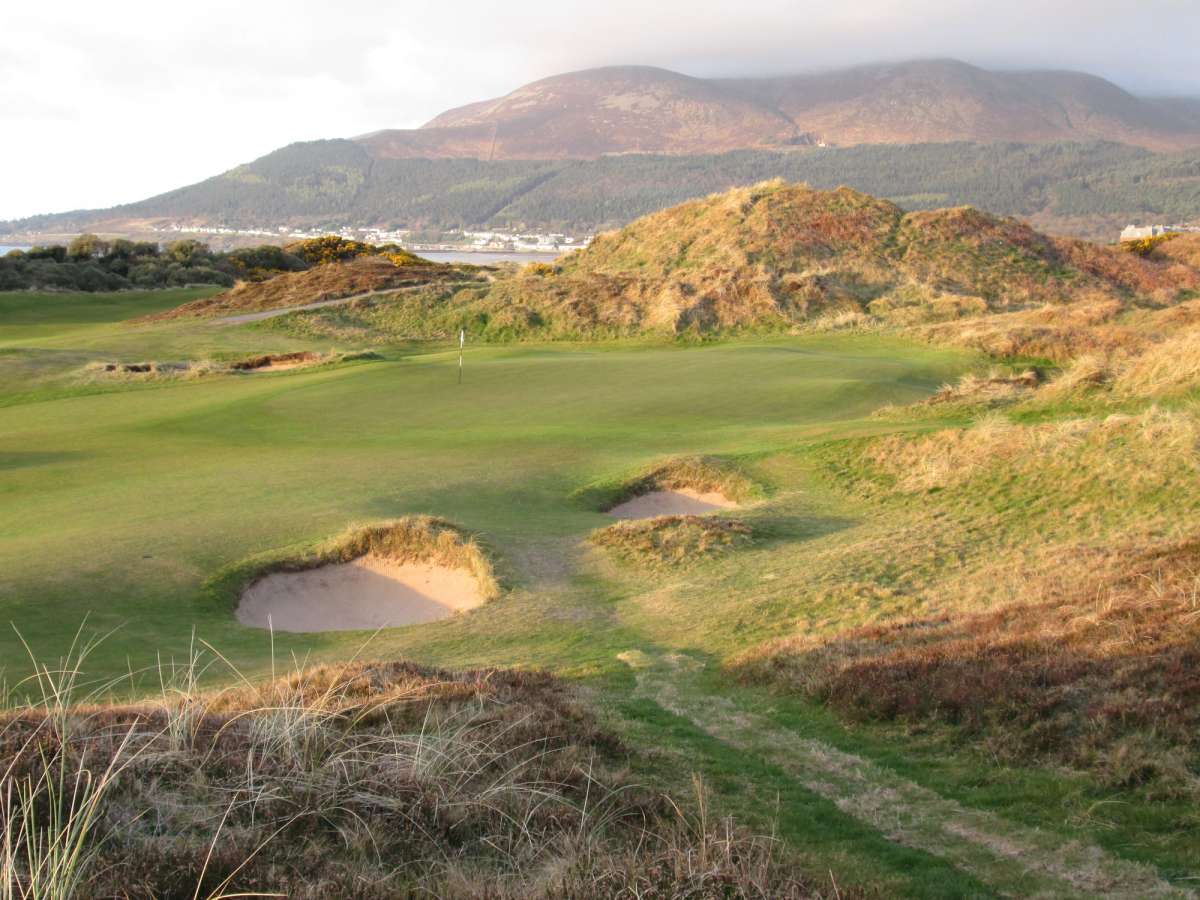
Top 100 Courses of Britain & Ireland 2022 In the last few weeks we’ve published ranking charts for Northern Ireland, Wales, England, Ireland and Scotland so it’s now time to extract the best 100 of those 380 courses and present them in a collated fashion within our Britain & Ireland Top 100 listings. In this revision, 32 layouts move up, 50 drop down, 13 stay in the same place and 5 are new entries or re-entries. Royal County Down One of the non-movers is the Championship course at Royal County Down in Newcastle which has been our No.1 for the British Isles since 2006. The layout began as a 9-hole track back in 1889 and its development has seen design input from iconic architects such as Old Tom Morris, Harry Vardon and Harry Colt. In the past few years, Martin Ebert has made judicious alterations to both the Championship and Annesley courses at the club. Review comments from last year include: “from start to finish the course doesn’t let up… not a single bad hole out there… without a doubt the best golf experience in the world… there are some classic links holes and the backdrop of the mountains of Mourne is spectacular… a few of the par threes are post cards from heaven… conditions are immaculate, greens are superb.” North Berwick (West) Climbing three places from number 13, the West course at North Berwick enters the elite Top 10 strata for the first time, having slowly risen every two years in the rankings from #41 in 2004. A golf course has operated here since the club was founded in 1832 (though the game was being played on the links as far back as 1672) and the current layout is attributed to Ben Sayers Jnr. and C.K. Hutchison who made use of additional land in the early 1930s. Review remarks this year include: “My main takeaway from playing golf here was just how much fun it was… it isn’t just a brutal slog lined by punitive rough and heavy bunkering… it is a varied challenge of strategy and skill that keeps you thoroughly engaged… somewhere I suppose you would never tire of playing… for me it’s what golf is all about.” St Patrick’s The highest placed of five newcomers to the chart is the St Patrick’s course at Rosapenna in Donegal which enters at number 14. Located a few kilometres along the coast from the resort’s Sandyhills and Old Tom Morris layouts, St Patrick’s is Tom Doak’s first foray into golf design in the Emerald Isle, where he was aided and abetted by a small team of associates who’ve done a remarkable job of transforming what was formerly a failed 36-hole project into a world-class 18-hole links. Our well-travelled correspondent Fergal O’Leary visited the new course last year just before it officially opened, calling it “a dream come true for Tom Doak, for the Rosapenna resort and for the golfers of Ireland… golfers will be left speechless by the sheer scale of the course, the width of the fairways, shaping of greens and a setting that will take your breath away.” Dumbarnie The second new entry in the standings is the latest addition to the golf scene in Fife at Dumbarnie Links on Largo Bay, arriving at number 40. Already a multiple award winner soon after it opened in 2020, the course quickly established its championship-hosting credentials by staging the Women’s Scottish Open last year. Designed by Clive Clark, the course has garnered nothing but positive comments since its unveiling. “How wonderful this piece of land is to experience,” wrote a reviewer just last month. “It photographs well but it is when you take it in with your own eyes that you truly appreciate the peaceful and majestic aura it exudes.” Another poster said: “like all courses that begin with a blank canvas, the variety offered up is very good… it’s a nicely balanced collection of strong holes that offers up the instant sugar rush that travelling golfers crave.” Further down the rankings, four English courses make significant improvements on their position. Rye The Old course at Rye in East Sussex advances ten spots to number 45. Host venue for the President’s Putter which has been played every January since 1920 by members of the Oxford & Cambridge Golfing Society, the course was originally laid out by Harry Colt, with subsequent modifications made between the wars made by Tom Simpson and Guy Campbell. Comments in reviews last year included: “Rye summed up why I love the Top 100 quest – history, drama, great views and lovely people… if the course was more open to visitors I suspect it would be way higher in the rankings… they are still using the same understated ‘temporary club house’ from the 1920s and it does very much feel like you are stepping back in time.” Hankley Common The ranking fortunes of the course at Hankley Common outside Farnham have fluctuated severely over the years. In the second revision of this chart in 2008, it rose to #51 from #76 before falling back to #70 two years later. Since then, it’s gone out as far as #82 in 2010 then come back in to a best placed #50 in 2016 – the course’s rise of 12 places now to #58 is just the latest in a chart roller coaster ride that might well continue for some time to come. Founded in 1897, the club started out with a 9-hole layout which James Braid doubled in size in 1922. Fourteen years later, Harry Colt remodelled the course into the one that’s still in play today. Both the English Men’s Amateur (2019) and the Men’s Home Internationals (2021) were held at Hankley Common in recent years so the club’s ability to host major championships is in no doubt. Prince’s The Shore & Dunes nines at Prince’sin Sandwich also makes good progress after entering the chart for the first time at #99 in 2020. It now soars fourteen places to number 85. Guy Campbell and John Morrison re-built the layout after World War II and Martin Ebert recently completed an upgrade to re-bunker holes, install new tees, create natural sand scrapes and introduce a new sea-facing par three on the Shore loop. Comments over the last 12-month period include: “a wonderfully mature course that provides a true test of all facets of golf… Prince’s is looking outstanding, with impressive bunkering and immaculate conditioning… new tees add length and change angles to increase the options and challenge… the wide run off areas leave you with the option to recover with a putt, chip or pitch… much more fun and thought-provoking than one dimensional rough.” Dropping out to make way for the five new courses are Castletown on the Isle of Man, Moray (Old) in Lossiemouth, Royal Ashdown Forest (Old) in East Sussex, Wentworth (East) in Surrey and Woburn (Marquess) in Buckinghamshire. To view the complete detailed list of our new Top 100 Golf Courses of Britain & Ireland chart click the link. View list here
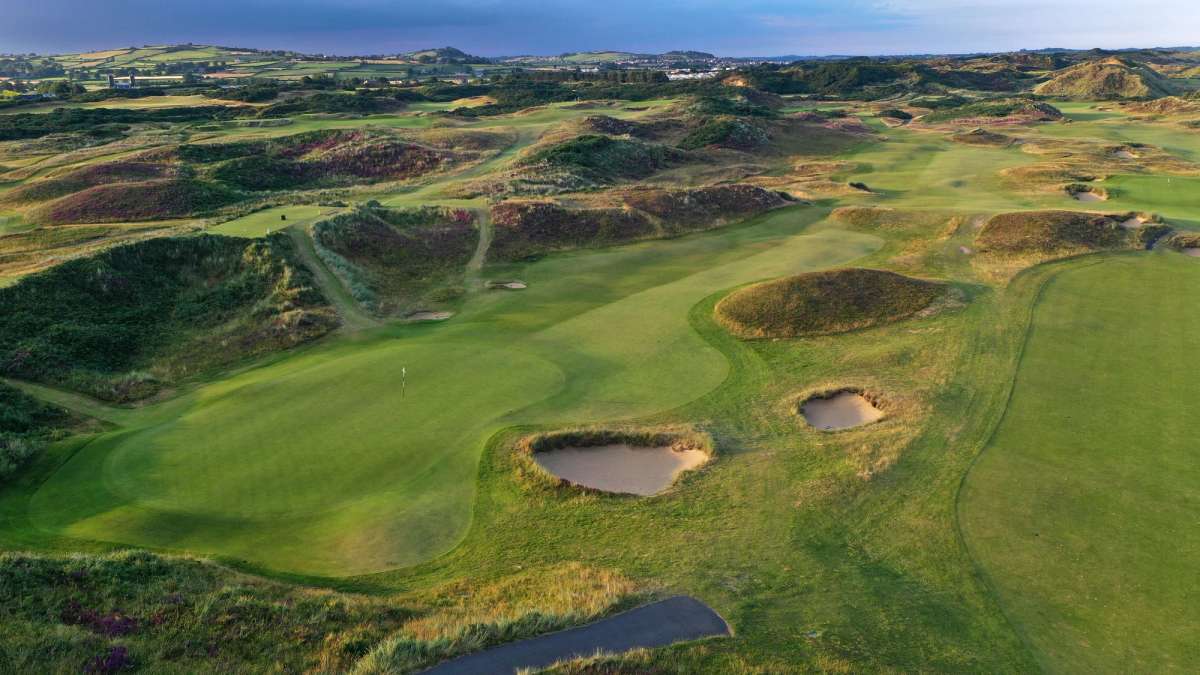
For golfers planning their first serious links trip, the choice often comes down to two destinations: Scotland or Ireland. Both offer some of the finest links courses in the world, dramatic coastal landscapes, historic clubs and enough quality to fill several days without playing the same type of golf twice. Scotland has the strongest claim to being the home of the game, with St Andrews, Muirfield, Carnoustie and Royal Dornoch among its headline acts. Ireland, meanwhile, can counter with Royal County Down, Royal Portrush, Ballybunion, Lahinch and Rosapenna. There is no wrong answer. But if you only have one major links trip to make, which country should come first? The Headline Courses Scotland has an almost unfair collection of famous links. The Old Course at St Andrews remains the obvious pilgrimage, while Muirfield, Turnberry Ailsa, Royal Dornoch and Carnoustie provide four very different reasons to keep travelling beyond the Home of Golf. North Berwick and Kingsbarns add further depth, and there is no shortage of excellent options once you move away from the biggest names. Ireland has an equally compelling collection. Royal County Down’s Championship course currently sits at No.1 in the Top100 GB&I ranking, with Royal Portrush at No.3, Ballybunion, Lahinch and Rosapenna Golf Resort’s St Patrick's Links adding further heavyweight options. That means neither country is short of a bucket-list course. Scotland perhaps has the deeper bench of instantly recognisable names, but Ireland can comfortably match it at the very top. Winner: Scotland The Links Experience The character of the golf is one of the biggest differences between the two destinations. Scotland gives you an extraordinary range of links experiences. The Old Course at St Andrews is steeped in history, Carnoustie has its fearsome reputation, Royal Dornoch delivers a more remote Highland setting, while North Berwick and Turnberry offer their own very different takes on seaside golf. Ireland's great strength is the way its links interact with the landscape. At Royal County Down, the Mountains of Mourne provide a spectacular backdrop. Royal Portrush winds through some of the biggest dunes in the British Isles, while Ballybunion, Lahinch and Rosapenna put the Atlantic firmly into the equation. That doesn't necessarily make Ireland's golf better, but it does give many of its standout courses a particularly strong sense of place. The landscape is part of the experience of playing the course. For golfers looking for variety, Scotland has the edge. For those who want their links golf to feel wild and dramatic, Ireland takes the cake. Winner: Ireland Building The Perfect Itinerary For the travelling golfer, the quality of individual courses is only half the equation. The other question is how easily you can string them together. This is one of Scotland's greatest strengths. A St Andrews trip can be built around the Old Course and supplemented by the six other courses at the St Andrews Links complex (New, Jubilee, Castle, Eden, Balgove, and Strathtyrum), alongside Kingsbarns Golf Links and Crail Golfing Society. An East Lothian trip can combine Muirfield with North Berwick, Gullane and Dunbar. Further west, the Ayrshire coast offers Turnberry, Royal Troon, Prestwick and Western Gailes. Then there is the Highlands, where Royal Dornoch, Castle Stuart and Nairn provide the foundations for another outstanding trip. Ireland has excellent clusters of its own. Dublin and the east coast provide several strong options, while the southwest combines Ballybunion, Lahinch and Waterville. Further north, Royal County Down and Royal Portrush provide the kind of double act that could justify an entire trip. But Scotland gives you more ways to construct the itinerary. You can build a four-day trip around one region or spend a week travelling between some of the game's most famous courses without running out of options. Winner: Scotland The Scenery and Atmosphere Both countries offer more than enough scenery to make the journey worthwhile, but they create very different kinds of golf trips. Scotland has the history and sense of occasion. A day at St Andrews can feel like a pilgrimage, while travelling through East Lothian or Ayrshire takes you between courses that have been part of the game for generations. Ireland's appeal is slightly less about pilgrimage and more about exploration. The best trips often involve following the coastline, travelling between small towns and remote clubs, and arriving at courses where the dunes and sea dominate the view. The golf can feel like part of a wider road trip, with the day's round followed by a trip to the pub to dissect it. Scotland has the stronger sense of golfing history, but Ireland arguably offers the more rounded sense of adventure. Winner: Ireland Value for Money Neither Scotland nor Ireland is a destination for the golfer looking for a bargain-basement holiday. The headline courses can command substantial visitor fees, particularly during the summer, but neither country requires you to play the most expensive courses every day. Scotland's depth is particularly useful, with an enormous range of courses allowing you to mix marquee names with excellent, less expensive links. That depth also means you can build an itinerary around value rather than simply ticking off the most famous names. Ireland competes strongly, particularly if you are prepared to venture beyond its biggest tourist destinations. But Scotland's sheer number of quality options makes it easier to put together a varied trip without paying a premium every day. Winner: Scotland The Verdict For your first links trip, choose Scotland. It has the history, depth, variety and concentration of world-class courses to make almost any itinerary work. The Old Course alone is enough to justify the journey, but Scotland's greatest strength is what comes after it. There are enough outstanding links to turn one trip into several without simply repeating the same experience. Ireland is the destination to choose when you want something a little more adventurous. Its great links are often dramatic, windswept and surrounded by scenery that can be as memorable as the golf itself. Royal County Down, Royal Portrush, Ballybunion, Lahinch and Rosapenna form an extraordinary collection, and the wider experience of travelling around the island only adds to the appeal. So Scotland wins the first-trip argument. But once you've made the journey, Ireland won't be far behind on the list.

Britain and Ireland represent the spiritual heartland of golf. Nowhere else on earth can a golfer experience such density, diversity and sheer quality of courses within easy reach of one another — from the windswept links of the Outer Hebrides to the Surrey heathland belt, from the Antrim coast to the dunes of County Kerry. Eight new entries join the rankings alongside a series of significant climbers, while the summit remains as stable and formidable as ever. The GB&I ranking draws on the assessments of a dedicated panel of well-travelled golf enthusiasts who evaluate courses across all five nations under consistent criteria. The result is the most authoritative cross-border ranking of golf in the British Isles — a resource for every golfer planning a links pilgrimage or seeking out a heathland gem closer to home. See the GB&I Rankings Now The 2026 Rankings The 2026 list spans links masterpieces, heathland classics, parkland gems and modern championship designs, offering something for every golfing traveller regardless of budget, geography or preferred style of play. Eight courses make their debut in this edition, and Scotland leads the new-entry count with three. England adds four fresh names. Ireland contributes a landmark addition in Royal Portrush Valley, while Wales and the Isle of Man both contribute. 2026 GB&I Top 100 at a Glance 🏅 The Immovable Elite The entire top 30 holds its position unchanged from 2025, which is due to the alignment with the world ranking. (European Club has been removed after its sale and new development). Royal County Down (Championship) retains top spot, a position it has occupied since 2006. Harry Colt's masterpiece on the County Down coast remains the benchmark against which all others are measured. St Andrews Links (Old Course) holds second, Muirfield fourth, and Trump Turnberry Ailsa fifth, with Royal Dornoch sixth, completing a top-six that reads like the definitive roll-call of British links golf. Royal Porthcawl (21st) anchors the Welsh presence at the upper end of the table. See the GB&I Rankings Now 📈 The Rising Stars Brora Golf Club Brora's rise signals a renewed appreciation for one of Scotland's most characterful links experiences. James Braid's Sutherland has long been cherished by those who make the pilgrimage north, and the panel's verdict this time around is emphatic. St Andrews Links (New Course) Tom Morris's New Course at St Andrews makes a similarly dramatic leap. Laid out on the same Fife linksland, the New Course offers a subtler but no less rewarding examination of links golf, and its rise reflects growing recognition among the panel of its considerable merits. Pennard Wales's most dramatic mover, Pennard's climb continues a strong upward trajectory for Welsh golf in this ranking. Set atop dramatic cliffs with views across Three Cliffs Bay, James Braid's coastal design delivers a links experience unlike anything else in the principality. The Addington Golf Club The Addington's extraordinary heath-and-heather landscape and inventive routing through woodland have always inspired devotion among connoisseurs of the inland game; the panel now recognises it more prominently within the national context. Formby Golf Club Formby's leap into the top 40 is particularly noteworthy. The Merseyside club, now sits among the top tier of English links venues. West Lancashire's rise reinforces the quality of the Lancashire coast corridor, which already features Royal Birkdale, Royal Lytham & St Annes, Hillside, Southport & Ainsdale and Wallasey. Carne Golf Links (Wild Atlantic Dunes) Three Irish courses make meaningful advances. Portstewart's Strand Course, County Louth, and Carne Golf Links on the wild Atlantic coast of County Mayo, shaped into the dunes by Eddie Hackett. See the GB&I Rankings Now 🆕 New Entries Eight courses make their debut in the 2026 GB&I Top 100: Cabot Highlands Old Petty (Scotland, #51) — the second Cabot Highlands layout to feature in the rankings, joining Castle Stuart in the list and continuing the rapid rise of this Inverness-shire resort as a world-class golfing destination. Elie (Scotland, #54) — one of the most characterful and historic clubs in Scotland, on the East Neuk of Fife. The course's unique features — including a periscope on the first tee — have made it beloved by generations of Scottish golfers. Trump International Scotland (New Course) (Scotland, #63) — the second Trump Dunes layout at Balmedie, joining the Old Course (25th), extends the Aberdeenshire complex's representation in the national rankings. Royal Portrush (Valley) (Ireland, #81) — the second course at Royal Portrush Golf Club, after new routing and holes from M&E. Prince's Golf Club (Dunes & Himalayas) (England, #82) — the Sandwich Bay classic returns to the rankings in a strong position. Guy Campbell and John Morrison rebuilt the layout after World War II, and Martin Ebert's recent upgrade, adding new tees, restoring natural sand scrapes and creating a new sea-facing par-three. Aldeburgh Golf Club (Championship) (England, #96) — the Suffolk links, founded in 1884 with design contributions from John Thompson, makes its debut in the national rankings after a major overhaul. Hayling Golf Club (England, #97) — the Hampshire links on Hayling Island, shaped in part by Tom Simpson, enters the rankings for the first time. Royal Ashdown Forest Golf Club (Old Course) (England, #98) — one of the most unusual and celebrated inland courses in England, Royal Ashdown is unique for having no bunkers. Beau Desert Golf Club (England, #100) — the Staffordshire heathland gem, founded in 1921 by Herbert Fowler, completes the expanded century of courses. See the GB&I Rankings Now Best Golf Courses by Nation 🗺️ England — 47 Courses England accounts for nearly half the rankings — a reflection of both the volume and variety of world-class golf across the country. The Surrey and Berkshire heathland belt contributes a disproportionate share of the upper-table entries: Sunningdale Old (8th) and New (13th), Swinley Forest (18th), St George's Hill (27th), West Sussex (31st), Walton Heath Old (38th) and Hollinwell (41st) all feature within the top half. The links of Lancashire, Kent and East Anglia provide a contrasting but equally compelling strand of the English golfing story. Four new entries — Aldeburgh, Hayling, Royal Ashdown Forest and Beau Desert — expand the list's geographic footprint into Suffolk, Hampshire, East Sussex and Staffordshire, demonstrating that England's golfing heritage extends well beyond its most celebrated corridors. Scotland — 30 Courses Scotland's 30 entries include five of the top six — a statistical dominance that reflects the country's unique concentration of championship links. St Andrews (2nd and 69th), Muirfield (4th), Turnberry Ailsa (5th) and Royal Dornoch (6th) anchor the Scottish contingent at the summit, while Carnoustie (11th), North Berwick (14th), Kingsbarns (15th), Ardfin (16th) and Cabot Highlands Castle Stuart (19th) complete a formidable top-20 presence. Ireland — 18 Courses Eighteen Irish courses feature across the island, with 11 of them sitting in the top 52 — a density of quality that underscores Ireland's claim to be the world's premier links destination. Royal County Down (1st) and Royal Portrush Dunluce (3rd) lead the charge from Northern Ireland, while Ballybunion Old (9th), Lahinch Old (10th), Rosapenna St Patrick's (12th) and Portmarnock (24th) anchor the Republic's contribution at the highest level. Wales — 4 Courses Wales holds four positions in the ranking, led by Royal Porthcawl. Pennard's rise is the Welsh highlight of 2026, with Royal St David's (77th) and Aberdovey (90th) completing the principality's quartet. The Welsh presence reflects a small but fiercely competitive national golfing scene whose best courses can match many of their more celebrated neighbours. Isle of Man — 1 Course Castletown enters the rankings at 93rd, extending the list's geographic scope to include what is perhaps the most underrated links destination in the British Isles. Designed on Langness Peninsula with views across Castletown Bay, the course offers a genuine links experience that few golfers beyond the island's shores have yet discovered. See the GB&I Rankings Now What the Rankings Tell Us 🔍 Scotland's Mid-Table Revolution Brora and the New Course at St Andrews both making gains along with three new Scottish entries arriving suggest that the expanded panel membership has brought fresh perspectives to the evaluation of Caledonian golf, reaching beyond the famous Fife and Ayrshire corridors into the Highlands and East Neuk. England's Heathland Heritage Runs Deep With 47 entries, England dominates the ranking numerically. But the nature of the English contribution is as interesting as the volume. The heathland courses of the Surrey and Berkshire sandbelt account for a remarkable cluster of entries in the top 40. Royal Ashdown Forest's debut as a bunkerless inland classic adds yet another dimension to the story of English golf design. The four new English entries span different eras and geographies, from the ancient links of Hayling Island to the heathland of Beau Desert. Welsh Golf Reaching New Heights Four Welsh courses in a combined GB&I Top 100 is genuinely significant. With Aberdovey re-entering the list at 90th, the principality now presents a quartet of genuinely diverse and compelling experiences. See the GB&I Rankings Now See the Full Rankings The complete 2026 GB&I Top 100, with individual course pages, panellist commentary and regional breakdowns, is available at Top100GolfCourses.com. Each of the 100 courses links through to detailed profiles, visitor information, and review collections from thousands of golfers who have experienced them firsthand. For regional perspectives within Britain and Ireland, the site also maintains separate Top 100 rankings for England and Scotland, a Top 50 for Wales, and individual rankings for Ireland and Northern Ireland — together covering nearly 700 distinct golf courses across the five nations. See the GB&I Rankings Now

