Top 100 Golf Courses of Canada
Canada’s Top 100 Golf Courses ranked for 2010/11
22nd July 2010
Top 100 Golf Courses, home of the most informed golf course rankings in the world, is pleased to announce its 2010/11 rankings of the Top 100 Golf Courses of Canada.
The Top 100 website has featured rankings under many categories for a number of years, but we have never before produced a Canadian Top 100 ranking list.
Our rankings take into account every shred of published ranking data, and, additionally, we keep a watchful eye on the golf clubs and listen to hundreds of thousands of visitors that surf the Top 100 website.
The result, we think, is a most informed Canadian Top 100 ranking list but we’d love to know what you think. Ranking golf courses is all about opinions and it’s the honest comments from visitors to the Top 100 website that set us apart from everyone else.
To see our new 2010 list of the Top 100 Golf Courses of Canada, simply click here.
We actively encourage feedback, so if you’d like to contact us please send us an email to info@top100golfcourses.com
Kind regards,
Keith Baxter
Editor
www.top100golfcourses.com
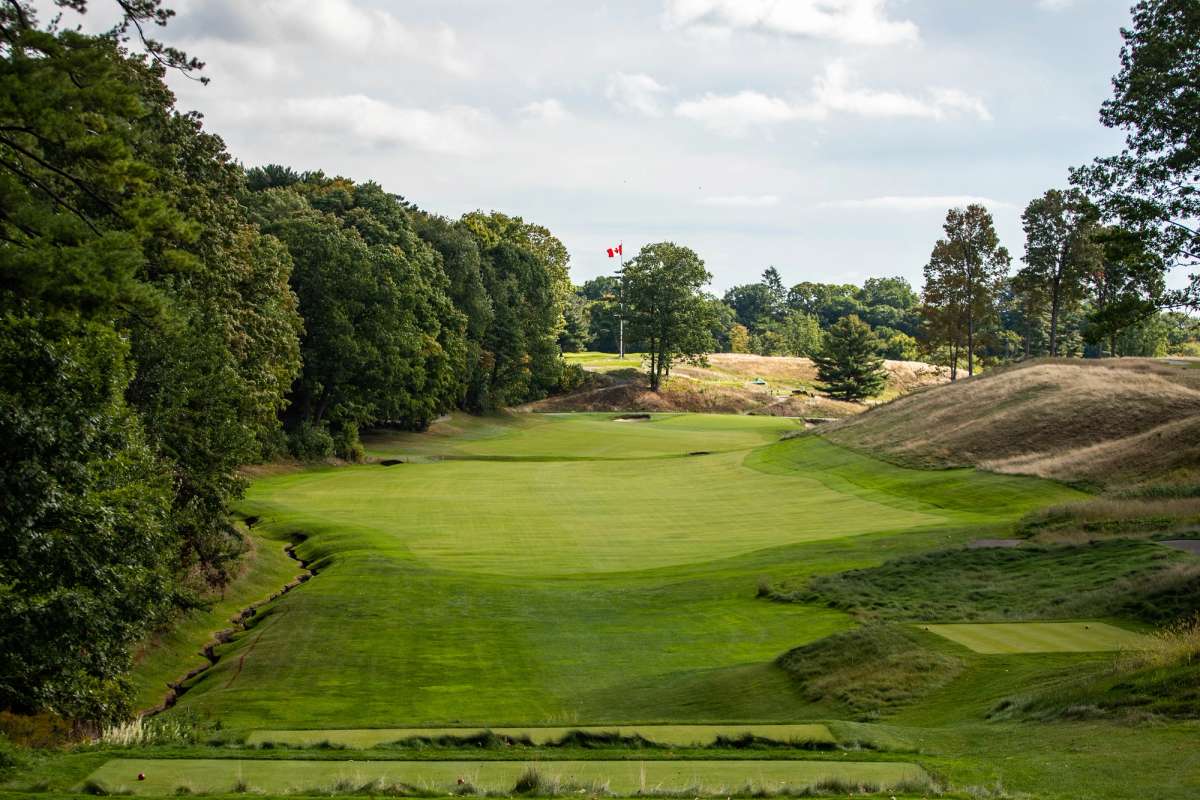
Canada's Best: Why Five Courses Battle for Top Spot Unlike most golfing nations where consensus exists around a clear number one course, Canada presents a fascinating anomaly. Whilst panellists consistently rank Jasper Park Lodge as the country's second-best course, the top spot remains hotly contested amongst five world-class contenders. This unique situation reveals not just the exceptional quality of Canadian golf, but the remarkable architectural diversity that makes the country one of the world's most underrated golf destinations. For serious golf travellers, this debate offers an extraordinary opportunity: access to world-class golf architecture across diverse landscapes at substantially lower costs than comparable international destinations, with the added advantage of no mandatory caddies and favourable exchange rates. Why Canada's Golf Rankings Defy Convention When Golf Club Atlas managing partner Andrew Harvey spoke with Jasper Miners of Top 100 Golf Courses about Canada's golf course rankings, Miners revealed something unprecedented in the golfing world. "There's really no general consensus on the best golf course in Canada," Miners explained during the discussion. "There could pretty much be as many as five number ones." This stands in stark contrast to other major golfing nations. The United States essentially debates between Cypress Point and Pine Valley, whilst Scotland's argument centres around St. Andrews and Muirfield. Canada, however, offers no such clarity amongst its elite courses. When Top 100 Golf Courses reviewed the Top 10 Courses in Canada, Jasper Park Lodge emerges as the consistent number two choice across all demographics. But the top spot remained fractured between St. George's Golf and Country Club, Cabot Cliffs, Banff Springs, Capilano Golf Club, and Toronto Golf Club, with Hamilton Golf and Country Club and Cape Breton Highlands Links also receiving serious consideration. This disparity stems from what Harvey identifies as the "Thompson Five" (Banff, Jasper, Capilano, St. George's, and Highlands Links), the "Harry Colt Two" (Toronto and Hamilton), and the "Cabot Two" (Cliffs and Links). These nine courses represent different eras of golf architecture across vastly different landscapes, making direct comparison exceptionally challenging. Three World-Class Golf Destinations in One Country Canada's ranking controversy reflects its unique position as perhaps the only country offering three distinct styles of elite golf within its borders. Each region presents world-class examples of different architectural philosophies, creating an apples-to-oranges comparison that defies easy resolution. Rocky Mountain Golf Courses represent perhaps the most dramatic golf anywhere in the world. Stanley Thompson's masterpieces at Banff Springs and Jasper Park Lodge showcase the dramatic possibilities of mountain golf. Set against the Canadian Rockies, these courses utilise spectacular elevation changes, dramatic vistas, and strategic routing through mountainous terrain to create unforgettable golf experiences that blend natural grandeur with architectural excellence. Southern Ontario Parkland Golf centres around the Greater Toronto Area, where Harry Colt's influence created two of Canada's finest courses. Toronto Golf Club and Hamilton Golf and Country Club showcase Colt's mastery of rolling terrain and strategic bunkering. St. George's Golf and Country Club, meanwhile, represents what Harvey calls "that American championship golf course" style—a demanding examination that has proven worthy of multiple Canadian Opens. Atlantic Links Golf achieved new prominence with Cabot's arrival in Nova Scotia. Cabot Cliffs and Cabot Links offer modern interpretations of links golf that rival anything in Scotland or Ireland, whilst the classical routing of Cape Breton Highlands Links provides a more traditional links experience through some of the most dramatic coastal terrain in North America. Stanley Thompson Golf Courses: Canada's Golden Age Legacy Understanding Canadian golf's excellence requires appreciating Stanley Thompson's unprecedented influence. Working primarily during the 1920s and 1930s, Thompson created what many consider the finest collection of golf courses by any single architect in any single country. His five Canadian masterpieces—Banff, Jasper, Capilano, St. George's, and Highlands Links—each demonstrate his ability to maximise dramatically different sites. Thompson's genius lay in his restraint and site sensitivity. Rather than imposing a signature style, he allowed each landscape to dictate the golf experience. This philosophy created courses so perfectly suited to their environments that they feel inevitable rather than constructed. Today, Rod Whitman emerges as Thompson's potential successor. The Alberta-born architect has developed a portfolio that increasingly draws comparisons to the master. Harvey suggests Whitman's career trajectory could rival Thompson's legacy: "If they're all as good as they currently are, you kind of go, okay, now there's a conversation to be had." With fifteen to eighteen courses planned or completed, Whitman's body of work may eventually challenge Thompson's supremacy in Canadian golf architecture. Western Canada continues producing exceptional golf course talent, from shapers like Josh McFadden (working with Gil Hanse) to architects like Riley Johns (working with Keith Cutten). This regional concentration of talent suggests something unique about the western Canadian golf experience that inspires deeper architectural understanding. Golf Travel Value: Canada vs The World's Elite Courses Canadian golf's most compelling argument for serious travellers lies not just in quality, but in exceptional value. Whilst a day at Sunningdale or Sandwich now approaches £500 including caddies and amenities, equivalent Canadian experiences cost significantly less with no mandatory additional services. The conversion rate alone makes Canadian golf attractive for international visitors. Where British golf has become prohibitively expensive for many travellers, Canadian courses offer world-class experiences at accessible prices. Harvey notes, "You can see some really great stuff on a budget, even though you're flying overseas." This value proposition extends beyond green fees. Canadian courses rarely require caddies, allowing golfers to experience these architectural masterpieces without the exponential costs associated with other world class venues. The emphasis on walking golf maintains the intended architectural rhythm whilst keeping costs reasonable. Seasonal considerations offer additional opportunities. Unlike the year-round accessibility of warmer climates, Canadian golf's concentrated season creates intense appreciation amongst locals and visiting golfers alike. The brief but glorious Canadian golf season—peaking in July and August—means early planning and booking are essential. Planning Your Canadian Golf Holiday: Regional Strategies Canada's vast geography—75 to 80 hours driving coast to coast—demands strategic planning for golf travellers. Rather than attempting a comprehensive national tour, successful Canadian golf trips focus on specific regions while acknowledging the country's three distinct golf landscapes. Western Canada Golf Tours offer the most dramatic golf experiences, centring on the Rocky Mountain courses of Banff and Jasper. These anchor points allow for exploration of hidden gems throughout Alberta and British Columbia. Rod Whitman's work provides contemporary excellence alongside Thompson's classics. Central Canada Golf Itineraries encompass the Southern Ontario corridor and Montreal region, offering the highest concentration of elite courses. The proximity of St. George's, Toronto, and Hamilton allows for efficient touring of multiple architectural styles within reasonable distances. Atlantic Canada Golf Adventures present the most remote but perhaps most rewarding golf experiences. Cabot's two courses alone justify the journey, whilst Highland Links offers one of golf's most unique experiences through Cape Breton's dramatic coastal landscape. Harvey's assessment proves increasingly relevant: "Every time I go somewhere, it reaffirms that the truly great golf courses here have their place in the discussion internationally." With six courses on Golf Club Atlas's coveted custodian list—tied with Australia and trailing only Scotland, England, and the United States—Canada's golf credentials are beginning to be appreciated by more and more astute travelling golfers. For golf travellers seeking world-class architecture without world-class prices, Canada offers an increasingly compelling proposition. The country's inability to agree on its best course reflects not confusion, but an embarrassment of riches.
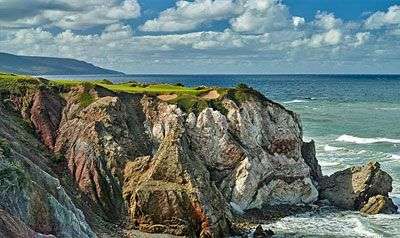
Top 100 Golf Courses of Canada 2019 Welcome to the sixth biennial edition of our Top 100 chart for Canada, which means we’ve been ranking golf courses to the north of the International Boundary with the United States for a decade now. As we also maintain regional listings for ten provinces, there are now a total of 280 Canadian courses featured on our site. That figure represents just a little over 10% of the nation’s golf facilities but we think they comprise the very best golf offerings that you will find. When we last updated our standings for this country, some may have been a bit taken aback by the introduction of Cabot Cliffs as our new number one. We obviously weigh everything up very carefully before catapulting a new course straight into the top spot of any national chart so a subsequent World Top 50 ranking for this design at the end of 2017 justified that significant decision. Cabot Cliffs Our International Correspondent David Davis visited Inverness last year and gave it this endorsement: “what Coore & Crenshaw have done here is nothing less than magnificent. The seaside clifftop property must have been a real challenge to route a course through. The genius of Bill Coore not only managed that but at the same time put together one of the best layouts in the world and one that immediately takes its place among the world’s Top 100 greats.” Cabot Cliffs remains in the number one slot but it’s not the only non-mover within our Top 10 because six other courses also hold onto the same chart position. With two of the remaining three layouts falling one position, it means that another Nova Scotia track, Highlands Links (up two to number 4), is the only course to make a positive move inside our elite top tier. Highlands Links It’s been a few years since Ian Andrew cleared ten acres of trees and carried out a massive bunker restoration on this classic old course and the longer term benefits of this work are now being seen. Parks Canada managed the property up until three years ago, when Ontario-based GolfNorth won the right to operate the course, along with nearby Keltic Lodge. Green fees have risen and some golfers aren’t happy as course conditioning last summer attracted some criticism. In a Canadian Broadcasting Corporation interview Graham Hudson, the General Manager, said staff members were doing their best and the course was improving daily, with time and better weather. Part of the problem was the course’s lengthy history and a worldwide reputation. "I'm not making light of it,” Hudson said, "but people have an expectation that we're going to be like their country club in downtown Toronto. We'll never be. It's not designed to be like that." Shaughnessy Golf & Country Club in Vancouver moves up four positions to number 19, following a drop of nine places last time around. Founded as Shaughnessy Heights Golf Club in 1911, the club had an 18-hole course in play inside two years of its formation. Shaughnessy then relocated to its current site in 1960, engaging the original architect, A.V. Macan, to fashion a new course on land leased from the Musquem Nation. In more recent times, Geoff Cornish and Norman Woods have made changes to the layout and the Canadian Open was last held here in 2011, with Sean O’Hair winning the event after a one-hole playoff. Further down the chart, the Blue course at Laval-sur-le-Lac in Quebec continues to make remarkable progress. It’s now reached the Top 50 with a seven-place leap from number 57, having previously soared thirty-six spots from number 93 in 2017. The first major project of Mike Weir and his design partner Ian Andrew back in 2011, the remodelling of the course entailed renovating twelve holes and re-routing the other six to make better use of the existing topography. The stated aim of the design duo to build challenging green sites and encourage more aggressive play has certainly paid off. Laval-sur-le-Lac Blue course So far, there’s been no mention of any courses in Ontario but a number of 18-hole layouts in that province make substantial double-digit upward moves in the bottom half of our new Top 100. The environmentally sensitive layout at The Georgian Bay Club (up ten to number 57) lies a hundred miles northwest of downtown Toronto, nestled in a 230-acre property in the Niagara Escarpment region. Opened for play in 2004, the course was designed by architect Jason Straka when he was working in partnership alongside Michael Hurdzan and Dana Fry. More than thirty potential course routings were discarded before one was finally chosen, with some holes playing into abandoned quarries to avoid disturbing local habitats. The Georgian Bay Club Another hundred miles further north, the course at Port Carling Golf & Country Club (up twelve to number 74) is an early Tom McBroom design that sits in 270 acres of land within the rugged Canadian Shield of Muskoka. Fairways are routed around a heavily forested landscape that’s also characterized by rocky outcrops, streams and lakes. A change of ownership in 2007 resulted in the architect returning to rebuild the first four holes, refurbish all the bunkers and reconstruct every green with A-4 bent grass. Windermere Golf & Country Club (up twelve to number 87) is located less than half an hour’s drive north of Port Carling on Lake Rosseau and the club celebrates its centenary this year. Nine holes were initially brought into play, followed by another three in 1923, before an additional six holes completed the 18-layout three years later. General Manager Jim MacLeod was appointed in 1972 and during his twenty-one years at the club he installed a series of ponds and drain lines to help improve drainage on the fairways, thus preserving the design intent of the original architect, Stanley Thompson. The highest climber in our new table lies to the south of Toronto, less than ten miles from the Peace Bridge at the east end of Lake Erie, linking Fort Erie with Buffalo in New York. The course at the Cherry Hill Club (up sixteen to number 66) dates back to 1924, two years after the club was founded, when Walter Travis was engaged to design the 18-hole layout. Thankfully, most of his work remains intact. Robbie Robinson upgraded the course before it hosted the Canadian Open in 1972 and Ian Andrew has since made further improvements by installing new putting surface drainage and constructing additional tees. Cherry Hill Club Matt Bosela had this to say in a review he posted a few months ago: “What an interesting golf course. The Travis design demands accuracy off the tee through the strategic placement of bunkers, which are plentiful here… Travis didn’t have the greatest piece of land to work with here, as the course is pretty flat throughout. However, he mixes up the holes well, incorporating many doglegs to encourage bending the ball of the tee.” The highest of four new entries makes an impressive entrance at number 68 and it’s the Gold course at The Ottawa Hunt & Golf Club, positioned close to the capital’s international airport. The Gold course is the club’s original 18-hole layout, designed by Willie Park Jr. in 1921. Tom McBroom upgraded the holes in the early 1990s before Michael Hurdzan completed the reconfiguration and reconstruction of the South and West nines (comprising the Gold course) in 2015, ahead of the Canadian Women’s Open which was held here two years later. The Ottawa Hunt & Golf Club Unfortunately, one of the 18-hole layouts dropping out of our Top 100 table is the very highly-regarded Sagebrush in British Columbia, where Rod Whitman set out the course a decade ago. The club ran into serious financial difficulties as a private facility five years ago and never really recovered from that position. It’s such a pity, as our regular contributor Matt Ward termed it a “rollicking fun adventure – with few lulls – and plenty of grand stages where you’ll find out soon enough if your game is up to the task.” Hopefully, it won’t be too long before golfers are teeing it up here again and the layout subsequently reappearing in the upper echelons of the national rankings. Making a welcome return to the chart at number 80 is the Mt. Lorette layout at the Kananaskis Country Golf Course in Alberta. Devastated by severe flooding six years ago, the Mt. Lorette and Mt. Kidd courses dropped out of our listings whilst they were being rebuilt by Gary Browning. Both have now re-opened for business so expect to see them feature more prominently when we re-appraise our Canadian Top 100 in 2021. Finally, another track that's too new to make the cut this time is Doug Carrick’s Nest at Friday Harbour, on the western shores of Lake Simcoe in Ontario, which debuted in August last year. The centrepiece of a multi-million dollar residential development that also includes a 1,000-berth marina, the course was shaped using around two million cubic metres of earth removed during construction of the harbour, with fairways blending into existing areas of wetlands and forest. Don’t be surprised if this large-scale new build project also makes the next edition of our Canadian chart. To view further details of our latest rankings of the Top 100 Golf Courses of Canada click the link. We've also updated the regional rankings for the ten Canadian Provinces. To view further details of our newly revised Canadian Provincial tables, click the following links: Alberta Top 40 British Columbia Top 60 Manitoba Top 10 New Brunswick Top 5 Newfoundland and Labrador Top 5 Nova Scotia Top 15 Ontario Top 100 Prince Edward Island Top 10 Quebec Top 30 Saskatchewan Top 5 If you have any thoughts to share about our latest national rankings then please use the “Respond to this article” link at the top or bottom of this page. We welcome feedback when we revise our charts so feel free to get in touch if you've got something to to say. Jim McCann Editor Top 100 Golf Courses

Top 100 Golf Courses of Canada 2013 Our 2013 Canadian golf course rankings include 12 new entries July 2013 In terms of visitors to the Top 100 website, Canadians rank third behind UK and US visitors. Given the large number of browsers from the Great White North, we felt we should take a longer and harder look at Canada’s best golf courses for 2013. First we have a new No.1 in the shape of St George’s Golf & Country Club. This fine old Stanley Thompson layout has pushed Highlands Links, another fine old Stanley Thompson course, into second place. Sagebrush moves into the Top 10… about time you may say, and Cabot Links debuts just outside the Top 10… no surprises there for those that have played it, other than to suggest it may have debuted even higher. One new entry that may surprise is the inclusion of Goodwood Golf Club, straight in at No.20. This Martin Ebert design is set out on the glacial moraine landscape to the north of Toronto and was conceived by the late Canadian entrepreneur Gordon Stollery as a private golfing retreat. Very few golfers will walk the Goodwood fairways but those that have teed it up here wax lyrically about the experience. In at No.36, leapfrogging the original Osprey and Redtail nines (now called the Predator course), is the new Ridge layout at Predator Ridge – the result of nine new holes added to a completely remodelled Peregrine nine by architect Doug Carrick. The routing of the Ridge course takes advantage of the site’s elevation changes to locate some lofty tee positions that thrill most golfers. So much has changed in our brand new Canadian Top 100 that it would require a detailed dissertation to describe all the changes. However, one thing worthy of mention is that we have extended our rankings for all ten Canadian Provinces. Our Best in Province rankings are now more detailed than most published ranking lists, but we’ve yet to create a Top 100 for Ontario, although we have managed to create an interesting Top 80. If you would like to help us improve our future Canadian golf course rankings, please get in touch via email to info@top100golfcourses.com - additionally if you know anything about golf in Canada’s remote territories of Yukon, Nunavut and Northwest Territories, please contact us. Scroll down to see our latest 2013 Canadian Top 100 golf course rankings. Keith Baxter Editor-in-Chief www.top100golfcourses.com NR – Not Ranked Golf courses that dropped out of the Canadian Top 100 (previous Top 100 ranking in brackets): (63) Marine Drive, (74) Fairmont Manoir Richelieu, (82) Bell Bay, (84) Angus Glen (South), (88) Bayview, (89) Wooden Sticks, (90) Eagle Ranch, (92) Sunningdale (Thompson), (95) Riverside, (97) Royal Mayfair, (99) Northern Bear, (100) Radium (Springs). Navigate to Canada’s Best In Province pages by clicking on the following links: Alberta – Best In Province Golf Courses British Columbia – Best In Province Golf Courses Manitoba – Best In Province Golf Courses New Brunswick – Best In Province Golf Courses Newfoundland and Labrador – Best In Province Golf Courses Nova Scotia – Best In Province Golf Courses Ontario – Best In Province Golf Courses Prince Edward Island – Best In Province Golf Courses Quebec – Best In Province Golf Courses Saskatchewan – Best In Province Golf Courses
