
Top 50 Golf Courses of New Zealand 2021
It’s just over two years since we published our last Top 50 chart for New Zealand so it’s high time that we reappraised this biennial listing. Thanks largely to strict Kiwi government covid measures which made foreign travel virtually impossible last year, golf within the country is in rather rude health at the moment.
Of course, high-end facilities which rely heavily on overseas visitors for much of their business will have suffered hardship but, in general terms across the nation, there was more than a quarter the usual number of additional rounds played in the second half of last year, which can only be good for the golf industry as a whole.
Increased numbers playing the game brings a new vibrancy to the sport but it hasn’t done anything to shake up many of the chart placements at the top end of the table. There were eight Top 10 non-movers in the 2019 revision of our Kiwi rankings and there are nine this time around.
We don’t alter ranking positions for the sake of “freshening the charts up”. If the data dictates that things should stay largely as they were near the top of the standings then that’s just the way it goes – some might actually see it as a validation of us having the top courses ordered correctly.
And so, the Tom Doak-designed course at the Tara Iti Golf Club outside Mangawhai retains its No. 1 status in our new listings. Along with Cape Kidnappers at #2 and Paraparaumu Beach at #3, Tara Iti occupies a position in our World Top 100 chart, which sets the gold standard globally, giving an indication of just how good the golf product can be in this part of the world.

Tara Iti Golf Club
Review comments for Tara Iti from last year include: “the whole concept is to enjoy your golf, not be beaten up by it, as it should be… a combination of top accommodation and hospitality for guests and top golf with all you dream of… one of not only the best courses, but also best golfing experiences, in the world.”
The only movement inside the Top 10 is at #10 with the arrival of the new 27-hole layout at Royal Auckland and Grange Golf Club which was planned by Chris Cochran of Nicklaus Design and built by Puddicombe Golf. After Royal Auckland and Grange merged in 2015, the stated aim of the new club was to create a golfing campus that was fit for comparison with the best in Australasia.

Royal Auckland and Grange Golf Club Tamaki course
“Project Legacy” has delivered just that, essentially obliterating the two former 18-hole courses to make way for the current set-up, with the Grange and Tamaki nines now considered the 18-hole course of first choice. The greens on all three nines have been constructed with state-of-the art SubAir systems so nobody can accuse the club of skimping on the specification for its new golf complex.
The biggest upward move in the top half of the new chart is made by the course at Manawatu Golf Club in Hokowhitu (up four to #21) which is reckoned to be the oldest golf course in continuous use in the country. Established as a 9-hole track back in 1895, it was redesigned by C.H. Redhead in 1928 then further changes were made by H.G. Babbage in 1955. More than twenty national amateur and professional championships have been contested at Manawatu down the years, with the last of five NZ Opens staged here in 1973.

Manawatu Golf Club
In the bottom half of the table, three courses each climb nine spots in the New Zealand standings.
The coastal course at Mangawhai Golf Club (at #32) in the seaside town of Mangawhai Heads was the last design of Harry Dale, who laid out or redesigned more than sixty courses throughout the North Island during his career, including Miramar, Ohope and Waipu. Bob Charles attended the club’s 40th anniversary celebration dinner in 2019 as guest of honour, after playing a round on the course earlier in the day, naturally.

Mangawhai Golf Club
The 18-hole layout at the Lakes Resort in Pauanui (at #36) is a new millennium offering from the same Canadian firm that built the new Royal Auckland & Grange 27-hole layout. With a dozen New Zealand projects to its name, Puddicombe Golf has operated in the country during the North American winter season since 1989 and the Lakes layout is one of the company’s flagship enterprises.
The Omaha Beach Golf Club course (at #38) started out as a 9-hole affair in 1976 before John Darby added another nine nearly thirty years later. It’s a lovely links-like layout located on the west side of the sandspit that protrudes out from the Tawharanui Peninsula to separate Whangateau Harbour from Omaha Bay. Chris Pitman now consults at the club as it seeks to improve the course’s championship hosting credentials.

Omaha Beach Golf Club
The much-anticipated new 36-hole development at the southern end of the Te Arai property (where Tara Iti is situated) broke ground late last year. The South course is a Coore & Crenshaw production which is set to open in 2022, with the Tom Doak-designed North course following a year later.

Te Arai Links South course
This upcoming pay and play facility has been described as the New Zealand equivalent of “having a couple of public Pebble Beach layouts located alongside a private Cypress Point” so it’s hardly any wonder so many golfers are eagerly looking forward to the imminent unveiling of these two tracks.
We’re also aware of the rebuild work recently carried out on the Lochiel course at Riverside Golf Club in Hamilton by RBT Design and Phil Tataurangi Golf and it’ll be interesting to see if this new track features in the national listings when we next revise the chart two years from now.
Millbrook’s fourth nine (Mill Farm) opens for member play this coming October. The new nine will join up with the third (Coronet) loop to form a new 18-hole course named Coronet which will most likely become the premier layout at the facility.
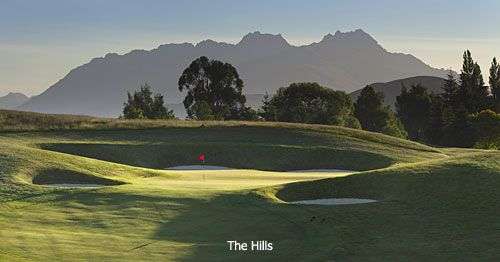
Scottish photographer tees it up Down Under Mark Alexander was commissioned by Golf Tourism New Zealand to shoot some of New Zealand’s top golf courses The recently formed Golf Tourism New Zealand (GTNZ) group has announced the completion of an exciting photography project that has incorporated some of the country’s best golf offerings including the host of this year’s New Zealand Open. Award-winning golf photographer Mark Alexander was commissioned by members of the group to shoot some of New Zealand’s top golf courses including The Hills. The assignment saw the Scottish photographer take in some of the finest tracks on both the North and South islands including New Zealand’s most established layouts. Shooting in December, Alexander visited four clubs including The Hills Golf Club outside of Queenstown; host to this year’s New Zealand Open, and Paraparaumu Beach Golf Club which is widely regarded as one of the best links courses in the southern hemisphere. The stunning inland courses of Wairakei and Manawatu were also captured by the photographer who is based at the Home of Golf. Ryan Brandeburg, executive director of GTNZ, was delighted Alexander could make the trip: “Part of our new golf initiative is to improve print and digital media,” he said. “The chance to offer the services of an internationally renowned photographer like Mark was a great opportunity. When we spoke to the golf courses, everyone saw the benefit of engaging Mark. With our location in the South Pacific, the frequency of a visiting golf photographer of Mark’s caliber is rare.” He continued: “Golf courses are living, breathing assets that constantly change. We jumped at the chance to utilise Mark’s skills to capture some of New Zealand’s best golf courses in the peak of our summer.” The commissioned shoots produced an extensive portfolio of landscape, portrait and panoramic images. Leo Barber, general manager of Paraparaumu Beach Golf Club, said he was thrilled with the results. “Mark has built up a reputation as one of the world’s leading golf course photographers and his work with links courses in particular impressed us, so we were delighted to have the opportunity to host Mark and have his lens bring our course alive with some superb photography.” The resulting images will be used by participating clubs to boost their marketing and promotional efforts both within New Zealand and internationally. Between 2008 and 2012, no fewer than 280,000 golf tourists visited New Zealand, but as Alexander noted, New Zealand isn’t a regular stop-off for travelling golfers – yet. “Photographing these beautiful golf courses was a great privilege,” he said. “I had never been to New Zealand before but the landscape, scenery and fantastic courses made for a memorable trip. It was extremely busy, but I fell in love with the place. Like Scotland, there is something for everyone and I am thrilled the courses that took part in the project are pleased with the final results. I hope my images attract golfers to play these internationally recognised courses as well as experience the best golf New Zealand has to offer.” Manawatu Golf Club, New Zealand’s oldest golf course, also commissioned Alexander. “When we looked through Mark’s previous work, we were really excited about having him photograph our course,” said Michael Williams, Manawatu’s general manager. “The photographs we have received didn’t disappoint and will be really helpful when we refresh our website and promote our club as a place to play for visitors.” Wairakei Golf & Sanctuary, located close to Lake Taupo, is also benefiting from Alexander’s photography. David Park, operations manager at the unique golf venue, says Alexander has produced a set of images that capture the essence of Wairakei. “We are extremely happy with the images Mark has supplied. He has taken shots from different angles and with different lighting from other photographers that we have used before. We found Mark easy to work with and very professional in everything he did for us.” Alexander, who is based in Fife but travels the world photographing golf courses, continues to be in high demand. Last year he became the first commissioned photographer to photograph Prestwick in its 162-year history and produced a set of three consecutive sell-out calendars for the St Andrews Links Trust, culminating in the 2015 special Open Championship edition. He is planning a return visit to New Zealand to carry out more work. To view Alexander’s work, visit www.markalexanderphotography.co.uk

New Zealand has become the epitome of destination golf travel. With Cape Kidnappers, the golf course was so wild and enticing, the ends justified the means. Since it's unveiling, Tom Doak has added Tara Iti and Te Arai North. Coore & Crenshaw have added Te Arai South. A forgotten Alister MacKenzie has been polished in Auckland at Titirangi by Clyde Johnson. Hidden gems, like Waverley and Wairakei, have made Paraparaumu Beach a less arduous journey with delightful stops to be made there and back to and from Auckland. If you're planning a trip to New Zealand, what are the must sees? What can be left for a follow-up trip or missed all together without regret? The Tom Thumb green at Waverley. It's not just the destination golf that's worth coming for in New Zealand. Photo J Miners The North Island - Golf Heaven If you're contemplating a trip to New Zealand it's probably because you have seen photos of Tara Iti, Te Arai or Cape Kidnappers, If so, the answer is easy, North Island. On the North Island, you have the main international airport along with all the World Top 100 golf courses. Tara Iti, Cape Kidnappers and Paraparaumu along with the newly unveiled Te Arai North and South. North of Te Arai is Kauri Cliffs, the former Kiwi poster child for destination golf before Cape Kidnappers. The same company owns both Kauri Cliffs and Cape Kidnappers. Cape Kidnappers near Napier, North Island, New Zealand. Photo G Lisbon In Auckland, there is Dr Alister MacKenzie's Titirangi and the newly polished Royal Auckland and Grange Golf Club. Near Lake Taupo you'll find Jack Nicklaus' Kinloch Club and Waireki. Another must-see golf course is Waverley. Built on black sand, the links is perhaps the best 18-hole, 6000-yard golf course on the planet. Tom Doak's team, in particular Brian Schnieder, put Waverley not the map in the early 2000's. For a golf course that has been established for 100 years, it shows undiscovered gems are waiting to be discovered still today. Top Tier North Island Itinerary If you had one week in New Zealand and were willing to fly internally between plays, you would play Tara Iti, Te Arai North, Te Arai South, Cape Kidnappers and Paraparumu Beach. All five can make legitimate claims to the World Top 100 Rankings. The big three (Tara Iti, Te Arai North, Te Arai South) are also the newest and are an hour and a half north of Auckland. Bolt on Alister MacKenzie's Titirangi, and you've probably seen the best golf in the country and a sensational, rare MacKenzie parkland with a cracking set of greens reminiscent of Pasatiempo. You don't need internal flights, helicopters or a lot of travel to do it. The lodging at Te Arai is world-class, as is the food and amenities. If accompanied by a partner who doesn't golf, a few days in Auckland and at the resort is very well spent. North Island If You Are Willing to Travel If you have time to see golf further afield, it will mean a road trip of 6-8 hours or a flight. Kiwis are quite used to flying short-haul internally as most of the multi-lane roads turn into dual carriageways a few miles outside the major urban centres. The drives are scenic but it's driving - not cruise control road-tripping across a multi-lane freeway in the rurals of America's midwest. If you are happy to drive or fly, Cape Kidnappers and Paraparaumu Beach are within reach. You can drive and play one about one golf course a day... Ultimate North Island Itinerary Day 1 - Land in Auckland and blow the cobwebs out with Royal Auckland and Grange Golf Club. A modern Nicklaus layout will provide a good opportunity to get over jet lag and sort out the kinks before you get to the bucket list stuff. If you miss it or don't have your best, it'll be fine... it is the starter before the main course. Days 2-4 - Te Arai South, Te Arai North and Tara Iti. Start your trip here or come here after a day in Auckland. It is perhaps the world's best stay-and-play resort for the quality of golf and overall experience. It's still new whilst the courses are complete, construction is underway on some magnificent properties around the site. Te Arai South Photo G Lisbon Day 5 - Titirangi - One of Dr Alister MacKenzie's best parkland designs. The set of greens needs to be seen to be believed. The other option is Kauri Cliffs - it's roughly 3 hours north of Auckland and about the same from Te Arai. It is a trek to get there and about 3 hours back to Auckland but to see the once darling of New Zealand golf some feel it's worth it. If you plan to play Cape Kidnappers later, it may be worth checking it out as there are sometimes offers on playing both... Titirangi Golf Club by Alister MacKenzie. Photo J Miners Day 6 - Waverley - The drive from Auckland to Waverely is about 6 hours. Leave early and play an afternoon round. Bring your camera and get some golden hour shots on some of the best golfing terrain in the country. Black sand links golf is ready to be found on your way to another World Top 100 - Paraparaumu Beach. Waverley Golf Club Photo J Miners Day 7 - Paraparaumu Beach is world-class - rough and ready golf on a rectangular piece of land, surrounded by houses and what appears to be in the valley between two mountain ranges. One of the mountains is actually Kapiti Island. If you want to see a bit of civilisation, Wellington is only a bit over an hour away to the South. Paraparaumu Beach Golf Club Photo J Miners Day 8 - If you still have a little gas in the tank, Cape Kidnappers can be visited on the way back home to Auckland. It is the one course you'd probably want to see on the east side of the North Island. If you have a chance to spend time there, the local region is renowned for its wine and culinary delights. My personal recommendation is Craggy Range. Points to Note If you played those courses, you'd pick off the cream of the crop in New Zealand. Played over 8-10 days you'd have enough time for wine tasting in Napier and a day or two rest in some exciting cities or country retreats. Optional courses to add or swap out would be Kinloch Club and Waireki. Unless you added 4-6 more days and were willing to put a few miles on the clock, it's probably best to hit those mentioned... unless you flew internally or by helicopter... which is always an option. New Zealand South Island Golf Courses The South Island is less star-studded than the North Island. The really big names are all on the North but the South may just be the more beautiful of the two. If you do fly south, Queenstown is the destination of choice. Outstandingly beautiful and very touristy, you'll find Millbrook, Jack's Point, The Hills and Arrowtown the cream of the crop here. Jack's Point steals the heart of many but it is Arrowtown that will appeal to the purist. Dubbed the South Island's Waverley, it is a thrill ride over some very enjoyable terrain. If you play Waverley, you'll see more of the same great style of golf here. It's worth coming for if you're already on this side of the world and want to drink great Pinot Noirs from the Central Otago Valley... If you come to New Zealand to play golf, go to the North Island. If you come to New Zealand for food and wine and perhaps play some golf, Queenstown won't disappoint. Getting to New Zealand You're probably going to want to fly. If you're in the USA, you can find direct flights from the east and west coasts. Flights will take between 15 and 17 hours from LA or New York. If you're in Europe, you'll have no choice but to transit through Asia. The major hubs are China, Hong Kong (China), Singapore, Japan, Korea, Malaysia, and Thailand. Getting Around New Zealand Once you're on the ground, you have a few options. First, hire a car and hit the road. The motorways are single-lane for the most part, and dual carriageways or divided highways are rare. Don't book too much and get in a rush - it'll ruin your holiday. On the other hand, internal flights are very common. Most flights are an hour or two max, and regional airports are well connected internally. For example, there are daily flights from Auckland to Wellington, and from there, Paraparaumu Beach is within easy reach. From Wellington, you can access Napier easily and that opens up Cape Kidnappers. Most major centres will link back to Auckland and then you're ready for your homebound journey. Common Misconceptions Debunked Myth: New Zealand is remote and a bit dated. Truth: New Zealand is a modern country. Despite being an island nation with a relatively small population, there is nothing someone who is used to all the creature comforts of the West will pine for here. The y may not have your regular international high-street brands, but a well-established independent business scene provides everything you could ask for. Myth: New Zealand is full of things that will make you ill or kill you. Truth: That may well be true in Australia, there aren't really any real issues from snakes, spiders or crocodiles in New Zealand. Golf In New Zealand Summary New Zealand is home to world-class golf. Tom Doak has made the most of some very unique land at Cape Kidnappers and perhaps the best modern links course at Tara Iti. Even if Tara Iti isn't for you to play, Te Arai South and North are also world-class. Add in Paraparaumu Beach and you have 5 legitimate World Top 100 courses which can all be accessed by pay and play green fees. Tier Two is very good indeed. Alister MacKenzie's Titirangi and the cult classics Waverley and Arrowtown would be next up on my wish list. That's a top 8 that would rival the top 8 in most countries outside America, England, Scotland and Ireland. Arrowtown GC Photo J Miners

Fergal visits New Zealand Fergal closes in on completing the Top 100 Golf Courses of the World – his latest stop was New Zealand As I came within arm’s reach of completing the Top 100 Golf Courses in the World, my travels took me to New Zealand where I experienced the most down to earth hospitality and one of the friendliest nations on earth. With images of Lord of the Rings all around me, I was keen to become Lord of the Greens and not get fooled by too many hobbits… Kauri Cliffs My first ever game in New Zealand was a significantly American experience. The red, white and blue flag proudly blows in the wind outside the clubhouse, and the very polite professional staff working in the pro-shop all herald from the United States. Given that the club’s founder and owner is originally from North Carolina, it all seems to make sense, yet the feeling of being in New Zealand is somewhat lost while listening to somebody with a thick Mid-West accent giving you directions to the practice ground. With an average of just 4,300 rounds per year, this golf club in Kerikeri is among the most isolated of any I've played. Walking this course is not really an option given the distances between certain greens and tees. The club’s strengths are the views, the warm hospitality and the guarantee of a memorable round along the coastline. The back nine takes you away from the water with the 10th through 13th holes located down in the valley all playing in the same direction away from the clubhouse. The anticipation to see the water again is handsomely rewarded when you climb up onto the par three 14th tee box which is the start of a very strong finishing stretch. The 16th hole is a very exciting cape style hole called ‘Temptation’ whereby you can bite off as much as your ego thinks you can chew. The remarkable green-site is on the ocean edge and requires a very precise approach shot. The 17th is the best hole on the property by far and plays as the index 1. The narrow fairway is at a diagonal angle to the tee box and is an impressive sight from the back tee. The hole runs along the ocean and will challenge the best players in the world to hit the green in regulation. The scenery of the Bay of Islands is unquestionably spectacular and will take your breath away at an astounding rate. Kinloch The only Jack Nicklaus signature course in New Zealand, and possibly the most challenging golf course you’ll find in the Southern hemisphere. Right from the first hole, the course offers challenges that average golfers will struggle with. Hundreds of bunkers populate this rippling topography and certain greens are contoured beyond any enjoyable level. I certainly admired the topography and scenery of the course and the challenge that it presents, but can’t help but think about certain elements that could make the course fairer and more walkable. Cape Kidnappers This golf course is as exciting as the name suggests. You’re quickly made aware that the Farm at Cape Kidnappers is fully functional and of utmost importance to the wonderful people who farm the expansive land. Given that the same gentleman with very deep pockets from North Carolina owns Kauri Cliffs and Cape Kidnappers, once you step inside the clubhouse, you immediately feel like you’re in America and surrounded by limitless luxury. Many of the golf staff are American and close to 80% of the 5,100 average annual rounds are played by American tourists. I stood on the first tee and realised that, despite years of reading golf books, I had little to no knowledge of what this course actually looked like – especially from the ground. In almost every golf book and website that previews this course, they all use the same aerial photograph of holes 13-16 which have the dramatic ‘finger fairways’ out on the cape. I told the head professional, “the world doesn’t know what your golf course looks like” and he knew what I meant by that. My mission was to experience and capture the course from the player’s perspective on the ground and really examine what the course had to offer. After all, it is on the shortlist of Doak’s best courses in an already impressive portfolio. After having the fortune of playing the course a few times, it is my humble opinion that the inland holes are significantly more impressive than those finger fairways that grab all the spotlights. In fact, when you play 13-16, you’re probably feeling a bit let down (if that's even possible) because the holes don’t look like anything you expected them to look like. I do recommend allowing a moment for photographs on the back nine, especially from the 15th green and 16th tee box. Doak’s routing across the farm is glorious whereby he created dramatic par threes over deep ravines, stunning par fours with spines running through fairways and blind drives to get your heart racing. The 7th hole was by far my favourite hole, as it presents a plateau fairway followed by a huge dip before swooping back up to the protected raised green. You really don’t want to hit your drive over the plateau, as it will leave you with a tough approach shot up to an unforgiving putting surface. Hitting this green in regulation is a wonderful achievement and the topology will have you taking photographs from almost every angle. Further highlights include the infinity green on number 12 where you naturally feel like you’re hitting into the end of the earth, which further echoes the sentiment of the excellent routing. Doak offers plenty of width throughout the fairways which is very fair given the demands of the approach shots. An exciting element to this course is the shaping around the greens. I encourage visitors to take note of the humps and bumps around the greens which kick the ball mostly in your favour (par three 6th hole is a great example of this as well as the punchbowl 18th green). This course really has the wow factor and I only wish that more people would come to play it as it’s sincerely memorable and appealing to golfers of all levels. Paraparaumu Beach A true links course created in the Golden Age of golf architecture by the legendary Alex Russell (who also designed Royal Melbourne (East), Lake Karrinyup and Yarra Yarra). It’s located about 40 minutes north of the windy city of Wellington. This golf club is a world-renowned layout on the undulating dune land of the Kapiti Coast. Affectionately known as ‘Param’ by the locals (or maybe by the too many visitors that can’t pronounce the name without really concentrating), this golf course will bring you back to reality with a bang. Everything about the club is humble and unpretentious and fits every element of a golfing gem. If you’re looking for a course which will examine how accurate you are from the tee, then you’ve met your match. With just 34 carefully crafted bunkers on the entire course, the challenge from this raw looking links property is magnified by tight tee shots, brutally wiry rough, rock hard bouncy fairways and spectacular mounding around the greens. The gentle undulations around the aprons are second to none. One of Russell’s trademark features is raised putting surfaces which further emphasizes the need for accuracy or fall off the green and be faced with a daunting up and down. This club is welcoming of all players of every demographic, has hosted the New Zealand Open no less than 12 times and has a completely different look and feel to the other courses on my tour to date. At Param, you’ll encounter the highest levels of hospitality from genuinely lovely personnel, down to earth golfers from all walks of life, affordable green fees and even a local punter selling you sausages next to the 10th tee (I suggest you buy one from him). With an annual budget of just $300k for golf course maintenance and four very hard working green-keepers, this experience is as close to Ireland or Scotland that your heart desires. If Cruden Bay had a Kiwi cousin, then this is it. The course is not tremendously long, but it will ask a lot from you, and is golf at its purest. “How did I bogey that hole!?” is a frequently asked question at Param. I enjoyed hitting irons off the tee for strategic placement; I enjoyed the challenge of the design variety in the green complexes and the absolute thrill of playing the legendary 13th hole which ripples its way up to the jaw-dropping raised green. A testament to the design variety is that everybody I chatted with had a different favourite hole. The club has recently co-developed ‘The Russell Society’ made up of representatives from the four Russell courses in the Oceania region, which is a superb way to continue the traditions and share the knowledge of his particular style of architecture. I can honestly say that an afternoon at Paraparaumu Beach Golf Club will be a highlight of your trip. The highest compliment to any golf course is that you’ll walk off the 18th green wanting to go straight back to the 1st tee. Article and photos (except one image, courtesy of Larry Lambrecht) by our US Consultant, Fergal O'Leary, who continues his mission to become the youngest person to play the Top 100 Golf Courses of the World.

