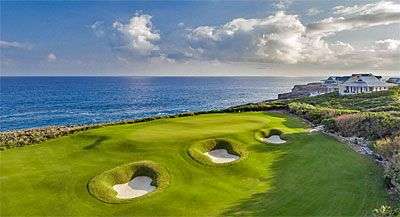
Top 50 Golf Courses of the Caribbean and Atlantic Islands 2017
We rank the fifty best courses within our Caribbean and Atlantic Islands region
We include twenty-five island nations in our Caribbean and Atlantic Islands region. It’s an enormous area of more than a million square miles which – apart from Bermuda – lies southeast of the United States of America, east of Central America and northwest of South America, comprising hundreds of islands, reefs and cays that were governed at various times in the recent past by British, Spanish, French and Dutch conquerors.
Our Top 50 listings are dominated by courses from three countries that occupy almost half the chart positions: Dominican Republic (10), Puerto Rico (8) and Bahamas (6). Fifty percent of the remaining places are filled by layouts from another three countries – Barbados (5), Bermuda (4) and Jamaica (4) – with the final thirteen slots shared between ten different countries, resulting in quite a spread of golf facilities across the region.
There’s lots of good golf to be found in this part of the world and many of the courses are designed by leading architects who were given big budgets to build the best layout possible. Unfortunately, access can be a problem because some private clubs and hotel resorts only allow members/residents the right to play. However, taking our Top 10 as an example, most of the courses are open for public play, proving it is possible to get onto a large proportion of the top tracks – which is what many might think a holiday destination should be all about.
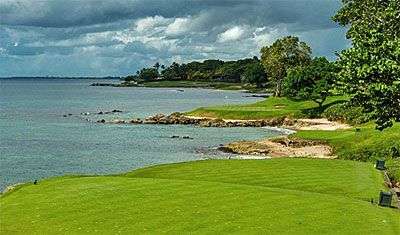
At number 1 in our Caribbean and Atlantic Islands chart, the Teeth of the Dog course at the Casa de Campo Resort in the Dominican Republic regularly features in World Top 100 listings (it currently sits at number 67 in our global rankings) and a recent reviewer was particularly thrilled with its proximity to the shoreline: “as you stand on a couple of holes along the sea, water is crashing immediately behind you, to the side of you and ahead of you directly on the same level you are standing.”
Pete and Alice Dye spent many years in their vacation home by 7th green after the course opened in 1971, revising and reforming little things around the course to improve what is undeniably one of Mr Dye’s finest designs. In truth, there can be little doubt that this layout is well worth its position at the head of our regional listings.
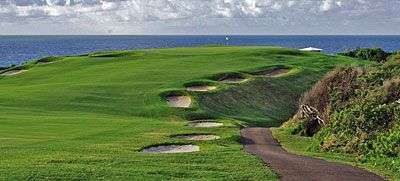
In the runner-up spot at number 2, Mid Ocean Club in Bermuda is a 1921 Charles Blair MacDonald course where the close-season invitational Grand Slam of Golf tournament for the winners of the four Major championships was contested in 2007 and 2008. Robert Trent Jones modified the layout in the early 1950s and Renaissance Golf Design has been consulting at the club since 1997.
At number 5, Abaco Club on Winding Bay in the Bahamas is a new millennium course designed by Tom MacKenzie when he was working with Donald Steel. Tom Doak, in his Confidential Guide to Golf Courses book (Volume III) opined: “it is quite difficult to recreate the feel of a true links course in tropical conditions, but here on the blustery east side of Abaco, they’ve succeeded admirably.” Golfers should expect to find more than the normal resort course type of challenge when playing here – especially if the wind is up.
Royal Westmoreland in Barbados is at number 7 and it’s a Robert Trent Jones Jnr course that was fashioned by the architect in 2005. The front nine (“Quarry”) holes are routed around an old limestone quarry – it’s said an old man was found during construction living here in an abandoned cement mixer – then the back nine (“Ridge”) holes are laid out on higher ground, where several shots have to be played across a rather intimidating canyon.
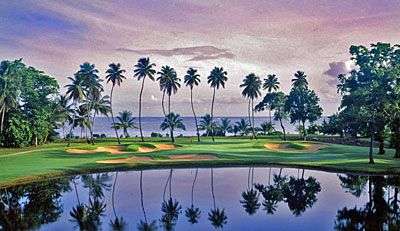
Another Trent Jones track, this time one designed by Robert Trent Jones Snr in the early 1960s, appears at number 8 in our chart and it’s the East course at TPC Dorado Beach in Puerto Rico. Twice host venue for the 2-man World Cup tournament in 1961 (when it was known as the Canada Cup) and in 1994, it was closed and completely refurbished a couple of years ago by… none other than Robert Trent Jones Jnr. Not everyone is enamoured with the nines now being played in reverse order as the former set of strong finishing holes is now encountered half way through the round.
Careful observers will note that the West course at TPC Dorado Beach is not listed in our new Top 50, but that will undoubtedly change next time we re-rank when the West reopens later this year after an extensive renovation.
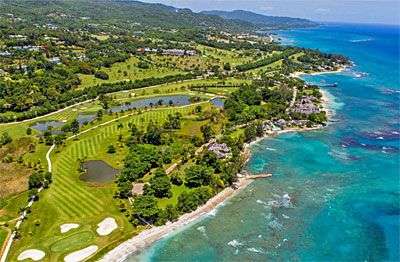
At number 9, Jamaica’s #1 course at The Tryall Club is a late 1950s layout from the underrated architect Ralph Plummer, who designed the course for a consortium of fellow Texan businessmen. Described as “the first course of real character in the Caribbean,” it hosted the Johnnie Walker World Championships from 1991 to 1995, with all five events won by Major-winning golfers. Since renovated by Arthur Hills, the course is still a strong test in the more modern era.
We’re keeping a close eye on a few projects that are still works in progress. There are two new Tom Fazio courses being built, one at Christophe Harbour in St Kitts – the first nine were started some time ago – but this development has been something of a slow burner, and the other at Exuma's Williams Cay in the Bahamas, which is scheduled to open in 2019. Tom Doak’s Tropicalia course at Miches in the Dominican Republic is due to break ground soon as part of a Four Seasons Resort project, and holes are due to be set out a little way back from the coast. Perhaps one of these proposed 18-hole layouts might appear in our next chart update for this region.
Rank/
To view further details of our latest Caribbean and Atlantic Islands Top 50 rankings click the link.
If you’ve any strong opinions about the ranking order of our Caribbean and Atlantic Islands chart then please let us know via the “Respond to this article” link at the top or at the bottom of this page. We’re always happy to hear from anybody who might want to share their views when we publish new regional listings, so by all means get in touch if you have something to say.
Jim McCann
Editor
Top 100 Golf Courses
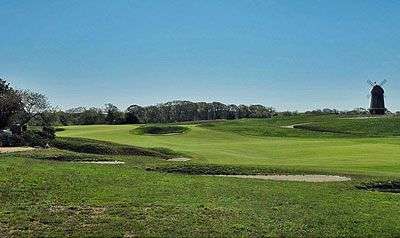
V is for Valley ORIGINAL Everyone knows that the National Golf Links of America is the holy land for template golf architecture, as C.B. Macdonald set out almost all of these holes based on UK precedents, which he would continue to refresh and recycle at courses to come. You need to wait until the second hole for that reality to set in, however, as the opener at NGLA is a Macdonald original. National Golf Links of America 1st hole - image courtesy of Jon Cavalier @LinksGems “Valley” is nearly driveable with modern technology, at 330 yards, but Macdonald’s creative design has maintained its challenge. From the tee, players hit down into the title valley, and the friendly slopes help the first shot of the day back down into the fairway. Bolder individuals can choose to go over the bunker-laden hilltop along the left (mind you, there are more bunkers than you can see. If you don’t see a ball roll up the fairway on the other side, be concerned). Even the resulting short pitch back up to the perched green guarantees nothing. The first hole features what many consider the club’s most turbulent green. Although not quite crowned, poorly-struck putts will still feed off the edges of the green, potentially into the bunkers along the right. Those who take a less-daring route to the right side of the fairway will probably have a blind approach to this roller coaster green. A bunker set in the fairway features a tall backing mound that obscures the uphill approach. OTHER INTERPRETATIONS “Valley” is not nearly as prevalent as other templates in the MacRaynor library and—considering that it’s a Macdonald original and not based on European originals—some may consider whether it merits the “template” status at all. Fortunately for our side of the argument, Macdonald named one other hole “Valley.” No. 8 at the Mid Ocean Club follows a similar formula, but reverses the sides of the fairway. This time the safe route is to go left of a hillside that rolls in from the right, which results in a partially obscured look and a less favorable angle to a green that angles front-right to back-left. The tiger may try to take advantage of a (Mid)ocean breeze to carry the hillside and get the perfect angle to the green, but those who come up short will be provided an awkward lie on the hill, aiming at a daunting green. Although not as topsy-turvy as NGLA’s, the green slants aggressively downhill from back to front...staying below the pin is essential. Two bunkers lurk on the left, very deep as Macdonald and Raynor built the green up using soil from an irrigation pond nearby. Mid Ocean Club 8th hole - image courtesy of John Sabino Subtler, the “Valley” at Seth Raynor’s Blue Mound Golf and Country Club is more akin to NGLA’s standard than many realize. For one, No. 6. is named “Strategy”... and to further confuse matters, the course has a hole named “Valley” at No. 14 (which is not linked to any template). Finally, the geography is not nearly as dramatic as the examples at NGLA and Mid Ocean (but the downward tee shot and upward approach remains). The ideal tee shot is less risky, but the player must have their distance measured. There are three bunkers, evenly distributed, that jut in from the left fairway. The player’s goal is to choose a landing area between two of these (or aim to drive the full 335 yards to the green), which will provide the best angle of approach. The first fairway hazard on the right appears about 200 yards out. Those who truly muff their tee shot and land in the right of this bunker will be fully blind to the green. Those who land in the fairway or in the left portion of the hazard will not be fully blinded, but another deep bunker at the green’s front-right will block their view to certain sections of the green (which is contoured to mimic its inspiration at NGLA). Playing to the right will always create some challenge during your approach; how much challenge is determined by your execution. The green is more geometric in a classic Raynor style, and is surrounded by “moat” bunkers at the rear, left and right. Blue Mound Golf & Country Club 6th hole - image courtesy of Jerry Rossi As “Valley” is not a popular template per se, it is not replicated frequently and—when it is—the architects may simply be following the lay of the land. One example is at a more modern Long Island classic. Like at NGLA, Bill Coore and Ben Crenshaw open Friar’s Head with a drive down into a valley and back up to a green on a plateau. In this case, a drive down the left risks running into the treeline protecting the driveway. Although the angle is not necessarily better than that from the right, it will involve less of a forced carry than the approach from the other side. The waste area on the right of the hole continues up the hill and almost touches the green, creating a muddling effect that confuses the player where the hazard ends and the green begins. Those approaching from the left will not need to be as nervous about the approach, as they have very little sand to carry. Friar's Head 1st hole - image courtesy of Fergal O'Leary MAYBE... MAYBE NOT There is another template that could easily be misconstrued for a “Valley.” The “Knoll” concept is built around playing up to a green perched at the top of a hill, and many examples of this template also involve driving down into a valley before playing up to that green (although a downward tee shot is not necessary for a true Knoll). Consider, for example, No. 13 at Piping Rock Club. This hole features a play down into a valley, and then back up the green atop the Knoll. Unlike a “Valley,” however, there is not necessarily strategy from the tee box when considering a Knoll. Almost all emphasis is on the player’s trusting their distance during the uphill approach, whereas Valleys put at least equal emphasis on placement of the tee shot to determine the difficulty of the approach shot. Of course, sometimes a gut check can be just as telling. How high is the green perched, and how steep is the rise? A Knoll typically rises higher at a more aggressive slope to the green than a “Valley.” Piping Rock Club 13th hole - image courtesy of Jon Cavalier @LinksGems The “gut check” test comes into play with at least one Seth Raynor entry as well. No. 13 at the Country Club of Charleston shows some similar features to a “Valley,” including a drive down from a ridge and an arc of bunkers along the right (which appears like it might have a blinding intent). However, does the green really rise high enough to satisfy the “Valley” requirement? Do the fairway bunkers truly muddle the approach? As we say, “maybe, maybe not.” More damningly, the strategy from the tee is different from a true “Valley.” In this case, the ideal approach angle is from the right, actually encouraging players to hit toward the “blinding” bunkers. Within a typical “Valley,” shooting toward these blinding bunkers would result in a less ideal angle of approach, while a different set of hazards would serve to threaten more aggressive tee shots down the left.
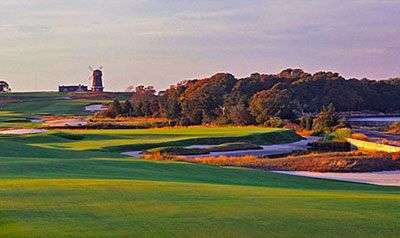
C is for CAPE THE ORIGINAL National Golf Links of America serves as a showcase for template golf, and it’s only fair that Charles Blair Macdonald would contribute his own designs to the mix—rather than draw inspiration from the Scottish standbys. Being so, the No. 14 “Cape” also underwent more tweaking by the architect than the rest of NGLA’s entries. NGLA 14th hole - image courtesy of National Golf Links of America The original played just more than 300 yards, ending with a green surrounded on three sides by water, providing the template’s name. The player also needed to reason against the fairway’s left-to-right slope, which could easily propel a standard fade toward the creek running along the right side. Perhaps recognizing the danger of club technology before it was trendy, Macdonald later extended the hole by moving the green. This fact is important when considering the qualifications for future Capes: Macdonald intended for the second shot to matter just as much as the first. Granted, this lengthening came at the cost of the cape status, at least geographically. The current version plays about 400 yards, featuring a trio of bunkers defending the left and back of the green (water remains along the right). Granted, Macdonald was hardly the first to invoke a diagonal tee shot, as examples such as the famous opener at Machrihanish demonstrate. Therefore C.B.’s codified emphasis on the second shot is all the more important for understanding the accepted meaning of “Cape” within golf architecture. OTHER INTERPRETATIONS More often than not, the average golfer does not think NGLA when they think “Cape.” For being “Grandfather of American Golf,” Macdonald ended up placing his most famous Cape on the British territory of Bermuda. Mid Ocean Club’s No. 5 emphasizes the popular diagonal approach to the fairway, with a perched teebox inviting players to take more aggressive lines. The risk, of course, is hitting the lake that runs along the length of the hole. Even getting across guarantees nothing; an approach from the left side of the fairway will be tough into a front-right-to-back-left green, which slopes toward the front to deposit shots in a long bunker of significant depth. Mid Ocean Club 5th hole - image courtesy of Fergal O'Leary Perhaps the most recognizable Cape—at least to television viewers—is the closing hole at Pebble Beach, where players must reckon with the Pacific Ocean all along the Par 5...as well as trees and bunkers that punish golfers who “chicken out” and stay too far away from that hazard. Another PGA Cape renews Macdonald’s distance concerns every year during the Arnold Palmer Invitational: No. 5 at Bay Hill plays 555 yards from the back tee, and bold players take jaw-dropping lines to get a shorter approach on the crescent-shaped hole. With the green “only” 350 yards from the tee—across a lake, of course—one must wonder how long until someone goes for broke (as Babe Ruth reportedly did at the aforementioned Mid Ocean Cape). Pebble Beach 18th hole - image courtesy of Pebble Beach Water is not essential to a Cape. Yale’s eighth hole, dubbed “Cape,” takes the same approach, but around a deep gully instead of water. The second shot lives up to Macdonald’s prescribed hype. Right is the way to aim; the green actually plays to Redan standards, guiding balls to the middle, and the rightward bunker isn’t that bad. Well, at least compared to the 9 metre-deep bunkers on the left. The Course at Yale 8th hole - image courtesy of John Sabino MAYBE...MAYBE NOT We’ll stir the pot and suggest a Par 3 cannot be a Cape. Pete Dye has several great shorts that tempt the player to attack the pin at the risk of a watery grave—such as No. 17 at Kiawah—but Macdonald’s emphasis on the second shot leaves these holes wanting. While on the topic of iconic holes wrapping around water, No. 13 “Azalea” at Augusta National certainly bears mention, thanks to the Rae’s Creek tributary that flows along the left side. It certainly requires two great shots to get home in two, but it’s questionable whether angle truly figures into the tee shot. Because of the forest along the left, the best tee shot is a question of hitting a longer draw, not taking a more aggressive angle. And, of course, the green is not a “cape” in the sense that it is protected on four sides, not three. We feel Macdonald probably would not have minded this tweak, however. Augusta National 13th hole - image courtesy of The Masters No. 18 at Pebble gets all the “Cape” credit, but there may be a case to be made for No. 8 as well. The tee shot is not a diagonal one, but the uphill, relatively blind nature of the shot means players are taking bigger risks the farther they push. Too long or too right means literally driving off a cliff. And the approach, across a cove and between bunkers, arguably requires enough finesse to qualify as an unconventional Cape. Pebble Beach 8th hole - image courtesy of Pebble Beach Finally, it is worth noting that there is a “Cape” older than any of the holes mentioned thus far: No. 4 at Royal North Devon is named “Cape,” less for any resemblance to Macdonald’s work, but rather a gigantic railway-sleepered bunker shaped just like Batman’s cape. Royal North Devon "Cape" bunker – 16th green "Punch Bowl" in the foreground
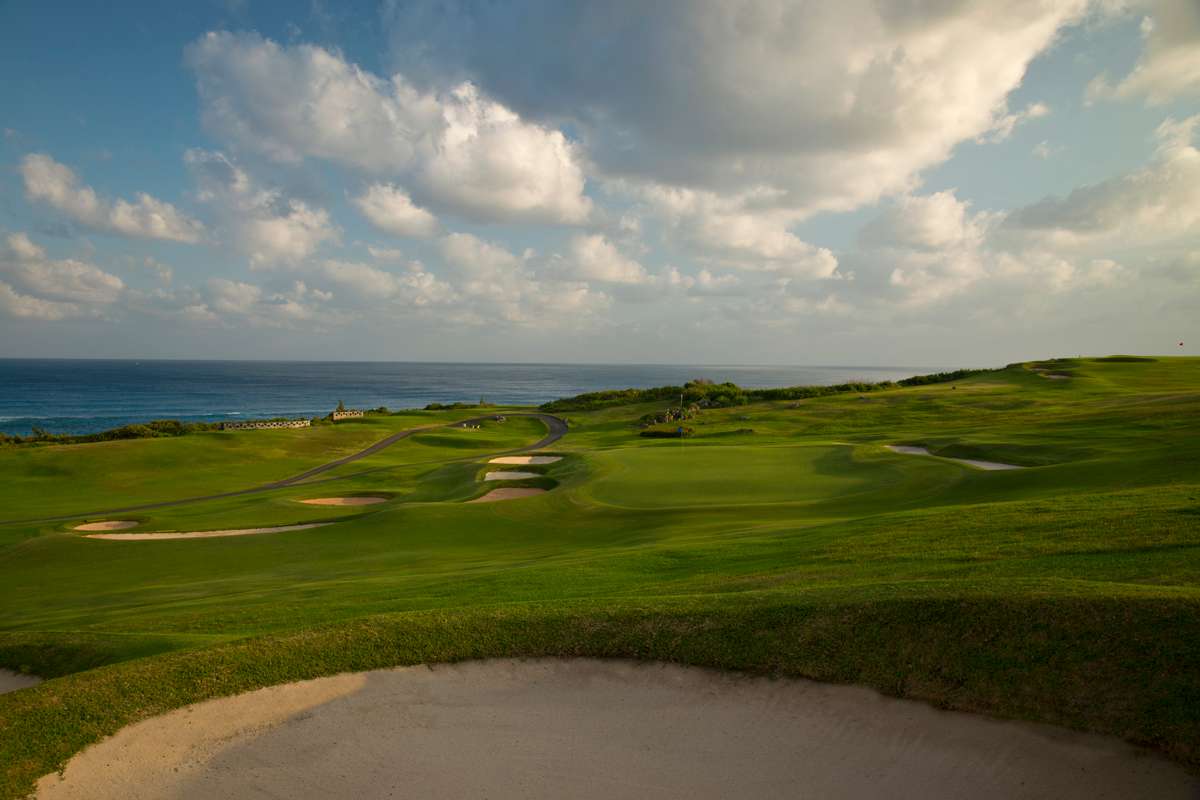
Bermuda delivers everything golfers dream about in a Caribbean holiday with one crucial advantage - it's barely further from New York than Washington DC. This British overseas territory sits alone in the North Atlantic, roughly 650 miles east of North Carolina, offering a collection of golf courses that punch well above their weight on an island just 14 miles long. The geography is perfect for East Coast golfers. From JFK, you're teeing off at Mid Ocean Club by lunchtime the same day. Yet this isn't some cramped resort island - Bermuda's 181 islands connected by bridges create a proper golf destination with six distinct courses, each offering something different from championship tests to charming short courses. Here's what makes Bermuda special for travelling golfers: World-class golf on a compact island - no course is more than 30 minutes from your hotel Year-round playable weather with temperatures rarely below 15°C (60°F) or above 29°C (85°F) Genuine value compared to major city golf, with spectacular courses from £40-£95 ($50-$120) Proper British culture and hospitality in an island setting Bermuda's Championship Golf Courses Mid Ocean Club - The Crown Jewel This CB Macdonald and Seth Raynor masterpiece from 1924 represents pure Golden Age American architecture. Mid Ocean Club sits practically adjacent to the airport, allowing visitors to play one of golf's legendary courses within hours of landing. The course flows across spectacular oceanside terrain with holes like the famous 5th, where the approach plays across a dramatic chasm to a green perched above crashing Atlantic waves. The club welcomes non-members on Monday, Wednesday, and Friday after 9 am, plus morning and afternoon windows on Tuesday and Thursday. No weekend access for visitors, but five days of availability make planning straightforward. Gil Hanse has developed restoration plans that could elevate this course into the world's top 100 when executed, returning it closer to the original Macdonald and Raynor vision after decades of well-intentioned but misguided changes. Port Royal Golf Course Home to the annual Butterfield Bermuda Championship each November, Port Royal showcases everything spectacular about Bermuda golf. The Robert Trent Jones Sr design culminates with the world-famous 16th hole - a 235-yard par-three where the green literally sits on the edge of the earth with nothing but azure Atlantic beyond. But Port Royal isn't just about that one hole. The entire course flows across dramatic island terrain with ocean views, interesting blind tee shots, reachable par-fours, and even historic fort ruins on the 15th. It's proper championship golf that tests the world's best professionals yet remains entirely playable for travelling golfers. Green fees are approximately £95 (€115/$135) for non-residents during weekdays, dropping to £75 (€90/$105) at weekends - one of golf's rare weekend discounts reflecting Bermuda's business-heavy weekday demand. Tucker's Point Club Located adjacent to the Mid Ocean Club, Tucker's Point offers a completely different character. This modern 18-hole course flows across rolling island terrain with spectacular ocean views from multiple holes. It's more accessible than Mid Ocean but maintains the same high conditioning standards you'd expect from a course serving the Rosewood Tucker's Point resort. The design takes advantage of natural elevation changes across the property, creating interesting approach shots and strategic variety. Several holes play directly along the coastline, offering the kind of ocean golf that makes Bermuda special. Green fees are approximately £115 (€140/$160) for resort guests, with slightly higher rates for outside play. Hidden Gems Worth the Journey Turtle Hill Golf Club - Short Course Perfection This extraordinary 18-hole short course winds its way up to Hamilton's lighthouse, offering ocean views from virtually every hole. The longest hole stretches just 230 metres, but don't mistake this for a simple pitch-and-putt. These are meticulously maintained holes that demand precision and creativity. Turtle Hill formerly hosted the World Par-3 Championship, and playing here reveals why. Each hole presents unique challenges within stunning natural amphitheatre settings. You can play from 7 am until 6 pm six days a week for approximately £45 (€55/$65) - exceptional value for one of golf's most charming experiences. The course sits at the foot of the unfortunately defunct Southampton Princess Hotel, but the golf remains spectacular and accessible. Belmont Hills Golf Course Opened in 2002, Belmont Hills serves as Bermuda's true public course where all island divisions disappear for four hours. This 6,000-yard layout offers proper golf for every skill level, with conditioning that rivals the private clubs. The course represents something special on an island historically divided - here, everyone plays together. Eric Anders Lang featured Belmont Hills in one of his documentaries, highlighting how this course serves the entire community. It's not just about the golf (though that's excellent) but about experiencing authentic Bermudian culture and hospitality. Green fees are approximately £65 (€80/$90), making it outstanding value for visitors wanting to play with locals. Ocean View Golf Course Part of the Port Royal complex, Ocean View offers a more accessible companion to the championship course. While details vary, government ownership has maintained good conditioning and reasonable pricing for visitors seeking additional rounds. This course provides another option for golfers staying near the western end of the island, particularly those wanting multiple rounds without travelling the full length of Bermuda. Five Forts Executive Course - St. Regis Luxury Located at the remote eastern end near the airport, Five Forts serves the St. Regis resort with an executive course built into clifftop terrain. The course features a David Leadbetter Golf Academy, making it perfect for golfers wanting professional instruction alongside their island rounds. While smaller than Bermuda's full-length courses, Five Forts offers proper golf with ocean views and resort-level conditioning. Sample Itinerary: 4-Day Bermuda Golf Adventure Day 1 - Arrival and Port Royal Morning: Fly into L.F. Wade International Airport (direct flights from major East Coast cities) Afternoon: Check into Hamilton accommodation, play Port Royal Golf Course Evening: Dinner at Pearl sushi restaurant on Front Street, Hamilton Day 2 - Mid Ocean Club and Tucker's Point Morning: Early tee time at Mid Ocean Club (book Monday, Wednesday, or Friday) Afternoon: Tucker's Point Club for contrasting modern ocean golf Evening: Dark and stormy cocktails at Swizzle Inn Day 3 - Short Course Magic and Exploration Morning: Turtle Hill Golf Club for unique short course experience Afternoon: Crystal Caves tour or beach exploration at Horseshoe Bay Evening: Fine dining at Tom Moore's Tavern or The Waterlot Inn Day 4 - Final Round and Departure Morning: Belmont Hills for an authentic local golf experience Afternoon: Shopping in Hamilton, afternoon tea at your hotel Evening: Departure (or extend for beach days) Seasonal Variations: Hurricane season runs June through November, but actual disruption is rare. Spring and autumn offer perfect conditions with fewer crowds. Bermuda Travel Logistics Getting There and Getting About Transportation: Multiple airlines serve L.F. Wade International directly from major East Coast cities. Flight time from New York is just 90 minutes - shorter than many domestic US flights. From London, expect 7-8 hours with one connection, typically through New York or Boston. Bermuda prohibits rental cars, but this creates part of the island's charm. Rent a "Twizy" - essentially a golf cart with a roll cage that's perfect for island exploration. These electric vehicles charge at stations throughout Bermuda and make travelling between courses fun rather than stressful. Taxis are readily available, and drivers often serve as informal tour guides. Weather and Packing: Bermuda enjoys year-round golf weather with temperatures rarely dropping below 15°C (60°F) in winter or exceeding 30°C (85°F) in summer. Pack layers for morning/evening temperature variations and always include a waterproof jacket. Trade winds provide natural cooling, but humidity can be high from June through September. The island's position in the Atlantic means the weather changes quickly. Pack golf gear for all conditions and consider an extra day's worth of clothing in case flights are delayed by weather. Where to Stay for Bermuda Golf Luxury Resort Options The Rosewood Tucker's Point offers the ultimate golf-centric experience, located adjacent to both Mid Ocean Club and Tucker's Point Club. The resort provides seamless golf arrangements and world-class accommodation. The St. Regis sits at the remote eastern end with the Five Forts Executive Course on-site. Perfect for golfers wanting resort luxury with immediate golf access, though other courses require 20-30 minute drives. Historic Hamilton Hotels Hamilton Princess & Beach Club in the capital provides a central location for exploring the entire island. You're walking distance from restaurants, shopping, and ferry connections to the Royal Naval Dockyard. The hotel offers classic Bermuda elegance with modern amenities. Mid Ocean Club Cottages For the ultimate insider experience, Mid Ocean Club offers 15-20 cottage rooms for members' guests. This provides unparalleled access to the legendary course plus insight into authentic Bermuda golf culture. Value-Conscious Alternatives Grotto Bay Beach Resort near the airport offers excellent value with unique features like the Prospero Cave spa built into natural limestone caves. The property provides proper resort amenities without premium pricing. Consider St. George's area properties for historic charm and reasonable rates, though you'll need transport to western island courses. Bermuda's Culinary Scene Premium Dining Experiences Pearl on Hamilton's Front Street serves exceptional sushi that rivals anywhere globally. The fresh fish arrives daily, and the preparation showcases Bermuda's position as a mid-Atlantic fishing paradise. Tom Moore's Tavern dates to the 1600s and offers fine dining in genuinely historic surroundings. The restaurant specialises in local fish and traditional preparations, with three-course dinners around £55-75 (€65-90/$75-100). The Waterlot Inn at Southampton provides another historic dining option where pirates supposedly once dined. The menu focuses on fresh seafood with international influences, reflecting Bermuda's position as a global crossroads. Local Specialities and Casual Options Barracuda Grill, next to Pearl, offers bistro-style dining with excellent fish preparations and a more casual atmosphere. Perfect for post-golf meals without resort formality. The Swizzle Inn practically demands a visit for an authentic Bermuda atmosphere. Try the island's signature cocktails - Dark 'n' Stormy (Gosling's dark rum, ginger beer, bitters) or Bermuda Swizzle - alongside hearty pub fare. The Frog & Onion Pub at the western end provides proper British pub atmosphere with local character. It's worth the journey for the setting alone, housed in historic buildings with harbour views. Cultural Dining Insights Bermuda maintains strong British traditions, including proper afternoon tea at most hotels. Don't miss this quintessentially colonial experience with finger sandwiches, scones, and full tea service. Fish chowder appears on every menu, often with local sherry peppers and Gosling's rum. Each restaurant prepares it differently, making comparisons part of the cultural experience. Booking Golf in Bermuda Advance Planning Requirements Mid Ocean Club requires the most planning, with visitor access limited to specific days. Book 2-3 months ahead for peak season (April-October), especially for Monday, Wednesday, and Friday slots. Winter months offer more flexibility, but the weather can be variable. Port Royal, as a PGA Tour venue, attracts serious golfers year-round. Book 4-6 weeks ahead for guaranteed preferred times, though same-week availability often exists except during tournament periods. Local Booking Insights Bermuda's business-heavy weekday demand creates interesting pricing dynamics. Weekend golf often costs less than weekday rounds at premier courses - the opposite of most destinations. Consider tee time clustering by geographic area rather than by course preference. Bermuda's compact size makes this efficient, and you'll discover gems you might otherwise miss. Explore Beyond Golf Natural Beauty and Outdoor Activities Horseshoe Bay Beach showcases Bermuda's famous pink sand, created by parrotfish processing coral reefs. The unique colouration and dramatic limestone cliffs provide stunning backdrops for non-golf hours. Crystal Caves offers underground exploration through naturally formed limestone caverns. The hour-long tours reveal spectacular stalactite and stalagmite formations plus underground pools with impossibly clear water. Glass Beach demonstrates Bermuda's maritime history, where centuries of shipwrecks created a coastline where sea glass forms the actual sand. The smooth, colourful fragments create an almost surreal beach experience. The Blue Hole provides excellent swimming and snorkelling in deep, protected water with visibility often exceeding 30 metres. Local operators offer equipment rental and guided tours. Cultural Attractions and Local Experiences The Royal Naval Dockyard preserves Bermuda's strategic maritime importance with museums, shops, and restaurants in restored historic buildings. The complex includes the National Museum and several craft workshops. St. George's, a UNESCO World Heritage site, represents one of the Americas' oldest continuously inhabited English settlements. The narrow lanes and limestone buildings showcase 400 years of architectural evolution. Gosling's Rum operations offer sunset cruises featuring tastings of various rum expressions. While the company doesn't operate full distillery tours, these boat trips provide an island perspective plus insight into Bermuda's signature spirit. Unique Island Experiences Lilly Bermuda allows visitors to create custom perfumes using local and international essences. The process takes 2-3 hours and produces unique fragrances unavailable anywhere else. Bermuda maintains connections to London's Savile Row tailoring tradition. Several island tailors create bespoke clothing, including the famous Bermuda shorts in proper pink or madras patterns. The spa at Grotto Bay Beach Resort operates within Prospero Cave, offering massages and treatments in naturally formed limestone chambers. This unique setting provides complete tranquility away from island bustle. Insider Local Knowledge Common Visitor Mistakes Don't underestimate Bermuda's British formality. Proper dress codes apply everywhere, from golf courses to restaurants. Pack at least one jacket for evening dining, and always bring collared shirts for golf. Avoid scheduling too many activities. Bermuda's charm lies in its relaxed pace - rushing between attractions misses the point entirely. Build in time for spontaneous beach discoveries and unhurried meals. Strategic Planning Wisdom Book accommodations near Hamilton for maximum flexibility in exploring the entire island. While resort properties offer luxury, central locations provide better access to diverse experiences. Consider visiting during shoulder seasons (March-April, November-December) for optimal weather with fewer crowds and better availability at premium courses. Pack reef-safe sunscreen - Bermuda's crystal-clear waters support fragile marine ecosystems, and regular sunscreens can cause environmental damage. Consider shipping golf clubs via FedEx or UPS rather than airline transport. Bermuda's customs processes are straightforward, and arrival timing often works better than coordinating with flights. Cultural Navigation Tips Tipping follows American rather than British standards, typically 18-20% at restaurants and $5-10 per bag for hotel services. Budget Planning and Travel Value Course Fee Reality Check Mid Ocean Club at approximately £225 (€270/$300) represents Bermuda's premium pricing, but compares favorably with elite US courses charging £300-500 ($400-600) for visitor access. Port Royal at £75-95 (€90-115/$105-135) delivers PGA Tour venue quality at municipal course pricing. Few destinations offer this value proposition for championship-calibre golf. Budget-conscious golfers can play excellent courses like Belmont Hills and Turtle Hill for £40-65 (€50-80/$55-90), making Bermuda surprisingly affordable for quality golf experiences. The Bottom Line: Why Bermuda Golf Works Bermuda delivers an impossible combination: world-class golf, genuine British culture, stunning natural beauty, and remarkable accessibility from North America. You can leave New York at breakfast time and be playing championship golf by lunch, all while experiencing a completely different culture and environment. The island's compact size means no wasted time travelling between courses, while the variety ensures every golfer finds their perfect experience. From Mid Ocean Club's Golden Age grandeur to Turtle Hill's charming intimacy, Bermuda offers golf memories that last far beyond the holiday. Most importantly, Bermuda hasn't lost its soul to mass tourism. The island maintains authentic character, genuine hospitality, and cultural traditions that create connections far deeper than typical golf destinations. When you combine exceptional golf with such authentic experiences, you understand why shipwrecked sailors chose to stay permanently over 400 years ago.
