US National Golf Foundation sees only gloom
19th January 2009
US National Golf Foundation finds course supply shrinking and analyses recession’s impact.
In 2008, course closures outpaced openings for the third consecutive year, according to year-end results from the National Golf Foundation.
The “negative net growth” occurred as a result of 72 openings offset by the closing of 106 facilities. Among the course openings, there were 47 daily-fees (including new courses and expansion of existing facilities); 4 municipal layouts and 21 private courses.The number of closings have declined steadily during the past few years, from 146 in 2006 to 121.5 in 2007 to 106 in 2008. Meanwhile, the nation reported course openings of 119.5 in 2006 and 113 in 2007.According to the NGF, closures continue to be disproportionately public, stand-alone 9-hole facilities or short courses that offer value-priced green fees.In other related news, rounds played volume in the U.S. declined 6.7 percent in November 2008 compared with the same month a year earlier. According to a report compiled jointly by the NGF, Golf Datatech, PGA of America and the National Golf Course Owners Association, year-to-date rounds played dropped 1.6 percent.
-----------------
A National Golf Foundation survey finds nearly 50 percent of core golfers have cut back spending because of the recession – but rounds played have fallen only marginally.
Excerpts of the survey reveal such seemingly contradictory results, but there may be simple explanations for them. According to the NGF, it’s possible survey participants are tightening their budgets but not reducing spending sharply enough to affect course operators. A general decline in consumer confidence also may be affecting perception more than actual behavior.
The NGF reports rounds played declined 1.3 percent through October 2008 compared with the same period in 2007. An indication that business is flat is supported by operators: 38 percent expect revenues to be up in 2008; 35 percent expect revenues to be down; and 27 percent expect revenue levels to remain the same.
The following is a part of the survey of adult core golfers:
| Golf related spending/activity: | March '08 | Aug. '08 |
|---|---|---|
| Playing fewer rounds | 19% | 23% |
| Delaying equipment purchases | 25% | 24% |
| Going on fewer golf trips | 18% | 17% |
| General finances: | ||
| Have cut back on spending | 51% | 48% |
| Inflation has put strain on budget | 49% | 49% |
| Soft housing market causing problems | 16% | 13% |
| My job is very/somewhat secure | 90% | 92% |
From: Golfweek
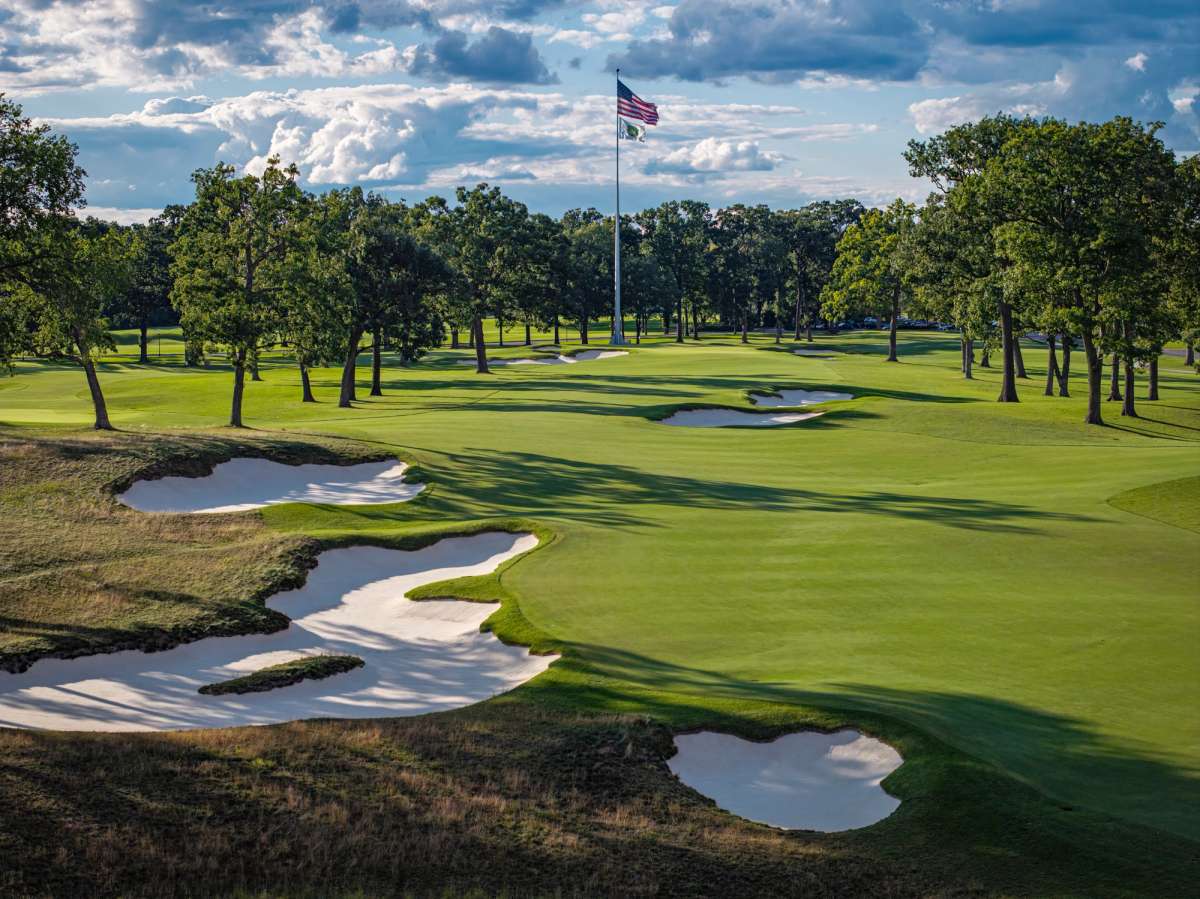
With the Presidents Cup rosters finally confirmed after both captains announced their six respective picks on Tuesday, the countdown to Medinah Country Club is officially on. Team International will head to Illinois looking to end Team USA’s dominance of the Presidents Cup and lift the trophy for only the second time in the competition’s history, having last tasted victory in 1998 at Royal Melbourne in Australia. It will be no easy task, though. Team USA boasts enormous depth, with major winners, extensive Ryder Cup and Presidents Cup experience, and the world’s number one-ranked player, Scottie Scheffler, among its ranks. But can Geoff Ogilvy’s International side cause an upset at Medinah? Top100 takes a closer look at both rosters, the key players to watch and the venue that could play a crucial role in deciding who will lift the Presidents Cup. Medinah No. 3: A new-look stage for the Presidents Cup There are few more appropriate venues for the 2026 Presidents Cup than Medinah No. 3. Completed in 1928 by renowned architect Tom Bendelow, the course has spent almost a century building a reputation as one of American golf’s great championship venues. Five major championships, a Ryder Cup and countless memorable moments have followed, including Tiger Woods’ victories in the 1999 and 2006 PGA Championships and Europe’s remarkable “Miracle at Medinah” in 2012 – widely regarded as one of the greatest comebacks in sporting history. But the course that welcomes the Presidents Cup will look considerably different from the one that hosted those events. After decades of incremental changes that increasingly narrowed the playing corridors and placed a premium on length, Medinah No. 3 underwent a major transformation by Australian firm OCM Golf, led by Geoff Ogilvy, Michael Cocking and Ashley Mead. The renovation, completed in 2024, sought to restore the scale and strategic character of Bendelow’s original design. Wider fairways, larger greens, expansive bunker complexes and the removal of hundreds of trees have opened up the landscape, resulting in a fascinating mix of old and new. At more than 7,650 yards from the championship tees, Medinah can still stretch the world's best players, but the increased width means distance alone should not dictate how the course is played. Instead, players will be faced with strategic decisions from the tee and into the greens, with different angles potentially offering very different rewards. The closing holes could provide some of the most dramatic moments of the week. Lake Kadijah now plays a prominent role on the inward nine, with the 16th crossing diagonally towards the water and the 17th offering another demanding one-shot test alongside the lake. The 18th, meanwhile, has been returned to its original corridor, providing a fitting finish to a course that has undergone such a significant rebirth. There is one particularly intriguing subplot for the International team. Their captain, Geoff Ogilvy, was part of the team responsible for reimagining Medinah No. 3. While intimate knowledge of a golf course is no guarantee of success, Ogilvy will know better than most how the redesigned holes are intended to be played, where the opportunities lie and which mistakes the course is designed to punish. The United States may arrive with the deeper roster and home advantage, but Ogilvy’s intimate knowledge of the course could help to level the playing field. With the course now offering considerably more strategic options than the penal layout of recent decades, the question is whether Ogilvy can use that knowledge to help his players find an advantage. Team USA: The Favourites On paper, Team USA looks extremely difficult to beat. World No. 1 Scottie Scheffler headlines a formidable 12-man roster that also includes major champions Collin Morikawa, Wyndham Clark and Justin Thomas, while Xander Schauffele and Patrick Cantlay add a wealth of team-match experience. The automatic qualifiers – Scheffler, Cameron Young, Clark, Sam Burns, Russell Henley and Morikawa – are joined by captain’s picks Schauffele, Thomas, Cantlay, Chris Gotterup, Jackson Koivun and Jacob Bridgeman. Snedeker's selections have made an already strong side even more imposing. Schauffele, Thomas and Cantlay bring considerable Presidents Cup and Ryder Cup experience, while the inclusion of 21-year-old Koivun adds an exciting new dimension. Koivun, Gotterup and Bridgeman will all make their Presidents Cup debuts at Medinah. The Americans therefore have an attractive blend of proven stars and youthful talent, with strength throughout the 12-man roster. Add home advantage and an 11-match winning streak, and it is easy to see why they arrive as overwhelming favourites. The challenge for Brandt Snedeker will be turning that individual quality into the right pairings and combinations – particularly in the foursomes. If he can do that, Team USA will take some stopping. The full Team USA roster can be found below: Scottie Scheffler Cameron Young Wyndham Clark Sam Burns Russell Henley Collin Morikawa Jacob Bridgeman Patrick Cantlay Chris Gotterup Jackson Koivun Xander Schauffele Justin Thomas Team International: The Underdogs The International team enters Medinah as the clear underdog, but Geoff Ogilvy has assembled a side with plenty of experience and enough quality to make life uncomfortable for the Americans. Si Woo Kim, Ryan Fox, Hideki Matsuyama, Min Woo Lee, Tom Kim and Adam Scott qualified automatically, before Ogilvy added Corey Conners, Sungjae Im, Christiaan Bezuidenhout, Nick Taylor, Nico Echavarria and Ryo Hisatsune with his six captain’s picks. There is plenty of Presidents Cup experience within the group, particularly through Scott, Matsuyama, Tom Kim, Si Woo Kim and Im. Ogilvy has also opted for three rookies in Taylor, Echavarria and Hisatsune, betting on a mixture of current form and players he believes can thrive in the team environment. It will also be a Presidents Cup debut for New Zealander and Champion Golfer of the Year, Fox. The obvious concern is star power. Si Woo Kim is the only International player inside the world's top 20, while the Americans boast Scheffler alongside a deep collection of elite players. But this is where Ogilvy's role could prove crucial. With a team that may lack the depth of the USA, the International captain will need to find the right combinations and maximise every available point. If his players embrace the occasion and the new-look Medinah rewards their style, they may have a genuine chance of making this a contest. After all, Medinah has already witnessed some extraordinary comebacks and championship moments. The 2026 Presidents Cup could provide another chapter in its remarkable history. The full Team International roster can be found below: Si Woo Kim (South Korea) Ryan Fox (New Zealand) Hideki Matsuyama (Japan) Min Woo Lee (Australia) Tom Kim (South Korea) Adam Scott (Australia) Christiaan Bezuidenhout (South Africa) Corey Conners (Canada) Nico Echavarria (Colombia) Ryo Hisatsune (Japan) Sungjae Im (South Korea) Nick Taylor (Canada)

If you've watched any professional golf on television over the past four decades, you've heard the letters "TPC" attached to a course name. TPC Sawgrass. TPC Scottsdale. TPC Harding Park. TPC stands for Tournament Players Club — a network of golf courses owned, operated, and licensed by the PGA Tour. The branding is everywhere in the sport, but most travelling golfers don't fully understand what it means, where it came from, or why it should matter to them when planning a trip. See the Top 100 Golf Courses Ranking of TPC Courses The story behind TPC is one of the shrewdest business moves in the history of sport. It reshaped the economics of professional golf, created a network of courses that the public can actually play, and pioneered a design philosophy that remains divisive among architecture enthusiasts to this day. Today, the TPC network comprises 30 properties across three countries — the United States, Canada, and Mexico — plus the U.S. territory of Puerto Rico. Here's what you need to know. How the PGA Tour Went From Tenant to Landlord For most of its history, the PGA Tour operated as a travelling circus. Each week, the Tour would pitch up at a different private club, stage a tournament, and move on. The host club controlled the course setup, the infrastructure, the hospitality, and the revenue. The Tour was a well-known guest renting somebody else's living room. By the late 1970s, that arrangement was breaking down. Spectator experiences at many venues were poor — cramped viewing corridors, limited sightlines, zero infrastructure for grandstands or broadcast equipment. Private clubs weren't designed for crowds of 30,000 or more. And the Tour had almost no control over the commercial revenue being generated at its own events. PGA Tour Commissioner Deane Beman saw the solution: the Tour needed to build and own its own courses. It was a radical idea — a professional sports league constructing its own stadiums. In American football or baseball, that model was well established. In golf, nobody had attempted it. Beman enlisted architect Pete Dye, and in 1980, they opened TPC Sawgrass in Ponte Vedra Beach, Florida. It would become the permanent home of The Players Championship and, in time, one of the most recognisable golf courses on earth. What Is Stadium Golf? The signature concept behind TPC courses is what Beman and Dye termed "stadium golf." The premise was straightforward: design the course so that spectators can actually see what's happening. In practice, that meant sculpting enormous mounds around greens and along key fairway corridors, creating natural amphitheatres where thousands of fans could watch the action from elevated vantage points. At Sawgrass, Dye committed fully. The course was carved from flat Florida swampland, with earth-moving equipment fabricating elevation changes the terrain never provided naturally. Waste bunkers, railway sleeper walls, bulkheaded lakes, and the now-iconic island green par-3 17th hole were all part of a layout that felt like nothing else in American golf. Tour professionals initially loathed it. The original routing was brutally penal, with water swallowing balls on seemingly every hole. J.C. Snead famously described the course as "90% horse manure and 10% luck." But Beman hadn't built Sawgrass to please the players. He'd built it for fans, for television cameras, and for the Tour's financial independence. The design philosophy has always split opinion. The weaker TPC courses feel very much manufactured — rows of uniform berms that bear no relationship to the landscape, constructed purely to give galleries somewhere to stand. That distinction matters if you care about golf course architecture, and it explains why some TPC courses rank among the best in their state while others go unranked entirely. Should TPC Courses Matter to Travelling Golfers? Here's the part that's most relevant if you're building a trip itinerary: a significant portion of TPC courses are open for public play. Unlike the storied private clubs that host major championships, the TPC network was designed with accessibility at its core. Of the 30 TPC properties, 14 are resort or daily-fee courses where you can book a tee time and pay a green fee without any membership. These include the flagship venues — TPC Sawgrass, TPC Scottsdale, TPC San Antonio, TPC Harding Park, TPC Las Vegas, TPC Louisiana, and TPC Dorado Beach, among them. The remaining 16 are private clubs, including notable tournament venues like TPC Southwind, TPC River Highlands, TPC Craig Ranch, and TPC Boston, where access is restricted to members and their guests. Just under half the network is genuinely accessible to travelling golfers, but that still represents a rare opportunity in professional golf — if you want to play a course where Tour events take place, TPC's pay-and-play venues are often your best, and sometimes your only, realistic option. The trade-off is price. Green fees at flagship TPC courses regularly sit between $300 and $500, sometimes considerably more during peak season. You're paying for the brand, the conditioning, and the bragging rights. Whether that represents value depends on what you want from a round of golf. Conditioning across the network is consistently strong. Because TPC courses are PGA Tour-owned, they're maintained to professional standards year-round rather than being polished for one event week per year. Greens are quick, fairways are tight, bunkers are pristine. If immaculate course conditioning is a priority for you, TPC venues will rarely let you down. Our Top 5 TPC Courses We've reviewed and ranked every TPC course in the network. These are the five that stand above the rest; whether they are worth a green fee is up to you. 1. TPC Sawgrass — Stadium Course Ponte Vedra Beach, Florida The flagship of the entire network and the course that started it all. Home of The Players Championship — which carries the largest purse on the PGA Tour outside the four majors — Sawgrass is the definitive TPC experience. The island green 17th is the single most televised hole in professional golf, and regardless of what you think about it architecturally, standing on that tee with a wedge in your hand is one of the great bucket-list moments in the game. Pete Dye softened the routing significantly after its brutal early years, and the course has matured beautifully through the Florida wetlands. The conditioning is immaculate, the practice facilities are world-class, and the entire experience — from check-in to the 18th green — is polished in a way that justifies the premium green fee. Playing Sawgrass feels like an event. That's exactly what it was designed to be. 2. TPC Boston Norton, Massachusetts A Gil Hanse design that hosted the Dell Technologies Championship (formerly the Deutsche Bank Championship) for over a decade as part of the FedEx Cup Playoffs. It's worth noting that TPC Boston operates as a private club, so access is limited to members and their guests — but it earns its place on this list on the strength of the design alone. TPC Boston stands apart from most courses in the network because of Hanse's reputation as one of the most respected modern architects in the game — his portfolio includes Merion's restoration and the Olympic Course in Rio. The routing moves through mature New England woodland with subtle, strategic bunkering and green complexes that reward creativity. It's a course that feels more considered than many TPC venues — less reliant on the stadium mounding formula and more focused on the quality of the golf itself. For golfers who appreciate design substance alongside Tour pedigree, Boston is a standout. 3. TPC Colorado Berthoud, Colorado One of the newer additions to the TPC network, TPC Colorado was designed by Art Schaupeter and sits against the dramatic backdrop of the Rocky Mountain Front Range. The course hosted the Korn Ferry Tour's TPC Colorado Championship and offers something that many TPC courses lack: a genuine sense of place. The mountain views are spectacular, the layout uses the rolling terrain intelligently, and the conditioning meets the standard you'd expect from the brand. It's a course that demonstrates what the TPC model looks like when it embraces natural landscape rather than imposing manufactured features onto flat ground. For golfers passing through Colorado, it's a compelling option that many overlook. 4. TPC San Antonio — Oaks Course San Antonio, Texas Home of the Valero Texas Open, which holds the distinction of being the longest-running event on the PGA Tour at the same course. The Oaks Course, designed by Greg Norman with Sergio Garcia's input, threads through the Texas Hill Country landscape of live oaks and native grasses, with the rock outcroppings and elevation changes giving the layout a character that feels authentically Texan. The resort complex at JW Marriott San Antonio also houses the Canyons Course (a separate TPC-branded layout by Pete Dye), making it a strong multi-round destination. The Oaks is the stronger of the two designs and earns its place among the top TPC courses for its combination of tournament pedigree, natural setting, and accessibility as a resort course. 5. TPC Harding Park San Francisco, California If there's one TPC course that transcends the brand entirely, it's Harding Park. Originally built as a municipal course in the 1920s, it was renovated and brought into the TPC fold, and has since hosted the PGA Championship, the WGC-Match Play, and the Presidents Cup. Set among towering Monterey cypress trees along the shores of Lake Merced, it possesses a sense of history and atmosphere that purpose-built TPC courses simply cannot replicate. The fact that it remains a public course in a major American city — one that has hosted a major championship — makes it almost unique in the sport. It barely feels like a "TPC course" in the traditional sense, and that's precisely what makes it special. The architecture predates the stadium golf era by half a century, and the Monterey cypress corridors give it a gravitas that no amount of manufactured mounding could create. Other Notable TPC Courses Several TPC courses outside our top 5 deserve mention for travelling golfers. TPC Scottsdale's Stadium Course hosts the WM Phoenix Open and its infamous par-3 16th hole stadium — the most raucous atmosphere in professional golf. TPC River Highlands hosts the Travellers Championship and features one of the best finishing stretches on Tour. TPC Southwind is home to the FedEx St. Jude Invitational — the PGA Tour's only private club in Tennessee. TPC Louisiana and TPC Deere Run are strong options that often fly under the radar. TPC Courses Outside the United States The TPC network extends beyond the continental U.S. into two additional countries and one U.S. territory. In Puerto Rico, TPC Dorado Beach is a 54-hole resort complex with the East Course ranked #1 on the island. In Mexico, TPC Danzante Bay in Loreto, Baja California Sur is ranked #17 nationally — a stunning coastal layout in one of the country's most beautiful settings. In Canada, TPC Toronto at Osprey Valley offers three courses (Hoot, Heathlands, and North), all ranked within the Canadian top 80 and all sharing the same Alton, Ontario facility. Are TPC Golf Courses Worth the Green Fee? The TPC network deserves credit for something that often gets overlooked: access to professional-calibre golf courses used for tournament play. Before TPC, if you wanted to play a course where Tour events took place, your options were virtually nonexistent. TPC created a pathway for everyday golfers to experience tournament conditions/ The business model was visionary. The PGA Tour transformed itself from an organisation dependent on the goodwill of private clubs into a property portfolio generating year-round revenue through green fees, memberships, hospitality, and event hosting. It gave the Tour financial independence and brand control that it simply didn't have before. The TPC name implies a certain standard, but the network includes everything from world-class tournament venues to facilities that are essentially well-maintained daily-fee courses carrying a premium marque. Not every TPC course hosts or was ever intended to host a Tour event. From an architectural standpoint, the ‘stadium’ build that defines most TPC designs can feel formulaic — manufactured berms that serve no strategic purpose and have no relationship to the natural landscape. The Bottom Line for Golf Travellers If a TPC course falls on your travel route, it may be worth considering. Our top 5 (Sawgrass, Boston, Colorado, San Antonio Oaks, and Harding Park) offer experiences that are difficult to replicate elsewhere: exceptional conditioning, memorable holes, and the chance to walk fairways you've watched on television. For the remaining TPC courses, weigh the green fee against what else is available in that market. In some cases, you'll find that a similarly priced course without the TPC badge offers a more interesting, more characterful round of golf. What Deane Beman started in 1980 was more than a golf course. It was a business model that altered an entire sport. Whether or not every TPC venue lives up to the ambition of that original vision, the concept itself remains one of the most consequential innovations in the modern game. See our TPC Ranking, you would actually want to play.
President's Cup 2026 - Medinah No. 3 Quick Facts Dates: 22–27 September 2026 Venue: Medinah Country Club, Course No. 3, Medinah, Illinois Prize Purse: No prize money awarded (proceeds to charity) Distance from Chicago: 40 kilometres (25 miles), approximately 45 minutes Tournament Status: PGA Tour-sanctioned biennial team competition (United States vs International Team) U.S. Team Captain: Brandt Snedeker International Team Captain: Geoff Ogilvy The Chicago suburbs will host one of golf's premier international spectacles when the Presidents Cup makes its debut at the legendary Medinah Country Club in September 2026. Golfers and fans worldwide will converge on this storied championship venue for six days of world-class match play golf, exceptional hospitality, and an unforgettable glimpse into American golf history. Tournament Overview - Why This Event Matters The Presidents Cup stands alongside the Ryder Cup as one of golf's most prestigious team competitions, pitting twelve of America's finest players against an International squad representing the rest of the world beyond Europe. Since its inception in 1994, the tournament has delivered countless memorable moments, though the Americans have dominated with a commanding 13-1-1 record through fifteen editions. The 2024 event at Royal Montreal saw the United States extend their winning streak to ten consecutive victories. What distinguishes the Presidents Cup from other golf tournaments is its charitable focus. Unlike traditional events with massive prize purses, the Presidents Cup awards no prize money whatsoever. Instead, all net proceeds are distributed to charities nominated by the players, captains, and their assistants. The first ten Presidents Cup competitions alone raised over £25 million (€30 million/$32 million) for worthy causes around the globe. The 2026 edition brings added intrigue with respected captains leading both sides. Brandt Snedeker, the 2012 FedExCup champion who compiled a 2-3-0 record as a player in the 2013 Presidents Cup, will guide the American team. Facing him across the first tee will be Australian Geoff Ogilvy, the 2006 U.S. Open champion who posted a 7-6-1 record across three consecutive International Team appearances from 2007 to 2011. Ogilvy's connection to Medinah runs deeper still—his architectural firm OCM Golf orchestrated the recent complete transformation of Course No. 3, making him uniquely qualified to strategise for the venue. The tournament will unfold over four days of competition from Thursday, 24 September, through Sunday, 27 September 2026, with practice rounds on Tuesday and Wednesday. Thirty points will be contested through various match play formats, including foursomes (alternate shot), fourballs (better ball), and Sunday singles matches where all twelve players from each team compete head-to-head. Tournament History & Heritage The Presidents Cup emerged from a desire to showcase elite international talent excluded from the Ryder Cup's United States versus Europe format. Australian players, South Africans, Japanese stars, and talented golfers from across Asia, Africa, and South America deserved their own premier team competition, and the PGA Tour delivered when it launched the Presidents Cup in 1994. That inaugural event at Robert Trent Jones Golf Club in Virginia saw the United States defeat the International Team by a margin of 20-12, establishing a pattern of American dominance that has persisted throughout the competition's three-decade history. Only once have the Internationals tasted victory—their resounding 20.5-11.5 triumph at Royal Melbourne in 1998 under captain Peter Thomson remains their finest moment. The 2003 event at Fancourt in South Africa ended in a historic tie when captains Jack Nicklaus and Gary Player agreed to share the cup after their designated playoff match between Tiger Woods and Ernie Els was suspended due to darkness after three holes. Through the years, the Presidents Cup has evolved into one of golf's most anticipated spectacles, drawing massive crowds and global television audiences. The tournament alternates between American venues and international host countries, with Royal Melbourne hosting three times (1998, 2011, 2019), making it the International Team's spiritual home. Other international venues have included South Africa, Canada, South Korea, and soon Kingston Heath in Melbourne for the 2028 edition. Recent competitions have produced extraordinary drama despite the Americans' winning streak. The 2019 event at Royal Melbourne stands out as particularly memorable, with Tiger Woods serving as playing captain for the United States. Down two points after three days, Woods' American team mounted a stunning Sunday comeback, claiming victory by the narrowest of margins. Woods himself contributed crucial points in both fourball and singles play, capping one of the most dramatic finishes in Presidents Cup history. Notable American captains have included legends like Jack Nicklaus (four times), Fred Couples (five times), and Jay Haas. The International side has been led by luminaries including Gary Player (five times), Nick Price (four times), and Ernie Els (twice). The 2024 event at Royal Montreal saw Jim Furyk lead the Americans to another commanding victory over Canadian Mike Weir's International squad. Statistical highlights tell the story of American supremacy: Phil Mickelson holds the record for most appearances with twelve, whilst Tiger Woods' perfect 5-0-0 performance in 2009 remains one of five instances where a player has achieved maximum points in a single competition. The Americans have never lost on home soil, posting an unblemished 8-0-0 record when hosting the event. Recent champions on American soil have been decisive. The 2022 event at Quail Hollow Club in Charlotte saw Davis Love III's team prevail 17.5-12.5 despite a valiant International comeback attempt on Sunday. The 2017 edition at Liberty National in Jersey City produced a commanding 19-11 victory for the United States, whilst the 2013 competition at Muirfield Village saw Fred Couples' Americans win 18.5-15.5 in Ohio. Looking beyond 2026, the Presidents Cup's future venues showcase golf's global reach. Following Medinah, the competition heads to Kingston Heath Golf Club in Melbourne for 2028, returning to Australia's fabled Sandbelt region. The 2030 edition will be contested at Bellerive Country Club in St. Louis, Missouri, with Melbourne scheduled to host again in 2040 under the PGA Tour's long-term commitment to Victoria. Championship Course: Medinah Country Club No. 3 Few American golf courses can match Medinah Country Club's championship pedigree or dramatic transformation. Course No. 3 stands as one of the nation's most storied layouts, having hosted five major championships and countless premier events since opening for play in 1928. What makes the venue particularly fascinating for the 2026 Presidents Cup is that spectators will witness an almost entirely new golf course, reimagined from fairway to green by Geoff Ogilvy's OCM Golf design firm. The journey began in the Roaring Twenties when the Medinah Shriners—members of the Ancient Arabic Order of the Nobles of the Mystic Shrine—pursued their ambition to create America's finest country club. Established in 1924 on 260 hectares (640 acres) of rolling farmland and woodland 40 kilometres west of Chicago, Medinah was conceived as a fifty-four-hole complex with Byzantine-inspired clubhouse architecture featuring minarets and classic Moorish design elements that remain striking today. Scottish architect Tom Bendelow designed all three original courses, with Course No. 3 opening in 1928 as a layout initially intended for the ladies. That status changed almost immediately when Lighthorse Harry Cooper fired a stunning 63 in the 1930 Medinah Open, prompting club officials to toughen the design. Harry Collis oversaw the first major renovation in the 1930s, beginning a pattern of perpetual evolution that would define Course No. 3's character. The 1949 U.S. Open put Medinah on America's championship golf map, launching decades of modifications aimed at keeping pace with advancing equipment and tournament demands. Roger Packard and Roger Rulewich made substantial changes before the 1988 U.S. Senior Open, where Gary Player claimed victory. Rees Jones then extended the course to 7,561 yards before the 2006 PGA Championship—at the time, the longest layout in major championship history—where Tiger Woods captured his twelfth career major title. Through the 1970s and 1980s, Course No. 3 exemplified the "championship course" ideal of that era. Tight, tree-lined fairways squeezed tee shots into narrow corridors whilst thick rough and marble-firm greens punished the slightest miscue. The course flexed its muscles admirably through multiple U.S. Opens (1949, 1975, 1990), two PGA Championships (1999, 2006), and the unforgettable 2012 Ryder Cup known as the "Miracle of Medinah." That Ryder Cup produced one of golf's most dramatic finishes when Europe, facing a seemingly impossible deficit, mounted an extraordinary Sunday singles comeback to snatch victory 14.5-13.5 from the Americans. Dressed in colours honouring the late Seve Ballesteros, the European team won eight and a half points from twelve singles matches, with Martin Kaymer securing the decisive point to complete the greatest away-team comeback in Ryder Cup history. Yet by 2019, when Course No. 3 hosted the BMW Championship, the landscape had shifted. Justin Thomas blistered the layout to twenty-five under par, setting a new course record of 61 in the third round and exposing how modern equipment had rendered the traditional design vulnerable. Medinah had slipped in the rankings, prompting club leadership to pursue drastic measures. Enter Geoff Ogilvy and his OCM Golf partners Mike Cocking and Ashley Mead. The Australian firm arrived with a revolutionary vision: transform Course No. 3 into a Melbourne Sandbelt-style layout that might have existed in the 1920s Golden Age of golf design. Using aerial photographs from the 1930s to guide their work, OCM embarked on a complete remake that closed the course from October 2022 through mid-2024. The transformation proved comprehensive. Tree removal opened sight lines across the property, revealing dramatic landforms that had been obscured for generations. The bunker count increased from approximately seventy to one hundred, with expanded, wavy hazards tied naturally into the surrounding terrain. Green complexes were enlarged and contoured to create Melbourne-style putting surfaces with multiple hole locations. Fairways were widened with closely mown surrounds, introducing strategic options and reducing heavy rough. The most dramatic changes occurred on the closing stretch. A new thirteenth hole now hugs Lake Kadijah, the fourteenth was shortened, the old fifteenth was removed entirely, and the former par-three seventeenth became a driveable par-four. The reimagined seventeenth hole—now a stunning 217-yard par three over water—plays to an angled green requiring precise club selection and unwavering nerve. This signature hole will feature prominently during Sunday singles matches. At 7,654 yards from the championship tees playing to par 72, the renovated Course No. 3 presents a thoroughly modern test whilst honouring Golden Age design principles. The opening hole typifies the new character—a straight par-four where heavily undulating terrain and strategic bunkering demand accuracy over brute force. The short par-four third offers birdie opportunities for those brave enough to challenge the green, whilst the second and thirteenth present water-laden par-threes that will create pivotal moments in match play. The back nine builds towards a thrilling conclusion. The fourteenth, now a medium-length par-four, sets up the strategic challenges ahead. The par-five fifteenth rewards aggressive play but punishes wayward shots severely. The sixteenth—a lengthy par-four with a terraced green—has sparked debate as one potential new signature hole, whilst the aforementioned seventeenth over Lake Kadijah delivers guaranteed drama. Notable champions at Medinah read like a hall of fame: Byron Nelson, Gary Player, Cary Middlecoff, Lou Graham, Hale Irwin, and Tiger Woods twice. The venue's championship credentials are beyond question, and the OCM renovation has restored Medinah to elite status. Members and early visitors have praised the transformation, with many holes now unrecognisable from their previous incarnations. For the 2026 Presidents Cup, Course No. 3's strategic demands and match play suitability will create compelling viewing. Unlike stroke play, where caution dominates, match play encourages aggressive tactics and risk-taking. Expect captains to craft pairings that exploit specific holes, with the water-laden par-threes and reachable par-fives producing pivotal swings in momentum. Other Historic Venues at Medinah Whilst Medinah will host all competition rounds, golf enthusiasts should note that the club's other courses offer their own compelling stories. Course No. 1, redesigned by Tom Doak in 2014, presents a stark contrast to No. 3 with its wide-open vistas and diabolical green complexes. The renovation involved removing nearly eight hundred trees and creating entirely new playing corridors, resulting in a layout praised for its strategic variety. Course No. 2 maintains Tom Bendelow's original character with tree-lined fairways and traditional design elements. Rees Jones oversaw infrastructure restoration in 2016, preserving the course as a classic representation of Golden Age architecture. Together, the three courses make Medinah one of America's premier fifty-four-hole facilities. Chicago's Culinary Scene The Chicago dining landscape combines Midwestern heartiness with international sophistication, offering everything from legendary steakhouses to innovative contemporary cuisine. The western suburbs near Medinah feature excellent options, whilst downtown Chicago presents world-class restaurants worthy of special occasion meals. Cooper's Hawk Winery & Restaurants in Bloomingdale brings California wine country sensibility to suburban Illinois. The concept combines a Napa-style tasting room with modern casual dining, featuring contemporary American cuisine designed to complement their wine club offerings. The menu ranges from creative pasta specialities to flame-grilled steaks, with everything crafted to pair with their extensive wine selection. Expect main courses from £16-£32 (€19-€38/$20-$40). Perry's Steakhouse & Grille in Schaumburg delivers the full-scale steakhouse experience with tableside presentations and exceptional service. The restaurant specialises in premium USDA cuts prepared with meticulous attention, alongside seafood options and signature side dishes. The bar programme features craft cocktails and an extensive wine list. Main courses typically range £32-£56 (€38-€66/$40-$70), with portions generous enough for sharing. Shaw's Crab House in Schaumburg stands as Chicagoland's premier seafood destination. The restaurant imports fresh catches daily, offers made-to-order sushi, and specialises in Alaskan king crab legs. The venue splits between a casual oyster bar and a more formal main dining room, both delivering straightforward preparations that let quality ingredients shine. Budget £24-£48 (€28-€57/$30-$60) for main courses, with shellfish platters commanding premium prices. Downtown Chicago elevates the culinary experience considerably. Alinea, Grant Achatz's three-Michelin-star temple of molecular gastronomy, represents one of America's finest restaurants. The tasting menu format explores culinary boundaries through innovative techniques and ingredient combinations, creating an unforgettable evening. Expect to invest £280-£400 (€330-€470/$350-$500) per person before wine pairings. Gibsons Bar & Steakhouse epitomises Chicago steakhouse culture with enormous portions, masculine décor, and people-watching opportunities. The Rush Street original attracts local celebrities and business leaders who appreciate straightforward excellence. Steaks arrive perfectly prepared, sides serve multiple people, and the bar pours generously. Budget £56-£80 (€66-€94/$70-$100) per person. RPM Italian in River North presents contemporary Italian cuisine in a sleek, energetic environment. Bill and Giuliana Rancic's restaurant features dishes meant for sharing, from house-made pastas to wood-fired pizzas and innovative entrées. The scene attracts stylish diners who appreciate modern interpretations of classic preparations. Main courses range £20-£40 (€24-€47/$25-$50). Traditional local fare shouldn't be missed. Lou Malnati's serves legendary Chicago deep-dish pizza from multiple locations, with the Schaumburg outlet convenient to Medinah. The butter crust and generous cheese layers define what many consider authentic Chicago pizza. Individual pizzas cost £16-£24 (€19-€28/$20-$30). Explore Beyond Golf Chicago offers world-class attractions rivalling any American city, from architectural treasures to cultural institutions and distinctive neighbourhoods. The metropolitan area's rich history, diverse communities, and lakefront setting create endless exploration opportunities. The Art Institute of Chicago ranks amongst the world's great art museums, housing extraordinary collections spanning centuries and continents. The museum's Impressionist and Post-Impressionist galleries feature iconic masterpieces including Georges Seurat's "A Sunday Afternoon on La Grande Jatte," Vincent van Gogh's "The Bedroom," and Grant Wood's "American Gothic." The Modern Wing showcases contemporary works, whilst special exhibitions rotate throughout the year. General admission costs approximately £20 (€24/$25), with Wednesday evenings offering reduced rates for Illinois residents. Millennium Park anchors downtown's cultural landscape with the iconic Cloud Gate sculpture (affectionately known as "The Bean"), Frank Gehry's Jay Pritzker Pavilion, and the Crown Fountain. The twenty-five-acre park hosts free concerts, films, and events throughout summer and autumn, whilst winter brings ice skating. The adjacent Lurie Garden provides a tranquil oasis showcasing native prairie plantings. Architecture enthusiasts must experience the Chicago Architecture Center River Cruise, widely considered the city's premier tour. Expert docents narrate the story of Chicago's architectural evolution whilst cruising past iconic structures including the Wrigley Building, Tribune Tower, and Marina City. The ninety-minute journey costs approximately £32 (€38/$40) and departs from the Michigan Avenue bridge. The Willis Tower Skydeck offers breathtaking views from the 103rd floor, with "The Ledge" glass boxes extending beyond the building's facade for thrilling photo opportunities. On clear days, visibility extends across four states. Admission runs approximately £24 (€28/$30), with combination tickets available for multiple Chicago attractions. Navy Pier extends into Lake Michigan as one of the city's most popular destinations. The entertainment complex features a towering Ferris wheel, boat tours, restaurants, the Shakespeare Theatre, and frequent fireworks displays during summer. Admission to the pier itself is free, with individual attractions charging separately. Golf heritage sites within reach include Olympia Fields Country Club's North Course, which hosted the 2003 U.S. Open and features an on-site museum showcasing championship history. Chicago Golf Club in Wheaton holds distinction as the first eighteen-hole course in North America, though access remains extremely limited to members and special guests. Natural beauty surrounds the metropolitan area. The Chicago Botanic Garden in Glencoe sprawls across 155 hectares (385 acres) with themed gardens, walking trails, and seasonal displays. Admission is free, with only parking charges applying. The Morton Arboretum in Lisle presents 700 hectares (1,700 acres) of trees and natural areas with extensive trail systems perfect for autumn colours. Family activities abound throughout the region. Lincoln Park Zoo offers free admission year-round, featuring extensive animal collections in a historic setting near Lake Michigan. The Shedd Aquarium showcases underwater life from around the globe, whilst the Field Museum houses world-renowned natural history collections including Sue, the largest and most complete Tyrannosaurus rex specimen ever discovered. The Museum of Science and Industry ranks amongst America's finest science museums, with interactive exhibits including a captured German U-boat from World War II, a full-scale replica coal mine, and the Apollo 8 spacecraft. The museum occupies the last remaining structure from the 1893 World's Columbian Exposition. Chicago's neighbourhood diversity provides authentic cultural experiences. Pilsen showcases vibrant Mexican-American culture through colourful murals, authentic taquerias, and the National Museum of Mexican Art. Chinatown offers traditional dim sum restaurants and Asian markets. Wicker Park and Bucktown feature independent boutiques, cafés, and street art. Music venues reflect Chicago's rich blues and jazz heritage. Buddy Guy's Legends on South Wabash presents the blues master's own club with live performances nightly. The Green Mill Jazz Club in Uptown maintains its 1920s speakeasy character and connection to Al Capone. Kingston Mines in Lincoln Park offers two stages with continuous blues performances. Shopping ranges from the Magnificent Mile along North Michigan Avenue—featuring luxury retailers and flagship stores—to neighbourhood boutiques throughout the city. Oakbrook Center in Oak Brook, convenient to Medinah, presents upscale shopping with excellent dining options. What's the best way to get tickets? The official PresidentsCup.com website serves as the only authorised ticket source. Sales typically open approximately twelve to eighteen months before the event, with early purchasers benefiting from dynamic pricing that increases as competition approaches. Monitor the official site and sign up for email notifications to receive alerts when sales commence. Additional Resources The official Presidents Cup website provides comprehensive tournament information, including schedules, tickets, hospitality options, prohibited items, parking, and spectator guidelines. Sign up for email notifications to receive important updates as tournament week approaches. Choose Chicago, the official tourism website, offers extensive information about attractions, dining, hotels, and neighbourhood guides. The site includes interactive maps, itinerary suggestions, and current events listings. Looking ahead, the Presidents Cup continues its global journey to Kingston Heath Golf Club in Melbourne's celebrated Sandbelt region for 2028, before returning to America at Bellerive Country Club in St. Louis for 2030. Each venue offers distinct character and championship credentials, ensuring the Presidents Cup remains one of golf's most anticipated competitions for years to come.

