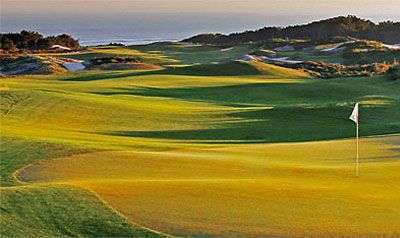
West Cliffs is set to become Cynthia Dye’s global masterpiece
The Top 100 Team has been fortunate to travel widely over the years to check out the very latest updates to existing layouts or to attend many new course openings. The recent trip to see the much-anticipated West Cliffs course on Portugal’s West Coast was predicted to be one of the best – and it was!
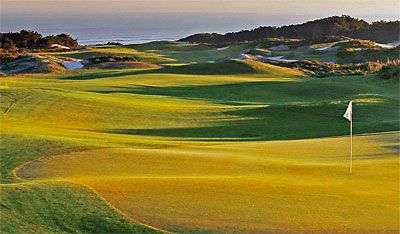
We were very privileged to be invited to preview this course a week ahead of the official opening date of 12th June 2017 and I was there with other representatives from various golf publications and tour operators to find out more about what we’d heard in advance was ‘something very special’.
This certainly turned out to be a very true statement as West Cliffs for me is breath-taking in places, one of the very best courses I’ve seen in a long while. It lies on Portugal’s Silver Coast and it already looks picture perfect, which is hard to imagine considering just a few years ago the terrain was covered in dense pine groves, rolling sand dunes and wild vegetation.
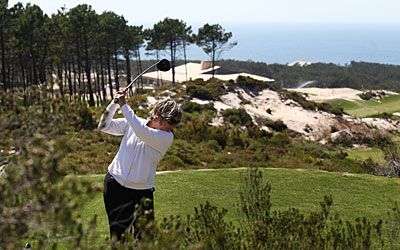
Indeed, course designer Cynthia Dye said of the original site, “Seriously, you could have got lost in there when we first came here”.
The job to create a top-end course and at the same time maintain an unspoiled natural landscape has been a monumental achievement. The ocean can be viewed from all around the course and what you see from most tees is an expanse of impressive bunkering and natural wasteland with brilliant holes laid out in between.
This is the first Dye-designed course in Portugal and the bar has been set very high for any others that might follow in the future. Cynthia, the niece of the great Pete Dye, has done a terrific job at West Cliffs which truly complements the family name, incorporating more than a hint of Uncle Pete’s Whistling Straits into the design.
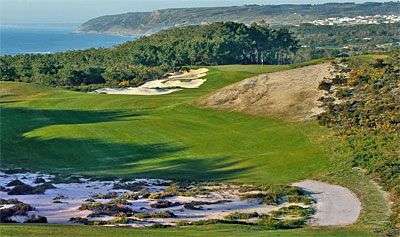
The front nine is very demanding – every single shot has such a high tariff and mistakes are severely punished on these ‘Dyeabolical’ holes – especially from the stroke index one 3rd hole onwards. This hole is rather scary from the tee, with water all the way down the right side, wasteland to the left and an undulating fairway with a huge sand dune sited in the middle, around 120 yards from the green.
Other noteworthy holes on the outward half include the par three 5th and par five 7th – the 5th is not that long (190 yards max) but the greensite and bunkering are magnificent, surrounding a massive, undulating green. The 7th hole is certainly the toughest par five on the course, rolling downhill, turning left, then crossing wasteland before climbing to a raised green – par is a very good score here!
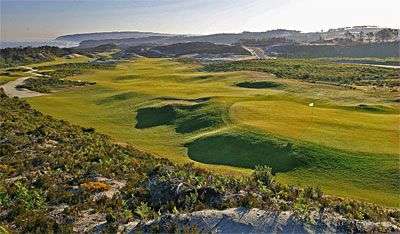
The back nine is more playable in my opinion, certainly my scorecard said so. There are still elevation changes but they’re not as dramatic as on some of the early holes. The key holes are the 13th and 14th – a par five then a par four running parallel to each other – and these are two very good-looking holes. Bold bunkering and wasteland areas are still the big themes here but the wild flowering around the holes is also a big feature.
The tee shots at the par three 16th and the closing hole are a bit special too – the 16th from the very back tee is brutal; uphill, through a small gap between trees and sand dunes to a heavily bunkered green. The 18th hole affords a big finish to a memorable round, requiring a carry from the elevated tee over wasteland and sand hills, then an accurate approach to the home green which butts up to the lake next to the clubhouse.
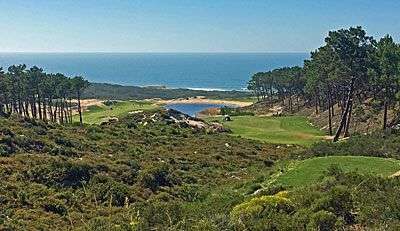
There are a few clichéd terms that come into use when describing golf courses, ‘stunning’ being the one that we read all too often. At West Cliffs, however, it will never be an over-used word because that is just what this course is! Obviously, I’ve seen it on day one so there’s still plenty of room for improvement over the coming years, once it has bedded in, but there’s no doubt in my mind that this will become a modern classic, with the potential to be ranked very highly in Portugal and Continental Europe.
West Cliffs Resort will be managed by the nearby Praia D'El Rey Resort, already one of the country’s premier golf resorts and those high standards will be mirrored at West Cliffs. There’s a myriad of accommodation options; townhouses and villas but the Marriott Hotel at Praia del Rey will probably be the choice for most golfers visiting.
The Lisbon/Central region of the country always has been a serious golf destination, even more so now with the arrival of this absolute ‘must-play’ course.
Thanks to The Azalea Group, Praia Del Rey and Monarch Airlines for making this trip so successful and the message from me is to play West Cliffs sooner rather than later.
“Monarch, the scheduled leisure airline, operates year round flights to Lisbon from Birmingham, London Gatwick and Manchester airports with fares, including taxes, from £42 one way (£76 return) - For further information please visit www.monarch.co.uk “
Andy Newmarch
Top 100 Golf Courses
West Cliffs is set to become Cynthia Dye’s global masterpiece The Top 100 Team has been fortunate to travel widely over the years to check out the very latest updates to existing layouts or to attend many new course openings. The recent trip to see the much-anticipated West Cliffs course on Portugal’s West Coast was predicted to be one of the best – and it was! We were very privileged to be invited to preview this course a week ahead of the official opening date of 12th June 2017 and I was there with other representatives from various golf publications and tour operators to find out more about what we’d heard in advance was ‘something very special’. This certainly turned out to be a very true statement as West Cliffs for me is breath-taking in places, one of the very best courses I’ve seen in a long while. It lies on Portugal’s Silver Coast and it already looks picture perfect, which is hard to imagine considering just a few years ago the terrain was covered in dense pine groves, rolling sand dunes and wild vegetation. Indeed, course designer Cynthia Dye said of the original site, “Seriously, you could have got lost in there when we first came here”. The job to create a top-end course and at the same time maintain an unspoiled natural landscape has been a monumental achievement. The ocean can be viewed from all around the course and what you see from most tees is an expanse of impressive bunkering and natural wasteland with brilliant holes laid out in between. This is the first Dye-designed course in Portugal and the bar has been set very high for any others that might follow in the future. Cynthia, the niece of the great Pete Dye, has done a terrific job at West Cliffs which truly complements the family name, incorporating more than a hint of Uncle Pete’s Whistling Straits into the design. The front nine is very demanding – every single shot has such a high tariff and mistakes are severely punished on these ‘Dyeabolical’ holes – especially from the stroke index 3rd hole onwards. This hole is rather scary from the tee, with water all the way down the right side, wasteland to the left and an undulating fairway with a huge sand dune sited in the middle, around 120 yards from the green. Other noteworthy holes on the outward half include the par three 5th and par five 7th – the 5th is not that long (190 yards max) but the greensite and bunkering are magnificent, surrounding a massive, undulating green. The 7th hole is certainly the toughest par five on the course, rolling downhill, turning left, then crossing wasteland before climbing to a raised green – par is a very good score here! The back nine is more playable in my opinion, certainly my scorecard said so. There are still elevation changes but they’re not as dramatic as on some of the early holes. The key holes are the 13th and 14th – a par five then a par four running parallel to each other – and these are two very good-looking holes. Bold bunkering and wasteland areas are still the big themes here but the wild flowering around the holes is also a big feature. The tee shots at the par three 16th and the closing hole are a bit special too – the 16th from the very back tee is brutal; uphill, through a small gap between trees and sand dunes to a heavily bunkered green. The 18th hole affords a big finish to a memorable round, requiring a carry from the elevated tee over wasteland and sand hills, then an accurate approach to the home green which butts up to the lake next to the clubhouse. There are a few clichéd terms that come into use when describing golf courses, ‘stunning’ being the one that we read all too often. At West Cliffs, however, it will never be an over-used word because that is just what this course is! Obviously, I’ve seen it on day one so there’s still plenty of room for improvement over the coming years, once it has bedded in, but there’s no doubt in my mind that this will become a modern classic, with the potential to be ranked very highly in Portugal and Continental Europe. West Cliffs Resort will be managed by the nearby Praia del Rey Resort, already one of the country’s premier golf resorts and those high standards will be mirrored at West Cliffs. There’s a myriad of accommodation options; townhouses and villas but the Marriott Hotel at Praia del Rey will probably be the choice for most golfers visiting. The Lisbon/Central region of the country always has been a serious golf destination, even more so now with the arrival of this absolute ‘must-play’ course. Thanks to The Azalea Group, Praia Del Rey and Monarch Airlines for making this trip so successful and the message from me is to play West Cliffs sooner rather than later. “Monarch, the scheduled leisure airline, operates year round flights to Lisbon from Birmingham, London Gatwick and Manchester airports with fares, including taxes, from £42 one way (£76 return) - For further information please visit www.monarch.co.uk “ Andy Newmarch Top 100 Golf Courses
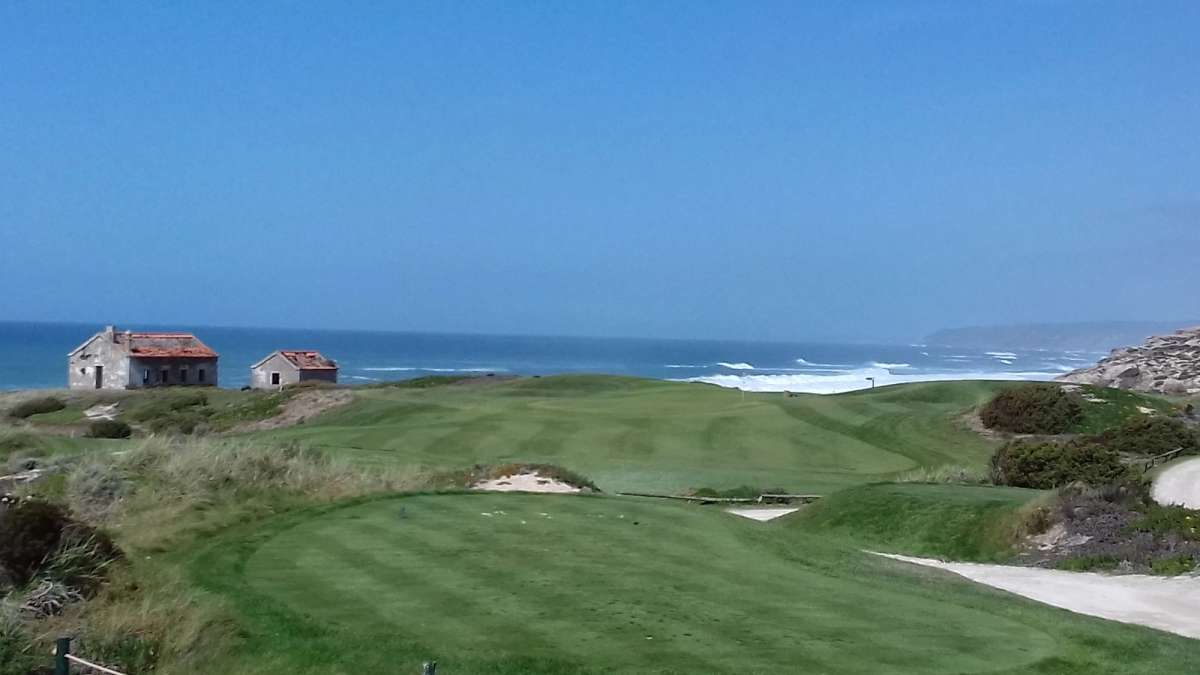
Lisbon – more golf resorts around the capital city We began a series of resort golf features a few months back with a look at The Argarve, which many consider to still be the top region for resort golf in all of continental Europe. We then followed that write-up with three similar articles on the Spanish Costas, the Canary Islands and Mallorcain the Balearics. It’s now time to return to Portugal to highlight some of the great golf on offer around Lisbon. We’ve made several trips to the region in the past few years and it never fails to impress. In this short report, we focus on two main geographical areas: the first is a cluster of three golf facilities located just over an hour’s drive north of the capital on the Silver Coast and the second is another small group of resorts in the Cascais municipality to the west of Lisbon on the popular Portuguese Riviera. PRAIA D’EL REY The recently renovated 5-star hotel at the Praia D’El Rey Marriott Golf & Beach Resort is one of three accommodation options at the resort, along with apartments and townhouses in The Beachfront and The Village. Cabell Robinson designed the 18-hole Praia D’El Rey layout with some of the fairways routed through undulating wooded terrain and others laid out on the flat, sandy-soiled shoreline of the Atlantic Ocean – it’s quite an intoxicating mix that provides unqualified variety from first tee shot to final putt. WEST CLIFFS A short 10-minute drive along the coast lies the new development at West Cliffs Ocean and Golf Resort, which is served by the same accommodation choices available at Prai D’El Rey. There are also Twin Villas available and in the future there will be around 500 housing units and a couple of high-end hotels constructed. Cynthia Dye designed the golf course and it opened to critical acclaim five years ago. However, it’s recognised as a tough track so you’re advised to choose your tees carefully and avoid the native areas of vegetation lining most of the fairways. ROYAL OBIDOS Running along the southern boundary of West Cliffs, the Royal Obidos Spa & Golf Resort is anchored by the 39-bedromm Evolutee boutique hotel which overlooks the Seve Ballesteros-designed course, with the accommodation complemented by the adjacent Mandalay Spa. Two editions of the Open de Portugal were held here in 2020 and 2021 and the event is due to be staged at Royal Obidos again this September, when Germany’s Marcel Schneider will defend his title. PENHA LONGA Situated seven kilometres inland from the coastal tourist destination of Estoril in Cascais, the Penha Longa Resort is set within a 545-acre National Park where a 194-room luxury hotel sits cheek by jowl in a beautiful setting with a 19th century palace that was originally founded as a monastery five centuries previously. The 18-hole Atlântico course is a Robert Trent Jones Jr. design which is routed across hilly, forested terrain and the signature 6th hole is framed by an old Roman aqueduct running diagonally alongside the green. OITAVOS DUNES The hotel at Oitavos Dunes is a very modern construction of steel and glass, boasting 142 surprisingly spacious bedroom and suites, each with full-height glass doors and a large balcony. The course is one of the few non-American offerings from Arthur Hills, opening for play 20 years ago. If you ignore spurious magazine rankings that have claimed it as a world-class layout then you’ll enjoy it as one of the best courses in Europe – even if the wind gets up, which it often does when you’re less than three kilometres from one of the most westerly point in continental Europe. QUINTA DA MARINHA Positioned immediately to the east of the Oitavos Dunes property, the recently renovated Onyria Quinta da Marinha Hotel extends to 198 rooms, with €1.5 million also spent refurbishing 27 on-site villas. The Quinta da Marinha course is a Robert Trent Jones Sr. layout from the mid-1980s which has had the holes re-sequenced due to the non-construction of an intended clubhouse. This makes things a little disjointed but it’s still a terrific track to play and one that bears many of the classic RTJ design traits involving sand and water. TROIA It would be remiss not to mention the Troia Resort located on the Tróia peninsula to the south of Lisbon, which is accessed by a frequent ferry service from Setúbal. With the Aqualuz Troia Lagoa and Aqualuz Troia Mar & Rio hotels and the Trioa Residence apartments and villas nearby, golfers are spoiled for choice wihen it comes to accommodation options. The course is another Robert Trent Jones Sr. design, with the Praia da Questa and the Praia da Costa da Gale beaches running along the west side of the sandy soiled property. COMPORTA DUNES Twenty-five kilometres further south, a new development is due to open next year at Comporta Dunes, outside the small coastal town of Carvalhal in the Alentejo region, and it’s a David McLay Kidd design that broke ground almost ten years ago before work ground to a halt when the owner ran into financial difficulties. Real estate developer Vinguard Properties and boutique hotel operator Amorim took over the property in 2019, hiring Conor Walsh (who’d worked on the completed first nine holes) to finish a project that had started six and a half years earlier. It’s fully expected that Amorim will also operate a small luxury hotel on site. Jim McCann Editor Top 100 Golf Courses
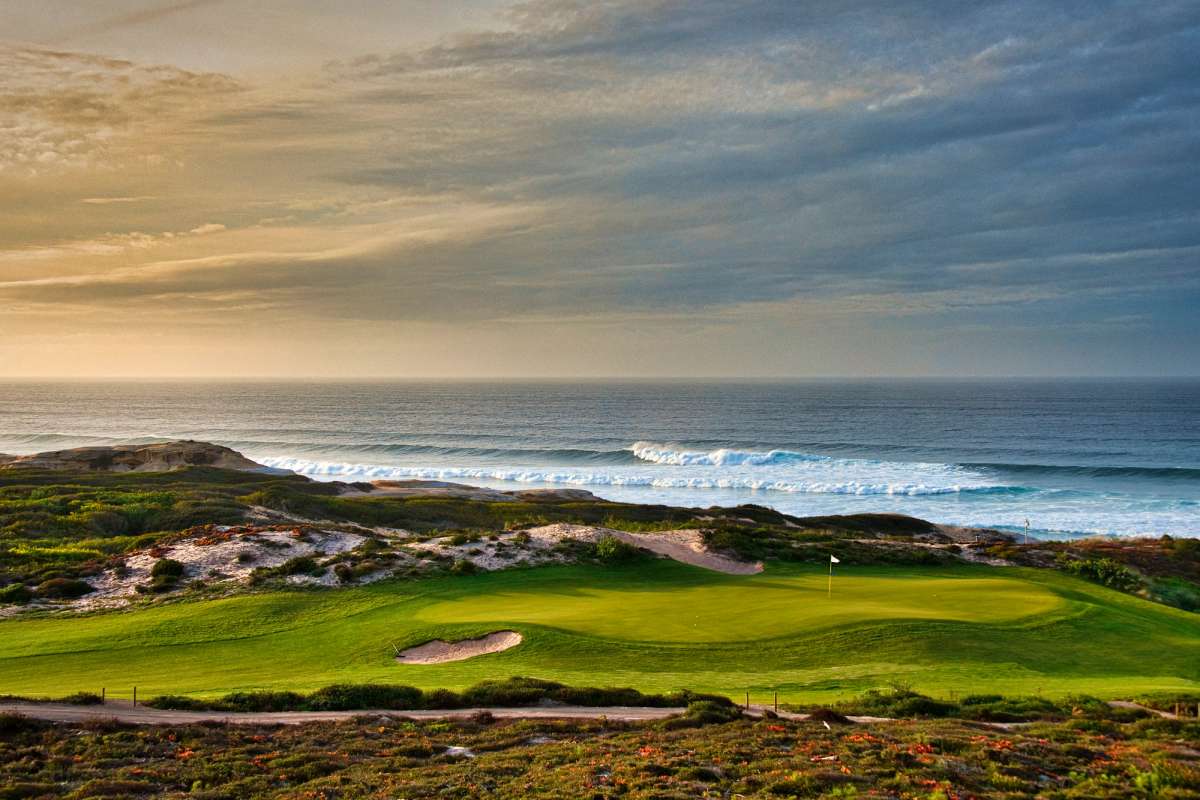
Portugal and Spain have become two of Europe's go-to golf getaways, offering sunshine, outstanding courses and plenty to enjoy away from the golf course. Both countries have their share of bucket-list layouts, but you don't need to spend a fortune to enjoy them. From the Algarve and Costa del Sol to emerging golf destinations further north, there are courses to suit almost every budget. So, if value for money is the priority, which country should be at the top of your list? We put Portugal and Spain head-to-head across the things that matter most when planning a golf holiday, from the quality of the courses and ease of building an itinerary to the overall cost of the trip. The Headline Courses The Algarve remains Portugal's best-known golf destination, but the rise of Comporta and the Silver Coast has added a new dimension to the country's appeal. The 2026 Top 50 Golf Courses in Portugal is now headed by Terras da Comporta (Dunas), with Monte Rei North and Quinta do Lago South completing the podium. West Cliffs sits fourth, while Oitavos Dunes and Palmares also feature inside the top eight. That gives Portugal an impressive collection without having to stick to one part of the country. West Cliffs, for example, is a spectacular coastal option north of Lisbon, while Palmares combines parkland and links-style golf overlooking the Atlantic. Spain has the deeper collection of established headline names. Real Club Valderrama remains Spain's No.1 in the 2026 Top 100, followed by Real Club de Golf Sotogrande and El Saler. Camiral's Stadium Course completes the top four, while Las Brisas, Finca Cortesin and Las Colinas are among the other highly ranked options. The important point for a value-focused trip, however, is that golfers don't necessarily need to play the most expensive course in either country to experience their best golf. El Saler is a particularly good example. Ranked third in Spain, its visitor green fee is €150 in high season and €135 in low season, with even lower rates for guests staying at the adjoining Parador. While Portugal is closing the gap quickly, Spain's combination of historic names, championship venues and regional variety gives it the edge. Winner: Spain The Golf Holiday Experience Portugal and Spain offer very different experiences once you look beyond the quality of the courses themselves. Portugal's golf culture is particularly geared towards the visiting golfer. The Algarve has spent decades building itself around golf holidays, with resorts, restaurants, hotels, transfers and courses all set up to make a week of golf relatively straightforward. That gives the region an easygoing feel. Golf can be the main event without taking over the entire holiday, with beaches, marinas, restaurants and towns all within easy reach. Further north, the Lisbon and Comporta areas offer a quieter alternative, with Atlantic coastline and a more understated atmosphere. Spain is a little more varied. The Costa del Sol is every bit as established as the Algarve as a golf holiday destination, but the wider country offers a much broader mix of experiences. A golf trip could mean staying in a purpose-built resort, basing yourself in Marbella and combining golf with the region's restaurants and nightlife, or travelling further afield to experience a completely different part of the country. That variety makes Spain particularly appealing for golfers who don't want every day of the holiday to revolve around the course. For a traditional golf getaway where the emphasis is on relaxing, playing plenty of golf and keeping everything close at hand, Portugal has the edge. Spain offers more possibilities, but that can also mean more decisions. Winner: Portugal Building The Perfect Itinerary This is where Portugal's geography becomes a genuine advantage. The Algarve is remarkably well suited to a four- or five-round golf trip. The region's courses are concentrated along the southern coastline, meaning golfers can stay in one base and reach a wide range of courses without spending hours behind the wheel. It also makes it easier to mix different types of golf. A trip could combine resort courses around Vilamoura and Quinta do Lago with coastal golf further west or less expensive options towards Tavira and the Spanish border. Portugal offers a similar advantage around Lisbon and the Silver Coast. Golfers can build a trip around a cluster of courses without necessarily having to change hotels every night. Spain can certainly compete on a regional level. The Costa del Sol has enough courses around Marbella, Estepona and Sotogrande to fill a week, while other regions offer their own concentrated collections. The difference is that Spain gives you more options while also requiring more discipline. Trying to combine the Costa del Sol with Valencia, Alicante or Catalonia on the same trip quickly turns a golf holiday into a road trip. For golfers looking to pick one region and settle in, both countries work. Portugal's advantage is that a week of golf can be built around a single base with relatively little time spent travelling between courses. Winner: Portugal Away From The Golf Course A good golf holiday needs more than good golf. Portugal's Algarve has the obvious ingredients: long beaches, seafood restaurants, lively marinas and historic towns. Vilamoura is well suited to golfers who want a resort atmosphere, while Lagos and Tavira offer something more traditional. The Lisbon region adds a major city to the equation, while Comporta provides a more relaxed coastal escape. That gives Portugal plenty of options for golfers travelling with partners, friends or family members who aren't planning to play every day. Spain, though, has the advantage in sheer variety. The Costa del Sol offers everything from Marbella's restaurants and nightlife to the quieter towns around Estepona. Elsewhere, golfers can combine their rounds with the food and culture of cities such as Valencia, Seville or Barcelona, or head to the beaches of the Balearic Islands. That matters when golf is only part of the holiday. Spain makes it easier to build a trip where the golf is one component of a much bigger itinerary. Portugal is an excellent all-round destination, but Spain's scale means there is simply more to choose from. Winner: Spain Value For Money This is the section that ultimately decides the argument. Neither Portugal nor Spain should be considered uniformly cheap. Both have premium courses where a single round can cost well into three figures, particularly during peak periods. *Rate includes a buggy. The figures show that both countries can offer good value, but Portugal has a particularly strong spread of options, from premium layouts at West Cliffs and Vale do Lobo to rounds below €100 at Quinta da Ria and Castro Marim. Spain can compete at the lower end, but Portugal offers a particularly broad range of price points within this sample. The headline green fee, however, only tells part of the story. A cheaper round isn't necessarily better value if it requires a long transfer, while a more expensive course can make sense if it is close to your accommodation and forms part of a wider package. Accommodation, car hire, transfers, food and the number of rounds you can comfortably fit into a trip all affect the final bill. This is where Portugal's concentration of golf gives it another advantage. A golfer can stay in one area, play several quality courses and avoid spending too much time or money travelling between them. There are also plenty of ways to reduce costs in both countries. Travelling outside peak periods, using twilight rates and mixing premium rounds with cheaper courses can make a significant difference. So while neither country is universally cheaper, Portugal arguably makes it easier to put together a high-quality golf holiday at a sensible overall price. Winner: Portugal The Verdict Portugal wins the value battle, but Spain may offer the more expansive golf holiday. Spain takes the honours for headline courses and what lies beyond the golf course, with an enormous collection of highly regarded layouts and a huge variety of destinations, food, nightlife and culture. Portugal, however, has the stronger case when value for money is the priority. The Algarve makes it remarkably easy to build a multi-round trip without spending too much time travelling, while the country's wider golf scene provides enough variety to keep things interesting. There are premium courses for those willing to spend, but also plenty of ways to construct a trip around more accessible green fees. That doesn't mean Portugal is always cheaper. A golfer staying at an expensive resort and playing the country's most prestigious courses can spend plenty. Equally, Spain can deliver outstanding value if you choose the right region and travel at the right time. But if the question is which destination makes it easiest to combine quality golf, good weather, an enjoyable holiday and sensible costs, Portugal gets the nod. Spain has the deeper pool of headline golf. Portugal simply makes it easier to get more from your money. Rates shown are 2026 visitor green fees where published. Higher and lower rates reflect the different seasonal periods used by each course and are not necessarily directly comparable. Twilight rates are shown where published.
