
Words by Michael Wharton Palmer
Sketches by Lauren Coffey
Edited by Jasper Miners
In the world of golf, the mere mention of the name Pinehurst conjures images of dramatic and historic US Open finishes on a traditional Donald Ross golf course set on wonderful sandy soil, meandering through Carolina pines.
Since its inception in 1895 as the vision of Boston businessman James Walker Tufts, Pinehurst has become synonymous with Southern charm and first-rate resort accommodations.
Not originally intended to be a sporting retreat, Donald Ross first integrated the game of golf into the resort in 1897, completing his renowned Pinehurst No. 2 in 1907.
The resort now houses 10 soon-to-be 11 courses, all of which prosper under the Pinehurst umbrella, each with its own identity and charm, but all wonderfully maintained and served by the various accommodations that the Pinehurst Resort offers.
The post-COVID boom of the game and accompanying stunning growth in the number of social media golf-related posts has only heightened the awareness of Pinehurst as the Cradle of American golf.
The standard look of the Pinehurst clientele has changed along with the post-COVID boom, as a crowd of cash and credit-rich thirty-somethings continue to discover the game and are attracted to the magnet that is Pinehurst.
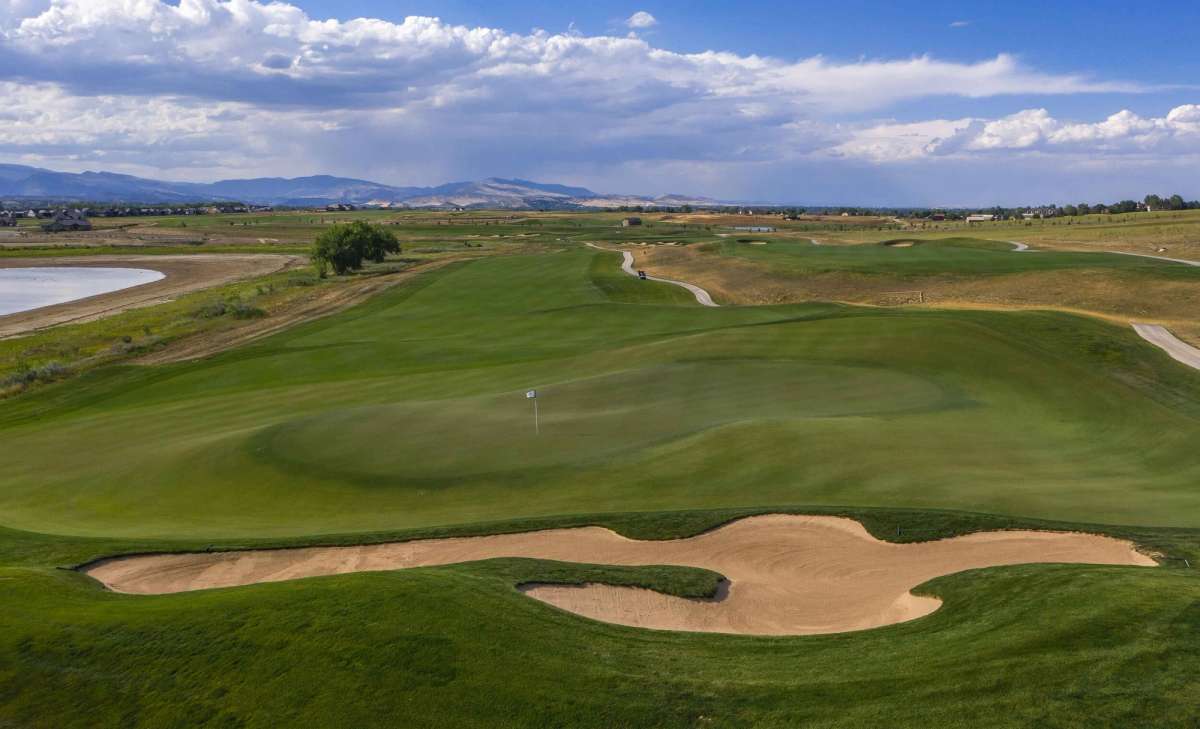
Nowhere is the change of average age of the clientele better illustrated than at the resort's hub of activity, the wonderful Himalayan-type putting green and recently opened short course, The Cradle. Its marvellously relaxed atmosphere is a sight to behold, often shoeless golfers walking around, drinks in hand, soaking up the sun, a sight early 20th-century elitism upon which Pinehurst was built would simply fail to comprehend.
Pinehurst has managed to blend the classical etiquette and modern-day casual beautifully; the two appear to exist in joyful harmony.
Amidst the often obnoxious and braggadocious social media postings of logo-emblazoned 'merch' with its headcovers, quarter-zips, Yetis and caps, there is a segment of the golfing community who still cherish the simplest of golf course memorabilia.
The simplicity of the scorecard, pencil and the glorious tee - and NOWHERE does the golf tee better than Pinehurst. This is golf tee heaven, so much so that there lies the underground aura of The Pinehurst Tee Collection.
The "SHORT" – Standard tee from The Cradle course. The original and everyday tee from the wonderful 9-hole short course designed by Gil Hanse.
The "FALL" – This tee is issued at The Cradle for a short time at the change of summer to autumn.
The "SPRING" – Short-time issue also at The Cradle for the start of the spring season.
The "CRADLE CROSSING" – This tee can be found at the comfort station on The Cradle, which is a junction within the course and the centre of post-game activity with fire pit libations and storytelling.

The "2" – Speaks for itself: the tee for the prestigious Pinehurst No. 2, host of four US Opens and Donald Ross's masterpiece.
The "3" – From Pinehurst No. 3, Ross's 1910 design featuring the smallest greens at the resort.
The "4" – Pinehurst No. 4, Gil Hanse's 2018 restoration ranked among America's top 100 courses.
The "8 BALL" – Exclusive tee to Pinehurst No. 8, Tom Fazio's Centennial Course.
The "SANDMINE" – Exclusive tee of Pinehurst No. 10, so called to pay homage to the sandmines upon which Tom Doak's newest course was built.

The "COTTAGES" – Tee found only at The Cottages of No. 8, new accommodation on site at that course.
The "CAROLINA" – The signature tee from The Carolina Hotel, the wonderfully elegant flagship of Pinehurst Resort since its construction in 1901.
The "MANOR" – So called as it can only be found at The Manor, the charming resort accommodation Manor House, built in 1923, featuring the popular Hackers at Pinehurst sports bar.
The "HOLLY" – Only available to guests at The Holly Inn, with its Southern charm and culinary excellence, which was the original accommodation built at Pinehurst, opening in 1895.

The "NEST" – Originates from the halfway house on Pinehurst No. 4 and pays homage to the red-cockaded woodpecker, an endangered species that is prospering under the protection of the Pinehurst area and longleaf pines.
The "PUTTER BOY" – This tee can be found throughout the resort, in the pro shop, on the range and in locker rooms.
The "NORTH SOUTH" – This tee is only available to competitors of the North South competitions held annually at Pinehurst since 1901.
The "COTTAGE" – Probably the grail of all the tees at Pinehurst. Found exclusively inside the Dornoch Cottage, which is located adjacent to hole 3 on Pinehurst No. 2 and designed and built by Donald Ross himself.

With 10 championship courses, Pinehurst Resort offers unmatched variety for golf enthusiasts. Each course provides its own unique challenge and, of course, its own commemorative tee.
The resort's founding course, originally designed by Dr. Leroy Culver in 1897 and later refined by Donald Ross. At just over 6,000 yards, this par-70 layout features Ross's signature small, elevated greens and strategic bunkering inspired by his Scottish heritage. The perfect warm-up for Pinehurst No. 2.
Donald Ross's masterpiece and host of four US Open Championships. At 7,588 yards, par 72, this iconic course features the famous turtleback greens surrounded by sand and native wiregrass. After the 2010 Coore & Crenshaw restoration, Pinehurst No. 2 returned to its natural Sandhills aesthetic, creating one of golf's most cerebral challenges.
The shortest course at Pinehurst at just 5,155 yards, par 68, but don't be fooled. Ross designed minuscule elevated greens averaging just 4,500 square feet each, demanding exceptional accuracy. Pinehurst No. 3 underwent renovations in 2017 to restore its traditional sandscape appearance.
Originally a Donald Ross routing from 1919, Pinehurst No. 4 was completely reimagined by Gil Hanse in 2018. The 7,117-yard, par-72 course features over 140 pot bunkers and native sandscapes similar to No. 2. Golf Magazine ranks it as the 92nd best course in America and co-host of the 2008 and 2019 US Amateurs.
Designed by Ellis Maples, Donald Ross's protégé, this 6,848-yard par-72 course features the iconic "Cathedral Hole"—the par-3 14th with a pond-fronted green encircled by towering pines. Pinehurst No. 5 showcases more water hazards than any other Pinehurst course and favours longer hitters.
Tom and George Fazio's 7,053-yard, par-72 creation offers dramatic elevation changes, water features, and undulating terrain. Pinehurst No. 6 departs from the traditional Pinehurst style with its parkland character, yet maintains distinctive Sandhills appeal with native wire grass and a challenging back nine.
Built on the most rugged terrain at Pinehurst, this 7,216-yard par-72 course features 75 bunkers and 25 acres of wetlands. Pinehurst No. 7 showcases the famous "Jones' Fingers" bunker on the signature 16th hole and boasts more elevation changes than any other Pinehurst course. Tiger Woods claimed his only Pinehurst victory here at the 1992 Big I Junior Classic.
Tom Fazio designed Pinehurst No. 8 to celebrate Pinehurst's 100th anniversary. This 7,092-yard, par-72 course is the most secluded at the resort, cut from a nature preserve with no housing development. Fazio incorporated Ross-inspired features including crowned greens with greenside swales and false fronts, earning recognition among America's top 100 public courses.
Originally the National Golf Club, this Jack Nicklaus design was acquired by Pinehurst in 2014. At 7,118 yards, par 72, Pinehurst No. 9 is the only Nicklaus course in the North Carolina Sandhills region. It features wide, tree-lined fairways, undulating bentgrass greens (the only bentgrass at Pinehurst), and dramatic water features.
Pinehurst's newest course, designed by Tom Doak and Angela Moser, opened in April 2024. This 7,020-yard, par-70 walking-only course sits on the 900-acre Pinehurst Sandmines property and features over 75 feet of elevation change—unprecedented at Pinehurst. Named Best New Public Course of 2024 by Golf Digest, Pinehurst No. 10 showcases rugged mining dunes and native Sandhills landscape.
A 9-hole par-3 course featuring holes ranging from 56 to 127 yards. Located mere steps from the resort clubhouse, The Cradle has become one of Pinehurst's most popular amenities, offering barefoot golf, cocktails, and a relaxed social atmosphere.
The wonderful Himalayan-type putting course features 18 holes of mind-bending journeys designed to entertain everyone, from golfing beginners to scratch players. Play is free to resort guests.
Whether you're seeking the cerebral challenge of Pinehurst No. 2's turtleback greens, the dramatic elevation of Pinehurst No. 7, the Jack Nicklaus pedigree of Pinehurst No. 9, or the walking-only experience of Tom Doak's Pinehurst No. 10, America's premier golf resort delivers unforgettable golf—and collectable tees to remember it by.
Pinehurst Resort remains the Cradle of American Golf, where history, championship golf, and yes, even the humble golf tee, are celebrated with unmatched reverence.

The Sandhills of North Carolina represent American golf's most sacred ground, where Donald Ross crafted his masterpieces and legends continue to emerge. Pinehurst isn't merely a golf destination—it's a pilgrimage site where the sport's greatest champions have tested their mettle across nearly 130 years of golfing history. Pinehurst - Your Next Golf Holiday? Why serious golfers choose Pinehurst: Unmatched heritage - Home to more major championships than any resort destination, including four U.S. Opens on the legendary No. 2 course Championship diversity - Ten distinct courses at Pinehurst Resort alone, each presenting unique challenges from Donald Ross classics to modern masterpieces Year-round playability - Mild Sandhills climate offers excellent conditions 10 months annually, with spring and autumn providing perfect golf weather Complete golf immersion - Purpose-built resort village where every aspect revolves around the game, from morning coffee to evening reflections The concentration of world-class golf within a 30-minute radius remains unmatched anywhere globally, making Pinehurst the ultimate destination for discerning golfers seeking authentic American golf history. North Carolina's Championship Golf Courses Pinehurst No. 2 - Donald Ross's crown jewel and America's most celebrated golf course. The crowned greens and strategic bunkering create an unforgiving test that has humbled golf's greatest players across four U.S. Opens. Recent restoration by Bill Coore and Ben Crenshaw returned the course to Ross's original vision. Pinehurst No. 10 - Tom Fazio's modern masterpiece seamlessly blends contemporary design with Sandhills tradition. This spectacular layout features dramatic elevation changes and strategic water features whilst maintaining the area's characteristic sandy soil and longleaf pines. Consistently ranked among America's finest resort courses. Old Town Club - Arguably North Carolina's finest golf experience, this ultra-exclusive members-only facility requires proper introductions but rewards with an absolutely sublime golf experience. Located approximately two hours from Pinehurst, the course represents golf architecture at its most refined. Access requires member invitation and planning. Pine Needles Golf Club - Donald Ross's family-friendly masterpiece, famous for hosting multiple U.S. Women's Opens. The course maintains Ross's strategic principles whilst offering a more approachable challenge. The historic lodge provides intimate accommodation with direct course access. Mid Pines Inn Golf Club - Another Ross gem recently restored to original specifications, featuring the architect's signature crowned greens and strategic bunkering. The intimate inn setting provides old-world charm with modern amenities. Southern Pines Golf Club - The oldest Ross course in continuous play, this members' club welcomes visitors and showcases the master's early design philosophy. More intimate than its famous siblings but equally challenging for serious golfers. North Carolina's Best Kept Golf Secrets Tot Hill Farm Golf Club - This Mike Strantz design offers dramatic, links-inspired golf through rolling Sandhills terrain. Known for bold architectural features and strategic challenge, it provides exceptional value compared to resort courses. Green fees approximately £85 (€100/$110). Forest Creek Golf Club - Two Tom Fazio courses provide members and their guests with exceptional golf experiences. Both layouts utilise natural Sandhills topography whilst offering distinct playing characteristics. Limited access through member introductions makes this a special treat for connected visitors. Country Club of North Carolina - This prestigious club features two excellent courses: the Ellis Maples design renovated by rising architect Kris Spence, and a classic William Byrd/Robert Trent Jones layout. Both courses maintain impeccable conditions year-round. Tobacco Road Golf Club - Mike Strantz's wild and wonderful creation challenges conventional golf thinking with dramatic elevation changes and bold design features. This public course offers a championship-level challenge at accessible pricing. The Dormie Club - Part of the exclusive Dormie Network, this Tim Cate design provides limited access to qualified golfers. The course showcases modern architecture whilst respecting Sandhills' traditions. Access requires Dormie Network membership or proper introductions. Sample Itineraries: Choose Your Pinehurst Adventure 3-Day Championship Experience Day 1: Arrive Raleigh-Durham Airport, drive to Pinehurst Resort (90 minutes). Check into Carolina Hotel, evening dinner at 1895 Grille in Holly Inn. Day 2: Morning championship test on Pinehurst No. 2, afternoon visit to Tufts Archives and World Golf Hall of Fame. Evening at Villaggio restaurant with a celebration of conquering America's most famous course. Day 3: Morning round at Pinehurst No. 10 for Tom Fazio's modern masterpiece, check out Pine Needles Lodge (15 minutes). Afternoon round at Pine Needles Golf Club, evening dinner at Ashten's in Southern Pines, before departure next morning. 5-Day Classic Experience Days 1-3: Follow the championship experience above Day 4: Check out Pinehurst Resort, morning round at Southern Pines Golf Club for an authentic Ross heritage experience. Afternoon check into Pine Needles Lodge, evening exploring Southern Pines town centre. Day 5: Morning round at Tot Hill Farm for Mike Strantz's dramatic links-inspired design. Afternoon departure via Raleigh-Durham Airport, allowing reflection on diverse architectural styles from Ross classics to modern innovation. 7-Day Comprehensive Experience Days 1-5: Follow classic experience above Day 6: Morning round at Mid Pines Inn Golf Club, a recently restored Ross gem. Afternoon check into Mid Pines Inn for an intimate lodge experience. Evening at Chef Warren's restaurant. Day 7: Challenge yourself with Tobacco Road Golf Club's wild Mike Strantz design featuring dramatic elevation changes. Afternoon departure with memories of North Carolina's most diverse golf architecture. 10-Day Ultimate Private Access Experience Days 1-7: Follow the comprehensive experience above Day 8: Travel day to access the private Forest Creek Golf Club (member introduction required). Experience Tom Fazio's dual masterpieces with on-site accommodation if available. Evening dining at club facilities. Day 9: Morning round at Country Club of North Carolina's Ellis Maples/Kris Spence course, afternoon round at their William Byrd/Robert Trent Jones layout. Both courses showcase immaculate conditioning and exclusive atmosphere. Day 10: Return to Pinehurst area for departure preparations and final equipment purchases at pro shops. Morning flexibility for additional practice or replay of favourite course before evening departure. Ultimate 7-Day Connoisseur's Collection Note: This itinerary requires extensive planning and member connections for private club access Day 1: Arrive and settle at Pinehurst Resort, evening preparation for championship golf ahead. Day 2: Pinehurst No. 2 championship experience, afternoon recovery and planning for exclusive access days. Day 3: Early departure for Old Town Club (2-hour drive, member invitation essential). Experience arguably North Carolina's finest golf course. Overnight accommodation near Old Town or return to the Pinehurst area. Day 4: Pinehurst No. 10 morning round, afternoon at Pine Needles Lodge with evening at historic property. Day 5: Morning round at Mid Pines Inn, afternoon at Southern Pines Golf Club for a double Ross experience. Day 6: Tot Hill Farm morning challenge, afternoon preparation for final exclusive experience. Day 7: Forest Creek Golf Club South course (member access required), afternoon departure with memories of North Carolina's most prestigious golf collection. Pinehurst Travel Logistics Transportation: Raleigh-Durham International Airport serves the region with direct connections to major European hubs. Rental cars provide essential flexibility for course-hopping, though many accommodations offer shuttle services to affiliated courses. The village of Pinehurst remains walkable, with most resort amenities accessible on foot. Weather & Packing: Spring (March-May) and autumn (September-November) provide ideal conditions with temperatures ranging from 15-24°C (59-75°F). Summer brings heat and humidity, requiring early morning tee times. Winter remains playable with temperatures 4-15°C (39-59°F). Equipment: Club transportation through airlines works well, though several local shops provide quality rental sets. Pine Needles and Pinehurst Resort offer excellent pro shops for equipment needs. Many courses include GPS-equipped golf carts in green fees. Documentation: Official handicap certificates are required for premium courses. Some private clubs require advance verification and member introductions. Dress codes tend toward smart casual, with most facilities requiring collared shirts and proper golf attire. Where to Stay for Pinehurst Golf Pinehurst Resort provides the complete experience with three distinct accommodation options. The Carolina Hotel offers luxury with grand Southern architecture, whilst Holly Inn provides intimate charm, and Magnolia Inn delivers modern comfort. All resort guests enjoy access to courses No. 1, 2, 3, 4, 8, 9, and 10, plus extensive practice facilities. Pine Needles Lodge creates an intimate golfing experience with direct course access and charming accommodations. The historic property maintains old-world character whilst providing modern amenities for discerning golfers. Mid Pines Inn offers similar charm with excellent course access and more budget-friendly pricing than resort options. The property provides an authentic Sandhills atmosphere with personal service. Private club accommodations at Forest Creek and Country Club of North Carolina provide exclusive experiences for qualified guests. Both clubs offer on-site lodging with immediate course access, though arrangements require member sponsorship. Local hotels and B&Bs throughout Southern Pines and Aberdeen provide excellent value for golfers prioritising course access over resort amenities. Many offer package deals with area courses at significant savings. Pinehurst's Culinary Scene Premium dining experiences centre around resort restaurants, with Villaggio in Magnolia Inn leading the pack for exceptional Italian cuisine and wine selection. 1895 Grille in Holly Inn provides classic American fare with Southern influences. Local Southern Pines restaurants offer outstanding value and authentic regional cuisine. Ashten's, Walcott's, and Chef Warren's provide excellent dinners. These establishments showcase local ingredients and traditional Southern cooking. Casual dining and lunch venues include the legendary Pinehurst Racetrack Restaurant for hearty breakfasts, Mason's in Aberdeen for exceptional morning meals, and The Villager Deli for lunch with views of the Donald Ross statue. The lunch buffet at The Deuce provides excellent value and remains the best deal in town for golfers seeking substantial midday meals. New dining destination at Pinehurst No. 10 offers excellent cuisine at the Sandmines location, providing another quality option for golfers exploring the newer facilities south of the main resort. Post-round refreshments flow naturally at resort bars, Dugan Pub for an authentic atmosphere, or Pinehurst Brewing Company for local craft beers. 19th hole culture remains strong throughout the region, with most venues welcoming golf conversation and camaraderie. Booking Golf in Pinehurst Resort course reservations at Pinehurst require accommodation packages for premium courses No. 2 and No. 4, whilst other resort courses allow outside play with advance booking. Peak seasons (spring and autumn) require 60-90 day advance reservations. Private courses like Pine Needles, Mid Pines, and Southern Pines accept advance bookings from qualified golfers. Summer months offer better availability and reduced pricing, whilst spring and autumn book quickly. Package deals through Pinehurst Resort or area hotels often provide better value than individual bookings, particularly for multi-course experiences. These packages frequently include accommodation, meals, and course access at attractive rates. Weather contingencies remain important given seasonal afternoon thunderstorms. Most courses offer rain checks or rescheduling options, though peak season flexibility may be limited. Local booking assistance through resort concierges or area golf shops can access member guest opportunities at private courses. Building relationships with local professionals often opens doors to exclusive experiences. Explore Beyond Golf Tufts Archives provides fascinating insights into Pinehurst's golf history, showcasing how James Walker Tufts transformed the Sandhills into America's premier golf destination. The World Golf Hall of Fame within the USGA building offers an additional historical perspective. Weymouth Woods Nature Preserve delivers excellent hiking through longleaf pine ecosystems, providing peaceful recovery from intense golf experiences. The preserve showcases a natural Sandhills environment that attracted original developers. Historic Southern Pines offers charming downtown shopping, antique browsing, and local craft galleries. The town maintains a small-town atmosphere whilst providing sophisticated amenities for visitors. Equestrian activities remain strong throughout the region, with various stables offering trail rides through Sandhills terrain. The area's horse culture complements its golf heritage beautifully. Cultural attractions include local art galleries, seasonal festivals, and historic home tours that showcase the region's development from health resort to golf mecca. Insider Local Knowledge Avoid common mistakes by understanding that Pinehurst No. 2 requires genuine shot-making skills - the crowned greens punish poor approach shots mercilessly. Seasonal timing proves crucial, with March-April and October-November providing optimal conditions. Summer golf requires dawn tee times to avoid heat and afternoon storms. Local connections through resort staff, pro shop personnel, or area golfers can unlock access to private clubs and special experiences. Southern hospitality opens doors for polite, respectful visitors. Equipment preparation should include wedges suitable for sandy conditions and putting practice for crowned greens. Many visitors underestimate how different these surfaces play compared to modern designs. Cultural expectations favour traditional golf etiquette and dress codes. The area takes golf seriously whilst maintaining welcoming atmosphere for genuine golf enthusiasts. Budget Planning & Travel Value Championship course experiences at Pinehurst No. 2 and No. 10 command premium pricing, reflecting world-class facilities and historical significance. Mid-tier options like Pine Needles, Mid Pines, and Southern Pines provide excellent value with authentic Ross designs without resort premiums. Budget-friendly alternatives include public courses like Mid South Club, Legacy, Talamore, and Longleaf. These provide solid golf experiences at accessible pricing. Total trip estimates vary significantly based on accommodation and course choices. Budget-conscious golfers can enjoy excellent experiences, whilst premium experiences at Pinehurst Resort with championship courses represent a significant investment. Money-saving strategies include off-season timing, package deals through area accommodations, and mixing premium courses with budget-friendly alternatives. Many local restaurants provide exceptional value compared to resort dining. The Sandhills of North Carolina offer unparalleled golf experiences for every budget, from budget-conscious enthusiasts to luxury-seeking golfers. The concentration of quality courses, combined with reasonable accommodation and dining costs outside the resort, creates exceptional value for international golf travellers seeking authentic American golf heritage.

The Sandhills – high-class designs outside Pinehurst I have been very fortunate to play a great deal of golf in Great Britain and Ireland. In fact by last count I have played 38 of the top 50 courses in GB&I including 18 of the top 20. However, access to the top courses in the USA is an entirely different matter. Most of the top courses are member only and extremely exclusive. The top public access courses are usually associated with expensive resorts and can be out of price range for many golfers. However, the Pinehurst area in the Sandhills of North Carolina offers golfers an opportunity to play a number of high-class golf courses at a very reasonable price. Pinehurst is about 350 miles from my home in Knoxville, Tennessee, so it made sense to travel to this fascinating area and try out some of the great courses here. I had visited the wonderful Pinehurst Resort two years ago and played the justifiably famous #2 course, but this time my wife joined me for a tour of several great golf courses outside the resort. We arranged to play Mid Pines, Pine Needles, Southern Pines, Dormie Club and Tobacco Road over the course of five days. First up was Southern Pines, a 1906 Donald Ross design that’s set in beautiful rolling terrain. Ross originally designed nine holes then added the second nine later and like all of the other courses we played on this trip the nines do not return to the clubhouse, which is a fun variation of the ubiquitous nine-hole loops seen in the vast majority of courses in the USA. The greens are pure Donald Ross – subtle yet challenging contours with slopes and run offs in every conceivable direction are the order of the day. The course is very pretty and tree-lined with gentile doglegs on almost every hole. The straightforward downhill opening par four is followed by the lovely short par five 2nd. The tee shot rolls downhill and a well-struck shot offers the opportunity to go for the green in two. However the second shot is uphill off a downhill lie to a green with a significant false front. I really enjoyed the stretch of 10 through 13, a collection of four unique par fours. 10 and 11 are short holes demanding precision but the par four 12th is slightly uphill and at 419 yards is quite a challenge. The 13th returns downhill at 400 yards and the approach is played to a sloping green with a dangerous drop off behind the putting surface. All these are really solid par fours. My wife is a relative beginner, playing to a 36 handicap, but she enjoyed the course. As is the case with most Ross designs the front of the greens were open and welcomed a run up shot versus the forced carries of many modern designs. Unfortunately, as great as the design is, Southern Pines is currently in a significant state of disrepair. The course is poorly maintained and the staff less than welcoming. I played from the back tees and many were unmowed and covered with weeds. In addition the pace of play was atrocious. It took our two ball over five hours to cover the entire 18, and we noticed several beer sodden foursomes in front of us holding up the entire course. Rumors abound that several groups are interested in purchasing the course, and if someone could come in and put some tender care into it (and an infusion of cash, obviously) then I believe Southern Pines could be a US Top 100 contender. Pine Needles and Mid Pines are two more classic Ross designs that lie across the road from one another near the town of Southern Pines. They were originally built to accommodate the overflow of visitors which the original courses at Pinehurst were unable to handle. The land is significantly hillier than the relatively flat land that Pinehurst #2 sits on, so the courses have a distinct flavor of their own. If anything these courses reminded me of some of the great heathland courses around London, perhaps most closely resembling the three “W’s” of Woking, West Hill and Worplesdon. Both these courses flow through beautiful pine forests that influence play but also allow recovery shots. Both courses have undergone renovations in the past few years. Mid Pines has been worked over by Kyle Franz who restored many of the putting surfaces. It has magnificent greens with an incredible variety of run offs, mounds and slopes – each green complex is unique and challenging. In addition, the course has restored the scruffy sand-like waste areas instead of thick Bermuda rough, much like the Coore-Crenshaw restoration of Pinehurst #2. The overall result is a wonderful course. The flow and curves of the holes demand very precise ball striking. The short par four 4th is a good example of the challenges that Mid Pines presents. The hole is only 330 yards, with lovely bunkering on the left. However, a huge single pine tree will block a shot played too carefully to the right. The green is small and angled away from the player with a steep slope off the right. The precision required here is entirely appropriate for a hole of this length. In addition, the par threes are in my opinion all excellent. The 2nd plays from one elevation to another, while the downhill 8th, bunkered 11th and long (230-yard) 13th are all solid challenges. Mid Pines is approximately 6,700 yards from the back tees and is a genuine test for any level of golfer. Pine Needles has hosted several U.S. Women’s Opens and is on schedule to host the championship again in 2022 for the fourth time. Although Mid Pines and Pine Needles are similar in design characteristics they differ sufficiently to be enjoyed on their own account. Pine Needles has undergone several renovations and Kyle Franz is continuing work on Pine Needles as he did at Mid Pines. The routing is unique as the course runs in a long almost continuous loop so that each hole seems to be in isolation from the other. There is essentially no rough on this course, only fairway and pine needles. The fairways are wider than Mid Pines but the course still demands strategy and precision to negotiate the best approach into the greens. The green complexes here are more pronounced than at Mid Pines and are closer to the style of greens at Pinehurst #2 than any other Ross course I have played. The starter warned me to approach the greens carefully, especially with longer clubs. I got the opportunity to appreciate his advice early in my round. On the beautiful long 438-yard par four 2nd I rifled my 5 iron second shot directly at the pin. My shot landed a few feet away from the hole only to roll off the back of the green onto a bank from where I was happy to make bogey. There are a number of supremely challenging holes. The par four 4th plays uphill and is guarded by a large bunker to the left with room available to the right off the tee. However, a large bunker to the left and two to the right protect the green so that the approach has to be played with the utmost precision. I also loved the par five 10th where the drive is challenged by a magnificent bunker in the corner of the dogleg. 17 is a great dog leg left par four where the tee shot is again dominated by a significant bunker in the corner of the dogleg. Overall I preferred Pine Needles ever so slightly over Mid Pines. I thought the setting was more attractive, I found the tight driving lines a little much at Mid Pines. My wife enjoyed both courses as well, but probably liked Pine Needles a little better, especially since she came within 6 inches of a hole-in-one at the downhill par three 13th. Both courses had a nice set of forward tees at just less than 5,000 yards, which suited her game well. The management at both courses is outstanding and the conditioning second to none. The Pinehurst area could be considered Donald Ross heaven and these two courses are among his finest designs. While the three Ross courses highlight the design features of the early 20th century, the other two courses we played, Dormie Club and Tobacco Road, showcase modern golf course architecture. Dormie Club was originally an expensive private club, but fell upon hard times during the economic difficulties earlier this century and is now open for public play. The course is a Coore and Crenshaw design and many of their architectural features are readily apparent. There appears to have been minimal shaping of the land, instead using the significant contours of this hilly lakeside property to bring character to the holes. The course flows up and down, left and right, and any combination of those as well. Overall there is a calm minimalist feel to the course. The holes are very pleasing to the eye as they flow through the tree-lined property. You never feel cramped at Dormie Club but the holes don’t lack strategic interest. I found the back nine much more absorbing than the front. There are several great holes on the inward half including the brutal 465-yard par four 13th hole, with a lone tree to the right of the fairway which really tightens up this already tough hole. The 14th is a short par four barely 300 yards long, but a huge bunker on the right dominates the well-contoured green. Fifteen is a beautiful par four with an oblique wetland hazard running down the right side of the fairway, offering the player endless options off the tee. The uphill par five 17th is probably my favorite hole on the course. The approach must contend with a huge cross bunker/waste area that demands a decision from the player to either lay up or go for it. Tobacco Road is probably the most well known design of the late Mike Strantz. I have often played Caledonia and True Blue (his two courses in the Pawleys Island area near Myrtle Beach) and they have always been favorites of mine. I was looking forward to playing this highly regarded layout and it was a fascinating experience to say the least. Tobacco Road is a somewhat bizarre combination of Pine Valley, Prestwick and Lahinch with a dose of modern Tom Fazio design thrown in for flavoring. This course is a 3D puzzle that is difficult to decipher on the first visit or with a course guide. In general I think the course is very fair, although it is very intimidating visually. There is usually much more room than initial appearances would suggest. The greens range from the sublime to the ridiculous (there must be a 20-foot elevation change from the lower to the upper tier of number seven). In general the course is fun to play but one that definitely demands a second go to really appreciate what is going on. My favorite holes included the short par four 5th. A massive waste area runs from the tee almost 250 yards up the left side of the fairway. There is a generous amount of room right and the reasonable play is to go right and hit a wedge into the green. Long hitters, however, may be ever so tempted to aim for the small sliver of landing area just past the waste area in an attempt to drive the green. I thought this was a cleverly designed hole. Nine is a fantastic uphill par four where the approach is guarded by a massive deep bunker to the right of the green, but in reality there is quite a bit of room to the left to approach the hole. Strantz went for glory on this course, and I thought he missed on a few holes. Thirteen is an uphill, dogleg par five with a dell green that is ridiculously narrow and guarded not only by the hills but by high grass. I thought this hole was somewhat contrived. I would certainly play both of these courses again. Rumor has it that Bill Coore is visiting Dormie Club for some updates, and I think some subtle bunkering and improvement of several of the green complexes, especially on the front nine, would really improve the course. Tobacco Road is certainly a wild ride. Surprisingly my wife much preferred Tobacco Road to Dormie Club. Tobacco Road has a forward set of tees around 4,300 yards that allowed her the challenge of the holes without pressing her to make forced carries either off the tee or approaching the green. At Dormie Club the forward tees were often only 10 or 15 yards in front of the men’s tees, and several holes were just too long for most female golfers. The par five 10th for example was 571 yards from the most forward tee! This was just a little much for her. In addition several of the tee shots had forced carries over wetlands that were just too difficult for her to negotiate. A few new tee boxes accommodating women and younger players would be a welcome addition to this fine course. I really think there are few places in the USA that offer as much quality golf at an affordable price than the Pinehurst area. Between these five courses, the famous Pinehurst #2, and several of the other fine courses at the Pinehurst Resort a golfer can sample the best of classic golf design as well as the new. I plan to return in the future and would recommend this area to anyone interested in playing quality, memorable golf courses at a very reasonable cost. Richard Smith Knoxville, Tennessee
For much of golf’s history, the idea of a hole measuring 700 yards or more would have seemed excessive. Today, such distances are no longer quite so extraordinary. The world’s longest holes are an eclectic group, spread across very different landscapes and created for very different reasons. Some belong to expansive resort courses, others to championship layouts, while a handful have become famous largely because of the sheer scale of the challenge they present. From a former world-record holder in North Carolina to an extraordinary par 7 measuring over 1km in South Korea, these are the 10 longest golf holes in the world. 10. Black Mountain Golf Club (North Carolina, USA) Hole 17 | 747 yards (683m) | Par 6 The 17th at Black Mountain is one of the survivors from an era when exceptionally long golf holes were still something of a novelty. At 747 yards, the par six was once recognised as the longest golf hole in the world - a distinction that helped put this small North Carolina club on the golfing map. The hole is part of Black Mountain's older nine-hole layout, which dates back to the 1960s, and its extraordinary length was a deliberate feature rather than an accident of modern championship-course design. From the back tees, the fairway climbs and falls through the foothills, with the green sitting far enough away that it disappears from view for much of the hole. For a course that otherwise has a relatively modest footprint, the 17th is an impressive piece of real estate. Its 747 yards are now exceeded by several holes built in the decades since, but the hole retains its place in golf's long-hole folklore. It is also a reminder of how quickly perceptions of distance have changed. What was once a world record is now the shortest hole in this particular top ten. 9. TPC Colorado (Colorado, USA) Hole 13 | 773 yards (707m) | Par 5 TPC Colorado opened in 2018 at Heron Lakes near Berthoud, with Arthur Schaupeter’s design set against open Colorado terrain and views towards the Front Range. The 7,991-yard course was built with tournament golf in mind and has since become a regular Korn Ferry Tour venue. The 13th, named “Longer Still”, is its defining hole. At 773 yards from the TOUR tees, it is the longest hole on a PGA TOUR course and the longest par five in PGA TOUR golf. Its principal feature is the enormous 108-yard Hell Bunker, which runs along the left side of the fairway and creates the key decision after the drive: challenge it to gain ground or lay back and accept a longer approach. At altitude, the hole does not play quite as severely as the yardage suggests, but its scale remains remarkable. More importantly, the length is integrated into the design rather than simply added as a spectacle, giving No. 13 a strategic identity that has made it one of the most recognisable holes in modern American golf. 8. The Reserve at Moonlight Basin (Montana, USA) Hole 17 | 777 yards (710m) | Par 5 Set at 7,500 feet above Big Sky in the Rocky Mountains, The Reserve at Moonlight Basin is one of Jack Nicklaus’ most dramatic mountain courses. Built across the former Moonlight Basin ski area, the 8,000-yard layout moves through forest and open mountain terrain, with more than 1,000 feet of elevation change across the property. The 17th is the signature expression of that setting. At 777 yards, it is already extraordinary on the card, but the hole plunges downhill towards the green, with the change in elevation and thin mountain air making the distance considerably less daunting than it first appears. A large fairway bunker sits around 370 yards from the back tee, beyond which the fairway reveals the full scale of the descent towards the green. It is a fittingly theatrical hole for a course where elevation is central to the experience. The 17th was also one of the holes that came to wider attention when Moonlight Basin hosted The Match in 2021 – when Bryson DeChambeau and Aaron Rodgers defeated Phil Mickelson and Tom Brady – putting its spectacular setting and remarkable yardage on national television. 7. Penati Golf Resort - Legend course (Trnava Region, Slovakia) Hole 15 | 783 yards (716m) | Par 6 Opened in 2012, the Legend Course at Penati occupies a sandy, pine-covered site near Senica, with Nicklaus Design using the natural character of the property to create wide, undulating fairways and extensive waste areas. The course forms part of Slovakia’s largest golf resort and was the first Nicklaus Design course in the country. The 15th is the course’s defining feature. It has 11 teeing positions, allowing it to be played at very different lengths, but from the back tees, it stretches to 783 yards and becomes a par 6. The fairway is split by a large waste bunker, with further bunkering framing the second landing area before the hole finally turns towards the green. The hole gained international attention when the European Challenge Tour used the full 783-yard version during the Slovakia Challenge in 2015, 2016 and 2019. In regular play, however, it is generally shortened and played as a par 5 - a useful reminder that the extraordinary version seen on the professional circuit is only one interpretation of Central Europe’s longest hole. 6. Theodora Golf Club (Transylvania, Romania) Hole 18 | 804 yards (735m) | Par 6 Theodora Golf Club sits outside Alba Iulia on the banks of the Mureș, occupying a remarkably flat 56-hectare site. Opened in 2018, the resort was created around an 18-hole championship course, with a large lake excavated in front of the clubhouse providing material to shape the otherwise level ground. That lake is central to the character of the closing hole. The 18th stretches over 800 yards from the back tees, with the approach eventually leading to an island green shared with the 9th. The arrangement gives what might otherwise be a straightforwardly expansive hole a much more distinctive finish. Theodora itself describes the 18th as the longest par 6 in Europe, and it has become the defining feature of a relatively young Romanian resort that has steadily established itself on the European golf map. 5. The Links at Kahite Golf Club (Tennessee, USA) Hole 9 | 808 yards (739m) | Par 6 The Links at Kahite opened in 2002 as the third course in Tellico Village, occupying a natural setting between Tellico Lake and the foothills of the Great Smoky Mountains. The links-style layout has six sets of tees, stretches to 7,170 yards and is notable for its 93 bunkers and tall fescue framing some of the fairways. The 9th is the course's defining hole: an 739-metre par 6 that runs in a notably direct line across the landscape. From the back tees it measures 808 yards, while the blue tees bring it down to 721, making the hole a very different proposition depending on where it is played from. The course's own guide describes it simply as a unique hole, with the fairway rewarding players who can keep successive shots in play. Its position at the turn also gives Kahite an unusual rhythm. After eight holes that establish the character of the course, the 9th opens out into one of the most distinctive holes in Tennessee golf before the back nine heads back towards the mountains. 4. Meadows Farms Golf Course (Virginia, USA) Hole 12 | 841 yards (769m) | Par 6 Meadows Farms is very much the product of its founder, Bill “Farmer” Meadows, who built the course on former farmland after taking up golf later in life. It opened in 1993 with an intentionally unconventional character: the 27-hole layout includes a baseball-themed hole, a waterfall green and an island green, alongside the hole that became its calling card. The 12th stretches to 841 yards from the championship tees, running downhill before turning right, crossing two lakes and climbing towards a large elevated green. A three-leaf-clover-shaped bunker guards the approach. The sequence gives the hole considerably more shape and interest than its raw length might suggest. For decades it was promoted as the longest golf hole in the United States, a distinction that helped make this eccentric Virginia course a destination in its own right. The current course still describes No. 12 as its signature hole and the longest in the country, as recognised by the Guinness Book of World Records. 3. The Links Golf Club (Idaho, USA) Hole 9 | 842 yards (770m) | Par 6 The Links Golf Club in Post Falls opened in 1999 on the broad, open Rathdrum Prairie, with owner and designer Emmett Burley shaping the course in the tradition of Scottish links golf. There are few trees or water hazards to interrupt the prairie landscape, leaving wind, wide fairways, deep bunkers and rough to define its character. The 9th has been the course's signature hole from the beginning. It was originally measured at 738 yards from the black tees, but subsequent changes have transformed it into an 842-yard par 6, now the longest hole on the course and one of the longest in America. That extra distance has only amplified the hole's original links character. With no trees or water to dictate the route, the scale of the prairie is laid bare, while the wind can have a considerable influence on successive shots. The green itself has two distinct levels, adding another layer to a hole that has evolved from an unusual feature into the defining landmark of The Links. 2. Satsuki Golf Club - Sano course (Kanto Region, Japan) Hole 7 | 964 yards (881m) | Par 7 Satsuki Golf Club’s Sano Course opened in 1979 in the hills of Tochigi Prefecture, with broad fairways laid through a landscape of trees and gentle elevation changes. The 18-hole course measures more than 7,200 yards from the back tees, but it is the seventh hole on the outward nine that has made the club internationally known. At 964 yards, the seventh was recognised by Guinness World Records as the world’s longest golf hole and remains the defining feature of the course. It is not simply a long, open stretch: the hole has trees crowding the tee shot, OB on both sides and a relatively narrow fairway, creating pressure from the outset. There are two greens, with the left measuring the full 964 yards and the right 924. The club’s own playing strategy reflects the scale of the hole: rather than simply attacking distance on every shot, the objective is to keep successive balls in play and leave the final approach within comfortable range. For many years, Satsuki’s seventh was the benchmark by which the world’s longest holes were measured. Gunsan Country Club has since surpassed it in sheer yardage, but the Japanese par-7 remains the more established name in the record books. 1. Gunsan Country Club - Jeongeup course (Jeonbuk State, South Korea) Hole 3 | 1,098 yards (1,004m) | Par 7 Gunsan Country Club is an extraordinary property in its own right. Built on a former salt field on Korea’s west coast, the sprawling complex now has 81 holes across more than 1,000 acres, with lakes accounting for roughly 380 acres of the site and 26 bridges linking the courses. The third on the Jeongeup Course is the hole that gives Gunsan its international reputation. At 1,004 metres from the black tees, it is a par 7 and the longest hole in this ranking. The hole is also the No. 1 handicap on its nine, with water running along the left and bunkers placed to complicate the long sequence of shots required to reach the green. Its scale is matched by an unusual sense of place. The hole emerged from the transformation of the old salt works into one of Asia’s largest golf complexes, and its local nickname, the “1004 Hole”, is a play on the 1,004-metre length. Gunsan has built much of its identity around these extreme holes, with a 661-metre par 6 elsewhere on the property, but the Jeongeup third remains the defining feature. At 1,098 yards, it is comfortably longer than Satsuki’s 964-yard seventh and takes the top spot here by distance. Guinness World Records, however, has historically recognised Satsuki’s hole, so the distinction between the longest hole by yardage and the Guinness record is worth keeping in mind.

