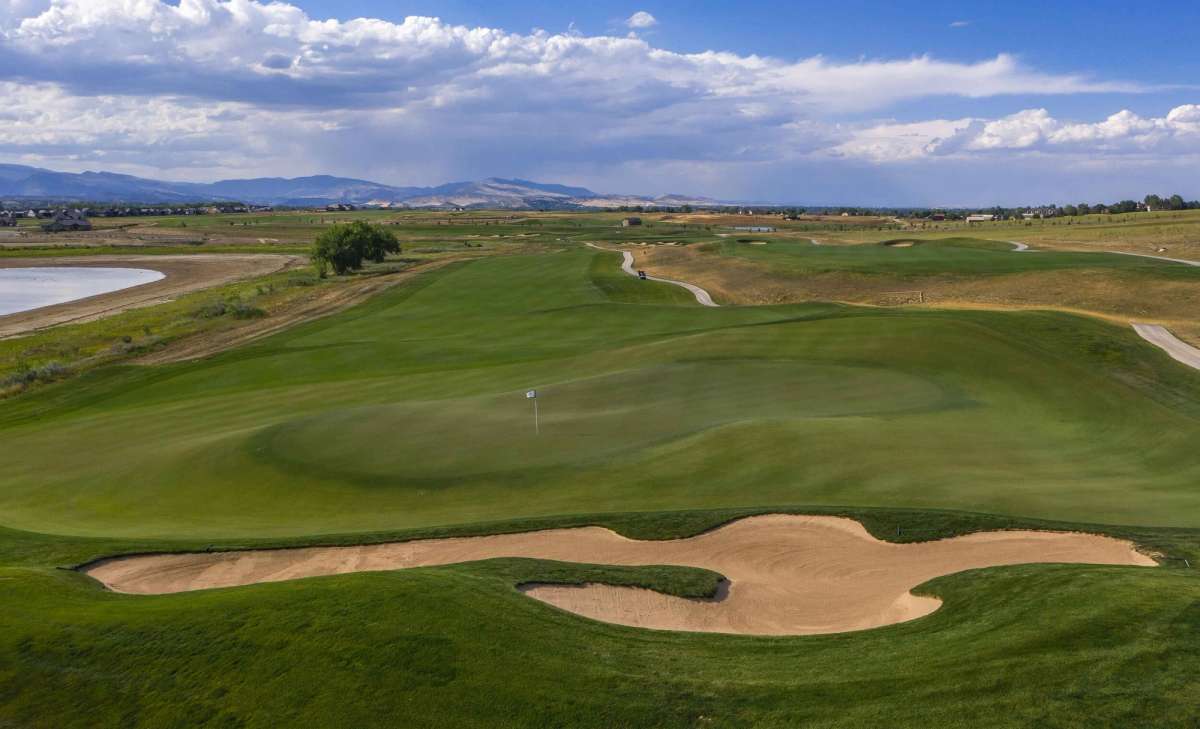
Located to the east of Missoula, Canyon River Golf Club course is a Lee Schmidt/Brian Curley creation that first opened its doors for play in 2006.
Canyon River Golf Club
Located to the east of Missoula, Canyon River Golf Club course is a Lee Schmidt/Brian Curley creation that first opened its doors for play in 2006.
Despite being located in Montana, a majority of your round at the Canyon River Golf Club will be located on flat land, focused more on the title river (which is actually the Clark Fork River). The 2006 Brian Curley and Lee Schmidt design revolves around a planned development just east of Missoula, and spends five holes with unabated looks at the river, which wraps around the property.
The design duo manages to involve the surrounding mountainside for more than just good looks, however, including at No. 12, a par three where regular players and tourists alike (it’s a public-access club) will be prompted to choose the right distance on a 211-yard par three that looks as tall as it is long.
The latest ranking of the Top 100 Golf Courses in the World serves as the ultimate global golf bucket list. Most members of our World Top 100 Panel are seasoned golfers, each playing 20-30 of these courses annually while travelling extensively over decades to form their opinions on others. We recognise that opinions vary—even among our panel members. Rankings are subjective, and there are undoubtedly 50 or more courses in the UK and USA alone that could easily fit onto this list. Links Golf Pilgrimages The rankings
California, United States
New Jersey, United States
Northern Ireland, United Kingdom
New York, United States
New York, United States
For much of golf’s history, the idea of a hole measuring 700 yards or more would have seemed excessive. Today, such distances are no longer quite so extraordinary. The world’s longest holes are an eclectic group, spread across very different landscapes and created for very different reasons. Some belong to expansive resort courses, others to championship layouts, while a handful have become famous largely because of the sheer scale of the challenge they present. From a former world-record holder in North Carolina to an extraordinary par 7 measuring over 1km in South Korea, these are the 10 longest golf holes in the world. 10. Black Mountain Golf Club (North Carolina, USA) Hole 17 | 747 yards (683m) | Par 6 The 17th at Black Mountain is one of the survivors from an era when exceptionally long golf holes were still something of a novelty. At 747 yards, the par six was once recognised as the longest golf hole in the world - a distinction that helped put this small North Carolina club on the golfing map. The hole is part of Black Mountain's older nine-hole layout, which dates back to the 1960s, and its extraordinary length was a deliberate feature rather than an accident of modern championship-course design. From the back tees, the fairway climbs and falls through the foothills, with the green sitting far enough away that it disappears from view for much of the hole. For a course that otherwise has a relatively modest footprint, the 17th is an impressive piece of real estate. Its 747 yards are now exceeded by several holes built in the decades since, but the hole retains its place in golf's long-hole folklore. It is also a reminder of how quickly perceptions of distance have changed. What was once a world record is now the shortest hole in this particular top ten. 9. TPC Colorado (Colorado, USA) Hole 13 | 773 yards (707m) | Par 5 TPC Colorado opened in 2018 at Heron Lakes near Berthoud, with Arthur Schaupeter’s design set against open Colorado terrain and views towards the Front Range. The 7,991-yard course was built with tournament golf in mind and has since become a regular Korn Ferry Tour venue. The 13th, named “Longer Still”, is its defining hole. At 773 yards from the TOUR tees, it is the longest hole on a PGA TOUR course and the longest par five in PGA TOUR golf. Its principal feature is the enormous 108-yard Hell Bunker, which runs along the left side of the fairway and creates the key decision after the drive: challenge it to gain ground or lay back and accept a longer approach. At altitude, the hole does not play quite as severely as the yardage suggests, but its scale remains remarkable. More importantly, the length is integrated into the design rather than simply added as a spectacle, giving No. 13 a strategic identity that has made it one of the most recognisable holes in modern American golf. 8. The Reserve at Moonlight Basin (Montana, USA) Hole 17 | 777 yards (710m) | Par 5 Set at 7,500 feet above Big Sky in the Rocky Mountains, The Reserve at Moonlight Basin is one of Jack Nicklaus’ most dramatic mountain courses. Built across the former Moonlight Basin ski area, the 8,000-yard layout moves through forest and open mountain terrain, with more than 1,000 feet of elevation change across the property. The 17th is the signature expression of that setting. At 777 yards, it is already extraordinary on the card, but the hole plunges downhill towards the green, with the change in elevation and thin mountain air making the distance considerably less daunting than it first appears. A large fairway bunker sits around 370 yards from the back tee, beyond which the fairway reveals the full scale of the descent towards the green. It is a fittingly theatrical hole for a course where elevation is central to the experience. The 17th was also one of the holes that came to wider attention when Moonlight Basin hosted The Match in 2021 – when Bryson DeChambeau and Aaron Rodgers defeated Phil Mickelson and Tom Brady – putting its spectacular setting and remarkable yardage on national television. 7. Penati Golf Resort - Legend course (Trnava Region, Slovakia) Hole 15 | 783 yards (716m) | Par 6 Opened in 2012, the Legend Course at Penati occupies a sandy, pine-covered site near Senica, with Nicklaus Design using the natural character of the property to create wide, undulating fairways and extensive waste areas. The course forms part of Slovakia’s largest golf resort and was the first Nicklaus Design course in the country. The 15th is the course’s defining feature. It has 11 teeing positions, allowing it to be played at very different lengths, but from the back tees, it stretches to 783 yards and becomes a par 6. The fairway is split by a large waste bunker, with further bunkering framing the second landing area before the hole finally turns towards the green. The hole gained international attention when the European Challenge Tour used the full 783-yard version during the Slovakia Challenge in 2015, 2016 and 2019. In regular play, however, it is generally shortened and played as a par 5 - a useful reminder that the extraordinary version seen on the professional circuit is only one interpretation of Central Europe’s longest hole. 6. Theodora Golf Club (Transylvania, Romania) Hole 18 | 804 yards (735m) | Par 6 Theodora Golf Club sits outside Alba Iulia on the banks of the Mureș, occupying a remarkably flat 56-hectare site. Opened in 2018, the resort was created around an 18-hole championship course, with a large lake excavated in front of the clubhouse providing material to shape the otherwise level ground. That lake is central to the character of the closing hole. The 18th stretches over 800 yards from the back tees, with the approach eventually leading to an island green shared with the 9th. The arrangement gives what might otherwise be a straightforwardly expansive hole a much more distinctive finish. Theodora itself describes the 18th as the longest par 6 in Europe, and it has become the defining feature of a relatively young Romanian resort that has steadily established itself on the European golf map. 5. The Links at Kahite Golf Club (Tennessee, USA) Hole 9 | 808 yards (739m) | Par 6 The Links at Kahite opened in 2002 as the third course in Tellico Village, occupying a natural setting between Tellico Lake and the foothills of the Great Smoky Mountains. The links-style layout has six sets of tees, stretches to 7,170 yards and is notable for its 93 bunkers and tall fescue framing some of the fairways. The 9th is the course's defining hole: an 739-metre par 6 that runs in a notably direct line across the landscape. From the back tees it measures 808 yards, while the blue tees bring it down to 721, making the hole a very different proposition depending on where it is played from. The course's own guide describes it simply as a unique hole, with the fairway rewarding players who can keep successive shots in play. Its position at the turn also gives Kahite an unusual rhythm. After eight holes that establish the character of the course, the 9th opens out into one of the most distinctive holes in Tennessee golf before the back nine heads back towards the mountains. 4. Meadows Farms Golf Course (Virginia, USA) Hole 12 | 841 yards (769m) | Par 6 Meadows Farms is very much the product of its founder, Bill “Farmer” Meadows, who built the course on former farmland after taking up golf later in life. It opened in 1993 with an intentionally unconventional character: the 27-hole layout includes a baseball-themed hole, a waterfall green and an island green, alongside the hole that became its calling card. The 12th stretches to 841 yards from the championship tees, running downhill before turning right, crossing two lakes and climbing towards a large elevated green. A three-leaf-clover-shaped bunker guards the approach. The sequence gives the hole considerably more shape and interest than its raw length might suggest. For decades it was promoted as the longest golf hole in the United States, a distinction that helped make this eccentric Virginia course a destination in its own right. The current course still describes No. 12 as its signature hole and the longest in the country, as recognised by the Guinness Book of World Records. 3. The Links Golf Club (Idaho, USA) Hole 9 | 842 yards (770m) | Par 6 The Links Golf Club in Post Falls opened in 1999 on the broad, open Rathdrum Prairie, with owner and designer Emmett Burley shaping the course in the tradition of Scottish links golf. There are few trees or water hazards to interrupt the prairie landscape, leaving wind, wide fairways, deep bunkers and rough to define its character. The 9th has been the course's signature hole from the beginning. It was originally measured at 738 yards from the black tees, but subsequent changes have transformed it into an 842-yard par 6, now the longest hole on the course and one of the longest in America. That extra distance has only amplified the hole's original links character. With no trees or water to dictate the route, the scale of the prairie is laid bare, while the wind can have a considerable influence on successive shots. The green itself has two distinct levels, adding another layer to a hole that has evolved from an unusual feature into the defining landmark of The Links. 2. Satsuki Golf Club - Sano course (Kanto Region, Japan) Hole 7 | 964 yards (881m) | Par 7 Satsuki Golf Club’s Sano Course opened in 1979 in the hills of Tochigi Prefecture, with broad fairways laid through a landscape of trees and gentle elevation changes. The 18-hole course measures more than 7,200 yards from the back tees, but it is the seventh hole on the outward nine that has made the club internationally known. At 964 yards, the seventh was recognised by Guinness World Records as the world’s longest golf hole and remains the defining feature of the course. It is not simply a long, open stretch: the hole has trees crowding the tee shot, OB on both sides and a relatively narrow fairway, creating pressure from the outset. There are two greens, with the left measuring the full 964 yards and the right 924. The club’s own playing strategy reflects the scale of the hole: rather than simply attacking distance on every shot, the objective is to keep successive balls in play and leave the final approach within comfortable range. For many years, Satsuki’s seventh was the benchmark by which the world’s longest holes were measured. Gunsan Country Club has since surpassed it in sheer yardage, but the Japanese par-7 remains the more established name in the record books. 1. Gunsan Country Club - Jeongeup course (Jeonbuk State, South Korea) Hole 3 | 1,098 yards (1,004m) | Par 7 Gunsan Country Club is an extraordinary property in its own right. Built on a former salt field on Korea’s west coast, the sprawling complex now has 81 holes across more than 1,000 acres, with lakes accounting for roughly 380 acres of the site and 26 bridges linking the courses. The third on the Jeongeup Course is the hole that gives Gunsan its international reputation. At 1,004 metres from the black tees, it is a par 7 and the longest hole in this ranking. The hole is also the No. 1 handicap on its nine, with water running along the left and bunkers placed to complicate the long sequence of shots required to reach the green. Its scale is matched by an unusual sense of place. The hole emerged from the transformation of the old salt works into one of Asia’s largest golf complexes, and its local nickname, the “1004 Hole”, is a play on the 1,004-metre length. Gunsan has built much of its identity around these extreme holes, with a 661-metre par 6 elsewhere on the property, but the Jeongeup third remains the defining feature. At 1,098 yards, it is comfortably longer than Satsuki’s 964-yard seventh and takes the top spot here by distance. Guinness World Records, however, has historically recognised Satsuki’s hole, so the distinction between the longest hole by yardage and the Guinness record is worth keeping in mind.

You don't need a four-figure budget, a private-club connection or an invitation from a member to play a course in the World Top 100. Top100 has collated the 10 cheapest visitor-accessible courses on our current World Top 100 Ranking, based on standard green fees. From a world-class links in Tasmania to a U.S. Open and Ryder Cup venue in New York, these courses offer the chance to play some of the best golf on the planet without the eye-watering green fees attached to many of their World Top 100 counterparts. 1. St Andrews Beach Golf Course (Victoria, Australia) World Ranking: 89th | Australia ranking: 6th | Green fee: A$139 (£74) Tom Doak’s first Australian mainland design, St Andrews Beach opened in 2004 on the Mornington Peninsula and has since become one of the country’s best-value, ranked courses. The public-access layout occupies 175 hectares of former grazing land, with wide fairways, rolling terrain and sandy natural contours that give several holes a links-like feel. Measuring just over 6,000 metres from the back tees, it is playable for a broad range of golfers, though the subtle greens ensure there is still plenty to think about. In a region known for outstanding golf, St Andrews Beach stands out not only for its quality but also for its accessibility, offering everyday golfers the chance to experience a Tom Doak design without the premium price tag often attached to courses of this calibre. 2. Bethpage Black (New York, USA) World Ranking: 58th | USA ranking: 28th | Green fee: From US$140 (£106) Bethpage Black has the rare distinction of being a World Top 100 course, a major championship venue and a public golf course. Located within Bethpage State Park on Long Island, the A.W. Tillinghast design opened in 1936 and has since hosted two U.S. Opens and the 2025 Ryder Cup. The Black is renowned for its difficulty, with narrow fairways, deep rough, large sculpted bunkers and elevated greens making accuracy essential. It is a demanding test, but one that remains remarkably accessible to everyday golfers. That combination of championship pedigree and public access is what makes Bethpage Black so unusual. Few golfers get the chance to play a course of this stature without needing a private-club connection or resort stay. 3. Paraparaumu Beach Golf Club (Wellington, New Zealand) World Ranking: 91st | New Zealand ranking: 2nd | Green fee: NZ$275 (£118) Set on the Kapiti Coast, north of New Zealand's capital city Wellington, Paraparaumu Beach has been one of the country’s most celebrated golf courses since Alex Russell designed it in 1949. The links has hosted 12 New Zealand Opens and has long been regarded as one of the country’s finest layouts. It is a relatively short course by modern championship standards, but the coastal wind, firm fairways, deep bunkers and undulating greens provide plenty of challenge. The split-fairway 17th is a particular highlight, forcing golfers to choose between two very different routes to the green. For international golfers, Paraparaumu offers the chance to experience a genuine piece of New Zealand golfing history without needing access to a private resort. 4. Fairmont Jasper Park Lodge Golf Course (Alberta, Canada) World Ranking: 73rd | Canada ranking: 2nd | Green fee: C$280 (£149) Set among the Canadian Rockies in Jasper National Park, Fairmont Jasper Park Lodge is one of Stanley Thompson’s most celebrated designs. Opened in 1925, the course winds through the valley beside Lake Beauvert, with snow-capped peaks providing a backdrop to almost every hole. The course combines wide fairways, elevated tees and strategically placed bunkers with the natural contours of the landscape. Thompson’s design rewards thoughtful play rather than simply demanding power, making it a course that can be enjoyed by golfers of different abilities. The result is a rare combination of classic golf and Canadian wilderness, with the surrounding mountains and forest making the journey between shots almost as memorable as the golf itself. 5. Barnbougle - The Dunes Course (Tasmania, Australia) World Ranking: 25th | Australia ranking: 3rd | Green fee: A$285 (£151) Barnbougle Dunes is about as close as Australia gets to a traditional seaside links. Set on Tasmania’s northeast coast, the course was designed by Tom Doak and Australian Mike Clayton and opened in 2004, establishing Barnbougle as one of the country’s premier golf destinations. The layout runs through towering coastal dunes, with wide fairways, natural contours and greens that follow the movement of the land. The wind is an ever-present factor, while the strategic design rewards golfers who think their way around the course rather than simply relying on power. For golfers seeking a genuine links experience outside the British Isles, Barnbougle Dunes is about as compelling as it gets, combining world-class golf with the rugged coastline of Tasmania. 6. Cape Wickham Golf Links (Tasmania, Australia) World Ranking: 47th | Australia ranking: 4th | Green fee: A$315 (£167) Cape Wickham occupies a spectacular stretch of coastline on King Island, sitting in Bass Strait between Tasmania and mainland Australia. Designed by American architect Mike DeVries, the links opened in 2015 and quickly established itself as one of the country's standout modern courses. The course makes the most of its remote coastal setting, with the opening five holes winding around Cape Farewell before the layout moves through sand hills and limestone outcrops. Several holes hug the shoreline, while the closing stretch heads towards the imposing Cape Wickham Lighthouse. The 18th provides a fitting finale, with the fairway doglegging around a sandy bay before reaching the home green, making Cape Wickham a memorable links experience from start to finish. 7. St Enodoc Golf Club - Church Course (Cornwall, England) World Ranking: 49th | England ranking: 4th | Green fee: £175 Set among towering dunes overlooking the Camel Estuary in Cornwall, St Enodoc’s Church Course is one of James Braid’s most distinctive designs. Founded in 1891, the course was transformed by Braid in the early 20th century and remains a spectacularly natural links. It is a relatively short par 69 at 6,010 metres, but its undulating fairways, dramatic elevation changes and formidable dunes create a test that demands imagination. The famous 6th is the standout, with the enormous Himalaya dune obscuring the green and making club selection particularly difficult. The course also has an unusual piece of history, with the 13th hole running alongside the churchyard where poet laureate John Betjeman is buried. 8. South Cape Owners Club (Gyeongsangnam-do, South Korea) World Ranking: 63rd | South Korea ranking: 2nd | Green fee: From KRW 350,000 (£195) Set on Namhae Island off the southeast coast of South Korea, South Cape Owners Club is a dramatic Kyle Phillips design where the ocean is visible from all 18 holes. The course opened in 2013 as part of a luxury resort development and has quickly established itself among Asia's most striking modern layouts. The course is framed by granite outcrops, coastal cliffs and rolling terrain, with bluegrass fairways contrasting against fine fescue rough. The standout stretch comes from the 11th onwards, culminating in two spectacular waterside par threes at the 14th and 16th. For golfers willing to make the journey to Namhae Island, South Cape offers a rare combination of world-class golf, dramatic coastal scenery and a luxury resort experience. 9. Utrecht De Pan Golf Club (Utrecht, Netherlands) World Ranking: 56th | Netherlands ranking: 1st | Green fee: From €235 (£198) Dating back to 1894, Utrecht De Pan is the second-oldest golf club in the Netherlands, with Harry Colt designing the current course in 1929. Set in secluded woodland near Utrecht, the layout is a classic heathland course, winding through pine, birch, oak and chestnut trees. De Pan has hosted the Dutch Open three times and is built around strategic rather than power golf. Several of its most memorable holes play over valleys of heather and sand, while the sixth and seventh demand particularly thoughtful tee shots and approaches. Recent restoration work by Frank Pont has helped return the course towards Colt’s original design, making De Pan a fascinating example of Golden Age heathland golf in the Netherlands. 10. Cruden Bay Golf Club - Championship Course (Aberdeenshire, Scotland) World Ranking: 70th | Scotland ranking: 10th | Green fee: From £205 Cruden Bay is one of Scotland’s most distinctive links, winding through towering dunes on the Aberdeenshire coast with the North Sea providing a constant backdrop. The course opened in 1899 after being laid out by Old Tom Morris and Archie Simpson, before Tom Simpson and Herbert Fowler remodelled it in 1926. Cruden Bay makes spectacular use of its natural terrain, with elevated tees, blind drives, punchbowl greens and fairways that rise and fall between the dunes. The 193-yard 4th, played from an elevated tee across a deep hollow, is one of several standout holes. There is plenty of character, too, from driveable par fours and back-to-back par threes to the feeling that every hole reveals something different. It is exactly the sort of course that rewards golfers willing to embrace its quirks. Green fees are based on standard 18-hole visitor rates, using international visitor rates where applicable. All prices are peak-season rates and do not take twilight, off-season or promotional rates into account. Prices are correct at the time of writing and are subject to change.

Florida is one of the world's great golf destinations, but its reputation for championship courses and high-end resorts can make it seem like a difficult place for beginners to start. It doesn't have to be. Across the state, you'll find short municipal layouts, forgiving designs, affordable daily-fee courses and practice facilities that make it easier to learn the game without being overwhelmed. Some offer a gentle introduction to 18 holes, while others provide a chance to experience famous golf venues from more manageable tees. We've picked some of the best options for beginners, looking at factors including length, difficulty, green fees, accessibility and the overall experience. Whether you're playing your first full round or simply looking for a Florida course where you can enjoy the game without needing a low handicap, these are the courses worth putting on your list. The Park West Palm Why play it: Golf for everyone, with plenty of ways to learn and practice Difficulty: ★★☆☆☆ Price: From $95 Best for: Beginners looking to learn and improve The Park is a particularly good introduction to golf for beginners because it offers plenty of ways to learn the game before committing to 18 holes. Alongside the full-length course is a Toptracer driving range, putting course and the Lit 9, a nine-hole par-three layout that can be played with little more than a wedge and putter. The 18-hole course itself was completely rebuilt by Hanse Golf Course Design, replacing Dick Wilson's original 1947 West Palm Beach layout with a new routing. The real appeal, however, is the club's approach to growing the game. Green fees for juniors registered as West Palm Beach city residents are just $20, while carts are not permitted before noon and caddies are actively encouraged. The Lit 9 costs $30 for adults and is free for children aged 12 and under, providing an inexpensive way to get on the course without tackling 18 holes. The Park has even hosted The Match IX, but despite welcoming stars such as Rory McIlroy, Max Homa, Lexi Thompson and Rose Zhang, its focus remains firmly on making golf accessible to everyone. Southern Dunes Golf & Country Club Why play it: A links-inspired layout where everything is laid out in front of you Length: 6,220 yards - Par 72 Difficulty: ★★★☆☆ Price: From $49 Best for: Beginners ready for a full-length challenge Southern Dunes offers a gentler introduction to championship-style golf than its 7,227-yard black-tee length might suggest. Designed by Steve Smyers in 1993, the course uses a sandy, undulating site and extensive mounding to create a links-like feel, with huge traditional bunkers, wispy waste areas and occasional water hazards shaping the holes. There are five sets of tees, with the shortest full course measuring 5,633 yards, giving beginners the option to leave the driver in the bag and play a manageable yardage. The appeal is that there are few surprises around Southern Dunes. The fairways, hazards and greens are generally laid out in front of you, allowing beginners to see the challenge and plot their way around rather than having to guess what lies ahead. The large, fast greens and rolling fairways still demand good putting and accuracy, but choose the right tees and Southern Dunes becomes a fair test rather than an intimidating one. Located in Haines City, just south of Orlando, it also offers an unusual taste of links-style golf in Central Florida. Orange County National – Panther Lake Course Why play it: A huge golf facility where beginners can build confidence before tackling 18 holes Length: 6,002 yards - Par 72 Difficulty: ★★★☆☆ Price: From $75 Best for: Beginners who want a full golf experience Orange County National is built around golf, with 45 holes, a 42-acre circular driving range, a 36-hole putting course and the nine-hole Tooth course all on the same sprawling property. For beginners, that means there are plenty of ways to practice before taking on Panther Lake, whether that means working on the range, spending time on the putting course or starting with nine holes. Panther Lake itself opened in 1997 and was designed by Phil Ritson, Isao Aoki and David Harman, with the rolling site providing some of the elevation change that is unusual for Florida. At more than 7,400 yards from the tips, Panther Lake is certainly not short, but the multiple tee options allow beginners to choose a yardage suited to their game. The course is set across more than 900 acres with no surrounding housing, creating a remarkably open and peaceful setting despite being a short drive from Orlando. With its extensive practice facilities and two championship courses, Orange County National gives beginners plenty of room to practise before working their way up to Panther Lake. Juliette Falls Golf Course Why play it: A scenic, strategic course with plenty of tee options Length: 6,269 yards - Par 72 Difficulty: ★★★☆☆ Price: From $70 Best for: Beginners ready to step up to a full-length course Juliette Falls proves that beginner-friendly golf doesn't have to mean giving up on scenery or ambition. John Sanford's 2007 design stretches to more than 7,200 yards from the back tees, but five sets of tees allow newer golfers to choose a more manageable distance. The layout winds through mature oak trees and the former phosphate-mining site, with generous corridors and clear angles of play making it possible to see the strategy of each hole before deciding how aggressively to play it. The course becomes particularly dramatic from the sixth hole, where the par five requires a tee shot over Reflection Lake, followed by the tropical landscaping and waterfall at the par-three seventh. Water is a recurring feature, but the hazards are generally visible rather than hidden, rewarding beginners who take the sensible route rather than chasing distance. With its rolling terrain, mature trees and four waterfalls, Juliette Falls offers a more substantial challenge while remaining accessible to golfers who choose the right tees. North Palm Beach Country Club Why play it: A forgiving Nicklaus design with plenty of room off the tee Length: 5,932 yards - Par 71 Difficulty: ★★☆☆☆ Price: From $60 Best for: Beginners who want a forgiving 18-hole course North Palm Beach Country Club is a good option for beginners who want to play a proper 18-hole course without being punished for every wayward drive. Redesigned by Jack Nicklaus in 2006, the course measures just under 7,100 yards from the back tees, but Nicklaus specifically designed it to be user-friendly from the member and senior tees. The first 180 to 200 yards from those tees are particularly wide, giving newer golfers plenty of room to find the fairway and build confidence off the tee. The course sits on a sandy site of less than 125 acres, with several lakes adding strategy without overwhelming the layout. Nicklaus also described the greens as having plenty of movement, giving beginners a chance to work on their short game as they progress. There is some history here, too: the original course dates to the late 1920s and was one of the final designs by Seth Raynor before Nicklaus gave the layout a new lease of life. In 2006, it became only the second Nicklaus Signature municipal course in the USA. Dye’s Valley at TPC Sawgrass Why play it: A chance to experience TPC Sawgrass without taking on the Stadium Course Length: 6,079 yards - Par 72 Difficulty: ★★★☆☆ Price: From $350 Best for: Beginners ready for a taste of championship golf Dye’s Valley offers beginners a chance to experience the TPC Sawgrass setting without immediately throwing them into the deep end of the Stadium Course. Designed by Pete Dye with Bobby Weed and player consultant Jerry Pate, the course stretches to around 6,850 yards but is less demanding from the forward tees. Water remains a major part of the challenge, lining many holes, although there are fewer forced carries than on its famous neighbour. The course opened in 1987, five years after Pate won The Players Championship and famously celebrated by dunking Dye in a nearby lake. There is still plenty of Dye’s trademark strategy here, with water, bunkering and demanding greens requiring golfers to think their way around the course. For beginners, however, the shorter length and variety of tee options make Dye’s Valley a more approachable way to experience one of American golf’s best-known venues. Winter Park Pines Golf Club Why play it: A short, affordable 18-hole course where beginners can leave the driver in the bag Length: 5,107 yards - Par 70 Difficulty: ★★☆☆☆ Price: From $45 Best for: Beginners looking for an affordable full round Winter Park Pines is a reminder that beginners don't need 7,000 yards to get a proper 18-hole golf experience. The Lloyd Clifton-designed course opened in 1968 and measures just 5,354 yards from the back tees, with forward tees bringing it down to 4,336 yards. The layout features five par threes and three par fives, while the relatively short par fours give newer golfers plenty of opportunities to reach the greens without relying on their longest clubs. Water is a recurring feature, including a creek that runs through the property, so there are still hazards to negotiate despite the modest yardage. But the course is designed to provide a test for both novices and more experienced golfers, with a driving range and practice greens available before the round. Best of all, non-resident green fees start at just $45 on weekdays during the summer, making Winter Park Pines one of the more affordable ways to play 18 holes in the Orlando area. Palm Beach Par 3 Golf Course Why play it: A spectacular 18-hole introduction to golf with every hole within reach Length: 2,572 yards - Par 54 Difficulty: ★★☆☆☆ Price: From $35 Best for: Beginners who want to learn the game without a full-length course Palm Beach Par 3 strips golf back to its essentials, with 18 holes ranging from just 81 to 211 yards. Set between the Atlantic Ocean and Intracoastal Waterway, the course gives beginners a chance to experience a full round without needing the distance or consistency required on a traditional par 72. Each hole has three sets of tees, while water hazards and sand bunkers provide plenty of challenges without turning every missed shot into a lost ball. The course dates back to 1961, when it was designed by Dick Wilson and his apprentice Joe Lee, before being completely redesigned by Hall of Famer Raymond Floyd in 2009. Alongside the ocean views, golfers have access to a full-length driving range, putting green and practice bunker, making it possible to work on the basics before taking on the course. For beginners, it is an affordable and unusually scenic way to get 18 holes under the belt.


