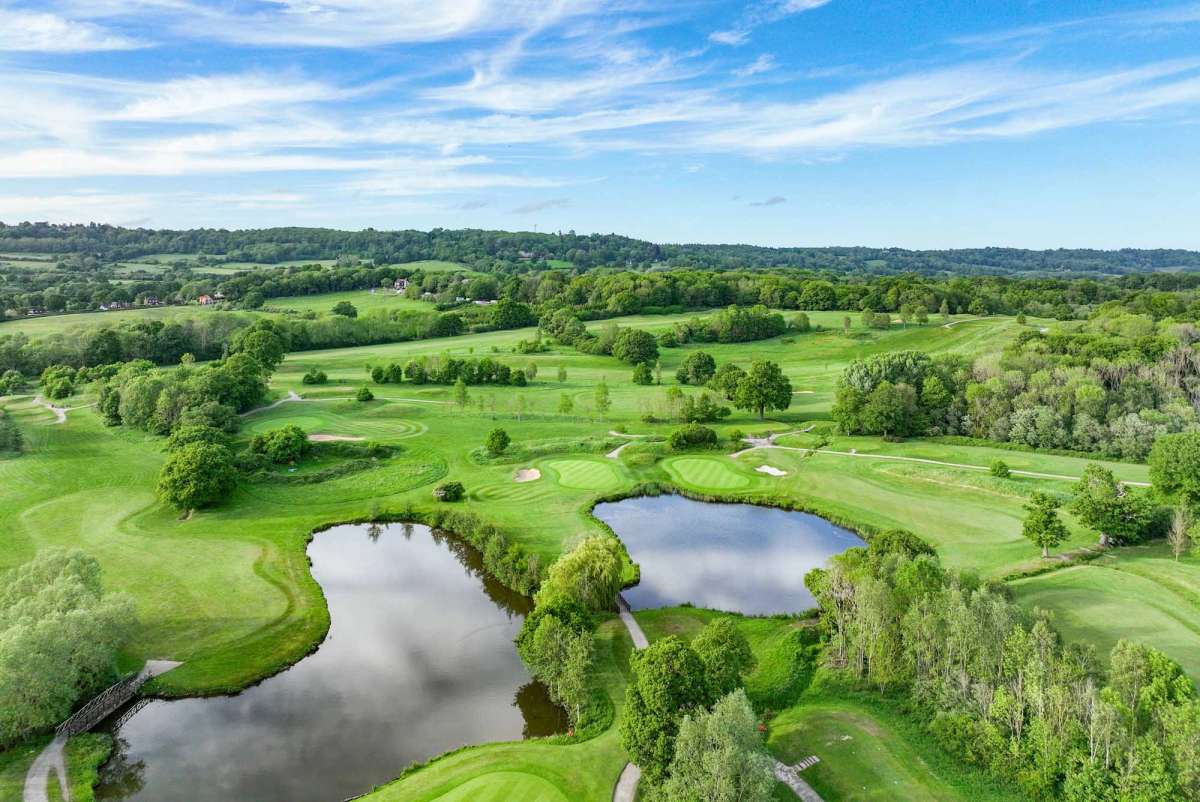
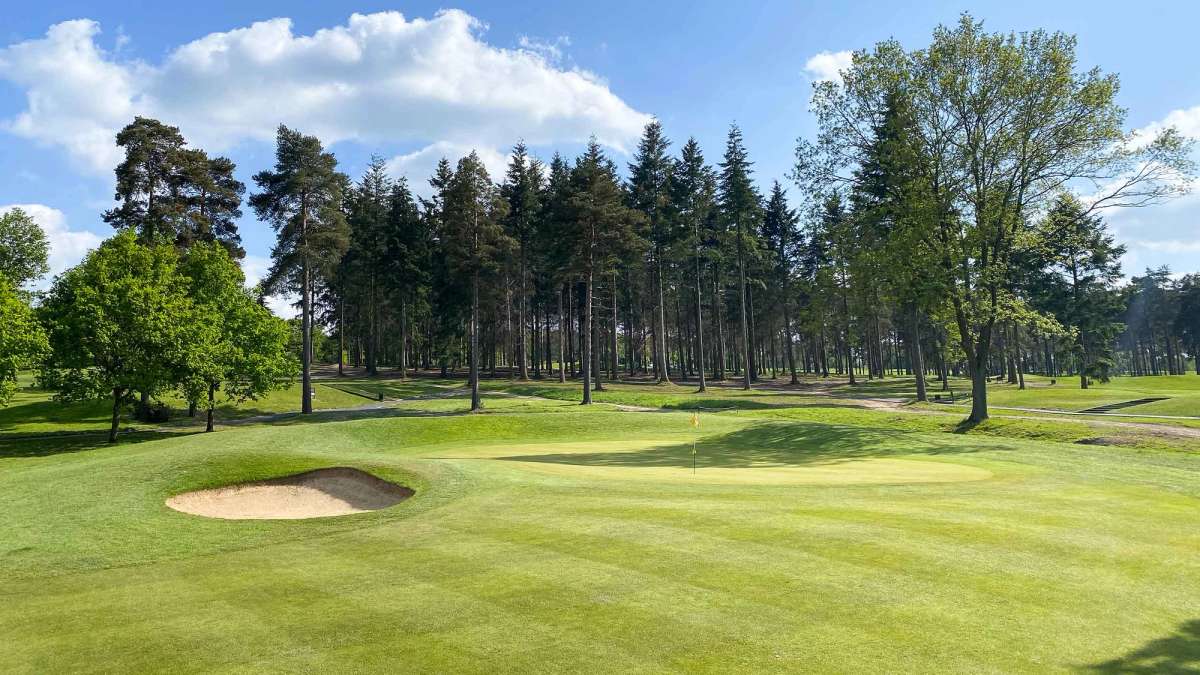
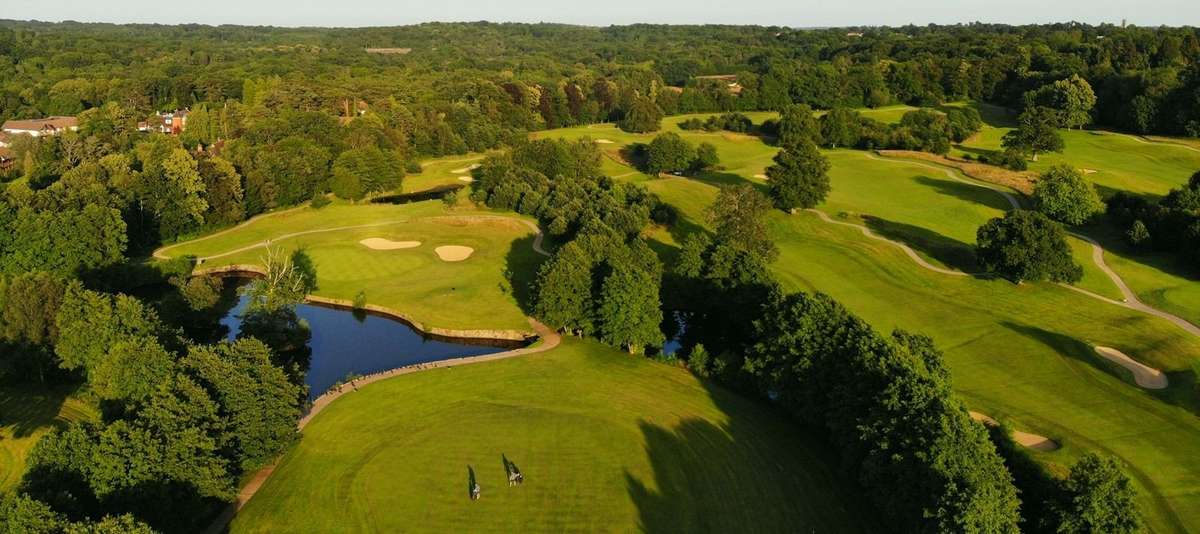
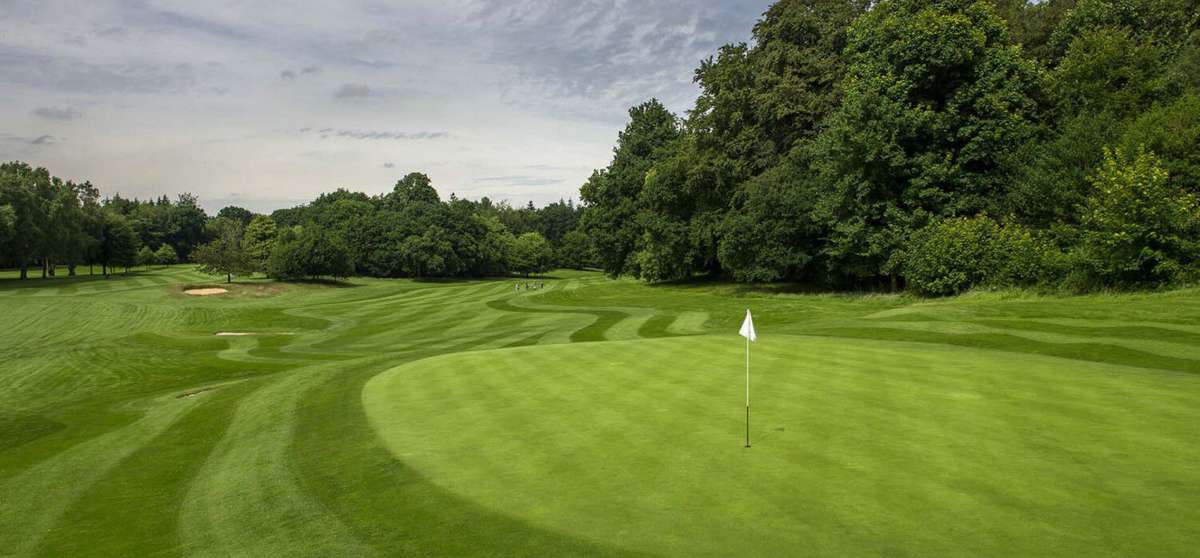
Golfers at Hever Castle Golf Club have a choice of 27 holes. The Kings and Queens nines comprise the Championship 18-hole layout and this fine course is complemented by the par 35 Princes nine.
Golfers at Hever Castle Golf Club have a choice of 27 holes. The Kings and Queens nines comprise the Championship 18-hole layout and this fine course is complemented by the par 35 Princes nine.
Hever Castle Golf Club (Kings & Queens)
Hever Castle is set on the northern edge of the High Weald. This Area of Outstanding Natural Beauty is a fitting location for one of England’s most historic and romantic castles. Dating back to the 13th century, this double-moated castle was the childhood home of Anne Boleyn, second wife of Henry VIII and mother of Elizabeth I.
Hever Castle Golf Club lies within this ancient estate to the north of the River Eden, 125 acres of which form the award-winning Hever gardens. Golf first arrived at Hever in the 1920s in the shape of a 9-hole course that was laid out for William Waldorf Astor (one of America’s richest men at that time) who purchased the property at the turn of the 20th century and then embarked upon an ambitious restoration programme.
The original 9-hole course was abandoned during the Second World War and fifty years passed by before golf returned to Hever Castle in the form of a modern 18-hole course, designed in 1992 by Dr Peter Nicholson, author of Science and Golf, a book that delves into the scientific aspects of the golf game. Nicholson worked with Peter Alliss and Dave Thomas and was a design consultant and agronomist for many clubs in the UK.
Nicholson’s course (fashioned in two returning 9-hole loops called the Kings and Queens) was joined by the shorter 9-hole Princes course, designed by Hever Castle’s Course Manager David Wood in 1998. There’s no argument as to which of the 27 holes comprise the championship layout at Hever Castle, because it was the Kings and Queens 18-hole configuration that hosted a PGA EuroPro Tour event in 2010, which Matthew Evans won, thus securing his place on the following season’s Challenge Tour.
The Championship course is certainly long enough to test the best, measuring more than 7,000 yards from the tips, but it’s playable for all levels of golfer from the forward tees. A stream comes into play at a handful of holes and poses a real threat at the greensite of the testing short par four 13th, which also features a swathe of water running down the left side of the hole.
While aquatic hazards appear at around half the holes on the card, the main threat to posting a decent score are the trees, which flank many fairways. The one-shot holes are particularly memorable and engaging, including the short 6th on the Kings front loop where its elusive, narrow green nestles among a spinney of trees and water waits to catch anything struck offline to the right. The 164-yard 12th is perhaps the prettiest par three at Hever Castle, which affords lovely views and also threatening water in front of the putting surface.
Most golfers will remember the monster 644-yard par five 17th that will test the mettle of every player so late in the round. It’s the tee shot that’s crucial at this hole, which doglegs to the right with water on both sides of the fairway corner. A par here will feel like a birdie for most mortal golfers.
The architect has made good use of the existing features of the Hever Castle site and there’s enough variety here to keep the members happy week in and week out. It’s also a delightful property on which to play golf and is a thoroughly enjoyable all-round experience.
The latest ranking of the Top 100 Golf Courses in the World serves as the ultimate global golf bucket list. Most members of our World Top 100 Panel are seasoned golfers, each playing 20-30 of these courses annually while travelling extensively over decades to form their opinions on others. We recognise that opinions vary—even among our panel members. Rankings are subjective, and there are undoubtedly 50 or more courses in the UK and USA alone that could easily fit onto this list. Links Golf Pilgrimages The rankings
California, United States
New Jersey, United States
Northern Ireland, United Kingdom
New York, United States
New York, United States
Hever Castle Golf Club, Edenbridge, Kent, England Click any of the large images to return to the main Hever Castle page All photographs courtesy of Hever Castle Golf Club -------- ------- ------- ------- ------- ------- ------- ------- -------
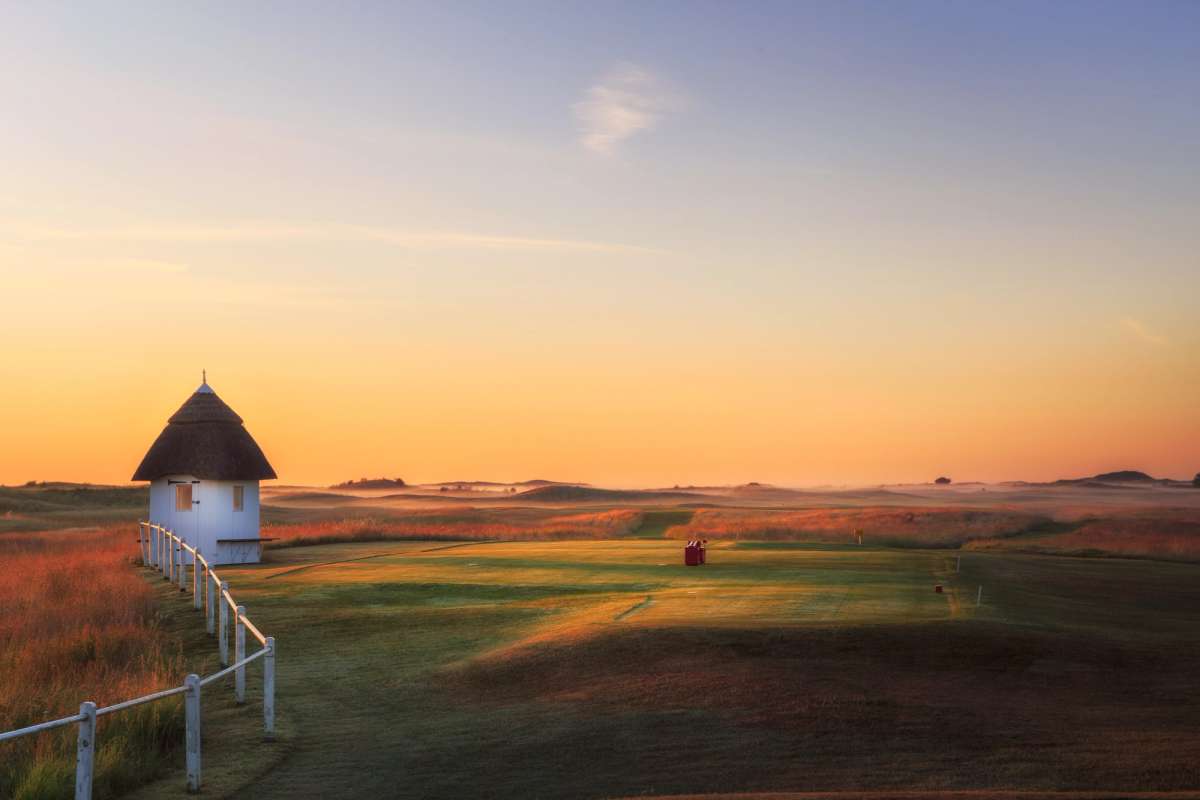
England is home to some of the best golf courses in the world, and its five highest-ranked layouts can be played without being a member. From a 15-time Open venue on the Kent coast to some of the finest heathland golf in Surrey and Berkshire, plus a spectacular links course in Cornwall, these are the five highest-ranked courses in England that welcome visiting golfers. Royal St. George’s Golf Club (Kent) World Ranking: 19th | England ranking: 1st | Green fee: £430 Royal St George’s offers the chance to play one of England’s most historic and challenging links courses. Founded in 1887, it was the first English course to host the Open and has staged the championship 15 times, including the most recent edition in 2021. Routed through towering dunes in a loose figure of eight, Royal St George’s has undulating fairways, uneven lies and plenty of elevation changes that can make even seemingly straightforward shots difficult. The fourth hole is particularly memorable, with a huge bunker carved into a towering dune guarding the fairway. Despite its reputation as a demanding championship test, the course is as enjoyable to explore as it is difficult to score on. Wildflowers and dune grasses line the fairways, while views stretch across Pegwell Bay towards the white cliffs beyond. Add in distinctive features such as the thatched shelters and St George’s flags, and there is plenty to keep you entertained between the inevitable moments of frustration. Sunningdale Golf Club - Old Course (Surrey) World Ranking: 22nd | England ranking: 2nd | Green fee: £485 The Old course at Sunningdale is widely regarded as one of the most beautiful inland courses in the British Isles. Opened in 1901 by Willie Park Jr, it was one of the first great courses to emerge from the Surrey and Berkshire sand-belt, with Harry Colt later reshaping the layout and giving it the intimate, tree-lined character it has today. Pine, birch, oak and heather frame the fairways, while the firm heathland turf makes Sunningdale a joy to walk and play. The course has hosted plenty of memorable golf, too, including Bobby Jones’ remarkable 66 in Open qualifying in 1926 and Nick Faldo’s 62 at the 1986 European Open. The 10th is a particular highlight, with its elevated tee offering a spectacular view before the halfway hut provides one of golf’s more welcome rewards. The 15th, a 226-yard par three, is another standout. For golfers visiting England, Sunningdale Old offers a classic heathland experience in one of the country's finest golfing regions. Sunningdale Golf Club - New Course (Surrey) World Ranking: 41st | England ranking: 3rd | Green fee: £485 The New course at Sunningdale provides a rather different experience to its famous older sibling. Opened in 1923 and designed by Harry Colt, it is more open and rugged than the Old, with elevated tees, heathery terrain and long carries placing a greater emphasis on driving. At 6,700 yards and par 70, the New is no pushover, with narrow fairways and plenty of undulation making it a particularly demanding test from the back tees. Even the professionals have struggled to make it look easy: Jack Nicklaus once held the course record with a 67 before Graeme Storm carded a remarkable 62 during Open qualifying in 2009. The course has also benefited from an ongoing tree-management programme, allowing more heather to return and restoring views across Chobham Common. The fifth, a picturesque par three played across the heath, is one of the highlights. The result is a course that rewards good driving without becoming a purely distance-based test, with the heathland setting providing plenty of visual interest along the way. St Enodoc Golf Club - Church Course (Cornwall) World Ranking: 49th | England ranking: 4th | Green fee: £190 St Enodoc is unlike almost any other links course in England. Overlooking the Camel Estuary in Rock, with views across to Padstow, the Church Course takes its name from the 13th-century church that sits beside the 10th green. Remarkably, the building was completely buried by sand in the 19th century before being excavated in 1863. Founded in 1891 and redesigned by James Braid in 1907, St Enodoc is defined by its towering dunes and constantly changing terrain, where no two holes feel quite the same. The sixth is the course's signature hole, demanding two blind shots over the towering 'Himalayas' dune to reach the hidden green. The 10th, played across a natural valley to a narrow fairway below, is another memorable challenge. If your ball strays towards the churchyard, you'll also find the grave of Poet Laureate John Betjeman, whose poem Seaside Golf was inspired by the course. The combination of huge dunes, unusual holes and views across the Camel Estuary makes St Enodoc a particularly distinctive addition to any English golf trip. Swinley Forest Golf Club (Berkshire) World Ranking: 52nd | England ranking: 5th Swinley Forest offers a quieter, more understated version of heathland golf on the Surrey and Berkshire sand-belt. Set among mature pines and heather, it has a wonderfully quiet atmosphere and an old-fashioned character that is increasingly difficult to find. The firm, fast-running fairways and purple heather in summer give it all the hallmarks of classic heathland golf. Designed by Harry Colt and opened in 1909, Swinley measures around 6,400 yards and plays to a par of 69. The short holes are particularly strong, with a varied collection of one-shotters that require careful club selection. Around the greens, false fronts, run-offs and subtle slopes provide plenty of opportunities for a good round to unravel. For much of its history, Swinley was an intensely private club where visitors were few and far between. It now welcomes green-fee golfers, although the club retains much of its distinctive character. The result is a course that feels removed from the modern world, with little of the glamour associated with some of its better-known neighbours. For golfers who enjoy traditional heathland golf, that simplicity is a large part of Swinley's appeal. Green fees quoted are summer 2027 rates where available.
Wildernesse Golf Club, Sevenoaks, Kent, England Click any of the large images to return to the main Wildernesse page All photographs courtesy of Wildernesse Golf Club 2nd green 3rd fairway 7th green 11th approach 12th green looking back 14th hole 18th hole from the clubhouse 18th hole 17th green