Playing Kauri Cliffs golf course is quite a formidable test and I’m sure I’m not alone in fearing that a mounting tally of lost balls was beginning to detract from the views.
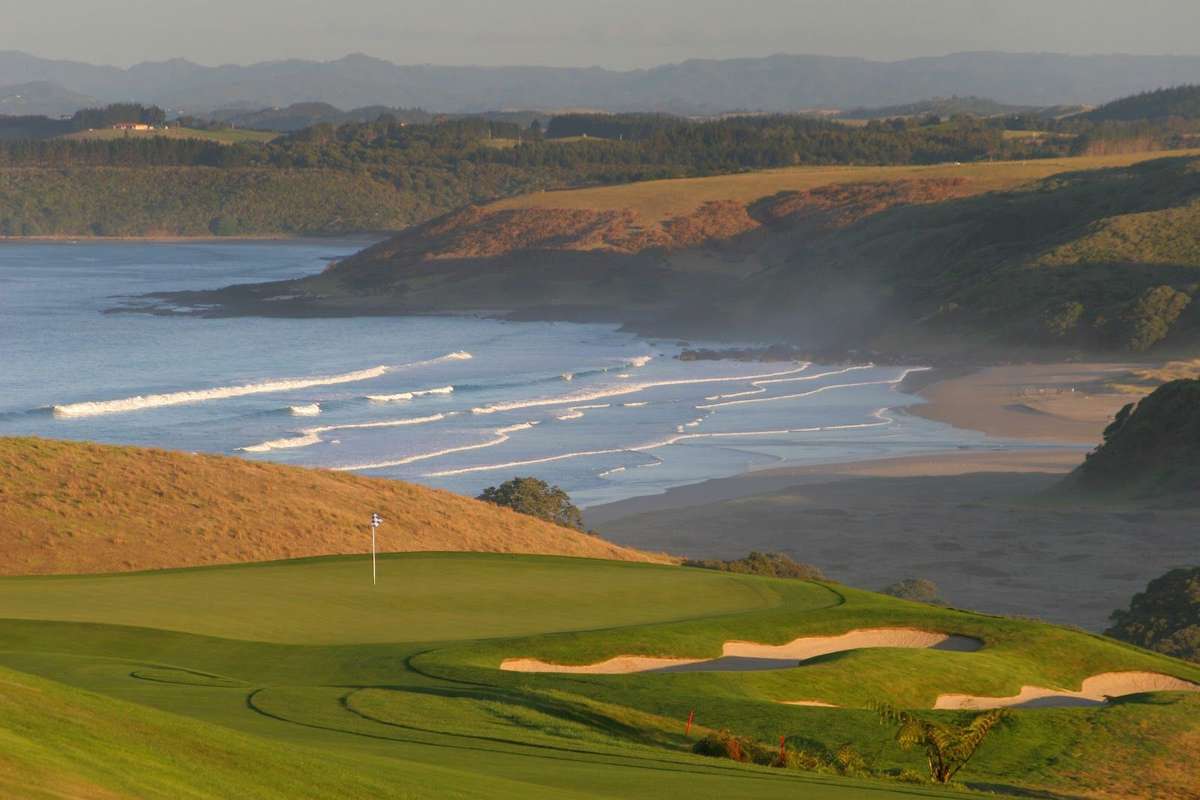
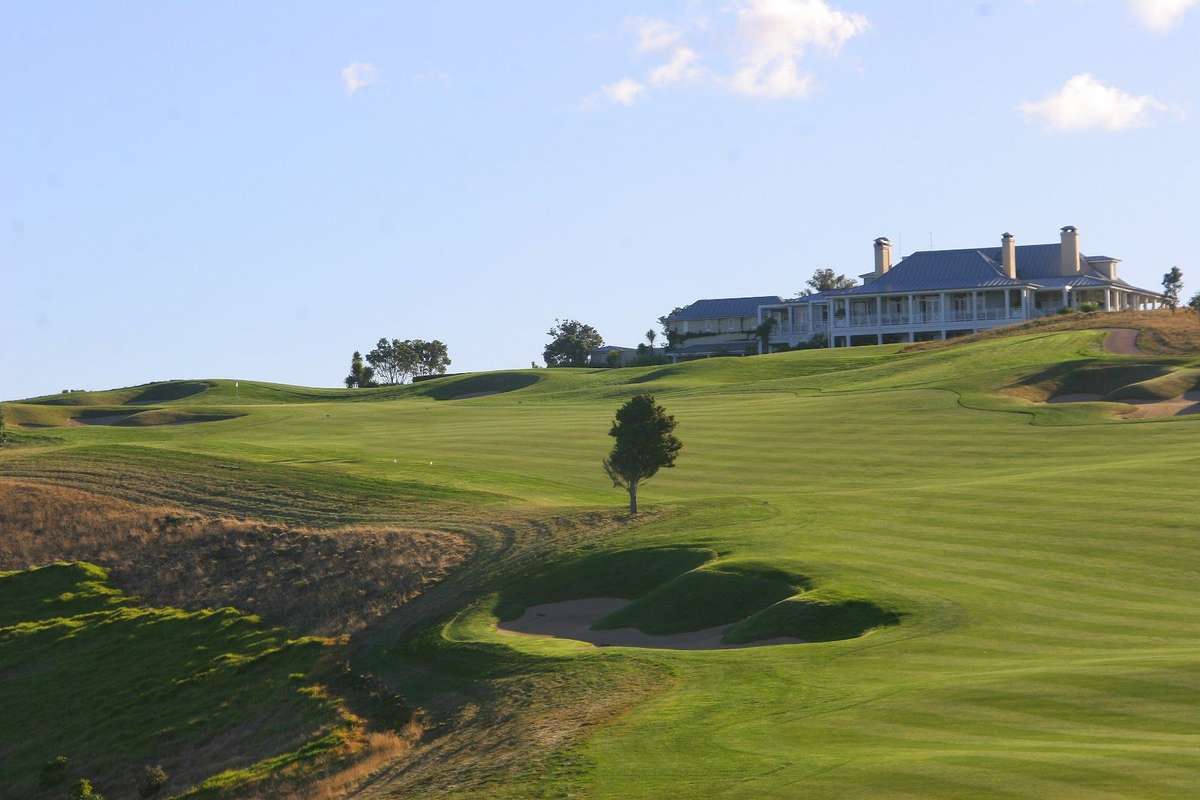
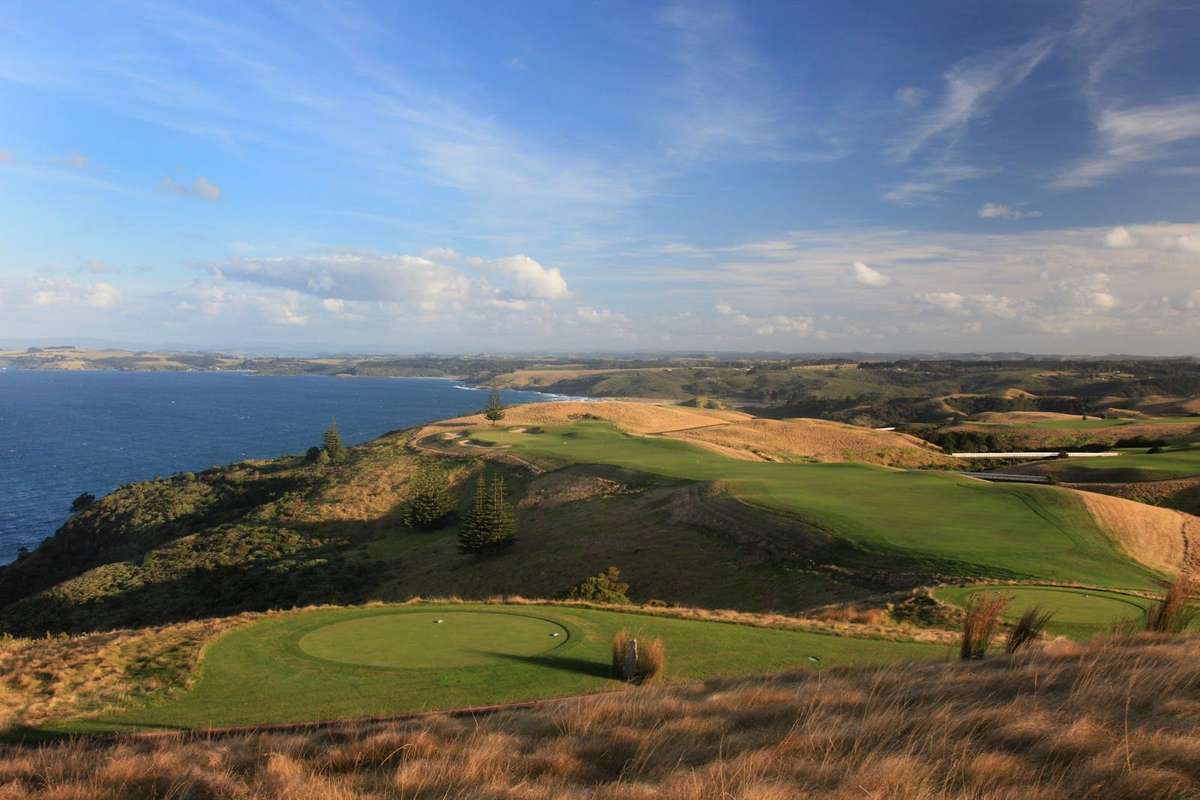
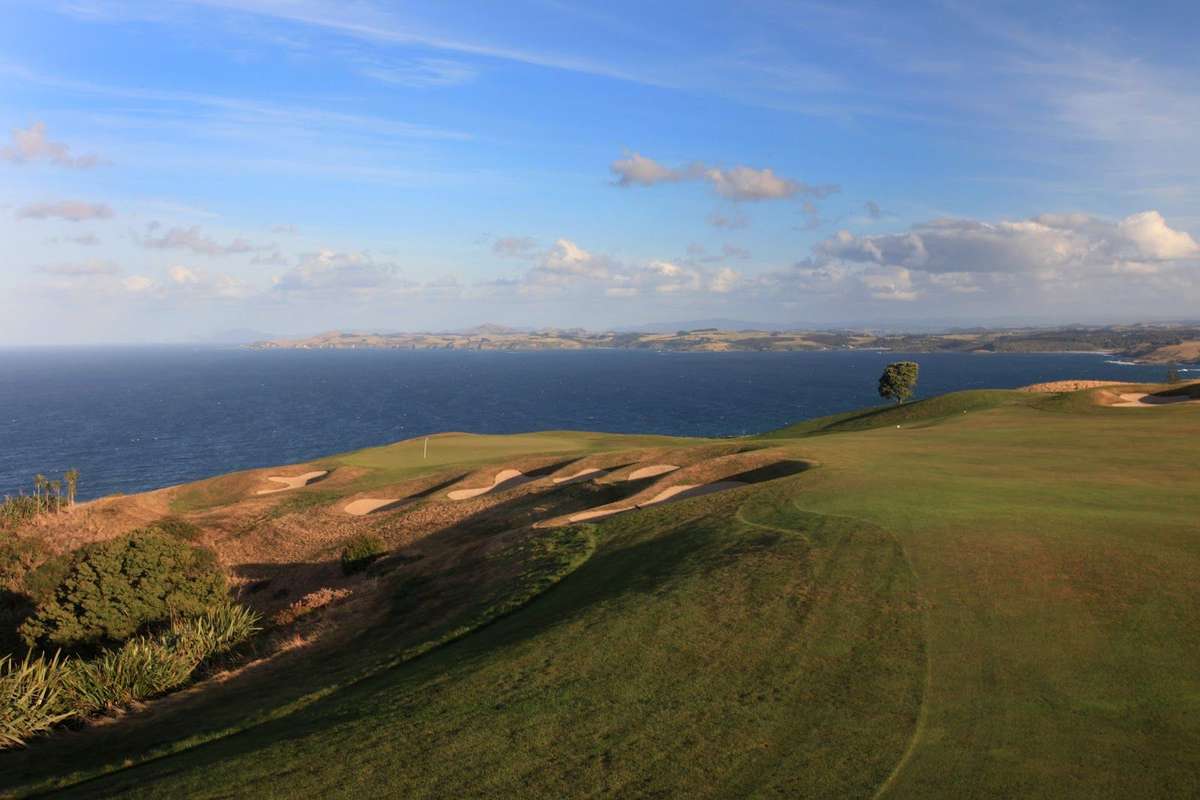
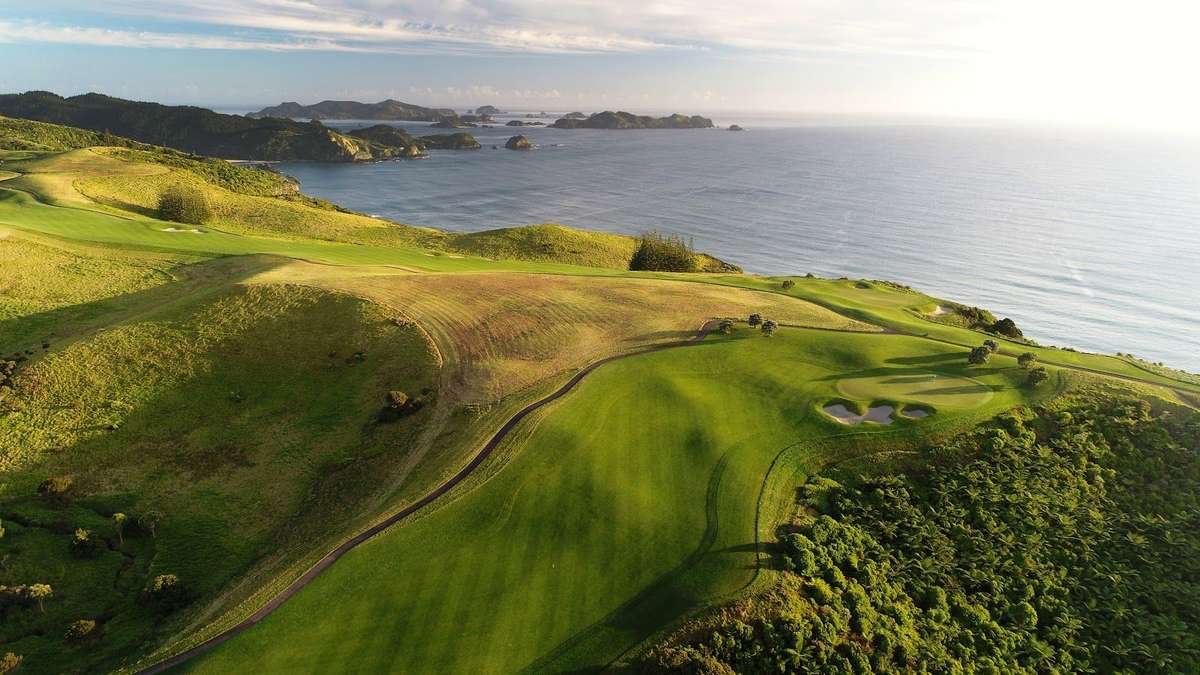
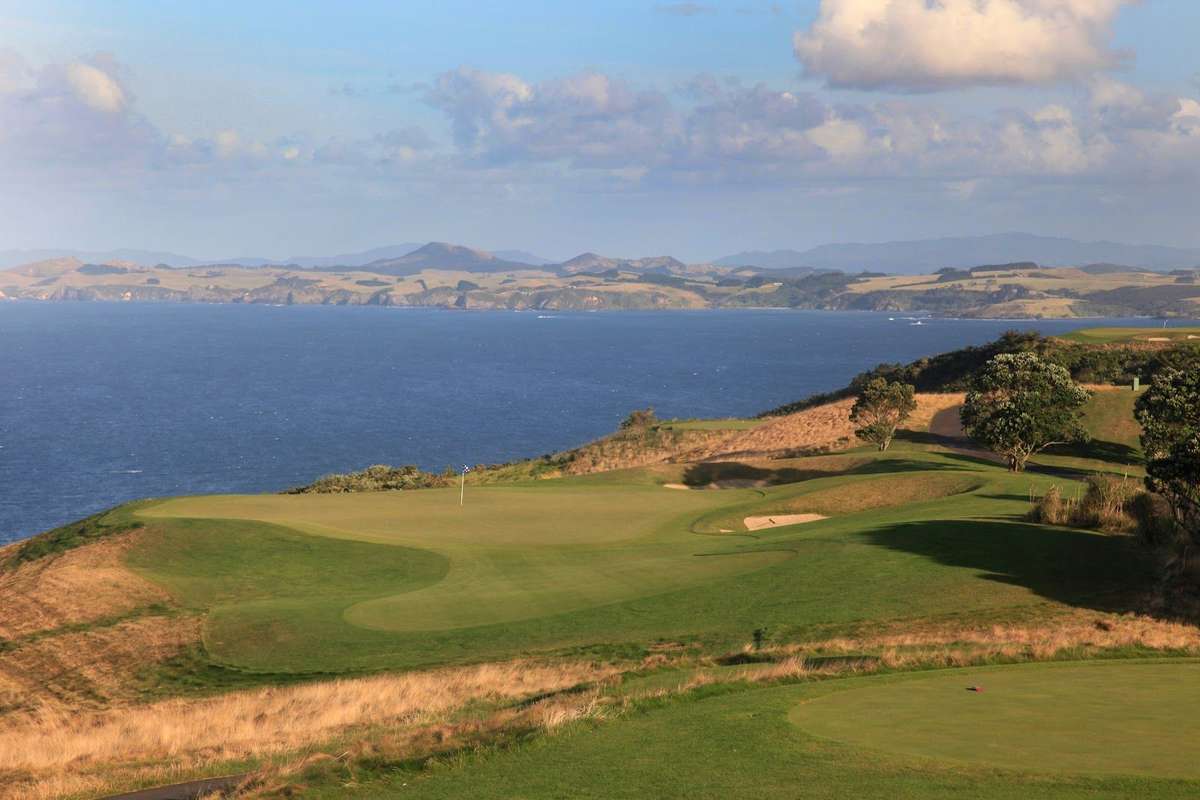
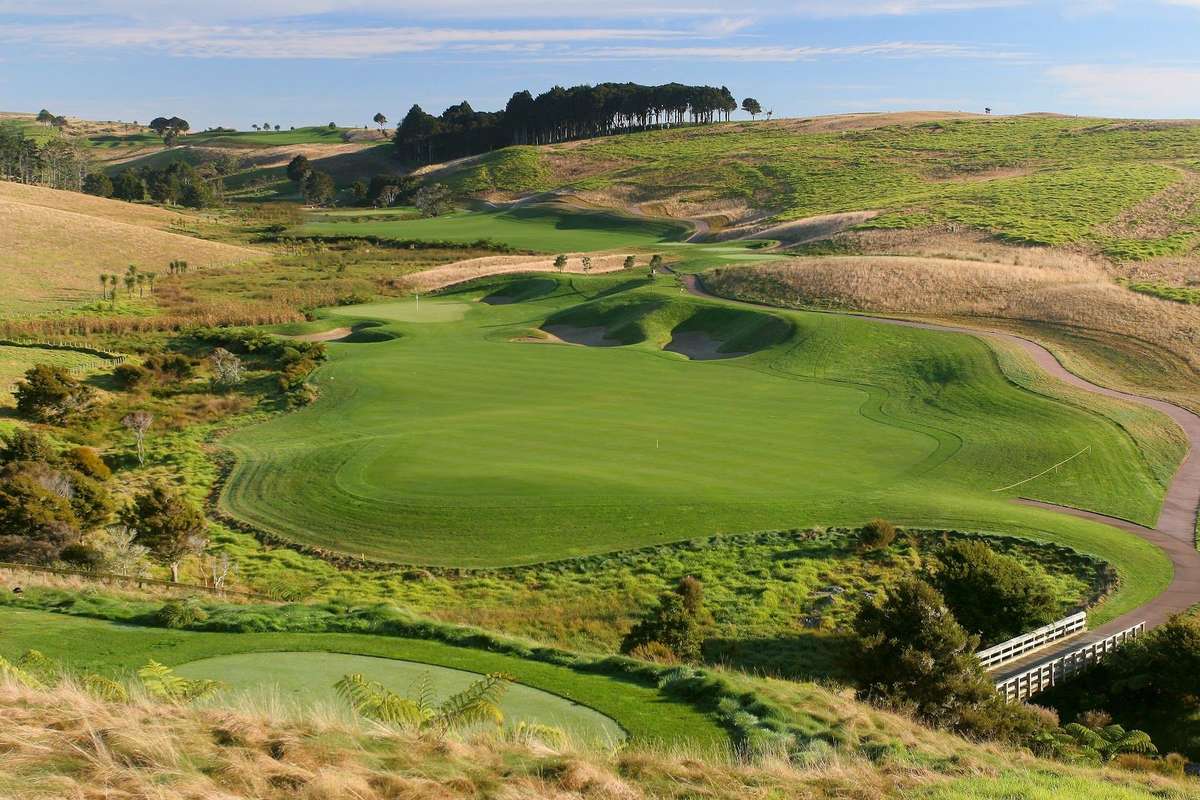
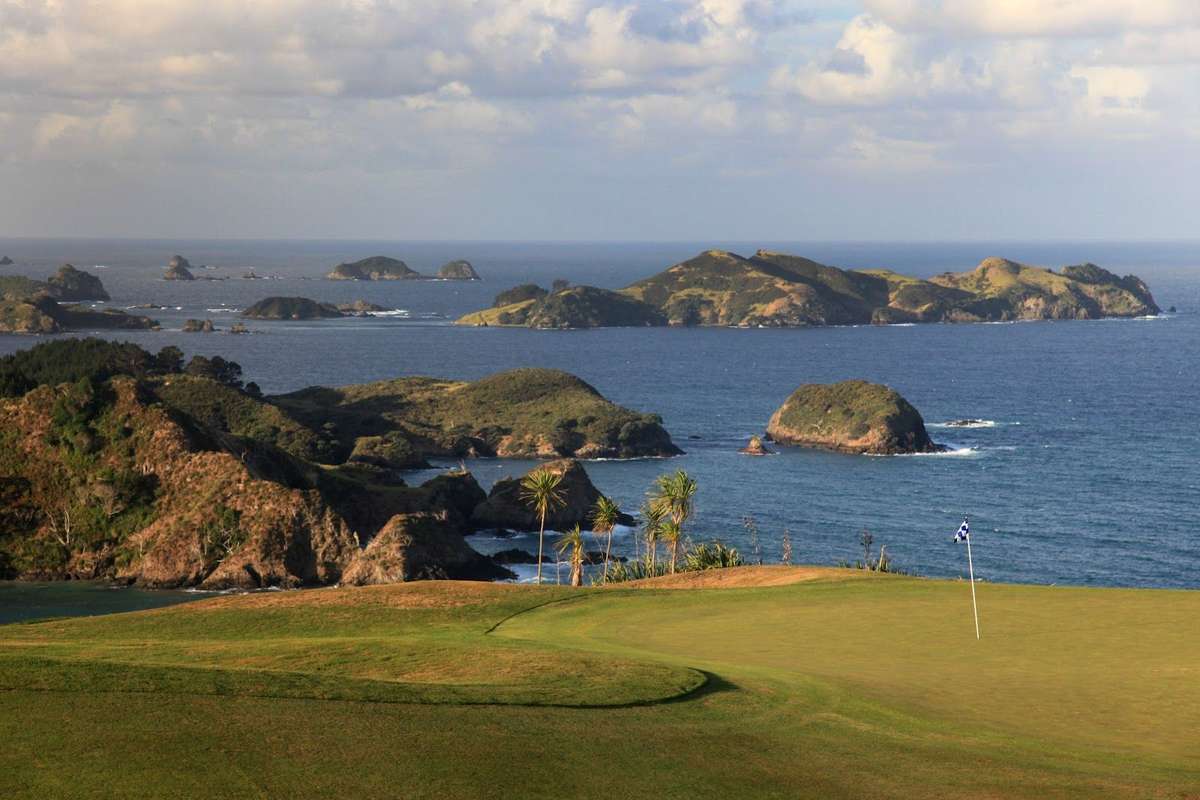
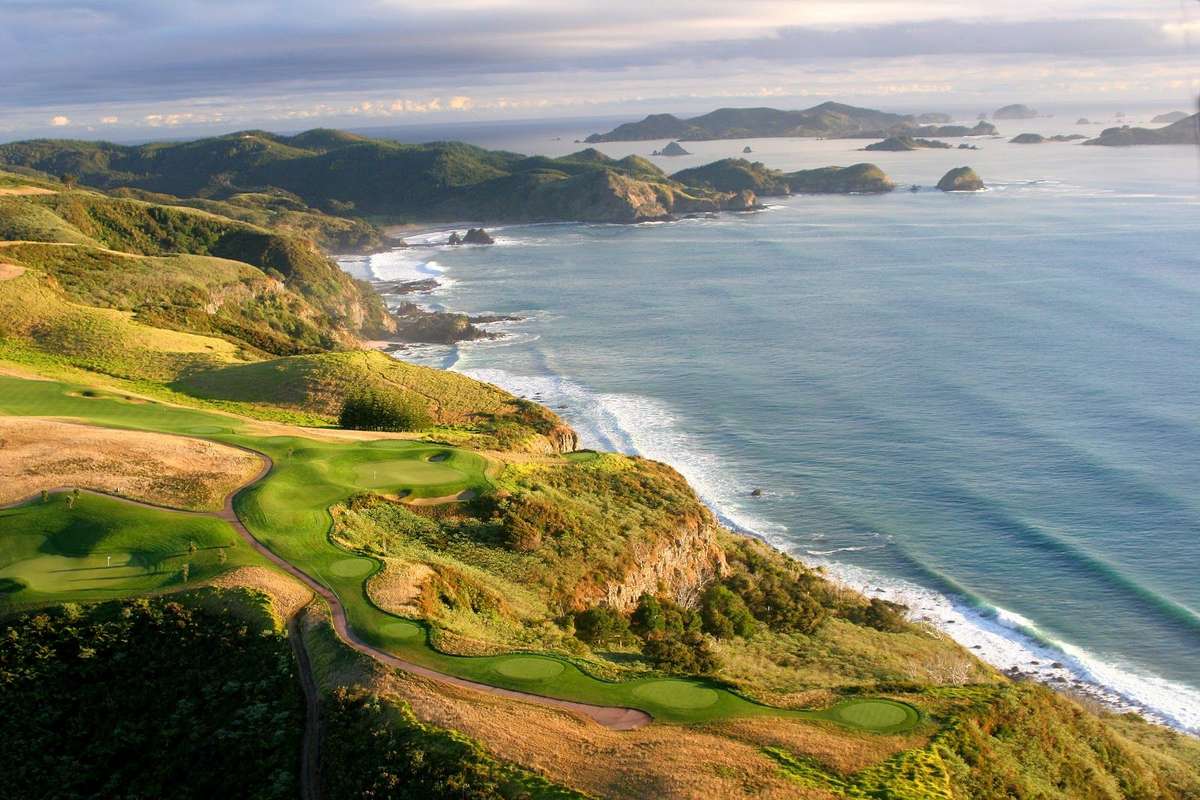
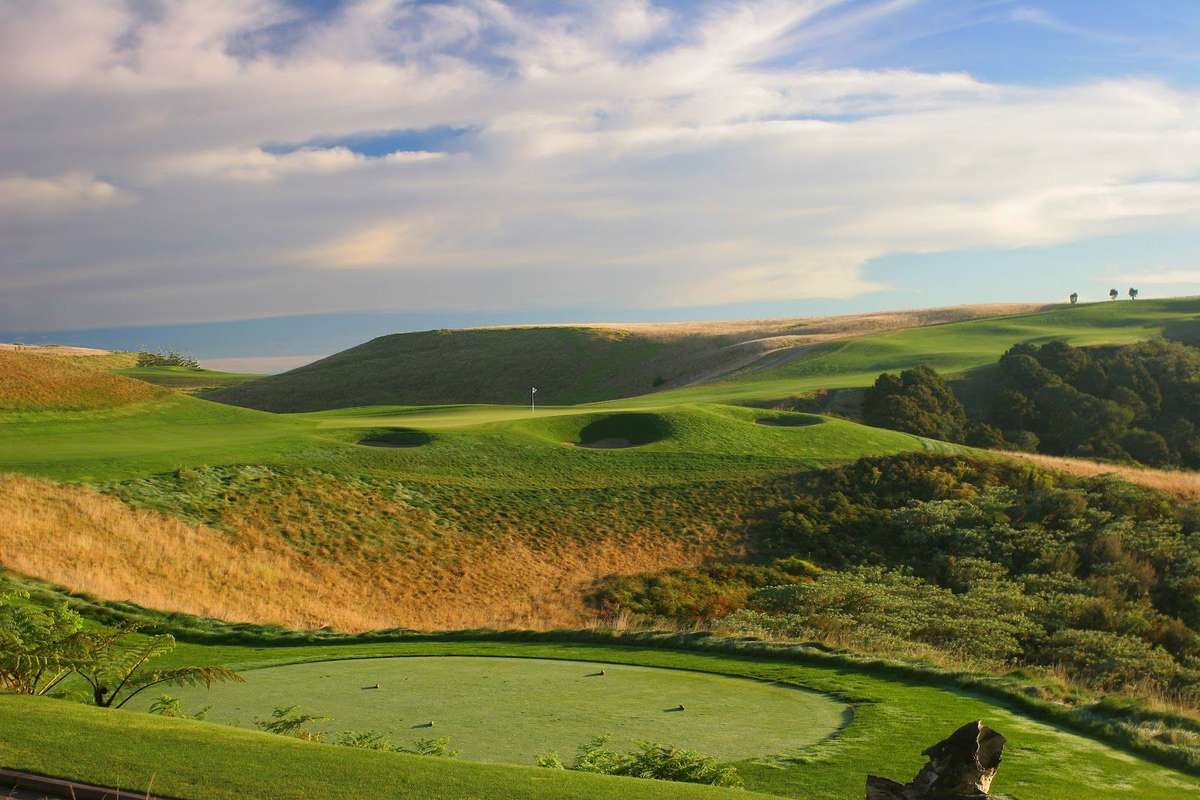
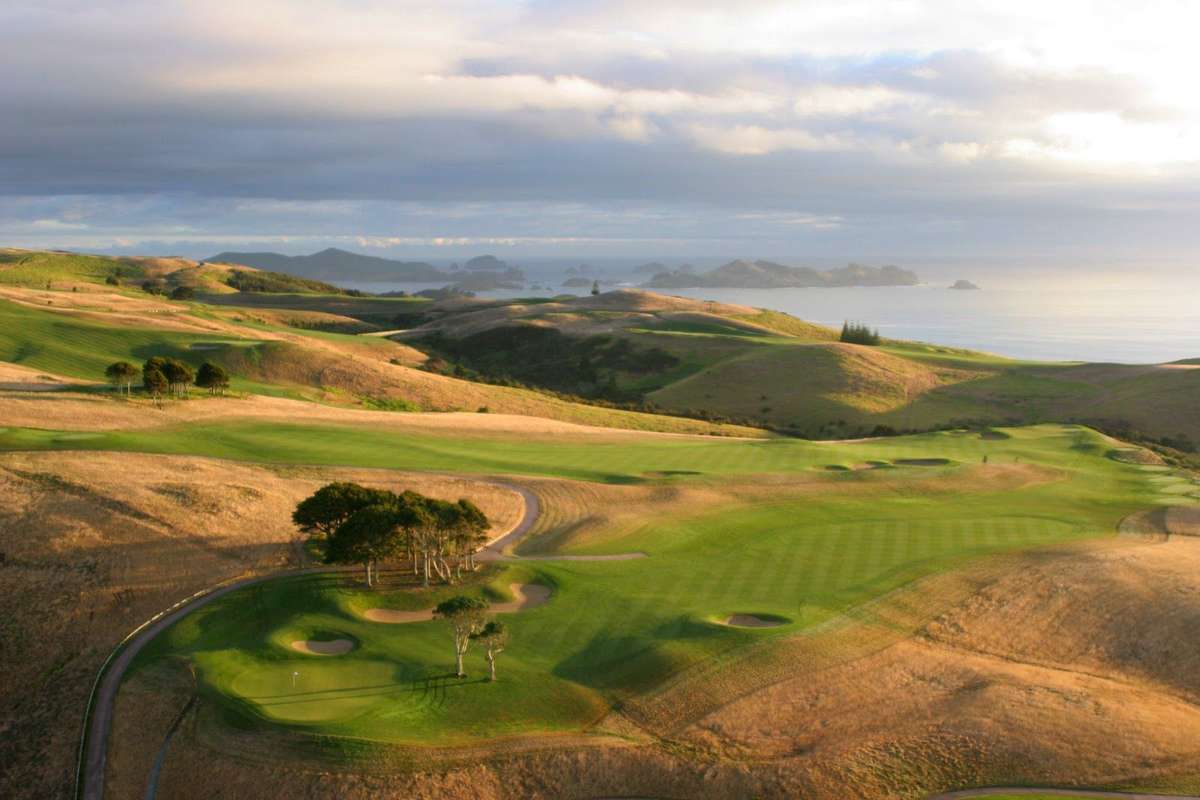
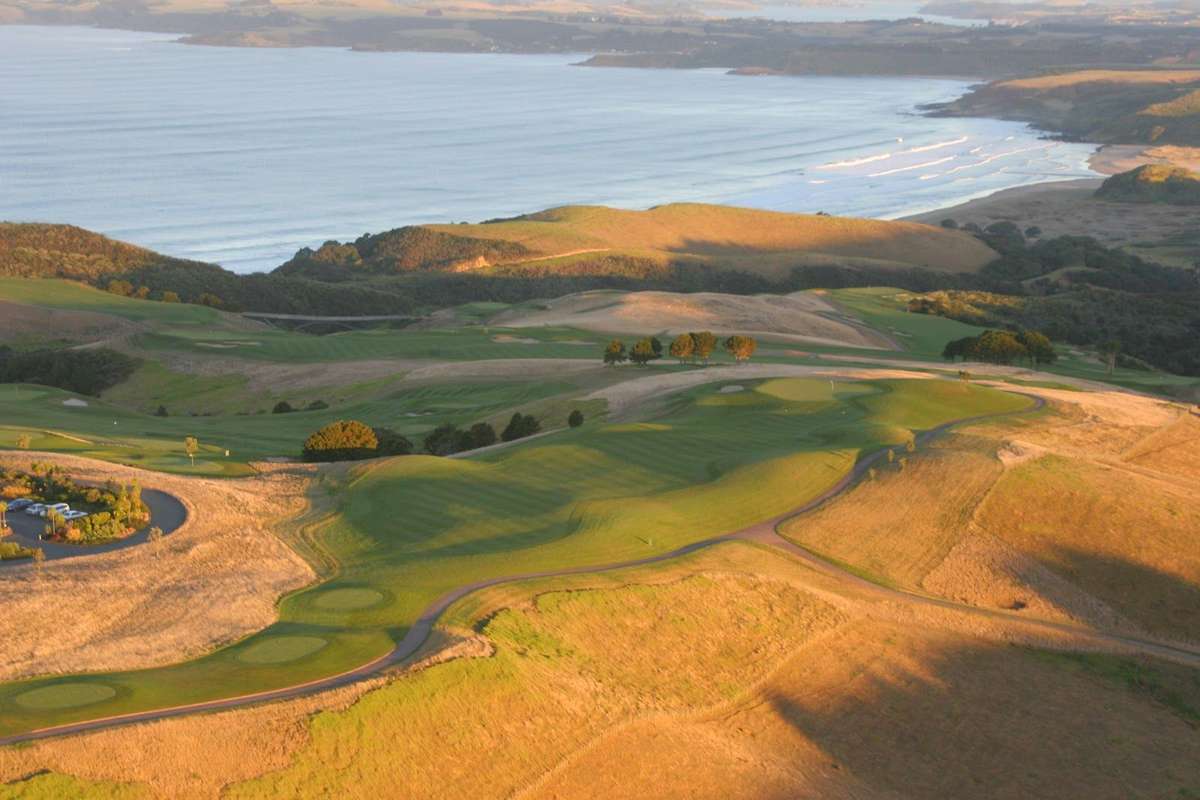
Playing Kauri Cliffs golf course is quite a formidable test and I’m sure I’m not alone in fearing that a mounting tally of lost balls was beginning to detract from the views.
Touring golfers visiting New Zealand will certainly want to play both Cape Kidnappers and Kauri Cliffs, so comparisons will always be drawn. Kauri Cliffs is a little closer to the ocean and has been laid out to make the most of the sea views. The 6th, 7th and then the run from the 14th to the 17th are all as close to the water as the topography allows.
Common to its sister course Cape Kidnappers 500 miles to the south, Kauri Cliffs is a cliff top golf course situated in an enormous tract of land. As course designer David Harman pointed out “at Kauri Cliffs, there are 4,500 acres; I see a couple of hundred golf holes. How do you tie them together? That’s the challenge.” Even though the golf course fills a small part of Julian Robertson’s land, the routing is elongated to make the most of the stunning sea views. The straight-line distance from the two extremities of the course (the 7th tee to the 14th tee) must surely be the longest of all non-links courses anywhere in the world.
Nothing whitens the knuckles quite like the experience of being asked to play across gorges and onto fairways bordered by the healthiest looking long grass in the world. Most balls that find this deepest cut of rough are gone forever. Playing Kauri Cliffs is quite a formidable test from the tees and I’m sure I’m not alone in fearing that a mounting tally of lost balls was beginning to detract from the views. An important decision for the golfer at the outset of his or her day is to select an appropriate set of tees from which to play.
The Lodge at Kauri Cliffs and the golf course are well admired by all who visit this striking part of the North Island. Travelling American golfers, who form an important part of the visitor base, compare Kauri Cliffs favourably with Cypress Point and Pebble Beach.
The above passage is a brief edited extract from The Finest Golf Courses of Asia and Australasia by James Spence. Reproduced with kind permission.
The latest ranking of the Top 100 Golf Courses in the World serves as the ultimate global golf bucket list. Most members of our World Top 100 Panel are seasoned golfers, each playing 20-30 of these courses annually while travelling extensively over decades to form their opinions on others. We recognise that opinions vary—even among our panel members. Rankings are subjective, and there are undoubtedly 50 or more courses in the UK and USA alone that could easily fit onto this list. Links Golf Pilgrimages The rankings
California, United States
New Jersey, United States
Northern Ireland, United Kingdom
New York, United States
New York, United States

Fergal visits New Zealand Fergal closes in on completing the Top 100 Golf Courses of the World – his latest stop was New Zealand As I came within arm’s reach of completing the Top 100 Golf Courses in the World, my travels took me to New Zealand where I experienced the most down to earth hospitality and one of the friendliest nations on earth. With images of Lord of the Rings all around me, I was keen to become Lord of the Greens and not get fooled by too many hobbits… Kauri Cliffs My first ever game in New Zealand was a significantly American experience. The red, white and blue flag proudly blows in the wind outside the clubhouse, and the very polite professional staff working in the pro-shop all herald from the United States. Given that the club’s founder and owner is originally from North Carolina, it all seems to make sense, yet the feeling of being in New Zealand is somewhat lost while listening to somebody with a thick Mid-West accent giving you directions to the practice ground. With an average of just 4,300 rounds per year, this golf club in Kerikeri is among the most isolated of any I've played. Walking this course is not really an option given the distances between certain greens and tees. The club’s strengths are the views, the warm hospitality and the guarantee of a memorable round along the coastline. The back nine takes you away from the water with the 10th through 13th holes located down in the valley all playing in the same direction away from the clubhouse. The anticipation to see the water again is handsomely rewarded when you climb up onto the par three 14th tee box which is the start of a very strong finishing stretch. The 16th hole is a very exciting cape style hole called ‘Temptation’ whereby you can bite off as much as your ego thinks you can chew. The remarkable green-site is on the ocean edge and requires a very precise approach shot. The 17th is the best hole on the property by far and plays as the index 1. The narrow fairway is at a diagonal angle to the tee box and is an impressive sight from the back tee. The hole runs along the ocean and will challenge the best players in the world to hit the green in regulation. The scenery of the Bay of Islands is unquestionably spectacular and will take your breath away at an astounding rate. Kinloch The only Jack Nicklaus signature course in New Zealand, and possibly the most challenging golf course you’ll find in the Southern hemisphere. Right from the first hole, the course offers challenges that average golfers will struggle with. Hundreds of bunkers populate this rippling topography and certain greens are contoured beyond any enjoyable level. I certainly admired the topography and scenery of the course and the challenge that it presents, but can’t help but think about certain elements that could make the course fairer and more walkable. Cape Kidnappers This golf course is as exciting as the name suggests. You’re quickly made aware that the Farm at Cape Kidnappers is fully functional and of utmost importance to the wonderful people who farm the expansive land. Given that the same gentleman with very deep pockets from North Carolina owns Kauri Cliffs and Cape Kidnappers, once you step inside the clubhouse, you immediately feel like you’re in America and surrounded by limitless luxury. Many of the golf staff are American and close to 80% of the 5,100 average annual rounds are played by American tourists. I stood on the first tee and realised that, despite years of reading golf books, I had little to no knowledge of what this course actually looked like – especially from the ground. In almost every golf book and website that previews this course, they all use the same aerial photograph of holes 13-16 which have the dramatic ‘finger fairways’ out on the cape. I told the head professional, “the world doesn’t know what your golf course looks like” and he knew what I meant by that. My mission was to experience and capture the course from the player’s perspective on the ground and really examine what the course had to offer. After all, it is on the shortlist of Doak’s best courses in an already impressive portfolio. After having the fortune of playing the course a few times, it is my humble opinion that the inland holes are significantly more impressive than those finger fairways that grab all the spotlights. In fact, when you play 13-16, you’re probably feeling a bit let down (if that's even possible) because the holes don’t look like anything you expected them to look like. I do recommend allowing a moment for photographs on the back nine, especially from the 15th green and 16th tee box. Doak’s routing across the farm is glorious whereby he created dramatic par threes over deep ravines, stunning par fours with spines running through fairways and blind drives to get your heart racing. The 7th hole was by far my favourite hole, as it presents a plateau fairway followed by a huge dip before swooping back up to the protected raised green. You really don’t want to hit your drive over the plateau, as it will leave you with a tough approach shot up to an unforgiving putting surface. Hitting this green in regulation is a wonderful achievement and the topology will have you taking photographs from almost every angle. Further highlights include the infinity green on number 12 where you naturally feel like you’re hitting into the end of the earth, which further echoes the sentiment of the excellent routing. Doak offers plenty of width throughout the fairways which is very fair given the demands of the approach shots. An exciting element to this course is the shaping around the greens. I encourage visitors to take note of the humps and bumps around the greens which kick the ball mostly in your favour (par three 6th hole is a great example of this as well as the punchbowl 18th green). This course really has the wow factor and I only wish that more people would come to play it as it’s sincerely memorable and appealing to golfers of all levels. Paraparaumu Beach A true links course created in the Golden Age of golf architecture by the legendary Alex Russell (who also designed Royal Melbourne (East), Lake Karrinyup and Yarra Yarra). It’s located about 40 minutes north of the windy city of Wellington. This golf club is a world-renowned layout on the undulating dune land of the Kapiti Coast. Affectionately known as ‘Param’ by the locals (or maybe by the too many visitors that can’t pronounce the name without really concentrating), this golf course will bring you back to reality with a bang. Everything about the club is humble and unpretentious and fits every element of a golfing gem. If you’re looking for a course which will examine how accurate you are from the tee, then you’ve met your match. With just 34 carefully crafted bunkers on the entire course, the challenge from this raw looking links property is magnified by tight tee shots, brutally wiry rough, rock hard bouncy fairways and spectacular mounding around the greens. The gentle undulations around the aprons are second to none. One of Russell’s trademark features is raised putting surfaces which further emphasizes the need for accuracy or fall off the green and be faced with a daunting up and down. This club is welcoming of all players of every demographic, has hosted the New Zealand Open no less than 12 times and has a completely different look and feel to the other courses on my tour to date. At Param, you’ll encounter the highest levels of hospitality from genuinely lovely personnel, down to earth golfers from all walks of life, affordable green fees and even a local punter selling you sausages next to the 10th tee (I suggest you buy one from him). With an annual budget of just $300k for golf course maintenance and four very hard working green-keepers, this experience is as close to Ireland or Scotland that your heart desires. If Cruden Bay had a Kiwi cousin, then this is it. The course is not tremendously long, but it will ask a lot from you, and is golf at its purest. “How did I bogey that hole!?” is a frequently asked question at Param. I enjoyed hitting irons off the tee for strategic placement; I enjoyed the challenge of the design variety in the green complexes and the absolute thrill of playing the legendary 13th hole which ripples its way up to the jaw-dropping raised green. A testament to the design variety is that everybody I chatted with had a different favourite hole. The club has recently co-developed ‘The Russell Society’ made up of representatives from the four Russell courses in the Oceania region, which is a superb way to continue the traditions and share the knowledge of his particular style of architecture. I can honestly say that an afternoon at Paraparaumu Beach Golf Club will be a highlight of your trip. The highest compliment to any golf course is that you’ll walk off the 18th green wanting to go straight back to the 1st tee. Article and photos (except one image, courtesy of Larry Lambrecht) by our US Consultant, Fergal O'Leary, who continues his mission to become the youngest person to play the Top 100 Golf Courses of the World.

New Zealand has quietly assembled one of the world's most compelling collections of golf courses. With five layouts ranked among the global top 100 and a golfing culture that prizes natural terrain over manufactured spectacle, the country punches well above its weight on the international stage. The updated rankings showcase remarkable stability at the top, whilst deeper exploration of both islands has unearthed hidden gems and confirmed the enduring quality of classic designs. These rankings represent the most comprehensive evaluation yet conducted, drawing on a dedicated panel of raters with extensive playing coverage across both the North and South Islands. The assessment prioritises architectural merit, strategic interest, and playing experience over resort amenities, reflecting an evolving appreciation for courses that work with their natural landscapes. The Top 50 Era Continues The updated rankings maintain the Top 50 national format established in recent years, representing the finest courses from a nation that boasts nearly 400 layouts serving approximately 500,000 golfers. Regional rankings have been expanded to include a North Island Top 40 and South Island Top 25, bringing attention to 65 unique courses across the country. Beyond the ranked courses, dozens more provide excellent golf experiences worth exploring. New Zealand's strength lies not in a handful of marquee names but in the breadth of quality across the two islands. Jump to the New Zealand Top 50 Ranking Jump to the New Zealand North Island Top 40 Ranking Jump to the New Zealand South Island Top 25 Ranking 2025 Top 50 At A Glance The Unchanged Elite The top five positions demonstrate unprecedented stability, with all five world-ranked courses maintaining their exact positions from 2024: Tara Iti (No change) - World #21 Paraparaumu Beach Golf Club (No change) - World #91 Te Arai Links (North) (No change) - World #92 Te Arai Links (South) (No change) - World #97 Cape Kidnappers (No change) - World #98 The Rising Stars Ten courses climbed five or more positions, led by dramatic ascents in both islands: Queenstown (Kelvin Heights) - Up 18 places (from #50 to #32) Ohope Beach - Up 12 places (from #33 to #21) Harewood - Up 12 places (from #47 to #35) Otago - Up 9 places (from #35 to #26) Mangawhai - Up 8 places (from #42 to #34) Hastings - Up 7 places (from #37 to #30) Waverley Golf Club - Up 5 places (from #17 to #12) Chisholm Links - Up 5 places (from #29 to #24) Waipu - Up 5 places (from #32 to #27) Poverty Bay - Up 5 places (from #41 to #36) The New Entries Six courses enter the New Zealand Top 50, with South Island venues dominating the newcomers: #37 Cromwell (South Island) #39 Roxburgh (South Island) #40 Nelson (South Island) #42 St Clair (South Island) #44 Invercargill (South Island) #48 Whakatane (North Island) Notable Movements Declines reflect the depth of competition, more playing depth from the panel, and applying updated criteria: Carrington - Down 24 places (from #23 to #47) Pegasus - Down 17 places (from #28 to #45) Millbrook Resort (Remarkables) - Down 16 places (from #22 to #38) Mount Maunganui - Down 14 places (from #36 to #50) Waitara - Down 7 places (from #34 to #41) Wairakei - Down 5 places (from #13 to #18) Best Golf Courses by Island The North Island maintains its numerical advantage with 33 courses (66%) in the Top 50, whilst the South Island contributes 17 layouts (34%). However, this breakdown masks the South Island's quality concentration, with Arrowtown, Jack's Point, and The Hills all positioned within the Top 11. North Island commands the elite tier with eight of the Top 10 courses, including all five world-ranked layouts. The island's strength spans from Tom Doak's masterpieces at Tara Iti and Te Arai to historic gems like Paraparaumu Beach. South Island excels in delivering authentic, terrain-driven golf experiences. The Queenstown region alone accounts for six ranked courses, whilst traditional club layouts in Dunedin, Christchurch, and throughout Central Otago provide compelling alternatives to resort golf. What the Rankings Tell Us The Elite Quintet Remains Untouchable The top five positions remain completely unchanged, although the panel is warming to newcomers at Te Arai. Tara Iti's dominance at number one appears unassailable, whilst the Te Arai courses have firmly established themselves in the conversation about New Zealand's finest layouts. Cape Kidnappers and Paraparaumu Beach occupy their rightful places as world-class destinations. This stability validates the quality assessment and suggests that New Zealand's elite tier has reached a natural equilibrium. Short of a major new development or significant renovation, these five courses will likely define the country's golfing reputation internationally for years to come. Tom Doak's Architectural Dominance American architect Tom Doak's influence on New Zealand golf cannot be overstated. His three courses occupy positions one, three, and five in the national rankings, all appearing in the World Top 100. Tara Iti represents his purest expression of links golf outside the British Isles, whilst Te Arai North has wowed all those who play it. Waverley's Journey from Hidden to Essential Waverley Golf Club's ascent tells one of the ranking's most compelling stories. "Discovered" by Doak's team during the Tara Iti construction and entering the rankings at #31 in 2017 as the "ultimate hidden gem," the course has steadily climbed to #12 in 2025. This progression reflects both growing appreciation for quirky, authentic layouts and the benefits of deeper playing coverage by knowledgeable raters. The secret is well and truly out now. Waverley represents a category of New Zealand golf often overlooked in favour of resort destinations—honest country courses that work with difficult terrain to create memorable golf. Its recognition validates the ranking methodology's emphasis on architectural merit over polish. Queenstown's Kelvin Heights Transformation The most dramatic movement in the 2025 rankings belongs to Queenstown Golf Club's Kelvin Heights course, which surged 18 places from #50 to #32. This isn't the product of recent renovation but rather reflects reassessment by raters who've played the course with fresh eyes and updated evaluation criteria. Kelvin Heights offers a different proposition than Queenstown's high-profile resort courses. The climb suggests growing appreciation for substance over spectacle. South Island Traditional Courses Gain Recognition The influx of five South Island new entries—Cromwell, Roxburgh, Nelson, St Clair, and Invercargill—marks a significant shift in ranking coverage. These aren't flashy resort developments but traditional club courses that have served their communities for generations. Their inclusion reflects the panel's deeper exploration of both islands and willingness to recognise quality regardless of profile. Otago's nine-place leap to #26 similarly confirms that classic parkland designs remain relevant when they offer genuine strategic interest. The course in Dunedin represents a style of golf largely abandoned in favour of links-inspired layouts, yet its challenging terrain and excellent conditioning demonstrate that multiple architectural philosophies can coexist at the top of New Zealand golf. Links Revival in Remote Locations Ohope Beach's 12-place surge to #21 highlights renewed appreciation for raw links experiences in isolated locations. Similarly, Kaitaia, Waipu, and Poverty Bay all rank higher. These venues offer the kind of honest, wind-swept golf increasingly valued by architecture enthusiasts. The Eastern Bay of Plenty, Northland's far north, and the East Cape now feature prominently in trip-planning conversations. Golfers willing to venture beyond Auckland and Queenstown are rewarded with courses that feel untouched by modern trends, where fescue fairways, natural contours, and minimal irrigation create playing experiences closer to Scottish links than manicured resort tracks. A Decade and a Half of Evolution 2010: The Inaugural Rankings The first New Zealand Top 30 in August 2010 established Cape Kidnappers and Kauri Cliffs as the "Big Two," with both courses having transformed the country's international reputation. The rankings also recognised three layouts challenging their dominance: The Kinloch Club (reportedly Jack Nicklaus's favourite of his own designs), The Hills (with its dramatic Canyon 17th hole), and Jack's Point (John Darby's naturalistic masterpiece). Paraparaumu Beach maintained its position as the country's premier links, a distinction it had held since opening in 1949. The course designed by Alex Russell, one-time partner of Alister MacKenzie, represented authentic links golf in the Antipodes long before Tom Doak arrived. 2012: First Expansion The rankings grew to a Top 40, representing approximately 10% of New Zealand's courses. Cape Kidnappers claimed the top spot by the slimmest margin over Kauri Cliffs, whilst Paraparaumu Beach returned to the Top 3 as architects and international publications weighted links courses more heavily in their assessments. Oreti Sands at Southland Golf Club climbed six places to #15 following Greg Turner and Scott Macpherson's redesign, the first of many successful renovations the duo would complete across both islands. Queenstown emerged as a destination powerhouse with five courses in the Top 27. 2013: Continued Growth Expansion to a Top 50 brought ten new entries, including Napier, Cromwell, and Harewood. Pegasus made the rankings' biggest single-year leap, surging from #38 to #21. More significantly, Tom Doak received approval to build Tara Iti on coastal land near Mangawhai, setting in motion the project that would eventually claim the top position. Cape Kidnappers retained its number one ranking for a third consecutive year, confirming its status as New Zealand's benchmark layout. 2015: Renovation Wave Begins The first rankings without new entries saw stability at the top but significant movement further down as Turner and Macpherson's renovation work gained recognition. Royal Wellington burst into the Top 10 at #9 following the duo's complete redesign, featuring trademark undulating greens and stunning new holes built around an existing stream. Waipu and Kaitaia climbed as raw links courses gained favour, whilst anticipation built for Tara Iti's imminent opening. Cape Kidnappers held the summit for a fifth year. 2017: The Tom Doak Revolution Tara Iti entered at #1, immediately dethroning Cape Kidnappers and signalling a new era for New Zealand golf. The course joined the World Top 100 in its debut year, validating the immense expectations that had accompanied construction. Five new entries included two more jumping straight into the Top 10: Wainui at #9 (replacing the former Peninsula Golf Club) and Windross Farm at #23 (Brett Thomson and Phil Tataurangi's design for the relocated Manukau Golf Club). Waverley debuted at #31 as the "ultimate hidden gem," discovered by Doak's construction team. Regional rankings expanded to a North Island Top 40 and South Island Top 20, broadening coverage significantly. 2019: Consolidation and Recognition Tara Iti confirmed its dominance whilst Paraparaumu Beach climbed to #3, displacing Kauri Cliffs to #5. The top five took shape with Te Arai courses yet to debut. Arrowtown made a significant four-place climb to #7, earning praise in The Confidential Guide to Golf Courses for its charm and quirky appeal. Waverley surged 15 places to #16 as word spread about its honest, natural golf. Marton Golf Club entered at #36, whilst the closure of Oreti Sands at Southland eliminated one of the country's most admired links layouts. 2021: The COVID Effect and Te Arai's Arrival Despite international travel restrictions, golf thrived domestically with rounds played up more than 25% in late 2020. The rankings showed nine Top 10 non-movers, suggesting stability in the elite tier. Royal Auckland and Grange's new 27-hole Nicklaus Design layout entered at #10, with the Grange and Tamaki nines forming the premier 18-hole combination. Construction of Te Arai's South course (Coore & Crenshaw) and North course (Tom Doak) promised to add two more world-class layouts within walking distance of Tara Iti. 2024: The Te Arai Trinity Te Arai's courses debuted at #2 (North) and #3 (South), creating an unprecedented concentration of world-ranked golf within 15 kilometres. The three layouts offered complementary experiences: Tara Iti's cerebral links golf, Te Arai North's dramatic journey from coast to forest and back, and Te Arai South's flowing Coore & Crenshaw design. Thirteen new entries joined the expanded Top 60 national rankings. Millbrook's Coronet course entered at #12, Tieke (the redesigned Lochiel) at #16, and The Farm at The Hills (Darius Oliver's par-3 course) at #40. Gulf Harbour closed permanently, whilst Ohope Beach began its ascent with a 12-place climb. Looking Ahead New Zealand golf enters a period of consolidation after the development boom of 2000-2024. Additional major projects are currently underway, suggesting the next ranking cycle will focus on refinement and more debut entries. International travel has fully recovered post-COVID, bringing renewed attention to New Zealand golf from overseas visitors. This exposure could accelerate improvements at courses seeking to attract destination golfers, though hopefully without sacrificing the authentic character that makes New Zealand golf distinctive. The complete New Zealand rankings, including regional listings for the North and South Islands, can be found on the Top 100 Golf Courses website

You don't need a four-figure budget, a private-club connection or an invitation from a member to play a course in the World Top 100. Top100 has collated the 10 cheapest visitor-accessible courses on our current World Top 100 Ranking, based on standard green fees. From a world-class links in Tasmania to a U.S. Open and Ryder Cup venue in New York, these courses offer the chance to play some of the best golf on the planet without the eye-watering green fees attached to many of their World Top 100 counterparts. 1. St Andrews Beach Golf Course (Victoria, Australia) World Ranking: 89th | Australia ranking: 6th | Green fee: A$139 (£74) Tom Doak’s first Australian mainland design, St Andrews Beach opened in 2004 on the Mornington Peninsula and has since become one of the country’s best-value, ranked courses. The public-access layout occupies 175 hectares of former grazing land, with wide fairways, rolling terrain and sandy natural contours that give several holes a links-like feel. Measuring just over 6,000 metres from the back tees, it is playable for a broad range of golfers, though the subtle greens ensure there is still plenty to think about. In a region known for outstanding golf, St Andrews Beach stands out not only for its quality but also for its accessibility, offering everyday golfers the chance to experience a Tom Doak design without the premium price tag often attached to courses of this calibre. 2. Bethpage Black (New York, USA) World Ranking: 58th | USA ranking: 28th | Green fee: From US$140 (£106) Bethpage Black has the rare distinction of being a World Top 100 course, a major championship venue and a public golf course. Located within Bethpage State Park on Long Island, the A.W. Tillinghast design opened in 1936 and has since hosted two U.S. Opens and the 2025 Ryder Cup. The Black is renowned for its difficulty, with narrow fairways, deep rough, large sculpted bunkers and elevated greens making accuracy essential. It is a demanding test, but one that remains remarkably accessible to everyday golfers. That combination of championship pedigree and public access is what makes Bethpage Black so unusual. Few golfers get the chance to play a course of this stature without needing a private-club connection or resort stay. 3. Paraparaumu Beach Golf Club (Wellington, New Zealand) World Ranking: 91st | New Zealand ranking: 2nd | Green fee: NZ$275 (£118) Set on the Kapiti Coast, north of New Zealand's capital city Wellington, Paraparaumu Beach has been one of the country’s most celebrated golf courses since Alex Russell designed it in 1949. The links has hosted 12 New Zealand Opens and has long been regarded as one of the country’s finest layouts. It is a relatively short course by modern championship standards, but the coastal wind, firm fairways, deep bunkers and undulating greens provide plenty of challenge. The split-fairway 17th is a particular highlight, forcing golfers to choose between two very different routes to the green. For international golfers, Paraparaumu offers the chance to experience a genuine piece of New Zealand golfing history without needing access to a private resort. 4. Fairmont Jasper Park Lodge Golf Course (Alberta, Canada) World Ranking: 73rd | Canada ranking: 2nd | Green fee: C$280 (£149) Set among the Canadian Rockies in Jasper National Park, Fairmont Jasper Park Lodge is one of Stanley Thompson’s most celebrated designs. Opened in 1925, the course winds through the valley beside Lake Beauvert, with snow-capped peaks providing a backdrop to almost every hole. The course combines wide fairways, elevated tees and strategically placed bunkers with the natural contours of the landscape. Thompson’s design rewards thoughtful play rather than simply demanding power, making it a course that can be enjoyed by golfers of different abilities. The result is a rare combination of classic golf and Canadian wilderness, with the surrounding mountains and forest making the journey between shots almost as memorable as the golf itself. 5. Barnbougle - The Dunes Course (Tasmania, Australia) World Ranking: 25th | Australia ranking: 3rd | Green fee: A$285 (£151) Barnbougle Dunes is about as close as Australia gets to a traditional seaside links. Set on Tasmania’s northeast coast, the course was designed by Tom Doak and Australian Mike Clayton and opened in 2004, establishing Barnbougle as one of the country’s premier golf destinations. The layout runs through towering coastal dunes, with wide fairways, natural contours and greens that follow the movement of the land. The wind is an ever-present factor, while the strategic design rewards golfers who think their way around the course rather than simply relying on power. For golfers seeking a genuine links experience outside the British Isles, Barnbougle Dunes is about as compelling as it gets, combining world-class golf with the rugged coastline of Tasmania. 6. Cape Wickham Golf Links (Tasmania, Australia) World Ranking: 47th | Australia ranking: 4th | Green fee: A$315 (£167) Cape Wickham occupies a spectacular stretch of coastline on King Island, sitting in Bass Strait between Tasmania and mainland Australia. Designed by American architect Mike DeVries, the links opened in 2015 and quickly established itself as one of the country's standout modern courses. The course makes the most of its remote coastal setting, with the opening five holes winding around Cape Farewell before the layout moves through sand hills and limestone outcrops. Several holes hug the shoreline, while the closing stretch heads towards the imposing Cape Wickham Lighthouse. The 18th provides a fitting finale, with the fairway doglegging around a sandy bay before reaching the home green, making Cape Wickham a memorable links experience from start to finish. 7. St Enodoc Golf Club - Church Course (Cornwall, England) World Ranking: 49th | England ranking: 4th | Green fee: £175 Set among towering dunes overlooking the Camel Estuary in Cornwall, St Enodoc’s Church Course is one of James Braid’s most distinctive designs. Founded in 1891, the course was transformed by Braid in the early 20th century and remains a spectacularly natural links. It is a relatively short par 69 at 6,010 metres, but its undulating fairways, dramatic elevation changes and formidable dunes create a test that demands imagination. The famous 6th is the standout, with the enormous Himalaya dune obscuring the green and making club selection particularly difficult. The course also has an unusual piece of history, with the 13th hole running alongside the churchyard where poet laureate John Betjeman is buried. 8. South Cape Owners Club (Gyeongsangnam-do, South Korea) World Ranking: 63rd | South Korea ranking: 2nd | Green fee: From KRW 350,000 (£195) Set on Namhae Island off the southeast coast of South Korea, South Cape Owners Club is a dramatic Kyle Phillips design where the ocean is visible from all 18 holes. The course opened in 2013 as part of a luxury resort development and has quickly established itself among Asia's most striking modern layouts. The course is framed by granite outcrops, coastal cliffs and rolling terrain, with bluegrass fairways contrasting against fine fescue rough. The standout stretch comes from the 11th onwards, culminating in two spectacular waterside par threes at the 14th and 16th. For golfers willing to make the journey to Namhae Island, South Cape offers a rare combination of world-class golf, dramatic coastal scenery and a luxury resort experience. 9. Utrecht De Pan Golf Club (Utrecht, Netherlands) World Ranking: 56th | Netherlands ranking: 1st | Green fee: From €235 (£198) Dating back to 1894, Utrecht De Pan is the second-oldest golf club in the Netherlands, with Harry Colt designing the current course in 1929. Set in secluded woodland near Utrecht, the layout is a classic heathland course, winding through pine, birch, oak and chestnut trees. De Pan has hosted the Dutch Open three times and is built around strategic rather than power golf. Several of its most memorable holes play over valleys of heather and sand, while the sixth and seventh demand particularly thoughtful tee shots and approaches. Recent restoration work by Frank Pont has helped return the course towards Colt’s original design, making De Pan a fascinating example of Golden Age heathland golf in the Netherlands. 10. Cruden Bay Golf Club - Championship Course (Aberdeenshire, Scotland) World Ranking: 70th | Scotland ranking: 10th | Green fee: From £205 Cruden Bay is one of Scotland’s most distinctive links, winding through towering dunes on the Aberdeenshire coast with the North Sea providing a constant backdrop. The course opened in 1899 after being laid out by Old Tom Morris and Archie Simpson, before Tom Simpson and Herbert Fowler remodelled it in 1926. Cruden Bay makes spectacular use of its natural terrain, with elevated tees, blind drives, punchbowl greens and fairways that rise and fall between the dunes. The 193-yard 4th, played from an elevated tee across a deep hollow, is one of several standout holes. There is plenty of character, too, from driveable par fours and back-to-back par threes to the feeling that every hole reveals something different. It is exactly the sort of course that rewards golfers willing to embrace its quirks. Green fees are based on standard 18-hole visitor rates, using international visitor rates where applicable. All prices are peak-season rates and do not take twilight, off-season or promotional rates into account. Prices are correct at the time of writing and are subject to change.


