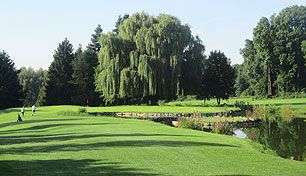
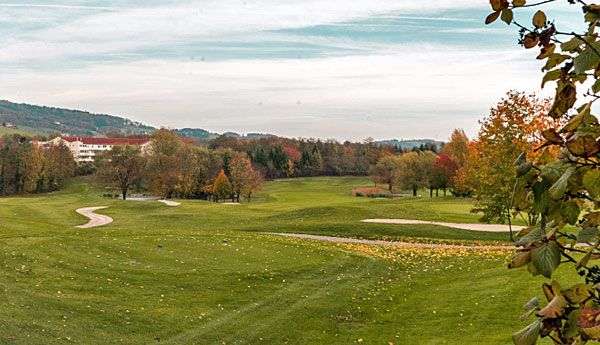
British architect Donald Harradine designed the course at Golf Club Linz St. Florian and it's set in the Tillysburg Estate on rolling land.
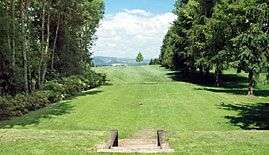


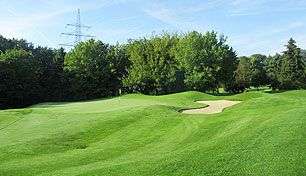

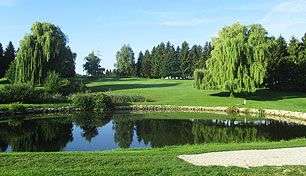


British architect Donald Harradine designed the course at Golf Club Linz St. Florian and it's set in the Tillysburg Estate on rolling land.
Golf Club Linz St Florian was founded in 1960, which makes it one of the oldest clubs in the area of Linz, the Upper Austrian capital. In 1975 the club moved to its present location in the Danube Valley. British architect Donald Harradine designed the course in the rolling Tillysburg Estate.
Linz played host to the Austrian Open in 1992, which resulted in a victory for Englishman Peter Mitchell, but since then Hans-Georg Erhardt has redesigned the course.
Unusually, the round at Linz starts with three par fives in the first four holes so you may get your round off to a flier if you can pick up a birdie here – the only drawback at a couple of these opening holes (and a few others later in the round) is the unsightly presence of power lines from the tee, detracting a little from the isolation afforded by the tree-lined fairways.
The 177-yard, par three, 7th is a lovely short hole, played over a pond to a long green protected on three sides by bunkers. Similarly, the signature hole at Linz, the 171-yard, par three, 16th also features water, as its green is guarded by a lake to the right (and a large bunker to the left to catch those who bale out too far to that side).
The latest ranking of the Top 100 Golf Courses in the World serves as the ultimate global golf bucket list. Most members of our World Top 100 Panel are seasoned golfers, each playing 20-30 of these courses annually while travelling extensively over decades to form their opinions on others. We recognise that opinions vary—even among our panel members. Rankings are subjective, and there are undoubtedly 50 or more courses in the UK and USA alone that could easily fit onto this list. Links Golf Pilgrimages The rankings
California, United States
New Jersey, United States
Northern Ireland, United Kingdom
New York, United States
New York, United States
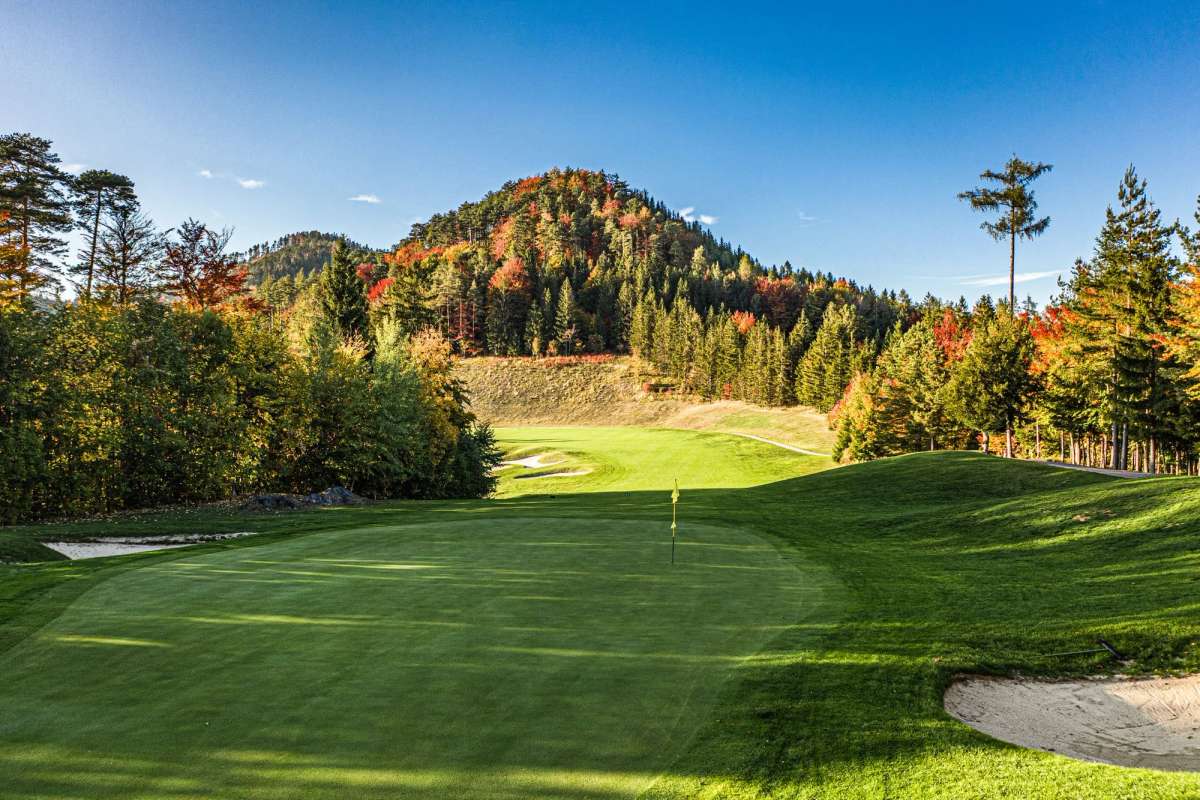
Thanks to the contributions of an enlarged group of panellists, our Austrian listings have been expanded from a Top 40 to a Top 50, with five courses dropping out from the old chart and 15 coming in to help define the new line-up. Only four courses remain in the same position during this revision and one of them is Adamstal, our national #1 which took over the top slot from Fontana in 2018. Adamstal The 18-hole Championship layout at Golf Club Adamstal – Franz Wittmann near Ramsauis is a Jeff Howes redesign from the late 1990s and it has graced our Continental Europe Top 100 over the last ten years, with the course currently residing at #85 in those standings. The Challenge Tour’s Euram Bank Open has been held here since 2018 so it’s a championship-calibre layout capable of testing the top professionals. Earlier this year, a reviewer posted: “Wow. What a course. We played on a hot summer’s day and even for a fairly fit 60-year-old a buggy was essential. Every hole on this course could be described as a signature hole and the views are simply breathtakingly awesome. The condition of the course bearing in mind it’s covered in snow part of the year was superb. A must play if anywhere near.” Linz St Florian The course at Golf Club Linz St. Florian dropped out of the elite Austrian Top 10 echelon in 2018 but it now advances seven places to #9, the joint-highest ranking position it has held in our chart. This manicured parkland layout was originally designed by Donald Harradine in the mid-1970s then Hans-Georg Erhardt conducted a renovation on the Tillysburg Estate during the 1990s. Seefeld-Wildmoos Soaring nine places up the chart to #10, the course at Golfclub Seefeld-Wildmoos near Innsbruck is another Donald Harradine production dating back half a century to the early 1970s. We understand the architect’s son Peter is due to carry out renovation work later this year (involving the creation of a couple of new irrigation lakes) and this should ensure the Harradine design legacy lives on for at least another fifty years. Just last month our Alpine Correspondent Francois Gacougnolle wrote: “If you want to discover what excellent alpine golf can be, Seefeld-Wildmoos is a great place to start (where) everything must be earned it seems. Just getting there is an adventure as the entrance lies at the end of a 3-km ever-winding, narrow-access road the club shares with hikers most of the way. The clubhouse sits atop a hill some 200 metres from the parking lot. A friendly welcome, and then… the fun and surprises begin.” Klagenfurt - Seltenheim The Perry Dye-designed course at Golfclub Klagenfurt-Seltenheim occupied a Top 10 position for the first four biennial editions of our Austrian chart but it then fell from grace to #18 in 2016, dropping further down the rankings since then. It now enjoys a turnaround in fortunes, climbing eight spots to #15. Older browsers of this site might remember seeing this course appear in the 'Peugeot Golf Guide of Europe’s Top 1000 Golf Courses' where it was awarded a mark of 17 out of 20 in the 2008/9 edition of the book, putting it among the top 25% of featured courses on the continent at that time. Haugschlag Rising eleven to #22, the Haugschlag course at the 36-hole Golfresort Haugschlag lies next to the border with the Czech Republic and it also lies in the shadow of its slightly shorter sibling, the Waldviertel course, which staged the Austrian Open three times in the mid-1990s. The Haugschlag saves the best until last at the short par three 18th, where the round concludes with a tee shot to an island green next to the clubhouse. Saalbach-Hinterglemm Progressing a remarkable thirteen places to #25, the Kitzeinhorn course at Golfclub Zell am See-Kaprun Saalbach-Hinterglemm sits on the north bank of the Salzach River, named after one of the local mountain peaks. Donald Harradine laid out the original 27 holes at this 36-hole facility, nine of which are used for the Kitzeinhorn, along with another nine that were subsequently added by Hermann Schauer. Ottenstein The highest newcomer arrives at #24 and it’s the course at Diamond Club Ottenstein which is set between the villages of Niedergrünbach and Marbach im Felde in Lower Austria. The first nine holes of the Bird Course were designed by Keith Preston in 1991, with Hans-Georg Erhardt adding another 9-hole loop four years later. Six of the eighteen holes feature water hazards, adding another dimension to the golfing splendour at this fine golfing establishment. To view the entire detailed list of our latest Top 50 Golf Courses of Austria click the link. View list here. If you have any comment to make on the above chart then please use the “Respond to this article” link at the top or bottom of this page. Jim McCann Editor Top 100 Golf Courses
Top 100 Golf Courses updates its Alpine rankings 2016 Austrian and Swiss rankings undergo their biennial review Top 100 Golf Courses continues its biennial ranking exercise for courses in European countries by taking a look at the Alpine nations of Austria and Switzerland. Both of these mountainous regions attract serious numbers of sporting visitors during the winter when the ski season is in full swing but the terrain also offers golfers a pleasantly different type of playing environment during the summer months. Austria The Austrian National Tourist Office markets themed packages which combine golf with lakes, hill country, mountain views and so on, integrating dozens of courses with the culture and natural surroundings of the various local regions. We’d like to think we’re complementing this initiative to promote Austria as a golfing destination by doubling the number of courses that we feature and so we now maintain a Top 30 for the country. In our new standings, Fontana is still at number 1, a position it has held since we created the first classifications for this country eight years ago. It was the venue for the European Tour’s Austrian Open from 2006 to 2009 and the course also occupies a healthy position within our Continental Europe Top 100 so there’s absolutely no doubt about the quality of this twenty-year-old co-design from Doug Carrick and Hans Erhardt. Another Erhardt co-design – this time the result of a collaboration with Kurt Rossnecht – rises one place to number 5 and it’s the West course at Colony Club Gutenhof, which was the first in the country to establish a 36-hole facility. One recent reviewer praised the club for its “wonderful 36-hole layout just 20 minutes from Vienna. Both courses are challenging, the greens are up to the highest standard and the condition of both extremely good.” Climbing two spots to number 6, the Diamond course at Diamond Country Club is where the Austrian Open is currently staged, the event having moved there in 2010. Designed by Jeremy Pern and opened for play in 2002, this 18-hole layout has more than a modicum of water hazards to keep the top European Tour professionals on their game when they compete here annually for the national golf championship. Another two courses move up one position in our revised chart: Linz St Florian, which was laid out by Donald Harradine in the mid-1970s, is our new number 9. A recent 5-ball review advised: “if you are in Vienna, take an hour ride by train to Linz and play this wonderful course. It is worth it”. One place behind, at number 10, is the lovely old Bernhard von Limburger track at Murhof, where Michael Pinner carried out some renovation work at the end of the 1990s. Extending our coverage of courses in Austria means we have fifteen new entries in our new Top 30 chart, the highest of which, Mondsee, enters the listings at number 8. This mid-1980s design from Max Lamberg sits on the shores of Lake Mondsee in a truly gorgeous Upper Austria setting and it’s here where the medieval Mondsee Abbey was used for the wedding scene in the 1965 hit musical film The Sound of Music. To view further details of the Austrian Top 30 click the link. Switzerland Our Swiss ranking chart remains as a Top 10, with Domaine Imperial heading the list for the 5th successive edition of our national classifications. Designed by Pete Dye, but actually constructed on his behalf by Tim Liddy in the late 1980s, the course occupies a fabulous property on Lake Geneva, with sweeping views across its sparkling waters to Mont Blanc in the distance. The layout also rides high in our Top 100 Continental Europe listings, another indicator of just how highly regarded it is by many golfing experts. Rising one place to number 2, the old Herbert Narbert design at Lausanne was renovated by Jeremy Pern in the mid-1990s when he rebuilt all eighteen greens. Recent reviewers have commented on the encroachment of trees along the fairways, with one person saying: “bring your chainsaw!” Nevertheless, such criticism hasn’t prevented the course from becoming the runner up in our latest Swiss standings. The only other upward moving course in our revised Swiss chart is Ascona, which climbs a commendable two places to number 5. Originally laid out as a 9-hole track by Harry Colt and Hugh Alison back in the 1920s, the course was doubled in size by Ken Cotton thirty years later when he formed the layout that’s in play today close to Lake Maggiore. Our lone new entry is Bad Ragaz at number 7, where the Swiss Senior Open has been held for the last twenty years. Donald Harradine, who was involved in literally dozens of golf projects in Switzerland over many decades, extended the course to an 18-hole layout in the mid-1950s (along with Fred Hawtree) so it’s a track that has stood the test of time for more than half a century now. To view further details of the Swiss Top 10 click the link. Top 100 Golf Courses always welcomes comments when we publish updated national rankings so feel free to let us know what you think of these two revised charts. Have we left out a layout that really should be listed or do we feature a course that doesn’t deserve to be included? Please click the “Respond to this article” link at the top or at the bottom of the page if you’d like to give us your opinion. Jim McCann Editor Top 100 Golf Courses
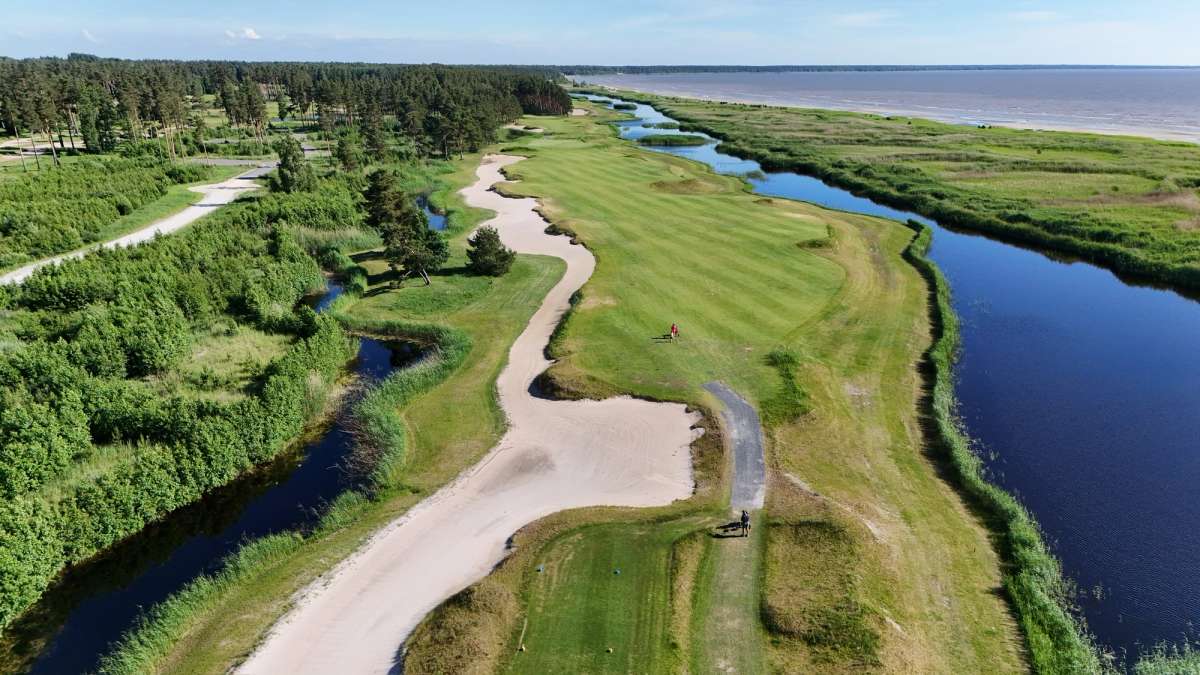
Europe's golf map stretches well beyond the famous names. Away from the links of Scotland and Ireland and the better-known resort destinations of Spain and Portugal, there are outstanding courses tucked into mountain valleys, Baltic coastlines and forests across the continent. From Switzerland to Estonia, these are courses that can be easy to overlook when planning a golf trip, despite offering the scenery, character and quality to make the journey worthwhile. We've picked 10 of Europe's biggest hidden gems, with every course coming from a different country. Andermatt Golf Course (Uri, Switzerland) Switzerland Ranking: 12th | Green Fees: From 130 CHF (€137) At around 1,400 metres above sea level, Andermatt Swiss Alps is surrounded by mountains, but the course itself is not quite the mountain layout you might expect. Designed by Kurt Rossknecht and opened in 2016, much of the 130-hectare course is relatively flat, with long rough lining the fairways and few trees giving it a links-like character. The third and fourth holes provide a dramatic change of pace, climbing through the rocky terrain at the end of the valley, while natural streams and water hazards feature elsewhere on the layout. The surroundings are impossible to ignore, with mountain ranges encircling the course and the sound of Alpine streams and grazing cows completing the experience. Pärnu Bay Golf Links (Pärnu Maakond, Estonia) Estonia Ranking: 1st | Continental Europe Ranking: 52nd | Green Fees: From €75 Estonia is hardly the first country that springs to mind when planning a European golf trip, which is precisely why Pärnu Bay Golf Links deserves a place on this list. Opened in 2015, the Lassi Pekka Tilander design occupies a narrow strip of sandy land where forest meets the Baltic Sea. Wide fairways, expansive waste areas and bold, multi-tiered greens give the course a links-like character, while the firm fescue surfaces reward a low, running game. Lead shaper Mick McShane, whose CV includes Kingsbarns, helped bring the design to life. Pärnu Bay may be off the beaten track, but it is one of the Baltics' standout layouts. Adamstal Golf Club - Championship Course (Niederösterreich, Austria) Austria Ranking: 1st | Continental Europe Ranking: 89th | Green Fees: €115 Tucked into a wooded valley southwest of Vienna, Adamstal feels a long way from the Austrian capital and even further from the usual European golf itinerary. Yet this spectacular mountain course has been Austria’s No. 1 on Top100’s national rankings and has hosted several editions of the Challenge Tour’s Euram Bank Open. Canadian architect Jeff Howes shaped the Championship course around the natural contours of the valley, with the 10th and 11th climbing into the mountains before dramatic elevated tees reveal the landscape below. The course even has a settle-the-bet 19th hole, a par three tucked into a pretty valley beside a mountain spring that has supplied Adamstal with drinking water for more than a century. Thracian Cliffs Golf & Beach Resort (Dobrich Province, Bulgaria) Bulgaria Ranking: 1st | Continental Europe Ranking: 43rd | Green Fees: €119 Perched on Bulgaria's northern Black Sea coast, Thracian Cliffs is one of Europe's most spectacular coastal golf courses. Gary Player’s signature design opened in 2011, with the holes carved along a narrow strip of land between high cliffs and the sea. The Black Sea is visible from every hole, while dramatic elevation changes add another dimension to the experience. The course hosted the 2013 World Match Play Championship, won by Graeme McDowell, and has featured prominently in Top100’s Continental Europe rankings. Alongside nearby BlackSeaRama and Lighthouse, Thracian Cliffs forms part of an unlikely but compelling golf destination on Bulgaria’s Black Sea coast. Zala Springs Golf Resort (Hungary) Hungary Ranking: 1st | Green Fees: 41,900 HUF (€114) Set among the rolling hills of western Hungary, Zala Springs combines a Robert Trent Jones Jr.-designed course with the thermal waters of nearby Hévíz. Opened in 2016, the 160-hectare layout winds through a landscape of lakes, natural rock formations and mature vegetation, with plenty of water coming into play. The 12th is among the standout holes, requiring an all-carry shot over an intimidating lake, while the ninth features a distinctive Biarritz green. Zala Springs is ranked Hungary’s No. 1 course by Top100 and offers something increasingly rare in modern golf: a high-quality course paired with a destination where golf is only part of the holiday. Kytäjä Golf – South East Course (Finland) Finland Ranking: 4th | Green Fees: From €90 Just 30 minutes north of Helsinki, Kytäjä's South East course offers a very different side of Finnish golf. Designed by Canadian architect Thomas McBroom and opened in 2003, it was his first Scandinavian project. The front nine winds through undulating woodland, before the back nine opens out across flatter terrain and towards the shores of Lake Kytäjä. Those lakeside holes provide some of the course’s most impressive views, with the surrounding Finnish landscape never far from sight. Kytäjä may be a relatively unfamiliar name to travelling golfers, but visitors are warmly received and there is plenty to discover. Karlštejn Golf Resort – A&B Course (Central Bohemian Region, Czechia) Czechia Ranking: 4th | Green Fees: From 1,900 CZK (€78) Golf in the grounds of a medieval castle is a pretty good way to spend a day in Czechia. Around 30 kilometres southwest of Prague, Karlštejn Golf Resort winds through a hilly, wooded landscape beneath the famous Karlštejn Castle, with limestone outcrops, ravines and a couple of lakes adding plenty of character. The 6,324-metre course was designed by Canadian architect Les Furber, who returned in 2006 to add a further nine holes. The original layout has also hosted a Ladies European Tour event, adding some serious pedigree to an otherwise wonderfully secluded setting. With Prague close by and the castle looming over the landscape, Karlštejn offers a memorable combination of golf and sightseeing. Golf Club Tále - Gray Bear Course (Slovakia) Slovakia Ranking: 3rd | Green Fees: From €75 Set in a mountain valley beneath the Low Tatras, Gray Bear was the first 18-hole championship course to open in Slovakia when it welcomed its first golfers in 2002. Designed by Americans Bob Walton and Skip Malek, the course occupies 160 acres of spruce forest within Tále National Park, weaving between open meadows and dense woodland. Streams, boulders, stone walls and specimen pines are incorporated throughout the layout, giving it a distinctly natural character. The 6th is the signature hole, with a stream crossing the fairway before the hole sweeps downhill towards a green surrounded on three sides by water. With the Low Tatras providing a dramatic backdrop throughout, Gray Bear is a memorable introduction to golf in Slovakia and an easy addition to a wider trip through the country. Golf Grad Otočec (Novo Mesto, Slovenia) Slovenia Ranking: 2nd | Green Fees: €80 Set among the heavily forested hills of Dolenjska, Grad Otočec winds through an undulating 185-acre property beside the River Krka. The course is a collaboration between Howard Swan and local architect Peter Škofic, with tight playing corridors creating an unusual sense of seclusion as the fairways twist through the woodland. The 3rd is a standout, with the par five turning towards a sunken, blind green, while the 12th stretches to 568 metres and demands three long, straight shots. Adding to the appeal, Otočec Castle sits nearby on an island in the river, giving visiting golfers the chance to stay in a genuine Slovenian castle after their round. Miklagard Golf (Viken, Norway) Norway Ranking: 2nd | Green Fees: From 850 NOK (€78) Just 10 minutes from Oslo Airport, Miklagard is remarkably convenient for a course of its stature. Robert Trent Jones Jr. designed it as Norway’s first championship course, with the layout purpose-built to host national and international tournaments. It is a big, bold test, with significant elevation changes, large bunkers and fast, contoured greens. A 2019 remodelling project added five new holes and reshaped the opening, while a hotel now occupies the former practice area. Its combination of accessibility, pedigree and championship credentials makes it an easy addition to a golf trip through Norway.