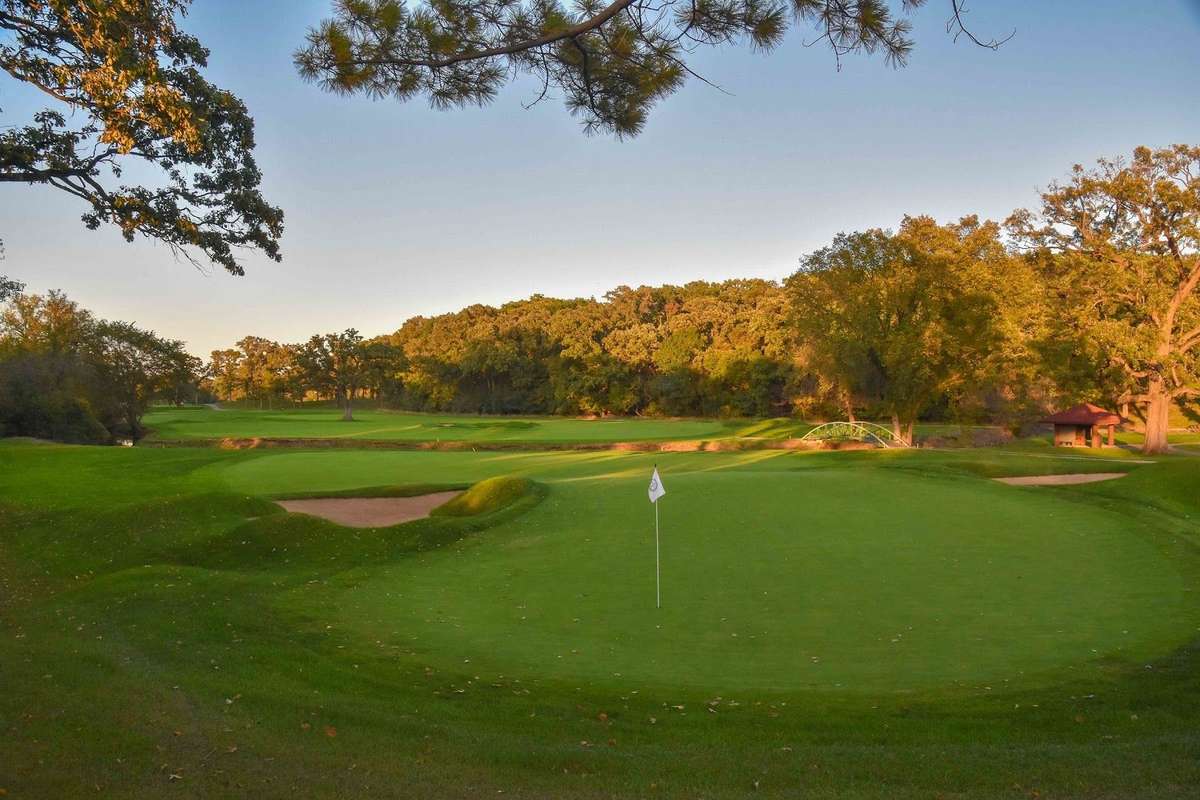
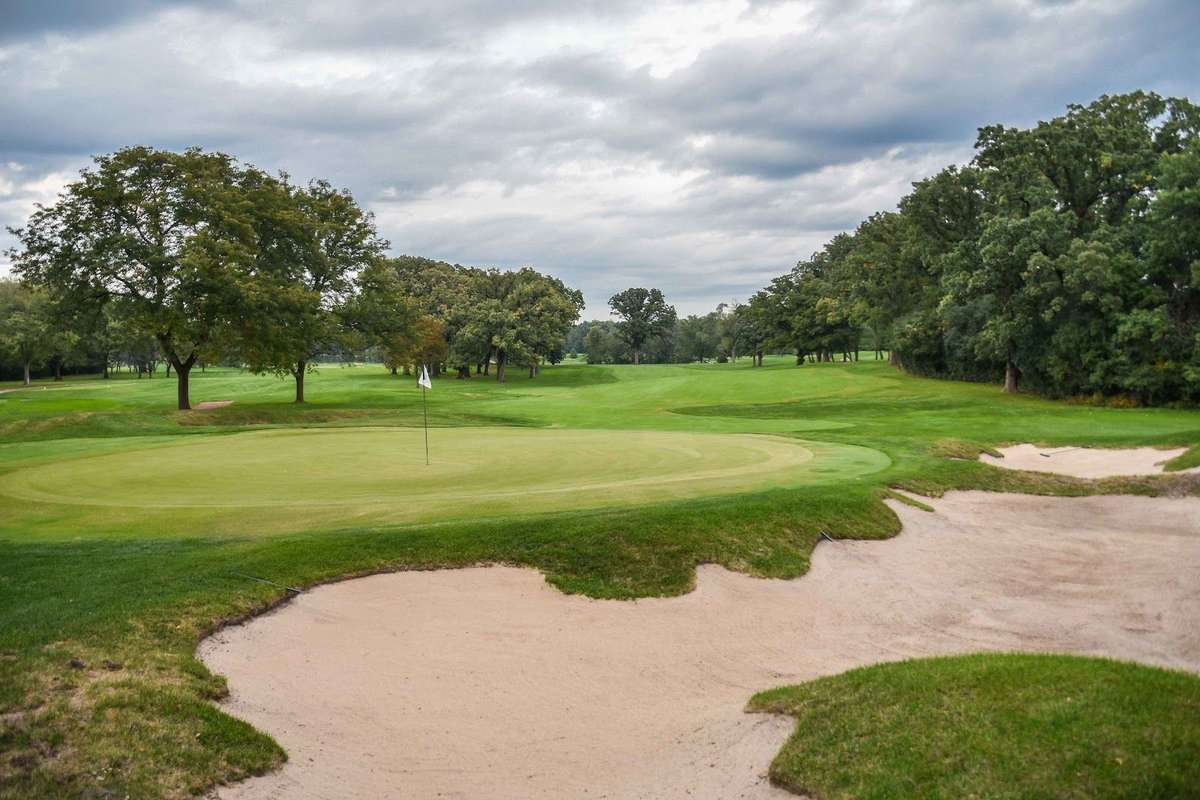
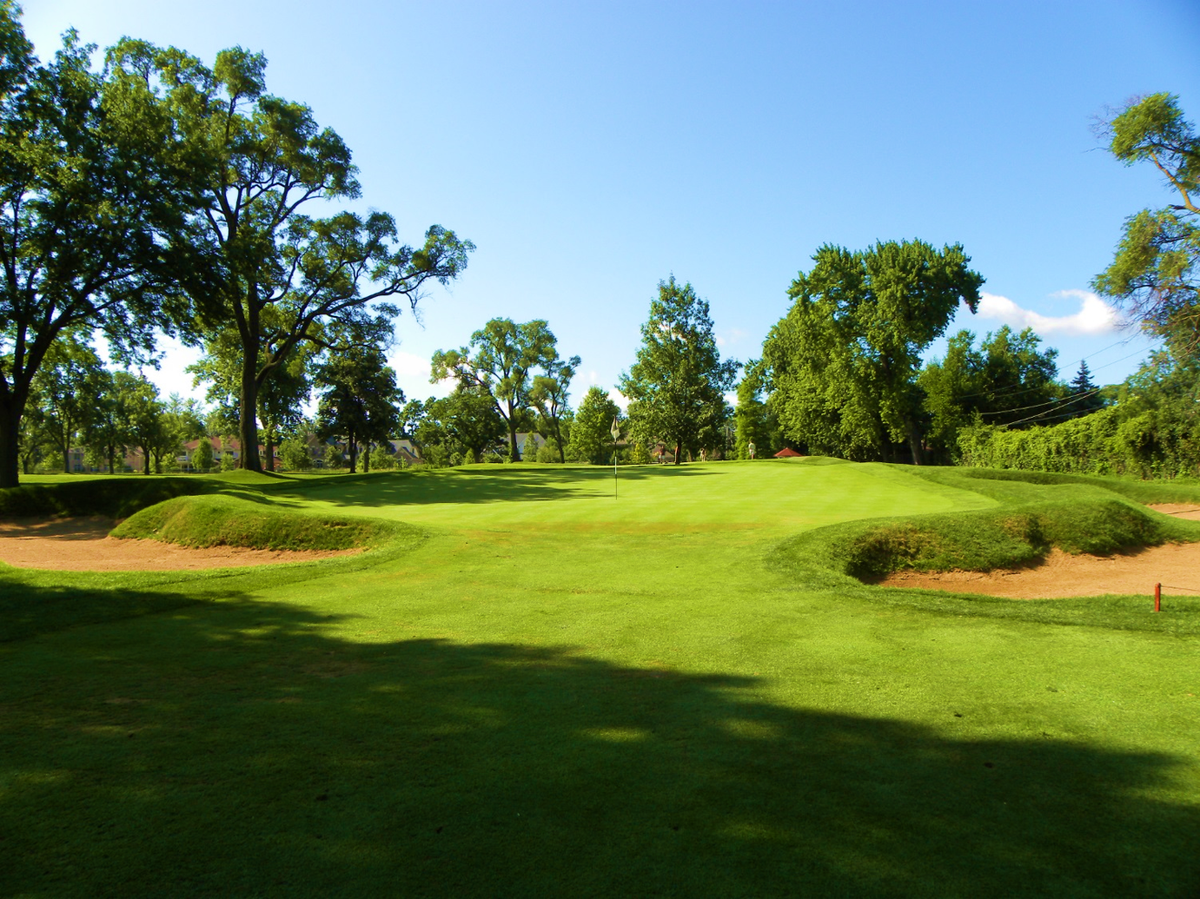
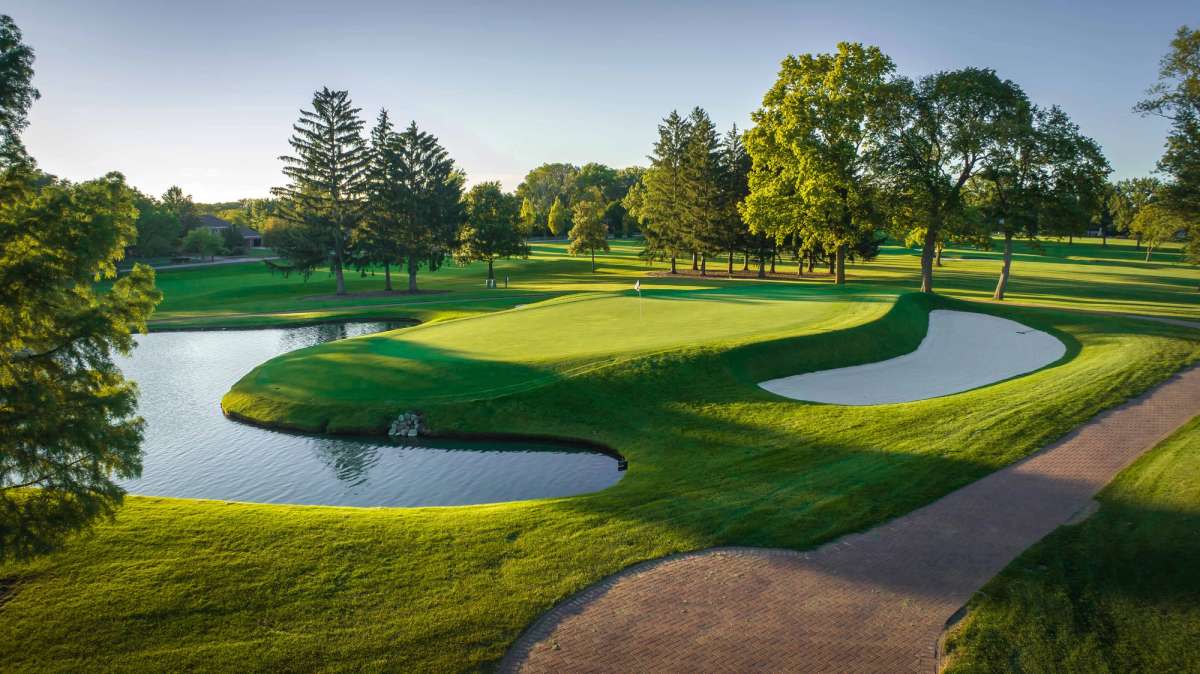
Apart from the North course, Olympia Fields Country Club owns the world’s largest clubhouse, which took two years to build and cost a whopping $1.3 million way back in 1925.
Overall rating

4.5
Olympia Fields Country Club (North)
Apart from the North course, Olympia Fields Country Club owns the world’s largest clubhouse, which took two years to build and cost a whopping $1.3 million way back in 1925.
The latest ranking of the Top 100 Golf Courses in the World serves as the ultimate global golf bucket list. Most members of our World Top 100 Panel are seasoned golfers, each playing 20-30 of these courses annually while travelling extensively over decades to form their opinions on others. We recognise that opinions vary—even among our panel members. Rankings are subjective, and there are undoubtedly 50 or more courses in the UK and USA alone that could easily fit onto this list. Links Golf Pilgrimages The rankings
California, United States
New Jersey, United States
Northern Ireland, United Kingdom
New York, United States
New York, United States
Once upon a time, Olympia Fields Country Club was the largest private country club in America and it was originally founded in 1915. By 1925, the club had four golf courses with plans in the pipeline for a fifth, but the Great Depression scuppered that. WWII then forced the club into serious financial difficulties and they had to sell half their land. Three golf courses were distilled into one (now called the South course) but the gem in the Olympia Fields crown – then known as No.4 course – remained intact and it’s now a priceless jewel in America’s rich golfing heritage.
Willie Park Junior designed the No.4 course and it’s now known universally as the North. The layout was lengthened and the bunkers improved by Mark Mungeam in the 1990s but the layout we play today and indeed the layout which hosted the 2003 US Open Championship, is still ostensibly a Willie Park Junior design. It’s little wonder that Olympia Fields is one of Jim Furyk’s favourite courses. He won the 2003 US Open equalling the then-record for the lowest 72-hole score in US Open history to claim his first major title.
Apart from the North course, Olympia Fields Country Club owns the world’s largest clubhouse, which took two years to build and cost a whopping $1.3 million way back in 1925. With its eighty-foot clock tower and English Tudor design, it’s possibly the most famous clubhouse in the world and it’s a monument to the extravagant Roaring Twenties.
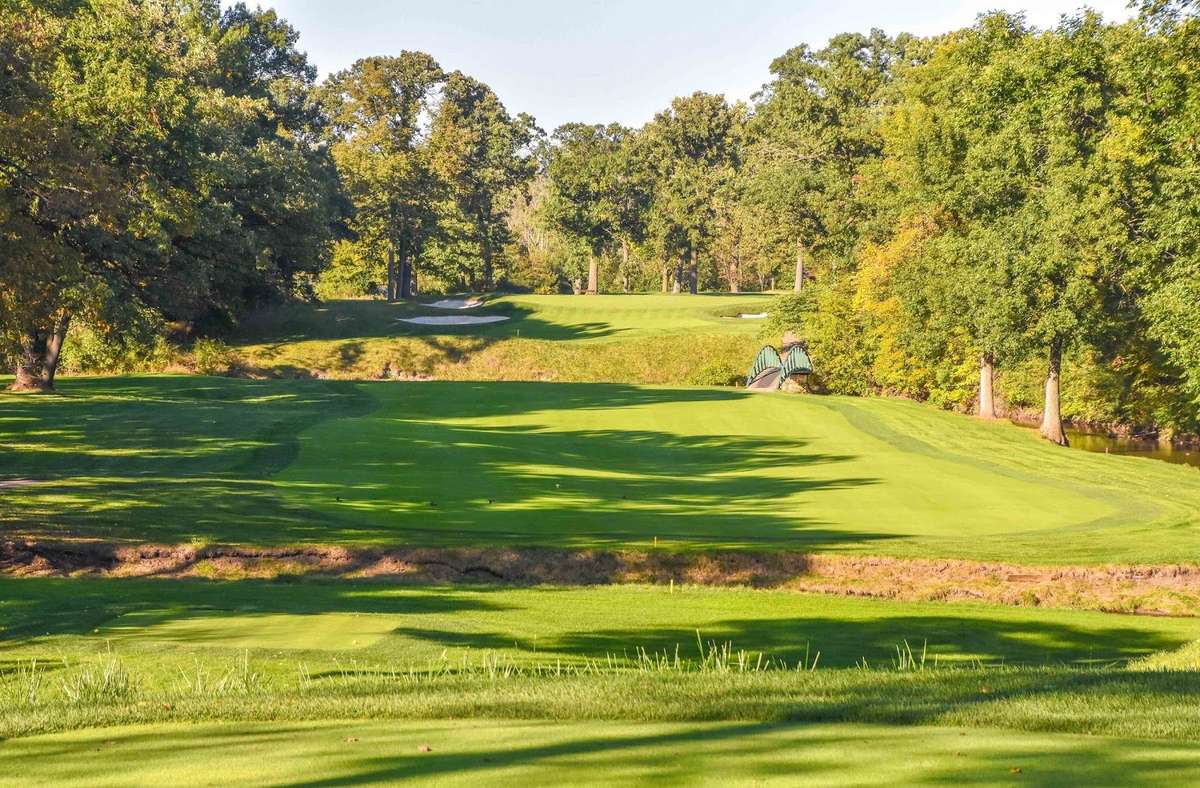
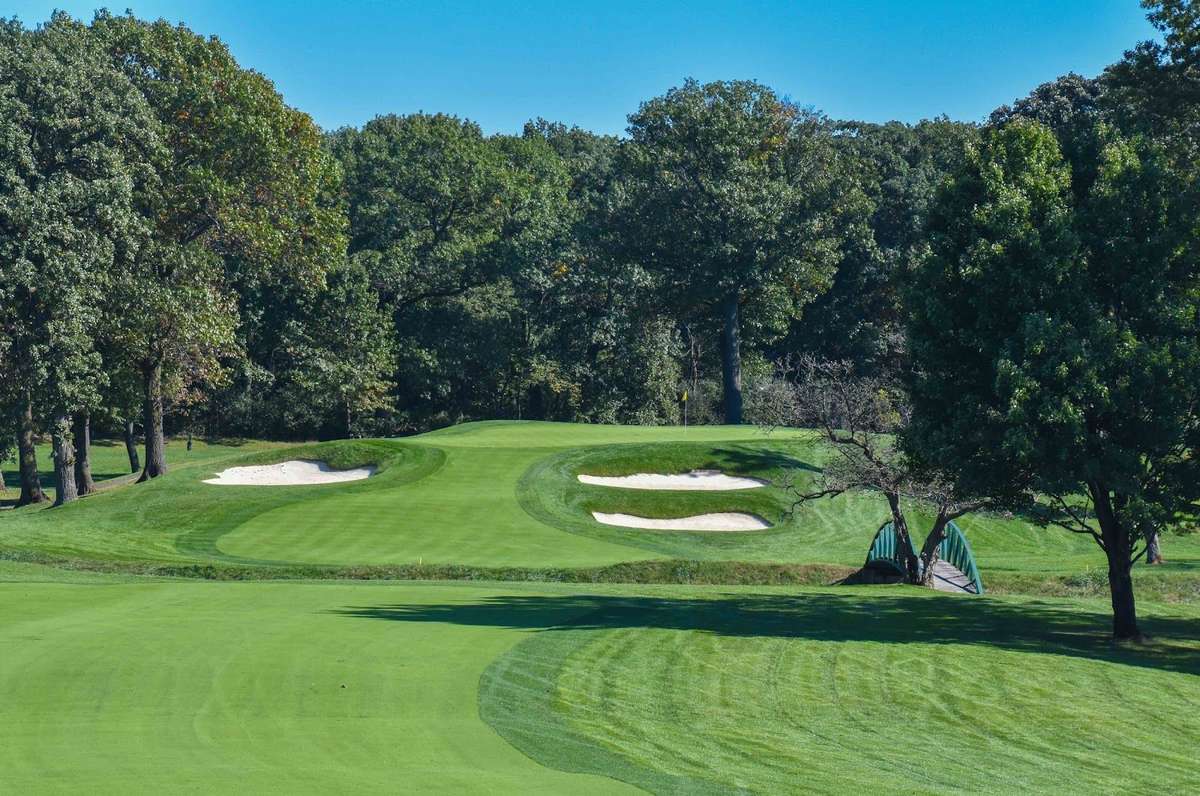
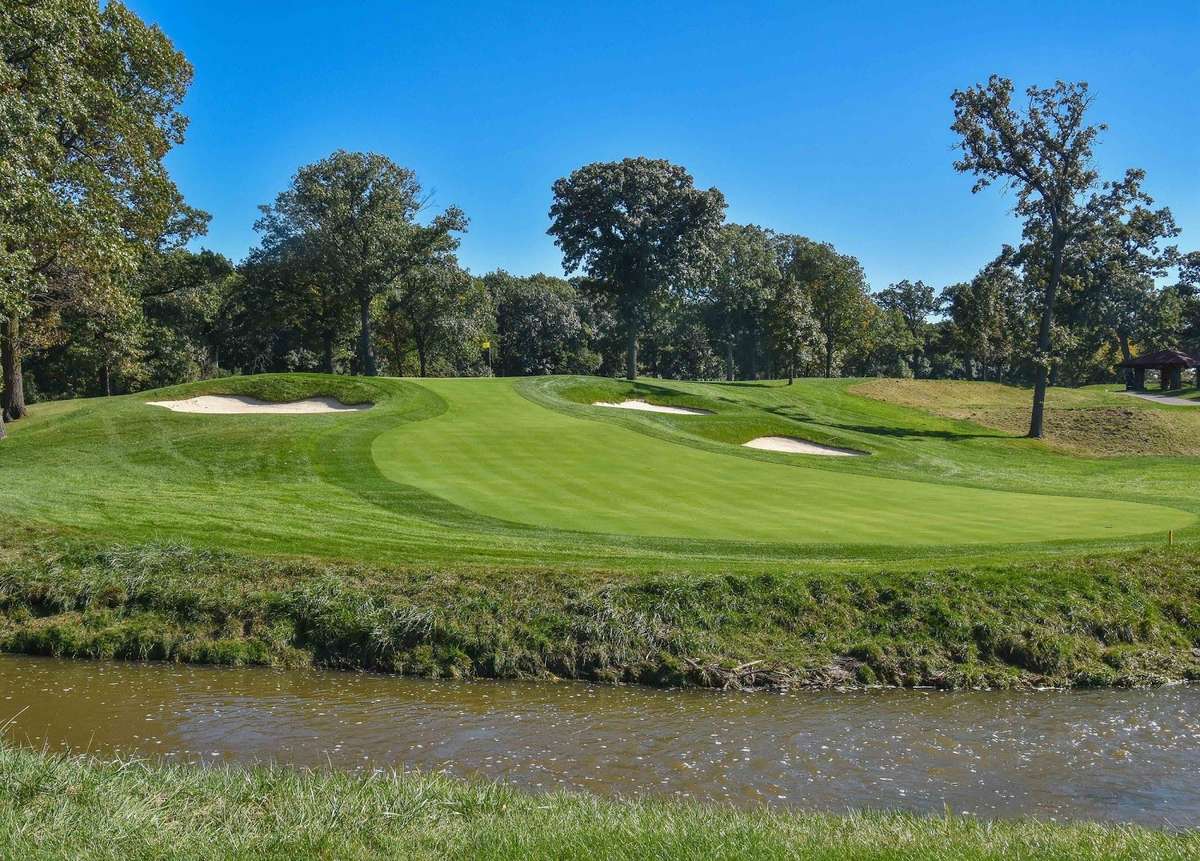
The North “has a good variety of holes on rolling parkland,” said Tom Doak in The Confidential Guide to Golf Courses, “with a handful of steep putting surfaces, and a standout hole in the big par-4 14th, with its second shot over a creek to an elevated green. Refinements for the 2015 U.S. Amateur were especially interesting: some greenside fronting bunkers were removed as superfluous.”
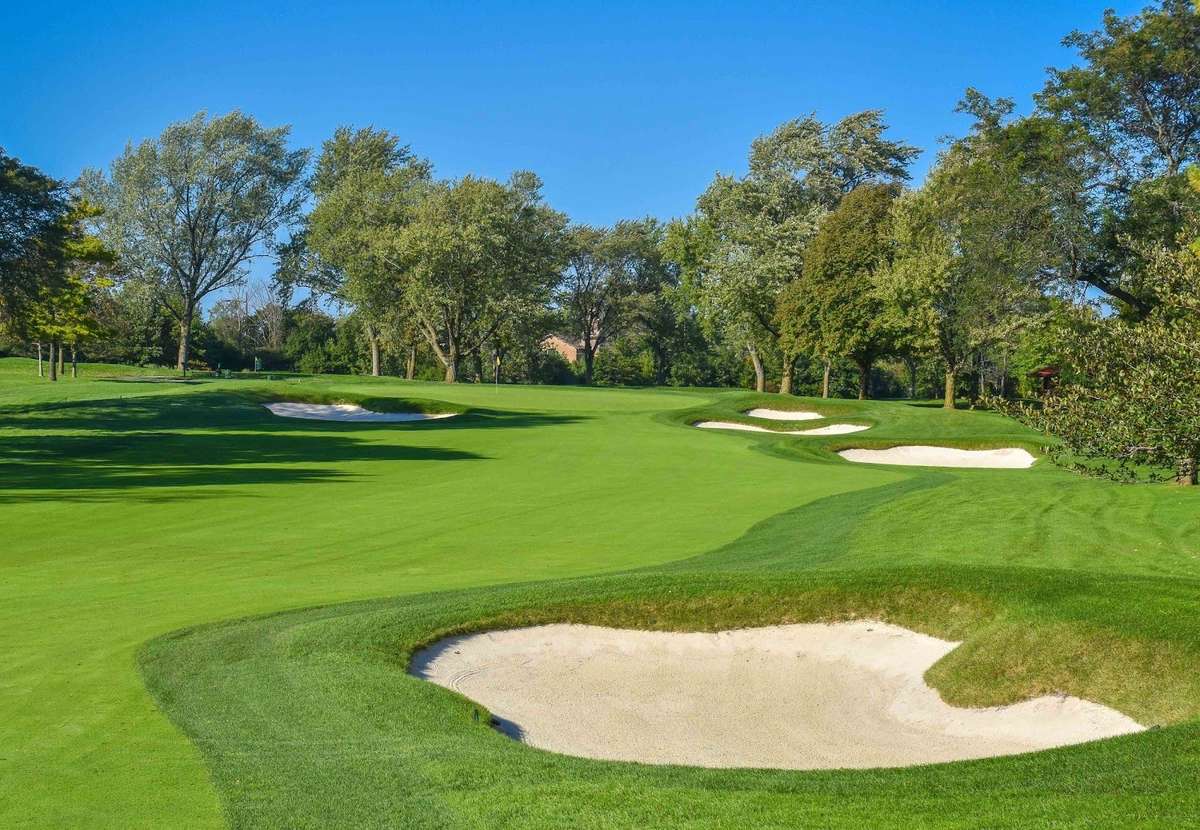
Mark Mungeam developed a renovation master plan for the North course prior to the U.S. Senior Open, in 1997; further work was then completed before the 2003 U.S. Open. After later discovering key period photography, the club opted for a full restoration which Mungeam directed.
Architects
Willie Park Jr., Mark Mungeam
From Furyk to Bryson: Mungeam's defense of Olympia Fields When the PGA Tour returns to Olympia Fields Country Club this week for the BMW Championship, penultimate stage of the Fedex Cup Playoffs (Aug. 27-30), the most interested observer will be Mark A. Mungeam, the architect who spent nearly a quarter century renovating, then restoring, but always defending this historic Willie Park Jr. design from muscle-bound, technologically enhanced assaults on par. Mungeam, owner of Massachusetts-based Mungeam Golf Design, first reckoned with the competitive resilience of the North Course at Olympia Fields in 1992. That master-planning process led to his direction of renovations prior to the in U.S. Senior Open, in 1997, then more prior to the 2003 U.S. Open, won by Jim Furyk. Thereafter, when the club opted for a full-on restoration — after discovering key period photography — Mungeam directed that refurbishment, as well. His prep efforts continued prior to the 2015 U.S. Amateur Championship, at Olympia Fields, claimed by a young, svelte Bryson DeChambeau. In 2017, Danielle Kang won the KMPG Women’s PGA Championship there. But it is DeChambeau who has emerged post lockdown bigger and longer — the new embodiment of golf’s uncomfortable relationship with length. He and his PGA Tour colleagues would appear ever more indifferent to the scoring safeguards Mungeam created over the course of 20 years. Olympia Fields North course 3rd hole photo by Gary Kellner “You can’t take it personally — I certainly don’t,” said Mungeam, ASGCA, whose more recent tournament prep involved rehabilitating a pair of Donald Ross-designed, City of Boston classics — George Wright GC in Hyde Park and Franklin Park GC in Dorchester — for the 2019 Massachusetts Amateur. “I can remember adding a bunker on the left side of what plays during championships as the par-4 18th hole at Olympia Fields, what the members play as no. 9,” the architect says. “It was 310 yards from the tee in 1999. Back then, we thought of it as an aiming bunker! Today they’ll be flying it, or trying to. They were doing that in 2015, during the Amateur. “There is a randomness to the bunkering in places like Scotland that keeps those hazards relevant through changes in technology and length, but it’s not enough to deter professionals today. The fairway bunkers at 18 on the North Course are deep enough that they are plenty penal. But the rough, should they miss the fairway, is ever more punishing. It has to be. At Olympia Fields and elsewhere, it has become a risk/reward situation from the tee, the sort of dynamic we associate with severe U.S. Open-style conditions. Is that better? Well, it’s better than it could have been, had we done nothing.” Located just outside of Chicago, the North Course at Olympia Fields opened in 1923. Two years later, Walter Hagen won the PGA Championship there. In 1928, Johnny Farrell captured the U.S. Open title on the North Course, besting Bobby Jones in a playoff. The club would host another PGA in 1961. The Western Open — considered alongside golf’s major tournaments into the 1960s (the BMW Championship is its 21st century incarnation) — was played here five times. In preparation for the 1997 Senior Open (won by Graham Marsh), the club engaged Mungeam to effectively renovate the North Course for 21st century tournament use. The USGA needed a championship venue in Chicago, the nation’s second biggest population center and television market. This was the first of several distinct renovation phases, Mungeam says. “That second renovation in 1999 was complicated — we were preparing for a U.S. Open Championship in 2003, for goodness sake — but it was a renovation. We didn’t have any period photography or plans from Park Jr. detailed enough to allow for restoration. That all changed in 2013 when someone found a program from the 1928 Open, with pictures of every single hole! That document was a goldmine. It became the practical basis for our sympathetic restoration work prior to the 2015 Amateur — the basis for the course we’ll see this week. “Without those photos, we would not have those magnificent cross-bunkers on the 5th, 8th and 17th holes, for example. The old photos were also crucial to full expansion several green surfaces. And, of course, they helped guide some tree removal.” Mungeam’s interaction with the North Course during all these tournament engagements has run the gamut. In 2003, he became the first architect who prepared a U.S. Open site to ever work the same course as part of the grounds crew: Mungeam raked bunkers, filled divots and fluffed rough for then superintendent Dave Ward, starting at 4 a.m. — before watching championship play from the maintenance shed. “I had been working alongside that crew for nearly 10 years by then. They were my friends,” Mungeam explains. At the Amateur in 2015, the architect observed DeChambeau up close, walking the course from what then passed for a responsible distance. After 24 years, Mungeam’s association with the club ended in 2018. He will watch this week’s tournament from the sofa inside his 1850s farmhouse in central Massachusetts. “This winter I ran into the current Olympia Fields superintendent, Sam MacKenzie, and he confirmed that nothing much has changed since 2017,” Mungeam says, noting the layout still maxes out at 7,343 yards (Par-70), up from the 7,180 yards it played for the 2003 Open. “All the same, I’ll be interested to see where they maintain the fairway edges. We modified them — to narrow things down beyond those fairway bunkers. And I’ll be interested to see how long and thick they keep the rough in those areas, where there won’t be galleries trampling the rough down. “The only real deterrents to Bryson and the Bombers these days are the roughs and the wonderfully sloped Willie Park Jr. putting surfaces, which many of these guys haven’t see before (though Bryson has). In the end, the greens make this course what it is. I’m sure Sam will have them rolling pretty quick.” Jim Furyk, never a long hitter, shot a then-record 8-under par to win the 2003 U.S. Open. “If the BMW winner doesn’t double that,” the architect says, “I’ll consider it a moral victory.”
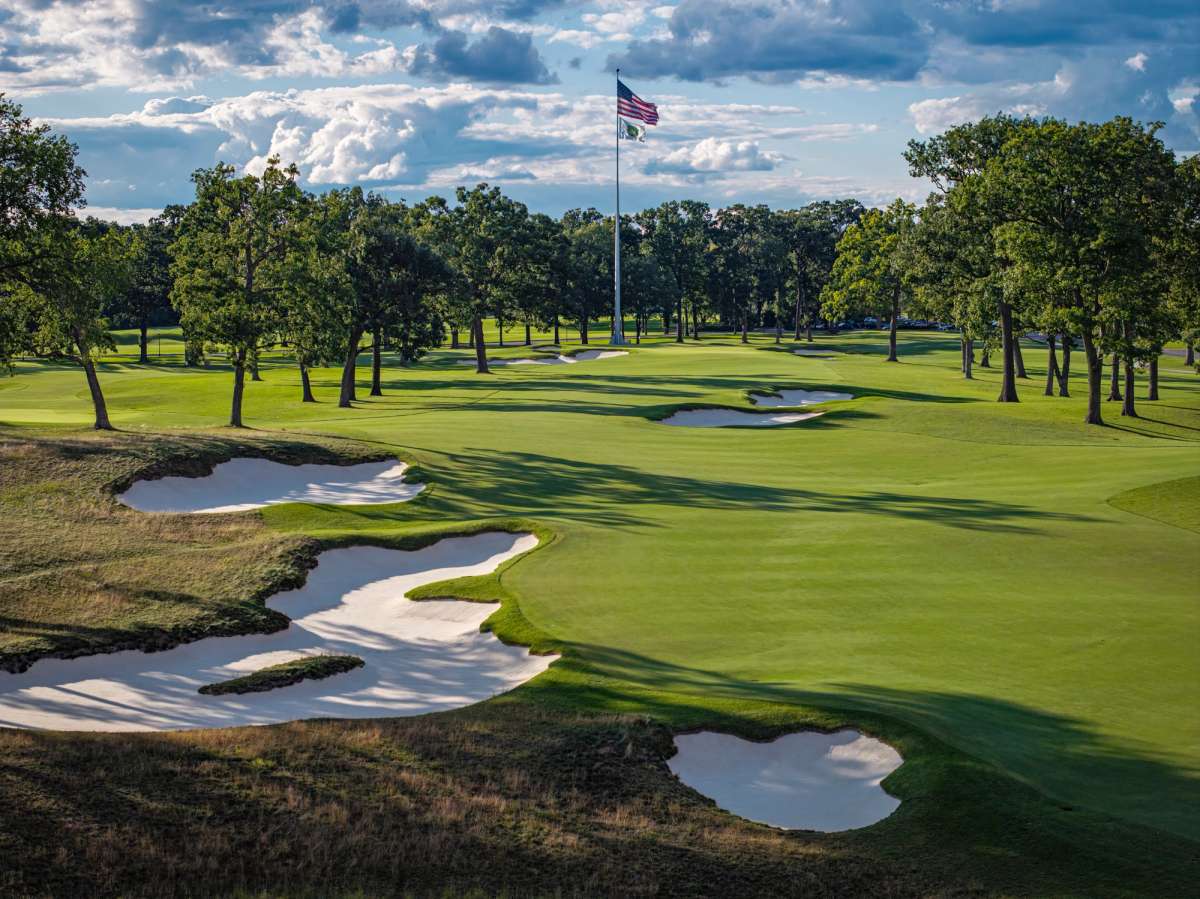
With the Presidents Cup rosters finally confirmed after both captains announced their six respective picks on Tuesday, the countdown to Medinah Country Club is officially on. Team International will head to Illinois looking to end Team USA’s dominance of the Presidents Cup and lift the trophy for only the second time in the competition’s history, having last tasted victory in 1998 at Royal Melbourne in Australia. It will be no easy task, though. Team USA boasts enormous depth, with major winners, extensive Ryder Cup and Presidents Cup experience, and the world’s number one-ranked player, Scottie Scheffler, among its ranks. But can Geoff Ogilvy’s International side cause an upset at Medinah? Top100 takes a closer look at both rosters, the key players to watch and the venue that could play a crucial role in deciding who will lift the Presidents Cup. Medinah No. 3: A new-look stage for the Presidents Cup There are few more appropriate venues for the 2026 Presidents Cup than Medinah No. 3. Completed in 1928 by renowned architect Tom Bendelow, the course has spent almost a century building a reputation as one of American golf’s great championship venues. Five major championships, a Ryder Cup and countless memorable moments have followed, including Tiger Woods’ victories in the 1999 and 2006 PGA Championships and Europe’s remarkable “Miracle at Medinah” in 2012 – widely regarded as one of the greatest comebacks in sporting history. But the course that welcomes the Presidents Cup will look considerably different from the one that hosted those events. After decades of incremental changes that increasingly narrowed the playing corridors and placed a premium on length, Medinah No. 3 underwent a major transformation by Australian firm OCM Golf, led by Geoff Ogilvy, Michael Cocking and Ashley Mead. The renovation, completed in 2024, sought to restore the scale and strategic character of Bendelow’s original design. Wider fairways, larger greens, expansive bunker complexes and the removal of hundreds of trees have opened up the landscape, resulting in a fascinating mix of old and new. At more than 7,650 yards from the championship tees, Medinah can still stretch the world's best players, but the increased width means distance alone should not dictate how the course is played. Instead, players will be faced with strategic decisions from the tee and into the greens, with different angles potentially offering very different rewards. The closing holes could provide some of the most dramatic moments of the week. Lake Kadijah now plays a prominent role on the inward nine, with the 16th crossing diagonally towards the water and the 17th offering another demanding one-shot test alongside the lake. The 18th, meanwhile, has been returned to its original corridor, providing a fitting finish to a course that has undergone such a significant rebirth. There is one particularly intriguing subplot for the International team. Their captain, Geoff Ogilvy, was part of the team responsible for reimagining Medinah No. 3. While intimate knowledge of a golf course is no guarantee of success, Ogilvy will know better than most how the redesigned holes are intended to be played, where the opportunities lie and which mistakes the course is designed to punish. The United States may arrive with the deeper roster and home advantage, but Ogilvy’s intimate knowledge of the course could help to level the playing field. With the course now offering considerably more strategic options than the penal layout of recent decades, the question is whether Ogilvy can use that knowledge to help his players find an advantage. Team USA: The Favourites On paper, Team USA looks extremely difficult to beat. World No. 1 Scottie Scheffler headlines a formidable 12-man roster that also includes major champions Collin Morikawa, Wyndham Clark and Justin Thomas, while Xander Schauffele and Patrick Cantlay add a wealth of team-match experience. The automatic qualifiers – Scheffler, Cameron Young, Clark, Sam Burns, Russell Henley and Morikawa – are joined by captain’s picks Schauffele, Thomas, Cantlay, Chris Gotterup, Jackson Koivun and Jacob Bridgeman. Snedeker's selections have made an already strong side even more imposing. Schauffele, Thomas and Cantlay bring considerable Presidents Cup and Ryder Cup experience, while the inclusion of 21-year-old Koivun adds an exciting new dimension. Koivun, Gotterup and Bridgeman will all make their Presidents Cup debuts at Medinah. The Americans therefore have an attractive blend of proven stars and youthful talent, with strength throughout the 12-man roster. Add home advantage and an 11-match winning streak, and it is easy to see why they arrive as overwhelming favourites. The challenge for Brandt Snedeker will be turning that individual quality into the right pairings and combinations – particularly in the foursomes. If he can do that, Team USA will take some stopping. The full Team USA roster can be found below: Scottie Scheffler Cameron Young Wyndham Clark Sam Burns Russell Henley Collin Morikawa Jacob Bridgeman Patrick Cantlay Chris Gotterup Jackson Koivun Xander Schauffele Justin Thomas Team International: The Underdogs The International team enters Medinah as the clear underdog, but Geoff Ogilvy has assembled a side with plenty of experience and enough quality to make life uncomfortable for the Americans. Si Woo Kim, Ryan Fox, Hideki Matsuyama, Min Woo Lee, Tom Kim and Adam Scott qualified automatically, before Ogilvy added Corey Conners, Sungjae Im, Christiaan Bezuidenhout, Nick Taylor, Nico Echavarria and Ryo Hisatsune with his six captain’s picks. There is plenty of Presidents Cup experience within the group, particularly through Scott, Matsuyama, Tom Kim, Si Woo Kim and Im. Ogilvy has also opted for three rookies in Taylor, Echavarria and Hisatsune, betting on a mixture of current form and players he believes can thrive in the team environment. It will also be a Presidents Cup debut for New Zealander and Champion Golfer of the Year, Fox. The obvious concern is star power. Si Woo Kim is the only International player inside the world's top 20, while the Americans boast Scheffler alongside a deep collection of elite players. But this is where Ogilvy's role could prove crucial. With a team that may lack the depth of the USA, the International captain will need to find the right combinations and maximise every available point. If his players embrace the occasion and the new-look Medinah rewards their style, they may have a genuine chance of making this a contest. After all, Medinah has already witnessed some extraordinary comebacks and championship moments. The 2026 Presidents Cup could provide another chapter in its remarkable history. The full Team International roster can be found below: Si Woo Kim (South Korea) Ryan Fox (New Zealand) Hideki Matsuyama (Japan) Min Woo Lee (Australia) Tom Kim (South Korea) Adam Scott (Australia) Christiaan Bezuidenhout (South Africa) Corey Conners (Canada) Nico Echavarria (Colombia) Ryo Hisatsune (Japan) Sungjae Im (South Korea) Nick Taylor (Canada)

President's Cup 2026 - Medinah No. 3 Quick Facts Dates: 22–27 September 2026 Venue: Medinah Country Club, Course No. 3, Medinah, Illinois Prize Purse: No prize money awarded (proceeds to charity) Distance from Chicago: 40 kilometres (25 miles), approximately 45 minutes Tournament Status: PGA Tour-sanctioned biennial team competition (United States vs International Team) U.S. Team Captain: Brandt Snedeker International Team Captain: Geoff Ogilvy The Chicago suburbs will host one of golf's premier international spectacles when the Presidents Cup makes its debut at the legendary Medinah Country Club in September 2026. Golfers and fans worldwide will converge on this storied championship venue for six days of world-class match play golf, exceptional hospitality, and an unforgettable glimpse into American golf history. Tournament Overview - Why This Event Matters The Presidents Cup stands alongside the Ryder Cup as one of golf's most prestigious team competitions, pitting twelve of America's finest players against an International squad representing the rest of the world beyond Europe. Since its inception in 1994, the tournament has delivered countless memorable moments, though the Americans have dominated with a commanding 13-1-1 record through fifteen editions. The 2024 event at Royal Montreal saw the United States extend their winning streak to ten consecutive victories. What distinguishes the Presidents Cup from other golf tournaments is its charitable focus. Unlike traditional events with massive prize purses, the Presidents Cup awards no prize money whatsoever. Instead, all net proceeds are distributed to charities nominated by the players, captains, and their assistants. The first ten Presidents Cup competitions alone raised over £25 million (€30 million/$32 million) for worthy causes around the globe. The 2026 edition brings added intrigue with respected captains leading both sides. Brandt Snedeker, the 2012 FedExCup champion who compiled a 2-3-0 record as a player in the 2013 Presidents Cup, will guide the American team. Facing him across the first tee will be Australian Geoff Ogilvy, the 2006 U.S. Open champion who posted a 7-6-1 record across three consecutive International Team appearances from 2007 to 2011. Ogilvy's connection to Medinah runs deeper still—his architectural firm OCM Golf orchestrated the recent complete transformation of Course No. 3, making him uniquely qualified to strategise for the venue. The tournament will unfold over four days of competition from Thursday, 24 September, through Sunday, 27 September 2026, with practice rounds on Tuesday and Wednesday. Thirty points will be contested through various match play formats, including foursomes (alternate shot), fourballs (better ball), and Sunday singles matches where all twelve players from each team compete head-to-head. Tournament History & Heritage The Presidents Cup emerged from a desire to showcase elite international talent excluded from the Ryder Cup's United States versus Europe format. Australian players, South Africans, Japanese stars, and talented golfers from across Asia, Africa, and South America deserved their own premier team competition, and the PGA Tour delivered when it launched the Presidents Cup in 1994. That inaugural event at Robert Trent Jones Golf Club in Virginia saw the United States defeat the International Team by a margin of 20-12, establishing a pattern of American dominance that has persisted throughout the competition's three-decade history. Only once have the Internationals tasted victory—their resounding 20.5-11.5 triumph at Royal Melbourne in 1998 under captain Peter Thomson remains their finest moment. The 2003 event at Fancourt in South Africa ended in a historic tie when captains Jack Nicklaus and Gary Player agreed to share the cup after their designated playoff match between Tiger Woods and Ernie Els was suspended due to darkness after three holes. Through the years, the Presidents Cup has evolved into one of golf's most anticipated spectacles, drawing massive crowds and global television audiences. The tournament alternates between American venues and international host countries, with Royal Melbourne hosting three times (1998, 2011, 2019), making it the International Team's spiritual home. Other international venues have included South Africa, Canada, South Korea, and soon Kingston Heath in Melbourne for the 2028 edition. Recent competitions have produced extraordinary drama despite the Americans' winning streak. The 2019 event at Royal Melbourne stands out as particularly memorable, with Tiger Woods serving as playing captain for the United States. Down two points after three days, Woods' American team mounted a stunning Sunday comeback, claiming victory by the narrowest of margins. Woods himself contributed crucial points in both fourball and singles play, capping one of the most dramatic finishes in Presidents Cup history. Notable American captains have included legends like Jack Nicklaus (four times), Fred Couples (five times), and Jay Haas. The International side has been led by luminaries including Gary Player (five times), Nick Price (four times), and Ernie Els (twice). The 2024 event at Royal Montreal saw Jim Furyk lead the Americans to another commanding victory over Canadian Mike Weir's International squad. Statistical highlights tell the story of American supremacy: Phil Mickelson holds the record for most appearances with twelve, whilst Tiger Woods' perfect 5-0-0 performance in 2009 remains one of five instances where a player has achieved maximum points in a single competition. The Americans have never lost on home soil, posting an unblemished 8-0-0 record when hosting the event. Recent champions on American soil have been decisive. The 2022 event at Quail Hollow Club in Charlotte saw Davis Love III's team prevail 17.5-12.5 despite a valiant International comeback attempt on Sunday. The 2017 edition at Liberty National in Jersey City produced a commanding 19-11 victory for the United States, whilst the 2013 competition at Muirfield Village saw Fred Couples' Americans win 18.5-15.5 in Ohio. Looking beyond 2026, the Presidents Cup's future venues showcase golf's global reach. Following Medinah, the competition heads to Kingston Heath Golf Club in Melbourne for 2028, returning to Australia's fabled Sandbelt region. The 2030 edition will be contested at Bellerive Country Club in St. Louis, Missouri, with Melbourne scheduled to host again in 2040 under the PGA Tour's long-term commitment to Victoria. Championship Course: Medinah Country Club No. 3 Few American golf courses can match Medinah Country Club's championship pedigree or dramatic transformation. Course No. 3 stands as one of the nation's most storied layouts, having hosted five major championships and countless premier events since opening for play in 1928. What makes the venue particularly fascinating for the 2026 Presidents Cup is that spectators will witness an almost entirely new golf course, reimagined from fairway to green by Geoff Ogilvy's OCM Golf design firm. The journey began in the Roaring Twenties when the Medinah Shriners—members of the Ancient Arabic Order of the Nobles of the Mystic Shrine—pursued their ambition to create America's finest country club. Established in 1924 on 260 hectares (640 acres) of rolling farmland and woodland 40 kilometres west of Chicago, Medinah was conceived as a fifty-four-hole complex with Byzantine-inspired clubhouse architecture featuring minarets and classic Moorish design elements that remain striking today. Scottish architect Tom Bendelow designed all three original courses, with Course No. 3 opening in 1928 as a layout initially intended for the ladies. That status changed almost immediately when Lighthorse Harry Cooper fired a stunning 63 in the 1930 Medinah Open, prompting club officials to toughen the design. Harry Collis oversaw the first major renovation in the 1930s, beginning a pattern of perpetual evolution that would define Course No. 3's character. The 1949 U.S. Open put Medinah on America's championship golf map, launching decades of modifications aimed at keeping pace with advancing equipment and tournament demands. Roger Packard and Roger Rulewich made substantial changes before the 1988 U.S. Senior Open, where Gary Player claimed victory. Rees Jones then extended the course to 7,561 yards before the 2006 PGA Championship—at the time, the longest layout in major championship history—where Tiger Woods captured his twelfth career major title. Through the 1970s and 1980s, Course No. 3 exemplified the "championship course" ideal of that era. Tight, tree-lined fairways squeezed tee shots into narrow corridors whilst thick rough and marble-firm greens punished the slightest miscue. The course flexed its muscles admirably through multiple U.S. Opens (1949, 1975, 1990), two PGA Championships (1999, 2006), and the unforgettable 2012 Ryder Cup known as the "Miracle of Medinah." That Ryder Cup produced one of golf's most dramatic finishes when Europe, facing a seemingly impossible deficit, mounted an extraordinary Sunday singles comeback to snatch victory 14.5-13.5 from the Americans. Dressed in colours honouring the late Seve Ballesteros, the European team won eight and a half points from twelve singles matches, with Martin Kaymer securing the decisive point to complete the greatest away-team comeback in Ryder Cup history. Yet by 2019, when Course No. 3 hosted the BMW Championship, the landscape had shifted. Justin Thomas blistered the layout to twenty-five under par, setting a new course record of 61 in the third round and exposing how modern equipment had rendered the traditional design vulnerable. Medinah had slipped in the rankings, prompting club leadership to pursue drastic measures. Enter Geoff Ogilvy and his OCM Golf partners Mike Cocking and Ashley Mead. The Australian firm arrived with a revolutionary vision: transform Course No. 3 into a Melbourne Sandbelt-style layout that might have existed in the 1920s Golden Age of golf design. Using aerial photographs from the 1930s to guide their work, OCM embarked on a complete remake that closed the course from October 2022 through mid-2024. The transformation proved comprehensive. Tree removal opened sight lines across the property, revealing dramatic landforms that had been obscured for generations. The bunker count increased from approximately seventy to one hundred, with expanded, wavy hazards tied naturally into the surrounding terrain. Green complexes were enlarged and contoured to create Melbourne-style putting surfaces with multiple hole locations. Fairways were widened with closely mown surrounds, introducing strategic options and reducing heavy rough. The most dramatic changes occurred on the closing stretch. A new thirteenth hole now hugs Lake Kadijah, the fourteenth was shortened, the old fifteenth was removed entirely, and the former par-three seventeenth became a driveable par-four. The reimagined seventeenth hole—now a stunning 217-yard par three over water—plays to an angled green requiring precise club selection and unwavering nerve. This signature hole will feature prominently during Sunday singles matches. At 7,654 yards from the championship tees playing to par 72, the renovated Course No. 3 presents a thoroughly modern test whilst honouring Golden Age design principles. The opening hole typifies the new character—a straight par-four where heavily undulating terrain and strategic bunkering demand accuracy over brute force. The short par-four third offers birdie opportunities for those brave enough to challenge the green, whilst the second and thirteenth present water-laden par-threes that will create pivotal moments in match play. The back nine builds towards a thrilling conclusion. The fourteenth, now a medium-length par-four, sets up the strategic challenges ahead. The par-five fifteenth rewards aggressive play but punishes wayward shots severely. The sixteenth—a lengthy par-four with a terraced green—has sparked debate as one potential new signature hole, whilst the aforementioned seventeenth over Lake Kadijah delivers guaranteed drama. Notable champions at Medinah read like a hall of fame: Byron Nelson, Gary Player, Cary Middlecoff, Lou Graham, Hale Irwin, and Tiger Woods twice. The venue's championship credentials are beyond question, and the OCM renovation has restored Medinah to elite status. Members and early visitors have praised the transformation, with many holes now unrecognisable from their previous incarnations. For the 2026 Presidents Cup, Course No. 3's strategic demands and match play suitability will create compelling viewing. Unlike stroke play, where caution dominates, match play encourages aggressive tactics and risk-taking. Expect captains to craft pairings that exploit specific holes, with the water-laden par-threes and reachable par-fives producing pivotal swings in momentum. Other Historic Venues at Medinah Whilst Medinah will host all competition rounds, golf enthusiasts should note that the club's other courses offer their own compelling stories. Course No. 1, redesigned by Tom Doak in 2014, presents a stark contrast to No. 3 with its wide-open vistas and diabolical green complexes. The renovation involved removing nearly eight hundred trees and creating entirely new playing corridors, resulting in a layout praised for its strategic variety. Course No. 2 maintains Tom Bendelow's original character with tree-lined fairways and traditional design elements. Rees Jones oversaw infrastructure restoration in 2016, preserving the course as a classic representation of Golden Age architecture. Together, the three courses make Medinah one of America's premier fifty-four-hole facilities. Chicago's Culinary Scene The Chicago dining landscape combines Midwestern heartiness with international sophistication, offering everything from legendary steakhouses to innovative contemporary cuisine. The western suburbs near Medinah feature excellent options, whilst downtown Chicago presents world-class restaurants worthy of special occasion meals. Cooper's Hawk Winery & Restaurants in Bloomingdale brings California wine country sensibility to suburban Illinois. The concept combines a Napa-style tasting room with modern casual dining, featuring contemporary American cuisine designed to complement their wine club offerings. The menu ranges from creative pasta specialities to flame-grilled steaks, with everything crafted to pair with their extensive wine selection. Expect main courses from £16-£32 (€19-€38/$20-$40). Perry's Steakhouse & Grille in Schaumburg delivers the full-scale steakhouse experience with tableside presentations and exceptional service. The restaurant specialises in premium USDA cuts prepared with meticulous attention, alongside seafood options and signature side dishes. The bar programme features craft cocktails and an extensive wine list. Main courses typically range £32-£56 (€38-€66/$40-$70), with portions generous enough for sharing. Shaw's Crab House in Schaumburg stands as Chicagoland's premier seafood destination. The restaurant imports fresh catches daily, offers made-to-order sushi, and specialises in Alaskan king crab legs. The venue splits between a casual oyster bar and a more formal main dining room, both delivering straightforward preparations that let quality ingredients shine. Budget £24-£48 (€28-€57/$30-$60) for main courses, with shellfish platters commanding premium prices. Downtown Chicago elevates the culinary experience considerably. Alinea, Grant Achatz's three-Michelin-star temple of molecular gastronomy, represents one of America's finest restaurants. The tasting menu format explores culinary boundaries through innovative techniques and ingredient combinations, creating an unforgettable evening. Expect to invest £280-£400 (€330-€470/$350-$500) per person before wine pairings. Gibsons Bar & Steakhouse epitomises Chicago steakhouse culture with enormous portions, masculine décor, and people-watching opportunities. The Rush Street original attracts local celebrities and business leaders who appreciate straightforward excellence. Steaks arrive perfectly prepared, sides serve multiple people, and the bar pours generously. Budget £56-£80 (€66-€94/$70-$100) per person. RPM Italian in River North presents contemporary Italian cuisine in a sleek, energetic environment. Bill and Giuliana Rancic's restaurant features dishes meant for sharing, from house-made pastas to wood-fired pizzas and innovative entrées. The scene attracts stylish diners who appreciate modern interpretations of classic preparations. Main courses range £20-£40 (€24-€47/$25-$50). Traditional local fare shouldn't be missed. Lou Malnati's serves legendary Chicago deep-dish pizza from multiple locations, with the Schaumburg outlet convenient to Medinah. The butter crust and generous cheese layers define what many consider authentic Chicago pizza. Individual pizzas cost £16-£24 (€19-€28/$20-$30). Explore Beyond Golf Chicago offers world-class attractions rivalling any American city, from architectural treasures to cultural institutions and distinctive neighbourhoods. The metropolitan area's rich history, diverse communities, and lakefront setting create endless exploration opportunities. The Art Institute of Chicago ranks amongst the world's great art museums, housing extraordinary collections spanning centuries and continents. The museum's Impressionist and Post-Impressionist galleries feature iconic masterpieces including Georges Seurat's "A Sunday Afternoon on La Grande Jatte," Vincent van Gogh's "The Bedroom," and Grant Wood's "American Gothic." The Modern Wing showcases contemporary works, whilst special exhibitions rotate throughout the year. General admission costs approximately £20 (€24/$25), with Wednesday evenings offering reduced rates for Illinois residents. Millennium Park anchors downtown's cultural landscape with the iconic Cloud Gate sculpture (affectionately known as "The Bean"), Frank Gehry's Jay Pritzker Pavilion, and the Crown Fountain. The twenty-five-acre park hosts free concerts, films, and events throughout summer and autumn, whilst winter brings ice skating. The adjacent Lurie Garden provides a tranquil oasis showcasing native prairie plantings. Architecture enthusiasts must experience the Chicago Architecture Center River Cruise, widely considered the city's premier tour. Expert docents narrate the story of Chicago's architectural evolution whilst cruising past iconic structures including the Wrigley Building, Tribune Tower, and Marina City. The ninety-minute journey costs approximately £32 (€38/$40) and departs from the Michigan Avenue bridge. The Willis Tower Skydeck offers breathtaking views from the 103rd floor, with "The Ledge" glass boxes extending beyond the building's facade for thrilling photo opportunities. On clear days, visibility extends across four states. Admission runs approximately £24 (€28/$30), with combination tickets available for multiple Chicago attractions. Navy Pier extends into Lake Michigan as one of the city's most popular destinations. The entertainment complex features a towering Ferris wheel, boat tours, restaurants, the Shakespeare Theatre, and frequent fireworks displays during summer. Admission to the pier itself is free, with individual attractions charging separately. Golf heritage sites within reach include Olympia Fields Country Club's North Course, which hosted the 2003 U.S. Open and features an on-site museum showcasing championship history. Chicago Golf Club in Wheaton holds distinction as the first eighteen-hole course in North America, though access remains extremely limited to members and special guests. Natural beauty surrounds the metropolitan area. The Chicago Botanic Garden in Glencoe sprawls across 155 hectares (385 acres) with themed gardens, walking trails, and seasonal displays. Admission is free, with only parking charges applying. The Morton Arboretum in Lisle presents 700 hectares (1,700 acres) of trees and natural areas with extensive trail systems perfect for autumn colours. Family activities abound throughout the region. Lincoln Park Zoo offers free admission year-round, featuring extensive animal collections in a historic setting near Lake Michigan. The Shedd Aquarium showcases underwater life from around the globe, whilst the Field Museum houses world-renowned natural history collections including Sue, the largest and most complete Tyrannosaurus rex specimen ever discovered. The Museum of Science and Industry ranks amongst America's finest science museums, with interactive exhibits including a captured German U-boat from World War II, a full-scale replica coal mine, and the Apollo 8 spacecraft. The museum occupies the last remaining structure from the 1893 World's Columbian Exposition. Chicago's neighbourhood diversity provides authentic cultural experiences. Pilsen showcases vibrant Mexican-American culture through colourful murals, authentic taquerias, and the National Museum of Mexican Art. Chinatown offers traditional dim sum restaurants and Asian markets. Wicker Park and Bucktown feature independent boutiques, cafés, and street art. Music venues reflect Chicago's rich blues and jazz heritage. Buddy Guy's Legends on South Wabash presents the blues master's own club with live performances nightly. The Green Mill Jazz Club in Uptown maintains its 1920s speakeasy character and connection to Al Capone. Kingston Mines in Lincoln Park offers two stages with continuous blues performances. Shopping ranges from the Magnificent Mile along North Michigan Avenue—featuring luxury retailers and flagship stores—to neighbourhood boutiques throughout the city. Oakbrook Center in Oak Brook, convenient to Medinah, presents upscale shopping with excellent dining options. What's the best way to get tickets? The official PresidentsCup.com website serves as the only authorised ticket source. Sales typically open approximately twelve to eighteen months before the event, with early purchasers benefiting from dynamic pricing that increases as competition approaches. Monitor the official site and sign up for email notifications to receive alerts when sales commence. Additional Resources The official Presidents Cup website provides comprehensive tournament information, including schedules, tickets, hospitality options, prohibited items, parking, and spectator guidelines. Sign up for email notifications to receive important updates as tournament week approaches. Choose Chicago, the official tourism website, offers extensive information about attractions, dining, hotels, and neighbourhood guides. The site includes interactive maps, itinerary suggestions, and current events listings. Looking ahead, the Presidents Cup continues its global journey to Kingston Heath Golf Club in Melbourne's celebrated Sandbelt region for 2028, before returning to America at Bellerive Country Club in St. Louis for 2030. Each venue offers distinct character and championship credentials, ensuring the Presidents Cup remains one of golf's most anticipated competitions for years to come.