Pine Valley Golf Club was the dream of a Philadelphian hotelier, George Crump, who sadly died before its completion. The legacy he left behind is universally considered to be the perfect example of penal golf course architecture.
Pine Valley Golf Club was the dream of a Philadelphian hotelier, George Crump, who sadly died before its completion. The legacy he left behind is universally considered to be the perfect example of penal golf course architecture.
Pine Valley Golf Club was the dream of a Philadelphian hotelier, George Crump, who sadly died before its completion. The legacy he left behind is universally considered to be the perfect example of penal golf course architecture.
The course is located on the New Jersey side of Philadelphia and it’s impossible to believe that one of the world’s best golf courses is set in such featureless countryside. Crump started work on this desolate piece of land in 1912 and, after receiving Harry Colt’s seal of approval on the routing, 14 holes were ready for play in 1916. Crump died in 1918 and his dream 18-hole course was one year away from completion.
Pine Valley officially opened in 1919 but it took three years for anybody to get round in 70 strokes and it quickly became renowned the world over as the ultimate test of golf. The members were quick to realise there was an opportunity for a quick buck and offered a standing bet to anyone playing for the first time that they won’t break 80. In 1954, Arnold Palmer took all bets going and cleaned up, shooting a 68. “I was desperate for money at the time,” he explained. “I was about to be married. So I collected all the bets I could find. I don’t know what I would have done If I had lost – it was far more money than I could afford.”
“Pine Valley fills you with dread and delight… it takes your breath away… it’s a monster, but it’s beautiful.” Wrote Robert Trent Jones in the Complete Golfer. “It is frequently alluded to as the most difficult course in the world, and this reputation is justified. To my way of thinking, it also possesses more classic holes than any other course in the world – ten of the eighteen. Of the remaining holes, five are outstanding, two are good, and one, the 12th, is ordinary, which, at Pine Valley, is tantamount to being a misfit.
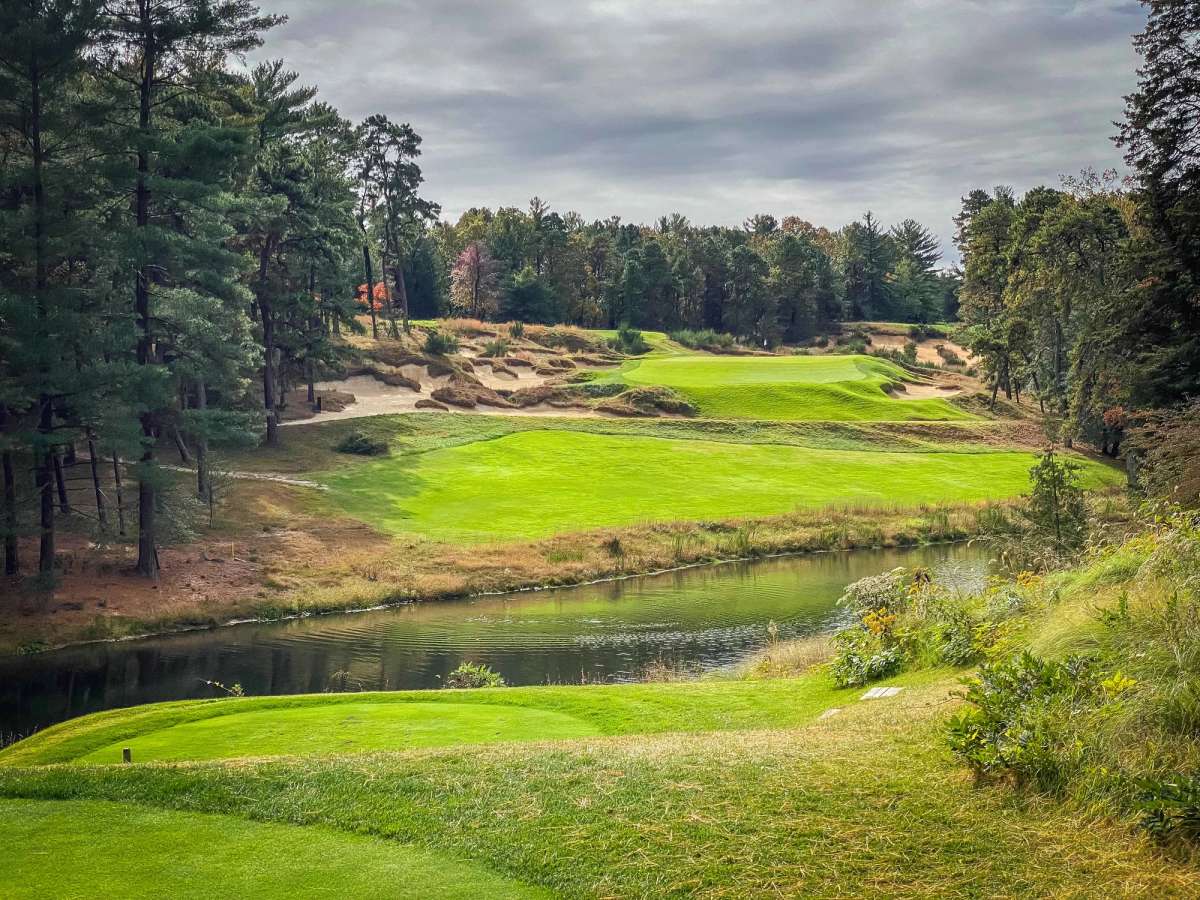
I remember playing a round at Pine Valley not so long ago with Lowell Thomas, who as you know, has travelled the world as widely as any man. On this 15th, after we had driven across the lake that separates the tee from the start of the fairway, Thomas turned and looked back across the water, then quietly gazed at the rest of the scene around us. ‘In all my travels,’ he said, ‘I do not think I’ve seen a more beautiful landscape. This is as thrilling as Versailles or Fontainebleau.’”

US Women's Open marks ongoing stature Golf in the Garden State by M. James Ward New Jersey is the 46th largest state in area in America – but its reputation in the golf arena clearly exceeds its limited geographical size – both historically and carrying through to the present day. This week's US Women's Open at Trump National Golf Club in Bedminster marks the 7th time the Garden State has served as host of the premier event in women's golf. The event also marks the 61st USGA Championship hosted in New Jersey – only three other states exceed that total – Pennsylvania, California and New York and each is considerably larger in overall size and in total courses. The first USGA Championship held in the state goes back to 1896 when Morris County Golf Club in Convent Station hosted the Women's Amateur. Leading the way in the Garden State is Baltusrol Golf Club. The Springfield-based club’s role in staging major golf championships stretches back to the earliest days of golf in the 20th century. After staging last year's PGA Championship, Baltusrol has hosted 17 national championships, including seven US Opens and two PGAs. Originally designed by A.W. Tillinghast, the formidable Lower course was updated by Montclair resident and world-renowned golf course architect Robert Trent Jones Senior in the early 1950s. RTJ’s work proved so demanding members suggested he play the strengthened par-3 4th hole prior to the 1954 US Open with its daunting water carry. Jones came to Baltusrol and proceeded to hit a 4-iron into the hole. Without skipping a beat he pronounced, "Gentlemen, as you can see, the hole is eminently fair!" NJ is also home to Pine Valley Golf Club – consistently rated among the top 2-3 clubs in the world. Located in the southwestern corner of the state, Pine Valley opened in 1913, the brainchild of hotelier George Crump. Born in Philadelphia in 1871, Crump was an avid golfer and his only design sprung from ideas adapted following his golfing trips to Britain and Europe. Unfortunately, Crump died before the final four remaining holes opened – completed after his death at 46 years of age. The English architect H.S. Colt played a major role in finalizing efforts. The aura of Pine Valley has only grown over time, as the course possesses an array of stellar holes. Renowned designer Tom Fazio has recently modified the layout and he also created a short course, which mirrors the approaches played to holes on the main course. In 1954, Arnold Palmer, in his first visit to Pine Valley, arranged a significant wager to recoup money spent on an engagement ring for his wife Winnie. Palmer fired scores of 67, 69 and 68, securing nearly enough money to pay for the ring. A few years later Jack Nicklaus played the course on his honeymoon, however, new bride Barbara waited in their car since the club was a men’s only bastion. Beyond the likes of Baltusrol (Lower) and Pine Valley, the Garden State has seven courses currently ranked among the Top 100 Golf Courses of the USA. Only two other states (California and New York) placed more. The New Jersey list includes Plainfield Country Club in Edison, Somerset Hills Country Club in Bernardsville, Baltusrol (Upper) in Springfield, Ridgewood Country Club (West & East) in Paramus and Galloway National Golf Club in Galloway. A few Garden State factoids In 1887, Essex County Country Club in West Orange, organized as NJ’s oldest country club, with 36 holes to open shortly thereafter. Bobby Jones played an exhibition on both courses and highlighted the 15th hole on the former private West course (now called Francis Bryne) among the strongest par fours he had ever played. In 1903 the term "birdie" was coined at Atlantic City Country Club in Northfield and shortly thereafter "eagle" was also born. Not far from ACCC the first PGA Championship was played in the state in 1942 at Seaview Country Club in nearby Absecon. A blossoming golf star named Sam Snead earned both his first Wannamaker Trophy and first of seven major titles. Snead bested Jim Turnesa – who was serving the U.S. Army with literally a battalion of fellow GI’s rooting for him from nearby Fort Dix. Sam later mentioned how much he gained from the experience given earlier failures in winning major events. Interestingly, a year prior at the 1941 PGA Championship, a Rumson native, Vic Ghezzi, claimed his first and only major championship. In 1946 Ghezzi would lose the US Open in a playoff, yet his stellar career play garnered him a spot in the PGA Hall of Fame in 1965. Morris County Golf Club, located in Convent Station, started in 1894 and it’s the only club of its kind in the USA organized and managed by women. One of NJ's most important contributors was George Jacobus. Born in Brook Lake the head golf professional at The Ridgewood Country Club in Paramus served as President of the PGA of America from 1932-39. Jacobus rose from the caddie ranks to become the first association president native to America. Ridgewood hosted the 5th Ryder Cup Matches – won by the American side 9-3 and led for the final time by playing Captain Walter Hagen. One of the members of the USA squad (Craig Wood) would later become a member of Ridgewood and add triumphs in 1941 at The Masters and the US Open. Jacobus attended the 1935 Masters and identified a developing player named Byron Nelson. Jacobus hired the Texan as his assistant and during his brief stint won the NJ Open in 1935 and the Met Open one year later before commencing his Hall-of-Fame career. In 1913, Weequahic Park in Newark opened, the oldest publicly owned course in the Garden State, which was coincidentally designed by George Low the Baltusrol club professional at that time. With clubs teetering during The Great Depression, Jacobus convinced PGA leadership in 1935 to hire the talented architect A.W. Tillinghast (the man responsible for NJ courses such as Baltusrol and Ridgewood) to provide no cost consultation services to PGA-member courses to bolster their designs and provide member clubs with a clear reason to keep PGA members on staff when many were let go because of the plunging economy. Tillinghast eventually visited over 400 courses nationwide. The plan was a success. Keeping the PGA of America relevant and having Tillinghast upgrade various courses in serious need of his design talents. Jacobus served Ridgewood for 50 plus years and was elected posthumously to the PGA Hall of Fame in 1965. In 1920 Shady Rest opened as the first African-American golf and country club in the USA. John Shippen, a superb golfer, competed and finished 5th in the 1896 US Open at Shinnecock Hills. The property is now called Scotch Hills Golf Course, owned by Scotch Plains Township and open to all. Another Jersey resident emerged years later as President of the PGA. This time the issues were more internal than external. Leo Fraser, long-time owner of the Atlantic City Country Club, assumed the leadership mantle in 1969-1970. During his term an ugly divorce between players competing in weekly tour events and those representing the bulk of the membership was brewing. Fraser played a key role and the resulting solution meant the creation of the PGA Tour. The two entities continue to this day as separate but affiliated organizations. William Lowell, Sr., a Maplewood dentist, is credited with marketing the first wooden tee in 1921. Growing the game has been a consistent clarion call to present day efforts. In 2012, the New Jersey PGA Section received the Herb Graffis Award from the PGA of America for its exemplary effort in player development. Founded in 1931, the NJPGA was lauded for an initiative called Golf in Schools, starting in 2009 and impacting 95,000 boys and girls at elementary and middle schools throughout the Garden State at 168 schools, the program has been a model for all 41 PGA sections across the country. Funded through the New Jersey Golf Foundation (the charitable arm of the Section) is offered at no cost to school districts. The Champions Tour debuted in 1980 when Atlantic City Country Club hosted the Atlantic City Senior Invitational, won by Texan Don January who earlier claimed the 1967 PGA Championship. Coming up in late September is the bi-annual President’s Cup Matches. Hosted at Liberty National Golf Club located in Jersey City with sensational views of the NYC skyline and Statue of Liberty. The USA squad, captained by Steve Stricker, and the world team minus Europe, captained by Nick Price, will tangle on a design from the late Bob Cupp with input from PGA Tour star and 1992 US Open champion Tom Kike. Liberty National, along with such courses as Plainfield and Ridgewood form the trio of clubs that rotate host roles for the Northern Trust Open (formerly the Barclays) the first leg of the Fed-Ex Cup Playoffs. The Garden State has been ground zero for a good deal of meaningful golf history. This week’s US Women’s Open Championship only adds to that impressive portfolio. New Jersey Best In State Rankings
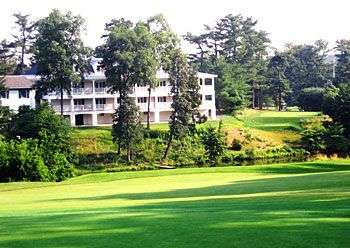
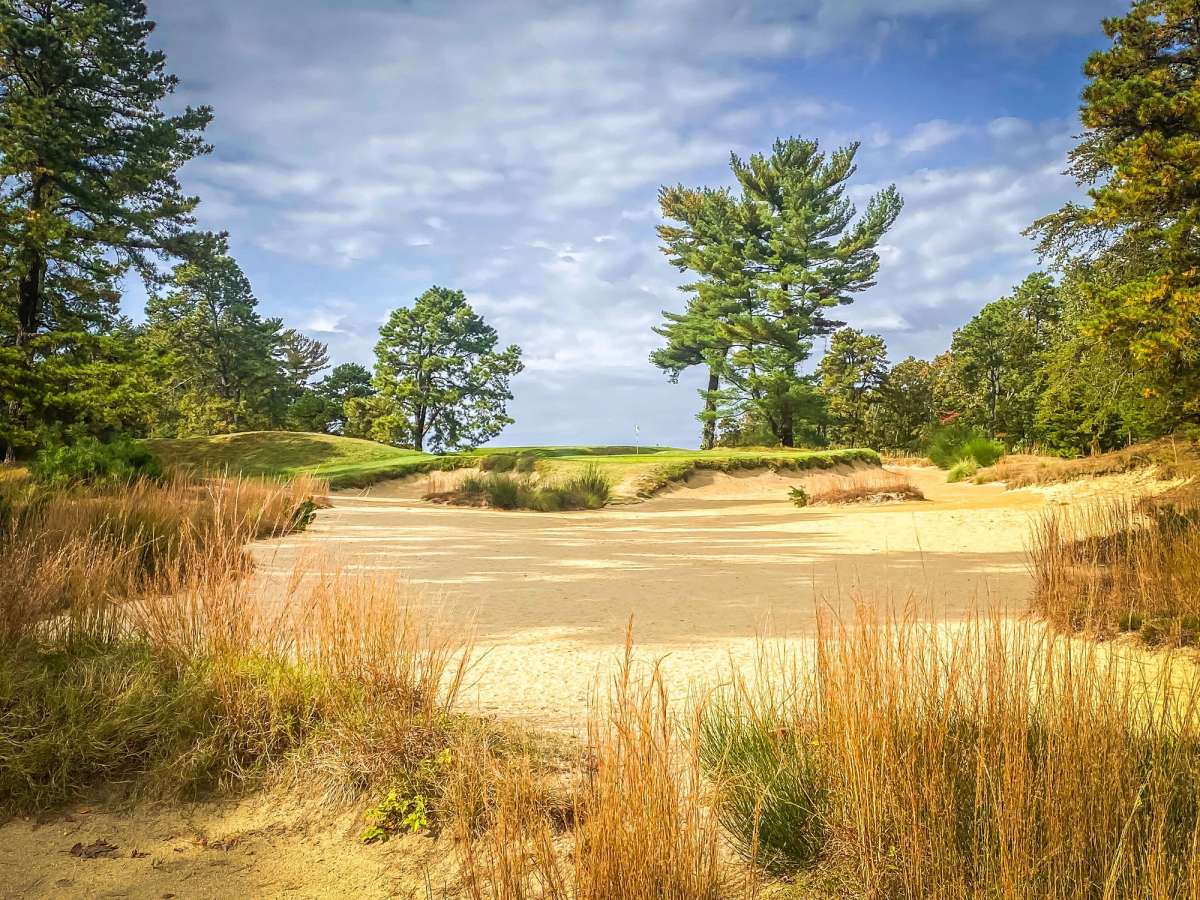
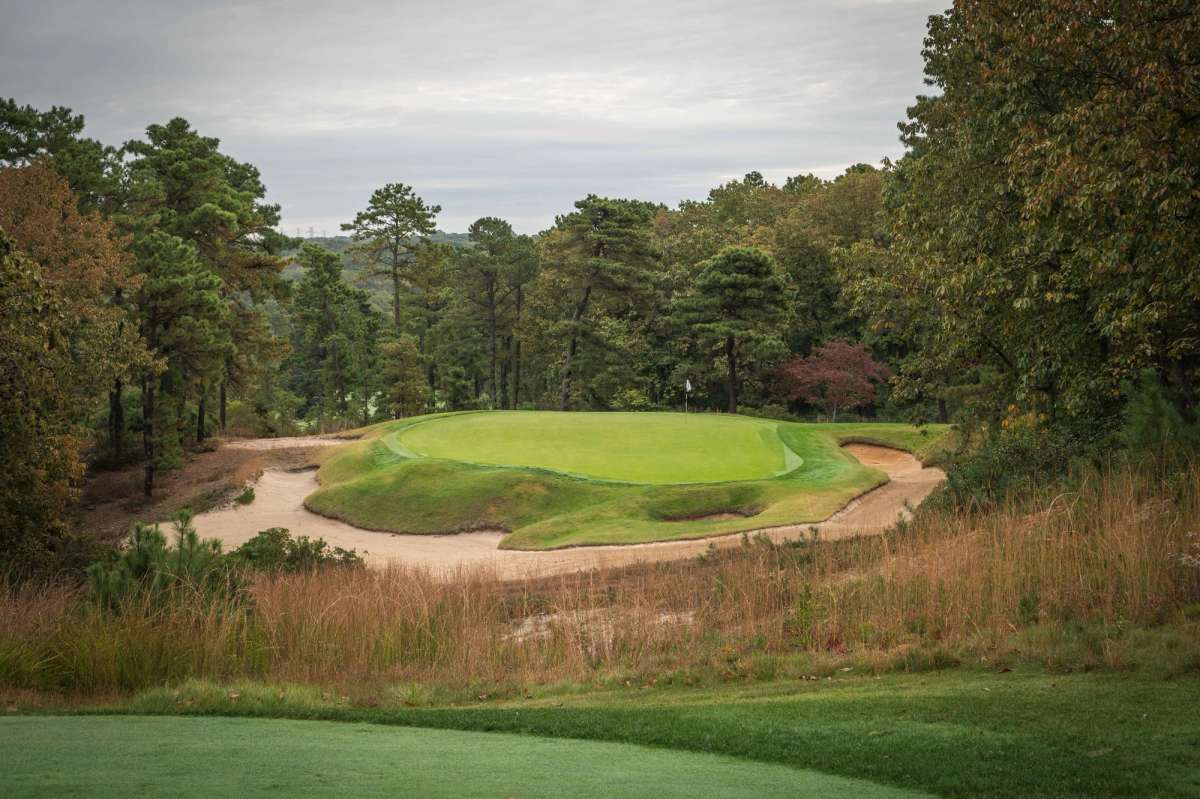
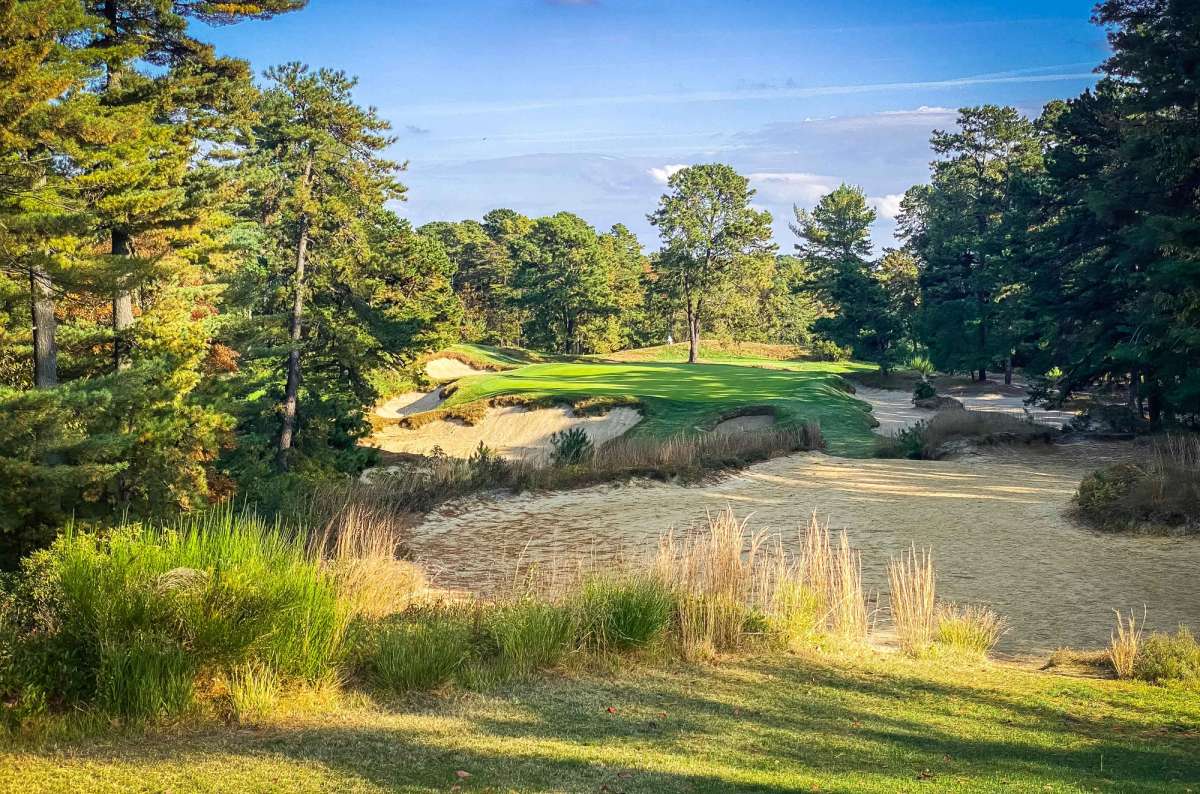
"Pine Valley is not just a day’s golf" "It might just be the ultimate golfing experience on the planet" The following Pine Valley course article was written by a reviewer who wishes to remain anonymous Photos courtesy of Rob Jewell For me it is easy to tell the mark of a golfer and maybe even a person by simply talking to them about their favourite golf courses, the ones they really want to play, the one they would like their last round ever to be played upon. The casual, laid back fair weather golfer always talks of places such as Pebble Beach, TPC Sawgrass and in a different way Augusta National (purely due to its affiliation to the Masters) as these are places their like-minded friends speak of or that they see on TV. Those who are more in the know and are slightly more serious about their golf, yearn for Cypress Point, Turnberry and Valderrama. Before I continue let me state that all of the aforementioned are outstanding golf courses, in particular reference to Augusta National I place it the first category purely based upon its worldwide TV coverage, they are all courses that I would play at the drop of a hat, without hesitation. Then there is the last category, the ones that the pure golf architecture nut wants to visit before all others, the so called Mecca’s of golf, places like Merion, Muirfield, Royal County Down, the National Golf Links of America, Royal Melbourne and of course the king of them all Pine Valley. The members of the above two categories know all about Pebble Beach and Augusta and when many are asked the question of what course is consistently ranked the world’s best? When they hear Pine Valley, the first thing they often say is “never heard of it”. Pine Valley is not just a day’s golf, it might just be the ultimate golfing experience on the planet, bar none! Located in the Pine Barrens of Southern New Jersey, only 20 miles from Philadelphia, when you are inside the gates of this oasis, one may as well be on a different planet, given the serene sense of seclusion one feels. The golf course was the dream of a Philadelphia hotelier by the name of George Crump. The club holds the annual Crump Cup, an invitational Mid Amateur tournament every year in his honour, interestingly on the final day of this tournament every year the course is open to the public to come and walk with the matches. Crump built the club with idea of creating a golf course that provided the ultimate test. In those early days, the cities of Philadelphia, New York and Boston regularly played matches against one another, Crump became tired of being beaten week in week out by the opposition, he felt the courses in the Philly area did not pose a stiff enough test to raise ones game as the North East’s other courses such as Garden City or the Country Club did. Therefore Crump sought out a property where golfers could play year round upon sandy soil so as to hone their games for the matches. Two stories exist as to how he came across the land at Clementon, one is that as a boy he used to hunt there with his father, the other is that he came across whilst onboard a train travelling to Atlantic city, Thomas McWood in his article on George Crump (which can be viewed on Golfclubatlas.com discussion group page) contends that both stories may contain an element of truth. Many other stories exist as to who actually designed Pine Valley. Crump took on a near obsession with the place, he moved out to the property and lived there alone with his hunting dogs, devoting all his time and endevours towards achieving his goal of building the world’s greatest golf course. The collaboration of architects who worked upon and consulted at Pine Valley reads like a who’s who of golden age golf course architects. Colt, Tillinghast, Alison, Maxwell and Wilson all left their mark at Pine Valley. Having made a golfing tour of England years previously, Crump was so taken with Harry Colt’s work that he invited him to come and review the site, with the 5th hole in particular being the one most associated with Colt’s recommendations. Sadly Crump reportedly took his life before the course was finished, many believe the length of time the course was taking to finish had taken its toll on him driving him to suicide. Holes 12-15 remained unfinished and it is believed (though again many theories exist) Hugh Wilson and his brother oversaw the construction of the unfinished holes, based along the plans that Crump had devised. On the day I was to play Pine Valley, I left no stone unturned. I gave myself more than ample time to arrive at the course. I had heard all the stories of it being notoriously difficult to find, that the area surrounding the course is a complete surprise for the location of the world’s greatest golf course. However no words of wisdom could have prepared me for what lay ahead. I turned off the motorway and kept following my GPS, as it took me down a very seedy road full of Petrol stations, off licence’s and other types of unremarkable shops (interpret as you wish). I was fully certain I was in the wrong place, worried sick that I would miss my day at Pine Valley. I ploughed ahead following my GPS and then it emerged, the tell tale sign I was in the right place, Clementon Splash World, the run down waterpark that I had heard so much about, which, from my extensive reading, signals that you are indeed very close. From here you take a narrow road that runs alongside a train track, to the point where it reaches a dead end. A narrow gap in the woods is the only point where you can see anything except towering pines, at this spot you cross over the train track, drive up to the guard house and pray your name is on the list! The drive from the entrance to the clubhouse is surreal in itself, passing the 18th green along the way and arriving and seeing things for real that I have viewed so many times by way of photographs. Once you enter the property, which I will concede is a very exclusive privilege, the people at Pine Valley might provide the most welcoming reception to a golf course anywhere in the world. The staff immediately make you feel incredibly comfortable, taking your bag, escorting you to the locker room and doing everything in their power to make sure you have a great day. Again, I had the feeling of all my dreams becoming a reality as I walked around the clubhouse. This was something I really couldn’t believe. As noted above I made sure to arrive in plenty of time, so I made my way to the range, catching glimpses along the way of what was to come. The practice facility at Pine Valley is without doubt one of the finest I have ever had to pleasure of viewing. It leaves places like Valderrama and Trump National in its wake. Pristine verdant green turf, good quality balls and a huge area to hit from, all framed by the pines that dominate the property make for a majestic setting. One could happily spend the whole day at a facility such as this. From here it was back to the clubhouse for a wholesome lunch, including the famed snapper soup and YES! It is as good as everyone says. And then it was time, time to set foot on the real reason I so badly wanted to make this pilgrimage. To be honest the first four holes for me were a complete blur. Hearing so much about the difficulty of the course and the penalties for hitting a poor shot, certainly plays on your mind from the moment you stick the peg in the ground to start your round. The first is definitely the best opening hole in the world (although I must say the 1st on the Strand course at Portstewart does run it very close). Crump’s thought process when designing the hole was genius. For he recognised that although it may well be the opener, it could also be the hole that would decide a match on the 19th, hence its demanding nature. The tee shot calls for a well-placed drive, where left of centre is favourable. As from this angle one is hitting up the dangerously sloping green as opposed to across it from the right side of the fairway. The view that greets the golfer from this tee is the one constant throughout all 18 holes at Pine Valley. An island of lush green fairway sits resplendent between the sandy waste areas that characterise the course, flanked left and right by dense pines. On first glance the fairways appear incredibly narrow, some people have been know to liken it to the artistic effect of tropme l’oeil, where the design deceives the eye. The reality is that Pine Valley’s fairways are quite wide, most certainly wider than the average, but it was the master artistry of Crump through his design which makes them appear such daunting prospects to keep the ball upon. At his golf course, Crump wanted to impose a very strict set of design philosophies on the layout. Most likely garnered from his trips to Europe and also his time spent playing the North East’s other courses. At Pine Valley, he insisted that no two holes should play in the same direction, no two holes should play parallel to the next, no hole should be visible from the other and that a player should be required to use every club in his bag. The first three features help to harvest the feeling of ultimate seclusion from the outside world when playing at Pine Valley, while the last point without doubt gave rise to the most interesting blend of golf holes found anywhere. The 2nd is the first of the great short par 4’s. It is of paramount importance to hit this fairway, above nearly all the others, the sand on the right, 7 times out of 10 leads to an automatic lay up. While the scrub on the left more often than not leads to a pitch out sideways. Many of my counterparts attest that the 2nd green at Pine Valley might be both the best contoured and most naturally placed green site in all of golf. It sits perched high on a hill above the fairway, like a speaker looking down on you from a pulpit, it slopes treacherously from back to front and is gargantuan in size. At less than 400 yards this hole is not long by modern standards, but any budding golf course architect could do well to use this hole as an example of how the short par 4 can play tougher than the 500-yard one by employing certain design elements, which make the hole no less tough but eminently more enjoyable than a long slog. The par threes at Pine Valley have been long acclaimed as the best collection of one-shot holes in all of golf. There may be courses that possess better par threes, like 15 & 16 at Cypress Point, but nowhere can match the diversity of what all four short holes at Pine Valley offer. The 3rd is maybe easiest of a very difficult lot, the green sits like an oasis in the middle of a sandy expanse, the green is one of the strangest shaped you will ever see, it is almost star shaped, and offers some of the most fun pin placements on the golf course. Here, maybe even more so than any other hole at Pine Valley, the decision of the greenkeeper as to where to cut the hole, dictates the scoring of the day. The 4th is again another tough tee shot, this time blind over a hill, doglegging to the right. If you carry your ball far enough down the right side cutting the dogleg its can kick down the slope leaving a much shorter approach. The approach shot here, as seen again on the 13th, highlights the genius of the design. Both are long par fours and are completely open in front. Probably the best way to attack is along the ground, for there is an apron of short closely mown grass, stretching back some 30 yards from the front of the green. The green slopes from front to back, and is fitted perfectly to the hole. The lack of any hazard at the front allows the weaker player to run the ball up with a longer club, but the severity of the green still protects the hole from being an easy touch for the stronger player. So to the real first heart stopping moment of the day – after a trip into the clubhouse for a mandatory Gatorade to settle the nerves and re-focus the mind. And there it was, sitting atop the hill looking gazing down on all below, Everest like, as if saying, “try and conquer me”. For me there has been no hole that I have wanted to experience more than this, Sawgrass 17th, Royal Portrush 14th, The 8th at Royal Troon all terrific, but the 5th at Pine Valley is exceptional! Again the obvious option is not always the best route to making par. Left is dead, right is dead, go long and a 3 putt is a certainty. The smart player will land his approach short, always trying to keep his ball below the hole; this route almost takes a double out of the equation, one of the keys to playing well around Pine Valley. At the 6th one intimidating tee shot follows another, an almost 90-degree dogleg to the right must carry what appears to the golfer to be a vast chasm of sand. The reality is that the shortest route over the san is only 140 yards, but this leaves 200+ to another difficult green, which this time around is heavily guarded front left by a bunker. If you choose to take the longest carry is 275 yards, but leaves obviously a much less difficult approach. Risk reward at its finest. Evidence that, although Crump definitely adopted architecture of the penal kind, he still afforded the player a chance to make a score. As you walk to the 7th tee – if the course has not already beaten you up – you can actually make a score. The day I played I was +7 through 6 (with 3 pars) and I finished +7. The 7th however appears daunting because your second shot must carry the famed Tillinghast Sahara Hazard, known at Pine Valley as “Hell’s Half Acre”. As is written so often about Pine Valley, the reasons why it is consistently ranked the world’s best is for a number of reasons, summed up brilliantly by Golf Club Atlas in saying: “Many would argue that a) it possesses more world class holes than any other course, b) the finest eighteen green complexes of any course, c) the finest collection of three shotters, d) the finest collection of two shotters (especially those under 370 yards), e) the finest collection of one shot holes, f) the finest three hole start and g) the finest three hole finish” The 8th again fits comfortably into the above description. On the day I played, I hit a 17-degree hybrid, nicely down the right side. All I had left into the green was a knock own lob wedge to a back pin. It came to rest maybe 8ft from the pin (or so I thought) and I walked up to the green a happy man, only to find my ball right down at the front of the green 40 feet from the cup. The front nine closes with another strong par four, the architectural ploy of forcing the golfer to hit towards what he can see on a blind tee shot as opposed the best line of play. The right side is visible from the tee, but deep narrow ruts of sand lie in wait. In an interesting aside, both the 8th and 9th holes have an alternate greens constructed by Perry Maxwell, built to give the other two greens, which are relatively small some relief. Any golf course aficionado should be well acquainted with some of the world’s greatest names for bunkers, the Sahara at Royal St George's, Hell/Principal’s nose at St Andrews, Spectacles at Carnoustie and the Cardinal at Prestwick. But the Devils Ass might be the most apt. The 10th hole, might the shortest hole on the golf course, but I feel it is the one that might best characterise the intimidation factor of Pine Valley. The hole is less than 150 yards, but never have I approached such a short hole with such a huge amount of trepidation. How deep is the Devil’s Ass hole? Not as deep as the Road hole bunker for certain, but it is the size and shape of it that make it most difficult, for there is barely enough room to take a stance and make a full swing. Anyone who suffers from claustrophobia, steer well clear. Many members, who hit their tee shot into the DA, have been known to simply play three from the tee rather than elect to escape from the Devil’s grasp. The 11th and 12th are holes that would both be standouts on many of the world’s best courses. At the 11th, again the obvious line from the tee is not always the best, I kept mine right of centre with a slight fade, however the preferred line is indeed down the left where the ball should gather towards the centre of the fairway. The 12th receives criticism, from some corners as being the only “weak” hole on the golf course, but I would completely disagree with this. The tee shot is far from easy and one must resist the temptation from being too greedy as there is nothing but trouble on the left side. As with the 3rd the pin position on this hole can drastically change how well it is scored upon. A front pin affords a very real chance to pick up a stroke, while anything towards the back makes things much more difficult. So begins what I feel is the single best stretch in all of golf. Four of the world’s par fours (all of different make up), the worlds toughest par five, and maybe the most visually terrifying par three known to man. The 13th is the most demanding par four on the golf course, although I suspect there was a element of Trent Jones’s hard par easy bogey moniker at work here too. Depending on what side of the fairway your tee shot ends up, this hole can appear to play right to left or left to right. The green sits pitched at an angle against the fairway and is guarded sentry-like by sandy scrub all up its left side. The temptation to take on the pin, via the aerial route, can end in pure agony for the golfer, as his heroic attempt falls short and moments later the pencil records a six. But as I discussed at the 4th, Crump affords the player the option to use the natural contours to their advantage by working the ball in from the apron short right, which kicks the ball left off its sloping turf. Hard par… easy bogey! For me it is the placement of the tee box high above the landing area, which makes the 14th hole frightening. Atop the hill by the 13th green, all the trouble that lurks below is there, evident and waiting to receive errant shots. I truly feel if this hole were dead flat it would play nowhere nearly as difficult. The green is one of the flattest on the course, which my caddy told me makes it incredibly difficult to read. By now I am sure you are sick of me discussing how visually intimidating the golf course is, but it is something that is a constant throughout your round. From the back tee your drive on 15 must carry a lake. In reality the carry is only 140 yards, but because of the design of the tee, and how close it lies to the waters edge, it seems like 250 yards. From here your shot plays sharply uphill and up until a few years ago, it was rumoured that no one had ever reached the green in two from the back tee. But apparently, last summer, Paul Casey achieved the feat and hence a new back tee was promptly constructed. For most mortals, the third shot must be so precise because the green lies well above the level of the landing zone, and any shot with too much spin will back up quite considerably. As at 13, depending on what portion of the fairway your tee shot finds, the hole can be a left to right dogleg or a right to left one. The drive is semi-blind and the right side is where the green becomes most accessible. The green is again open in front, allowing the creative player to chase his ball down the hill and onto the green. However the terrain and green slopes push balls to the right, as if by magnet, and anything missed left leaves one of those less than comfy sand shots played back towards water. I liken the 17th, to the calm before the storm of 18. As is noted in many writings about Pine Valley, Crump was not a complete sadist. He did afford the golfer a certain element of give and take. At 17 he felt that the player should be allowed to have a chance to make a birdie to pick up a stroke, whether it be to post his best ever score, or that ever important stroke to break 70/80/90 or even 100. There are murmurs that the fairway on this hole used to be split level, with the left side being the safer option, but giving rise to a more difficult approach while the right one the riskier option but with a nice reward. At present the green is semi bowl shaped, and balls can gather towards certain hole locations. There is one question I continually ask myself about Pine Valley, is the 18th the best finishing hole in the world? As you can gather from the above writing I am indeed a huge fan of the golf course, if a flawless golf course exists it may be it. It certainly does not have the history of St Andrews, The beauty of Pebble Beach or the sheer drama of a Sawgrass, but then again these three holes, all regularly host televised tour events, which only add to their exposure. I am certain if Pine Valley ever had a tiny fraction of the coverage the other three receive, it would be recognised the world over. As it stands, it is an exceptional golf hole, one which I feel was made for a strong fader of the golf ball. For I believe a hard cut drive and a soft landing fade of a second shot are the optimum way to play the golf hole. If heaven were anything like Pine Valley I would happily reside there. The golf is pure and understated, the food top notch, the accommodation outstanding, their short course is a great complement to its big brother. Even the halfway house is unique with its collection of golf balls from all over the world. Once inside the gates you feel completely shut off from the outside world. The golf courses and practice range takes up roughly 200 acres, of the 600 odd the club owns, thus protecting their property from any encroaching developments. Pine Valley is in itself actually its own incorporated borough, consisting of a number of very small administrative buildings, with a population of 12 people. This gives the sense of an almost private village behind the fence. Pine Valley is an experience. It has been without doubt the best day of my golfing life up until now. The chance to finally get to see first hand tracts of land that I have read about since I was a teenager was incredibly special for me. The hairs on the back of my neck were standing vertically all day. Even as a scratch golfer, I would be lying if I did not say the course’s reputation affected my golf game, especially early during the round. If I am ever lucky enough to have the opportunity to play the course again, I would be hopeful that I would not be so easily overawed. Now and again I make my own personal lists of things such as, the best par three/four/five I have played, my favourite eclectic 18 holes, best short par three, long par four etc. I never seem able to to exclude one hole at Pine Valley. Is it the best golf course in the world? For me, as a purist, a low handicap and a lover of golf course architecture, it wins hands down. Others who enjoy more of a stroll among beautiful surroundings may prefer, the courses of the Monterrey Peninsula or the Irish/Scottish courses like Royal County Down, Portrush, Turnberry and Waterville. For me there will forever only be one Number 1!

The United States is home to some of the world's most celebrated golf courses, from spectacular coastal layouts to historic clubs that have hosted the game's biggest championships. But playing America's best golf is not always as straightforward as booking a tee time. Many of the country's highest-ranked courses are private clubs, while some resort venues require visitors to book accommodation before they can play. So where are America's top-ranked courses concentrated, and how many can the average golfer actually play? A state-by-state breakdown of the Top100 Golf Courses USA ranking reveals a striking divide. New York and California lead the way by course count, but of the 100 courses listed, just 16 meet our criteria for playing without knowing a member or staying at a resort. The remaining 84 have some form of access restriction, whether through private membership, accommodation requirements or other visitor policies. For golfers planning a trip to the United States, that distinction matters: a state might have an impressive collection of top-ranked courses, but that doesn't necessarily mean visitors can build a holiday around playing them. New York and California Lead the Rankings New York tops the state-by-state breakdown with 14 courses, narrowly ahead of California with 13. Massachusetts follows with seven, while Ohio and Wisconsin each have six. New Jersey and South Carolina account for five courses each. The figures highlight the strength of golf in the Northeast, alongside California's long-standing reputation as one of America's premier golfing destinations. New York is home to some of the country's most exclusive golf venues, including Shinnecock Hills Golf Club, National Golf Links of America and Fishers Island Club. However, it also has one of the world's most famous public courses. Located on Long Island, Bethpage Black has hosted multiple US Opens and the 2025 Ryder Cup. Its public status makes it an important exception in a ranking where access is often far from guaranteed. Demand is high and securing a tee time requires planning, but golfers do not need a private-club membership to play it. The other 13 New York courses in the ranking do not meet our public-access criteria. California presents a different mix of courses, from celebrated coastal layouts to championship venues further inland. Pebble Beach Golf Links is perhaps the best-known example, with its dramatic Pacific Ocean setting making it one of the most recognisable courses in golf. The state offers a wide range of golfing experiences, but green fees, booking conditions and accommodation requirements can influence whether a course is a realistic option for visiting golfers. Its size is another consideration, with distances between destinations potentially shaping how many courses golfers can fit into one trip. The States Where Top-Ranked Golf Is Hardest to Access Some of the states with the most courses in the ranking are also among the hardest for visiting golfers to explore. New York has 14 ranked courses, but 13 do not meet our criteria for playing without knowing a member or staying at a resort. California has 13 courses, with 11 falling outside those criteria, while none of Massachusetts' seven entries qualify. The contrast is striking. New York and California offer plenty of choice on paper, but their highest-ranked courses are often difficult to access independently. Massachusetts presents a similar challenge, with its rich golfing heritage reflected in a list dominated by venues that aren't straightforward for visitors to book. New Jersey faces a comparable issue. Its five courses include Pine Valley Golf Club, frequently ranked among the world's finest, but its reputation as a private club makes it a difficult destination for golfers without the right connections. These figures underline why course rankings alone don't tell the whole story. For visitors, the practical question isn't just how many highly ranked courses a state has, but how many they can realistically play. The Best States for Golf You Can Actually Play Of the 100 courses in Top100 Golf Courses' USA ranking, just 16 can be played by the public without knowing a member or staying at a resort. Wisconsin and Oregon lead the way, with four qualifying courses each, followed by South Carolina, Florida and California with two apiece. Oregon is an obvious choice for a multi-course golf trip. All four qualifying layouts are at Bandon Dunes Golf Resort on the Pacific coast: Bandon Dunes, Pacific Dunes, Bandon Trails and Old Macdonald. Having four highly ranked courses in one destination allows golfers to experience a variety of layouts without spending their holiday travelling between different parts of the state. The rugged coastal setting is a major part of the appeal. Wisconsin offers four qualifying courses across two destinations. Whistling Straits' Straits course is one of the state's best-known golfing venues, having hosted major championships on the shores of Lake Michigan. Further inland, Lawsonia Links offers a different style of golf, while Sand Valley and Sedge Valley give visitors two more courses to explore within the same resort destination. Together, they make Wisconsin a compelling choice for golfers looking to combine several highly ranked rounds in one trip. South Carolina has two qualifying courses, each offering a different experience. Kiawah Island's Ocean Course is known for its exposed coastal setting and championship pedigree, having hosted major events including the 2021 PGA Championship. Old Barnwell provides a contrasting inland experience, adding another option for golfers planning a trip around the state's top courses. Florida's two entries are Streamsong Red and TPC Sawgrass' Stadium Course. Streamsong Red is characterised by its expansive sandy terrain, while TPC Sawgrass is home to one of golf's most recognisable holes: the island-green 17th. The two courses offer very different experiences, from Streamsong's distinctive landscape to the chance to play one of the PGA Tour's most famous venues. California completes the group with Pebble Beach Golf Links and Pasatiempo. Pebble Beach is renowned for its Pacific coastline and history of major championships, while Pasatiempo, designed by Alister MacKenzie, offers a celebrated layout with a distinctive place in American golf history.
The latest ranking of the Top 100 Golf Courses in the World serves as the ultimate global golf bucket list. Most members of our World Top 100 Panel are seasoned golfers, each playing 20-30 of these courses annually while travelling extensively over decades to form their opinions on others. We recognise that opinions vary—even among our panel members. Rankings are subjective, and there are undoubtedly 50 or more courses in the UK and USA alone that could easily fit onto this list. Links Golf Pilgrimages The rankings
California, United States
New Jersey, United States
Northern Ireland, United Kingdom
New York, United States
New York, United States


