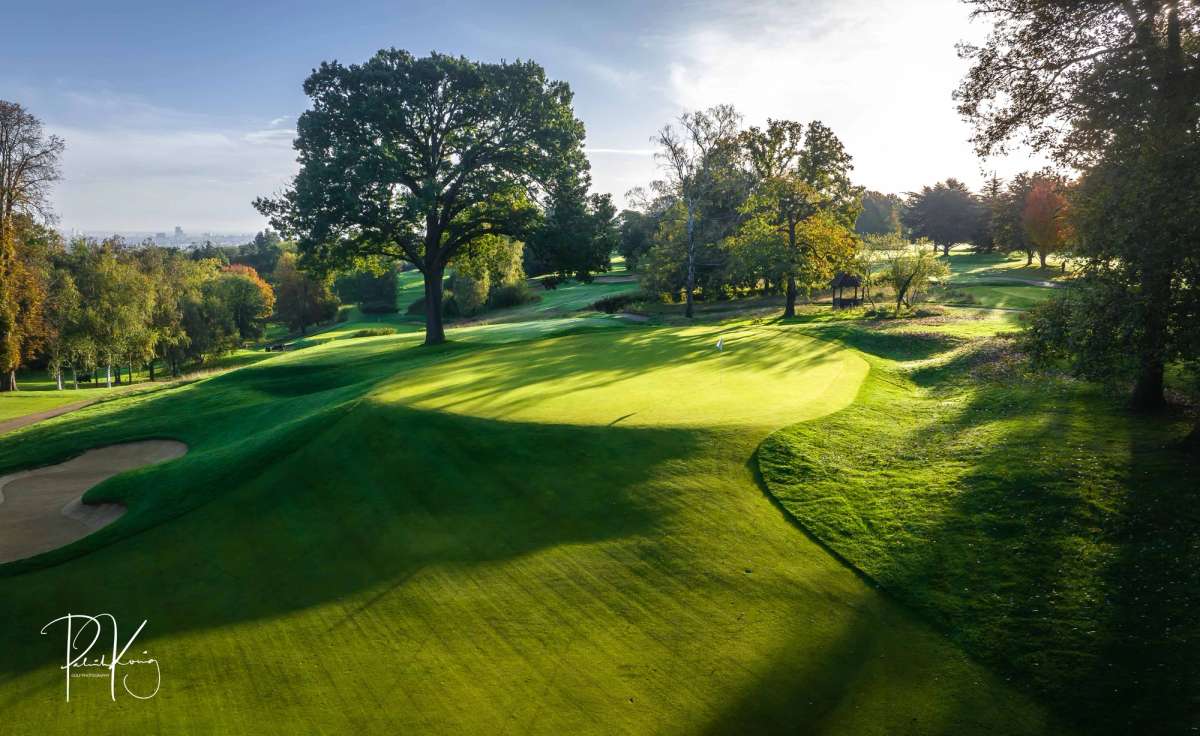
Host on numerous occasions to the French Open, Saint Germain is a delightful park course, which flows through avenues of majestic trees.
Overall rating

5.0
Saint Germain Golf Club (Grand Parcours)
Host on numerous occasions to the French Open, Saint Germain is a delightful park course, which flows through avenues of majestic trees.
The latest ranking of the Top 100 Golf Courses in the World serves as the ultimate global golf bucket list. Most members of our World Top 100 Panel are seasoned golfers, each playing 20-30 of these courses annually while travelling extensively over decades to form their opinions on others. We recognise that opinions vary—even among our panel members. Rankings are subjective, and there are undoubtedly 50 or more courses in the UK and USA alone that could easily fit onto this list. Links Golf Pilgrimages The rankings
California, United States
New Jersey, United States
Northern Ireland, United Kingdom
New York, United States
New York, United States


Top 100 Golf Courses expands its coverage of courses in France to a Top 100 We extend our presentation of courses in France by more than doubling the content There’s been a big shake up, a very big shake up in fact, with the re-ranking process that has produced the latest edition of our French ranking chart. We’ve recognised for a while now that we’ve hardly done justice to the large number of very good golf courses in France. We also realise this is a situation that goes back eight years to 2008, when we first began listing a small percentage of the country's top tracks. Having established a national Top 40 four years ago, we were contemplating a modest increase in our 2016-17 coverage by adding another ten courses, but a number of factors, including recent access to additional data streams, has allowed us to make more of a quantum leap in our Gallic golfing presentation with the production of a national Top 100 chart for France. We’re satisfied that the Top 50 tracks are pretty much in the correct order as we’ve been appraising the majority of them for a few years now. Of course, the bottom half of the standings is a different matter, and we freely admit that it might take another edition or two before we get things right. For the time being though, we’ve made as honest an attempt as possible to line up all the best courses in the right sequence. And so, taking a look at our new Top 100, Tom Simpson’s Morfontaine remains our number 1, which is hardly surprising when you consider it occupies the top spot in our Continental Europe Top 100. Some might also consider this classic old track to be ranked a little too low at number 34 in our current World Top 100 listings but it certainly deserves its status as one of the very best golf courses on the planet. As one recent reviewer commented: “absolutely worthy of its position at the top of the tree in Continental Europe. Wonderful location, with ample space for the remarkable routing which both challenges and delights.” And another reviewer endorsed this by saying: “A truly wonderful and unique experience. Not sure what to expect save the bar was set very high and was not disappointed.” Positions 2 to 4 in our new chart stay the same as before but Prince de Provence at Vidauban rises one place to number 5. This Robert Trent Jones Snr course underwent an extensive renovation program during the winter of 2014 when new irrigation and drainage systems were installed and these improvements have obviously impressed those who have seen the results of this work. We also hope to return for a further visit soon to cast an eye over the upgrade for ourselves. Leaping six places up to number 6, the old Harry Colt-designed course and nine-time French Open venue at Saint Germain has undergone a substantial amount of restoration work in recent years and it’s one of a number of French layouts that were identified during our recent European re-ranking exercise as languishing too low in the listings. Bill Coore’s Châteaux course at Médoc (up two to 8), the Robert von Haage-designed Seignosse (up two to 9) and Martin Hawtree’s remodelled Les Aisses (up five to 10) also make such significant upward moves as a direct result of some positive discrimination carried out during our European reappraisal process. Belle Dune makes good progress in our new chart, rising nine places to number 16. Situated at the southern end of the beautiful Côte d’Opale, this coastal course is only one of several highly regarded layouts in this particular region, as confirmed by a recent reviewer who said: “We play this course and the four courses at Le Touquet and Hardelot every year and have not had one bad experience at any of them.” Two hundred and forty miles along the same coastline in Normandy lies the small town of Bréville sur Mer and next to it the Bay of St Michel, where the Links layout at Granville (up sixteen to number 18) lies. The book “True Links” by George Peper and Malcom Campbell cites this course as the only true links in the whole country and it’s a wonderful old Harry Colt design from 1912 which has been restored by both Martin Hawtree and, in more recent times, Stuart Hallett. A little further down the chart, Gary Player’s first French design at Château de Taulane also makes a double digit rise in the rankings (up ten to number 25). This course lies a little off the beaten track, a good 90-minute drive from Cannes on the Côte d’Azur, but recent 5-ball and 6-ball reviews suggest it’s well worth making the journey inland to sample the wonderful fusion of golf and nature in the foothills of the Provence Alps. Looking at the new entries, some might question the lofty position of the highest newcomer, Grand Saint-Emilionnais, which enters at number 23. Only unveiled last year, Tom Doak’s first project in Continental Europe was built for the Mourgue d’Algue family, who are big players in French golfing circles, and the architect’s trademark minimalist design is already being hailed as one of the best to have opened anywhere this millennium. Of course, only time will tell just how good the course is and we look forward with eager anticipation to the reviews that are bound to follow in the months to come. The next highest new entry is Dinard at number 30. The club claims an inauguration date of 1887 so this makes it the second oldest in Europe, established thirty-one years after Pau and only one year ahead of both Biarritz and Royal Antwerp. Laid out on Brittany’s Emerald Coast, the course is very short at less than 5,350 metres from the medal tees. Sadly, it’s been revised so many times down the years there’s little left of Tom Dunn’s original design though it’s still a course that merits respect and admiration from golfing aficionados. Médoc (Vignes) also makes a laudable entrance at number 33, further enhancing this resort’s reputation as one of the best 36-hole venues in all of France. Situated in the Pian-Médoc region, to the north of Bordeaux, the Vignes has for a long time played second fiddle to the slightly older Châteaux course (where the French Open was held the year it opened in 1989) but many now think there’s little to choose between either 18-hole layout. To view further details of the Top 100 for France click the link. We always welcome your opinion when we publish updated national rankings so feel free to let us know what you think of our new Top 100 for France. Have we left out a course or included one that shouldn’t be considered. Is there a particular layout positioned either too high or too low in the chart? Please click the “Respond to this article” link at the top or at the bottom of the page if you’d like to make us aware of your thoughts. Jim McCann Editor Top 100 Golf Courses

A Biarritz hole is one of golf's most theatrical par 3s: a long carry to a massive, elongated green bisected by a dramatic swale or depression that divides the putting surface into two distinct plateaux. Named after the French seaside resort where the original hole once stood, the Biarritz has challenged golfers and sparked architectural debate for over a century. Most template holes replicated by C.B. Macdonald—the father of American golf course architecture, who pioneered copying famous holes and adapting them to new sites—and his disciples draw inspiration from originals in the British Isles, the homeland of golf. The Biarritz is a rare exception, most commonly traced back to the south-west coast of France, in the region of the same name. There, Tom and Willie Dunn Jr. crafted one of the most famous and infamous par 3s in history. The Original: A Hole Lost to History The "Chasm" hole (the current name for the template is derived from its original host club, not the original hole name) at Golf de Biarritz Le Phare featured a heroic carry over the titular chasm, approximately 160 yards, to a massive putting surface. The third hole's target area featured two large flat zones—one at the front and one towards the rear—divided by a drastic swale running between them, and guarded at the sides by bunkering. It is believed that only the rear platform was ever pinned—totalling between 210 and 240 yards—making the hole essentially a test of a player's ability to hit both long and straight (this was certainly a driver during the Dunn brothers' time in the 1880s). The rest of the putting surface's dimensions are largely conjecture, as the original lasted only four years before construction of a hotel moved the teebox and took the bay out of play. The original green and hole would eventually be eliminated and, later, decimated during World War II. Furthering the mystery is the unlikelihood that Macdonald could have found himself in France during its brief existence. All of these factors—or lack thereof—add up to occasionally contentious conversation amongst golf architecture enthusiasts about what constitutes an authentic Biarritz. Defining Features of a True Biarritz Whilst interpretations vary, most architecture historians agree a Biarritz should include: Length: 180-240 yards (though modern versions may stretch further) The swale: A deep depression dividing the green Two plateaux: Distinct front and rear landing areas, traditionally both cut to green height. Purists claim only the rear was pinned. Massive scale: Greens typically 60-80 yards, or more, deep Strategic question: Can (or should) the front plateau be pinned? Classic Biarritz Examples Macdonald's template showcase, the National Golf Links of America, doesn't feature the model. Instead, Long Island's Piping Rock Club hosts the designer's first Biarritz. In the absence of official documents, the Biarritz swale has traditionally been understood to fit within a range of 1 to 1.5 metres in depth, which describes Piping Rock's variant well. Lacking a bay, Macdonald added a large bunker in front of the first plane. It's important to note that this landing area is not green, but fairway, running down into the swale, which features a similar cut. The effect is a rather micro-version of the Valley of Sin at St Andrews, forcing a tricky up-and-down recovery for shots short off the tee. These specifications inspire the most vocal arguments about whether the front could—or should—be pinned, and whether that act violates Macdonald's intentions. It appears one person who didn't see an issue pinning the front was Seth Raynor, Macdonald's nearest disciple. His Course at Yale hosts perhaps the most famous rendition of the Biarritz, and perhaps the most dramatic as well. Players must carry nearly 200 yards of water to where the green immediately begins, through a swale, to the back plateau. To compound your problems, the green tilts aggressively both front-to-back and right-to-left. Whilst a more "dignified" template, such as the Redan, might flaunt its subtle tweaks from the original, the Biarritz seemingly encouraged imitators to push the envelope ever further. Charles Banks created one of the longest versions at Forsgate Country Club in New Jersey, stretching to 235 yards. Not taking his nickname "Steamshovel" lightly, the designer also added Raynor-style thumbprints—shallow depressions—to both of the green's flat surfaces. The most controversial element, however? His swale can be pinned. Getting back to Macdonald, The Creek gets a nod for its distinct rendition. Missing the green isn't enviable for any Biarritz, but The Creek's takes it to a new level via its Biarritz/Island hybrid. It's a big target, but tee shots are easily pushed by aggressive winds into the Long Island Sound inlet. Modern Interpretations The naturalist tendency of the 21st century has made this template a less-likely choice for new courses, but a few true Biarritzes have emerged. One of the more straightforward versions is the 16th at Streamsong's Red Course in Florida, featuring a 70-yard green that plays between the property's dunes. Tom Doak included a Biarritz-based hole at Bandon Dunes' Old Macdonald, but the Oregon resort's naturalist aesthetic raises some doubts amongst purists. The green does take a pill shape and features a swale through the middle. On either side of the swale, however, Doak enacts rolling features more in keeping with his Pacific Dunes design than the relatively plain planes of traditional Biarritz. And, at 180 yards, it is short even by Dunn's old-fashioned standards. Contested Variations: Where Does the Template End? The most famous examples of the Biarritz don't leave much room for subtlety. Accordingly, some of the more debatable examples are guilty of underdoing rather than overdoing. There is no doubt that a Biarritz green can accomplish its purpose as part of a long par 4 or short par 5, but two of the more notable examples raise questions about whether the template can survive a change in par. For example, A.W. Tillinghast included one at Somerset Hills Country Club in New Jersey. Perhaps because of the 13th hole's two-shot nature, his swale is much shallower than the holes referenced above. This alters the approach, but is it watered down enough to strip the "Biarritz" title? The architecture community remains divided. The "Gate" hole at North Berwick Golf Club in Scotland does more than inspire questions about the nature of the Biarritz; it inspires questions as to the template's origin story. The approach shot on this par 4 is much shorter than a typical Biarritz, but the green is much more severe. Similar to the course's iconic Redan, the green tilts down from front-right to back-left, and is divided by a gully reaching Yale-level depths. If the concept alone weren't enough to stir the pot, some suggest that Gate may be the true inspiration behind the Biarritz. North Berwick was founded in 1832, and Macdonald had decisively visited, unlike the Chasm hole. Two facts take some wind out of this theory, however: first, most historians agree that Gate was added in the 1930s, and it's suspected that Bernard Darwin didn't mention the green during his 1920s visit. Second, Macdonald named the template "Biarritz," not "Berwick." The Bottom Line Despite the mystery surrounding its origins and the ongoing debate about what constitutes an authentic example, the Biarritz remains one of golf architecture's most compelling templates. At its best, it presents a thrilling all-or-nothing shot that separates the bold from the cautious—a test of both distance and precision that has captivated golfers for well over a century. Whether you believe the front plateau should be pinned or consider North Berwick the true inspiration, Biarritz's dramatic swale continues to spark conversation and challenge players at some of the world's finest courses. Originally written by R Book. Edited by J Miners.
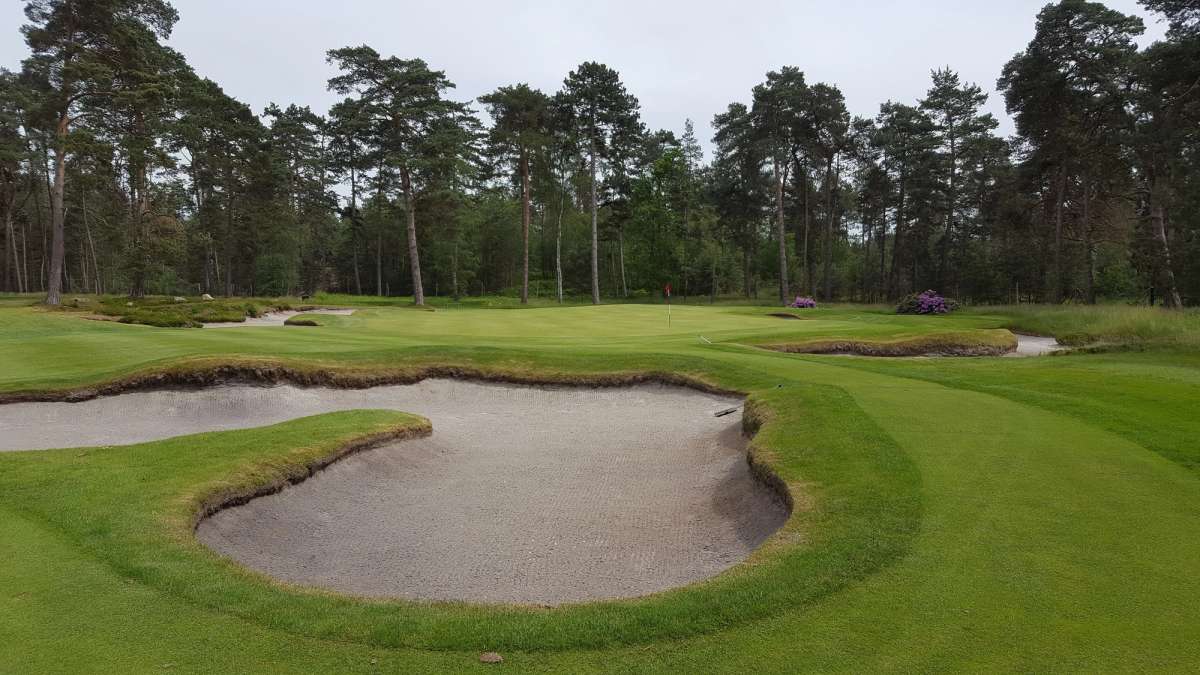
Producing a Top 100 chart for Europe isn’t easy as there aren’t many golfers with a broad enough range of playing experience across all the countries. Still, we’ve managed to find a select group of well-travelled panellists who have assisted with this chart and we’re grateful for their input. Normally, we produce these continental listings at the start of a ranking cycle then work our way through the constituent countries. This time, we began with the Nordic countries last year then – after something of a hiatus in the second half of 2022 – we eventually worked through the remaining nations until all were refreshed. Doing things that way made it a good bit trickier to assemble the top-level chart now (as recently revised country positions must remain intact within the pan-national framework) but we think we’ve produced a cohesive ranking list that stands up well against those that have gone before in previous iterations. So, in our new-look European Top 100, twelve courses remain in the same position, twenty-nine move up, forty-two drop down and seventeen make their first appearance in the standings. We’ll now concentrate our overview on most of the big upward movers, along with our highest new entry which arrives comfortably inside the Top 10. Morfontaine But first, we introduce the course which has held the coveted European #1 slot since 2012, the Grand Parcours 18-hole layout at Golf de Morfontaine in France. Golf was first played here in 1913 but it was Tom Simpson’s late 1920s remodelling of the layout that brought the course to prominence. Relatively recent Kyle Phillips improvements have ensured the course keeps pace with modern technology, at the same time retaining much of the original design intent. This 5.5-ball review was posted a few months ago: “Played this course last year around September. Amazing course. Every hole is beautiful. We were all alone with our 4-ball and a caddy. They were blowing away the leaves in front of us, just as if it was just for us. Perfect conditions. We played the championship course in the morning and the [9-hole] Vallière in the afternoon. An amazing experience.” Lofoten Links The remote course at Lofoten Links in Norway was listed just inside the top half of the table last time around in 2020 but it now makes a prodigious 43-place leap up the listings to the #4 position – which is not that surprising when you consider it was a new entry in our World Top 100 when it was refreshed last year. Designed by Jeremy Turner, this 18-hole layout in the Arctic Circle enjoys one of the most stunning locations imaginable. Les Bordes Entering the standings for the first time, the New course at Les Bordes Golf Club in France is our highest new entry at #6. Laid out by Gil Hanse on the site of a former 36-hole set-up close to Robert von Hagge’s Old course, the New is a heathland-style track featuring expansive waste areas, formidable bunkers and captivating green complexes, with great emphasis placed on the ground game in a firm and fast playing environment. Visby A few folk probably raised an eyebrow when we published our Swedish Top 100 last year as the 18-hole layout (called “The One”) at Visby Golfklubb on the island of Gotland took over the #1 position from the Stadium course at Bro Hof Slott. It now rises twenty-nine places to #17 in our continental standings, improving on the #25 position it held in 2014. Pierre Fulke and Adam Mednick deserve great credit for the remodelling work caried out at the club. Royal Antwerp The Tom Simpson course at Royal Antwerp Golf Club in Belgium climbs nineteen spots to #22 in the new chart. It’s hard to imagine this place fell from our European Top 100 in 2014 and only reappeared when we last reappraised the standings three years ago – all credit to the club for its willingness to restore the layout to its original design objectives, removing a vast number of trees to greatly improve the overall agronomy on the property. Palmares The Praia and Lagos nines at Palmares Ocean Living & Golf Resort in Portugal found favour with our Portuguese panel a few months back (rising two to #3 in the national chart) and it now makes substantial progress in the continental listings, moving up eleven places to #27. Situated on the Atlantic coast in the eastern half of The Algarve, the original 18-hole course was revamped into a 27-hole complex in 2010 by Robert Trent Jr. and the club has never looked back since. Les Aisses The 18-hole Les Aisses course at Les Aisses Golf in the Sologne region of France jumps twenty-five places up to #31 in the chart. Hawtree Limited was engaged in 2010 to reimagine the original Olivier Brizon design, recreating an old-style layout in the spirit of the heathland tracks found in England around London. Woodland management, heather regeneration and remodelling of bunkers have all contributed to the new look here. Real Moraleja Real Club La Moraleja in Madrid owns the largest private golf facility in Europe, with four Jack Nicklaus-designed 18-hole golf courses operating across three locations around the Spanish capital. The club’s #3 course now advances fourteen places to #40 in our chart, with sand-capped fairways routed around four large lakes on a rather flat site where a fair amount of soil was shifted to create contouring during construction. Royal Limburg The course at Royal Limburg is another Belgian track that has dramatically turned its ranking fortunes around. Positioned at #33 in 2018, it plummeted inexplicably to #88 in 2020 but it’s now back with a bang, soaring 47 places up to #41. Designed by Fred Hawtree in the mid-1960s then subsequently altered by his son Martin, the course underwent a complete bunker renovation by architect (and club member) Bruno Steensels in 2018 – so it’s taken a full five-year period for that work to be fully appreciated now! Real Puerta de Hierro The Abajo course at Real Club de la Puerto de Hierro in Madrid (up fifteen to #48) has benefitted from the design talents of several top architects since 1912, starting out with Harry Colt and Tom Simpson in its formative years, followed by John Harris and Kyle Phillips in more modern times. Frank Pont consults currently as the club continues to revise and refine both the Abajo and its sister layout, the Arriba, at a wonderful 36-hole facility close to the city centre. Pärnu Bay The 18-hole layout at Pärnu Bay Golf Links in Estonia (up twenty-three to #52) is a Lassi Pekka Tilander design, shaped by Mick McShane, that first opened for play in 2015. Situated on a sandy coastal strip of land where the forest meets the sea at Pärnu Bay, the raised fairways weave around expansive sandy waste areas and small lagoons, leading to multi-tiered, sand-protected greens. Drought-tolerant fescue ensures firm and fast playing conditions all-year-round. Linna The top track in Finland is the course at Linna Golf (up fourteen to #65) which Tim Lobb designed when he worked with European Golf Design in the early years of the new millennium. Located halfway between Tampere and Helsinki, the course is routed through a pine and birch forest next to the famous Vanajan Linna Hotel, with views across Lake Katuma to the west of the property. Royal Bled The 18-hole King’s course at Royal Bled in Slovenia (up sixteen to #79) dates back to the late 1930s but it was largely abandoned until Donald Harradine redesigned the layout in 1972. Fast forward almost forty-five years and the club commissioned Swan Golf Designs to reconstruct tees, green and bunkers, install new irrigation and introduce new water features on the back nine. It’s pleasing now to see this extensive upgrade receive the recognition it fully deserves. Olgiata Located half an hour’s drive northwest of Rome city centre, the 18-hole West course at Olgiata Golf Club in Italy (up eleven to #87) is a 1960s Cotton & Pennink parkland track that Jim Fazio renovated in 2010. The club has hosted the World Cup twice (in 1968 and 1984) and staged three Italian Opens, the last of which was in 2019 when Austrian Bernd Wiesberger won the event by one stroke from Matt Fitzpatrick. To view the entire detailed list of our latest Top 100 Golf Courses of Continental Europe click the link. View list here. If you have any comment to make on the above article then please use the “WRITE A RESPONSE” link at the bottom of this page. Jim McCann Editor Top 100 Golf Courses
Measuring 6,734 yards from the championship tees, Golf de Saint Germain is located to the west of Paris in the forest of Saint Germain. The club was originally founded in 1902 as Golf de l’Ermitage and their course was situated on the banks of the river Seine but in 1920 they moved to their present location when members grew tired of the river flooding their 18-hole layout.
St Germain is one of several French golf projects that Harry Colt was involved with in the early part of the 20th century, the others being Cannes Mandelieu, Chantaco, Saint Cloud, Granville and Le Touquet (with Charles Alison).
The club has hosted the French Open nine times and it has been won at St Germain by golfers from eight different nations (with only Scotland providing multiple champions in the shape of George Duncan in 1927 and Sandy Lyle in 1981). The last winner here was Seve Ballesteros when he shot a course record 62 on his way to capturing the 1985 Open de France.
The first world amateur team championship for women was held over the course in 1964, when the ladies from the home nation lifted the prestigious Espirito Santo Trophy.
A delightful parkland course that flows through avenues of majestic trees, St Germain is a thinking golfer’s course where one must plot their way round the property, avoiding the strategically placed bunkers and steering clear of the trees that line every fairway and shelter every green.
Following a meeting of the Colt Association at Stoke Park and visits to Swinley Forest and Sunningdale at the end of the 1990s, the club assembled a small team to oversee the restoration of the course to its original design.
Superfluous trees and bushes were removed and putting surfaces reshaped and resized, with Colt’s trademark false fronts restored at many of the greens. Selective bunker removal was undertaken and over fifty greenside traps were renovated, returning green surrounds to their original appearance.
As Philippe Delaune, the St Germain President says, “If our club is lucky enough to possess a renowned architectural heritage, it is our duty to preserve its authenticity… The course can evolve but it must retain its original character”.
The book 500 world’s greatest golf holes by author George Peper and the editors of GOLF magazine features the 444-yard par four 14th at Saint Germain: “Like many of the 1920s-era courses around Paris, Saint Germain’s character reflects the many stages of its life. At this hole, despite decades of tree growth that now leave the hole a private wooded enclave, vestiges of a more open, linkslike design remain. Mounded, closely sculpted fairway bunkers that pinch the tee shot landing area are covered with fescue-like long grass, while the crowned green is bunkerless in front and therefore receptive to a variety of mid-trajectory approaches.”
Golf de Saint Germain offer excellent practice facilities with a driving range, pitching and putting greens and an additional 9-hole layout so make use of them before tackling the main course!