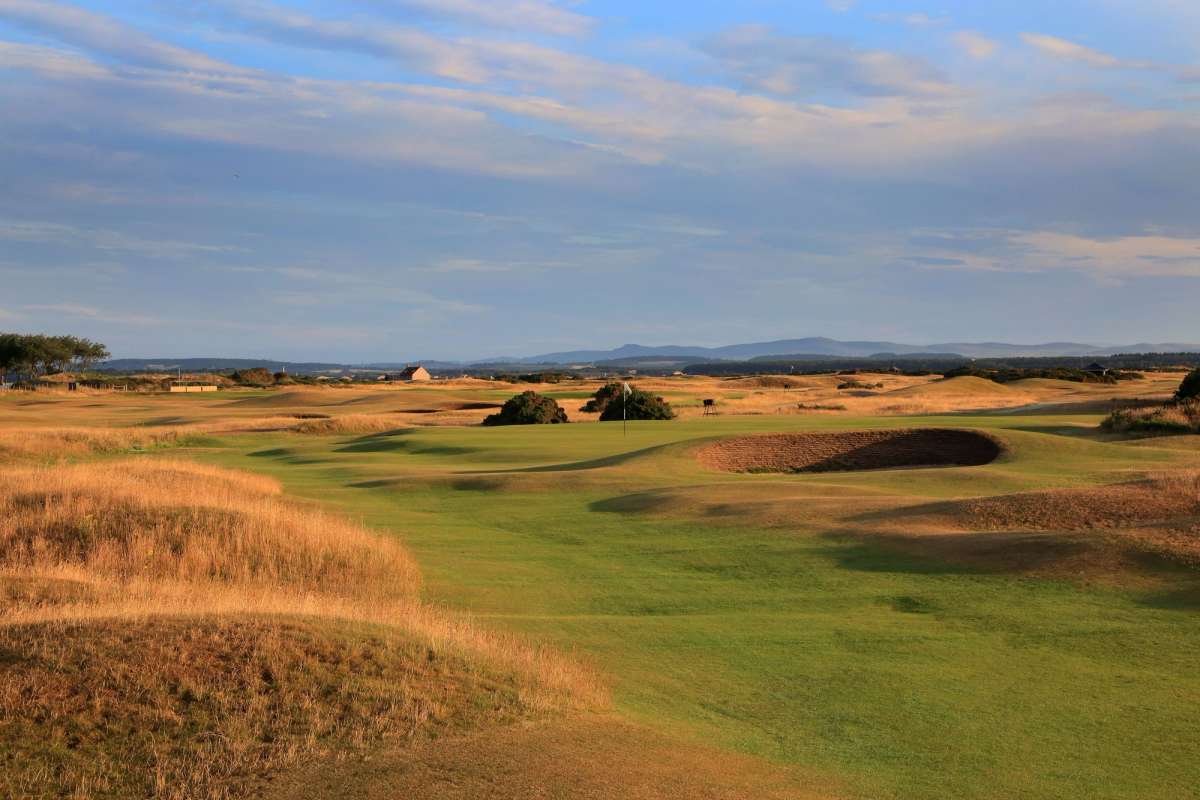
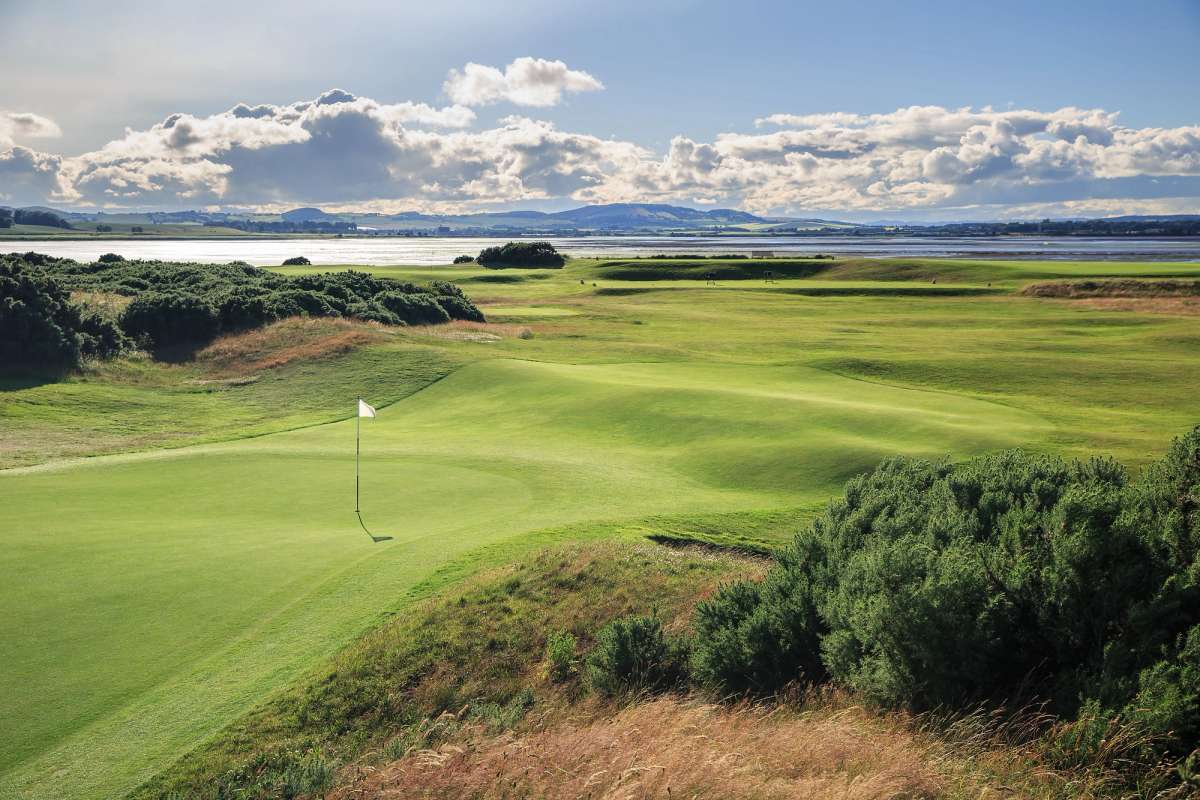
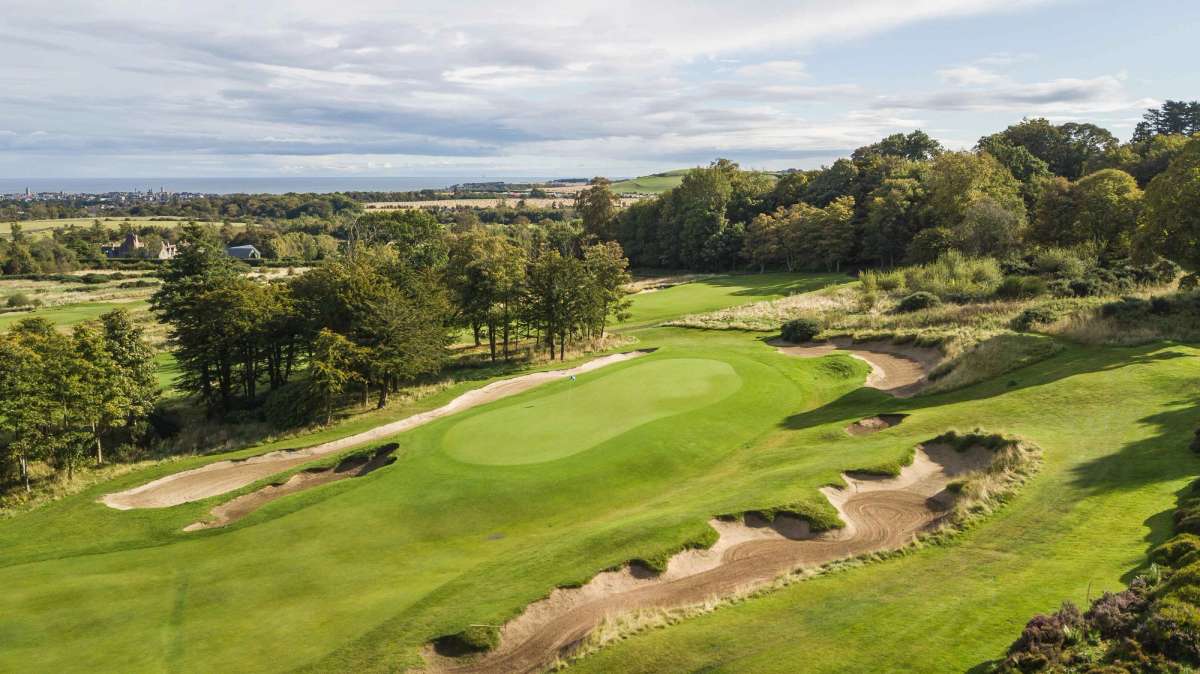
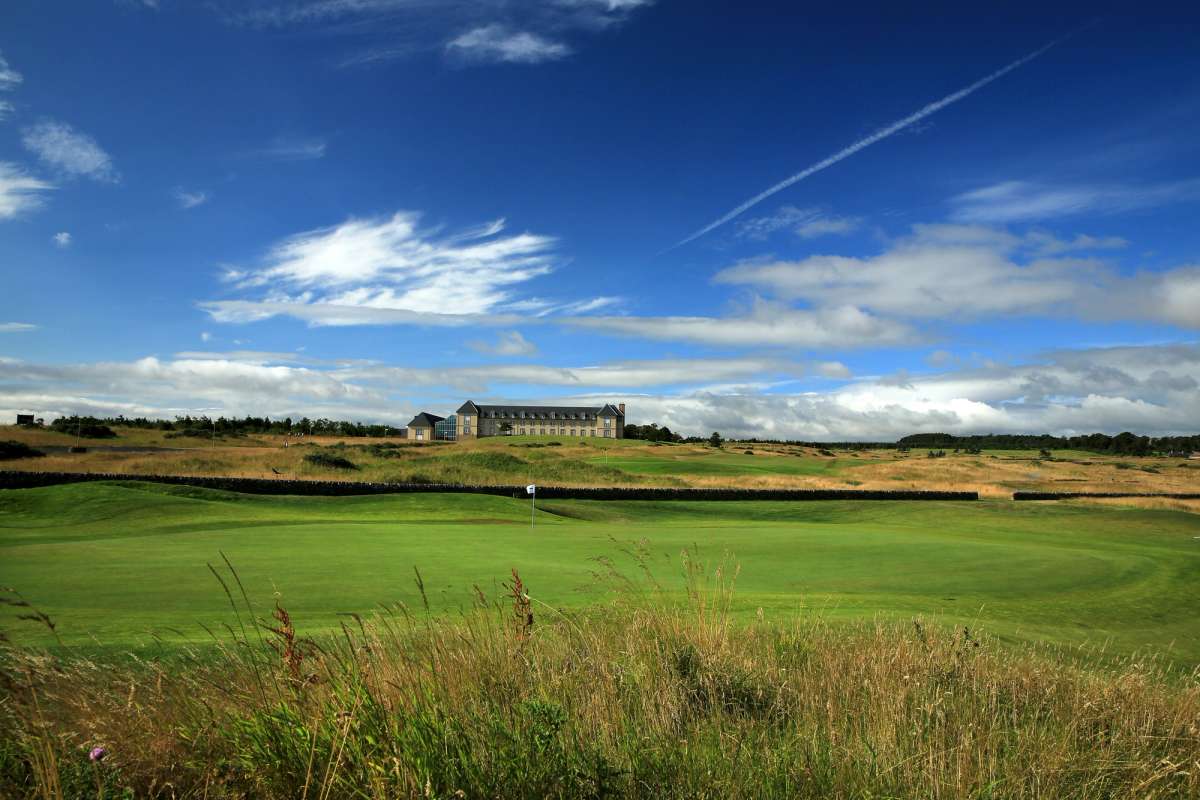
No other course has hosted more Opens than the Old Course at St Andrews.


St Andrews Links (The Old Course)
No other course has hosted more Opens than the Old Course at St Andrews.
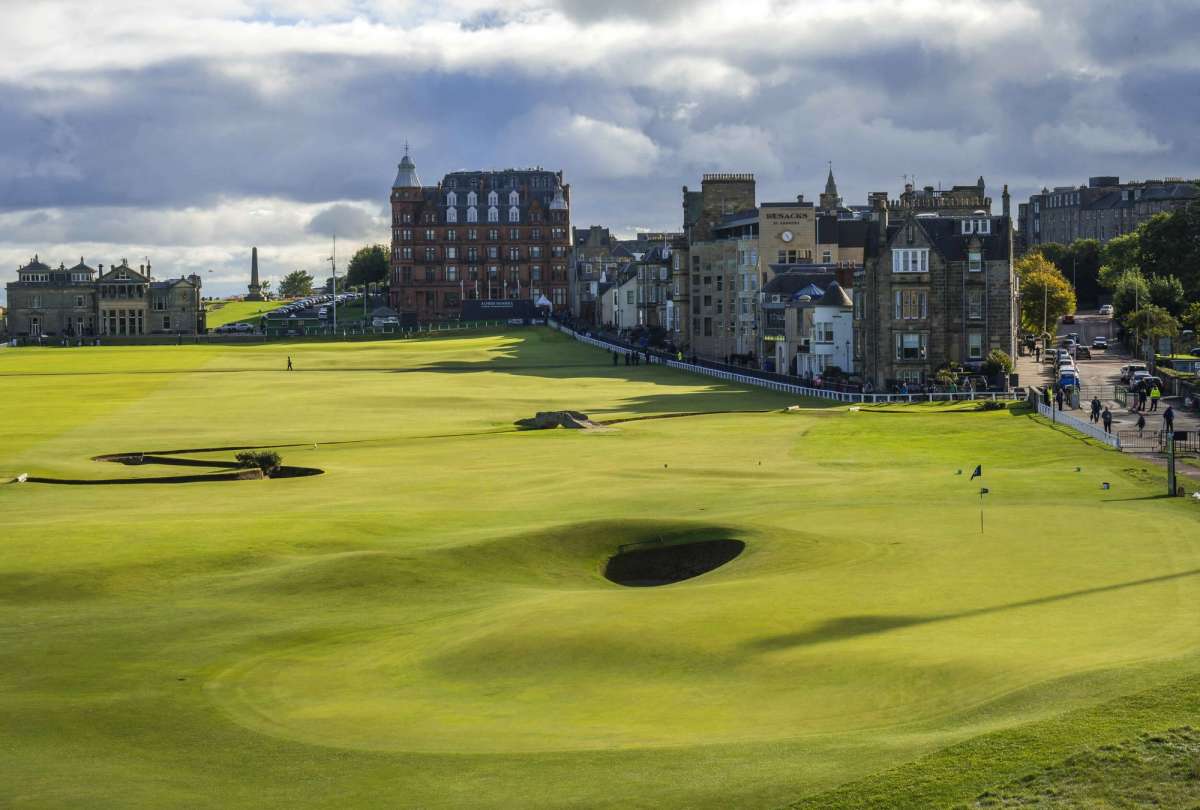
Rarely is the Old Course ranked outside the top ten because it’s a very special links. Surely there is little left to write about St Andrews; the spiritual home of golf, the world’s most famous links course, the mother of golf and so on. Golf was probably played here in the 12th century; what is certain is that the Old Course is one of the oldest golf courses.
In 1553, the Archbishop of St Andrews administered confirmation, at last allowing the community to play golf over the links. The Society of St Andrews Golfers was formed in 1754 and ten years later the course was reduced from its original 22 holes to 18. In 1834, William IV bestowed royal patronage on the club and The Society then changed their name to the Royal and Ancient Golf Club. Significantly, Ladies’ golf began at St Andrews; the world’s first ladies golf club was founded here in 1867. Royal North Devon’s ladies club was formed one year later.
"There are those who do not like the golf at St Andrews," wrote Bernard Darwin in his 1910 book, The Golf Courses of the British Isles, "and they will no doubt deny any charm to the links themselves, but there must surely be none who will deny a charm to the place as a whole. It may be immoral, but it is delightful to see a whole town given up to golf; to see the butcher and the baker and the candlestick maker shouldering his clubs as soon as his day's work is done and making a dash for the links."
The St Andrews Old course itself usually isn’t an instant hit, it’s a golf course you have to get to know and love. First timers might be somewhat disappointed. It's also unlikely that the Old course will feel familiar when you play it for the first time (except perhaps the 1st, 17th and 18th). Television pictures tend to make the ground look very flat, but the humps, hollows and ripples in the fairways are much deeper when you get out onto the course, as indeed are the pot bunkers. Dr Alister MacKenzie wrote in his book, The Spirit of St Andrews: “A good golf course is like good music or anything else: it is not necessarily a course which appeals the first time one plays over it; but one which grows on a player the more frequently he visits it.”
In Tom Doak’s Little Red Book of Golf Course Architecture, the author goes a long way towards explaining why the Old course isn’t an instant hit:
“The Old Course would never receive the acclaim it has today if we hadn’t been told for eons how great it is. It is the great golf course that the most players tend to dismiss as overrated after their first round – of course, that has something to do with its fame too. But it seems to me that the two reasons for it are simple: 1) most tourists don’t get to see the most interesting hole locations, which are reserved for important events, and 2) golfers can’t make out the strategies of the holes because the features are so difficult to see.”
However, it goes without saying that every golfer should play this course at least once, preferably multiple times. It sends shivers down the spine when the starter announces your name, setting those first tee nerves jangling. Oozing familiarity with names like the Swilcan Burn, the bridge over the burn—thought to have been built by the Romans—and the Valley of Sin. There are many memorable holes on the Old course, but one in particular, the 17th, the Road hole, is probably the most famous hole in the world.
And a word about the greens: they are the most extraordinary and interesting putting surfaces in the world. There is little definition between where the fairway, fringe and green stops or starts and the fairways are probably faster and certainly more undulating than the average golf club’s greens. And the size of them is absolutely staggering—they are gigantic—occupying more than an acre in some cases. When you are on the green, forget about having the pin tended—take a pair of binoculars instead.
Mother Nature was largely the architect of the Old course, but some credit must be given to Allan Robertson. In 1848, he widened fairways, created the now-famous gigantic double greens and built the infamous Road Hole green. Robertson's protégé, Old Tom Morris, also made further revisions to the Old course down the years.
"If I could be certain that everyone were intimately acquainted with the Old Course at St Andrews," wrote Tom Simpson, "my task, in saying what constitutes a good golf course would be a very simple one. I should just say St Andrews and leave it at that."
So, get yourself in the ballot and keep your fingers crossed. You will definitely remember the Old course experience for the rest of your life. And did you know that St Andrews Links has become the first Open Championship venue to achieve the prestigious GEO Certified ecolabel?

There are few better places to tee it up than the Home of Golf. There are also few tee times harder to come by. Playing the Old Course at St Andrews is rarely as simple as finding an empty slot and clicking 'book'. For golfers who haven't secured a tee time in advance, the daily ballot offers another route onto one of the world's most famous golf courses. It is, quite literally, a draw: you enter with your group, wait for the result and hope your names appear. The process is straightforward once you know the rules, but there are a few details that can catch first-time visitors out. Here's how the Old Course ballot actually works. What Is the Old Course Ballot? The Old Course ballot is a daily draw for golfers looking to play the course without an advance tee time. Rather than opening every visitor tee time for advance bookings, St Andrews Links makes a proportion available through the ballot. Golfers can enter shortly before their preferred day of play, with successful applicants then allocated a tee time. The important thing to understand is that entering the ballot does not guarantee you a round. You are entering a draw for the available tee times on that particular day. The ballot is sometimes referred to as the Old Course lottery, but there is nothing particularly complicated about it. Once you know when to enter and what information you need, the process is relatively simple. How Does the Old Course Ballot Work? There are five basic steps to entering the Old Course ballot. 1. Choose Your Day to Play The ballot is drawn two days before play. That means golfers need to plan a little differently from a conventional golf booking. If you want to play on a Thursday, for example, your ballot entry is made on the Tuesday. The Old Course is closed on Sundays, so there is no ballot for Sunday play. Visitors are still welcome to walk the course freely and stop for the obligatory photo on the Swilcan Bridge. 2. Enter the Ballot by 2pm Entries close at 2pm, two days before the day you want to play. For example: Want to play Thursday? Enter by 2pm Tuesday. Miss the deadline and you'll have to wait for another opportunity. Entries can be made through the St Andrews Links system, with golfers required to provide the relevant details for everyone in their group. 3. Add Your Group The main Old Course ballot is for groups of two, three or four golfers. Each golfer's name, home golf club and handicap must be provided, with a maximum handicap of 36. A single golfer cannot enter the standard group ballot. This is worth knowing before you arrive in St Andrews. If you're travelling alone, there is another option: St Andrews operates a separate Singles Daily Draw, which we'll explain below. 4. Wait for the Ballot Draw Once the 2pm deadline has passed, St Andrews conducts the draw for the available tee times. This is where the element of chance comes in. There is no trick that guarantees success, your application is simply considered alongside the other groups looking to play that day. The number of available tee times can vary, so there is no fixed success rate that applies to every ballot. 5. Check Your Ballot Result The results are published later that afternoon. If your group is successful, you'll be given an Old Course tee time and can then complete the necessary arrangements to play. If you're unsuccessful, you haven't lost a booking fee or a deposit simply by entering. You can try again for another eligible day if your itinerary allows. How Can Singles Get an Old Course Tee Time? Not every golfer arrives in St Andrews with three playing partners in tow. Fortunately, travelling alone doesn't necessarily mean missing out on the Old Course. The standard Old Course ballot is designed for groups of two to four golfers, so a solo visitor cannot simply enter the main draw on their own. However, individual golfers have other avenues to explore. The Singles Route Since March 2024, individual golfers have entered the Singles Daily Draw, which replaced the old system of golfers queuing overnight in the hope of picking up a tee time. The process is separate from the main Old Course ballot and takes place the day before play. Singles can enter the draw in person between 9am and 5pm at either the Old Pavilion, beside the first tee, or the St Andrews Links Clubhouse. At 5pm, a randomised draw is made, with successful golfers notified by email and SMS. If selected, the golfer is given a place on the Old Course by joining an existing group with an available space. In other words, you don't need to arrive with three friends to play the Old Course as a single, but you do need to be prepared to join other golfers. It is a much more civilised system than the old singles queue, which meant you could spend hours waiting outside in the hope of getting onto the course the following day. The digital draw gives solo golfers a defined application window and a randomised chance of securing a tee time instead. What Happens If You Win the Old Course Ballot? The good news is that you have an Old Course tee time. Your group will be allocated a time from the available ballot sheet, rather than choosing a particular slot in the way you might when booking an ordinary public course. Tee times can vary considerably depending on the day and season, so don't build your entire day's itinerary around a particular time until the result has been confirmed. You should also have your handicap information available. The maximum handicap for the Old Course is 36, and St Andrews can require evidence of handicap before play. The 2026 high-season green fee is £355, although rates vary by season. What Happens If You Lose the Old Course Ballot? Nothing, other than a slight dent to your plans. You don't pay simply for entering the ballot, and an unsuccessful application doesn't prevent you from trying again on another eligible day. This is why flexibility can be valuable when planning a St Andrews golf trip. If you're staying for several days, you can enter the ballot on more than one occasion rather than putting everything on a single draw. It's also worth having a plan B. St Andrews Links is home to six other courses - New, Jubilee, Castle, Eden, Strathtyrum and Balgove - which don’t require you to enter a lottery, so an unsuccessful ballot doesn't have to mean a wasted day of golf. Can You Improve Your Chances of Winning the Old Course Ballot? There is no magic formula. The ballot is a draw, and the number of applications and available tee times varies from day to day. That means there is no reliable percentage chance of success that can be applied to every golfer or every date. What you can do is give yourself more opportunities. If your schedule allows, consider entering on multiple eligible days. Being flexible about when you play also means you're not relying on one particular draw. Peak periods can be particularly competitive, while availability varies throughout the season, so it's sensible to approach the ballot as an opportunity rather than a guarantee. Old Course Ballot FAQs How Far in Advance Can You Enter the Old Course Ballot? The ballot is drawn two days before play, with entries closing at 2pm. So, for example, golfers hoping to play on Thursday must enter by 2pm on Tuesday. Can You Enter the Old Course Ballot as a Single? Not through the standard group ballot. The main ballot accepts groups of two, three or four golfers. St Andrews has a separate system for individual golfers. How Many Golfers Can Enter the Old Course Ballot? A standard ballot application can contain two, three or four golfers. What Handicap Do You Need for the Old Course Ballot? The maximum handicap is 36 for men and women. Golfers should be prepared to provide evidence of their handicap. Can You Enter the Old Course Ballot More Than Once? Yes. If you're staying in St Andrews for several days, you can enter for multiple eligible playing days. Each day's ballot is a separate draw. Does Winning the Ballot Guarantee a Specific Tee Time? Winning the ballot means your group has secured an Old Course tee time, but you don't simply choose whatever time you want. Your group is allocated a time from the available ballot sheet. Is the Old Course Ballot Worth Trying? The Old Course ballot won't give you certainty, but it does give visitors another way onto the most famous fairways in golf. For anyone with some flexibility in their itinerary, there's little to lose by entering. Know the deadline, make sure your group meets the requirements and be prepared to try again if your name doesn't come out. And if you're travelling alone, remember that the Singles Daily Draw offers a separate route to the first tee.

A good halfway house can turn a great round of golf into a memorable one. It might be a cold beer on a Scottish links, a burger with a spectacular view or a hot drink to warm you up before the back nine. Whatever is on offer, the best halfway houses give golfers a chance to forget about the scorecard for a few minutes and enjoy the experience. We recently asked the Top100 Golf Courses community to share their favourite halfway houses, uncovering plenty of memorable stops around the world. We've picked five of their recommendations, alongside five more renowned halfway houses that are well worth knowing about. What is a Halfway House? A halfway house is a food and drink stop positioned around the turn of a golf course, usually between the ninth and 10th holes. Some are little more than a hut serving snacks and drinks, while others have become destinations in their own right, offering everything from full meals and cocktails to fires, views and plenty of local character. Five Halfway Houses Chosen by the Top100 Community Sunningdale Golf Club (England) There is a reason the halfway hut at Sunningdale has become one of the most famous refreshment stops in golf. The small Swiss-chalet-style building has been in place since 1903, sitting where the ninth holes of both the Old and New Courses meet their respective 10th holes. But the building itself isn't the main attraction. That would be the sausage sandwich. Sunningdale's legendary hut serves a simple sausage on buttered bread, with other food and refreshments available alongside it. The hut has become such an established part of the experience that the club's own tradition says everybody stops, but does so speedily. It's not fancy, and that's rather the point. After nine holes of heather-lined fairways, a hot sausage sandwich and a cup of tea can feel like exactly what golf ordered. Nairn Golf Club - The Bothy at Nairn (Scotland) The Bothy at Nairn has a history that goes well beyond golf. Built in 1877, the stone building and neighbouring icehouse formed part of the Easter Delnies Fishing Station, one of five salmon fisheries operating along the coast between Nairn and the mouth of the Findhorn. In a good season, the fishery could catch up to 5,000 salmon, with ice collected from local rivers and a specially made pond and stored in the icehouse to keep the catch fresh. The buildings have since been given a new lease of life, with the Bothy converted into a halfway house where golfers can stop for snacks and refreshments at the turn. On a cold day beside the Moray Firth, there's also a fireplace to warm up beside. The historic stone building, Highland setting and views across the course provide plenty of atmosphere. One of our community members put it rather simply: a dram of whisky and a fire are hard to beat. Hard to argue with that. Turnberry Ailsa (Scotland) Turnberry's halfway house is about as far removed from the traditional golf hut as you can get. The Ailsa's ninth hole now finishes beside the famous Turnberry Lighthouse, which doubles as a halfway house for golfers. The lighthouse itself dates back to 1873, while the golf course's dramatic ninth was redesigned as part of the Ailsa's major renovation. Inside, golfers can stop for food and drink before heading to the 10th, but the real attraction is outside. From the lighthouse, there are views across the Firth of Clyde towards the Isle of Arran and Ailsa Craig. It's a halfway stop that feels more like a destination than a quick pit stop. When your halfway house is a historic lighthouse overlooking one of Scotland's most spectacular stretches of coastline, you've got a pretty good excuse to take your time. Ardglass Golf Club (Northern Ireland) At Ardglass, the halfway-house experience is wonderfully straightforward: have a Guinness and enjoy the view. The course's old cottage halfway house at the back of the 7th green has become one of its most memorable features, with golfers able to stop for a pint before continuing their round. A recent visitor described it as a gorgeous cottage with Guinness, while another praised the combination of a Guinness, sausage roll and views over the Irish Sea. It fits Ardglass perfectly. The County Down links is already one of the most dramatic places to play golf in Northern Ireland, with the Irish Sea never far away. Add a pint of Guinness just before the turn and you've got a halfway house that feels distinctly of its surroundings. Sometimes you don't need to reinvent the wheel. Blair Atholl Golf Estate (South Africa) Blair Atholl might have been one of the less obvious names to appear among the community recommendations, but the descriptions made it impossible to leave out. The halfway stop sounds less like a quick break and more like an event. One golfer highlighted the chicken burger, a chef cooking a barbecue beneath the trees and a deck sitting beneath a stream. Another mentioned silver-service high tea. That's quite the halfway-house menu. It's also a good example of why the best stops aren't necessarily the most famous. A halfway house can become memorable because of the food, the setting or simply the feeling that you're being looked after rather than rushed back onto the course. Five More Renowned Halfway Houses St Andrews Links - The Old Course (Scotland) If we're talking about halfway houses, it makes sense to visit the place that has a claim to starting the tradition. In the 19th century, David "Old Da" Anderson sold ginger beer and other refreshments from a cart on the Old Course at St Andrews. It has been described as golf's first refreshment stand. The modern version sits behind the ninth green and keeps the tradition going, albeit with a rather more substantial menu. The pork and haggis sausage roll is a popular choice, while the club's own Tom Morris 1821 Lager provides a suitably Scottish accompaniment. It's difficult to think of a more fitting place for a halfway stop. The Old Course is steeped in golfing history, and even the break between nines has a story of its own. Pine Valley Golf Club (New Jersey, United States) Pine Valley's halfway house is memorable before you've even ordered anything. Rather than a conventional hut, it is built into the base of an old water tower, which golfers encounter around the eighth hole and again near the 12th tee. It's an appropriately unusual feature for one of the world's most unconventional golf courses. The tower doubles as a stop for drinks and snacks, giving golfers a chance to take a breather before continuing around Pine Valley. It even boasts an impressive collection of golf balls from around the world. There aren't many halfway houses that can claim to be built inside a water tower. Quivira Golf Club (Baja California Sur, Mexico) Quivira has taken the halfway-house concept and spread it across the entire round. The Jack Nicklaus-designed course has multiple all-inclusive comfort stations, each offering golfers food and drinks as they make their way around the Cabo San Lucas layout. The most spectacular is The Cliffs, perched almost 300 feet above the Pacific, where golfers can stop for a breakfast burrito and take in the views over the ocean. Then there's The Oasis, the main halfway house near the ninth green. Here, the emphasis is on the food, with freshly prepared Baja cuisine including tacos and tostadas, alongside a full tequila bar. A final stop, Cañada, sits near the 16th tee, while another comfort station beside the oceanfront practice facility offers snacks and cold drinks before golfers even reach the first tee. The food and refreshments are included in the green fee, making Quivira's comfort stations much more than somewhere to grab a quick drink. Tacos, tequila and spectacular Pacific Ocean views make the breaks almost as memorable as the golf. Whistling Rock Country Club (South Korea) At Whistling Rock, there isn't just one halfway house to look forward to. The South Korean club is made up of three nine-hole loops, each with its own themed tea house: Cocoon, Temple and Cloud. The three buildings are each distinctly different. One is a rounded structure between a lake and forest, another is a formal wood-and-glass building, while the Cloud tea house sits high among the trees. The result is a halfway-house experience that feels distinctly different depending on which nine you're playing, with each tea house adding another layer to the Whistling Rock experience. Royal Dornoch Golf Club (Scotland) Royal Dornoch's halfway house is proof that sometimes the best idea is a simple one. The stop sits behind the ninth green of the Championship Course, with views back across the links towards the Dornoch Firth. And then there's the traditional order: hot chocolate with Bailey's Irish Cream, a combination that makes considerably more sense when you're standing on a Scottish links in a North Sea wind. It's a small detail, but one that has become part of the Royal Dornoch experience and exactly the sort of halfway-house tradition golfers remember.
Scotland is home to some of the most famous golf courses in the world, but playing them during the peak season isn't as simple as picking a date and booking a tee time. In this guide, Top100 breaks down how far in advance you should book your Scottish golf trip, highlighting the courses you should target at 12–18 months, 9–12 months, six months and three months out. 12–18 Months Muirfield – Honourable Company of Edinburgh Golfers The second-ranked golf course in Scotland, Muirfield has hosted 16 Open Championships and remains one of the country's ultimate bucket-list destinations for avid golfers. It is also a prime example of why planning well in advance is essential when building a Scottish golf trip. Muirfield's visitor booking process is unusually structured. For 2027, the diary for independent golfers opened on March 18, 2026, and closed on March 27, with applications accepted only during that window. Visiting golfers could submit up to three preferred dates, with only one application permitted per group. Another important consideration for groups wanting to play Muirfield is that, during the peak months of May to September, the club does not accept bookings for singles, two-balls or three-balls. Smaller groups can instead join a waiting list in the hope that a fourball becomes available through a cancellation. If Muirfield is non-negotiable on your Scottish golf bucket list, it should be one of the first things your group books – even before flights and accommodation. Royal Dornoch Golf Club – Championship Course Regularly ranked among the finest golf courses in the world, Royal Dornoch's Championship Course is another Scottish bucket-list destination where the "book it when the diary opens" mentality is justified. The demand for tee times is enormous. When Royal Dornoch opened its 2027 tee sheet in May 2026, the club revealed that summer availability for 2026 was already extremely limited, with the remaining vacant fourball slots falling late in the afternoon. More than 13,000 rounds are allocated to visiting golfers each year, but the course's global reputation means those tee times are in huge demand. Booking applications are only accepted by email and processed in chronological order. The club itself advises golfers to look ahead when planning a trip to Dornoch, and with demand showing little sign of slowing, leaving it until six or three months before your trip is a gamble. If Royal Dornoch is a priority for your trip, it should be one of the first tee times you secure. St Andrews Links – Old Course No Scottish golf trip is complete without discussing the Old Course at St Andrews, but unlike Muirfield and Royal Dornoch, getting a tee time at the Home of Golf requires a slightly different approach. Your best chance of securing an advance reservation for the Old Course is by submitting an application through the St Andrews Links Trust annual advance reservation process, which typically opens at the beginning of September for the following year. At least two golfers are required in each group, with a maximum of eight. You don’t necessarily need to secure a confirmed Old Course tee time 12–18 months in advance, as golfers who miss out on an advance reservation can still enter the highly competitive 48-hour ballot or explore other last-minute availability. If you want to save yourself the stress of applying for a tee time at the Home of Golf, there are also a number of authorised providers – including golf tour operators and local accommodation providers – offering packages throughout the high season that include guaranteed Old Course tee times. 9–12 months Kingsbarns Golf Links Situated just six miles from St Andrews, Kingsbarns Golf Links is one of Scotland's most celebrated modern links. Designed by Kyle Phillips, the course makes the most of its spectacular coastal setting, with the North Sea visible from almost every hole. Kingsbarns' reputation has continued to grow since opening, with the course now co-hosting the annual Alfred Dunhill Links Championship alongside the Old Course at St Andrews and Carnoustie. Its popularity, however, means golfers planning to play during the peak summer months should think about their tee time well in advance. Advance booking is highly recommended by the club to guarantee your place. While Kingsbarns does offer a last-minute online booking service, tee times are only released a maximum of three days in advance and are available at the full rack rate. Nine to 12 months out is a sensible target for Kingsbarns. Its proximity to St Andrews also makes it particularly important to book early if you're hoping to combine the two in the same trip. Carnoustie Golf Links – Championship Course One of the most famous and challenging links courses in the world, Carnoustie's Championship Course is a key addition to any Scottish golf itinerary. Having hosted eight Open Championships, including Francesco Molinari's memorable victory in 2018, its reputation means tee times during the peak season are highly sought after. Unlike some of Scotland's most exclusive courses, Carnoustie offers visitors a number of ways to secure a tee time, with bookings available directly through the club. However, if you're planning to play during the busiest summer months, leaving your round until the final few weeks of your trip is a risk. For a peak-season trip, booking Carnoustie's Championship Course early is particularly important if you want a preferred morning tee time or are travelling as a larger group. Royal Troon Golf Club – Old A regular fixture on the Open Championship rota, Royal Troon's Old Course is another of Scotland's most sought-after links and a natural target for golfers planning a trip during the summer months. The course has hosted the Open nine times, most recently in 2024, and its reputation means popular tee times can be snapped up well in advance. Royal Troon offers more flexibility than some of Scotland's most difficult courses to access, with its visitor season running from mid-April to October. However, visitor tee times are limited to Mondays, Tuesdays and Thursdays, making it worth securing your round well ahead of a peak-season trip. The club also opens its diary well ahead of the playing season. For a peak-season trip, securing your preferred date early is the safest approach, particularly given the limited days available to visitors. Turnberry – Ailsa One of Scotland's most recognisable links, the Ailsa Course at Turnberry combines a rich Open Championship history with one of the most dramatic coastal settings in the country. Perched on the Ayrshire coast with views across to the Isle of Arran, the course has hosted four Open Championships and remains a bucket-list round for many visiting golfers. Turnberry offers visitor tee times throughout the season, but demand for the Ailsa is high during the summer, particularly for the most desirable morning times. Booking Turnberry’s Ailsa Course early gives you the best chance of securing your preferred date and tee time rather than relying on availability closer to your trip. 6 months Once you've secured the headline rounds on your itinerary, six months out is a good time to start filling in the rest of your trip. The courses in this category are still highly regarded and can be extremely popular during the summer, but generally offer more flexibility than the likes of Muirfield, Royal Dornoch or the Old Course at St Andrews. For a trip during the peak months, courses such as Gullane No. 1, Dumbarnie Links, Crail, Elie, Prestwick, Western Gailes, Nairn, North Berwick and Dunbar, as well as the New, Jubilee and Castle Courses at St Andrews, are well worth targeting. These courses can form the backbone of a fantastic itinerary, particularly if you're looking to experience a mix of famous championship layouts and traditional Scottish links. Six months out is also when location should start influencing your planning, with courses viewed as part of a wider itinerary. A trip based around St Andrews, for example, gives you access to Crail, Elie, Dumbarnie and the three St Andrews Links courses, while an East Lothian trip opens up Gullane, North Berwick and Dunbar. Further west, Prestwick and Western Gailes can be combined with Royal Troon and other Ayrshire links. At six months, you should still have a good selection of tee times available, but peak-season mornings and the most desirable days can begin to disappear. If there's a particular course in this category that is a must-play, don't assume you'll be able to pick it up at the last minute. Six months is a good balance between having plenty of choice and not needing to plan your entire Scottish golf adventure a year or more in advance. 3 Months Three months out is where you can start to take a more flexible approach to your Scottish golf itinerary. By this stage, the headline rounds should ideally be secured, but there are still plenty of excellent options for filling out your itinerary closer to your trip. If you haven't planned anything yet, don't panic – Scotland is full of authentic, characterful golf courses that don't require a year of advance planning. Courses such as Leven Links, Lundin Links, The Glen, Dunbar, Panmure, Montrose, Ladybank, Machrihanish, Musselburgh and Gailes offer plenty of variety, from traditional links with centuries of history to lesser-known hidden gems that could provide some of the most enjoyable rounds of the trip. This is also the point where flexibility becomes your biggest advantage. If you're happy to play in the afternoon, move between days or travel a little further from your base, you'll generally have more options. It can also be worth checking courses regularly for cancellations, particularly if there's a specific course you'd like to add to the itinerary. Don't mistake three months out for "leave everything until the last minute", though. Peak-season tee times at popular courses can still disappear, particularly for larger groups. If one of these courses is a must-play, book it once you've settled on your itinerary rather than assuming you'll find a tee time a few weeks before travelling. The good news is that you don't need to plan every round of a Scottish golf trip 18 months in advance. Identify the courses you simply can't miss and secure those first, before using the months that follow to build out the rest of your itinerary. With a little flexibility, even a trip planned just three months out can still feature some of Scotland's most authentic and enjoyable golf.
The latest ranking of the Top 100 Golf Courses in the World serves as the ultimate global golf bucket list. Most members of our World Top 100 Panel are seasoned golfers, each playing 20-30 of these courses annually while travelling extensively over decades to form their opinions on others. We recognise that opinions vary—even among our panel members. Rankings are subjective, and there are undoubtedly 50 or more courses in the UK and USA alone that could easily fit onto this list. Links Golf Pilgrimages The rankings
New York, United States
Victoria, Australia
Scotland, United Kingdom
Pennsylvania, United States
Northern Ireland, United Kingdom