Western Cape, South Africa
Co-host (with De Zalze) to the World Amateur Team Championships in 2006, Stellenbosch Golf Club has also been the venue of other prestigious events like the South African Open which the club held in 1999.
Overall rating

3.5
Co-host (with De Zalze) to the World Amateur Team Championships in 2006, Stellenbosch Golf Club has also been the venue of other prestigious events like the South African Open which the club held in 1999.
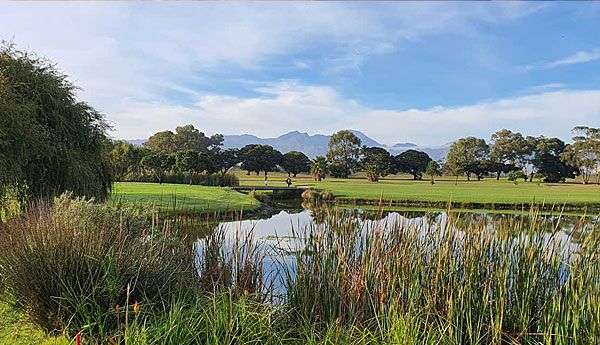
Stellenbosch is one of the oldest clubs in South Africa, which celebrated its centenary in 2004, and it lies close to the Helderberg Mountains, in the heart of the nation’s wine region. We don’t know who designed the club’s original course but we do know it was doubled in size from a 9-hole layout to a full 18 holes by Ken Elkin in 1953.
The expanded course occupies fairly flat terrain with only a few gentle changes in elevation and water coming into play at only four holes: 2, 5, 12 and 18. Expect a tough start to a round here as the opening quartet of par fours all measure in excess of 400 yards from the back tees.
A really strong hole on the front nine is the par five 8th, which locals call “Snakes and Grapes” – a slice sends shots into the bush on the right and a hook results in a lost ball in the vineyards on the left. On the back nine, the demanding par five 14th requires shot-making skills of a high order, starting with a fade from the tee, followed by a draw for the second shot (or vice versa for the lefty).
A number of top competitions have been held at Stellenbosch in recent years, including the South African Open in 1999 and – along with co-hosts De Zalze – the World Amateur Team Championships in 2006. The ladies from the home nation claimed the Espirito Santo Trophy for the first time when their team forced the holders, Sweden, into second place.
The latest ranking of the Top 100 Golf Courses in the World serves as the ultimate global golf bucket list. Most members of our World Top 100 Panel are seasoned golfers, each playing 20-30 of these courses annually while travelling extensively over decades to form their opinions on others. We recognise that opinions vary—even among our panel members. Rankings are subjective, and there are undoubtedly 50 or more courses in the UK and USA alone that could easily fit onto this list. Links Golf Pilgrimages The rankings
California, United States
New Jersey, United States
Northern Ireland, United Kingdom
New York, United States
New York, United States
Other Top Course to Consider in the Western Cape The Western Cape of South Africa, renowned for its stunning landscapes and vibrant culture, also stands out as a premier destination for golf enthusiasts. The region boasts a diverse range of world-class golf courses, each offering unique challenges and spectacular views. From the rolling greens nestled against mountain backdrops to coastal links with panoramic ocean vistas, the Western Cape's golf courses are as much a feast for the eyes as they are a test of skill. This area not only attracts seasoned golfers but also offers a welcoming atmosphere for beginners looking to experience the sport in one of the most picturesque parts of the world. Overview of Notable Golf Courses in the Western Cape Fancourt (Links) - Often referred to as the crown jewel of South African golf, Fancourt Links is a meticulously designed course that pays homage to the traditional links courses of Scotland and Ireland. Created by the legendary Gary Player, this course is known for its undulating, windswept terrain and challenging layout, making it a favourite for major golf tournaments and discerning players. Fancourt (Montagu) - Another Gary Player masterpiece, the Montagu course at Fancourt is famed for its beautiful fairways and strategic bunkering. This parkland course blends seamlessly into the landscape, featuring stunning views of the Outeniqua Mountains and perfectly manicured greens. It provides a challenging yet enjoyable game for golfers of all skill levels. Pearl Valley - Set in the picturesque Paarl-Franschhoek Valley, Pearl Valley is renowned for its pristine conditioning and the stunning setting of the Winelands. Designed by Jack Nicklaus, the course features a layout that's both challenging and rewarding, with water hazards and bunkers that demand strategic play. The signature 13th hole is a highlight, offering both risk and reward in equal measure. Arabella - Located near Hermanus, Arabella Golf Club is often rated among the top courses in South Africa. It is particularly famous for its challenging back nine and spectacular finishing holes that overlook the Bot River Lagoon. The course's natural beauty is complemented by a layout that takes full advantage of the varied terrain, providing a test for golfers who enjoy a course that requires thoughtful navigation. Pinnacle Point - Situated on the Mossel Bay coastline, Pinnacle Point is a breathtakingly beautiful course that offers sweeping views of the Indian Ocean. This cliff-top course is known for its dramatic elevation changes and challenging holes, particularly those that run along the precipice of the ocean cliffs. The course's design leverages the natural landscape to offer a unique golfing experience that is both visually striking and challenging. These courses not only highlight the best of golf in the Western Cape but also encapsulate the spirit of South African golf: challenging, beautiful, and unforgettable. Whether you're a serious golfer seeking a test or a casual player looking to enjoy a round in a picturesque setting, the Western Cape offers some of the best golfing experiences in the world. Find out more about travel toErinvale Why not register today to be the 1st to Receive Worldwide Rankings releases for 2024. Lockhart Travel Club Concierge Services FAQ What is the Lockhart Travel Club? Lockhart Travel Club is dedicated to offering its members unique opportunities for world-class golf exploration and adventure. It connects members with like-minded individuals worldwide, aiming to fulfil their desire to play at the best golf courses globally. The club originated from Robert Lockhart's passion, a Scotsman who introduced golf to America in the late 19th century, and it continues to embody his spirit of golf travel (Lockhart Travel Club). Who are the members of the Lockhart Travel Club? Members are individuals from some of the world's greatest clubs, sharing a common passion for golf and adventure. The club welcomes golfers eager to travel, play, and check off their bucket list of courses. They are driven by the opportunity to see and play the best courses worldwide, taking advantage of the club's network. What kind of experiences does Lockhart Travel Club offer? In 2023, the club provided opportunities to play in various top-ranked courses and locations, including the Sand Hills of Nebraska and Colorado, the best of Japan and Korea, the English Heathlands, the classic courses of France, and the best of New Zealand’s North Island. The 2024 schedule promises unique experiences in 19 different countries, including Thailand & China, Brazil, South Africa, the Northeast USA, and Australia. How do I join Lockhart Travel Club? Interested individuals can inquire about membership by contacting the club directly via their official email. The club values connections among golf enthusiasts and strives to plan unique, unforgettable opportunities for its members throughout the year. For more detailed inquiries or to apply for membership, please refer directly to the Lockhart Travel Club's official website or contact their membership services. Lockhart Travel Club About Us: Learn more about the club Top 100 Golf Courses - Lockhart Travel Club: Explore member experiences and trips
Timing can make all the difference when planning a golf holiday. While peak season often brings the best playing conditions, it can also mean higher green fees, expensive accommodation and limited tee-time availability. Travelling during the shoulder season – the periods immediately before or after a destination's busiest golfing months – can offer a better balance between cost, weather and availability. From Scotland's famous links to the desert courses of Arizona, we've picked out 10 destinations where travelling outside peak season could make your next golf trip more enjoyable – and potentially more affordable. The Algarve, Portugal Best time to visit: February, June or November The Algarve is one of Europe's most popular golf holiday destinations, but its busiest golfing periods don't necessarily coincide with the peak summer tourism season. March through May and September through October are generally the most expensive months for golf, when comfortable temperatures attract visitors from across Europe. Travelling in February, June or November can offer better value, with several leading courses reducing their green fees outside these periods. June is particularly appealing for golfers who enjoy warm weather, although early tee times are advisable as temperatures rise. February and November are cooler, with a greater chance of rain, but accommodation and tee-time availability can be more attractive. With championship courses stretching across Portugal's southern coastline, the Algarve remains an excellent destination for golfers looking to balance quality and affordability. Courses to consider Monte Rei Golf and Country Club (North) Quinta do Lago (South) Palmares Golf (Praia & Lagos) Costa del Sol, Spain Best time to visit: Late May–June or November Spain's Costa del Sol has more than 70 golf courses, including some of continental Europe's most highly regarded layouts. Spring and autumn are traditionally the busiest golfing periods, particularly March, April and October, when temperatures are comfortable and conditions are well suited to playing 18 holes. Travelling in late May, June or November can offer an alternative, with some courses introducing reduced green fees outside their highest-demand periods. June brings warmer weather and long daylight hours, making morning rounds particularly appealing. November is cooler and generally quieter, although rainfall becomes more likely. With Marbella, Estepona and Sotogrande all within easy reach, golfers can combine several championship courses with restaurants, beaches and other attractions. However, premium venues may maintain high green fees throughout much of the year, so checking individual seasonal rates is particularly important. Courses to consider Real Club Valderrama Finca Cortesin Golf Club La Reserva Club Scotland Best time to visit: April–May or September–October Scotland's famous links courses attract golfers from around the world during the summer, when long daylight hours and relatively mild weather make it possible to play well into the evening. However, travelling outside the busiest months can offer considerable advantages, particularly at courses with different seasonal green-fee structures. April and early May can provide an opportunity to experience Scotland's traditional links before peak summer demand, while October can bring lower rates at some leading venues. September remains popular with international visitors, meaning substantial savings aren't always guaranteed. Links courses can also play particularly well during the cooler months, with firm turf and coastal winds providing a traditional test of golf. The biggest compromise is the weather, while shorter daylight hours towards October can limit the number of rounds golfers can fit into a single day. Courses to consider Kingsbarns Golf Links Royal Dornoch Golf Club (Championship) North Berwick Golf Club (West Links) Ireland Best time to visit: April–May or September–October Ireland is home to some of the world's finest links courses, but securing tee times at its most famous venues during the summer can require considerable forward planning. Courses such as Royal County Down, Lahinch and Ballybunion attract international visitors throughout the main golfing season, with popular tee times often booked well in advance. Travelling in April or October may provide greater flexibility when planning an itinerary, particularly for golfers hoping to visit several highly ranked courses on the same trip. May and September can also offer excellent playing conditions, although both remain popular months and green fees may be comparable with peak summer rates. Spring brings increasing daylight, while early autumn can offer relatively mild temperatures before winter approaches. Atlantic winds and rain remain a possibility throughout the year, but for golfers prepared to embrace the conditions, Ireland's links courses are rewarding in almost any season. Courses to consider Royal County Down (Championship) Lahinch Golf Club (Old) Ballybunion Golf Club (Old) Belek, Turkey Best time to visit: February–March or late November Belek has established itself as one of Europe's leading resort golf destinations, with championship courses, luxury hotels and all-inclusive packages attracting visitors throughout much of the year. Unlike northern European destinations, its busiest golfing periods are generally spring and autumn, particularly April, May and October, when temperatures are most comfortable. Travelling in February, March or towards the end of November can provide better value, with some resorts offering more attractive golf packages outside the busiest months. The courses are concentrated along Turkey's Mediterranean coastline, making it relatively straightforward to arrange several rounds without lengthy transfers. Rainfall is more likely during the cooler months, while temperatures can vary considerably between February and late March. For golfers looking for a resort-based holiday with accommodation, golf and transfers organised together, Belek is an appealing shoulder-season option. Courses to consider Carya Golf Club Montgomerie Maxx Royal The National Golf Club (Irmak & Tuna) - Antalya Dubai, UAE Best time to visit: October or April Dubai offers a distinctive golfing experience, with championship courses, luxury resorts and dramatic city skylines providing a very different setting from traditional links golf. The city's peak golfing season runs through the cooler winter months, when visitors arrive to escape colder climates elsewhere. October and April sit around the edges of this busy period, offering opportunities to find more attractive accommodation rates and potentially lower green fees. The trade-off is the temperature. Both months can be considerably warmer than the middle of winter, making early morning or late afternoon tee times preferable. Dubai also offers floodlit golf, allowing visitors to play after sunset when conditions are more comfortable. With several leading courses located within a relatively short drive, the city is well-suited to a golf holiday combining multiple rounds with sightseeing and other activities. Courses to consider Emirates Golf Club (Majlis) Jumeirah Golf Estates (Earth) Dubai Creek Golf & Yacht Club Arizona, USA Best time to visit: November or late April–May Arizona's desert golf courses provide some of the most spectacular scenery in American golf, with Scottsdale and the greater Phoenix area attracting visitors throughout the cooler winter months. Peak demand generally falls between January and March, when comfortable temperatures bring golfers from across the United States and beyond. November and late April into May can offer alternatives, with potentially lower green fees and fewer visitors than the busiest winter weeks. However, autumn visitors need to pay particular attention to overseeding schedules. Many Arizona courses temporarily close or restrict play during September and October while preparing their playing surfaces for winter. By November, most have reopened, although conditions and cart restrictions can vary. Late spring offers another opportunity before the intense summer heat arrives, but temperatures can rise quickly as May progresses. Courses to consider Troon North Golf Club (Monument) We-Ko-Pa Golf Club (Saguaro) Grayhawk Golf Club (Raptor) Western Cape, South Africa Best time to visit: March–April or October–November South Africa's Western Cape and Garden Route offer some of the country's finest golf, with championship courses surrounded by mountains, vineyards and dramatic coastal scenery. The region's busiest tourism period generally coincides with the southern hemisphere summer, particularly December and January, when domestic and international holidaymakers flock to Cape Town and the surrounding coastline. Travelling in March, April, October or November can provide a quieter alternative, with comfortable temperatures and opportunities to combine golf with sightseeing. The Garden Route is particularly well suited to a longer golf holiday, with several leading courses located within driving distance of one another. Conditions can vary throughout the region, with the Western Cape experiencing wetter winters and more settled weather during the warmer months. Accommodation may also be more affordable outside the busiest holiday periods, although green-fee discounts depend on the individual club. Courses to consider Fancourt (The Links) Pearl Valley Arabella Country Estate Hua Hin, Thailand Best time to visit: November or March Hua Hin has established itself as one of Thailand's leading golf destinations, with championship courses, luxury resorts and a well-developed golf tourism industry. The region's busiest golfing period generally falls between December and February, when cooler, drier weather attracts international visitors. November and March can provide alternatives, although the playing conditions differ considerably between the two months. November marks the transition towards the drier season, with improving weather following the wetter months. March is generally hotter, making early morning tee times preferable before afternoon temperatures rise. Hua Hin is particularly appealing for golfers looking to combine several rounds with a relaxing beach holiday, with many of the area's leading courses located within a relatively short drive. Caddie fees, tips and buggy charges should also be considered when calculating the overall cost of a golf trip. Courses to consider Black Mountain Golf Club (East & North) Pineapple Valley Golf Club Springfield Royal Country Club (A&B) Marrakech, Morocco Best time to visit: February or November Marrakech offers an appealing alternative to Europe's more established golf holiday destinations, with championship courses, luxury resorts and the opportunity to combine golf with the city's cultural attractions. Spring and autumn are particularly popular golfing periods, when temperatures are comfortable for playing 18 holes and exploring the surrounding city. Travelling in February or November can provide an alternative to the busiest months, although November can still attract considerable golf tourism. February is generally cooler, with occasional rainfall and chilly mornings, while November often provides comfortable daytime temperatures before winter arrives. Unlike the coastal resorts, Marrakech can become extremely hot during summer, making June through August less appealing for golfers hoping to play during the middle of the day. With several highly regarded courses located around the city, Marrakech is well suited to a short golf break. Courses to consider Assoufid Golf Club Royal Marrakech (Old) Al Maaden Golf Resort Is Shoulder-Season Golf Worth It? Travelling outside peak season won't always guarantee cheaper green fees or perfect weather, but it can provide opportunities that are harder to find during the busiest months. Whether that means securing a tee time on a famous Scottish links, avoiding peak winter prices in Arizona or finding better-value golf in the Algarve, choosing the right time to travel can make a significant difference to a golf holiday. Note: Recommended travel windows are indicative. Green fees, seasonal pricing, course maintenance and visitor availability vary by club and should be checked before booking.

Golf can be an expensive game, particularly when it comes to playing some of the world's best courses. But a memorable round doesn't have to come with a hefty price tag, and there are plenty of excellent layouts where you can enjoy 18 holes without spending more than £50. From championship golf in the United States to traditional links in Britain and Ireland, we've picked out 10 courses from around the world that prove quality and value for money can go hand in hand. Some of the rates depend on the season, day of the week or online booking availability, but each offers the chance to enjoy a quality round without breaking the bank. Gold Mountain Golf Club - Olympic Course (Washington, USA) Washington Ranking: 13th | Green Fees: From US$30 The Olympic Course at Gold Mountain Golf Club is proof that you don't need a famous resort or a hefty green fee to find championship-calibre golf. Part of a 36-hole public facility owned and operated by the City of Bremerton, the course was designed by John Harbottle III and opened in 1996, 25 years after its older sibling, the Cascade Course. The tree-lined layout is slightly hillier than the Cascade but remains eminently walkable, with annual bluegrass covering the tees, fairways and greens. Its quality has been recognised on the national stage, having hosted the U.S. Amateur Public Links Championship in 2006 and the U.S. Junior Amateur Championship in 2011. There are plenty of memorable holes, including the short fourth, the water-guarded ninth and the 188-yard 16th, which plays across a lake to the green. The closing par four also offers a tempting birdie opportunity. With the Cascade Course next door, golfers can make a full day of it, with 36 holes available at a price that remains competitive with many courses charging considerably more for a single round. Green fee note: Online green fees start at US$30 for 18 holes, with rates varying depending on the tee time and availability. Diamond Springs Golf Course (Michigan, USA) Michigan Ranking: 62nd | Green Fees: From US$35 Diamond Springs is a public golf course in Hamilton, Michigan, that demonstrates how affordable golf needn't mean compromising on design. Created by Mike DeVries, whose work at the highly regarded Kingsley Club established his reputation in the state, the course occupies 250 acres of oak and pine-covered sandhills around 30 minutes south-west of Grand Rapids. One of its defining features is the decision to use a single height of cut across much of the playing surface, doing away with traditional rough and keeping maintenance costs down. The result is a course that remains playable for higher handicappers while still offering plenty of strategic interest. The front nine features varied topography and interesting green complexes, but it's the closing stretch that really stands out. The final five holes bring a dramatic ravine into play, with the short par four offering a tempting risk-and-reward opportunity before a memorable finish at the 18th. Green fee note: Start at US$35 for 18 holes walking during April and October, rising to $50 midweek and $60 at weekends during the June–September peak season, all comfortably under £50. George Wright Golf Course (Massachusetts, USA) Massachusetts Ranking: 36th | Green Fees: From US$61 Designed by Donald Ross and opened in 1936, George Wright Golf Course is a municipal layout in Hyde Park, Boston, with a history as interesting as its setting. Built as part of the Works Progress Administration programme during the Great Depression, its construction was a major undertaking, reportedly requiring 60,000 pounds of dynamite to work through the rocky terrain. The result is a distinctive layout that makes excellent use of its natural surroundings, with rocky outcrops, elevation changes and tree-lined fairways providing plenty of character. After a period of neglect, the City of Boston took over its operation at the turn of the millennium and invested in improvements to the greens, irrigation and bunkering. That turnaround was recognised when George Wright became the first municipal course to host the Massachusetts Amateur Championship in 2018. Green fee note: Non-resident 18-hole green fees in 2026 are US$61 Monday to Thursday and $70 at weekends. The weekday rate works out at approximately £46. Kington Golf Club (Herefordshire, England) England Ranking: 65th | Herefordshire Ranking: 1st | Green Fees: From £26 Perched more than 1,000 feet above sea level on Bradnor Hill, Kington Golf Club is the highest 18-hole course in England and one of the country's most distinctive golfing experiences. Designed by C.K. Hutchison and opened in 1926, the layout is renowned for its panoramic views across the Welsh borders, taking in the Brecon Beacons, Black Mountains and Malvern Hills. At less than 6,000 yards, Kington might appear relatively straightforward on the scorecard, but its natural contours and fast-running turf provide a different sort of challenge. There are no bunkers or water hazards, with the sloping fairways and wonderfully quirky greens doing much of the defending. The result is a course that rewards creativity and careful shot-making rather than simply asking golfers to hit the ball as far as possible. Its unusual character has helped build a loyal following among visitors, while its position at the top of the Herefordshire rankings makes it a worthy inclusion. Green fee note: Green fees start at £26, with standard visitor rates varying depending on the time of year and day of play. Even during peak season, an 18-hole round costs no more than £45, including weekends and Bank Holidays Seascale Golf Club (Cumbria, England) England Ranking: 81st | North West England Ranking: 11th | Green Fees: From £35 Founded in 1893, Seascale Golf Club is a traditional links course on the Cumbrian coast, designed by Willie Campbell and George Lowe. Covering less than 100 acres, it makes clever use of its compact setting, with a varied layout that moves across different levels of terrain. The views are a constant feature, taking in the Isle of Man across the Irish Sea and the Lakeland hills inland. Seascale is not especially long by modern standards, but its rolling fairways, natural contours and fast greens provide a test that changes with the wind. The back nine is particularly memorable, from the short 10th, where a stream guards the hole, to the demanding 471-yard 16th. The 17th plays towards the beach, while the closing hole features a distinctive L-shaped green that offers one final challenge. It's an engaging and characterful links experience that deserves its place among England's top 100. Green fee note: High-season visitor rates are £35 for 18 holes midweek and £40 at weekends, keeping Seascale comfortably within the £50 budget. Braid Hills Golf Course (Edinburgh, Scotland) Scotland Ranking: 84th | Green Fees: £41 Set high above Edinburgh, Braid Hills is a public course where panoramic views come with a demanding test of golf. Founded in 1893, the layout was designed by three-time Open Champion Bob Ferguson and Musselburgh clubmaker Peter McEwan. It stretches to 5,858 yards, but its relatively short length should not be mistaken for an easy round. The hilly terrain, sloping lies and native gorse make accuracy and course management essential, particularly when the wind picks up. There are relatively few bunkers, so the challenge is less about avoiding sand and more about finding the right side of the fairway and keeping the ball out of trouble. The par threes at the second and 13th are highlights, while the elevated tee at the 14th offers one of the course's most memorable views. With the Pentland Hills on one side and the Edinburgh skyline stretching towards the Firth of Forth on the other, Braid Hills pairs a challenging round with some of the city's finest golf-course views. Green fee note: The standard visitor rate is £41 for 18 holes, making Braid Hills one of the more affordable options in Edinburgh without restricting play to winter or weekday tee times. Borth & Ynyslas Golf Club (Ceredigion, Wales) Wales Ranking: 17th | Green Fees: From £45 Borth & Ynyslas is a classic Welsh links course with a history stretching back to 1885 and a strong claim to being the oldest golf course in Wales. Its location along Cardigan Bay, within the Dyfi National Nature Reserve, gives it a distinctive setting, while Harry Colt's redesign in 1947 helped shape the layout that remains largely intact today. At just over 6,000 yards, it is not particularly long, but the coastal conditions can make it a considerably tougher proposition. The traditional out-and-back layout runs alongside the shoreline, with the railway and road forming boundaries on the other side of the fairways. Rolling humps, hollows and strategically placed bunkers provide much of the challenge, while the prevailing coastal wind rarely makes life straightforward. The second is a particularly memorable hole, a 454-yard par four squeezed between the road and the Irish Sea. With level terrain and easy walking, it is also the sort of course that might tempt golfers into a second round. Green fee note: 2026 summer green fees are £49.50 for individual visitors playing 18 holes, dropping to £44 per person for groups of seven or more. Winter rates for 2026/27 start at £45. Aberystwyth Golf Club (Aberystwyth, Wales) Wales Ranking: 46th | Green Fees: From £35 Aberystwyth is a Harry Vardon design that combines elevated golf with some of the finest coastal views in Mid Wales. Founded in 1911, the club opened its 18-hole course in 1913, with Vardon – a six-time Open Champion – responsible for the original layout. Sitting above the university town, the course enjoys sweeping views across Cardigan Bay, with the coastline stretching towards the Llyn Peninsula and Pembrokeshire. At just over 6,100 yards, it is not an especially long course, but the undulating terrain and exposed position provide plenty of variety. The layout moves between downland and parkland holes, with elevation changes adding another dimension to the challenge. The first is an interesting opening hole, with a stream cutting across the fairway to guard the approach, while the short 14th features an elevated green protected by fairway bunkers. The views from the higher holes are a highlight, making this an enjoyable round for golfers visiting the Welsh coast. Green fee note: The 2026 summer rate is £60 when booked through the office, but online bookings receive a £10 discount, bringing the 18-hole green fee to £50. The 2026/27 winter rate is £45 through the office, or £35 online. Corballis Links Golf Club (Dublin, Ireland) Ireland Ranking: 46th | Green Fees: From €25 Corballis Links has more than a century of golfing history, with its original holes laid out in 1906 by employees of the nearby Portrane Hospital. The course has since undergone several changes, with architect Ron Kirby responsible for the modern layout and a particularly memorable stretch of holes along the coastline at Donabate. Owned by Fingal County Council, Corballis is Ireland's only public links course, offering visitors the chance to experience genuine coastal golf without the price tag associated with many of the country's better-known venues. Its par-65 layout is relatively short, but that doesn't make it an easy round. Blind shots through the dunes, elevated greens and exposed fairways place a premium on accuracy and good course management, while the wind can make club selection a challenge. The views across the Irish Sea towards Lambay Island are another highlight, particularly on the coastal holes. Green fee note: The club advertises midweek visitor rates from €25, with weekend rounds from €35. Open competitions are available on Mondays, Wednesdays and Fridays from €30. Cart, trolley and club hire are extra. Metropolitan Golf Club (Western Cape, South Africa) Western Cape Ranking: 31st | Green Fees: R960 Founded in 1895 as the Green and Sea Point Golf Club, Metropolitan has been part of Cape Town's golfing landscape for more than 130 years. Its present-day course, however, is a much more modern creation. When the original layout made way for Cape Town Stadium ahead of the 2010 FIFA World Cup, architect Mark Muller was tasked with creating a new course alongside the stadium and Green Point Urban Park. The result is an unusual layout that delivers 18 holes across just nine fairways and 14 greens, using different tee positions and putting surfaces to create two distinct loops. Wide fairways make it accessible to golfers of varying abilities, while the coastal wind and subtle contours provide plenty to think about. The setting is hard to beat, with Table Mountain and the Atlantic providing a spectacular backdrop, while the closing par three played across water towards the clubhouse is a memorable way to finish. Green fee note: The 2026/27 non-affiliated visitor rate is R960 for 18 holes, approximately £43. Visitors are welcome Sunday to Friday, with caddies, club hire and carts available at additional cost.