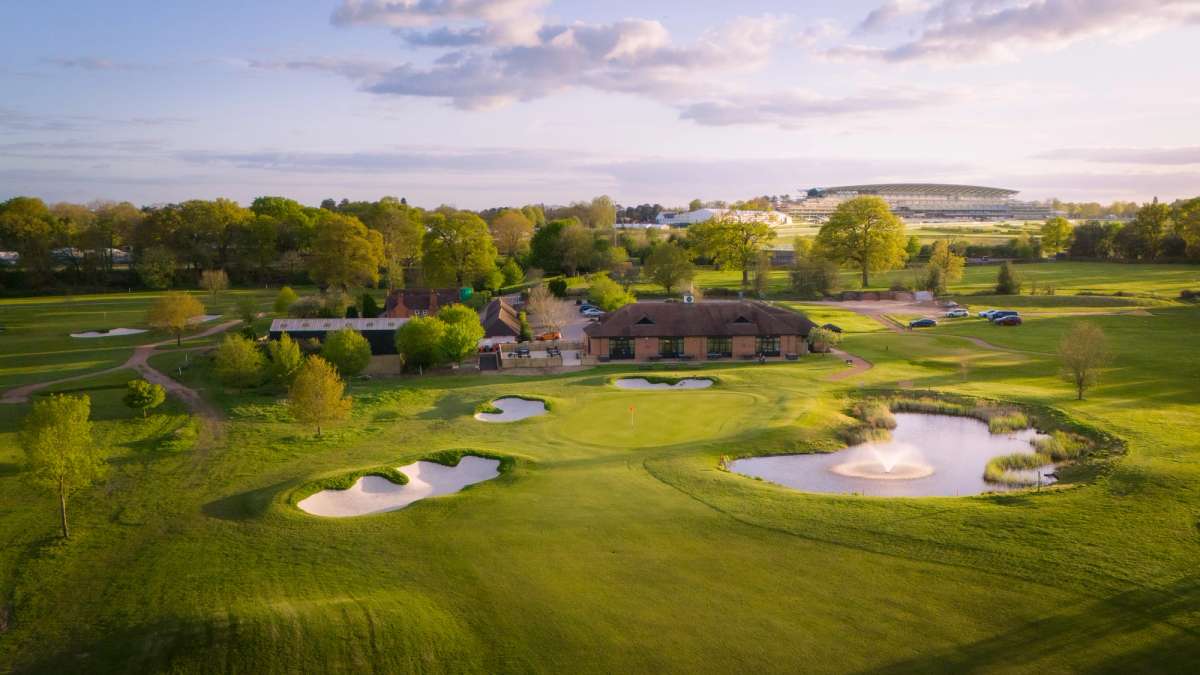
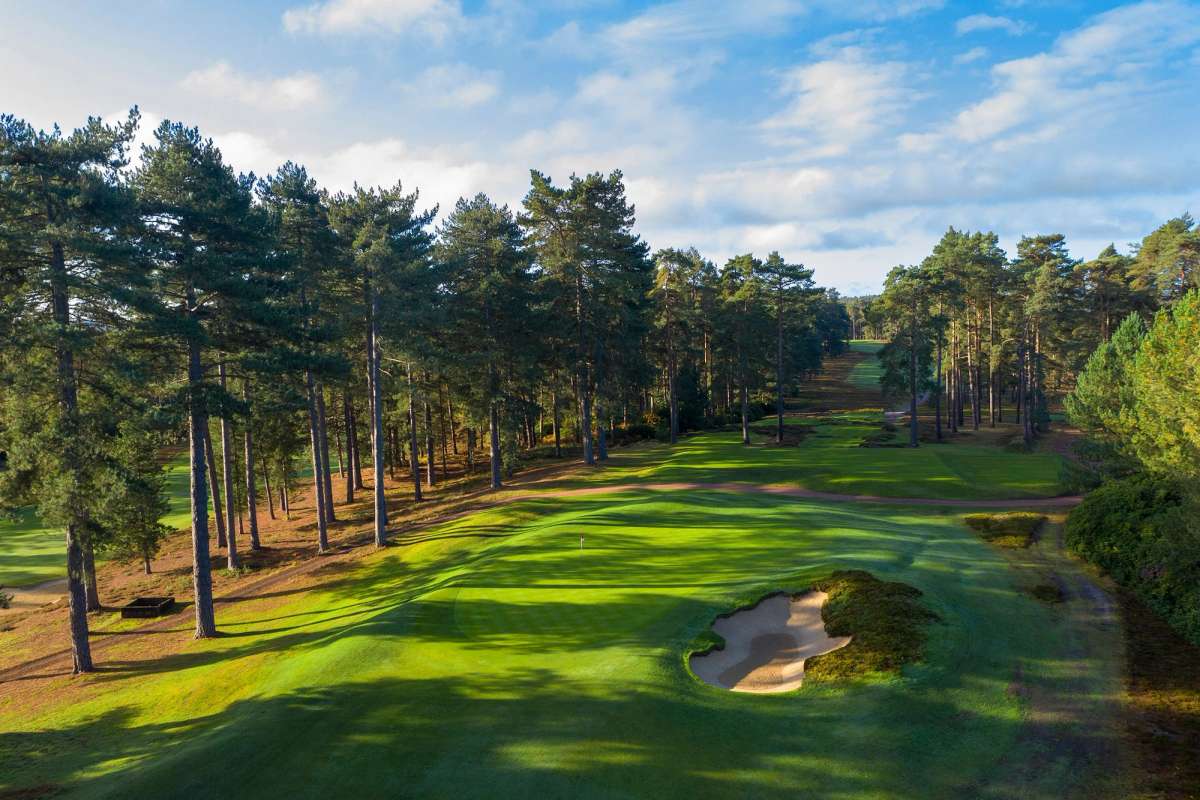
The Old course at Sunningdale is one of the British Isles’ most aesthetically pleasing inland courses. Arguably, it was the first truly great golf course to be built on the magical Surrey/Berkshire sand-belt.


The Old course at Sunningdale is one of the British Isles’ most aesthetically pleasing inland courses. Arguably, it was the first truly great golf course to be built on the magical Surrey/Berkshire sand-belt.
Sunningdale Golf Club (Old)
The Old course at Sunningdale is one of the British Isles’ most aesthetically pleasing inland courses. Arguably, it was the first truly great golf course to be built on the magical Surrey/Berkshire sand-belt. The land was (and still is) leased from the freeholder, St John’s College, Cambridge. It is a Willie Park Junior masterpiece and opened for play in 1901, becoming known as the Old after the opening of the New Course in 1923.
Lined with pine, birch and oak trees, it is a magnificent place to play golf. The emblem of the club is the oak tree, no doubt modelled on the huge specimen tree standing majestically beside the 18th green. It’s incredible to believe that originally the golf course was laid out on barren, open land. Harry Colt was a big influence at Sunningdale; he was Secretary and Captain in the club’s early years and redesigned the Old course, giving it a more intimate and enclosed feel.
The Old course at Sunningdale has seen many great rounds of golf, but these three rank amongst the very best:
1. 1926 - the perfect 66 by Bobby Jones in Open Qualifying.
2. 1986 - a remarkable 62 by Nick Faldo in the European Open.
3. 2004 - an incredible eagle, albatross start by Karen Stupples in the Women's British Open.
In 1926, during qualification for the British Open, amateur Bobby Jones played the Old Course perfectly, scoring 66, made up of all threes and fours (taking 33 putts). This type of scoring was unheard of in those days. Bernard Darwin brilliantly summed up Jones’ round as “incredible and in decent”. “Few joys in this world are unalloyed”, wrote Darwin in Golf Between Two Wars, “and though Bobby was naturally and humanly pleased with that 66 he was a trifle worried because he had 'reached the peak' rather too soon before going to St. Anne's.” Jones went on to Royal Lytham & St Annes and won the 1926 Open by two strokes, beating fellow American Al Watrous.
If you have already played the Old course, you will surely remember the elevated 10th tee, a fabulous driving hole and one of our all-time favourite holes. By the time you have putted out on the 10th, you will be ready for refreshments at the excellent halfway hut that sits welcomingly behind the green. What sheer delight! The 5th, a lovely par four, is beautifully described in The 500 World’s Greatest Golf Holes: “From an elevated tee, the fifth is clearly defined. The fairway is bordered by heather, golden grass and dark green forest. There are two fairway bunkers in the right half of the fairway; a small pond and four sentinel bunkers protect the green. Success calls for two pure shots…” The 15th is also featured in the same book; it’s a superb par three, measuring 226 yards.
Many people regard Sunningdale as the perfect golfing venue. The Old and New courses taken together are probably the finest pair of golf courses anywhere. On a sunny autumn day, walking on that perfect heathland turf, surely there is nowhere better to play golf with a few friends. “If we have not been too frequently ‘up to our necks’ in untrodden heather—nay, even if we have—we ought to have enjoyed ourselves immensely,” as Darwin said in his 1910 book, The Golf Courses of the British Isles.

A good halfway house can turn a great round of golf into a memorable one. It might be a cold beer on a Scottish links, a burger with a spectacular view or a hot drink to warm you up before the back nine. Whatever is on offer, the best halfway houses give golfers a chance to forget about the scorecard for a few minutes and enjoy the experience. We recently asked the Top100 Golf Courses community to share their favourite halfway houses, uncovering plenty of memorable stops around the world. We've picked five of their recommendations, alongside five more renowned halfway houses that are well worth knowing about. What is a Halfway House? A halfway house is a food and drink stop positioned around the turn of a golf course, usually between the ninth and 10th holes. Some are little more than a hut serving snacks and drinks, while others have become destinations in their own right, offering everything from full meals and cocktails to fires, views and plenty of local character. Five Halfway Houses Chosen by the Top100 Community Sunningdale Golf Club (England) There is a reason the halfway hut at Sunningdale has become one of the most famous refreshment stops in golf. The small Swiss-chalet-style building has been in place since 1903, sitting where the ninth holes of both the Old and New Courses meet their respective 10th holes. But the building itself isn't the main attraction. That would be the sausage sandwich. Sunningdale's legendary hut serves a simple sausage on buttered bread, with other food and refreshments available alongside it. The hut has become such an established part of the experience that the club's own tradition says everybody stops, but does so speedily. It's not fancy, and that's rather the point. After nine holes of heather-lined fairways, a hot sausage sandwich and a cup of tea can feel like exactly what golf ordered. Nairn Golf Club - The Bothy at Nairn (Scotland) The Bothy at Nairn has a history that goes well beyond golf. Built in 1877, the stone building and neighbouring icehouse formed part of the Easter Delnies Fishing Station, one of five salmon fisheries operating along the coast between Nairn and the mouth of the Findhorn. In a good season, the fishery could catch up to 5,000 salmon, with ice collected from local rivers and a specially made pond and stored in the icehouse to keep the catch fresh. The buildings have since been given a new lease of life, with the Bothy converted into a halfway house where golfers can stop for snacks and refreshments at the turn. On a cold day beside the Moray Firth, there's also a fireplace to warm up beside. The historic stone building, Highland setting and views across the course provide plenty of atmosphere. One of our community members put it rather simply: a dram of whisky and a fire are hard to beat. Hard to argue with that. Turnberry Ailsa (Scotland) Turnberry's halfway house is about as far removed from the traditional golf hut as you can get. The Ailsa's ninth hole now finishes beside the famous Turnberry Lighthouse, which doubles as a halfway house for golfers. The lighthouse itself dates back to 1873, while the golf course's dramatic ninth was redesigned as part of the Ailsa's major renovation. Inside, golfers can stop for food and drink before heading to the 10th, but the real attraction is outside. From the lighthouse, there are views across the Firth of Clyde towards the Isle of Arran and Ailsa Craig. It's a halfway stop that feels more like a destination than a quick pit stop. When your halfway house is a historic lighthouse overlooking one of Scotland's most spectacular stretches of coastline, you've got a pretty good excuse to take your time. Ardglass Golf Club (Northern Ireland) At Ardglass, the halfway-house experience is wonderfully straightforward: have a Guinness and enjoy the view. The course's old cottage halfway house at the back of the 7th green has become one of its most memorable features, with golfers able to stop for a pint before continuing their round. A recent visitor described it as a gorgeous cottage with Guinness, while another praised the combination of a Guinness, sausage roll and views over the Irish Sea. It fits Ardglass perfectly. The County Down links is already one of the most dramatic places to play golf in Northern Ireland, with the Irish Sea never far away. Add a pint of Guinness just before the turn and you've got a halfway house that feels distinctly of its surroundings. Sometimes you don't need to reinvent the wheel. Blair Atholl Golf Estate (South Africa) Blair Atholl might have been one of the less obvious names to appear among the community recommendations, but the descriptions made it impossible to leave out. The halfway stop sounds less like a quick break and more like an event. One golfer highlighted the chicken burger, a chef cooking a barbecue beneath the trees and a deck sitting beneath a stream. Another mentioned silver-service high tea. That's quite the halfway-house menu. It's also a good example of why the best stops aren't necessarily the most famous. A halfway house can become memorable because of the food, the setting or simply the feeling that you're being looked after rather than rushed back onto the course. Five More Renowned Halfway Houses St Andrews Links - The Old Course (Scotland) If we're talking about halfway houses, it makes sense to visit the place that has a claim to starting the tradition. In the 19th century, David "Old Da" Anderson sold ginger beer and other refreshments from a cart on the Old Course at St Andrews. It has been described as golf's first refreshment stand. The modern version sits behind the ninth green and keeps the tradition going, albeit with a rather more substantial menu. The pork and haggis sausage roll is a popular choice, while the club's own Tom Morris 1821 Lager provides a suitably Scottish accompaniment. It's difficult to think of a more fitting place for a halfway stop. The Old Course is steeped in golfing history, and even the break between nines has a story of its own. Pine Valley Golf Club (New Jersey, United States) Pine Valley's halfway house is memorable before you've even ordered anything. Rather than a conventional hut, it is built into the base of an old water tower, which golfers encounter around the eighth hole and again near the 12th tee. It's an appropriately unusual feature for one of the world's most unconventional golf courses. The tower doubles as a stop for drinks and snacks, giving golfers a chance to take a breather before continuing around Pine Valley. It even boasts an impressive collection of golf balls from around the world. There aren't many halfway houses that can claim to be built inside a water tower. Quivira Golf Club (Baja California Sur, Mexico) Quivira has taken the halfway-house concept and spread it across the entire round. The Jack Nicklaus-designed course has multiple all-inclusive comfort stations, each offering golfers food and drinks as they make their way around the Cabo San Lucas layout. The most spectacular is The Cliffs, perched almost 300 feet above the Pacific, where golfers can stop for a breakfast burrito and take in the views over the ocean. Then there's The Oasis, the main halfway house near the ninth green. Here, the emphasis is on the food, with freshly prepared Baja cuisine including tacos and tostadas, alongside a full tequila bar. A final stop, Cañada, sits near the 16th tee, while another comfort station beside the oceanfront practice facility offers snacks and cold drinks before golfers even reach the first tee. The food and refreshments are included in the green fee, making Quivira's comfort stations much more than somewhere to grab a quick drink. Tacos, tequila and spectacular Pacific Ocean views make the breaks almost as memorable as the golf. Whistling Rock Country Club (South Korea) At Whistling Rock, there isn't just one halfway house to look forward to. The South Korean club is made up of three nine-hole loops, each with its own themed tea house: Cocoon, Temple and Cloud. The three buildings are each distinctly different. One is a rounded structure between a lake and forest, another is a formal wood-and-glass building, while the Cloud tea house sits high among the trees. The result is a halfway-house experience that feels distinctly different depending on which nine you're playing, with each tea house adding another layer to the Whistling Rock experience. Royal Dornoch Golf Club (Scotland) Royal Dornoch's halfway house is proof that sometimes the best idea is a simple one. The stop sits behind the ninth green of the Championship Course, with views back across the links towards the Dornoch Firth. And then there's the traditional order: hot chocolate with Bailey's Irish Cream, a combination that makes considerably more sense when you're standing on a Scottish links in a North Sea wind. It's a small detail, but one that has become part of the Royal Dornoch experience and exactly the sort of halfway-house tradition golfers remember.
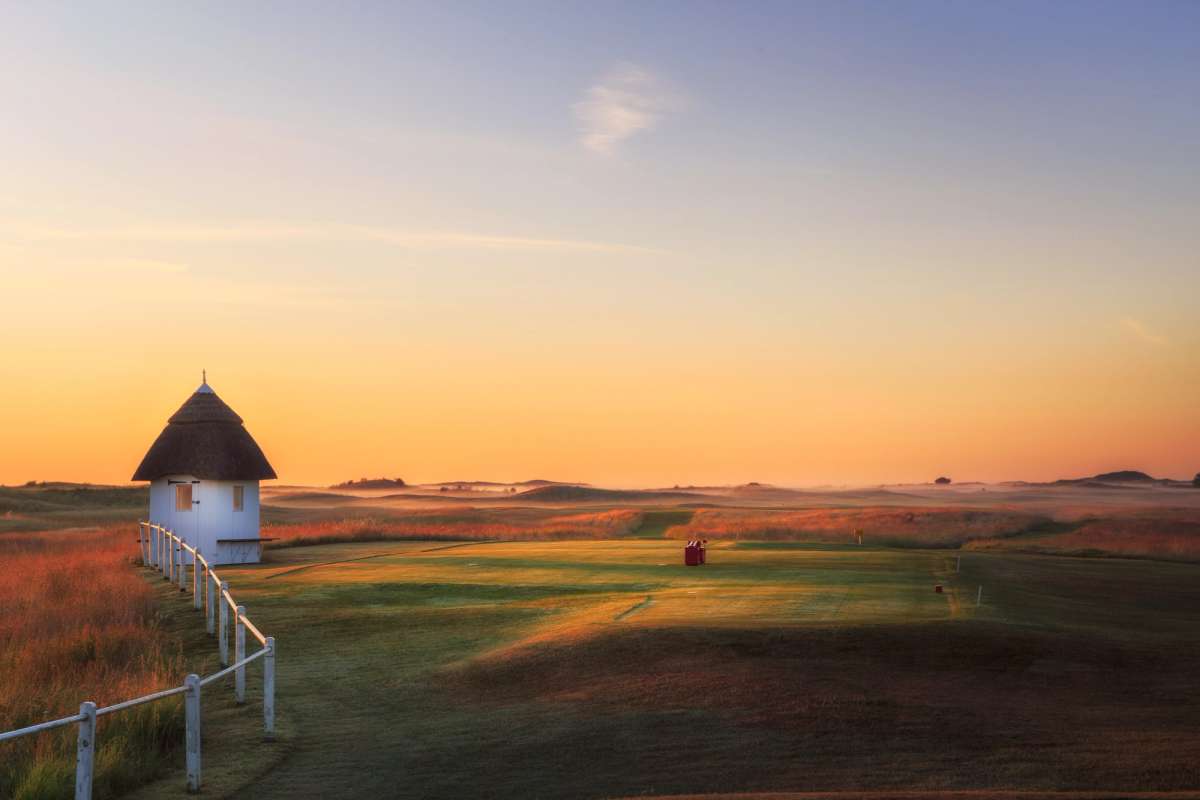
England is home to some of the best golf courses in the world, and its five highest-ranked layouts can be played without being a member. From a 15-time Open venue on the Kent coast to some of the finest heathland golf in Surrey and Berkshire, plus a spectacular links course in Cornwall, these are the five highest-ranked courses in England that welcome visiting golfers. Royal St. George’s Golf Club (Kent) World Ranking: 19th | England ranking: 1st | Green fee: £430 Royal St George’s offers the chance to play one of England’s most historic and challenging links courses. Founded in 1887, it was the first English course to host the Open and has staged the championship 15 times, including the most recent edition in 2021. Routed through towering dunes in a loose figure of eight, Royal St George’s has undulating fairways, uneven lies and plenty of elevation changes that can make even seemingly straightforward shots difficult. The fourth hole is particularly memorable, with a huge bunker carved into a towering dune guarding the fairway. Despite its reputation as a demanding championship test, the course is as enjoyable to explore as it is difficult to score on. Wildflowers and dune grasses line the fairways, while views stretch across Pegwell Bay towards the white cliffs beyond. Add in distinctive features such as the thatched shelters and St George’s flags, and there is plenty to keep you entertained between the inevitable moments of frustration. Sunningdale Golf Club - Old Course (Surrey) World Ranking: 22nd | England ranking: 2nd | Green fee: £485 The Old course at Sunningdale is widely regarded as one of the most beautiful inland courses in the British Isles. Opened in 1901 by Willie Park Jr, it was one of the first great courses to emerge from the Surrey and Berkshire sand-belt, with Harry Colt later reshaping the layout and giving it the intimate, tree-lined character it has today. Pine, birch, oak and heather frame the fairways, while the firm heathland turf makes Sunningdale a joy to walk and play. The course has hosted plenty of memorable golf, too, including Bobby Jones’ remarkable 66 in Open qualifying in 1926 and Nick Faldo’s 62 at the 1986 European Open. The 10th is a particular highlight, with its elevated tee offering a spectacular view before the halfway hut provides one of golf’s more welcome rewards. The 15th, a 226-yard par three, is another standout. For golfers visiting England, Sunningdale Old offers a classic heathland experience in one of the country's finest golfing regions. Sunningdale Golf Club - New Course (Surrey) World Ranking: 41st | England ranking: 3rd | Green fee: £485 The New course at Sunningdale provides a rather different experience to its famous older sibling. Opened in 1923 and designed by Harry Colt, it is more open and rugged than the Old, with elevated tees, heathery terrain and long carries placing a greater emphasis on driving. At 6,700 yards and par 70, the New is no pushover, with narrow fairways and plenty of undulation making it a particularly demanding test from the back tees. Even the professionals have struggled to make it look easy: Jack Nicklaus once held the course record with a 67 before Graeme Storm carded a remarkable 62 during Open qualifying in 2009. The course has also benefited from an ongoing tree-management programme, allowing more heather to return and restoring views across Chobham Common. The fifth, a picturesque par three played across the heath, is one of the highlights. The result is a course that rewards good driving without becoming a purely distance-based test, with the heathland setting providing plenty of visual interest along the way. St Enodoc Golf Club - Church Course (Cornwall) World Ranking: 49th | England ranking: 4th | Green fee: £190 St Enodoc is unlike almost any other links course in England. Overlooking the Camel Estuary in Rock, with views across to Padstow, the Church Course takes its name from the 13th-century church that sits beside the 10th green. Remarkably, the building was completely buried by sand in the 19th century before being excavated in 1863. Founded in 1891 and redesigned by James Braid in 1907, St Enodoc is defined by its towering dunes and constantly changing terrain, where no two holes feel quite the same. The sixth is the course's signature hole, demanding two blind shots over the towering 'Himalayas' dune to reach the hidden green. The 10th, played across a natural valley to a narrow fairway below, is another memorable challenge. If your ball strays towards the churchyard, you'll also find the grave of Poet Laureate John Betjeman, whose poem Seaside Golf was inspired by the course. The combination of huge dunes, unusual holes and views across the Camel Estuary makes St Enodoc a particularly distinctive addition to any English golf trip. Swinley Forest Golf Club (Berkshire) World Ranking: 52nd | England ranking: 5th Swinley Forest offers a quieter, more understated version of heathland golf on the Surrey and Berkshire sand-belt. Set among mature pines and heather, it has a wonderfully quiet atmosphere and an old-fashioned character that is increasingly difficult to find. The firm, fast-running fairways and purple heather in summer give it all the hallmarks of classic heathland golf. Designed by Harry Colt and opened in 1909, Swinley measures around 6,400 yards and plays to a par of 69. The short holes are particularly strong, with a varied collection of one-shotters that require careful club selection. Around the greens, false fronts, run-offs and subtle slopes provide plenty of opportunities for a good round to unravel. For much of its history, Swinley was an intensely private club where visitors were few and far between. It now welcomes green-fee golfers, although the club retains much of its distinctive character. The result is a course that feels removed from the modern world, with little of the glamour associated with some of its better-known neighbours. For golfers who enjoy traditional heathland golf, that simplicity is a large part of Swinley's appeal. Green fees quoted are summer 2027 rates where available.

South East England - Top 50 Golf Courses 2017 This release for England’s South East is the seventh and final update that will inform our upcoming English Top 100 rankings. The South East region is where you’ll find the nation’s largest swathe of heathland, where there is seemingly an infinite number of classic heathery courses from which to choose. There’s also a trio of Open Championship venues in this region (one current and two former), and it’s the venerable Royal St George’s that heads our inaugural South East Top 50 table. England’s South East region incorporates the counties of Berkshire, Buckinghamshire, Hampshire, Kent, Middlesex, Oxfordshire, Surrey and Sussex. It’s the most densely populated of England’s nine “official” regions where more than eight and a half million people reside. Their golfing needs are served by approximately 475 golf clubs in this region. Selecting the best 10% for our inaugural Top 50 was surprisingly easy because the vast majority are already ranked nationally in our England Top 100. Our new South East regional Top 50 features six World Top 100 ranked courses, twenty-four layouts that are currently ranked in our GB&I hundred, and forty-four that are listed in our current English Top 100. The South East is undeniably the strongest golfing region in England – whichever way you care to analyse it. Underpinning Royal St George’s (#1), the Old course at Sunningdale Golf Club (#2) and its younger sibling the New (#3) are the two premier heathland courses in the country. Many well-travelled golfers believe that Sunningdale is the best 36-hole golf club in the world. Richard Smith, one of our respected reviewers, played here in July: “A day at Sunningdale is a treat to treasure. This is great golf in a beautiful setting on courses oozing with history. This was one of the great golfing days in my life to play the Old and New together.” Swinley Forest (#4) is Harry Colt’s “least bad course” and it’s enjoying a renaissance following the addition of new back tees, which now stretch the layout to around 6,400 yards from the tips. Richard Smith commented as follows: “My first impression after finishing was that this was the hardest 6,400- yard course I had ever played… Swinley is a course that absolutely demands precision and the ability to work the ball in all directions. Every shot needs to be thought and played with a purpose. I think the thing that elevates Swinley to the highest level is a combination of the strategic options available on each shot and the testing greens and approaches.” St George’s Hill (#5) is another outstanding Harry Colt layout which is still vastly underrated by some publications. It has featured in our World Top 100 for a number of years now and its place in that esteemed list is really well deserved. Walton Heath’s Old course (#6) does tend to divide opinion somewhat and its detractors tend to complain about the holes around the turn – which had to be altered to accommodate London’s M25 orbital motorway – but the Old is perhaps the most authentic heathland layout in the South East, where the tangly heather is at its most tenacious. West Sussex (#7) at Pulborough is one of my personal heathland favourites and Bernard Darwin described it as “a little sandy jewel set in the Sussex clay”. It’s considered to be too short by modern standards and maybe it’s one par five away from magnificence, however, along with Rye, it’s one of the toughest par 68s I’ve ever played and holding a score together on the back nine is easier said than done. Talking of brutal homeward nines, few come much tougher than the backside at Royal Cinque Ports (#8) in Deal. Despite its Open pedigree, the rumpled and crumpled links at Sandwich overshadows Deal, but the greensites at Royal Cinque Ports are every bit as good as its more illustrious regal near neighbour. The West course at Wentworth (#9) has been through some tough times in the last decade or so. We did wonder whether lost love would ever return to Virginia Water’s West course – The rise and fall of the troubled Burma Road. We teed it up on the West a couple of weeks ago and the improvements are stark. There is no doubt that the recent multi-million pound revamp, which included creeping bent re-seeding and installation of sub-air greens, has made a marked difference. Retuning the course back to the old Harry Colt design has not only pleased us, but also many of the Tour players – and the work is not yet finished. Further improvements will be undertaken over this coming winter in readiness for next spring’s BMW PGA Championship. Shhh naysayers. Nobody could possibly accuse the Berkshire’s Red course (#10) of being dull. Its exciting 6-6-6 routing keeps you on your toes and there’s only one consecutive pair of holes with the same par values at the back-to-back short par fours (11 and 12) and both these holes are set magnificently on the higher ground. The Old course at Rye (#11) was Harry Colt’s inaugural design where the routing has been altered and improved down the years by several architects, including Tom Simpson and Sir Guy Campbell. Many wonder why Rye is not a permanent feature in the World Top 100, others think – rather like West Sussex – that it’s missing a strong enough mix of holes. Queenwood (#12) is the course that David McLay Kidd built for the club’s small but perfectly formed membership and their very fortunate friends. With probably the best tee to green grooming in England, Queenwood is where many top players hone their game. In the words of Fergal O’Leary: “Expect to feel like a king off the course, and then be challenged like a PGA Tour professional the minute you step on the first tee.” According to Tom Doak, Hankley Common (#13) “provokes mixed emotions; if the strategy ever matched the setting, you could have a world beater.” Undeniably a most enjoyable element of the course is the majesty of the situation, which is quiet and genteel in the classical English mould. Woking (#14) for some is already a world beater and it was here where a few golf mad barristers, with the help of Tom Dunn, created the first experimental heathland layout in 1893. Worplesdon (#15) is perhaps the prettiest of Surrey’s trinity of “Ws” and it was John Abercromby’s inaugural design that dates back to 1908 with the greens and bunkers constructed by Willie Park Junior. Little has changed here after more than 100 years. The East course at Wentworth (#16) was the first course Harry Colt built at Virginia Water. It has remained largely untouched since it was laid out two years before the second unofficial matches between American and British professionals were staged here in 1926, one year prior to the inauguration of the Ryder Cup. Hindhead (#17) has come on in leaps and bounds in the last decade and it’s now one of the premier courses in Surrey thanks to a plethora of subtle modifications and a step change in greenkeeping standards. It’s one of the most memorable courses in the county. West Hill (#18) is the third member of the trio of W’s and it too has improved markedly in the last few years. A massive tree-clearing programme has now completed, creating more width and enabling an already heathery layout to flourish. The Addington (#19) has been underrated for a while now, largely due to tree encroachment which is gradually being addressed. However, there’s no denying the course’s dramatic, tumbling topography that takes golfers on a wild and exciting ride under the watchful gaze of the London city skyline. The Blue course at The Berkshire (#20) is the Red’s understudy. Ed Battye, the founder of Golf Empire, reckons that “the run of holes from the 11th onwards are really what define the Blue… They are all energetic holes and there is more going on over this closing stretch than what has gone before it.” Our first South East Top 50 features courses in the 21-50 range that we’d happily play every week. The undeniable quality and quantity of golf on offer in this region is second to none in the British Isles. It doesn’t make sense to mention every layout here, but we feature each one prominently within our Top 100 web pages. However, we’ll mention a few South East courses that have pleasantly surprised us recently. These have flown under the radar and we think they are worthy of highlighting. Knole Park (#42) has yet to appear within our English Top 100, but that will change very soon. This 1924 John Abercromby design is laid out within an enormous 1,000-acre estate and it’s a thrilling layout which plays firm and fast over an old deer park where fallow deer still roam freely today. We should perhaps pay closer attention to the writings of Bernard Darwin who, in 1925, wrote the following passage in The Golf Courses of Great Britain: [Knole Park] “is still very new, but I think, when it is a little older, few, if any, park courses will be better. Certainly none will be prettier. There are the loveliest holes down winding forest glades, full of romantic possibilities…” Royal Wimbledon (#43) is another club that has perennially missed out on a national ranking position, although in 2008 it did make a brief appearance in our English Top 100. The club really couldn’t care less whether or not their course is ranked, such is their indifference to ratings, however, anyone can play here by following simple protocol. Those that have teed it up at this Harry Colt-touched heathland cum parkland track delight at Colt’s signature par threes. Piltdown (#47) is yet another club in this region that is investing heavily in its primary asset, the golf course. We were very impressed when we played here on two separate occasions recently. Just like its neighbour on the other side of Ashdown Forest, Piltdown is bunkerless, and the absence of sand traps somehow play trickery with distances. It’s a charming course that doesn’t have strong architectural provenance but it’s a solid layout nonetheless. Brokenhurst Manor (#49) is set in the heart of the New Forest and it’s another unsung Harry Colt design which is unusually configured in three returning 6-hole loops. As is often the case with Colt layouts, the stars of the show are the one-shotters which look longer than they actually play, but there are plenty of other solid holes throughout the card. There’s undeniably a heathland look and feel to the entire layout but with a distinct lack of heather which the club is trying to introduce in places. Despite a tree-clearing programme, there’s an opportunity to open the site up further. Farnham (#50) has languished for too long in the lower reaches of our Surrey Best In County rankings. A recent visit to the club proved how important it is to regularly re-play courses. Located in a charming village called The Sands, Farnham is half parkland and half heathland. The course starts and ends on the flatter, parkland ground, and the holes in between are routed across the heathery ground where the land movement is more stirring. Some of these sandy holes would grace any Top 100 heathland course. We played the new and ultra-exclusive David McLay Kidd and Tom Watson co-design at Beaverbrook Golf Club earlier this year and felt it has great potential, but we decided not to list it in our Surrey Best In County rankings this time, largely due to insufficient votes. Finally for those eagle-eyed observers, we’ve extended our Kent Best In County rankings from a Top 25 to a Top 30. We decided there were a number of solid courses in this golf rich county deserving credit. South East England - Top 50 Golf Courses 2017 Rank/ Click the following links to see in detail our latest Best In County rankings for the eight South East England counties: Berkshire Top 15 Golf Courses 2017 Buckinghamshire Top 10 Golf Courses 2017 Hampshire Top 20 Golf Courses 2017 Kent Top 30 Golf Courses 2017 Middlesex Top 10 Golf Courses 2017 Oxfordshire Top 10 Golf Courses 2017 Surrey Top 40 Golf Courses 2017 Sussex Top 20 Golf Courses 2017 Keith Baxter Top 100 Golf Courses
The latest ranking of the Top 100 Golf Courses in the World serves as the ultimate global golf bucket list. Most members of our World Top 100 Panel are seasoned golfers, each playing 20-30 of these courses annually while travelling extensively over decades to form their opinions on others. We recognise that opinions vary—even among our panel members. Rankings are subjective, and there are undoubtedly 50 or more courses in the UK and USA alone that could easily fit onto this list. Links Golf Pilgrimages The rankings
New York, United States
Auckland, New Zealand
England, United Kingdom
New York, United States
Illinois, United States