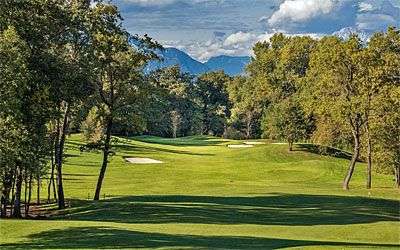
Italy – Golf and More…
We travel to the Friuli Venezia Giulia region of Italy to see what it can offer visiting golfers
It’s six years until the 2022 Ryder Cup takes place, but awarding this prestigious golfing event to Rome’s Marco Simone Golf Club has triggered a flurry of promotional activity within Italy. In a concerted effort to show the world exactly what the country can offer visiting golfers, Italy Golf & More, was launched earlier this year and this enterprising project is a collaboration between eleven private sector partner regions, the Italian Golf Federation and the Ministry of Tourism, all of whom joined forces to publicise the nation as a forward-looking golf destination.
Using the recent Italian Senior Open in Udine as the focal point for its latest promotion, the consortium commissioned The Azalea Group, the respected UK golf public relations and marketing company with an enviable list of international clients, to lead a small press pack of journalists on a tour of the autonomous Friuli Venezia Giulia region. Over the course of five days, the group was given the chance to spend some time in a couple of historic towns, sample a little of the excellent local cuisine, and squeeze in a few games of golf at a few of the best 18-hole courses in the district.
Located in the northeast corner of Italy, where it borders Austria to the north and Slovenia to the east, Friuli Venezia Giulia occupies a diverse landscape of just under 8,000 square kilometres, stretching from the peaks of the Carnic and Julian Alps, through the foothills and plains of Friuli and the Karst, to the lagoons of Marano and Grado on the shoreline of the Adriatic Sea. It’s a district that can trace the origins of the Roman ruins at Aquileia back to 181 BC and it has seen Austrian, Slavic and Italian influences all vie for dominance at various times during the two millennia since then.
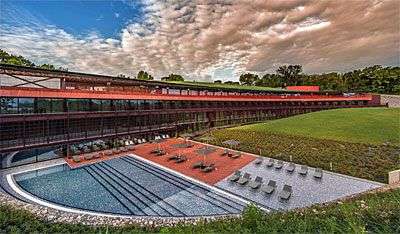
The guarantee of a €7 million prize pot for the Italian Open for eleven years was a major financial inducement that helped win the Ryder Cup bid and another golfing commitment promised was the reintroduction of the Italian Senior Open to the European Senior Tour calendar. With businessman Gabriele Lualdi having invested heavily in the infrastructure at Golf Club Udine – including the construction of the Villaverde Hotel, spa and state-of-the-art medical centre next to the clubhouse – it seems only right to have the Senior Open revitalised here this year, rewarding a progressive club which has invested heavily in the future of golf in Italy.
Originally laid out as a 9-hole design by John Harris and Marco Croze in 1972, the Udine course was later extended to a full 18-hole track by the same Italian architect. Following Mr Lualdi’s acquisition in 2013, the layout is undergoing a gradual renovation process, with holes upgraded in a rolling program by another designer, Fulvio Bani. Unfortunately, heavy rain led to the cancellation of the eagerly anticipated Senior Open pro-am, regrettably leading to a curtailment of journalistic participation in the event. Play in the tournament itself did get under way the following morning as scheduled, allowing the three-day event to proceed as planned, with Welshman Stephen Dodd eventually holding off a strong challenge from compatriot Phillip Price to win his first Senior title by one-shot in only his seventh Senior tournament.
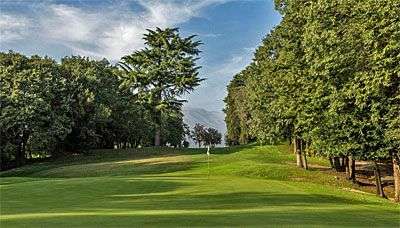
Sixty-three kilometres west of Golf Club Udine, Castel d’Aviano Golf Club lies between the charming little town of Pordenone and the Piancavallo ski centre. Set within a 55-hectare property inside the 16th-century Villa Policreti estate, the tree-lined fairways are laid out in two distinct 9-hole circuits, with holes 3 to 11 sitting in a separate, self-contained parcel of land. Water hazards come into play at three holes on the back nine, most notably at the 331-metre 17th, where a pond protects the front left side of the green.
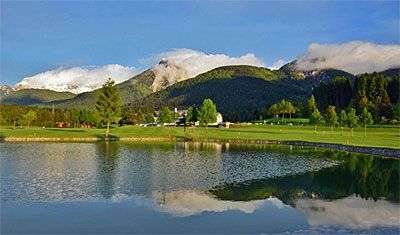
An hour’s drive northeast of Udine, via the A23 Alpe Adria highway, Golf Senza Confini Tarvisio is situated in the very top right hand extremity of the country as you look at a map of Italy. Originally designed by Giacomo Cabrini in 1992 then expanded a decade later by Graham Cooke, the course lies on the Priesnig plateau, some 750 metres above sea level, with the Austrian and Slovenian borders located less than 15 kilometers away. Mount Mangart looms in the background and Tarvisio Forest surrounds the course in what is simply a sensational location for playing golf.
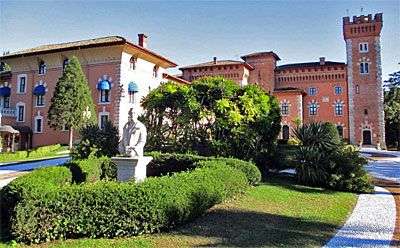
Although there wasn’t enough time in a packed itinerary to see either the d’Aviano or Tarvisio courses, an outing to Castello di Spessa more than made up for this. The 13th-century castle lies in the heart of the Collio Goriziano, one of the most prolific wine-producing regions in Italy, and this magnificent building has now been converted into a 15-bedroomed hotel. Ageing cellars beneath the castle house wine barrels on one level and bottles of red wine in a second, lower level which was once a military bunker built by the Italian army in 1939 and only rediscovered during restoration work. Its constant 14°C temperature is ideal for ageing both the Cru del Castello red wines and Grappa Riserva Conte Ludovico.
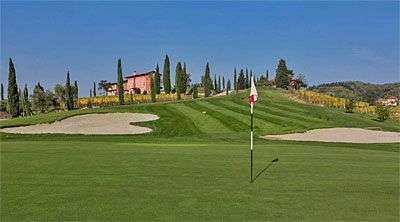
Giacomo Cabrini designed the Castello di Spessa Golf & Country Club course that lies to the south west of the castle and the fairways are set out in an easy-walking, parkland setting. By far the most interesting sequence of holes during the round is played between the 4th and the 8th, which weave their way through vineyards that are sited on hillier ground. The 132-metre 5th, requiring a tee shot from an elevated position over rows of vines to a raised green on the other side of the vineyard, is easily the best hole on the card and one of the most unique par threes that you could ever imagine playing anywhere.
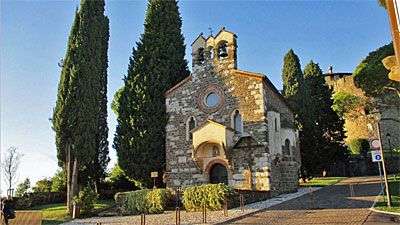
After a sumptuous lunch in the Tavernetta al Castello, a gourmet restaurant and 10-bedroom hostelry converted from old farmers’ cottages, it was on to have a look around the border town of Gorizia. It’s here that Charles X of France died in 1836, when it was part of the Kingdom of Illyria, a crown land in the Austrian Empire. Gorizia Castle overlooks the old town, with Nova Gorica located on the other side of the border with Slovenia. This conurbation is sheltered by a mountain ridge to the north, protecting it from the cold Bora wind that affects other places in the locality, allowing residents to enjoy a year-round Mediterranean climate.
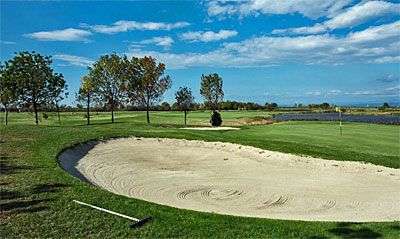
Returning to Udine, the final night’s stay in the city was marked with dinner at Trattoria Ai Frati, a family-run restaurant serving regional specialties such as frico and polenta and tagliatelle with rabbit ragout and porcini mushrooms. Next morning, the exploration of the Friuli Venezia Giulia hinterland over, it was time to leave base camp at the comfortable Hotel Astoria in Udine and head for the coast, where Austro-Hungarian Emperors are reputed to have spent their summers in the spa town of Grado. The course is operated by the Tenura Primero resort and it was recently ranked in a golf magazine’s inaugural Top 100 Resorts in Continental Europe chart. Fairways are set out along the lagoon so there’s water in play at most of the holes, none more so than at the par five 11th, which plays to an island green. If you can finish a round here with the same ball you started with then you’re some player!
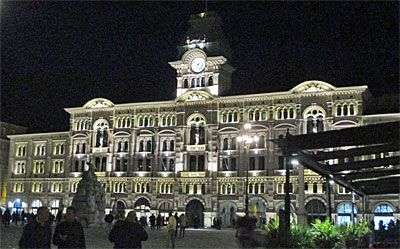
After completing eighteen holes, another magnificent lunch ensued in nearby Ristorante Tarabusino before the group set off on the one-hour road journey to Trieste. In truth, after checking into the Gran Hotel Duchi D’Aosta there wasn’t really enough time before darkness fell to properly explore this wonderful city of around a quarter of a million inhabitants, apart from having a quick look around the narrow streets of the old city and taking a short walk around the Piazza Unita d’Italia. Sadly, the “Nice of the Adriatic” remains largely undiscovered by the group of journalists – though dinner at Roberto Marussi’s 50-year-old family Ristorante Al Bagatto will long be remembered – so a return visit may have to be taken some day to see more of the sights, perhaps as a disembarking passenger on a day trip from one of the large cruise liners that dock right in the heart of the city?
Golf Club Trieste is the oldest golf club in the region, formed by members of the Allied forces that were based in the area after the end of World War II. The layout opened for play in 1955 and it extends today to 5,810 metres, playing to a par of 70. Laid out above the city at an altitude of 350 metres above sea level, the course affords golfers majestic views across the Gulf of Trieste to the Grado and Lignano lagoons. Feature holes include long par fours at the left doglegged 8th and the 17th, which is hampered by out of bounds down the left side. It’s a pity there was no opportunity to play the course on this occasion but that’s another good excuse for arranging a future trip to Trieste!
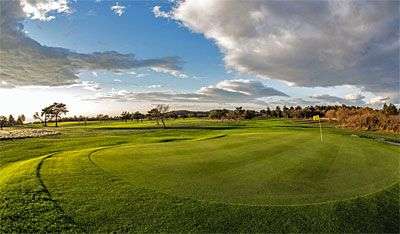
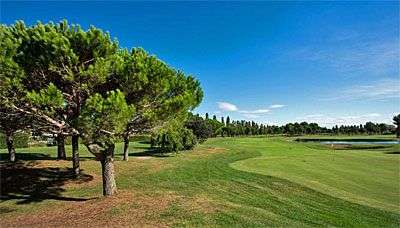
The tour ended at Lignano Golf Club, situated between the Tagliamento River estuary and the Marano lagoon, where the Italian Ladies’ Open in 1993 and 1994 was hosted. The fairways of this course are routed around a gently undulating landscape close to the sandy beaches of the Adriatic shoreline. Four holes on the front nine (at 4 & 6 to 8) and three on the back nine (at 12 to 14) flirt with water hazards and there are a couple of large, sandy waste areas to negotiate at the 9th and the 15th. The best hole is also the most difficult: the 402-metre 13th, rated stroke index 1, requires a solid tee shot across an intimidating wetland area to reach the fairway before heading for the green.
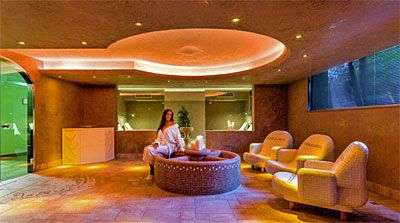
The 24-bedroomed Hotel Golf Inn Lignano is attached to the clubhouse at the golf club, presenting golfers with a range of tempting stay and play options, based on their choice of accommodation. Guests can also relax in the well-appointed, modern wellness facility, making use of the sauna, steam room, Turkish baths and tepidarium. With such a top-class leisure facility on the doorstep of the golf club, there’s really no good excuse for not indulging in a little golf-related pampering after a round at Lignano.
Before returning to Venice for the flight back to the UK, the press trip was rounded off with a final lunch in the countryside near Gorgo di Latisana at the lovely little unassuming Ristorante Da Boschet, which specialises in seafood dishes. It was a wonderful way to round off a truly memorable excursion, eating local wild-caught fish and drinking some of the best wines produced in the area. In many ways, the last day encapsulated everything the Friuli Venezia Giulia region is capable of offering golfers – good golf and wellbeing for body and soul, the discovery of countryside secrets and cuisine of the highest order. This particular part of Italy might not be high on your list of potential golfing destinations – but it should be.
Jim McCann
Editor
Top 100 Golf Courses
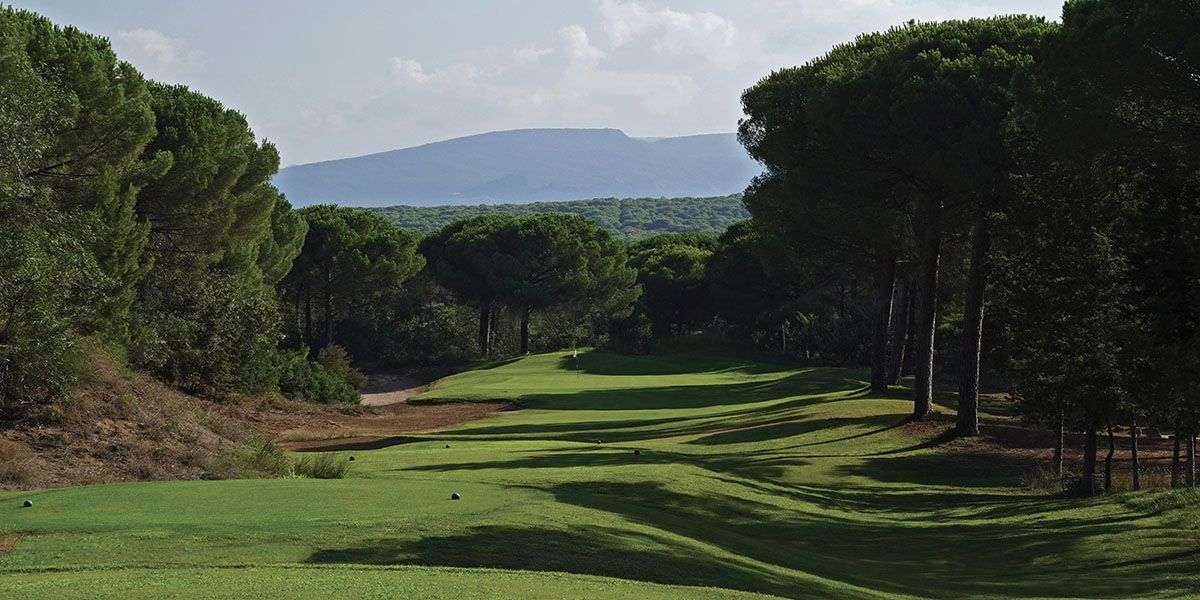
We produced an Italian resort article last summer which focused on several golf facilities spread across the mainland of Italy. We’re now revisiting this country, starting in the north then working our way south but this time we’re including the Mediterranean islands of Sicily and Sardinia, where we shine a light on half a dozen resorts that are worthy of closer scrutiny. Of all the “mainstream” golfing nations in Europe, Italy’s the one that hides its light under a bushel the most. Perhaps in this year of the Ryder Cup in Rome it’s time we knew a little more about it. Le Le Robinie Our latest Italian resort journey starts outside Milan near Malpensa airport, at Le Robinie Golf Club, where Jack Nicklaus designed his first Italian course in the early 1990s. The terrain’s pretty flat around here so a fair amount of soil was shifted to fashion the fairways, with the closing holes on both nines routed around a couple of lakes located close to the clubhouse. There’s also a fair number of bunkers dotted around this parkland layout so, with water and sand much in evidence, it’s resort golf all the way during a round at this modern facility. The accommodation extends to a number of guest rooms within the clubhouse, all with air conditioning and private bathroom with hot tub or shower. An additional seventy apartments – comprising studio, 2-room or 3-room apartments – are also available, each with a private patio, terrace or balcony. The leisure complex includes a swimming pool and a well-equipped gymnasium and the Restaurant Le Robinie (consisting of three dining rooms spread across three levels) serves dishes from a Mediterranean-themed menu. Poggio dei Medici Three hundred kilometres southeast of Milan, outside Florence, lies Poggio dei Medici Golf Club which opened for play thirty years ago. Anchored by a 16th-century hunting lodge, the Villa di Cignano, which acts as the clubhouse, the course is set amongst rolling hills with open parkland holes weaving across a picture postcard landscape. Starting in 1999, five consecutive editions of the Ladies Italian Open were staged here, with the five winners emerging from five different countries for these events. The Unahotels accommodation offers 70 guest rooms equipped with things like a mini fridge, flat-screen TV, bathrobes and dressing gowns. A cold buffet breakfast is served here every morning and the bar serves a wide variety of drinks throughout the day. There’s an outdoor swimming pool, jacuzzi and sauna and the spa centre also provides fitness classes. Guests who want more than just golf can expend more energy with mountain biking, horse riding and tennis. Terme di Saturnia A leisurely 3-hour drive south from Florence through beautiful Tuscan terrain brings us to the golf course in the old spa town of Terme di Saturnia, where the climate and the hot sulphurous springs are intended to aid recuperation and restoration of body, mind and spirit. Ron Fream set out the course here 16 years ago and it was built with the prime consideration of respecting and safeguarding local nature in order to gain Italian Golf Federation ecological certification. There are 124 guest rooms (39 of which are suites) at the resort and they vary in size from 18-25 square metre for a superior room to 75 square metres for a grand suite. The world-class spa has a thermal lake in the centre of the complex and there are 5 outdoor thermal pools, along with whirlpools, a sauna, sensory showers and a whole range of massages, body treatments, wellness and beauty programs – thermal therapies are even available for locals who are entitled to one cycle per year paid by the Italian NHS! Il Picciolo Etna We leave the Italian mainland now and head to the Mediterranean island of Sicily, where the 18-hole layout at Il Picciolo Etna Golf Resort & Spa has operated since the late 1980s. Host venue for the Ladies Italian Open from 1995 to 1997 (and again in 2011), the course occupies hilly ground to the north of Mount Etna, where holes are set out as two returning nines. Measuring almost 5,900 metres from the back markers, the course is a Luigi Rota Caremoli design which plays to a par of 72, with the very short par three 15th one of the feature holes on the scorecard. Accommodation amounts to 98 air-conditioned guest rooms within the hotel (21 deluxe, 22 cottage, 46 classic and 9 suites) along with 6 clubhouse rooms. Breakfast and dinner are served in La Ghiandaia restaurant, with lunch available in the Il Palmento clubhouse restaurant. The Birdie Bar is open in the evening and the Pool Bar is also available for refreshments from mid-morning to early evening during the summer. The Spa centre offers a number of services – from heated swimming pool to sensory showers – and there’s a range of body treatments and massages which can be arranged by appointment. Borgo di Luce I Monasteri On the south side of Mount Etna, positioned between the UNESCO World Heritage sites of Syracuse and Noto, the Borgo di Luce I Monasteri Golf Resort features an 18-hole (par 71) layout designed by architects David and Vincenzo Mezzacane. Holes are set out among groves of citrus trees and prickly pear cactus, with water hazards to be negotiated on several holes, most noticeably at the par three 9th and par four 18th where a pond separates the greens. The 5-star on-site hotel is a former Benedictine monastery comprising 102 exquisitely furnished guest rooms and suites located on the ground floor in various parts of the hotel’s three main buildings. The pool bar provides light lunches, while Le Ceramiche restaurant serves à la carte dinners based on Mediterranean cuisine. The Zagara spa offering guests the use of a Turkish bath, sensory shower, sauna, hot tub, relaxation area and a range of treatments. Verdura Occupying a wonderful 2-kilometre stretch of coastline on the west side of Sicily, the Verdura Resort’s 45-hole golf facility was designed by Kyle Phillips, opening for play just over a decade ago now. The two championship 18-hole layouts – East and West – are the main attraction, supported by a 9-hole par three course, driving range and practice area. Unfortunately, severe storms in late 2018 caused an embankment to breach, resulting in extensive flooding across both the original layouts. Not to worry, the architect was quickly called in to rearrange the routing and introduce several remodelled holes and before you know it, business was back to normal once again! The 5-star hotel is a member of the famous Rocco Forte Hotels Group, offering 156 guest rooms, 35 suites and 20 villas. Apart from golf, on-site activities include a Water Sports Club, Tennis Club, football pitch and an enormous 60-metre outdoor pool. For relaxation, there’s a luxurious spa set amid the olive, orange and lemon trees, with four thalassotherapy pools, a 20-metre lap pool, steam bath, sauna and 11 treatment rooms. The hotel’s organic farm is handpicked daily, with produce used in the preparation of gourmet meals for the six restaurants and bars. Is Molas Three hundred kilometres from the north coast of Sicily lies the south coast of Sardinia and the 27-hole golf complex at the Is Molas resort,near the small town of Pula. The original Championship 18-hole course was designed by the British partnership of Ken Cotton, Charles Lawrie and Frank Pennink in the mid-1970s, and there are views from the fairways to the nearby tower of Nora on the coastal ruins of an ancient Roman city. Fairways are routed over moderately undulating terrain, with water hazards coming into play between the 9th and 14th holes. The on-site 4-star hotel contains 70 air-conditioned guest rooms in four categories (classic, comfort, family and superior) and there are 2-room apartments in the nearby Residence Le Ginestre residential development. The restaurant seats up to 160 people in the garden of the hotel, facing on to the swimming pool. The covered terrace of the hotel pool bar (La Pergola) serves drinks, snacks and light meals prepared with typical Sardinian products while La 19, the “Golf Pool Club” is the ideal chill out place to relax after a round. Is Arenas Drive 2 hours northwest from Is Molas and you’ll arrive at the Is Arenas resort on the west coast of Sardinia, where Robert von Hagge carved out the resort’s 18-hole layout from dense woodland twenty years ago. Juniper and pine trees frame every hole here as the course winds its way across a mildly contoured, sandy-soiled landscape. The flamboyant American architect had this to say when asked what it took to produce such a fine golfing layout: “all the natural elements that it offers – sand dunes, forest, water and an exceptional climate – are a perfect combination for a unique experience (providing) an unlimited carpet of colours, fragrances and vital energies.” Accommodation at the Is Arenas Private Golf Foresterie boutique hotel is for golfers only – with a maximum occupancy of 40 players – and it comprises a number of air-conditioned villas, houses and suites nestled in the trees next to the golf course. Located one and a half kilometres away towards the beach, the 5-star Is Arenas Resort provides 70 guest rooms (varying from 30 square metre Classic rooms to 43 square metre Junior Suites) along with a wellness centre that incorporates a whirlpool, Turkish bath, fitness room and a variety of treatments. The beach is a 5-minute walk away, extending to six kilometres along the coastline. Pevero Another 2½-hour drive northeast from Is Arenas brings us to the smart Costa Smeralda district in the northeast corner of Sardinia and Pevero Golf Club. Fifty years ago, Robert Trent Jones Senior and Ron Kirby were engaged by none other than the Aga Khan to set out eighteen holes on the peninsula between the bays of Cala di Volpe and Volpero and six years after it first opened for play, the 35th edition of the Italian Open was staged here in 1978, with South African Dale Hayes winning the event by three shots from his nearest rivals. Overlooking the Mediterranean Sea, it’s a spectacular place to play but when the infamous Mistral wind blows then controlling a golf ball round this course is a tough task for even the professional players – as evidenced by the Dale Hayes aggregate total of five over par when he claimed the national Open 45 years ago. The golf club has close associations with four local hotels. The first, and nearest, is Hotel Cala Di Volpe, with 121 guest rooms and a large, lagoon-like saltwater pool. Close by, Hotel Romazzino has 100 guest rooms, including a Presidential Suite on the top floor. To the north of the golf course, the Cervo Hotel in the adjacent resort of Porto Servo has 80 guestrooms, ranging from 16 square metre classic rooms to a 142 square metre Presidential Suite. On the other side of this small seaside town sits the Hotel Pitrizza, with 66 suites and villas that look out onto the shimmering waters of Liscia di Vacca bay. If you have any comment to make on the above article then please use the “WRITE A RESPONSE” link at the bottom of this page. Jim McCann Editor Top 100 Golf Courses
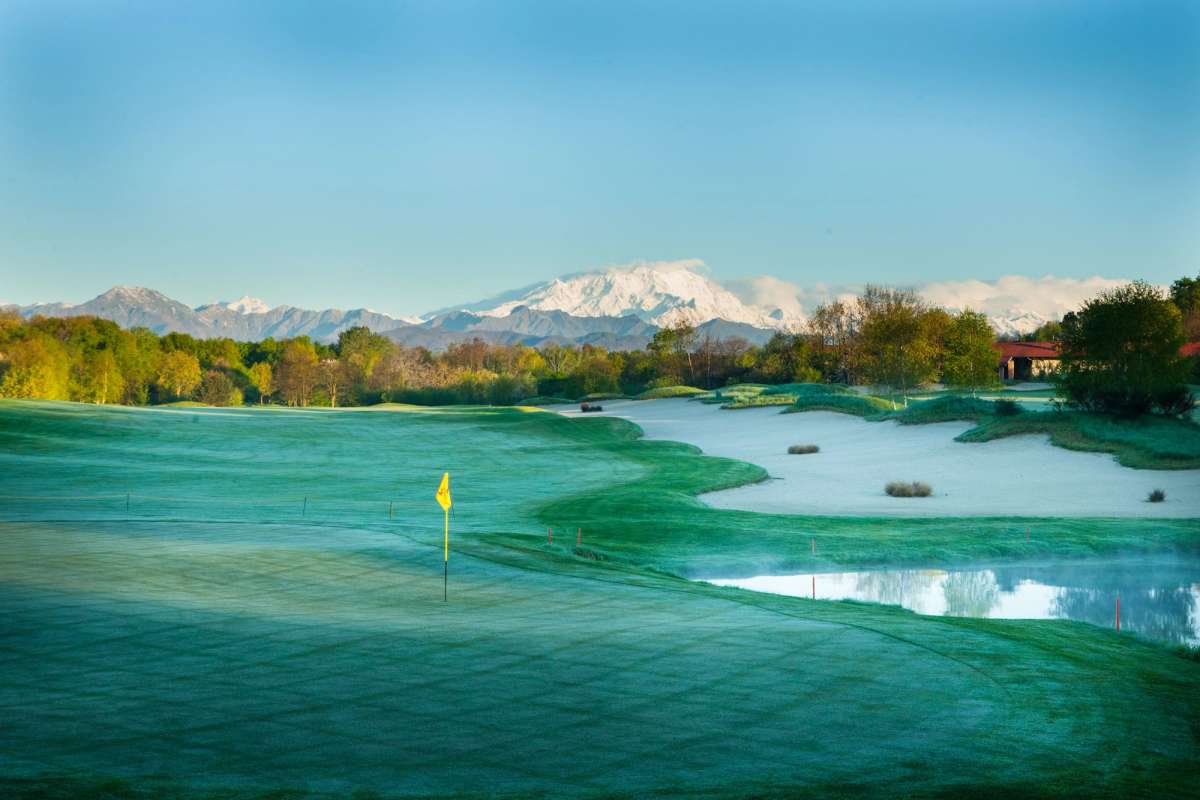
Italian golf resort options We’ve been to France, Portugal and Spain during our latest series on golf resorts around Europe and we now switch our attention a little further east to Italy. There are approximately 92,000 registered golfers playing on around 240 courses across the country and there’s plenty of scope for visiting golfers being able to tee it up at one of the nation’s many non-private golf facilities. Bogogno We begin in Piedmont, in the northwest of Italy, at the 36-hole Bogogno Golf Resort. The 50-bedroomed hotel has operated since 2014 and its leisure amenities include a spa, swimming pools, small football pitch, tennis and floodlit padel courts. The restaurant and bistro next to the clubhouse offers Mediterranean-inspired cuisine, with a wine list selected from famous Italian and international wineries. Located just over an hour’s drive to the northwest of Milan, the resort lies in the foothills of the Monte Rosa massif mountain range with two late 1990s Robert von Hagge-designed 18-holes in play, named Bonora and Conte. The facility actually opened with only one course initially but it proved so popular the architect was asked to return to split this layout in two then add another nine holes to each half of the original. Castelconturbia Just a few kilometres away from Bogogno lies Golf Club Castelconturbia, with 27 holes in play. The on-site boutique hotel boasts 19 elegantly furnished guest rooms, all with air conditioning, satellite TV and views of the internal garden. The adjoining restaurant has a large, covered terrace and splendid views of the finishing holes on all three nines. Here you can sample the specialties of regional and international cuisine, accompanied by special labels from the wine cellar. Golf was played here until the early 1960s but the course then fell into disrepair and the club was abandoned. Twenty years later, Robert Trent Jones Senior revived the original 9-holer and added another couple of nines to form the layout that’s in operation today. Golfers who’d like to play the 18-hole course that staged the Italian Open twice during the 1990s should tackle the Blue and Yellow nines. Arzaga A 2-hour drive east from Castelconturbia will take you via Milan, Bergamo and Brescia to Lake Garda, with the 27-hole Arzaga Golf resort located close to the crystal-clear waters of the lake. The on-site Palazzo Arzaga Hotel and Spa are currently closed for renovation but there’s alternative accommodation meantime in the nearby Borgo di Drugolo, consisting of a dozen apartments that can each house between 2 and 8 guests or there’s Villa Montecroce, comprising four 2-8 person apartments with a large garden and outdoor swimming pool. The original 18-hole course opened in the late 1990s, designed by Jack Nicklaus II, making it one of Jack Junior’s rare golf projects located outside America. Gary Player added another nine holes so there’s quite an eclectic mix of styles here. The two layouts are quite different so it makes sense to play all 27 holes then make up your mind which nines you prefer. Castelfalfi Moving south into Tuscany, the 5-star hotel at the Toscana Resort Castelfalfi features a rather unique 31-room accommodation building – having been converted from a former tobacco warehouse – and there are also villas and apartments to rent. The property also features a wellness centre, along with heated indoor and outdoor swimming pools, and there are six restaurants serving high quality dishes prepared from Tuscan produce. The golfing element at Castelfalfi dates back to the early 1990s but Wilfried Moroder and Rainer Preissmann were called in around ten years ago to remodel the layout, creating the 18-hole Mountain course and 9-hole Lake course. The former is a challenging, championship-standard design, while the latter is a shorter, more open layout that’s suitable for a fun game with golfers of all abilities. La Bagnaia A pleasant one-hour journey further south through the beautiful Tuscan countryside will see you arrive at La Bagnaia Golf & Spa Resort, on the other side of Siena. It’s an IMG Prestige property with two medieval settlements, Borgo Filetta and Borgo Bagnaia, providing 99 room and suite accommodation options. There’s also a swimming pool, wellness centre and relaxing garden to stroll around. The 18-hole golf course is a Robert Trent Jones Jr. design, one of only three Italian projects the American architect has worked on. Set out as an inland links with rolling fairways routed around five attractive lakes, the course at Royal Golf La Bagnaia occupies a huge 325-acre portion of an even larger estate so only the super fit golfer should consider walking here – buggies are virtually essential, allowing you to stop occasionally and take in the magnificent surrounding views. Argentario Another hour’s drive to the coast from La Bagnaia brings us to the Monte Argentario promontory and the 5-star Argentario Golf & Wellness Resort, which was recently licensed as the PGA National Italy, a designation it holds until 2029. The four floors of the hotel are home to 73 rooms, starting with minimalist contemporary designed units on the first floor and ending with master and business suites (along with a wellness centre and gymnasium) on the fourth floor. All rooms have private balconies and there are adjacent villas for those who might prefer a little more privacy. The golf course is a joint effort from David Mezzacane and Baldovino Dassù who laid out the holes in 2006. Located next to the Duna Feniglia Nature Reserve, the front nine holes play down towards then back from the Orbetello Lagoon, with the back nine routed around olive groves on higher ground close to the clubhouse. San Domenico We end our Italian golf resort feature on the other side of the country, near the small fishing village of Savelletri on the coastline of Puglia, where the 5-star Borgo Egnazi provides the main accommodation option for golfers visiting the San Domenico Golf resort. There are 63 hotel rooms and a spa in the main building and a further 92 casetta offering self-catering facilities, together with four swimming pools and several restaurants and trattoria (including the Michelin-starred Due Camini). The golf course is a European Golf Design project (Andrew Hagar was the lead architect before he moved to Faldo Design) and it opened for play almost 20 years ago. Original stone walls and olive trees on the former farmland were retained during construction and large waste areas of crushed rock and indigenous vegetation were added to emphasise the local landscape surroundings. Eight editions of the European Challenge Tour Grand Final were staged here from 2005 to 2012 so it’s a championship-standard layout which is more than capable of testing the professionals. Jim McCann Editor Top 100 Golf Courses
On the Robert Trent Jones Jr. Trail in Italy For some strange reason Italy doesn't have the same golfing appeal as some other Continental European countries, such as France, Portugal and Spain. That's not to say Italy should be overlooked as a golfing destination – far from it. We reported on the Friuli Venezia Giulia region during 2016 then travelled to Sicily the following year. We decided it was high time to head back to this beautiful country to check out further golfing options, this time in Italy's heartland. Our contact at Braemar Golf recently informed us about a renovated Robert Trent Jones Jr. layout in Central Italy that might be of interest to us so we investigated further and found there were another couple of RTJII tracks within easy reach, prompting us to build a short trip around visiting all of these modern designs. The American architect now has around thirty courses to his name in Europe, including Lubker and Miklagard in Scandinavia, Palmares and Penha Longa in Portugal, Lage Vuursche in The Netherlands and Zala Springs in Hungary. We also decided to add a few other courses to our itinerary to shine a light on further golfing options between Rome and Florence, in the beautiful regions of Tuscany, Umbria and Lazio. Antognolla After flying into Rome’s Fiumicino airport, we drove two hours north towards Perugia then a little further on to the village of San Giovanni del Pantano, where Antognolla sits in hilly, wooded seclusion. Because a 12th century castle overlooks it, this course is located in rather a fairytale setting. It actually opened at the end of the 1990s but the property has changed hands a few times since then, with the current owners investing heavily in Robert Trent Jones Jr.’s renovation of the golf facility. New irrigation and drainage systems have been installed to improve playing conditions and the bunker upgrade work is of the highest order. The club is hosting the 43rd edition of the PGA of Italy Championship, played over three rounds, between the 14th and 16th September, and César Burguière, Director of Golf commented: “we have made huge progress in the last eighteen months and hosting this prestigious event is a great reward for all the hard work from the team.” La Bagnaia A 1.5-hour drive west of Antognolla brings you to La Bagnaia Golf and Spa Resort, situated a short distance from Siena, one of the cultural jewels in the Tuscany crown. The 18-hole layout here nestles within a huge, 1,100-hectare estate that dates back many centuries and spreads across two adjacent hamlets, Borgo Bagnaia and Borgo Filetta. The course is another RTJII design which opened in 2011, designed in the style of an “inland links,” and fairways have been fashioned across a gently undulating landscape with the golf component complemented by a selection of accommodation options at a Curio Collection by Hilton boutique hotel. There’s also a nearby Buddha Spa by Clarins for post golf relaxation. Argentario We then headed back south, taking in a couple of courses en route to our next Robert Trent Jones Jr. layout at Terre dei Consoli, close to the capital city of Rome. The first of these tracks on our sideways swipe was encountered at the Argentario Golf Resort & Spa on the Tyrrhenian coast, where the resort is set out on the Monte Argentario promontory. It’s a spectacular place to play golf, especially on the front nine as golfers are afforded fabulous long views out over Orbetello Lagoon. In such a natural spot, you can hardly imagine that part of the golf layout was built on a former landfill site. The club has recently received the designation “PGA National Italy” – becoming the only PGA-licensed golf facility in the country – and it will hold this title for the next ten years. The venue has also been chosen to host the next four annual editions of the SkyCaddie Pro-Captain Challenge, when ten regional qualifiers from the UK will fly in to compete for the first prize. Terme di Saturnia Just over an hour’s drive inland from Argentario, the course at Terme di Saturnia occupies a stunning site between Montemerano and Poggio Murella in the province of Grosseto, and hot sulphurous springs have been used in the spa town of Saturnia to recuperate the mind and body for many decades now. Opened for play in 2007, the 18-hole layout is a Ron Fream design (from his days working all over the world with Golfplan) which was built to respect and safeguard local nature, securing Italian Golf Federation ecological certification in the process. This easy-walking terrain now teems with a wide variety of birds that are attracted to the man-made water features on the course. Terre dei Consoli The third and final Robert Trent Jones Jr. course on our trip was situated outside Rome at Terre dei Consoli, next to the small town of Monterosi. There are actually twenty-seven holes in play here, comprising the 18-hole Championship course and a 9-hole Family course. A brand new clubhouse is nearly finished and will soon be in operation. Interestingly, the historical pilgrim route called the Via Francigena – which starts at Calais in France and ends in Rome – runs through the course, though numbers walking this road are far fewer than the many thousands who travel annually on the Camino de Santiago in Spain, so golfers should not expect to see too many backpackers on foot heading for St Peter’s Basilica when they play here. Golf Nazionale It made sense to round off our visit to Italy by checking out the three top rated courses in our Central Italy rankings, starting at Golf Nazionale, which is located immediately to the north of the Terre dei Consoli property. Previously known as Le Querce Golf Club, it hosted the World Cup of Golf in 1991, only a year after the club was launched. Ranked #3 regionally and #9 in the national listings, Golf Nazionale is a formidable 18-hole woodland track that’s laid out across a lovely rolling tract of land. It can be stretched to almost 6,500 metres from the back tees though it’s set in such an enormous property it could easily be extended further if required for big time competitions. Olgiata (West) The West course at Olgiata Golf Club (ranked #2 regionally and #6 in Italy) is a 1960s production from the design studio of the English architect C. K. Cotton, who partnered Frank Penninck on many of the firm’s overseas projects. The layout has since undergone a new millennium makeover by Jim Fazio, with modifications made to fifteen holes. The club hosted the World Amateur Team Championship (1964) and World Cup for professionals (1968) not long after it first opened and it has since held another World Cup in 1984, along with a couple of Italian Opens (1973 and 2002) and this important international event returns to Olgiata in October. Roma Aquasanta On the other side of the Eternal City, not far from Leonardo da Vinci International Airport, you’ll find the century-old course at Circolo del Golf Roma Acquasanta, founded in 1903 by British expatriate golfers. According to The World Atlas of Golf, this layout “is not only the oldest surviving golf course in Rome but also in Italy”. Ranked #1 regionally and #5 in the country, Roma Acquasanta also entered our Continental Europe chart at #90 two years ago. When first founded, the course was on the outskirts of the city but now it is surrounded by suburbia on all sides, though a certain timeless aura still exists around the clubhouse, especially with old ruins like the Claudius aqueduct close by. One that got away Before heading back to the UK, we thought we had also managed to set up a visit to the Championship course at Marco Simone to see how things were shaping up with the renovation work that’s currently underway on the course at it prepares to host the 2022 Ryder Cup matches. We had even lined up Dave Sampson from European Golf Design who’d agreed to show us around, as he would be there at that time. Alas, the rug was pulled from under our feet at the last minute so that particular site visit had to be hastily cancelled. Still, there’s always next year (or even the year after)… Jim McCann Editor Top 100 Golf Courses
